Most burst pipes do not announce themselves with a jet of water across the kitchen. They start with something that feels slightly off. The shower is weaker than usual. There is a faint hiss somewhere upstairs at midnight. The toilet cistern refills when nobody has flushed it. By the time a brown ring appears on the ceiling, water may have been pouring into the floor void for an hour.
I have been plumbing in Ipswich for more than forty years, and the cost of a burst pipe almost always comes down to one thing: how long it runs before someone turns the water off. A burst caught in ten minutes is a short repair and a mop. The same burst left overnight can mean new ceilings, flooring and weeks of drying out. This guide shows you how to recognise a burst pipe early, how to confirm it in two minutes with your water meter, where it is likely to be, and what to do first.
Think a Pipe Has Burst? Do These 5 Things First
If you are reading this with water coming through the ceiling, skip everything else on this page and do this now. You can work out the cause later.
Turn the water off at the stopcock
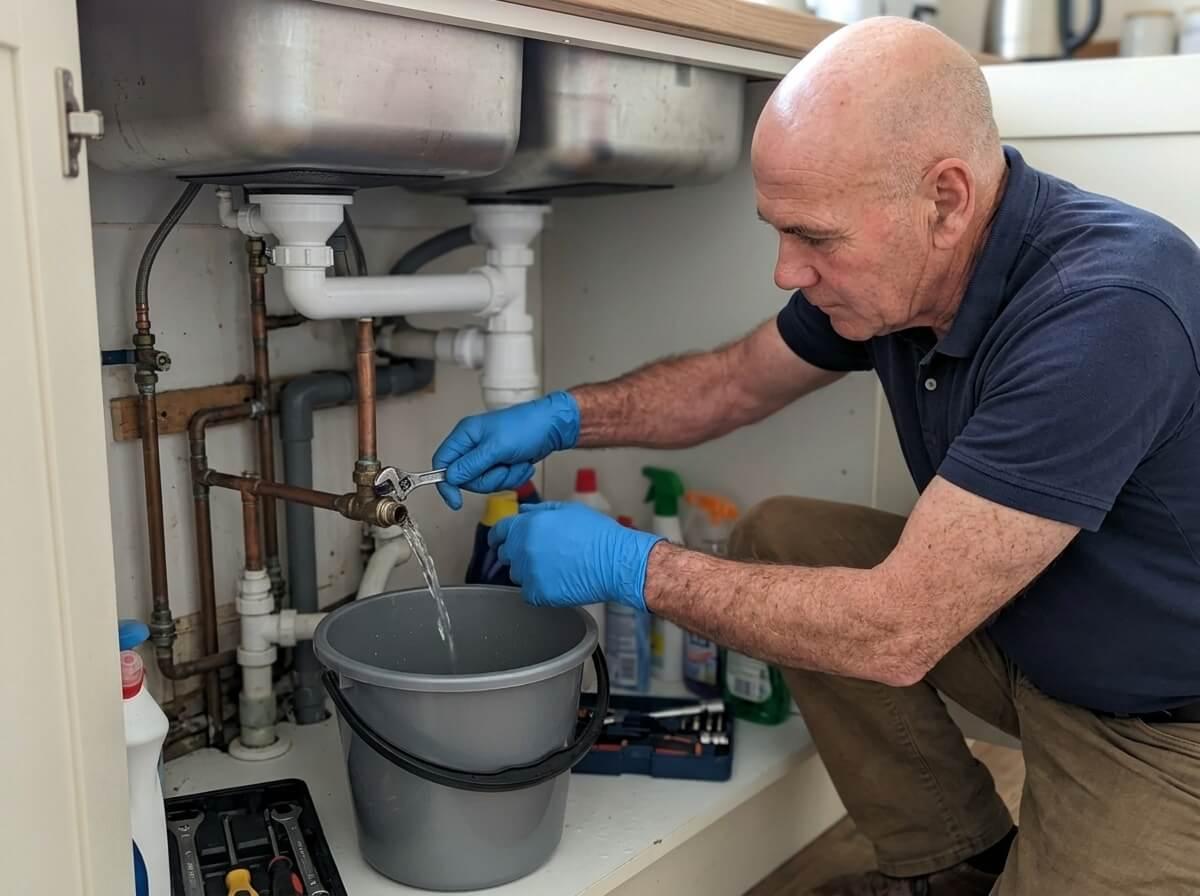
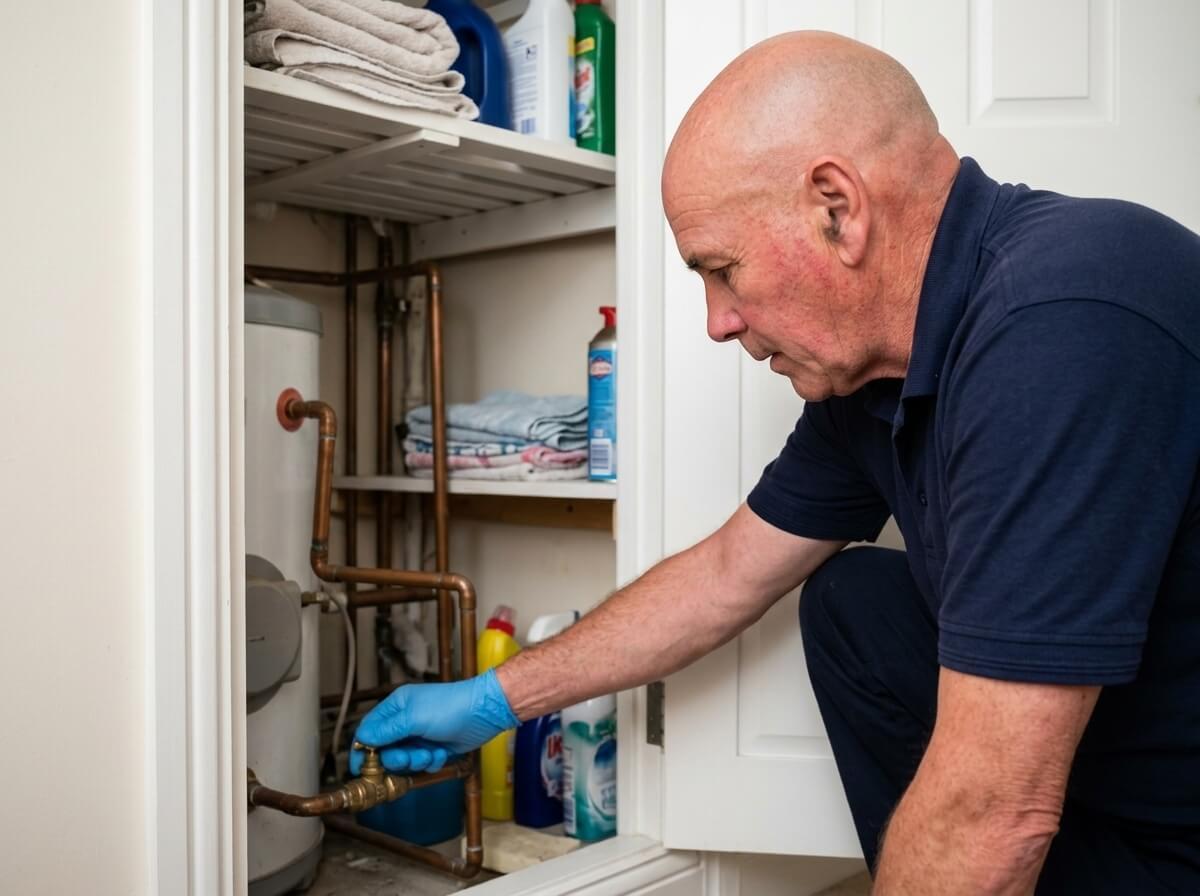
Turn it clockwise until it stops. In most Suffolk homes it is under the kitchen sink, in a downstairs toilet, by the front door or in the airing cupboard. If you have never found it, the how to locate your stopcock guide shows every usual hiding place. If it will not budge, do not force it with a long bar. Use the outside stop tap instead, or call.
Make the electrics safe
If water is near light fittings, sockets, an extractor fan or the consumer unit, switch the electricity off at the consumer unit, but only if you can reach it while standing somewhere dry with dry hands. If the consumer unit itself is wet, keep away from it and tell your plumber and electricity supplier.
Drain the pipes
Open all the cold taps, and flush the toilets, to empty the pipework so less water escapes through the split. Switch off the boiler and any immersion heater. If you have a loft tank, the hot taps will keep running until it empties, which is what you want.
Catch the water and protect the room
Buckets under drips, towels along the floor, and move furniture, electricals and anything precious out of the way. If a ceiling is bulging, do not stand under it. A small hole made with a screwdriver at the lowest point, with a bucket underneath, lets the water out in a controlled way, but only if you can reach it safely and the electrics are off.
Take photos and call a plumber
Photograph the damage, the wet ceiling, the meter reading and anything you can see of the pipe before you clear up. Then call an emergency plumber. The full drill for after the water is off is in what to do when a pipe bursts.
The 10 Signs of a Burst Pipe
One sign on its own can have an innocent explanation. Two or three together, especially a noise plus a pressure drop, almost always means water is escaping. These are the signs I ask about on the phone, roughly in the order people notice them.
1. The sound of rushing or hissing water when nothing is on
The single most reliable sign. A pressurised mains pipe that has split makes a constant hiss or rush, like a tap left full on somewhere you cannot see. Smaller splits sound like trickling or dripping inside a wall or ceiling. Listen at night when the house is quiet, with your ear to the wall, the floor and the airing cupboard door, and near the stopcock itself, where the sound often carries along the pipe.
2. A sudden drop in water pressure, or no water at all
If the shower goes weak and the kitchen tap splutters for no reason, water may be leaving the pipe before it reaches you. A big burst on the incoming supply can take the pressure to almost nothing. Ask a neighbour first: if their water is fine, the problem is probably on your side. The low water pressure guide covers the other causes, and no water in the house covers a supply that has stopped completely.
3. The water meter moves when everything is off
Your meter does not lie. With every tap, toilet and appliance off, the dials should be still. If the small red star or the last digits are turning, water is going somewhere. The two minute meter test further down tells you whether it is inside the house or on the pipe outside.
4. A ceiling that is stained, bulging, sagging or dripping
Water from a burst upstairs or in the loft lands on the back of the plasterboard and spreads before it shows. First a damp stain, then a dark patch that grows by the minute, then a bulge. A bulging ceiling can hold a surprising weight of water and then give way suddenly. Keep everyone out of the room. The water leaking through the ceiling guide explains how to deal with it safely.
5. Damp patches on walls, bubbling paint or lifting wallpaper
A pipe buried in a wall, or running down inside a stud partition, shows up as a damp patch that grows, plaster that feels cold and soft, paint that blisters or wallpaper that peels away. Draw a pencil line round the edge. If it has spread an hour later, water is still running. See water leaking from a wall for how to narrow it down.
6. A wet, spongy or warm floor
Laminate lifting at the joins, carpet damp at the edges, tiles that sound hollow, or a floor that is warm underfoot in one spot. Warm points to a hot water or heating pipe. Cold and wet points to the mains. In older Ipswich homes with solid concrete floors, the pipes often run in the screed, and water can travel a long way before it surfaces. The water leak under the floor guide goes into this in detail.
7. The toilet cistern or loft tank keeps refilling on its own
If you hear the cistern filling when nobody has flushed it, or the loft tank’s float valve hissing for hours, something is draining them. A burst on the hot water pipework or a pipe fed from the loft tank is a common culprit, especially after a freeze. Check the loft with a torch and look at the cold water tank and the pipes around it.
8. Spitting taps, or brown or cloudy water
When water escapes from a burst, air can be drawn into the pipework. Taps cough and spit, and the first water out may be brown or cloudy from stirred-up sediment. On its own this can also follow work on the water main in the street, so check for other signs before you assume the worst.
9. A wet patch outside that never dries
The incoming supply pipe runs underground from the boundary to your stopcock. When it bursts, you may see a boggy patch on the lawn, a damp strip across the drive, greener grass along a line, or water bubbling up near the meter chamber, even in a dry spell. The water leak outside the house guide explains who is responsible for each part of that pipe.
10. A bigger water bill, or boiler pressure that keeps dropping
The slow signs. A water bill or smart meter reading that jumps without any change in how you use water usually means a small burst or leak that has not yet shown itself. On the heating side, a combi or system boiler that keeps losing pressure, with no water visible anywhere, often means a burst or leak on a heating pipe under the floor. The signs of a hidden water leak guide covers these slower clues in more depth.
Burst Pipe Symptom Finder: What Your House Is Telling You
Find the row that matches what you have noticed. It shows where the burst usually is, how quickly it needs dealing with, and the first thing to do.
| WHAT YOU NOTICE | WHERE IT USUALLY IS | URGENCY | DO THIS FIRST |
|---|---|---|---|
| Rushing, hissing or roaring water with every tap and appliance off | A split or blown joint somewhere on the pressurised cold main, often under a floor, in a wall or in the loft. | Emergency now | Stopcock off. If the noise stops, it is your pipework. |
| Ceiling bulging, sagging or dripping, or water from a light fitting | A pipe in the floor void or loft above. Water pools on the plasterboard until it finds a way out. | Emergency now | Stopcock off, electrics off at the consumer unit if safe, keep out of the room. |
| Water spraying or pouring from a pipe you can see | A split copper pipe, a pushed-off push-fit fitting or a failed flexi hose. | Emergency now | Close the nearest isolation valve or the stopcock, then open cold taps. |
| Pressure dropped suddenly across the whole house, or no water at all | A burst on the supply pipe outside or inside, or a problem on the water company main. | Emergency now | Do the meter test below. Check the water company's website for local supply problems. |
| Water meter turning with everything off | Water escaping on your side of the meter: on the supply pipe if the stopcock is closed, inside if it is open. | Same day | Close the stopcock and watch the meter again to narrow it down. |
| Toilet cistern or loft tank filling over and over on its own | A burst on the pipework fed from the loft tank, or a hot water pipe, draining the tank as fast as it refills. | Same day | Close the valve on the tank feed or the stopcock, check the loft and airing cupboard. |
| Damp patch on a wall that keeps growing, wallpaper lifting or paint bubbling | A pipe buried in the wall or running down inside a stud partition. | Same day | Mark the edge of the patch with a pencil and check it again in an hour. |
| Floor wet, spongy or warm, laminate lifting, carpet damp at the edges | A pipe under suspended floorboards or in a solid concrete floor. Warm means a hot water or heating pipe. | Same day | Stopcock off. Switch the heating off if the floor is warm. |
| Boggy patch in the garden or drive that never dries, water bubbling near the meter | The underground supply pipe between the boundary and the house. | Same day | Meter test with the inside stopcock closed. Report to the water company if it is in the pavement. |
| Boiler pressure keeps falling, radiators going cold, no water visible | A burst or leak on the heating pipework, often under a floor. Heating water is often black. | Same day | Do not keep topping up the boiler. Look for black stains and warm patches. |
| Taps spitting air, or water coming out brown or cloudy after a loss of pressure | Air and sediment drawn in after water has escaped, either from a burst or from work on the main. | Within days | Run the cold kitchen tap. If it does not clear, or pressure stays low, keep looking. |
| Water bill or smart meter usage suddenly much higher, with no change in habits | A slow leak or small burst underground or under a floor that is not showing anywhere yet. | Within days | Meter test overnight, then ask about the water company's leak allowance once it is fixed. |
The 2 Minute Meter Test: Is Water Escaping Right Now?
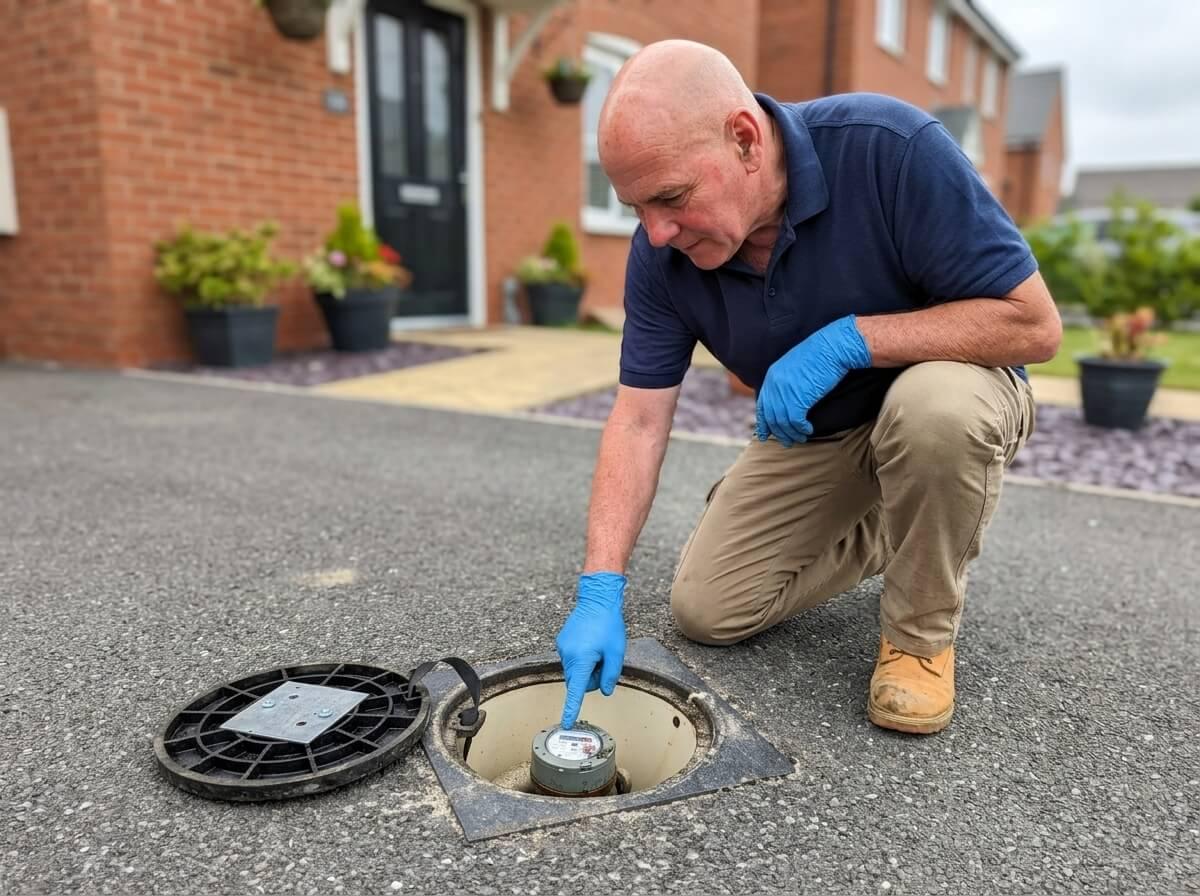
This is the test I talk people through on the phone, and it settles the question faster than anything else. Most homes in Ipswich and across Anglian Water’s area have a meter in a small chamber under a cover near the boundary, usually in the pavement, the front garden or the drive. Some newer homes have one indoors near the stopcock.
Turn everything off
Every tap, the washing machine, the dishwasher, the outside tap, and make sure no toilet is refilling. Switch off any water softener that might regenerate. Leave the stopcock open for now.
Read the meter
Lift the chamber lid (a screwdriver in the slot usually does it) and wipe the glass. Note the reading, including the red digits, or watch the small red star or triangle that spins when water flows. Take a photo.
Watch for two minutes
If the star is spinning fast, or the digits are rolling, water is leaving the pipes at a rate that points to a burst. A slow creep over half an hour points to a smaller leak.
Close the stopcock inside and watch again
If the meter stops, the escape is inside the house: under a floor, in a wall, in the loft or on the heating. If it keeps moving with the stopcock closed, the burst is on the underground supply pipe between the meter and your stopcock.
Burst Pipe or Just a Leak? How to Tell the Difference
People often ask me whether what they have is “a burst or just a leak”. It matters, because one needs the water off right now and the other can usually wait for a booked visit. Here is how they compare, along with the two things most often mistaken for a leak.
| WHAT IT IS | HOW FAST | THE TELLS | HOW URGENT |
|---|---|---|---|
| Burst pipe | Sudden. Litres a minute. | Rushing or hissing noise, pressure drops, water appears fast and spreads, meter spins. | Emergency. Stopcock off now and call a plumber. |
| Slow leak | Drips. Builds up over days or weeks. | Stain or damp patch that grows slowly, musty smell, mould, slightly higher bills, meter creeps. | Fix within days, before it rots timber or brings a ceiling down. |
| Condensation | Beads of water that come and go. | Droplets along cold pipes and cisterns in cool, damp rooms. Wipes off and comes back slowly. Meter still. | Not a leak. Improve ventilation or insulate the pipe. |
| Overflow running | Steady trickle outside. | Water from a small pipe on the outside wall, cistern or loft tank refilling. Usually a worn float valve. | Within days. Wasteful, and can freeze into a dangerous icicle in winter. |
The grey area is a small split that weeps rather than sprays. It behaves like a leak but gets worse quickly, especially on a pipe that froze. If water is running rather than dripping, or you cannot keep up with it using a bucket, treat it as a burst. If you need a temporary fix while you wait, the how to stop a leaking pipe guide shows the emergency repairs that actually hold.
What Does a Burst Pipe Sound Like and Look Like?
The sounds
- ●A steady hiss. A fine split or pinhole in a pressurised copper pipe. Often loudest near the pipe and carried along the pipework to the stopcock.
- ●Rushing or roaring. A full split or a joint blown apart. Sounds like a bath filling somewhere you cannot see.
- ●Trickling or dripping inside a ceiling or wall. Water running down the back of the plasterboard or along a joist before it finds a way out.
- ●A cistern or tank refilling again and again. Water draining away elsewhere and the float valve trying to keep up.
- ●Banging after the water comes back on. Air in the pipes after a burst has been isolated and repaired. Usually settles after the taps are run. The airlock guide helps if it does not.
What you might see on the pipe itself
- ●Copper: a split running along the length of the pipe, often with the copper bulged or bellied outwards. Typical of a frozen pipe.
- ●Plastic push-fit: a fitting that has slid off the end of the pipe, or a pipe that has cracked where it was kinked or clipped tight.
- ●Compression joint: the nut and olive pushed apart, or water spraying from round the nut.
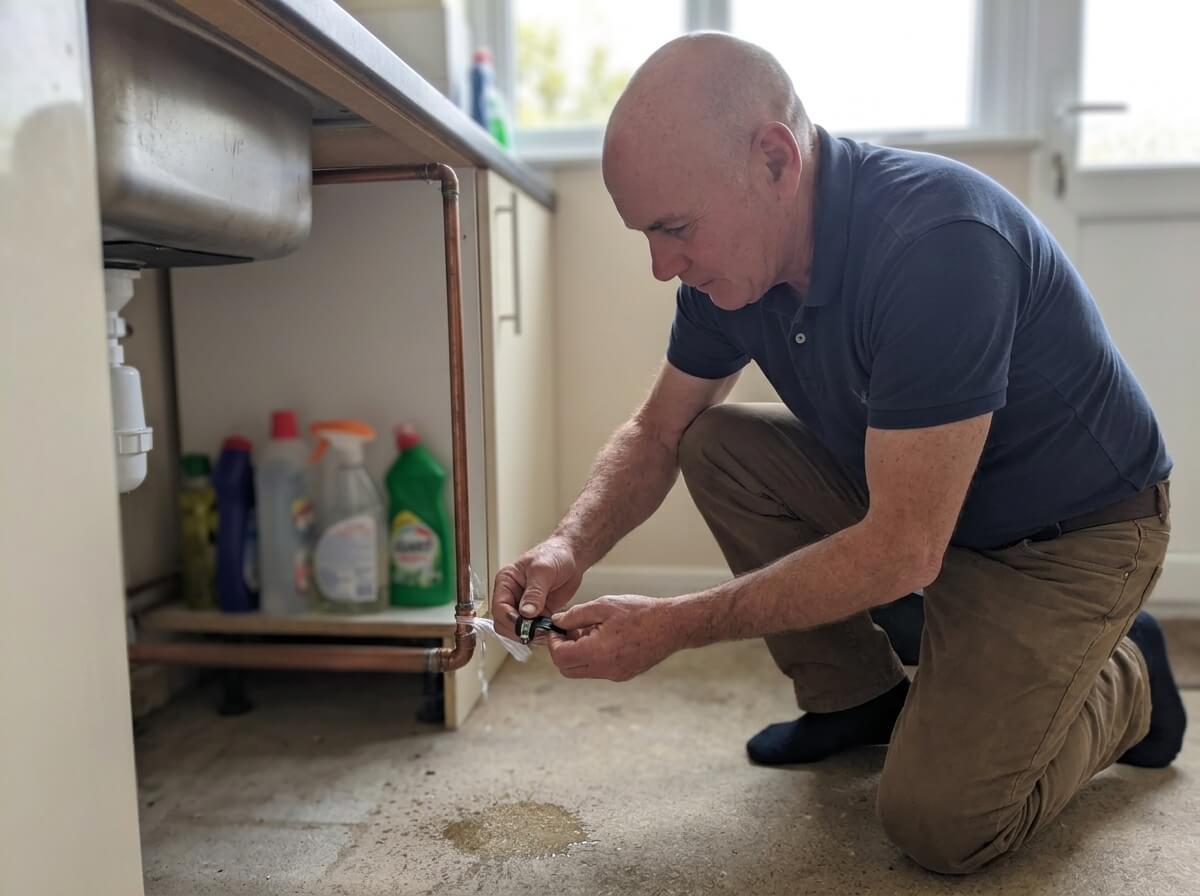
- ●Flexible tap connector: a bulge or split in the braided hose under a sink or toilet. The burst flexi hose guide covers these, as they are one of the most common bursts I see.
- ●Old lead or iron pipe: a swelling, a pinhole spurting a thin jet, or crusty deposits round a weak spot.
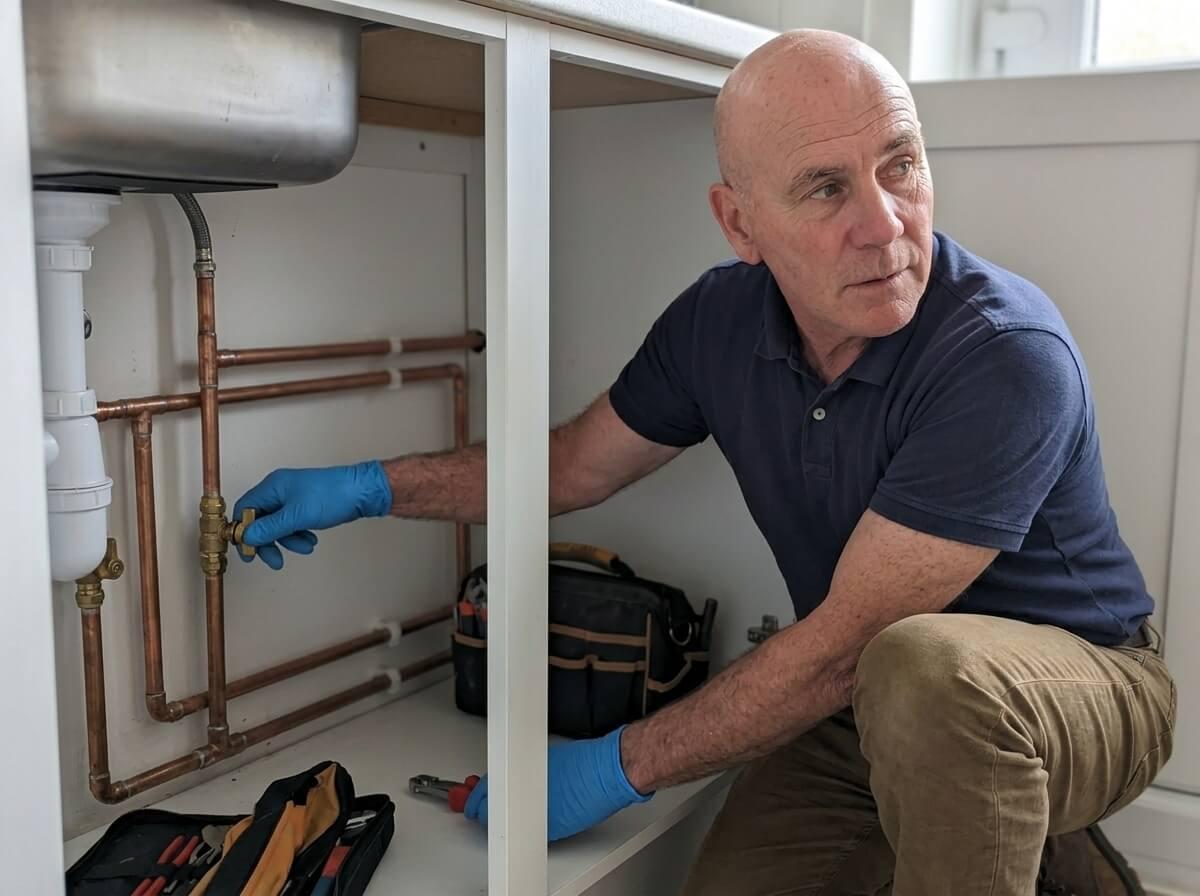
Signs of a Burst Pipe, Room by Room
Where the water shows up is not always where the pipe has burst. Water runs along joists, down inside walls and through floor voids. These are the patterns I see most often in Suffolk homes.
In the loft
Lofts are where pipes freeze first, and where a burst can run longest without anyone noticing. Look for wet insulation, drips from the tank or its pipes, a float valve that will not stop filling, and stains on the ceiling below, usually the landing or a bedroom. Bursts in the loft often show on the top floor ceiling within minutes.
In the ceiling below a bathroom
A stain under the bathroom is not always a burst pipe. Leaking shower seals, a bath waste or a toilet seal can all do it. The difference is timing: if the stain grows when nobody is using the bathroom, it is pressurised pipework. If it only appears after a shower or bath, it is more likely a seal or waste.
Behind a wall
Kitchens and bathrooms with pipes chased into the plaster are the usual suspects, as are stud walls where pipes drop to the ground floor. Swelling skirting boards are an early clue, because water runs down inside the wall and collects at the bottom. If you have recently hung a picture or fitted a shelf, the drilled through a water pipe guide is worth reading.
Under the floor
Upstairs, floor voids hide the pipes to every radiator and bathroom. Downstairs, many houses built from the 1960s onwards have pipes in a concrete floor. A warm patch, a damp smell, laminate lifting, or water seeping out at the skirting all point here. Heating pipes are common culprits, and the giveaway is a boiler that keeps losing pressure.
Under the kitchen sink or behind appliances
Flexi hoses, washing machine valves and old compression joints live here. A burst shows quickly as water on the cupboard base or seeping from under the kick board. Close the isolation valve on that pipe if there is one, and the rest of the house can keep its water.
Outside and underground
The supply pipe from the boundary to the house is usually blue plastic on newer properties and lead, iron or copper on older ones. Signs include a boggy strip in the garden, a damp line across a block-paved drive, water bubbling round the meter chamber, and pressure that fades across the whole house. Outside taps on an unheated wall also split in hard frosts.
Frozen or Burst? Signs After a Cold Snap
In freezing weather, the first sign is usually the opposite of a burst: a tap that gives nothing at all, or a toilet that will not refill, because ice is blocking the pipe. Frost on the outside of a pipe, or a pipe that looks swollen, are other warnings. The danger comes later. Ice expands as it forms, splits the pipe, and then holds the split shut until it thaws. That is why so many bursts are discovered on the first mild morning after a cold spell.
- ●Before the thaw: find the frozen section, turn the water off at the stopcock, and open the tap it feeds so water and steam can escape as it thaws. Thaw gently with a hairdryer or warm towels, never a blowtorch.
- ●As it thaws: stand by the stopcock and watch the pipe. If water appears, turn the stopcock off at once.
- ●After the thaw: check the loft, the airing cupboard, under sinks and the outside tap, and do the meter test.
The full step by step is in the frozen pipes guide, and the Chartered Institute of Plumbing and Heating Engineering has useful advice on frozen and burst pipes as well.
Why Pipes Burst
Freezing gets the headlines, but it is far from the only cause. Knowing the likely reason helps you find the burst faster and stop it happening again.
- ●Freezing. Pipes in lofts, garages, outside walls, under suspended floors and in unheated extensions. Worst when a house is left empty and cold.
- ●Joints pulling apart. A push-fit fitting without its pipe insert, a pipe not pushed fully home, or a compression nut left loose. These can let go years after they were fitted.
- ●Flexible hoses failing. Braided tap connectors and appliance hoses wear out, especially when kinked or twisted.
- ●Damage. Nails through floorboards, screws through walls, and pipes knocked when cupboards are fitted.
- ●Corrosion and age. Pinholes in old copper, perished joints, and lead or iron supply pipes that are well past their best.
- ●High pressure and water hammer. Mains pressure surges and pipes that bang when taps shut put repeated strain on joints. The banging pipes guide explains the fix.
- ●Ground movement. Shrinking clay soils in a dry summer and tree roots can crack underground supply pipes.
Is a Burst Pipe an Emergency?
Yes. Any pipe that is actively releasing water under mains pressure is a plumbing emergency, because the damage grows every minute it runs. Call an emergency plumber straight away if:
- ●Water is running, spraying or pouring, rather than dripping.
- ●It is coming through a ceiling, or a ceiling is bulging.
- ●It is near electrics, a light fitting or the consumer unit.
- ●You cannot turn the water off, or turning it off has not stopped it.
- ●You have no water, and someone in the house is elderly, unwell or has young children.
- ●It is a freezing night and you have no heating or hot water as a result.
If the water is off, the leak has stopped and everything is safe, the repair can often wait until the morning. Ring anyway and describe what you can see. A good plumber will tell you honestly whether it needs a visit tonight. The what counts as a plumbing emergency guide has a triage table for other situations.
What Not to Do When You Suspect a Burst Pipe
- ✕Do not wait to see if it gets worse. Turn the water off first. You can always turn it back on once you know what is going on.
- ✕Do not touch wet electrics. Not even to switch a light off.
- ✕Do not stand under a bulging ceiling. Plasterboard full of water can drop without warning.
- ✕Do not use a naked flame to thaw a pipe. Blowtorches start fires in lofts and floor voids.
- ✕Do not keep topping up a boiler that keeps losing pressure. You are just feeding the leak.
- ✕Do not start ripping up floors or walls. Find the leak first with a meter test and a plumber’s equipment. Opening up in the wrong place doubles the repair bill.
- ✕Do not throw away damaged items before your insurer sees them. Photos first, then clear up.
Who Is Responsible for a Burst Pipe?
In most homes, the property owner is responsible for every pipe inside the house and for the underground supply pipe from the property boundary to the house. The water company, Anglian Water across most of the Ipswich area, is usually responsible for the main in the street and the short pipe up to your boundary, or to the outside stop tap or meter. If the meter keeps turning with your stopcock off, the burst is very likely on your side.
If you rent, your landlord is responsible for keeping the water pipes in repair under section 11 of the Landlord and Tenant Act 1985. You should still turn the water off, limit the damage and report it straight away, in writing if you can. The landlord plumbing responsibilities guide explains what to do if you cannot reach them. In flats, a burst in the flat above is usually the responsibility of whoever owns that pipe.
Burst Pipes and Your Home Insurance
Damage from a burst pipe is usually claimed as “escape of water”, one of the most common home insurance claims in the UK. Most buildings policies cover the damage to the house, and contents policies cover your belongings. Many also include trace and access cover towards the cost of finding a hidden burst. The repair to the pipe itself is often not covered, and damage from a leak that has been going on slowly for months may be refused.
Insurers also look at whether the house was heated in winter and how long it was empty, so check your policy before you go away. The burst pipe insurance claim guide walks through what to record and what usually gets paid, and water damage after a leak covers drying out.
How I Find and Fix a Burst Pipe
When you call me about a suspected burst, I will ask what you can hear, what you can see, whether the meter is moving and whether the stopcock stops it. That usually tells me roughly where to look before I arrive.
Make it safe
Water off, electrics checked, and any trapped water in a ceiling let out in a controlled way.
Find the burst
Most bursts are found by sight and sound once the floor void or loft is checked. When a pipe is buried in a floor or wall, I use leak detection methods to pinpoint it, so only a small, neat section needs opening up. Our leak detection service covers this.
Repair it properly
Cutting out the damaged section and fitting new copper or plastic pipe with soldered, compression or push-fit joints, depending on what is there. Not a clamp left in place for good. Details are on the burst pipe repair page.
Test and restore
Water back on slowly, joints checked under pressure, air bled from the system, and the boiler and heating brought back up. If the pipe froze, I will insulate it or suggest rerouting it so it does not happen again.
How to Catch a Burst Pipe Early
- ●Know where your stopcock is, and test it. Turn it off and on twice a year so it does not seize. If it is stiff, the seized stopcock guide shows how to free it safely.
- ●Do a meter test once a month. Two minutes, everything off. It catches hidden bursts before the ceiling does.
- ●Lag pipes in cold spots. Loft, garage, outside walls, under suspended floors. Insulate the tank in the loft, but not underneath it, so warmth from the house can reach it.
- ●Keep the heating ticking over in winter. Even when you are away, a low setting or frost protection keeps pipes above freezing.
- ●Isolate the outside tap. Turn off the inside valve that feeds it in autumn and open the tap to drain it.
- ●Replace tired flexi hoses. If they are bulging, rusting at the ends or more than about ten years old, change them.
- ●Consider a leak alarm or smart shut-off valve. Cheap water alarms under sinks and near the boiler, or an automatic valve on the main, can cut the water before you even know there is a problem.
Signs of a Burst Pipe: The Key Points
- ●The strongest signs are a rushing or hissing noise with everything off, a sudden pressure drop, and a meter that keeps moving.
- ●Ceilings that stain, bulge or drip, walls that bubble and floors that go wet or warm show where the water is going.
- ●The 2 minute meter test tells you whether water is escaping and whether it is inside the house or on the supply pipe.
- ●After a freeze, the burst often only shows when the pipe thaws, so check the loft and outside tap on the first mild day.
- ●Stopcock off, electrics safe, taps open, photos, then call an emergency plumber.
Burst Pipe in Ipswich? Call Philip
If you think a pipe has burst, turn the stopcock off, keep clear of wet electrics and call me. I will talk you through making it safe on the phone, get to you as fast as I can, usually in about 30 minutes for local emergencies, find the burst and repair it properly, often on the first visit.
I cover Ipswich, Felixstowe, Woodbridge, Kesgrave, Stowmarket and the surrounding towns, and I answer the phone myself, 24 hours a day, seven days a week, on 07977 857224. See everything else on the emergency plumbing services page, or get in touch for a free, no-obligation quote.