A leak under the floor is one of the most unsettling calls I get, because you know something is wrong but you cannot see it. The carpet by the kitchen door is damp again. The laminate in the hall has started to lift. There is a warm patch on the tiles in front of the cooker, or the water bill has doubled and nobody knows why.
I have been finding and fixing leaks across Ipswich and Suffolk for more than forty years. Most guides on this give you a list of signs and tell you to call someone. What they leave out is that the answer depends on two things: which pipe is leaking, and what kind of floor it is under. A leaking heating pipe in a 1970s concrete floor in Kesgrave is a completely different job from a weeping joint under the floorboards of a Victorian terrace off Norwich Road. This guide walks you through both, so you know what you are dealing with before anyone picks up a crowbar.
Water Under the Floor? Do These 4 Things First
Turn off the stopcock
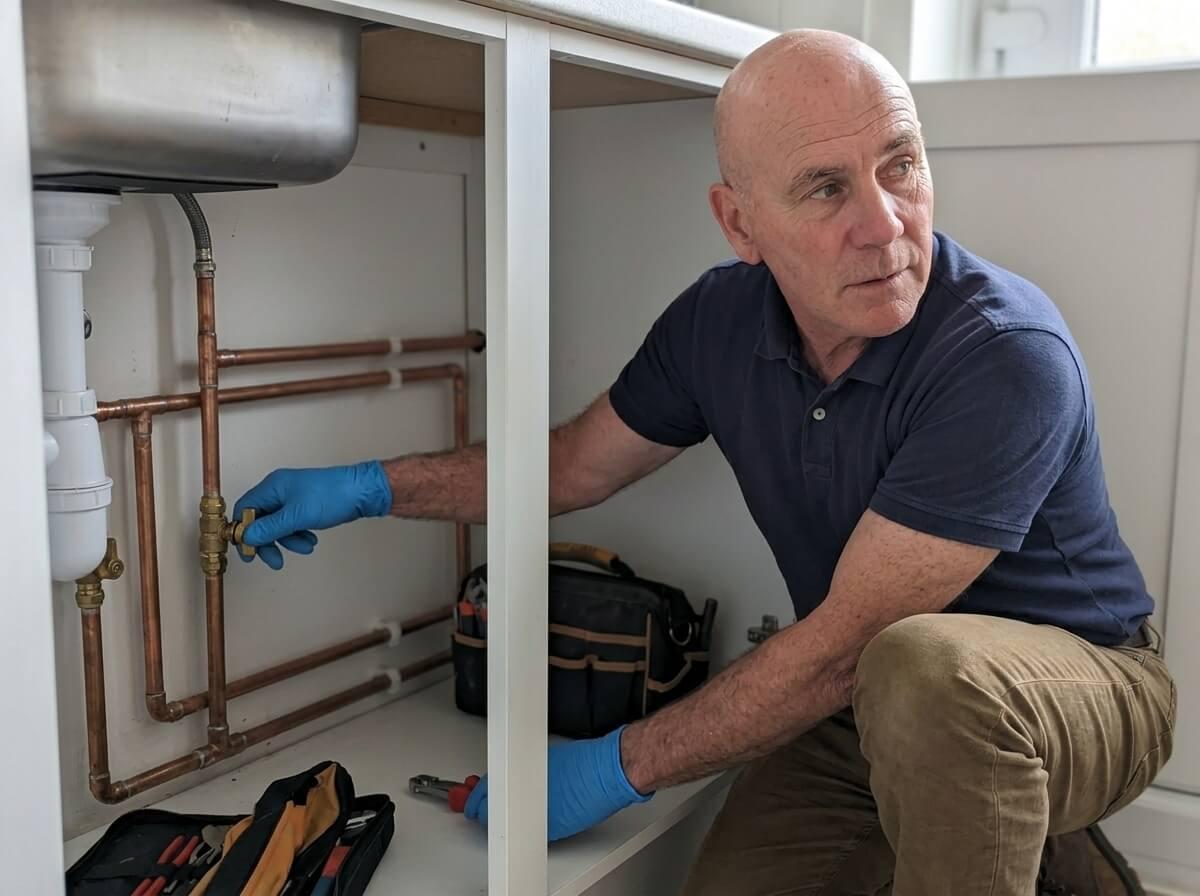
Your main stopcock is usually under the kitchen sink, but it can be in a downstairs toilet, under the stairs or in the garage. Turn it clockwise until it stops. Then watch the wet area. If it stops spreading, the leak is on the mains cold supply or, on a combi boiler, the hot water. If you cannot find it, see how to locate your stopcock.
Make the electrics safe
If water is near floor sockets, a cooker point, underfloor heating thermostats, downlights in the ceiling below, or anything else electrical, switch that circuit off at the consumer unit. If the consumer unit is wet, or you are not sure, do not touch it and keep everyone out of the room.
Check the boiler pressure gauge
On a combi or system boiler, the gauge on the front should read about 1 to 1.5 bar when the heating is cold. If it is well below that, or has dropped to zero, the heating system may be what is leaking. Turn the boiler off. Turning off the stopcock does not stop a heating leak, because it is a separate sealed system.
Protect the floor and record it
Lift rugs, move furniture and anything stored on the floor, and roll back carpet from the wet area if you can so it can start to dry. Take photos and a short video of the damage and write down your water meter reading. Your insurer will want them.
Which Pipe Is Leaking? Five Simple Tests
Under a typical floor there can be the mains cold water, hot water pipes, central heating flow and return pipes, and waste pipes from the kitchen or bathroom. Each one behaves differently when it leaks. These tests take an hour or two, cost nothing, and tell you, and whoever comes to fix it, where to look.
| TEST | HOW TO DO IT | WHAT IT TELLS YOU |
|---|---|---|
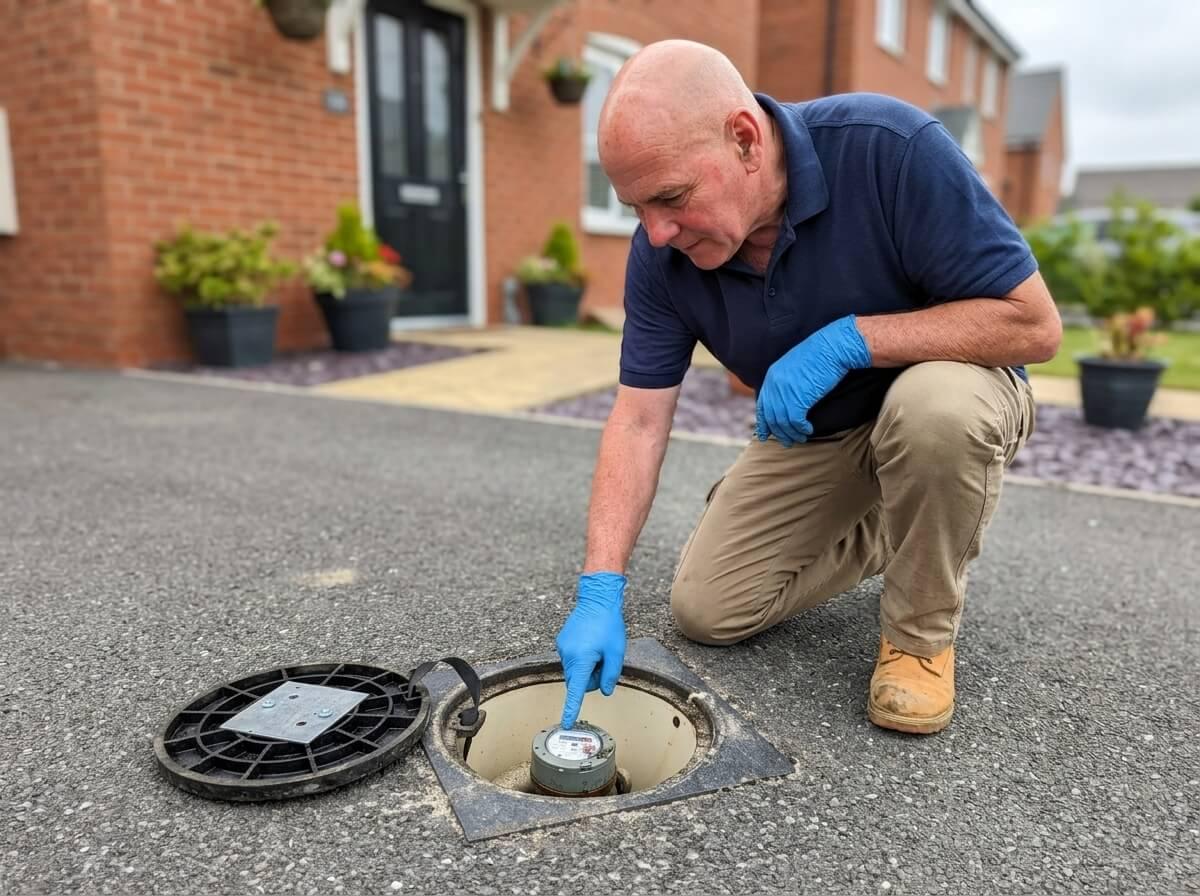
| Water meter test | Turn off every tap, the washing machine, dishwasher and any outside tap. Read the meter, wait an hour without using water, read it again. On many meters a small star or dial spins if water is flowing. | If it has moved, water is escaping from the mains cold supply, or from the hot water on a combi boiler, somewhere between the meter and your taps. |
| Boiler pressure test | On a combi or system boiler, note the needle on the pressure gauge with the heating off and cold. Check it again the next morning, and after the heating has been on. | If it keeps dropping below about 1 bar and you keep topping it up, and there is no drip at the boiler or radiators, a heating pipe is probably leaking, often under a floor. |
| Hot water test | Run a hot tap for a few minutes, then walk the floor in socks or lay your hand flat on it. Feel for a patch that is warmer than the rest. | A warm spot on a solid floor, with no underfloor heating there, usually means a hot water or heating pipe leaking right underneath it. |
| Waste test | Leave the stopcock on but do not use anything for a day. Then run the shower, bath, basin or washing machine one at a time and check the wet patch after each. | If the floor only gets wetter after one of them is used, it is a waste pipe or a seal, not a pressurised pipe. The meter will not move for this kind of leak. |
| Rain test | Note whether the damp patch gets worse after heavy rain, and whether it is next to an outside wall. | If the meter does not move, the boiler holds pressure, and the damp follows the weather, it is more likely ground water, a gutter or downpipe, blocked air bricks or a drain. |
One extra check for the meter test: if the meter keeps turning with the stopcock inside the house turned off, the leak is not under your floor at all. It is on the underground supply pipe between the meter and the house, and my guide to a water leak outside the house explains whose pipe that is and who pays.
What Kind of Floor Do You Have?
How a leak shows, how it is found and how much disruption the repair causes all depend on the floor. Most homes in Ipswich have one of these, and plenty have a mix, such as a suspended timber floor in the front rooms and a solid floor in a later kitchen extension.
Suspended timber floor (floorboards over a void)
Common in Victorian, Edwardian and 1930s houses, and upstairs in almost every house. Boards or chipboard sit on joists with a void underneath, ventilated through air bricks in the outside wall. Pipes run between or through the joists. A leak here often drips into the void and goes unseen for months, showing only as a musty smell, soft boards or a stain on the ceiling below. The good news is that the pipe is usually reachable by lifting one or two boards in the right place.
Solid concrete floor with pipes in the screed
Many houses built from the 1950s to the 1980s, including a lot of the estates around Ipswich, Kesgrave, Martlesham and Felixstowe, have a concrete slab with a sand and cement screed on top, and the heating and hot water pipes were laid straight into it. Often these are thin 8mm or 10mm microbore copper pipes feeding each radiator. Copper buried directly in cement, with no sleeve, slowly corrodes from the outside, and after forty or fifty years many of these pipes are reaching the end of their life. A leak shows as a warm spot, a damp patch on the floor covering, or a boiler that keeps losing pressure.
Tiled floors, bathrooms and wet rooms
Tiles hide a leak well. Water gets under them and travels along the adhesive bed until it finds a joint to come out of, or soaks into the boards or screed below. In a bathroom the cause is very often not a pipe at all, but a leaking shower tray or screen seal, a toilet leaking at the base, or a bath waste. Hollow sounding tiles, grout that stays dark, and lifting tiles near the shower are the usual clues.
Floors with underfloor heating
Wet underfloor heating runs plastic pipe in loops through the screed or in panels under boards. The pipe itself rarely fails on its own, but it can be pierced by a nail, screw or carpet gripper, and the manifold and its connections can weep. A drop in boiler pressure with no visible drip is the main sign. Leave the floor alone and get it pressure tested loop by loop, which is the only reliable way to find which circuit is leaking.
Leak Under the Floor Fault Finder
When someone rings me about water under the floor, I ask what they can see, hear and feel. Find the row that matches what is happening in your home.
| WHAT YOU NOTICE | LIKELY CAUSE | URGENCY |
|---|---|---|
| Water spreading across the floor or coming up between boards or tiles | A split pipe or failed joint on the mains, hot water or heating under the floor. Water is finding the easiest way out. | Act today |
| Water coming through the ceiling below an upstairs floor | A leaking pipe or joint between the joists, a shower tray, bath waste or toilet seal leaking into the floor void. | Act today |
| Hissing or running water sound with everything off | Water escaping under pressure from a supply pipe. Often loudest at night when the house is quiet. | Act today |
| Warm patch on a solid concrete floor | A hot water or central heating pipe leaking in the screed. Often a corroded copper pipe laid straight into the concrete. | Within days |
| Laminate or wood floor swelling, cupping or lifting at the joints | Moisture rising from below, either a slow pipe leak or damp in the floor, soaking into the boards from underneath. | Within days |
| Boiler pressure keeps dropping and needs topping up | A leak on the sealed heating system. If nothing drips at the boiler or radiators, a buried or underfloor heating pipe is the usual cause. | Within days |
| Water meter moves with everything turned off | A leak somewhere on the supply. Under a floor, in a wall, or on the underground pipe between the meter and the house. | Within days |
| Floor only wet after a shower, bath or washing machine | A leaking waste pipe, trap or shower tray seal. Only leaks when water goes down it. | Within days |
| Musty smell, mould on skirting boards, soft or springy boards | Water or damp in the void under a suspended floor, rotting the joists or board ends. Could be a pipe, or ventilation. | Within days |
| Damp patch by an outside wall that gets worse after rain | Probably not a pipe. Rain getting in, high ground or a blocked air brick. Check the meter and boiler pressure to rule a leak out. | Check and watch |
Water Under the Floor but No Leak?
Not every wet floor is a plumbing problem. If the meter does not move with everything off, the boiler holds its pressure, and the floor is still damp, look at these before paying anyone to dig:
- ●Blocked or buried air bricks. A suspended floor needs air moving through the void. Air bricks covered by soil, a patio, a raised flower bed or a later extension let damp build up, and joists and board ends start to rot and smell.
- ●High ground or a patio outside. If the ground or paving outside is higher than the inside floor, or above the damp proof course, rain soaks straight through the wall at floor level after every heavy shower.
- ●Gutters and downpipes. A blocked gutter or a cracked downpipe pouring down the wall next to the damp patch puts gallons into the foundations every time it rains.
- ●A leaking drain. A cracked drain under or beside the house can wet the ground and the void. This one usually smells, and gets worse when baths and washing machines empty, not when it rains. See sewage smell in the house.
- ●Condensation. A cold solid floor under vinyl or a rug in a kitchen or bathroom can sweat. It looks like a leak but appears in cold weather, wipes dry, and is often worse in the morning.
A Leak Under the Floorboards
If you have a suspended floor and the tests point to a pipe, the leak is often findable without much damage. A plumber will look at where the pipes run, usually from the stopcock, the boiler and the airing cupboard towards the kitchen, bathroom and radiators, and lift the boards along that route closest to the wettest area. Water in the void tends to collect at the lowest point, which is not always under the leak, so the trick is to follow the pipe, not the puddle.
If you want to look yourself, choose a board that is already loose or has been lifted before, check for cables, as they often run alongside pipes, and never cut or screw into a board without knowing what is under it. Look along the pipe with a torch for drips, green or white crusting on joints, and wet patches on the joists. Common culprits are compression joints that have worked loose, pipes that have been nicked by a nail or screw from a previous carpet fitting, and old soldered joints on the heating.
Upstairs, the first sign is usually on the ceiling below. If that is what you are seeing, read my guide to water leaking through the ceiling first, as a sagging ceiling needs dealing with before anything else.
A Leak Under a Concrete Floor
This is the one people dread, and it does not have to be as bad as you think. The steps are always the same:
Prove which system is leaking
Isolate the mains, the hot water and the heating in turn and watch the meter and the boiler gauge. Then, where valves allow, isolate individual radiators or branches. Every pipe ruled out shrinks the search area.
Trace the pipe route
Pipes in screed usually run in fairly straight lines from the boiler or manifold to each radiator, often close to walls and across doorways. Old plans, where radiator pipes come up out of the floor, and the warmth of hot pipes all help map them.
Pinpoint the leak
Moisture readings across the floor, feeling or imaging warm spots on hot pipes, and listening for the leak narrow it down to a small area. On the hardest jobs, under thick concrete or tiles you want to keep, specialist tracing equipment such as tracer gas may be worth it, and I will tell you honestly if it is.
Open up only what is needed
A small section of floor is cut out over the leak, the pipe is repaired, pressure tested and, ideally, wrapped or sleeved before the hole is filled with fresh screed. The floor covering can go back once the screed has dried.
The big decision is whether to repair or reroute. If one buried pipe has corroded through, the rest of that run is the same age, laid in the same concrete, and another leak a metre along is common. Abandoning the buried pipe and running a new one above the floor, behind skirting, through a wall, or across a ceiling void from upstairs, often costs less over time and means the problem cannot come back in the floor. I will give you a clear price for both options, agreed before work starts, so you can choose.
Warm Floor and Boiler Losing Pressure
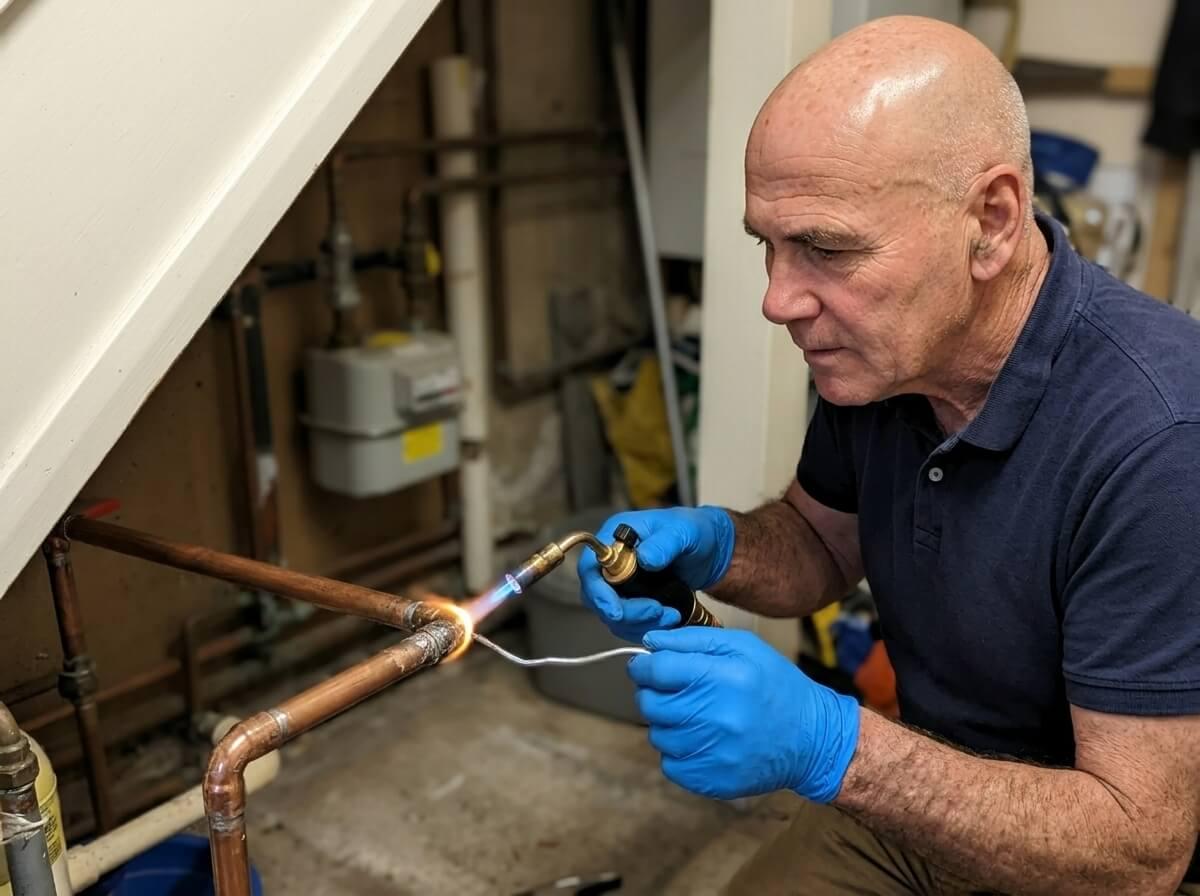
These two together are the classic sign of a central heating leak under a solid floor. Heating water is hot when the boiler runs, so the floor warms over the leak, and because the system is sealed, every drop lost shows on the pressure gauge. You top it up, it drops again, and every top up brings in fresh water and oxygen that speeds up corrosion inside the radiators and the boiler.
You may see heating leak sealer recommended for this. On a pinhole it can sometimes slow or stop a leak for a while, but it does not fix a corroded pipe, and used wrongly it can block a boiler’s heat exchanger, filters and microbore pipes. I would only ever treat it as a stopgap, and never in a system with an old boiler you want to keep going. If you are topping up more than once every few weeks, get it traced. For leaks you can see on a radiator or valve, my radiator leaking guide covers those.
Is a Leak Under the Floor an Emergency?
Call a plumber straight away, day or night, if:
- ●Water is spreading across the floor or coming up between boards or tiles.
- ●Water is coming through a ceiling, or near lights, sockets or the consumer unit.
- ●Turning off the stopcock does not stop it, or you cannot find or turn the stopcock.
- ●You can hear water running under the floor with everything turned off.
- ●The boiler has lost all its pressure and you have no heating or hot water in cold weather.
- ●Someone elderly, disabled, very young or unwell is in the house and the water has to stay off.
A slow leak that stops when the stopcock is off, or a heating pressure drop you can top up once a week, can wait for a booked visit. Keep the water off when you are not using it and the boiler pressure checked. If you are not sure, ring me and describe what you can see. I will tell you honestly whether it can wait until morning. You can also read what affects the cost of an emergency plumber.
What Not to Do
- ✕Do not break into a concrete floor on a guess. You can damage the pipe you are looking for, or another one, and you may still be in the wrong place.
- ✕Do not drill, nail or screw into a floor to find a leak. Pipes and cables run just under the surface. This is how many underfloor leaks start in the first place.
- ✕Do not keep topping up the boiler and ignoring it. Each top up adds oxygen and fresh water that corrode the system from inside, and the leak keeps soaking the floor.
- ✕Do not lay new flooring over a damp floor. Laminate, wood and vinyl trap the moisture and rot or lift. Fix the leak and let the screed or boards dry properly first.
- ✕Do not touch wet electrics. If water has reached sockets or the consumer unit, switch off at the main switch only if it is dry and safe to reach.
- ✕Do not leave the water on overnight. A small leak running for eight hours puts a lot of water into a floor. Turn the stopcock off before bed until it is fixed.
Insurance, Landlords and Your Water Bill
Most buildings insurance covers escape of water, meaning the damage the water does to floors, screed, plaster and skirting. Many policies also include trace and access, which helps pay for finding the leak and opening up and making good the floor. The repair to the pipe itself is usually not covered, and leaks that have clearly been going on for a long time, or wear and tear, can be excluded. Ring your insurer early, before major work starts, and keep photos, your meter readings and the plumber’s written findings.
If you rent, the water supply, hot water and heating pipes are your landlord’s responsibility, wherever they run. Report a suspected leak in writing straight away, turn the water off if it is spreading, and take photos. You are not expected to find or fix a buried pipe yourself.
If you are on a water meter, a leak under the floor can make a big difference to your bill. Once it is repaired, ask your water company, Anglian Water for most of the Ipswich area, whether you qualify for a leak allowance. They may reduce the charge for the water lost if the leak was on your pipework and was fixed promptly. Keep the invoice for the repair, as they usually ask for it.
How I Find and Fix a Leak Under the Floor
When I come out to a suspected underfloor leak, I start with the questions and the simple tests above, then the meter and the boiler pressure, and isolate each part of the system in turn until I know which pipe is losing water. Then I work out where that pipe runs and narrow down the leak before lifting or cutting anything. On a suspended floor that usually means lifting one or two boards in the right place. On a solid floor it means opening up as small an area as possible.
I carry copper, plastic and push-fit pipe and fittings on the van, so in most cases I can repair the pipe or reroute it on the same visit, then pressure test it before the water goes back on and the floor is closed up. You get a fair price agreed before work starts, and if the job is bigger, such as replacing a run of buried heating pipe, a free, no-obligation quote with options. If the leak turns out not to be plumbing at all, I will tell you that too, and what I think it is.
How to Stop It Happening Again
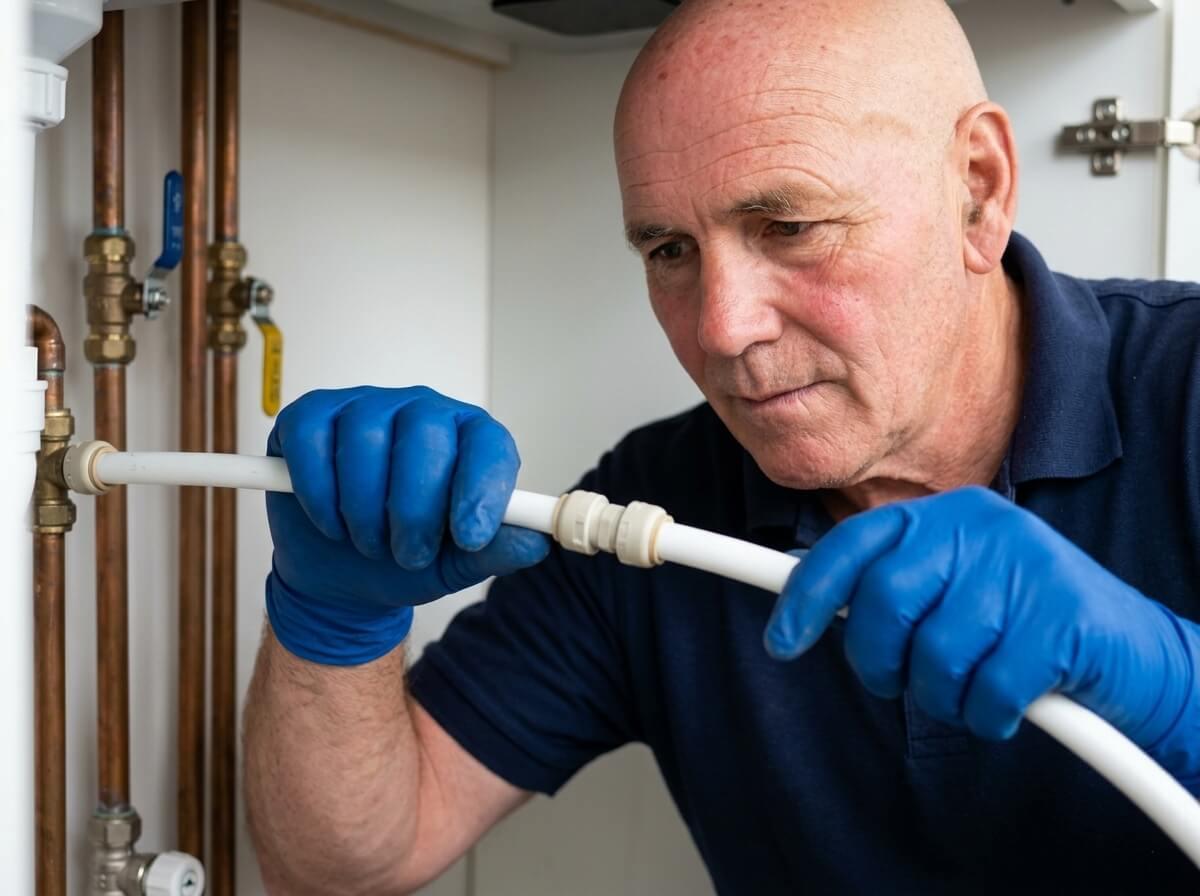
- ●Know where your pipes run. Take photos of pipe routes whenever a floor is up, and keep them. It saves time, money and floor next time.
- ●Check your meter now and then. Read it last thing at night and first thing in the morning with nothing used. It catches a hidden leak months before the floor shows it.
- ●Watch the boiler pressure. A gauge that is steady month to month is a sealed system with no leaks. One that creeps down needs looking at.
- ●Mark pipes before flooring goes down. Tell carpet and flooring fitters where the pipes run so grippers, nails and screws stay clear of them.
- ●Keep air bricks clear. Make sure soil, paving and planters stay below the air bricks and the damp proof course.
- ●Sleeve new pipes in solid floors. Pipes in a new screed should be in a duct or sleeve so they are protected and can be pulled through and replaced without digging.
- ●Fit a leak detector. A cheap battery water alarm on the floor by the boiler, under the sink or behind the washing machine sounds the moment water appears.
Water Leak Under the Floor in Ipswich? Call Philip
If you have water under the floor, a floor that will not dry, a warm patch or a boiler that keeps losing pressure, call me. I will find which pipe is leaking and where, open up only what is needed, and repair or reroute it, usually on the same visit. You get a clear, fair price agreed before I start.
I cover Ipswich, Felixstowe, Woodbridge, Kesgrave, Martlesham, Stowmarket and the surrounding towns, and I answer the phone myself, 24 hours a day, seven days a week, on 07977 857224. For hidden leaks of any kind, see our leak detection service. If a pipe has split, see burst pipe repair and what to do when a pipe bursts. To check for other clues around the house, read the signs of a hidden water leak, or see everything else on the emergency plumbing services page.