A plumbing emergency is stressful in any home. When you rent, there is an extra layer of worry on top. Can you call a plumber yourself? Will you get the bill? What if the landlord is on holiday, the letting agent is shut for the weekend and water is coming through the kitchen ceiling?
I get these calls every week from tenants across Ipswich, Felixstowe, Woodbridge and Kesgrave, and just as many from landlords and letting agents trying to sort out what happened. The good news is that the rules are fairly clear once you know them. This guide covers what to do in the first ten minutes, who is responsible for each kind of plumbing problem, who pays, how quickly it should be fixed and what to do if it is not. It is written for tenants and landlords in England. I am a plumber, not a solicitor, so where the law matters I have pointed you to the official sources too.
Plumbing Emergency in a Rented Home? Do These 6 Things First
Whoever ends up responsible, the first few minutes are the same, and they are down to whoever is in the house. Doing them well keeps the damage, and any argument about the bill, as small as possible.
Stop the water
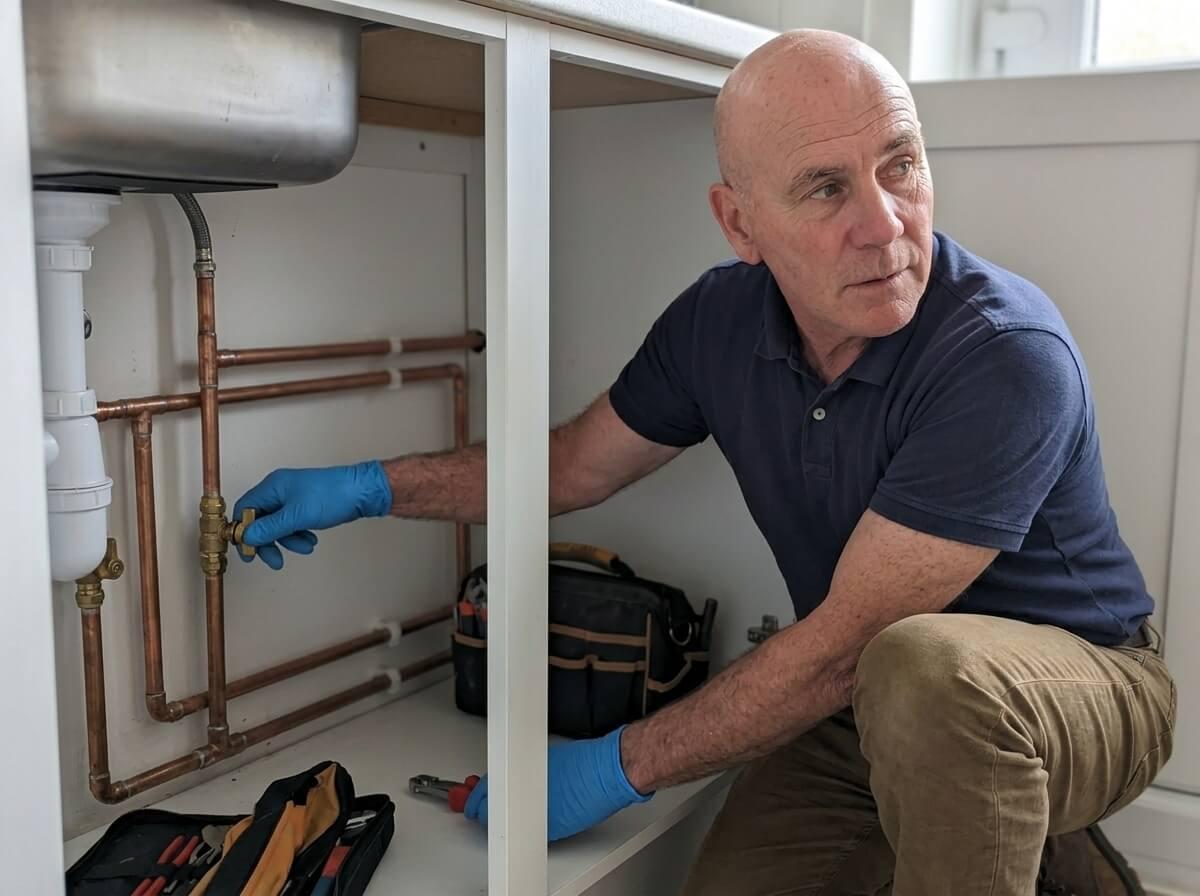
For a burst or leaking pipe, turn the main stopcock clockwise until it stops. It is usually under the kitchen sink, but in flats it is often in a hallway cupboard or the airing cupboard. Our guide to finding your stopcock covers the usual hiding places. For one toilet, tap or appliance, turn its isolation valve a quarter turn with a flat screwdriver instead.
Make the electrics safe
If water is near sockets, lights or the consumer unit, do not touch them. From a dry spot, switch off that circuit or the main switch. If the consumer unit itself is wet, keep away from it and see the warning below.
Catch and contain the water
Buckets under drips, towels on the floor, belongings moved out of the way. If a ceiling is bulging, keep everyone out of that room. Stop using any toilet, sink or shower that is blocked or backing up.
Take photos and a short video
Get the leak or blockage, the damage, and the stopcock in its off position. Your phone will timestamp them. This is the single most useful thing you can do to protect yourself later, with the landlord, the deposit scheme and any insurer.
Report it to your landlord or letting agent
Ring their emergency number first if they have one, then confirm in writing by email, text or the agent’s repairs portal. Say what happened, when, what you have done and whether the water is now off. A landlord’s duty to repair only starts once they know about the problem, so the written report matters.
If nobody answers and it cannot wait, call an emergency plumber
If water is still escaping, sewage is coming up or you have no working toilet, and you cannot reach the landlord or agent, call a local emergency plumber to make it safe. Tell them you rent, ask them to stick to making it safe, and keep the invoice and their report. The section below on calling your own plumber explains how the cost is usually handled.
Is the Landlord Responsible for Plumbing? The Short Answer
Yes, for almost everything that matters. Under section 11 of the Landlord and Tenant Act 1985, a landlord letting a home on a tenancy of under seven years must keep in repair and working order the installations for the supply of water and for sanitation, including basins, sinks, baths and toilets, and the installations for heating rooms and heating water. The same section covers the structure and exterior, which includes drains, gutters and external pipes.
That duty applies whatever your tenancy agreement says.A clause saying the tenant is responsible for all plumbing repairs does not move a landlord’s legal repairing obligation onto you. Shelter puts it simply in its guide to landlord and tenant responsibilities for repairs: your landlord is always responsible, even if the agreement does not mention it. Separately, the Homes (Fitness for Human Habitation) Act 2018 means a rented home must be fit to live in, and a home with no working toilet or no water supply is not.
In plumbing terms, the landlord’s side normally covers:
- ●Pipes and fittings: cold and hot water pipes, the stopcock, isolation valves, joints and the supply pipe within the property boundary.
- ●Toilets, sinks, basins and baths: the fixtures themselves, their taps, traps and waste pipes, and the cistern parts inside.
- ●Drains: the underground drains and manholes that serve only that property, up to where they join a shared drain or the sewer.
- ●Hot water and heating: the boiler, hot water cylinder, immersion heater, radiators and their valves.
- ●Anything the landlord supplied: a washing machine or dishwasher that came with the property, and its hoses and valves.
Who Fixes What: Landlord, Tenant or Water Company?
Here is how the most common rented home plumbing problems usually split. It is a plumber’s practical guide, not legal advice, and your tenancy and the facts of each case still matter.
| PROBLEM | USUALLY THE LANDLORD'S JOB | WHEN IT CAN BE DIFFERENT |
|---|---|---|
| Burst, split or leaking pipe | Landlord | The tenant may pay if they caused it, for example by drilling through a pipe or leaving the home unheated in a hard frost against the tenancy terms |
| Blocked toilet | Landlord, if it is a fault, poor design or a drain problem | The tenant usually pays if wipes, nappies, sanitary products, kitchen roll or toys caused it |
| Blocked kitchen sink | Landlord, if the pipework is faulty or the fall is wrong | Fat and food blockages, and simple jobs like clearing the trap, are normally down to the tenant |
| Cistern overflowing or running all the time | Landlord. Worn fill valves and flush valves are wear and tear | Rarely the tenant, unless the cistern or its parts were damaged |
| Dripping tap or tap that will not turn off | Landlord | The tenant if the tap was damaged, not just worn |
| Stopcock seized, leaking or impossible to find | Landlord | None. A working, reachable stopcock is part of the water installation |
| No hot water or no heating | Landlord. Boilers, cylinders and immersion heaters are covered | Topping up combi boiler pressure or resetting a timer is a reasonable tenant job |
| Washing machine or dishwasher leaking | Landlord, if the appliance came with the property | The tenant, if it is their own appliance or they fitted it |
| Blocked drain serving only your home | Landlord | The tenant, if a plumber finds wipes, fat or nappies caused it |
| Shared drain or public sewer | Anglian Water, free of charge | None. Lift the manhole cover: if it is full and the next one along is too, report it to the water company |
| Leak coming from the flat above | The owner of the flat above, or the freeholder for shared pipes | Your landlord should deal with them on your behalf. Damage to your belongings goes on your own contents insurance |
When the Tenant Pays: Blockages and Damage You Cause
The law expects tenants to use a home in a “tenant-like manner”. In plumbing terms that means looking after things sensibly, doing the small jobs any householder would do, and not causing damage. The landlord still has to arrange the repair, but they can pass on the cost if you or your guests caused the problem.
The plumbing problems most often down to the tenant are:
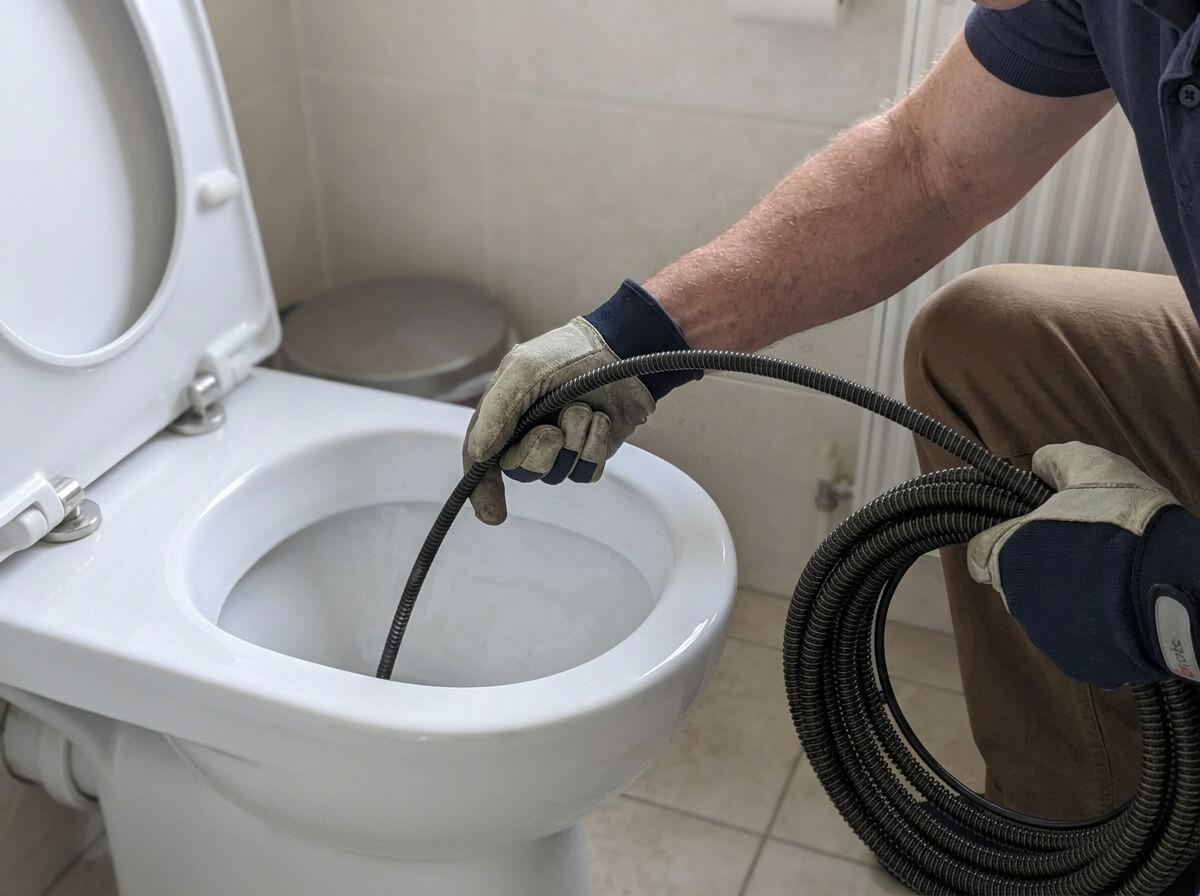
- ✕Wipes, nappies and sanitary products down the toilet. Shelter uses exactly this as its example. Even “flushable” wipes do not break down like paper. When I pull a mat of wipes out of a toilet or drain, I photograph it, and that photo usually settles who pays.
- ✕Fat, oil and food scraps down the kitchen sink. Cooking fat sets hard in the waste pipe. Our guide to why a sink keeps blocking shows what builds up and how to stop it.
- ✕Accidental damage. Drilling through a pipe to hang a shelf, cracking a toilet pan or forcing a seized valve until it snaps.
- ✕Frozen pipes in an empty, unheated home. Many tenancy agreements ask you to keep some heating on in winter or tell the landlord if you will be away. If you switch everything off for a fortnight in January and a pipe splits, you may be asked to contribute.
- ✕Not reporting a slow leak. If you knew about a drip for months and said nothing, and it rotted the floor, part of that damage may come back to you.
Things that are not your fault, and not yours to pay for, include:
- ✓Wear and tear. Washers, fill valves, flush valves, ageing pipework and old joints all wear out with normal use.
- ✓Design and installation faults. A waste pipe with no fall, an undersized soil pipe or a toilet that was badly fitted. If your toilet keeps blocking even with only paper going down it, the problem is usually the toilet or the drain, not you.
- ✓Tree roots, collapsed drains and sewer problems. These are the landlord’s or the water company’s.
- ✓Leaks you reported promptly. Once you have told the landlord, the clock is on them.
If a landlord wants to charge you, they should show you why, ideally with the plumber’s report and photos. If they try to take it from your deposit at the end of the tenancy and you disagree, you can raise a free dispute with the tenancy deposit protection scheme holding it, and they will look at the evidence on both sides.
How Long Does a Landlord Have to Fix Plumbing?
For private renters, the law says repairs must be done within a “reasonable time” of the landlord being told. There is no fixed number of hours, because reasonable depends on how serious the problem is. A burst pipe needs someone the same day. A dripping tap can wait a couple of weeks.
Based on what councils, the courts and the trade generally treat as reasonable, this is what most tenants can expect:
| PROBLEM | URGENCY | WHAT REASONABLE USUALLY LOOKS LIKE |
|---|---|---|
| Water you cannot stop, or a burst pipe | Emergency | Made safe the same day, usually within hours |
| Water coming through a ceiling, light or near electrics | Emergency | Made safe the same day, usually within hours |
| Sewage coming up a drain, bath or shower | Emergency | Same day, and within 24 hours at most |
| Your only toilet blocked or not flushing | Emergency | Within 24 hours |
| No water from any tap (and the street has water) | Emergency | Within 24 hours |
| No heating or hot water in cold weather | Urgent | Within 24 hours, sooner if anyone in the home is elderly, unwell or very young |
| Blocked sink or bath, or a second toilet blocked | Urgent | Within a few working days |
| Dripping tap, slow drain or overflow pipe dripping outside | Routine | Within a few weeks |
Council and housing association tenants
Social housing tenants have firmer timescales. Since 27 October 2025, Awaab’s Law has required social landlords in England to investigate and make safe emergency hazards within 24 hours, and to offer somewhere else to stay if they cannot. Council tenants can also use the Right to Repair scheme, under which a leaking water pipe or a total loss of water is normally a one working day job, as is a toilet that will not flush where it is the only toilet. A blocked sink, bath or basin is normally three working days. Check your own landlord’s repairs policy for the exact list.
Private tenants: what is changing
The Renters’ Rights Act 2025 gives the government power to extend Awaab’s Law to private landlords, with fixed deadlines for hazards. At the time of writing in November 2026, the timescales were still being consulted on and no start date had been set. The government’s Renters’ Rights Act roadmap is the place to check for updates. Until then, “reasonable time” is the test, and for a genuine plumbing emergency that means the same day.
Landlord Not Answering? Out of Hours Plumbing Emergencies
Pipes do not burst to suit office hours. Most of the rented home emergencies I go to happen on a Friday night, a Sunday or a bank holiday, when the letting agent is closed and the landlord is not picking up. Here is the order I suggest:
- ●Check the paperwork first. Your tenancy agreement, the agent’s welcome pack or the landlord’s emails often include an out of hours number, or a named plumber the landlord already uses. Use that first if you can.
- ●Leave a voicemail and send a text and an email. Say it is an emergency, what is happening and that you will need to call a plumber if you do not hear back within, say, an hour. That shows you tried.
- ●Make it safe with the valves. If the stopcock or an isolation valve stops the water and you still have a working toilet, it may be able to wait until the morning. Our guide to what counts as a plumbing emergency helps you decide.
- ●If it cannot wait, call an emergency plumber. Water you cannot stop, water through a ceiling, sewage coming up or your only toilet out of action all justify a call on the night. Ask for a price before they start and ask them to make it safe only.
- ●Pass everything on straight away. Send the landlord the invoice, the plumber’s notes and your photos the same day.
Can I Call My Own Plumber and Take It Off the Rent?
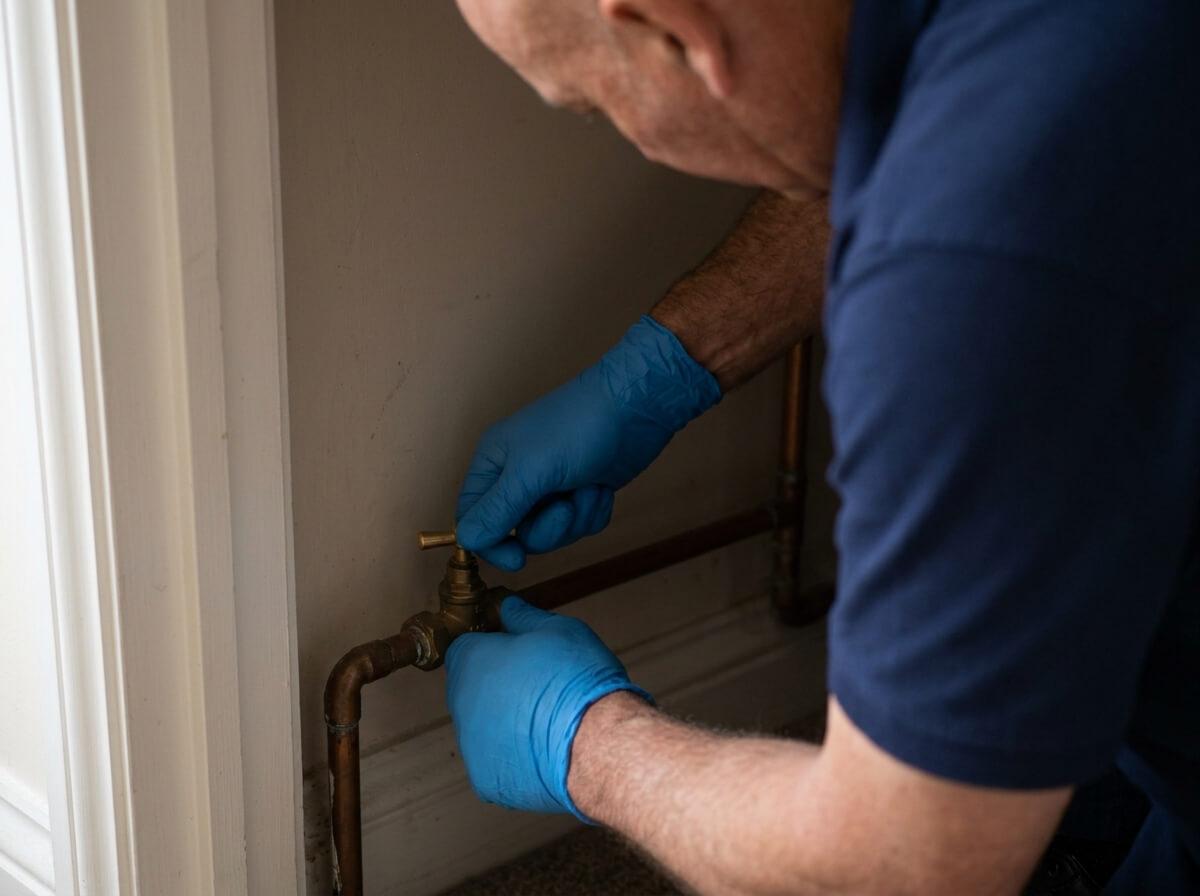
In a genuine emergency, calling a plumber to make the property safe when you cannot reach the landlord is sensible, and most reasonable landlords will repay a fair invoice for that work. Problems tend to start when a tenant goes further: replacing a whole boiler, choosing an expensive permanent repair, or quietly knocking the cost off the rent.
- ✕Do not just stop paying rent. Withholding rent can put you in arrears, and arrears are a ground for possession. It also weakens your position in any dispute.
- ✕Do not commission a big permanent repair without agreement. Make safe now, then let the landlord arrange the proper fix, unless they refuse or ignore you.
- ✓Do keep it to the emergency. Stopping the leak, clearing the blockage, capping a burst pipe or swapping a failed valve is a make-safe. That is easy to justify.
- ✓Do ask the landlord to repay you directly. Send the invoice with your photos and the messages showing you tried to reach them.
There is a formal process for deducting the cost of repairs a landlord has refused to do, but it involves written warnings, quotes and notice periods, and getting it wrong is risky. Speak to Citizens Advice or Shelter before you try it.
What to Do If Your Landlord Will Not Fix a Plumbing Problem
Most landlords want a leak fixed as much as you do, because it is their property getting damaged. Occasionally, though, a repair drags on for weeks. If that happens:
Put it in writing again
Email or write to the landlord or agent. List the problem, when you first reported it, what has happened since and when you expect it fixed. Attach photos. Keep copies of everything.
Use the complaints process
Letting agents in England must belong to a redress scheme, and council or housing association tenants have a formal complaints process, with the Housing Ombudsman behind it.
Contact the council
For private renters in Ipswich, the Ipswich Borough Council private landlords and tenants team follows up complaints about disrepair. Councils can inspect the home and use their powers to make a landlord deal with serious hazards, such as no working toilet, no water or a persistent leak. If you live in another district, contact that council’s private housing team.
Get advice before going further
Citizens Advice, Shelter and a housing solicitor can explain options such as a disrepair claim or the formal repair-and-deduct route.
Many tenants worry that complaining will get them evicted. Since 1 May 2026, the Renters’ Rights Act has abolished section 21 “no fault” evictions for private tenancies in England, so a landlord can no longer simply end a tenancy because you asked for a repair. They now need one of the legal grounds for possession.
Renting a Flat: Leaks From Above and Shared Pipes
Flats add another layer. Water coming through your ceiling is usually from the flat above, a shared pipe in the walls or the roof, and the person responsible for fixing it may not be your landlord at all.
- ●Leak from the flat above: knock on their door and ask them to turn off their stopcock. The repair is for the owner of that flat. Tell your own landlord too, because they need to deal with any damage to your ceiling and walls.
- ●Shared pipes, stacks and tanks: communal soil stacks, rising mains and shared cold water tanks are usually the freeholder’s or managing agent’s responsibility. Your landlord should chase them.
- ●Your belongings: damage to your own things is normally a claim on your own contents insurance, whoever caused the leak.
Our full guide to a water leak from the flat above covers who pays in more detail, and if it is coming through a light fitting, read water leaking from a light fitting before you touch a switch.
Insurance: Whose Policy Pays for the Damage?
The repair and the damage are often paid for by different people. Roughly:
- ●The landlord’s buildings insurance usually covers escape of water damage to the structure, floors, ceilings, kitchen and bathroom, and sometimes the cost of tracing the leak. It does not usually pay for the worn part that failed.
- ●Your contents insurance covers your own belongings: furniture, clothes, electronics. Many tenants do not have it and find out the hard way. It is cheap and worth having.
- ●Tenant’s liability cover, often an add-on to contents insurance, can pay for accidental damage you cause to the landlord’s fixtures, such as a cracked toilet or a drilled pipe.
Insurers want to see that the water was stopped quickly, so the photos and the stopcock step at the top of this guide matter. Our burst pipe insurance claim guide explains what they usually ask for.
For Landlords and Letting Agents: Get Ready Before the Emergency
Most of the expensive rented home callouts I go to could have been smaller with a little preparation. If you let property in and around Ipswich, these are worth doing at the start of every tenancy:
- ✓Show the tenant the stopcock on move-in day, and check it turns. A seized stopcock turns a five minute leak into a flooded flat. If yours is stuck, our guide to a stopcock that is stuck or seized explains the fix.
- ✓Label the isolation valves under the kitchen sink, behind each toilet and by the washing machine.
- ✓Give tenants an out of hours number and a named plumber they can call if you cannot be reached, with an agreed limit they can authorise for a make-safe.
- ✓Explain what can and cannot be flushed, especially in student lets and HMOs where several people share one toilet.
- ✓Winter-proof empty properties. Keep the heating on low between tenancies, lag loft pipes and drain the outside tap. Our frozen pipes guide has the full list.
- ✓Ask for photos and a cause on every invoice. It makes recharging a tenant fair and makes disputes rare.
I work with private landlords and letting agents across Ipswich and East Suffolk on burst pipe repairs, blocked toilets, drain unblocking and leak detection, with a clear written report for the landlord after every job.
Mistakes That Make a Rented Home Emergency Worse
- ✕Waiting for the landlord before turning the water off. Stop the water first, always. Nobody will blame you for that.
- ✕Only telling the agent by phone. Follow every call with a message, so there is a record of when they knew.
- ✕Pouring chemical unblocker into a toilet or sink full of water. It rarely works on a full blockage, it is dangerous for whoever clears it next, and it can damage plastic waste pipes.
- ✕Tidying up before taking photos. Photograph first, then clean up.
- ✕Letting a slow leak go. Small drips under a sink or behind a toilet rot floors and bring down ceilings. Report them early, while they are cheap to fix.
Is the Landlord Responsible for Plumbing? The Key Points
- ●In England, landlords must keep water pipes, drains, toilets, sinks, baths, heating and hot water in repair, whatever the tenancy says.
- ●Tenants pay for damage they cause, such as toilets blocked by wipes or sinks blocked by fat, and must report problems promptly.
- ●In an emergency, stop the water, make the electrics safe, take photos, then report it by phone and in writing.
- ●If nobody answers and water is still escaping, call an emergency plumber to make it safe and send the landlord the invoice.
- ●Do not withhold rent. If repairs are ignored, put it in writing, then contact the council.
- ●Social tenants have a 24 hour rule for emergency hazards. Private tenants should expect a same day response to a real emergency.
Whether you are a tenant with water coming through the ceiling or a landlord who needs a reliable plumber on call, contact PD Parnell Plumbing for a fair price agreed before any work starts.