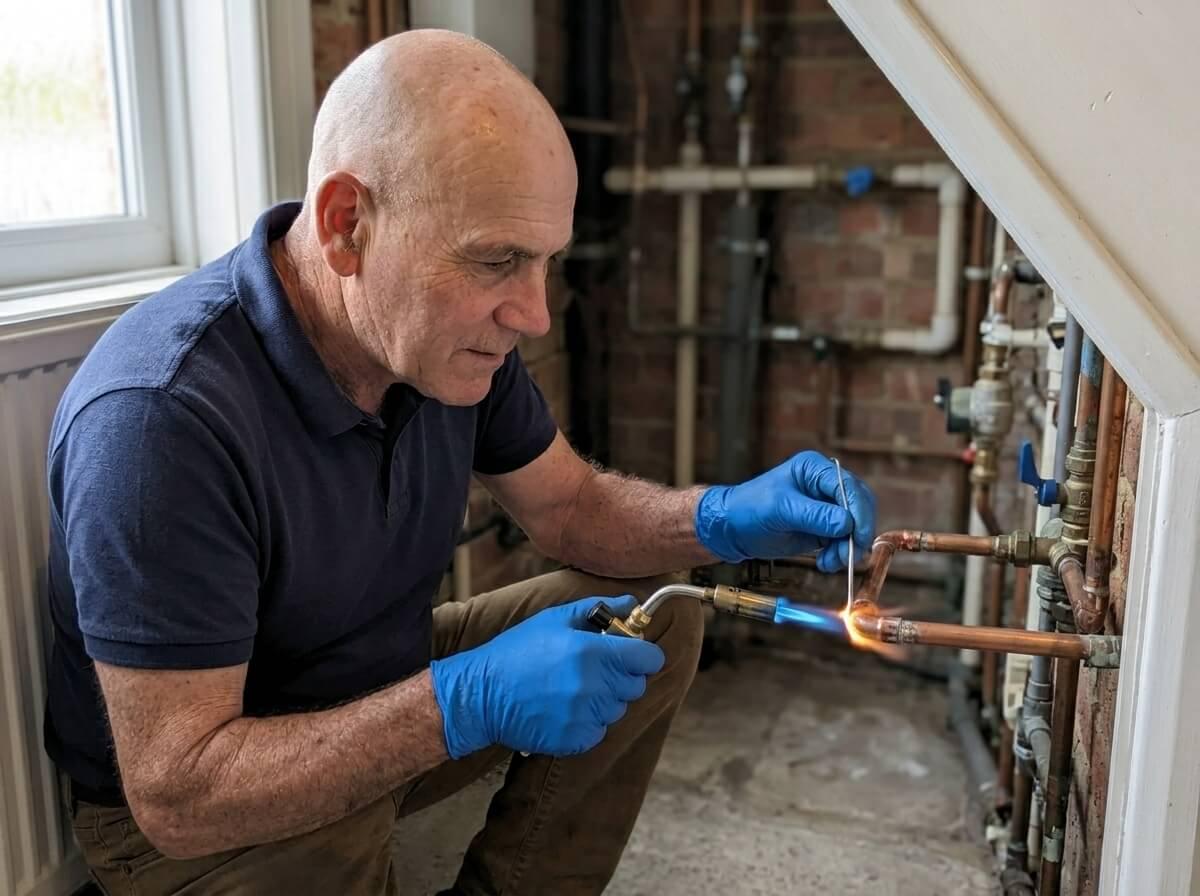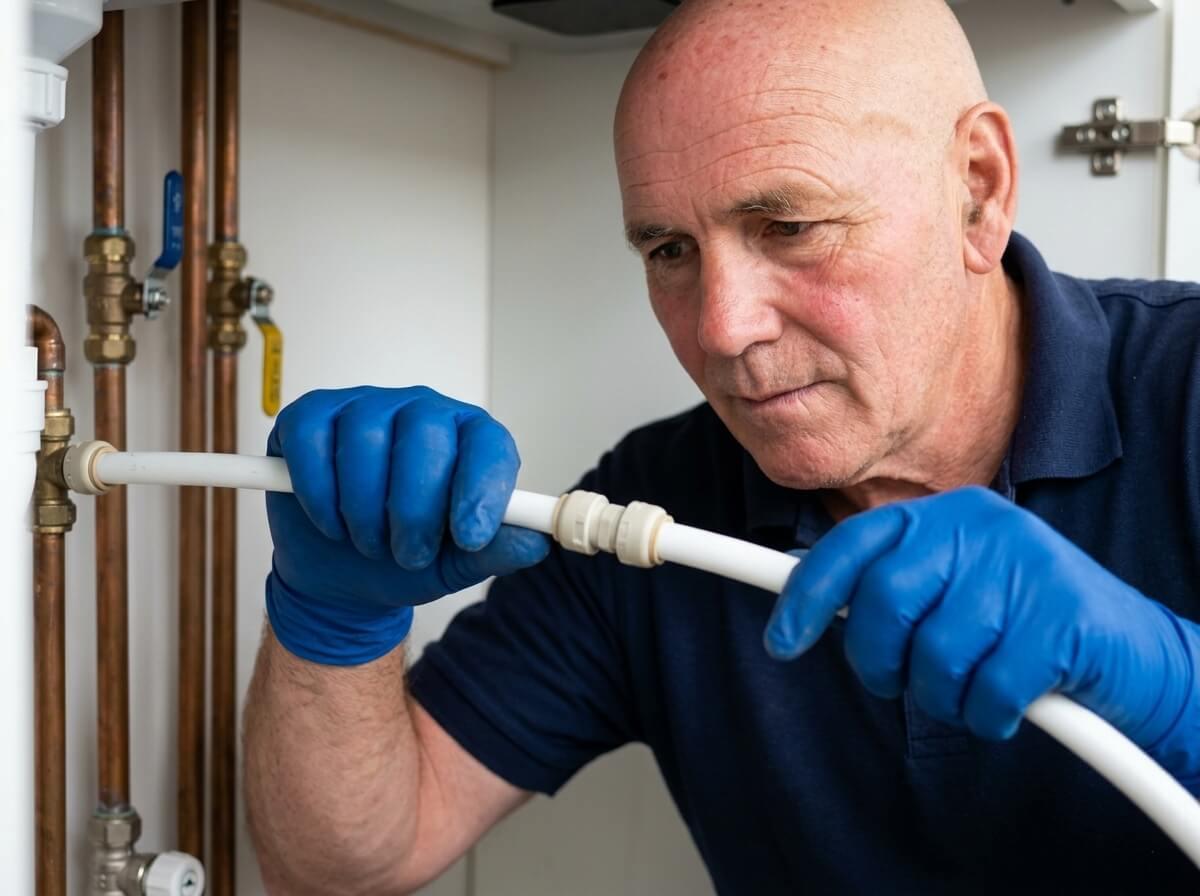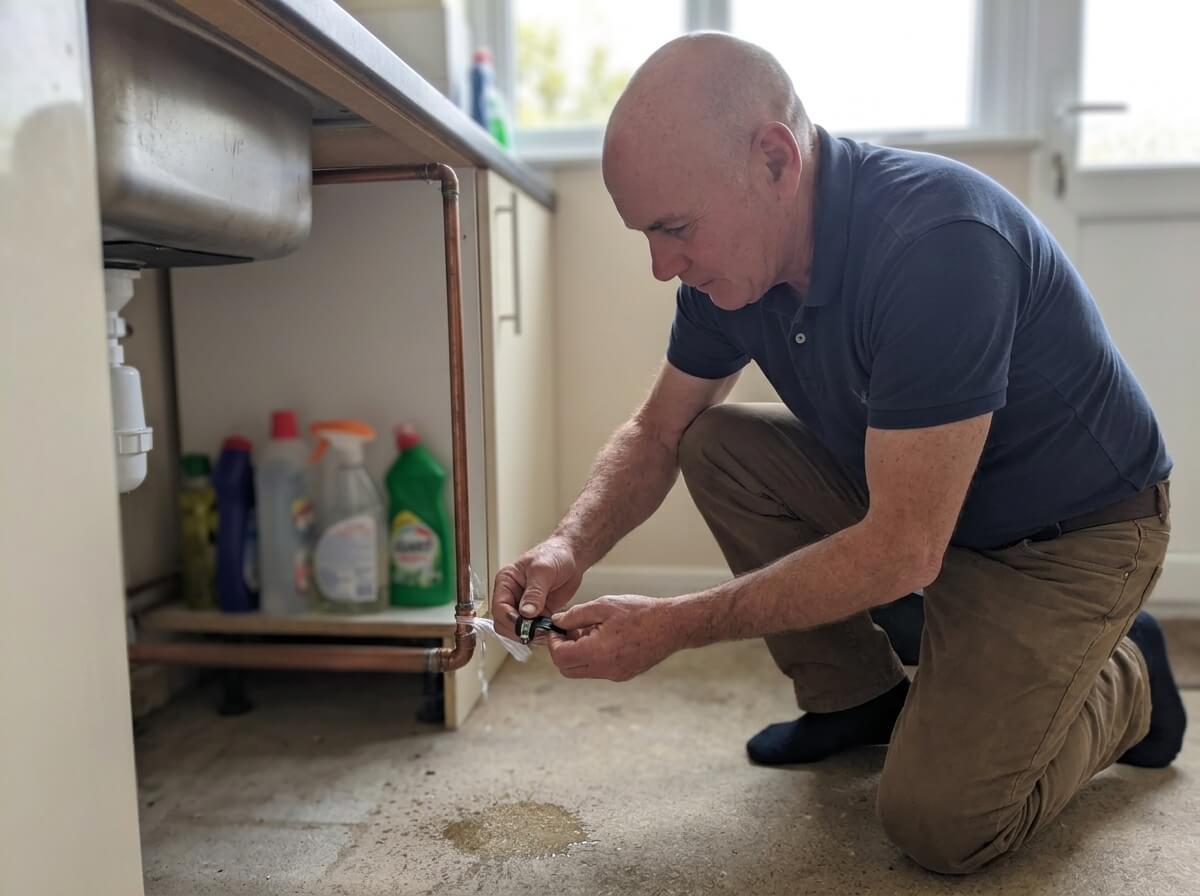
A burst pipe is bad enough on its own. Water is coming through the ceiling, the carpet squelches, and somewhere in the back of your mind a second worry is building: is my insurance going to pay for any of this? Making a burst pipe insurance claim is something most people only do once or twice in their lives, so it is no surprise that nobody knows the rules until they are standing in a wet hallway.
The trouble is that the first hour decides a lot. Throw out the wrong thing, start the wrong repair or wait a fortnight to ring, and a claim that should have been simple gets cut or refused. I have been repairing burst pipes and finding hidden leaks across Ipswich and Suffolk for more than forty years, and I write up the cause for insurers most weeks. This guide is the plumber's side of the story: what to do straight away, what is and is not usually covered, and the evidence that gets claims paid.
Burst Pipe? Do These 5 Things Before You Ring the Insurer
Every policy expects you to limit the damage once you know about it. These steps protect your home first and your claim second, and none of them should take more than a few minutes.
Turn off the water at the stopcock
The main stopcock is usually under the kitchen sink, but it can be under the stairs, in a downstairs toilet, the garage or an airing cupboard. Turn it clockwise until it stops, then open the cold taps to drain the pipes. If you cannot find it, use my guide on how to locate your stopcock. If the leak is on a heating pipe or radiator, turn the boiler off too, because the stopcock does not stop a sealed heating system.
Make the electrics safe
If water is near sockets, light fittings or coming through a ceiling with a light in it, switch off that circuit at the consumer unit, provided the consumer unit itself is dry. If it is wet, do not touch it, keep people out of the room and call for help.
Photograph and film everything before you clear up
Wide shots of each room, close-ups of the leak, the ceiling, the floor, damaged furniture and anything electrical. A short video walking through the house with the date showing on your phone is ideal. Write down your water meter reading if you have one.
Catch the water and save what you can
Buckets under drips, towels along skirting, furniture moved or raised on foil or blocks, rugs lifted. If a ceiling is bulging with water, keep well clear of it. Moving belongings to stop more damage is expected and does not harm a claim, but do not throw anything away yet.
Get an emergency repair and keep the failed part
Call a plumber to stop the leak properly. Ask them to keep the split section of pipe or the failed fitting, photograph the leak before they repair it, and put the cause in writing. My step-by-step guide on what to do when a pipe bursts covers the first few minutes in more detail.
Does Home Insurance Cover Burst Pipes?
In most cases, yes. Almost every UK home insurance policy includes cover for what insurers call escape of water: water that suddenly escapes from a fixed water or heating system inside the home. That covers burst and split pipes, failed joints, leaking tanks and cylinders, radiators, and appliances like washing machines and dishwashers. The Association of British Insurers has its own guidance on burst pipes and water leaks, and escape of water is one of the most common home insurance claims in the country, costing insurers millions of pounds every day.
What catches people out is the difference between the damage and the cause. Insurers pay to put right what the water did. They usually do not pay to fix the thing that leaked, because that is treated as maintenance. So the new ceiling, the replastered wall and the replacement laminate are normally on the claim. The plumber's repair to the pipe is normally on you, unless you also have home emergency cover.
Escape of water is also different from flood. Water coming in from outside, from a river, surface water or a burst water main in the street, falls under flood or storm cover, and water coming through a roof in heavy rain is storm or not covered at all. If you are not sure which one you have, describe what happened to the insurer and let them classify it.
What Insurance Usually Pays For, and What It Does Not
Every policy is worded differently, so treat this as a map rather than a promise. It is based on the policies I see customers claiming on, and the questions loss adjusters ask me on site.
| WHAT WAS DAMAGED OR NEEDED | WHICH COVER | USUALLY | WORTH KNOWING |
|---|---|---|---|
| Ceilings, plaster, walls, floors and screed damaged by the water | Buildings | Usually covered | The heart of an escape of water claim. Includes drying out, stripping out and putting it back. |
| Fitted kitchen, bathroom suite, built-in wardrobes and other fixtures | Buildings | Usually covered | Covered if the water damaged them. Matching panels or tiles can be an issue if the range is discontinued. |
| Carpets, sofas, beds, electricals, clothes and other belongings | Contents | Usually covered | Keep the damaged items until the insurer says you can bin them. Some insurers class fitted carpets as buildings. |
| Finding a hidden leak and opening up a floor, wall or ceiling to reach it | Trace and access | Depends on policy | Included in many buildings policies, an optional extra on others, and usually capped. |
| Repairing the burst pipe, failed fitting or valve itself | Home emergency | Usually not | Treated as maintenance on most buildings policies. Home emergency cover may pay for it up to a limit. |
| Hotel or rented home while the house is dried out and repaired | Buildings or contents | Depends on policy | Most policies include alternative accommodation if the home is not fit to live in, up to a set limit. |
| Damage from a slow leak that has been going on for weeks or months | Excluded | Usually not | Usually refused as gradual damage or wear and tear. Rot, mould and long-term staining are the giveaways. |
| Leaks through failed grout or silicone around a shower or bath | Excluded | Usually not | Most policies exclude failed sealant. A split pipe behind the same shower is a different matter. |
| Frozen pipe that burst while the home was empty and unheated | Check wording | Depends on policy | Unoccupancy clauses often remove cover after 30 or 60 days empty, or if heating conditions were not met. |
| The cost of the water lost through the leak | Check wording | Depends on policy | Some buildings policies cover metered water lost through an escape, up to a small limit. Anglian Water may also offer a leak allowance. |
Is a Burst Pipe a Buildings or Contents Claim?
Often it is both. A simple rule that works for most homes: if it would stay behind when you move house, it is buildings. If you would take it with you, it is contents.
- ●Buildings: ceilings, plasterboard, plaster, floorboards, joists, screed, skirting, doors, the fitted kitchen, bathroom suite, built-in wardrobes, tiling and the pipework itself.
- ●Contents: sofas, beds, rugs, clothes, electricals, books, food in a freezer that defrosted after the electrics were switched off, and in many policies carpets, although some insurers put fitted carpets under buildings.
- ●Both with one insurer: usually one claim, one claims handler and one excess, which is simpler.
- ●Split between insurers: two claims running side by side, two excesses, and two sets of the same photos. Send the same plumber's report to both.
Renting, leasehold flats and leaks from next door
If you rent, the landlord insures the building and you insure your own belongings. Tell the landlord or agent straight away, in writing, because they need to start the buildings claim and get the leak fixed. In a leasehold flat the building is normally insured on one block policy arranged by the freeholder or managing agent, so the claim goes through them, not your own insurer, although your contents policy still covers your things.
When water comes from the flat or house next door, each owner usually claims on their own policy for their own damage. Insurers may then recover costs from each other in the background. Get the neighbour's name and their insurer if you can, and photograph where the water came in. My guide to water leaking through the ceiling covers how to tell whether a leak is yours or upstairs.
Trace and Access Cover: Paying to Find the Leak
A burst pipe spraying from under a sink is easy to find. A leak inside a screed floor, a stud wall or a ceiling void is not, and finding it can take longer than fixing it. That is what trace and access cover is for. It pays towards the cost of tracing a hidden leak, opening up the floor, wall or ceiling to reach it, and making that area good afterwards.
- ●Where to find it: usually in the buildings section of the policy, sometimes called "trace and access" or "tracing a leak". Some policies only offer it as an optional extra.
- ●How much it pays: limits I see on customers' policies are commonly a few thousand pounds up to around ten thousand pounds per claim.
- ●What it does not pay for: the repair to the pipe itself, in most policies, and any leak excluded elsewhere, such as failed sealant.
- ●Why it matters: some policies pay for tracing even when the damage itself is not covered, so it is worth checking before you write off a claim.
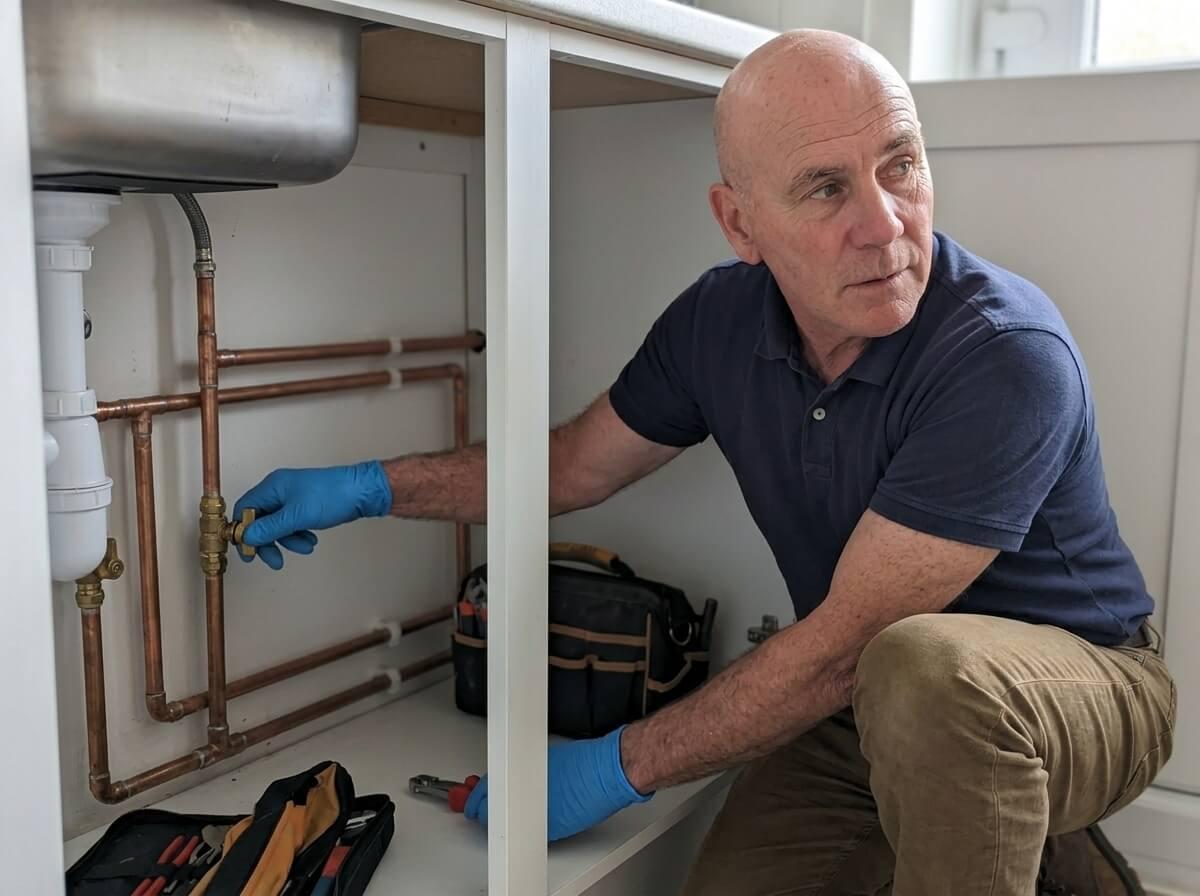
How a plumber finds the leak matters to the insurer, because every square metre of floor or wall opened up has to be put back. On leak detection jobs I start with the water meter and pressure tests to prove which pipe is leaking, then narrow it down before anything is lifted, so the hole is small and in the right place. If you have noticed damp patches, a meter that never stops or a boiler losing pressure but cannot see water, my list of signs of a hidden water leak will help you decide whether to call now.
Home Emergency Cover Is a Different Thing
People often assume their home insurance will send a plumber. Usually it will not. That job belongs to home emergency cover, which is a separate add-on or a standalone policy, often sold with home insurance, with a bank account or by an energy supplier.
| ESCAPE OF WATER (HOME INSURANCE) | HOME EMERGENCY COVER | |
|---|---|---|
| Pays for | The damage the water caused to the building and contents | Call-out, labour and parts to stop the emergency, up to a limit |
| Pipe repair | Usually not | Usually yes, often a temporary repair first |
| Excess | Often higher than the standard policy excess | Often nil or small |
| Who you call | The insurer's claims line | The emergency helpline, which sends its own contractor |
| Using your own plumber | Normally fine for the emergency repair | May not be reimbursed unless the helpline agrees first |
If you have home emergency cover, ring the helpline first and ask how long they will be. If they cannot get someone out quickly and water is pouring through the house, ask them to agree in writing, or by a note on your call, that you can use a local plumber and claim the cost back. Either way, stopping the water quickly is what protects the bigger escape of water claim.
The Escape of Water Excess
Look at your policy schedule and you may find two excess figures: a standard one, and a separate, often higher, one for escape of water. Because these claims are so common and so costly, many insurers set the escape of water excess at several hundred pounds or more. That money comes off what they pay you, once per claim.
Sometimes it is not worth claiming. A small brown ring on a ceiling that needs stain block and a coat of paint, or one damaged rug, can cost less than the excess. Get the leak fixed, get a price for the making good, and compare it with your excess before you decide. Remember that a claim can affect your premium and no-claims discount, and that some insurers want to hear about an incident even if you do not claim, so read the notification section of your wording.
For bigger bursts, the excess is usually a small part of the bill. A soaked ceiling that comes down, wet plaster, a lifted kitchen floor and drying equipment for a few weeks soon runs into thousands. That is exactly what the cover is there for.
Why Burst Pipe Claims Get Turned Down
Most escape of water claims are paid. The ones that are not usually fall into a handful of familiar reasons, and nearly every one of them can be avoided with a bit of knowledge before the leak or quick action after it.
| REASON | WHAT THE INSURER SEES | HOW TO AVOID IT |
|---|---|---|
| Gradual damage or wear and tear | The insurer decides the leak had been seeping for a long time, pointing to rotten timber, old staining, mould or corroded fittings. | Deal with drips, damp patches and falling boiler pressure the week you notice them, not the season after. Get the cause written down by a plumber. |
| You knew about it and did nothing | A neighbour, tenant, past email or earlier repair shows the leak was known about before the damage happened. | If you spot a leak, act and keep the receipt. A dated invoice for a prompt repair is strong evidence in your favour. |
| Home left empty or unheated | The house was unoccupied for longer than the policy allows, or heating and drain-down conditions in winter were not met. | Read the unoccupancy section, tell the insurer before a long absence, keep the heating on low or turn off and drain the water. |
| Failed grout, sealant or a shower tray | Water got past tiles, silicone or the tray edge. Most policies treat that as maintenance, not an escape of water. | Reseal baths and showers when the silicone starts to blacken or lift. Ask the plumber to confirm in writing if it was actually a pipe. |
| Evidence cleared away too soon | Wet carpet skipped, ceiling boarded over or the failed pipe binned before anyone from the insurer could see it. | Photograph everything, keep the failed part and damaged items, and agree with the insurer before permanent repairs start. |
| Late notification | The insurer was told weeks after the event, by which time the damage spread and mould took hold. | Ring the claims line the same day or the next morning, even if you are not sure you will claim. Ask for a reference number. |
| Poor DIY or faulty workmanship | The joint that failed was recently made by someone who was not competent, or a fitting was the wrong type for the pipe. | Use a qualified plumber for changes to pipework, and keep invoices for work done on the system. |
Sudden or gradual: the argument behind most disputes
The biggest grey area is a leak that started slowly and then got much worse. A compression joint can weep for months, then let go. A pinhole in an old copper pipe can drip into a void for a long time before the ceiling shows it. Insurers will often pay for the sudden escape but not for the rot, mould and long-term damage that built up before it. That is why a plumber's honest written view on how long the leak had been running is so important. If it was a fresh failure, say a frost split or a fitting that blew off, the report should say so and say why.
How to Make an Escape of Water Claim, Step by Step
Once the water is off and the emergency repair is done, this is how a typical claim runs. Insurers differ, but the shape is the same.
Ring the claims line and get a reference number
Do it the same day or the next morning. Say it is an escape of water, roughly where and when, and that the leak has been repaired. Ask what they need from you, whether they are sending a loss adjuster or a surveyor, and whether you can start drying out.
Send your evidence pack
The photos and video, the meter reading, a list of damaged items with rough ages and prices, the plumber's report and the itemised invoice. Keep copies of everything you send and a note of every call: date, who you spoke to, what was agreed.
Meet the loss adjuster or surveyor
On bigger claims, someone visits to see the damage, ask how it happened and check the cause. Show them the failed part. If your plumber is happy to speak to them, give the adjuster their number. I am always glad to explain what failed and why.
Drying out
Wet plaster, ceilings and floors have to be dried before anything is put back. The insurer often sends a drying company with dehumidifiers and fans, and they take moisture readings until the building is dry. This commonly takes a few weeks, longer for solid floors.
Strip out and reinstatement
Damaged plasterboard, flooring and units are removed and replaced. The insurer may use its own contractors, or offer a cash settlement so you can use your own. Get your own quotes before accepting a cash figure.
Settlement
Contents are settled by replacement, repair or payment. Check the figure against your list, and question anything that looks short before you accept.
Citizens Advice has a straightforward page on making an insurance claim and what to do if there is a problem, which is worth a read alongside this one.
What Your Plumber's Report Should Say
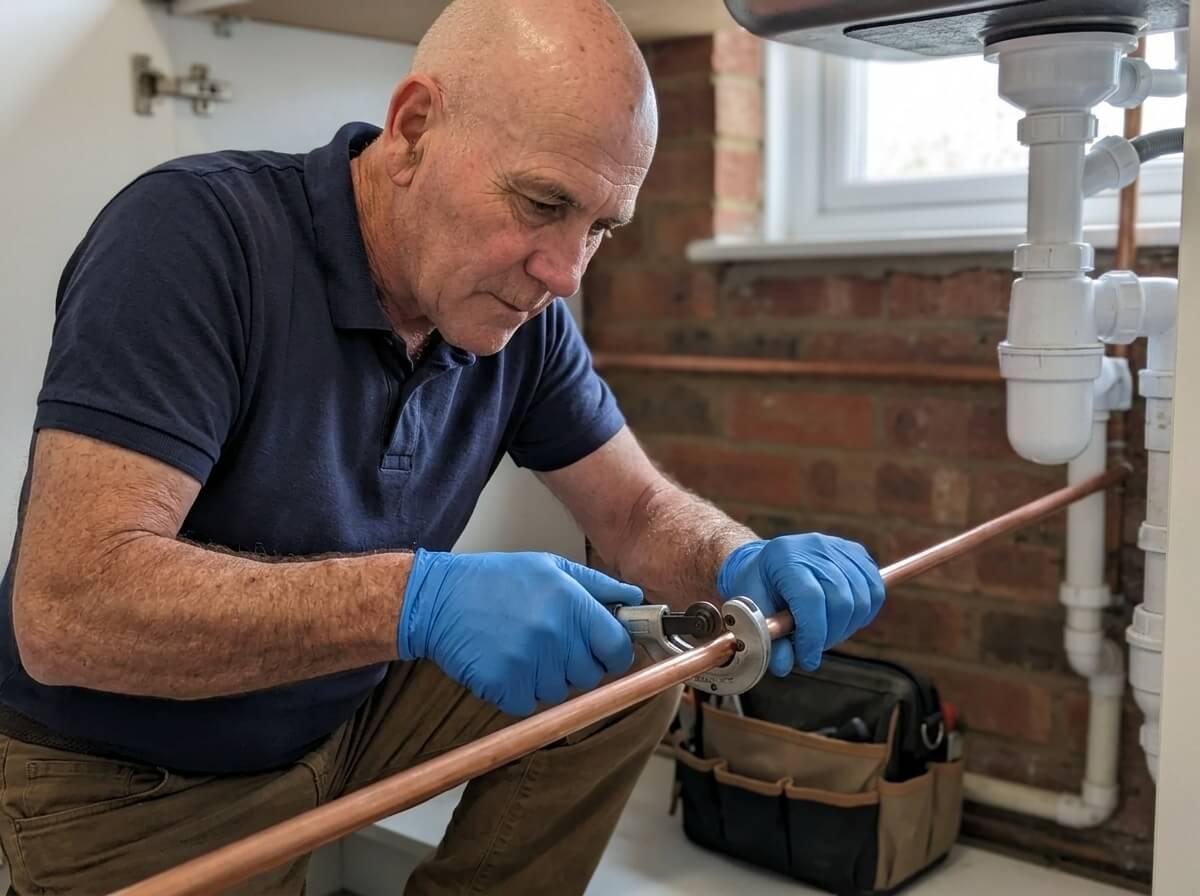
This is the part most guides skip, and in my experience it is the part that makes the biggest difference. A one-line invoice that says "repaired leak, labour and parts" helps nobody. A clear report lets the claims handler tick the boxes they need without sending someone out to find out. Here is what I put in mine, and what you should ask any plumber for:
- ●Date, time and address of the visit, plus who was present.
- ●Exactly where the leak was: which room, which pipe, how deep under the floor or how far into the wall.
- ●What failed, in plain English: a split copper pipe, a pushed-off push-fit joint, a corroded compression olive, a cracked fitting.
- ●Sudden or long-running, and why: a fresh split from frost or a fitting that let go is very different from a joint that has wept for months.
- ●Pipe material and rough age, because insurers often ask whether the system was maintained.
- ●Photos of the leak before repair, the failed part, the access opened up and the finished repair.
- ●What was done and what is still needed, including whether the repair is permanent or temporary.
- ●An itemised invoice that separates finding the leak, getting access, the repair itself and any making good.
Can I Use My Own Plumber for an Insurance Claim?
For the emergency repair, almost always yes. You are expected to stop the leak quickly, and no insurer wants you waiting hours for their contractor while water runs through the house. Keep the invoice and the report, and send them in with the claim.
For the reinstatement work afterwards, the insurer may prefer its own network of builders and decorators, because they have agreed prices. You can usually ask for a cash settlement instead and choose your own trades, but the figure offered is often based on what the insurer would pay its own contractors, so get your own quotes before you agree. If you have home emergency cover, check whether the helpline must authorise a call-out before it is reimbursed.
Whoever you use, check they are qualified and insured. The WaterSafe register of approved plumbers is a good place to start, and my guide on how to find a good plumber in Ipswich has a checklist.
Winter Is Coming: Protect Your Home and Your Claim
Most of the burst pipes I attend happen in a cold snap, or the day it starts to thaw, when ice that split a pipe in a loft or garage melts and the water starts to run. Winter is also when insurers look hardest at whether reasonable precautions were taken. A few minutes now does two jobs: it makes a burst less likely, and it makes a claim much easier to defend if one happens.
- ●Lag exposed pipes: in the loft, garage, outbuildings, under suspended floors and on outside walls. Foam lagging is cheap and quick to fit.
- ●Keep the heating on low: even when you are out or away, rather than letting the house go cold overnight in a freeze.
- ●Isolate and drain the outside tap: a frozen outside tap can split the pipe inside the wall.
- ●Check the stopcock turns: a seized stopcock in an emergency adds minutes and gallons. My guide to a stuck or seized stopcock shows what to do.
- ●Read the unoccupancy clause: many policies limit cover once a home has been empty for 30 or 60 days in a row, and some have winter conditions about heating or draining down. Tell your insurer before a long trip.
My guide on frozen pipes and how to thaw them safely covers what to do if the taps stop running on a cold morning, before anything splits.
Leaks Outside the House and the Water Bill
If the leak is on the underground supply pipe between your boundary and the house, it is usually your pipe and your responsibility, and it falls under the underground services or accidental damage part of a buildings policy, if it is covered at all. The water lost through a leak can also push up a metered bill. Water companies, including Anglian Water here in Suffolk, may give a one-off allowance once a leak on your supply pipe has been repaired promptly, and some insurance policies cover metered water lost through an escape up to a small limit. My guide to a water leak outside the house explains whose pipe is whose.
If Your Insurer Says No
A refusal is frustrating, especially when the water damage is still drying out around you. It is not always the final word, though.
Ask for the reason and the wording in writing
Ask which exclusion or condition the decision relies on, and what evidence they used. Read that clause in your policy yourself.
Check the evidence
If they say the leak was gradual, does the failed part, the photos and the plumber's report agree? An independent written opinion from a plumber on what failed and how long it had been leaking can change the picture.
Make a formal complaint
Write to the insurer, say it is a complaint, set out why you disagree and attach your evidence. They then have up to eight weeks to send a final response.
Go to the Financial Ombudsman
If you are still unhappy, or eight weeks pass without a final response, you can refer it to the Financial Ombudsman Service. It is free, and you normally have six months from the insurer's final response to do it.
Burst Pipe in Ipswich? Call Philip
I cover Ipswich and the villages and towns around it, including Felixstowe, Woodbridge, Kesgrave and the surrounding area, and I answer the phone myself, 24 hours a day, on 07977 857224. For a burst pipe I stop the water, find exactly what failed, make a proper repair, keep the failed part and give you a written report and an itemised invoice that is ready to send to your insurer. You get a fair price agreed before work starts. If you want to know what to expect on the bill, read how much an emergency plumber costs, or see everything I do on the emergency plumbing services page.
To keep it short, the things that matter most are these:
- ●Stopcock off, electrics safe, then photos and video before you clear anything up.
- ●Insurance usually pays for the damage, not for repairing the pipe. Home emergency cover is a separate product.
- ●Check for trace and access cover if the leak is hidden in a floor, wall or ceiling.
- ●Keep the failed part and get a written cause and an itemised invoice from your plumber.
- ●Ring the insurer the same day, and do not start permanent repairs until they have agreed.
When you are ready, get in touch for a free, no-obligation quote or call me now if the water is still running.