Low water pressure is one of those problems that can be completely harmless or the first sign of a pipe pouring water into your floor. Most of the time it is something simple: work in the road, a stopcock that was never opened fully after a new meter went in, or a tap aerator choked with Suffolk limescale. But a sudden drop with no obvious reason can also be a burst pipe under the floorboards or a split in the supply pipe under the garden, and those get worse, and more expensive, every hour.
I have been a plumber in Ipswich for more than forty years, and when somebody rings me about low pressure, I ask the same handful of questions every time: which taps, hot or cold, since when, and are the neighbours the same? The answers point to the cause before I have even picked up a spanner. This guide walks you through those same checks, in the right order, so you know whether to ring the water company, fix it yourself, or get a plumber out.
Water Pressure Suddenly Dropped? Do These 5 Things First
Run the cold kitchen tap
In almost every house, the cold kitchen tap comes straight off the mains before anything else, no tank, no boiler, no cylinder. Turn it fully on. If that is strong, the mains supply to your house is fine and the problem is somewhere in the plumbing after it. If that is weak too, the problem is the supply: the street, your stopcock or your supply pipe.
Ask a neighbour
Knock next door or ask on a local group. If they have lost pressure at the same time, it is almost certainly the water company’s network, a burst main or repair work, and there is nothing to fix in your house. If they are fine, the cause is on your side of the boundary.
Check your water company's incident map
Most water companies show bursts, planned work and supply problems by postcode on their website. In Ipswich and most of the surrounding area that is Anglian Water, but your bill will confirm who supplies you. If there is work listed nearby, it is usually back to normal within hours.
Make sure the stopcock is fully open
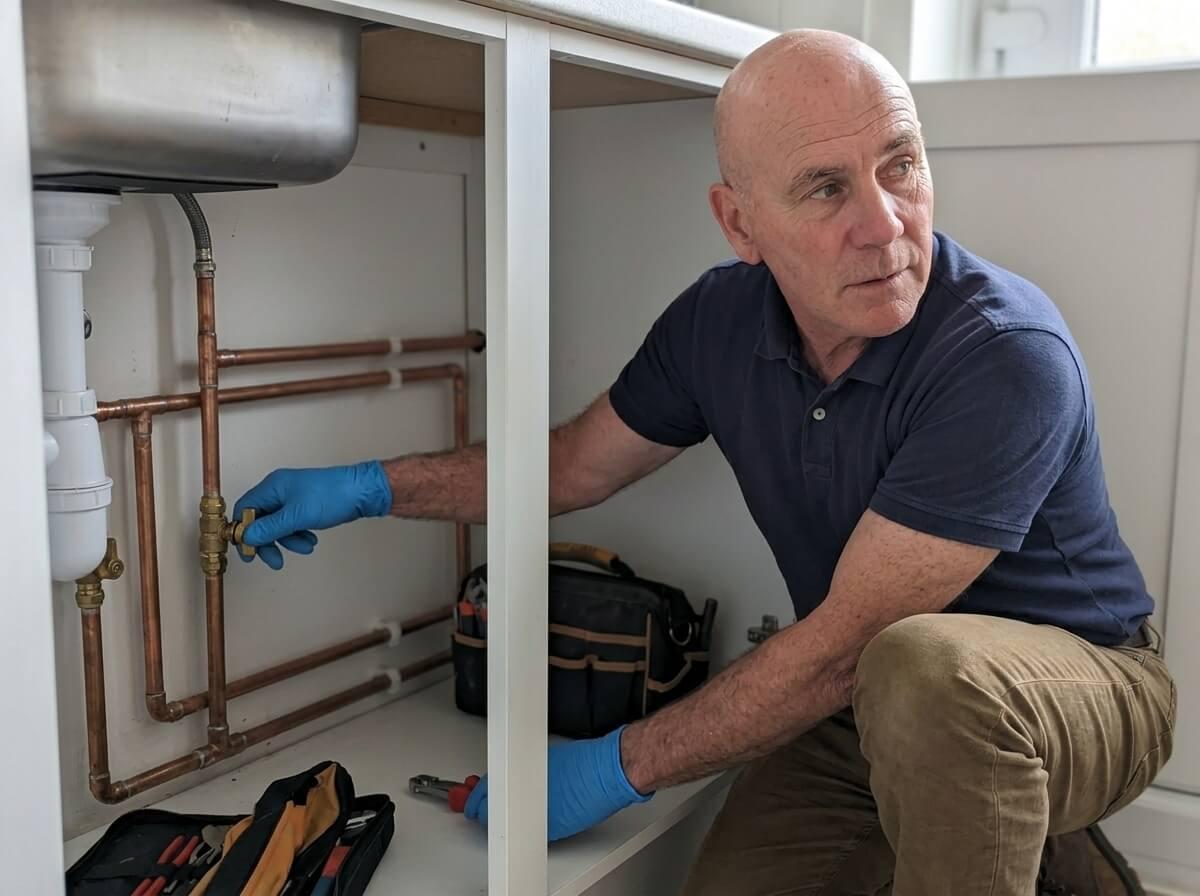
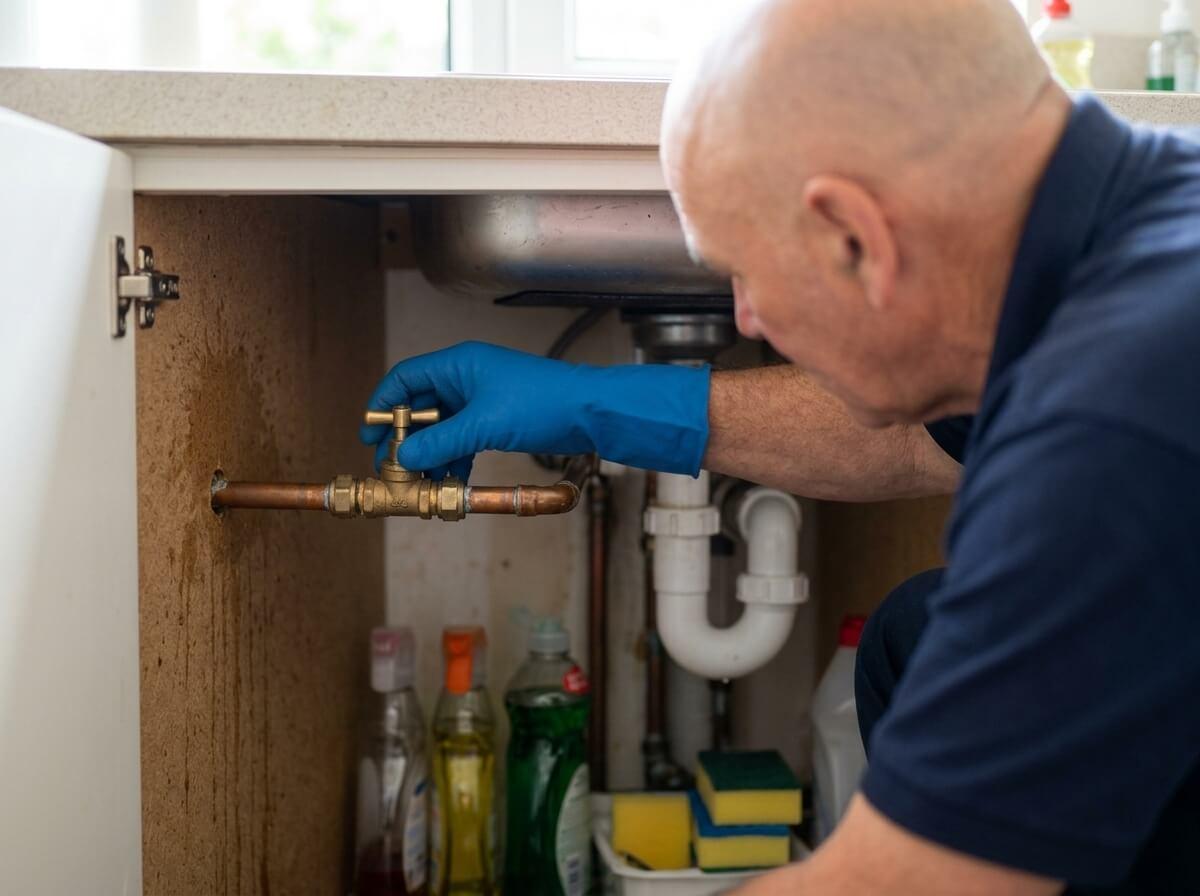
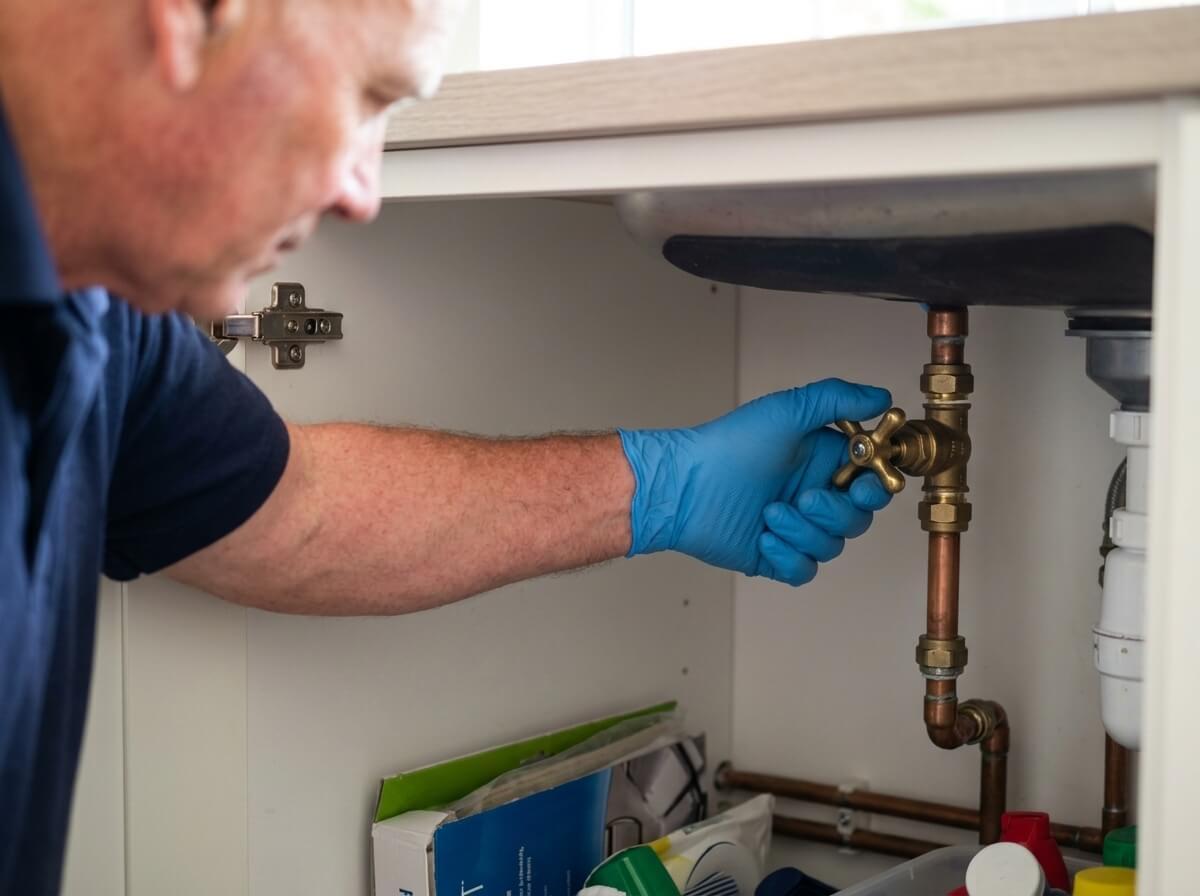
Find your stopcock, usually under the kitchen sink, and turn it anticlockwise until it stops, then back a quarter turn so it does not stick. A stopcock left half closed after a repair, a new meter or a previous emergency is one of the most common causes I see. My guide on how to find your stopcock shows where to look if it is not under the sink.
Listen and look for a leak
With every tap and appliance off, stand in the quiet and listen near the stopcock, the airing cupboard and the floors. A hiss or the sound of running water, a damp patch on a ceiling, wall or floor, or water bubbling up in the garden or drive means water is escaping before it reaches your taps. If you find any of those, turn off the stopcock and call a plumber.
Which Taps Are Weak? Find the Pattern That Matches
Which taps are affected tells you more than anything else. Go round the house and try the cold kitchen tap, a hot tap, an upstairs cold tap and the shower, then find the row below that matches what you found.
| WHAT YOU FIND | IT POINTS TO | DO THIS NEXT |
|---|---|---|
| Whole house weak, neighbours weak too | The water company's network: a burst main, repair work, high demand or a pumping fault | Check your water company's incident map by postcode and report it. Nothing in your house needs fixing. |
| Whole house weak, neighbours fine | Your stopcock or outside stop tap partly closed, a leak on your supply pipe, or an old narrow supply pipe | Open the stopcock fully, do the meter test below, and look for wet ground along the pipe route. |
| Cold kitchen tap strong, hot taps weak | The hot water system: a scaled combi, a cylinder fed from a low tank, an airlock, or an unvented cylinder valve | Check the loft tank is full. On a combi, call a heating engineer. On an unvented cylinder, call a plumber. |
| Cold kitchen tap strong, upstairs cold taps and toilets slow | The cold water tank in the loft: a stuck or furred ball valve, a closed gate valve or a gravity system that was always weak | Look in the loft tank. If it is low or empty, the ball valve that fills it needs attention. |
| One tap or one shower weak, everything else fine | A furred aerator or shower head, a half closed isolating valve, a kinked hose or a worn cartridge | Unscrew and descale the aerator or head. Check the isolating valve slot runs along the pipe. |
| Pressure dropped and you can hear water running | A leak or burst pipe, inside the house or on the supply pipe outside | Turn off the stopcock and call a plumber now. This is the one to treat as an emergency. |
| Pressure low on a frosty morning, no water at some taps | A frozen pipe, usually in the loft, an outside wall, a garage or where the supply comes in | Turn off the stopcock, thaw it gently and watch for a split as it thaws. |
| Pressure dropped straight after work on the supply or a new meter | A stop tap not fully reopened, or grit and scale disturbed into aerators, valves and filters | Open the stopcock fully, clean aerators and ask the water company to check the outside stop tap. |
Is It Low Pressure or Low Flow? The Bucket Test
Pressure is how hard the water is pushed. Flow is how much actually comes out. You notice flow: a shower that dribbles, a bath that takes forever. A house can have reasonable pressure and poor flow if something in the pipe is restricting it, such as a half closed valve, an old narrow lead pipe or a furred up aerator. You can measure flow with nothing more than a bucket and your phone.
Use the cold kitchen tap
It gives you a reading of the mains, without a tank or boiler in the way. Make sure nothing else in the house is using water.
Time how long it takes to fill a 10 litre bucket
Many household buckets have litre marks inside. Turn the tap on fully and start the timer as the water hits the bucket.
Read the result
About a minute or less, so 10 litres a minute or more, is a healthy supply for most homes. Between one and two minutes is on the low side, and a combi boiler or a mains shower may struggle when two taps are on. Two minutes or more, so 5 litres a minute or less, is poor and worth investigating.
If you want an actual pressure reading, a simple pressure gauge that screws onto an outside tap or a washing machine valve costs a few pounds from a plumbers’ merchant. Take the reading with nothing else running. Many homes see somewhere between 1 and 3 bar, but your street, the height of your house and how far you are from the main all make a difference, so the bucket test and how it compares to normal for your house matter more than one number.
Causes of Low Water Pressure in the Whole House
A burst main or work in the street
If the whole street dropped at once, the cause is on the water company’s network. A burst main, a valve being worked on, a pumping station fault or very high demand on a hot evening can all do it. The water may come back cloudy, which is just air and clears in a glass within a minute, or brown, which is disturbed sediment. Run the cold kitchen tap until it runs clear before you use the washing machine or dishwasher. If it stays discoloured, tell the water company.
A stopcock or outside stop tap partly closed
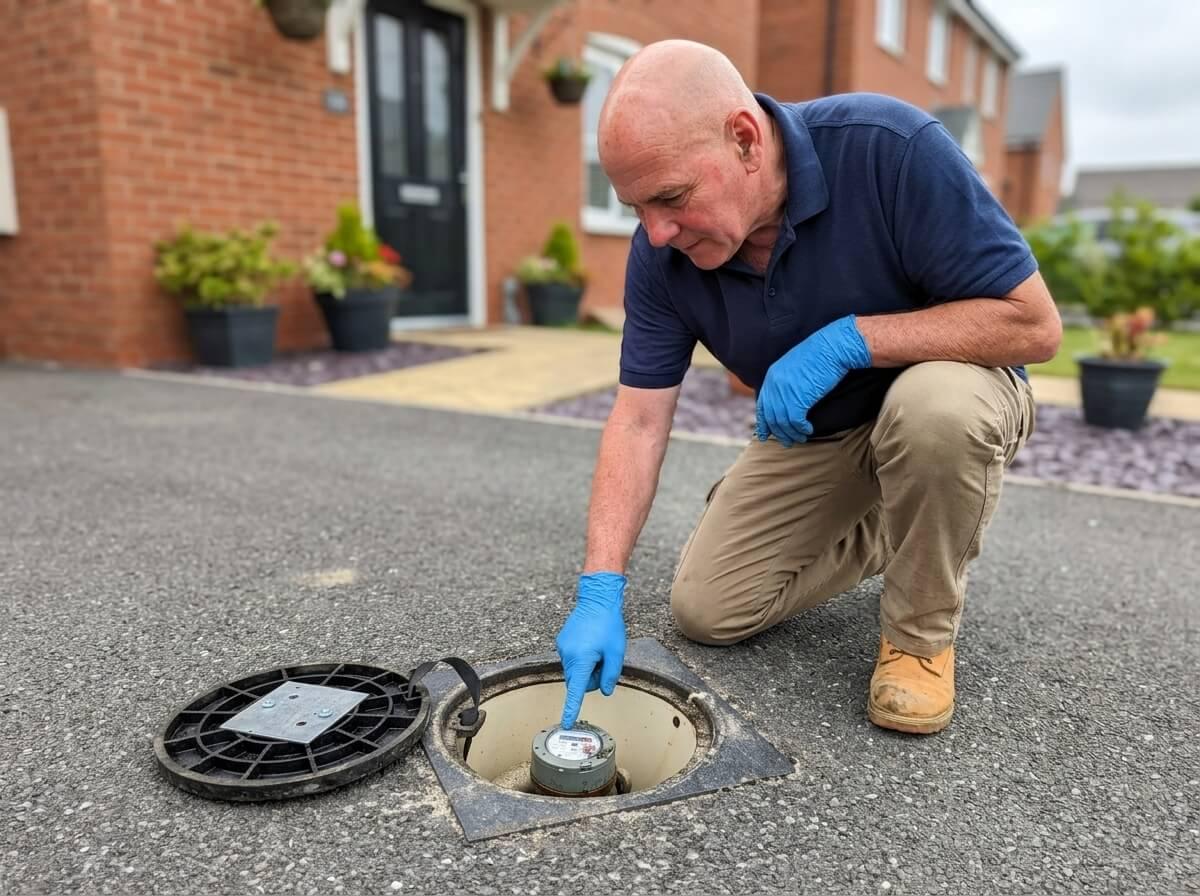
Every time the water is turned off for a repair, a new meter or a kitchen fit, there is a chance the stopcock is not opened fully again. Inside, that is easy to check. Outside, the stop tap is usually under a small cover in the pavement or at the edge of your drive, often in the same chamber as the meter. That one belongs to the water company and needs a special key, so if the inside stopcock is fully open and the pressure dropped straight after they worked on it, ring them and ask them to check it.
A stopcock that is failing inside
Old brass stopcocks have a jumper and washer inside. Over the years the washer can perish and the jumper can stick or partly drop off its seat, so the valve looks fully open but lets only a fraction of the water through. If you turn the handle and the pressure does not change at all, or the stopcock is stiff and weeping round the spindle, it needs replacing. Do not force it with a big wrench. See what to do if your stopcock is stuck or seized before you try.
A leak on your supply pipe
The supply pipe runs underground from the outside stop tap to your stopcock, and in most cases it is the homeowner’s responsibility. A split or a failed joint on it lets water escape into the ground before it reaches the house. The signs are a wet or unusually green strip across the lawn, water seeping up through the drive or path, a soft patch, and a water meter that keeps turning when nothing in the house is on. My guide to a water leak outside your house explains who is responsible for which bit, and many water companies help with the cost of repairing a leaking supply pipe.
A burst or leaking pipe inside the house
A pipe that has split under the floor, in a wall or in the loft can steal a lot of water before you see any sign of it. Pressure drops, the toilet takes longer to refill, and you may hear a faint hiss when everything is quiet. Then a stain appears on a ceiling or skirting. If your pressure has dropped and you have any of the signs of a hidden water leak, do the meter test below today.
A frozen pipe
In a cold snap, a pipe in the loft, an outside wall, a garage or where the supply comes up through the floor can freeze solid or partly freeze, so some taps die and others trickle. Turn off the stopcock before you thaw it, because a frozen pipe has often already split and will only start leaking once the ice melts. My guide on frozen pipes covers how to thaw one safely.
An old lead or iron supply pipe
Plenty of older houses in Ipswich, especially pre war terraces and semis, still have the original lead or galvanised iron supply pipe. These pipes were narrow to start with, and iron furs up inside over the decades. If your pressure has always been poor, gets worse at busy times, and the stopcock and meter are fine, the supply pipe is the likely limit. Replacing it with modern blue plastic pipe makes a big difference to flow, and gets rid of any lead at the same time. Some water companies offer help towards replacing lead supply pipes, so ask yours before you book the work.
The Water Meter Test for a Hidden Leak
If your pressure has dropped and the neighbours are fine, this test tells you in an hour whether water is escaping somewhere. It works whether you are on a meter already or not, as long as you can see one at the boundary.
Turn everything off
Every tap, the washing machine, dishwasher, outside tap, hose and any garden irrigation. Make sure no toilet is still filling and the loft tank, if you have one, has stopped filling.
Read the meter
Lift the cover at the boundary, clear any water or soil out of the way, and photograph the dial. Many meters also have a small red or black star or triangle that spins when water is flowing. If it is spinning now, with everything off, that is a leak.
Wait an hour or two without using any water
Then read it again. If the numbers have moved, water is escaping between the meter and your taps.
Turn off the inside stopcock and test again
If the meter still moves with the inside stopcock off, the leak is on the underground supply pipe between the meter and the house. If it stops, the leak is inside the house.
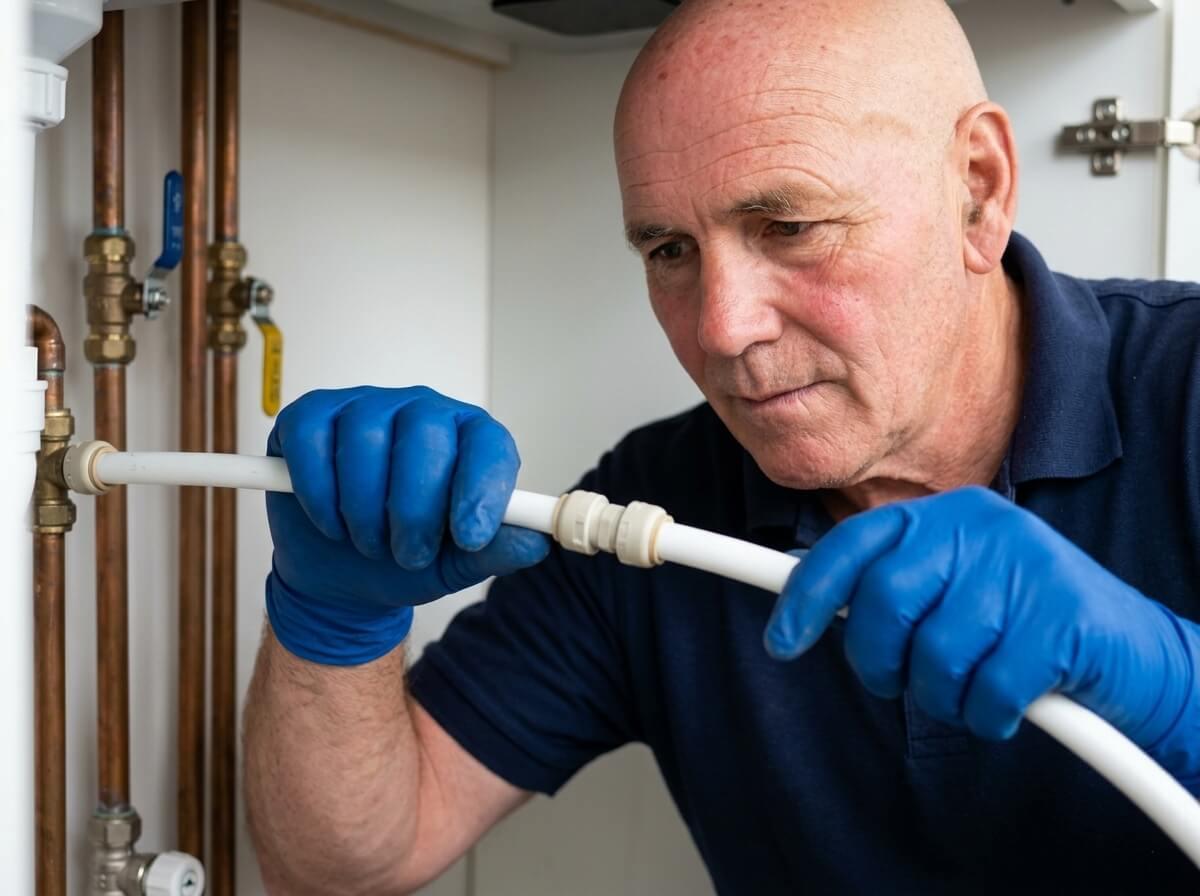
Hot Water Pressure Low but the Cold Is Fine
If the cold kitchen tap is strong but the hot taps are weak, the mains is fine. The problem is in how your house heats and stores hot water. Which system you have makes all the difference.
Combi boiler
A combi heats mains water on demand, so hot pressure should be close to cold. If hot has gone weak and the temperature keeps going up and down, the usual cause in a hard water area like Ipswich is limescale in the plate heat exchanger, or a blocked filter on the cold inlet to the boiler. Both are inside the boiler and need a heating engineer. Check the boiler display for a fault code before you call.
Hot water cylinder with a tank in the loft
A traditional vented cylinder is fed by a cold water tank in the loft, and the hot pressure comes only from the height of that tank. Low hot pressure here usually means the tank is low because the ball valve filling it is stuck or furred, a gate valve on the pipe from the tank has been partly closed, or there is an airlock. Look in the tank. If it is low or empty, that is your answer.
Unvented cylinder
An unvented cylinder runs at mains pressure through a pressure reducing valve, usually with a strainer before it. If that strainer blocks with grit or scale, or the valve starts to fail, the hot taps and any cold taps fed from the same set of controls lose pressure. Unvented cylinders have safety valves and should only be worked on by someone qualified to do so. My guide to a hot water cylinder leaking explains how to tell which type you have.
Low Pressure in One Tap or One Shower
If just one outlet is weak, relax. The rest of the system is fine, and this is usually a ten minute fix.
- ●Furred aerator. The little mesh at the end of the tap spout catches grit and limescale. Unscrew it by hand, or with a cloth and grips, soak it in white vinegar or descaler for an hour, rinse it and screw it back. Some newer taps need a small plastic key.
- ●Shower head full of scale. Unscrew the head from the hose, soak it overnight in descaler, then rub the rubber nozzles with your thumb. In Ipswich’s hard water this is worth doing every couple of months.
- ●Isolating valve half turned. Look under the basin or sink for a small valve on the pipe with a screwdriver slot or a little handle. The slot should run along the pipe. If it is at an angle, somebody has knocked it or left it half closed after a repair.
- ●Kinked tap connector or shower hose. Flexible connectors under modern basins and sinks kink easily when things are pushed into the cupboard. A shower hose hung by its head can kink at the end.
- ●Worn tap cartridge or washer. If the aerator is clean and the valve is open, the tap itself may be the problem. A worn cartridge or a washer that has broken up can block the flow.
One weak shower on a tank fed system can also simply be a gravity shower that never had much pressure to start with. My guide to a leaking shower covers what to do if a shower drips or leaks as well.
Low Water Pressure Causes: Who Fixes It and How Urgent Is It?
Find the row that matches what you have found. The last two columns show who usually fixes it and how quickly it needs dealing with.
| CAUSE | SIGNS | WHO FIXES IT | URGENCY |
|---|---|---|---|
| Burst pipe or leak inside the house | Water running sound, wet ceiling, wall or floor, meter turning with everything off. | Usually a plumber | Act today |
| Leak on your supply pipe outside | Wet or green strip in the lawn, water rising in the drive, meter turning, neighbours fine. | Usually a plumber | Act today |
| Burst main or work in the street | Neighbours affected too, sudden drop, sometimes cloudy or brown water. | Your water company | Act today |
| Frozen pipe | Cold snap, some taps dead, frost on a pipe, toilet not refilling. | Usually a plumber | Act today |
| Stopcock or outside stop tap partly closed | Started after work on the water or a new meter. Everything weak. | Often a DIY fix | Fix when you can |
| Stopcock seized or failing inside | Will not open fully, handle turns but nothing changes, weeps at the spindle. | Usually a plumber | Within days |
| Old lead or iron supply pipe | Always been weak, worse at busy times. Common in older Ipswich terraces. | Usually a plumber | Within days |
| Scaled combi heat exchanger or inlet filter | Hot weak, cold fine, hot water temperature up and down. | Heating engineer | Within days |
| Unvented cylinder pressure reducing valve or strainer | Hot and cold weak on the cylinder side, kitchen tap fine. | Usually a plumber | Within days |
| Loft tank ball valve stuck or furred | Upstairs taps, bath and toilet slow to fill. Tank low. | Usually a plumber | Within days |
| Furred aerator or shower head | One outlet weak or spraying sideways. | Often a DIY fix | Fix when you can |
| Isolating valve half closed or kinked hose | One tap, shower or appliance weak after a repair or a clear out. | Often a DIY fix | Fix when you can |
Your Rights: Minimum Pressure and Compensation
Water companies in England and Wales have to meet a minimum standard for pressure under the Guaranteed Standards Scheme. It is measured at the boundary, usually at the outside stop valve, and the minimum is 7 metres head, about 0.7 bar. If pressure falls below that twice, each time for more than an hour, within 28 days, you may be entitled to an automatic payment. The Consumer Council for Water says customers in England can also be entitled to a further payment where low pressure is ongoing. Payments are not made where the drop was caused by necessary work on the network or by drought, and the amounts are reviewed, so check the current figures with your water company or the Consumer Council for Water.
This only covers the water company’s side of the boundary. If the cause is your stopcock, your supply pipe or the plumbing in the house, it is yours to fix. That is why it is worth doing the neighbour check and the meter test before you call anyone: you will know straight away who to ring.
Can You Increase Your Water Pressure?
Start by taking away anything that is holding it back: open the stopcock fully, descale aerators and shower heads, straighten hoses, fix any leak and check the loft tank is filling. That alone sorts a lot of homes. If the mains itself is weak, the options are:
- ●Replace an old supply pipe. Swapping an old lead or iron pipe for a modern, wider plastic one is often the single biggest improvement, and it is a one off job.
- ●A shower pump on a tank fed system. On a gravity system, a pump fitted after the cylinder and tank can transform the shower. It must be the right type for the system.
- ●An accumulator or boosted supply. Where the flow is fine at quiet times but drops at peak times, a storage accumulator can bank water to help. Under the water fittings regulations, a pump that draws more than 12 litres a minute directly from the mains needs the water company’s consent, so get advice before you buy anything.
What Not to Do
- ✕Do not ignore a sudden drop with a hissing sound. That is very often a leak, and the water is going somewhere.
- ✕Do not force a stiff stopcock with a long wrench. Old stopcocks snap at the spindle, and then you cannot turn the water off at all.
- ✕Do not open the water company's outside stop tap yourself. It is their valve, it needs a special key, and some are fragile.
- ✕Do not fit a pump straight onto the mains without checking. It can break the rules and pull pressure from your neighbours.
- ✕Do not take the casing off a boiler. Low hot water pressure on a combi is a job for a heating engineer.
- ✕Do not run the washing machine on brown water. Wait until the cold tap runs clear, or you risk stained washing.
- ✕Do not thaw a frozen pipe with the stopcock on. If it has split, it will flood the moment the ice melts.
Is Low Water Pressure an Emergency?
Turn off the stopcock and call a plumber straight away, day or night, if:
- ●The pressure dropped suddenly and you can hear water running with everything off.
- ●A ceiling, wall or floor is wet, stained or bulging.
- ●Water is coming through a light fitting or near any electrics.
- ●Water is bubbling up in the garden, drive or path and the neighbours are fine.
- ●The meter keeps spinning with every tap and appliance off.
- ●A pipe has split after a frost.
- ●Your stopcock is seized or broken and you cannot stop the water.
If the whole street is affected, it is a job for the water company, not a plumber. If one tap is weak, or the pressure has always been a bit poor, book it in for a normal day. If you are not sure, ring me and tell me what you have found. I will tell you honestly whether it can wait until morning. You can also read what affects the cost of an emergency plumber.
Renting, Flats and Shared Supplies
If you rent, the water supply and the pipes are usually the landlord’s responsibility. Do the neighbour check, make sure the stopcock is fully open, and report the problem to your landlord or agent in writing, mentioning any signs of a leak. In flats and some older terraces, several homes can share one supply pipe, so a leak or blockage on it affects everyone, and the responsibility is usually shared between the owners. If several flats in a block lost pressure at the same time but the street is fine, tell the managing agent.
Low Water Pressure in Ipswich? Call Philip
If your pressure has dropped and you think water is escaping somewhere, your stopcock will not open fully, or you just cannot work out why the shower has gone to a trickle, call me. I check the stopcock and supply first, test for a leak properly before anything comes apart, and carry stopcocks, valves, pipe and fittings on the van, so many jobs are sorted on the first visit. You will get a clear, fair price agreed before I start, and for a bigger job like a new supply pipe, a free, no-obligation quote.
I cover Ipswich, Felixstowe, Woodbridge, Kesgrave, Stowmarket and the surrounding towns, and I answer the phone myself, 24 hours a day, seven days a week, on 07977 857224. If you cannot see where the water is going, our leak detection service will find it. If a pipe has split, our burst pipe repair page explains what happens next. Or see everything else on the emergency plumbing services page.