A burst pipe is one of the most stressful things that can happen in a home, and it is also one of the most damaging if you do not act fast. In over forty years as an emergency plumber in Ipswich, I have seen the full range, from a pinhole spray that quietly rotted a floor for months to a full rupture that brought a ceiling down in under an hour. The good news is that the first few minutes are entirely in your hands, and what you do in that time makes an enormous difference to the damage and the cost. This guide takes you through exactly what to do, step by step, then explains why pipes burst, how to prevent the next one, and what a proper repair involves. Read it now so the sequence is in your head before you ever need it.
Why Speed Matters in the First Five Minutes
When a pipe fails, water escapes at mains pressure, typically three to four bar, or around 40 to 60 PSI. That is enough to empty a startling volume of water into your home very quickly, and water does not stay where it lands. It runs along floor joists, tracks down electrical cables, and pools above ceilings until the plasterboard gives way. A leak that starts in a bedroom can drip out of a downstairs light fitting ten feet away. This is why the priority is not mopping up or finding buckets, it is stopping the water at source and making the situation safe. Everything else can wait until the flow has stopped.
Step 1: Kill the Source (The Stopcock)
You cannot manage a burst pipe until you stop the pressure pushing water into your property. Finding the rising main and shutting off the supply is your only priority in these first moments.
Finding Your Internal Stop Tap
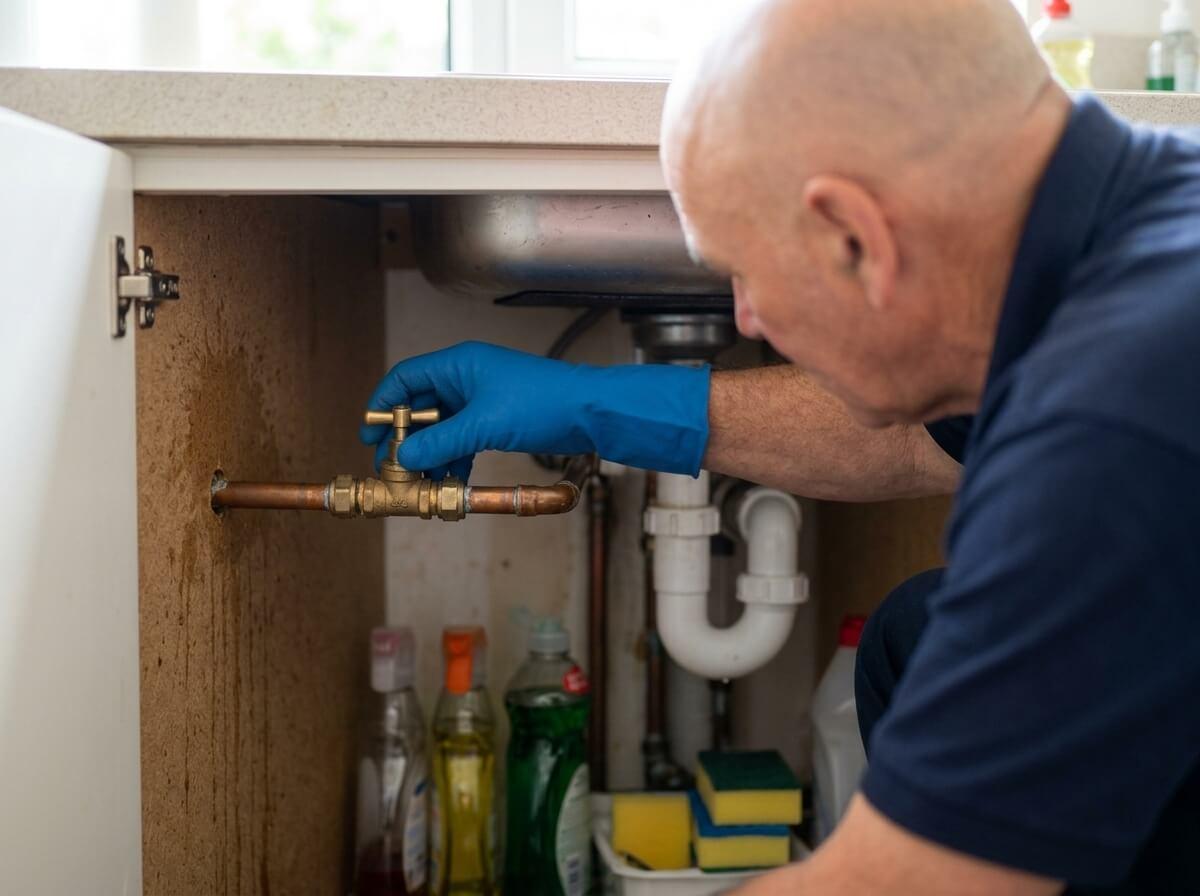
Most modern homes keep the stopcock under the kitchen sink. In many of the older terraced properties I visit across Ipswich, you might instead find it in the hallway, under the stairs, or even under a floorboard near the front door. Check these common spots if it is not under the sink: behind a removable panel in the kitchen or utility room; inside a cupboard in the downstairs bathroom; near the hot water cylinder in the airing cupboard; or low down on a wall in the garage. Turn it firmly clockwise to close. If you want the full rundown of hiding places, I have written a companion guide on how to locate your stopcock fast.
If Your Stopcock is Seized by Limescale
Suffolk is a notoriously hard-water area, and over years of sitting idle, limescale builds up and seizes the valve. If the handle feels rigid, do not reach for a hammer or a heavy wrench, forcing it often snaps the head off and creates a second leak you cannot control. Apply a spray of penetrating oil such as WD-40, wait a moment for it to soak into the threads, and try to move the handle gently back and forth. If it still will not budge, move straight to the external valve.
Using the External Valve as a Failsafe
If your internal tap fails, head outside. Look for a small plastic or metal cover on the pavement or in your front garden, this is your external stop tap or water meter box. Lift the lid and reach down to the valve. Most need a stopcock key, but you can often turn them by hand or with pliers. Turn it clockwise to stop the water before it even enters your home. If you cannot find or operate this valve, call me on 07977 857224 and I will talk you through it.
Step 2: Isolate Electrical Hazards
Water conducts electricity through your walls and ceilings long before it reaches the floor, and structural saturation often reaches electrical conduits first. That makes a burst pipe a genuine fire and shock risk, not just a water problem.
When to Trip the Main Switch
Locate your consumer unit, the fuse box, and find the large Main Switch or RCD. Flip it to OFF immediately if water is leaking anywhere near light fittings, sockets or appliances. If you have to walk through standing water to reach it, wear rubber-soled shoes. If the consumer unit itself is wet, or you hear buzzing coming from it, stay well away and call a qualified electrician after you have called me.
Signs Water Has Reached Your Electrics
Watch for flickering lights or a faint smell like burning plastic, which can mean water has already breached your electrical system. Avoid touching metal surfaces such as radiators or pipework if you suspect the water is live, because electricity can track through the damp structure of your home. And never try to drip-test a wet light fitting with your hand, water travels along joists and cables, so a fitting can be live even if the leak is in another room. Isolate the power at the source first, every time.
Step 3: Depressurise the System
Closing the stopcock stops the pressure from the street, but it does not empty the water already inside your home. Gravity will keep pushing that standing water through the hole in your pipe until you drain the system manually.
The Order of Tap-Opening
Open your cold taps starting at the lowest point of the house, usually the kitchen or an outside tap, and work your way up to the highest floor, opening every tap as you go. This breaks the vacuum in the pipework and lets air in, so the remaining water flows out of the taps into your drains instead of through the burst. Open the hot taps too, to empty the hot water cylinder, but make sure your central heating and immersion heater are switched off first, because empty pipes cannot protect heating elements from burning out.
The Tank-Fed Trap
Many properties in the older parts of Ipswich rely on a cold water storage tank in the loft. If your burst is on a pipe fed by this tank, closing the main stopcock will not stop the water straight away, the tank holds dozens of gallons that will keep feeding the leak until it empties. In that case, find the gate valve on the pipe coming out of the loft tank and close it to isolate that supply, or simply drain the tank down through the taps as described above. Knowing whether your home is mains-fed (direct, high pressure, stops quickly when the stopcock is closed) or tank-fed (indirect, gravity-based, keeps running until the tank empties) tells you what to expect in those first minutes.
Step 4: Damage Triage and the Nail Trick
Controlled drainage prevents a full ceiling collapse. One square metre of saturated plasterboard can weigh over 50kg, which is a serious hazard for anyone standing beneath it.
Preventing a Ceiling Collapse
If you see a bulge or bubble forming in a ceiling, water is pooling behind the plasterboard and you must relieve the pressure before the whole sheet comes down. Place a bucket directly under the centre of the bulge, then use a small nail or a screwdriver to poke a single pilot hole into the middle of the wet patch. This directs the water into the bucket in a controlled stream and usually saves the rest of the ceiling. It feels counter-intuitive to make a hole in your own ceiling, but a small hole you control is far better than a collapse you do not.
Documenting for Insurance: the Photo Checklist
Before you move any furniture or start cleaning up, take clear photographs. Your insurer needs evidence of where the damage started and how far it spread. Photograph: the exact spot where the pipe burst; any saturated ceilings, walls and floorboards; damaged furniture, electronics and belongings; and a clear shot of your water meter reading. Good photos taken early make an insurance claim far smoother and can be the difference between a claim being paid in full or disputed.
Assessing the Severity of the Leak
It helps to know how serious the leak is, both for your own sense of urgency and so you can describe it accurately when you call for help. A pinhole leak shows as a fine mist or tiny spray and does slow, hidden damage over time. A joint failure produces a steady stream or heavy drip and moderate, spreading saturation. A full rupture is rushing, gushing water and an immediate catastrophe. Telling me which of these you are dealing with when you call lets me bring the right parts and give you the most accurate advice while I am on my way.
Step 5: Professional Emergency Burst Pipe Repair
Managing the flood is only half the job. You still need a permanent repair to restore your water supply and make sure the pipework can handle mains pressure safely again.
Why DIY Fixes Usually Fail
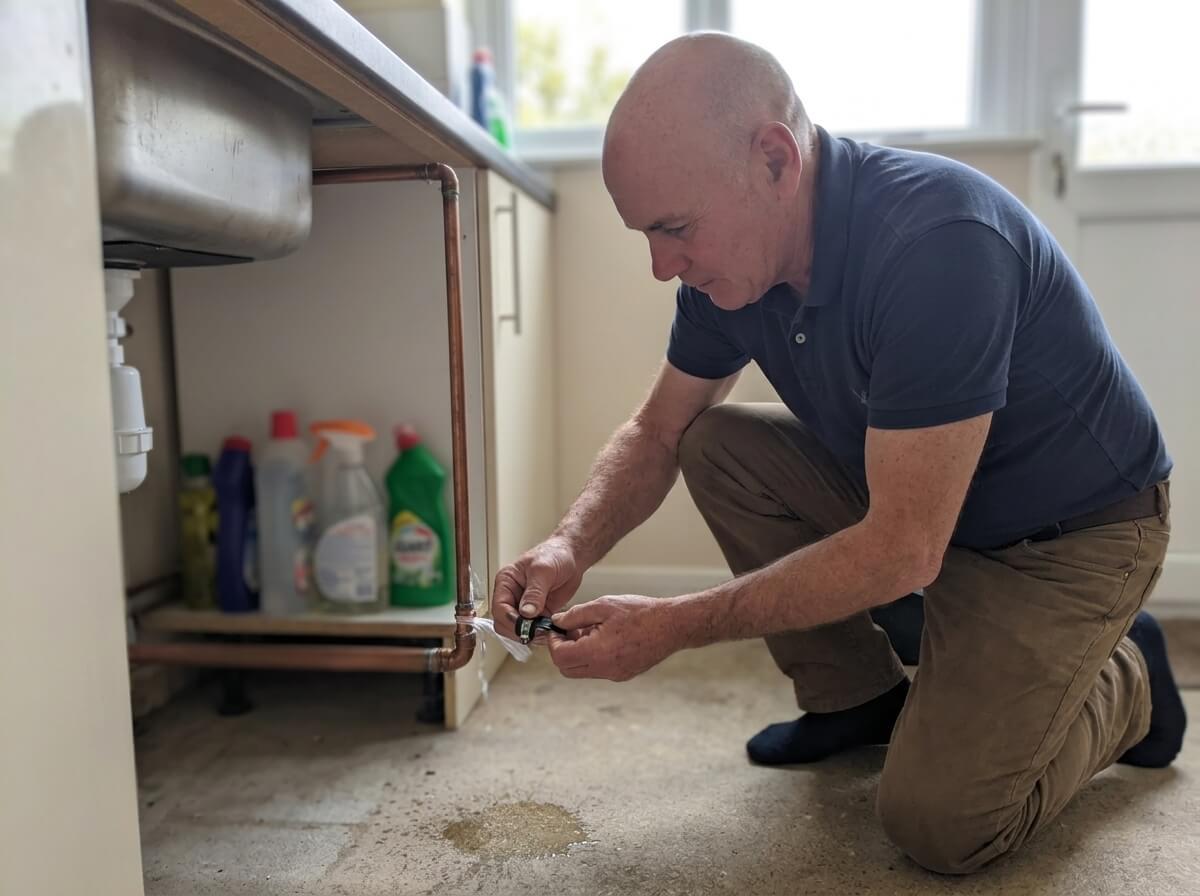
Shop-bought repair tapes, putties and clamps rarely work as a long-term fix. UK mains pressure of three to four bar is strong enough to push straight through most temporary wraps, and they often fail the moment you turn the stopcock back on, leaving you dealing with the same burst hours later. They can be useful to buy a little time, but they are not a repair. I always recommend a proper mechanical or soldered repair to avoid a second flood.
What a Proper Repair Involves
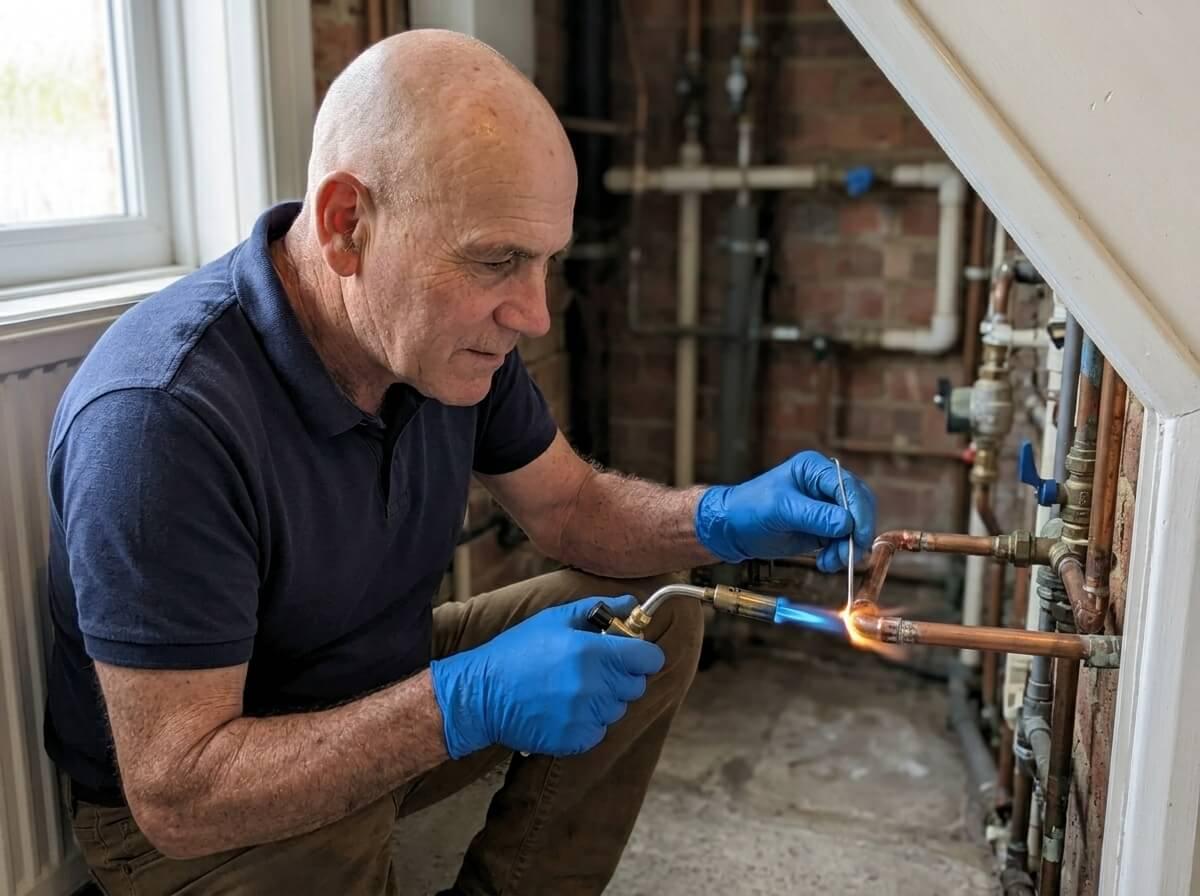
When I repair a burst, I start by cutting away the ruptured section back to clean, sound pipe. I then fit new copper or high-density plastic fittings to match your system, soldering or crimping the joints to create a permanent, watertight seal. Once the repair is made, I carry out a full pressure test on the line to confirm it is sound, and I check the system for airlocks that can damage your boiler or cause noisy water hammer in the walls. The aim is always a repair that lasts, not a patch that fails again.
Preventing a Repeat
While I am there, I look at why the pipe failed and what can stop it happening again. I check the insulation on exposed pipes, especially in cold spots like lofts, garages and outbuildings, because proper foam lagging stops water freezing and expanding in winter. If your home has excessively high water pressure, I can fit a Pressure Reducing Valve (PRV) at the main entry point to regulate the force of the water and protect your joints, taps and appliances from constant stress.
Common Causes of Burst Pipes in Suffolk Homes
Understanding why pipes burst helps you prevent the next one. In Ipswich and across Suffolk, the causes I see most often are: frost damage, where water freezes and expands in exposed pipes over winter and splits them, with the burst often only discovered when it thaws; corrosion in older copper and iron pipework, common in the county’s many period properties; persistently high mains pressure, which stresses joints and fittings until one fails; failed flexible hoses under sinks and behind washing machines and dishwashers, which have a limited service life and can let go without warning; physical damage, such as a nail or screw driven through a concealed pipe during DIY; and the gradual toll of limescale in our hard water, which weakens valves and fittings over the years. Frost and failed flexible hoses are, by some distance, the two I am called out for most.
How to Prevent Burst Pipes
A little prevention goes a long way, and most of it is straightforward:
- ●Lag exposed pipes with foam insulation, especially in lofts, garages, outbuildings and against external walls, this is the single most effective defence against winter bursts.
- ●In cold snaps, keep your heating ticking over at a low temperature even when you are out, so pipes do not freeze.
- ●Know where your stopcock is and check once or twice a year that it still turns, so you can act fast if the worst happens.
- ●Replace ageing flexible hoses under sinks and behind appliances before they fail, they are cheap and easy to renew.
- ●If your water pressure is very high, have a Pressure Reducing Valve fitted to take the strain off your pipework.
- ●If you are going away in winter, either leave the heating on low or drain the system down and turn off the stopcock.
- ●Deal with small leaks and damp patches promptly, they are often the early warning of a joint that is about to fail.
None of these is expensive, and together they dramatically cut the risk of a burst, and the misery and cost that come with it.
What Burst Pipe Repair Costs and How Insurance Works
The cost of repairing a burst depends on where the pipe is, how accessible it is, and what the repair involves. A straightforward repair to an accessible pipe is at the lower end; a burst that is hard to reach, or a longer corroded section that needs replacing, takes more time. Emergency and out-of-hours call-outs are charged at a higher rate reflecting the urgency, but you will always get a clear quote before I start any work, even in the middle of the night. On insurance: most standard buildings policies focus on the damage the water causes rather than the repair of the pipe itself. Cover for tracing the leak and repairing damaged flooring and ceilings is common, while the plumber’s bill for the pipe repair is often only covered if you have a specific Home Emergency add-on. I provide itemised invoices that separate leak detection from the repair, which helps your insurer process a claim, and I am happy to explain the technical details of the failure to your claims handler.
Call Your Emergency Plumber in Ipswich
A burst pipe is frightening, but if you stop the water, make the situation safe and call for help quickly, most bursts are very recoverable. If you are dealing with one now, or you want the reassurance of a number saved for when you might, call me. At PD Parnell Plumbing I provide a genuine 24-hour emergency service across Ipswich and Suffolk, answer the phone personally, and aim to be with you within around thirty minutes locally. I will give you clear advice over the phone while you shut things down, then carry out a proper, pressure-tested repair and help you prevent the next one. Call 07977 857224, day or night, 365 days a year.