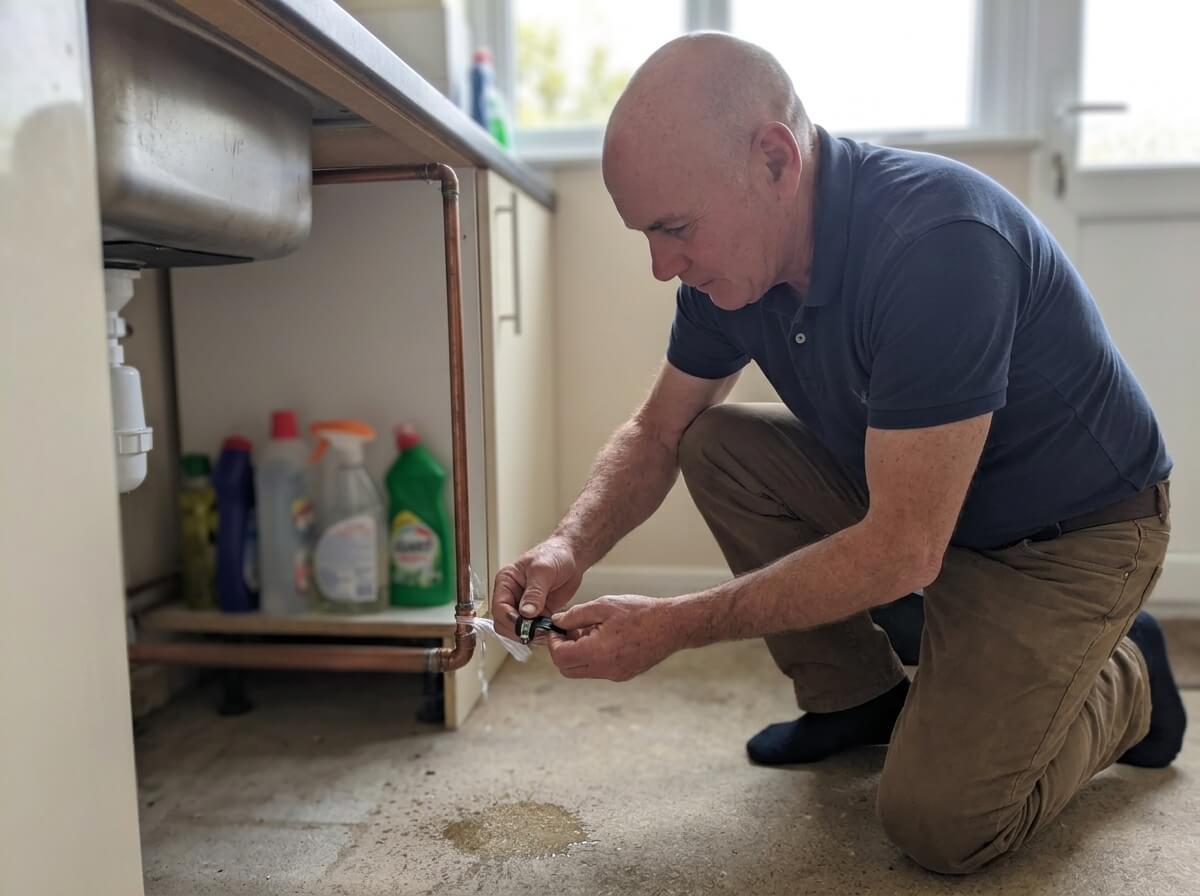
A burst flexi hose does not drip. It sprays. One minute you are making a cup of tea, the next there is water pouring out of the cupboard under the sink, across the kitchen floor and, if you are upstairs, through the ceiling of the room below.
It is frightening, and it happens fast: a burst 15mm supply at normal mains pressure can let out well over 10 litres a minute. The good news is that you can usually stop it yourself in under a minute if you know where to reach. This guide covers exactly that, followed by the bit most people never think about until it is too late: how to tell when a hose is about to fail, and what to replace it with.
Burst Flexi Hose? Do These 6 Things Now
Read this list once, then act. Speed matters more than getting every step perfect.
Turn off the isolation valve on that hose
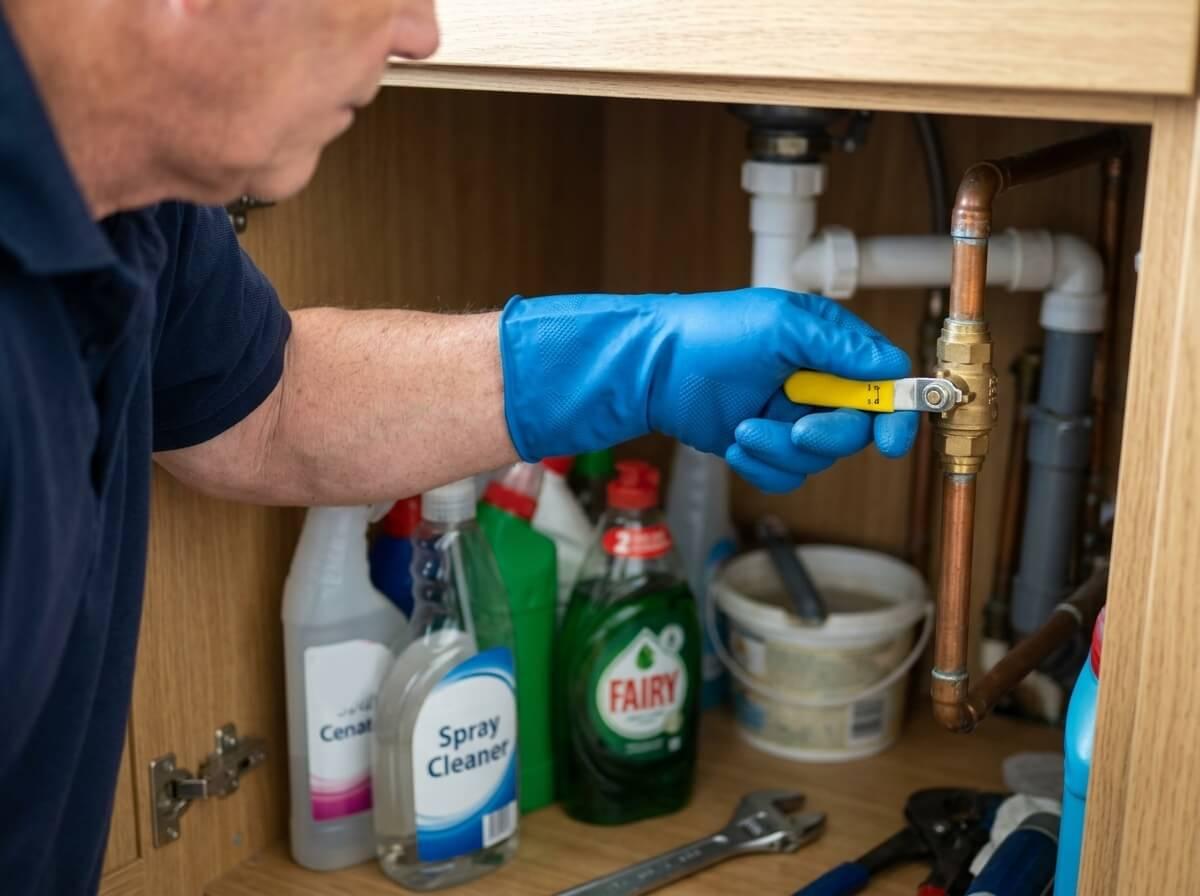
Look at the copper or plastic pipe just before the hose. Most have a small isolation valve with a screwdriver slot or a little yellow or blue lever. Turn it a quarter turn so the slot or lever sits across the pipe, not along it. A coin or butter knife will turn the slot type. Our guide to the isolation valve shows what they look like.
No valve, or it will not move? Turn off the stopcock
The main stopcock is usually under the kitchen sink, often right next to the burst. Turn it clockwise until it stops. If it is somewhere else, our guide on how to locate your stopcock covers the usual hiding places. If it is stiff, do not force it with a long spanner: see what to do when a stopcock is stuck.
Make the electrics safe
Water and sockets do not mix, and kitchen cupboards are full of both. If water has reached a socket, an extension lead, the dishwasher or the washing machine, do not touch them. Switch them off at the consumer unit with dry hands instead.
Drain the pressure
Once the water is off, open the cold kitchen tap to empty what is left in the pipe. If the hot hose burst and your hot water comes from a cylinder fed by a tank in the loft, the stopcock alone will not stop it: close the valve on the cold feed pipe into the cylinder in the airing cupboard as well, then run the hot taps.
Contain the water
Towels along the cupboard base and doorways, a bucket under the hose, and get anything valuable off the floor. If water is coming through a ceiling, follow our guide on water leaking through the ceiling, especially if it is near a light fitting.
Photograph everything, keep the hose, then call
Take photos of the hose, the cupboard and the damage before you clear up. Keep the failed hose: your insurer may want to see it. Then call a plumber to fit a new hose and get your water back on.
What Is a Flexi Hose, and Where Are They in Your Home?
A flexi hose (also called a flexible tap connector, flexi tail or braided hose) is a rubber tube wrapped in a woven stainless steel braid, with a brass nut crimped onto each end. The rubber lining carries the water. The braid stops the rubber ballooning and splitting under mains pressure, which in most Ipswich homes sits somewhere around 2 to 4 bar.
They are cheap, quick to fit and forgiving of slightly misaligned pipes, which is why almost every tap, toilet and appliance fitted in the last twenty years uses at least one. Most houses we visit have six to ten of them, and most homeowners do not know where half of them are.
| WHERE | WHAT IT FEEDS | WHAT TO WATCH FOR |
|---|---|---|
| Under the kitchen sink | The kitchen mixer tap (hot and cold), sometimes a filter tap or boiling water tap | Bleach and cleaning sprays stored next to the hoses, and boxes shoved against them |
| Under bathroom basins | Basin taps, often hidden inside a vanity unit or behind a pedestal | Tight bends where a long hose has been squashed into a small space |
| Behind or inside the toilet | The cistern fill valve. In wall-hung and back-to-wall toilets, it is behind the panel | Concealed cisterns: a burst here can run unseen into the wall, floor and ceiling below |
| Behind the washing machine and dishwasher | The appliance inlet hose, screwed onto a valve on the supply pipe | Hoses crushed or kinked when the machine is pushed back, and valves left on for years |
| Shower valves and bath taps | Some bar mixers, bath fillers and pumps are connected with short flexi tails | Inaccessible behind bath panels and boxing, so a slow leak goes unnoticed for weeks |
| Under a combi boiler | The braided filling loop used to top up the heating system pressure | Left connected and both valves open, it is a flexi hose under constant pressure |
Why Flexi Hoses Burst: 8 Common Causes
Flexi hoses rarely fail for no reason. When I pull a burst one out of a cupboard, one or more of these is nearly always to blame.
1. Age and a perished rubber lining
The rubber inside slowly hardens and cracks with years of pressure and hot water. Many manufacturers give a five year warranty, which tells you roughly when they expect wear to start. A hose that has been in for ten years or more is living on borrowed time, even if it looks fine from the outside.
2. Corrosion from cleaning products
This is the one most people never suspect. Bleach, toilet cleaner and some sprays give off chlorine fumes in a closed cupboard, and chlorine attacks stainless steel braid. The strands rust, snap, and the lining bulges through the gap. If your hoses look brown or spotty and you keep cleaning products under the sink, that is why.
3. Kinked or tightly bent hoses
Hoses should run in a gentle curve. A hose that is too long gets folded into a tight loop, and one bent sharply right next to the crimped end puts all the stress on the weakest point. The lining cracks at the bend.
4. Twisted or over-tightened when fitted
If a hose is twisted as the nut is done up, it stays wound like a spring and the braid works loose over time. Over-tightening crushes the washer and stresses the crimp. Hand tight plus a quarter to half turn with a spanner is plenty for most tap connectors.
5. Too short and under tension
The opposite problem. A hose stretched between the tap and the valve pulls on the crimp every time the tap is used or the cupboard is knocked. Crimp failures are among the most common bursts I attend.
6. Cheap, unapproved hoses
Some very cheap hoses sold online use thin braid, poor rubber and weak crimps. They often fail within a few years. Use hoses with WRAS approval, which shows the product has been tested as suitable for use on the drinking water supply.
7. Pressure spikes and water hammer
If your pipes bang when a tap or the washing machine shuts off, each bang is a pressure spike travelling through every hose in the house. Over years that fatigues the lining. Our guide to banging pipes explains the causes and the fixes.
8. Knocks in a cluttered cupboard
Bin caddies, boxes of dishwasher tablets and heavy bottles get pushed hard against the hoses every day. Washing machines are shoved back against their inlet hose. A little space around the hoses goes a long way.
Warning Signs a Flexi Hose Is About to Fail
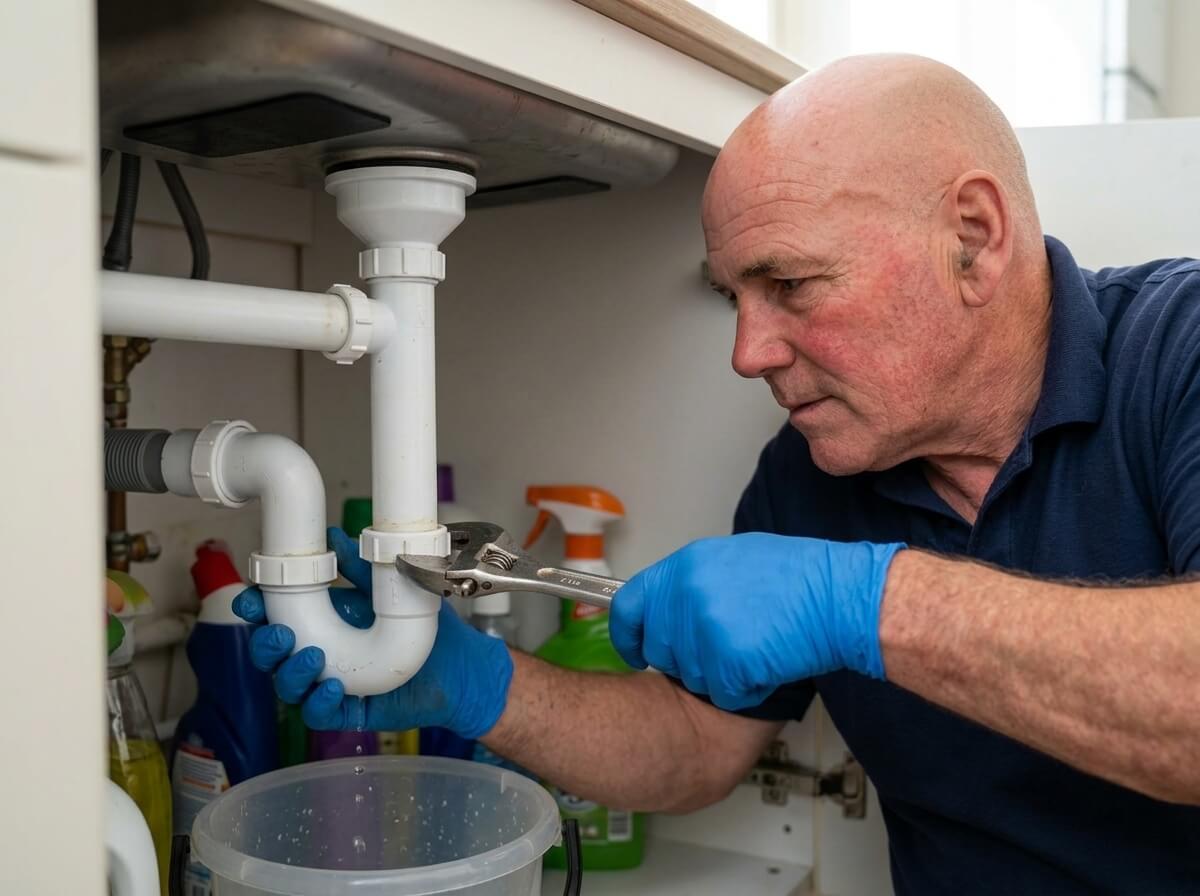
The best time to deal with a flexi hose is the year before it bursts. Most give some warning if you know what to look for. Clear the cupboard, use a torch, and run a dry piece of kitchen roll along each hose and each end.
| WHAT YOU SEE | WHAT IT MEANS | WHAT TO DO |
|---|---|---|
| Rust spots, brown staining or a dull, discoloured braid | The stainless steel braid is corroding, usually from cleaning product fumes | Replace soon. The braid is what holds the rubber lining together under pressure |
| Broken, frayed or springy loose strands | The braid has started to fail and the inner lining is losing its support | Replace now and leave the isolation valve off until you do |
| A bulge, lump or swelling anywhere along the hose | The rubber lining has split and is pushing through the braid | Turn it off at the isolation valve straight away. This is the stage before a burst |
| A sharp kink or a hose bent almost double | The lining is stressed at the bend and will crack there first | Replace with the correct length so it can sit in a gentle curve |
| Damp, weeping or green and white crust at the crimped ends | The crimp (ferrule) that holds the braid to the nut is letting go | Replace. The crimp is the most common failure point and cannot be repaired |
| Damp at the nut only, braid and crimp dry | A washer or olive problem in the joint, not a hose failure | Turn the water off, remake the joint with a new washer, then test |
| Swollen, stained or soft cupboard base | A slow leak has been running for some time | Dry the cupboard, find the source with dry tissue, and replace whatever is weeping |
A bulge is the most urgent sign of all. It means the lining has already split and only the braid is holding the water in. Turn that hose off at its isolation valve today, even if it means going without that tap until it is replaced.
How Long Do Flexi Hoses Last?
There is no fixed expiry date, but in my experience these are realistic figures for hoses that were decent quality and correctly fitted in the first place.
| HOSE | TYPICAL LIFE | HOW OFTEN TO CHECK |
|---|---|---|
| Kitchen and basin tap hoses | Around 5 to 10 years | Once a year, and whenever you clear out the cupboard |
| Toilet fill valve hoses | Around 5 to 10 years | Once a year where you can see them. Concealed ones whenever the panel is off |
| Washing machine and dishwasher inlet hoses | Around 5 years | Every time the machine is pulled out, and replace with any new machine |
| Cheap unbranded or unapproved hoses | As little as 2 to 3 years | Replace with an approved hose rather than waiting |
| Combi boiler filling loop | Varies | Close both valves after topping up and do not leave it under pressure |
A simple rule: check every hose once a year, and replace any that are over ten years old, whatever they look like. If you do not know how old they are, which is the case in most houses that have changed hands, treat them as old. Some hoses have a date stamped on the crimp or a coloured tag. If yours do, take a photo for your records.
Ipswich has hard water, and limescale is not kind to the small isolation valves next to each hose. A valve that has not been turned for years can seize or start weeping when you finally need it. Turning each one off and on again once a year, when you check the hoses, keeps them free.
Leaking Flexi Hose: Braid, Nut or Crimp?
Not every wet hose is a failed hose. Where the water is coming from tells you whether it is a five minute fix or a replacement. Dry everything, turn the tap on, and hold dry tissue against each point in turn.
- ●Wet at the nut on the tap end: usually a missing, perished or pinched fibre or rubber washer inside the nut. Turn the water off, undo it, fit a new washer and do it up again without forcing it.
- ●Wet at the nut on the pipe end: usually a compression olive that has not seated, or a joint that has been disturbed. Check the pipe end is cut square and clean and the olive sits straight. A quarter turn tighter is sometimes all it needs.
- ✕Wet at the crimped metal sleeve: the hose has failed where the braid joins the fitting. No repair is possible. Replace it.
- ✕Wet through the braid itself: the lining has split. Replace it, and turn it off until you do.
- ●Dry hose, but water on the cupboard base: look higher. The tap body, the seal under the tap or the waste pipe are common culprits. Our guide to a leak under the sink walks through each one.
Can You Replace a Flexi Hose Yourself?
If you are reasonably handy and there is a working isolation valve, yes. Replacing a basin or toilet hose is one of the more manageable plumbing jobs. Kitchen monobloc taps are harder, because the tails screw into the underside of the tap in a cramped space, and you may need to loosen the tap to reach them.
Getting the right hose
- ●Pipe end: 15mm compression is standard for most taps and toilets. Some cisterns and appliances use 22mm or 3/4 inch.
- ●Tap end: 1/2 inch BSP female for most basin and bath taps and toilet fill valves. Monobloc kitchen and basin taps often use M10 threaded tails instead.
- ●Length: long enough to sit in a gentle curve with no stretch, short enough that it does not need folding. Measure before you buy.
- ●Approval: buy WRAS approved hoses from a proper merchant. A built-in isolation valve on the hose is a handy extra where there is no valve on the pipe.
Fitting it properly
Turn off the water and drain it
Isolation valve off, or stopcock off. Open the tap to let out what is left, and put a bowl and towel under the joint.
Undo the old hose
Hold the valve or fitting still with one spanner while you undo the nut with another, so you do not twist the pipe.
Fit the new hose with new washers
Use the washer supplied. Do not add PTFE tape to a nut that seals on a flat washer: it can stop the washer seating. Do the nuts up by hand first, then a quarter to half turn with a spanner, without twisting the hose.
Turn the water on slowly and check
Open the valve gently, then hold dry tissue to each end. Check again after an hour and the next morning. Small weeps often show up only after the joint has been under pressure for a while.
Flexi Hose or Copper Tails: Which Is Better?
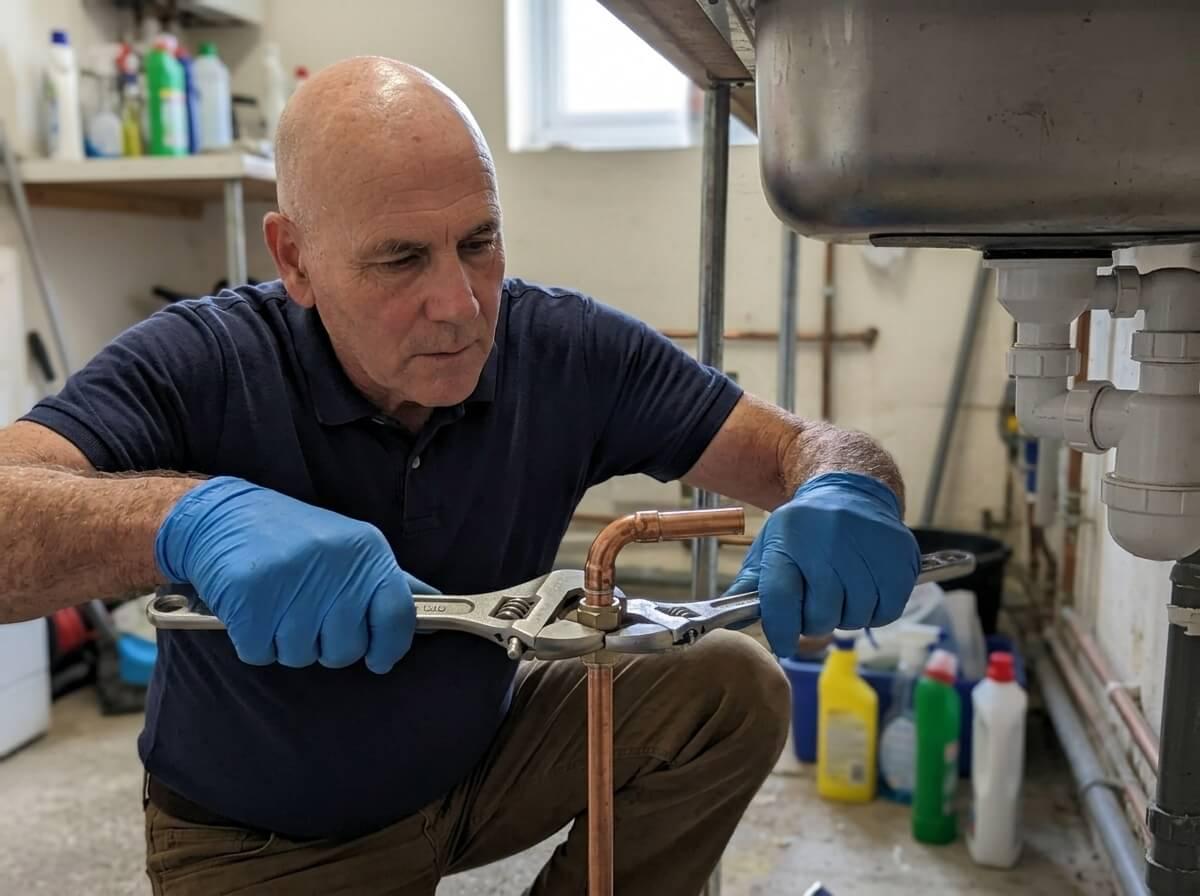
Before flexi hoses, taps were connected with rigid copper tails bent and cut to fit. They take longer to fit and need more skill, but there is no rubber in them to perish. Where there is room to do it neatly, copper is still the most durable option.
- ✓Copper tails: very long life, no lining to fail, not affected by cleaning product fumes. Need more space and more skill to fit.
- ✓Good flexi hoses: quick to fit, tolerant of awkward positions and essential for monobloc taps and appliances. Need checking and replacing.
- ✕Cheap flexi hoses: the cause of a large share of the bursts I attend. Not worth the few pounds saved.
For most homes, the sensible answer is a mix: copper where it is practical, good approved hoses where it is not, and an accessible isolation valve on every single one.
Flexi Hoses, Water Regulations and Your Insurance
Every fitting connected to the mains in England is covered by the Water Supply (Water Fittings) Regulations 1999. They require fittings to be of a suitable quality and standard and installed so they do not waste or contaminate water. In practice, for flexi hoses, that means approved products, fitted so they can be reached and inspected, and never used as a substitute for fixed pipework buried in a wall or floor.
Escape of water is one of the most common home insurance claims in the UK. Figures published by Confused.com put it at the top of the list for 2021 to 2024, with an average cost of £5,708 per claim, and the East of England is no exception. Burst and leaking hoses are a familiar part of that picture.
Most policies cover the damage the water causes, but not the hose itself. Many reduce or refuse claims where the insurer decides the failure was down to wear and tear or neglect, so a hose you were told was perishing and left in place can weaken your claim. Report the leak quickly, keep the old hose, and keep the plumber’s invoice. Our guide to making a burst pipe insurance claim covers what insurers ask for.
Going Away? Protect Your Home From a Burst Hose
The worst flexi hose bursts I see happen in empty houses: holidays, hospital stays, or a property between tenants. With no one there to turn it off, a hose can run for days. A few minutes before you leave avoids that.
- ✓Turn off the washing machine and dishwasher valves. They are the hoses under the most strain and the easiest to turn off.
- ✓For longer trips, turn off the stopcock. Check whether your heating and hot water need the mains on first. Our guide on whether you can use your boiler with the water off explains.
- ✓Keep some heat on in winter. A cold snap can freeze and split pipes and hoses in an unheated house. See our guide to frozen pipes.
- ✓Ask someone to look in. A neighbour with a key and the stopcock location can save thousands.
When to Call an Emergency Plumber
Call straight away if you cannot stop the water, if the stopcock will not turn off fully, if water has reached electrics or a ceiling, or if the burst hose feeds something you cannot do without, such as the only toilet in the house. If you have stopped the water and everything is safe, it can usually wait for a same day visit. Not sure? Our guide to what counts as a plumbing emergency helps you decide.
Our burst pipe repair service covers Ipswich and the surrounding towns and villages 24 hours a day, usually with you in about 30 minutes for local emergencies. I fit a new approved hose, check the valve and the other hoses while I am there, and agree a fair price before any work starts. If the hose was hidden behind a panel and you are not sure how far the water has gone, our leak detection service finds where it has travelled before it turns into damp and mould.
Burst Flexi Hose: The Key Points
- ●Stop the water first: isolation valve a quarter turn, or the main stopcock.
- ●Keep away from wet electrics and switch off at the consumer unit if water has reached them.
- ●A burst or bulging hose cannot be repaired. Replace it with an approved hose of the right length.
- ●Rust, fraying, bulges, kinks and wet crimps are all warning signs. Check every hose once a year.
- ●Replace hoses at around 10 years, sooner for appliance hoses and cheap hoses.
- ●Keep bleach and cleaning products away from the hoses, and give them room in the cupboard.