It is one of the most frightening moments in a plumbing emergency. A pipe has split or a tap will not turn off, you have found the stopcock, turned it as far as it will go, and the water is still coming. On the phone, people often think they have done something wrong, or that the stopcock has broken. Very often neither is true.
I have been a plumber in Ipswich for more than forty years, and “I have turned the stopcock off but it is still running” is something I hear every week. Most of the time it is one of four things: water draining out of the pipes, a cold water tank in the loft that the stopcock does not control, a valve that is not quite closed or is not the main stopcock at all, or an old stopcock whose washer has worn out. Each one has a different fix, and you can tell which one you have in a couple of minutes with nothing more than the kitchen tap. This guide shows you how.
First, How Long Is It Normal for Water to Keep Running?
Closing the stopcock stops new water coming in from the mains. It does nothing about the water already in the pipes, and in a two storey house that is several litres. So water will keep coming out of an open tap, or a burst pipe, for a while after the stopcock is off. What matters is how it behaves:
- ●Combi boiler, no tanks: the kitchen cold tap should drop to a trickle within about a minute and stop within two or three. Hot taps stop almost straight away, because a combi heats mains water as it flows.
- ●Loft tank and hot water cylinder: the kitchen cold tap behaves as above, but the hot taps, and often the bathroom cold taps and toilets, can keep running for 15 to 30 minutes. A loft tank typically holds around 200 litres.
- ●Unvented cylinder (no loft tank, pressurised cylinder): hot taps may give a short burst as the expansion vessel empties, then stop.
- ●Not normal: the kitchen cold tap still running at full pressure after a minute, or still trickling after ten. That means mains water is getting past the stopcock.
Water Still Running? Do These 6 Things Now
Open the cold kitchen tap and leave it open
The cold tap at the kitchen sink is fed straight from the mains, next to the stopcock in most homes. Opening it does two jobs: it drains the pipes, which takes the pressure off a leak elsewhere, and it is the best test you have of whether the stopcock is working. Watch it for two or three minutes. A tap that slows to nothing means the stopcock has done its job.
Check the stopcock is fully closed
Turn it clockwise until it will not go any further, but do not force it beyond that. Old stopcocks often stiffen halfway and feel shut when they are not. If it is a lever valve, the lever should sit across the pipe, not along it. If the handle keeps turning without ever getting tighter, stop: the spindle has stripped and the valve is not closing.
Make sure it is the main stopcock
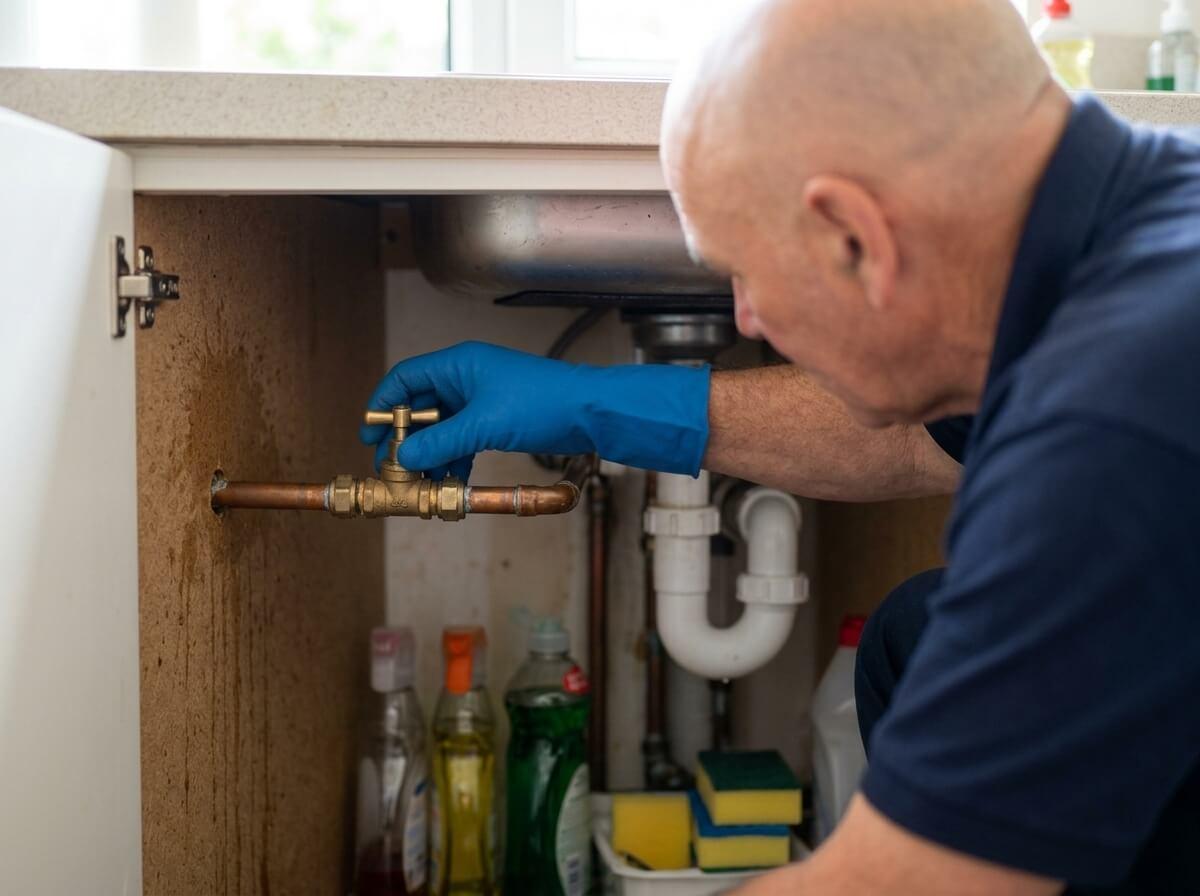
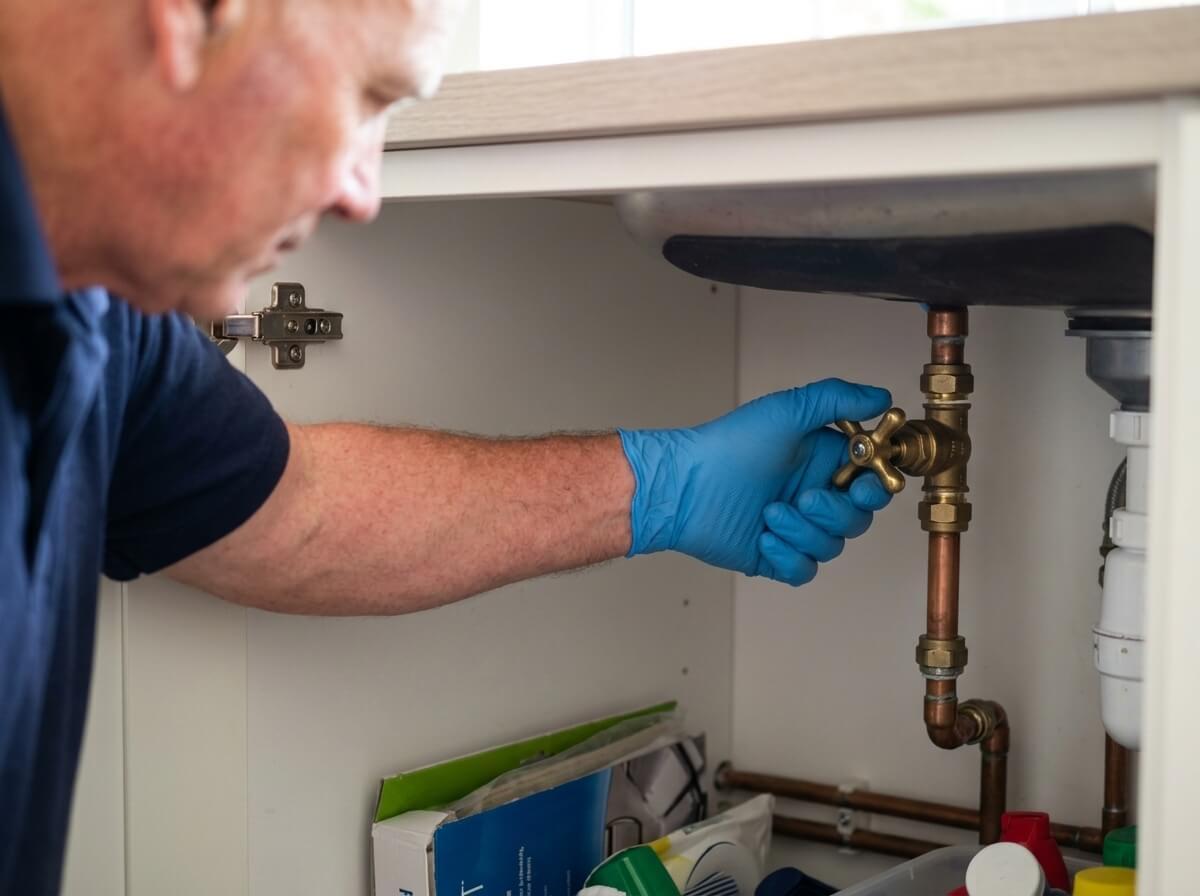
The main stopcock is on the pipe where the water main comes up into the house, usually under the kitchen sink, under the stairs or in a downstairs toilet or utility. A small valve with a screwdriver slot on a pipe to one tap is an isolation valve, and only turns off that tap. The table further down shows the valves people most often mix up. My guide on how to locate your stopcock shows where it is in most homes.
Check the hot taps and the toilets
If the kitchen cold has stopped but hot water, bathroom cold taps or toilet cisterns keep running or refilling, it is a loft tank, not a faulty stopcock. Close the gate valve on the pipe coming out of the tank, often in the loft or the airing cupboard, or open the bath taps to empty the tank as fast as you can.
Make the electrics safe and catch the water
If water is near sockets, a light fitting, an appliance or coming through a ceiling, switch off at the consumer unit. Put down towels and buckets, move valuables, and keep children and pets away. If the consumer unit itself is wet, do not touch it.
Still running? Use the outside stop tap and call
If the mains is still getting past your stopcock and you have a leak, turn off the outside stop tap in the pavement or front garden, then call an emergency plumber. If you have no leak, nothing is urgent: book the stopcock in to be repaired or replaced, because it will not protect you in a burst.
What Your Taps Are Telling You: Find Your Cause
With the stopcock closed and the cold kitchen tap open, look at what the water is doing and find the row that matches.
| WHAT YOU SEE | WHAT IT MEANS | DO THIS NEXT |
|---|---|---|
| Kitchen cold tap slows to a trickle, then stops within two or three minutes | Nothing wrong. The pipes were draining and the stopcock is working | Leave the tap open so the pipes stay empty, and deal with the leak or job in hand. |
| Kitchen cold stops, but the hot taps keep running | The hot water is fed from a cold water tank in the loft, which the stopcock does not control | Close the gate valve on the tank outlet, or open the hot bath tap to drain the tank. |
| Kitchen cold stops, but bathroom cold taps run and the toilets keep refilling | The bathroom cold taps and toilets are tank fed too, common in older Ipswich houses | Same as above: close the tank gate valve or open the cold bath tap to empty the tank. |
| Every tap keeps running at full pressure, kitchen cold included | The stopcock is not closed, it is the wrong valve, or the handle is spinning on a stripped spindle | Check it is fully clockwise and that it is the main stopcock. If in doubt, use the outside stop tap. |
| The handle keeps turning round and round and never gets tighter | The spindle or headgear thread has stripped, so the washer inside is not moving | Stop turning. Use the outside stop tap and have the stopcock replaced. |
| Kitchen cold slows right down but never stops, even after ten minutes | The stopcock is passing: a worn or hardened washer, or limescale or grit on the seat | Use the outside stop tap if you have a leak. Book a re-washer or replacement. |
| Hot water runs for a few seconds, then stops (unvented cylinder) | Normal. The expansion vessel is releasing its stored water | Nothing to do. If it keeps running, check the cold side as above. |
| Water meter still turning with the stopcock off and every tap closed | A leak between the meter and the stopcock, or a passing stopcock feeding a leak indoors | Look for damp near where the pipe comes in or in the garden. Call a plumber to trace it. |
The Loft Tank: Why the Hot Water Keeps Running
This is the most common reason of all, and the one nobody tells you about. Many Ipswich homes, especially Victorian and Edwardian terraces, 1930s semis and houses built up to the 1980s, have a vented system: a cold water tank in the loft feeds a hot water cylinder in the airing cupboard. The mains, controlled by your stopcock, only fills the tank and feeds the kitchen cold tap. Everything downstream of the tank runs on gravity.
So when you turn the stopcock off, the tank stops refilling, but the water already in it carries on flowing to the hot taps, and in many older houses to the bathroom cold taps and the toilets too. If the leak is on one of those pipes, it keeps going until the tank is empty. To stop it faster:
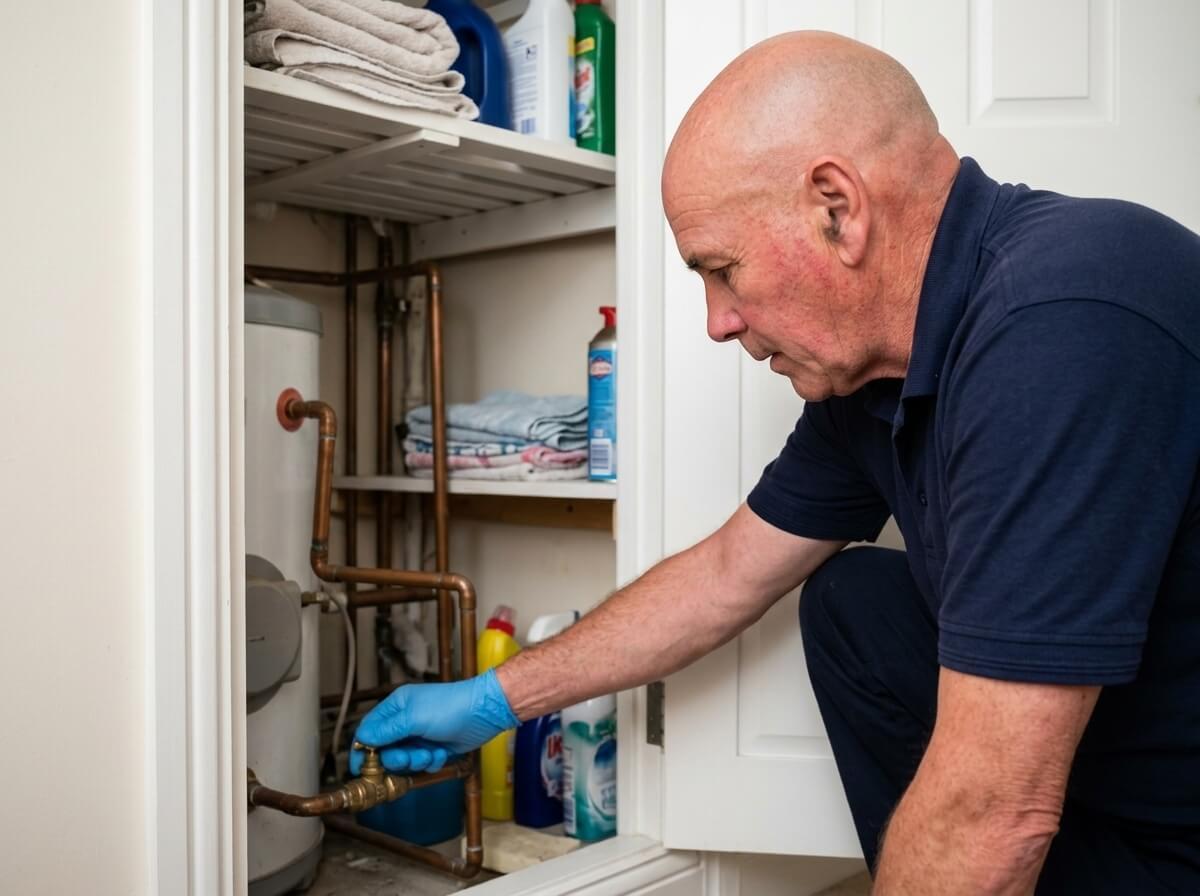
- ●Close the gate valve. Look on the pipe or pipes coming out of the bottom of the tank, or on the pipework in the airing cupboard near the top and bottom of the cylinder, for a brass valve with a round wheel handle, often red. Turn it clockwise. Gate valves are notorious for seizing or not quite closing, so do not force one.
- ●Drain the tank through the bath. Open the hot and cold bath taps fully. A bath tap empties a tank far faster than a leak does, and sends the water down the drain instead of through your ceiling.
- ●Leave the cylinder alone. The hot water cylinder stays full even when the tank is empty, so it is safe. If you want to be cautious, switch off the immersion heater and the boiler until the water is back on.
If the tank itself is what is leaking, see my guide to a cold water tank leaking in the loft. And if you are wondering about the heating while the water is off, I explain that in can I use my boiler if the water is off.
Are You Turning the Right Valve?
A lot of homes have several valves on the pipework, and in the panic of a leak it is easy to grab the wrong one. Older houses that have been extended or converted can also have more than one stopcock, one where the main comes in and another on the pipe to an extension, a kitchen that has moved, or a flat upstairs. Here is how to tell them apart:
| VALVE | WHAT IT LOOKS LIKE | WHAT IT TURNS OFF |
|---|---|---|
| Main stopcock | Brass tap with a crutch or round handle, or a lever, on the pipe where it comes up through the floor. Usually under the kitchen sink, under the stairs or in a downstairs cloakroom | The whole mains supply to the house, including the tank in the loft if you have one |
| Isolation valve | Small valve with a slot for a screwdriver or a little lever, on the pipe to one tap, toilet or appliance | Only that one tap, toilet or appliance |
| Drain-off valve | Small brass spout with a square spindle, often just above the stopcock | Nothing. It drains the pipe. Turning it can make water come out, not stop it |
| Gate valve | Brass valve with a round wheel handle, often red, on the pipes from the loft tank or in the airing cupboard | Water from the loft tank to the hot cylinder, or to the bathroom cold taps and toilets |
| Outside stop tap | Under a small cover in the pavement or front garden, often marked W, sometimes in the meter chamber | Everything, before it reaches the house. Belongs to the water company |
If the valve you turned is a small one on a single pipe, it is probably an isolation valve. Those are useful for a single leaking tap or toilet, but they will not stop a burst on the main pipework.
Why a Stopcock Stops Shutting Off Properly
If the cold kitchen tap keeps running, or keeps trickling long after the pipes should be empty, the stopcock is letting mains water past. Plumbers call this passing. Inside a traditional brass stopcock, turning the handle screws a spindle down until a small rubber or fibre washer, on a part called the jumper, presses onto a brass seat and closes the waterway. Any of these can go wrong:
- ●Worn or hardened washer. After twenty or thirty years the washer goes hard, splits or wears a groove, and no longer seals against the seat, however tight you turn the handle.
- ●Limescale or grit on the seat. Suffolk water is hard. Scale builds up on the seat, and grit from mains work in the street can lodge under the washer and hold it open a fraction.
- ●Stiff spindle. An old stopcock that has not been turned for years can stiffen part way. It feels as if it has stopped, but the washer has not reached the seat.
- ●Stripped spindle or headgear. The handle turns and turns but never tightens. The thread inside has worn away, so the washer is not moving at all.
- ●Jumper stuck to the seat. On some stopcocks the jumper can stick, so the valve works one way but not the other. It is another sign the stopcock is at the end of its life.
If your stopcock is too stiff to turn at all, read my guide on a stopcock that is stuck or seized before you reach for a bigger spanner. Forcing an old stopcock is how spindles snap, and then the water will not go off at all. If it has started dripping after you turned it, see stopcock leaking.
How to Use the Outside Stop Tap
If your stopcock will not stop the mains and you have a leak, the next valve back is the outside stop tap, between your home and the water main in the street. It cuts the water before it reaches the house.
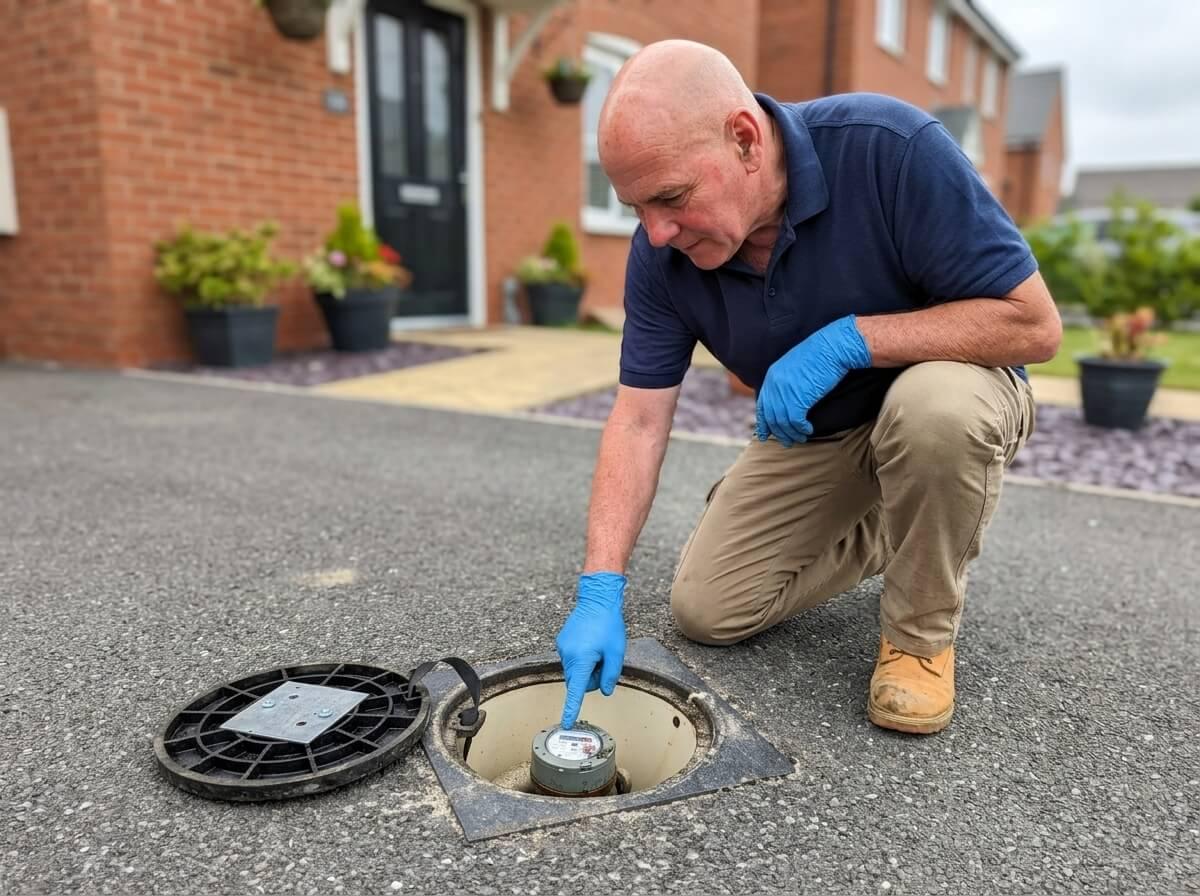
- ●Find it. It is usually under a small round or square cover, about the size of a hand, in the pavement outside or at the edge of your front garden or drive, often marked W or WATER. On newer homes it is often in the same chamber as the water meter.
- ●Turn it clockwise. Many sit at the bottom of a narrow pipe and need a long stopcock key, a few pounds from a hardware shop and worth keeping in the house. Some newer ones have a lever you can reach by hand.
- ●Go gently. If it will not move with steady pressure, stop. A snapped outside stop tap is a bigger problem than the one you started with.
- ●Think about neighbours. In older Ipswich terraces, one outside stop tap can feed two or three houses. If yours may be shared, let your neighbours know.
- ●Open the cold kitchen tap. The leak will slow and stop as the pipe empties.
The outside stop tap belongs to the water company, which for most of Ipswich and the surrounding area is Anglian Water. They prefer it is operated by them or a plumber, and you could be liable if you damage it, but in a genuine emergency turning it off gently to stop water pouring into your home is reasonable. If it will not turn, is broken, or does not shut off either, call Anglian Water on 03457 145 145, or call me. I can isolate the supply, and if I need to replace your stopcock while the outside stop tap is faulty, I can freeze the pipe with a pipe freezing kit so the work is done without waiting.
Water Meter Still Turning With the Stopcock Off?
If you have a meter, it is a very useful tool here. With the stopcock closed and every tap, toilet and appliance off, the dial should be completely still. Lift the cover, take a photo of the reading, wait thirty minutes without using any water, and look again.
- ●Still with the stopcock off, moving with it on: you have a leak somewhere inside the house, and your stopcock is working.
- ●Moving with the stopcock off: either the stopcock is passing and water is escaping somewhere inside, or there is a leak on the supply pipe between the meter and the stopcock, under the drive, the garden or the floor.
A leak on the supply pipe is easy to miss because the water soaks into the ground. Look for a wet patch that never dries, unusually green grass, or damp at the bottom of the wall where the pipe comes in. My guides on a water leak outside your house and the signs of a hidden water leak explain what to look for. If you cannot see it, our leak detection service will trace it without pulling up more floor than necessary.
Fixing a Stopcock That Will Not Turn the Water Off
Once the immediate emergency is over, a stopcock that does not shut off fully needs sorting. It is not dangerous in itself, but it means you have no proper way of stopping the water in your own home. There are two options:
- ●Re-washer it. With the outside stop tap off, the headgear is unscrewed, the old jumper and washer replaced, and the seat cleaned. On a sound stopcock that is a quick job.
- ●Replace it. More often, on a stopcock that is old, scaled up, corroded or stripped, I recommend a new one. Often I fit a quarter-turn lever valve, which shuts the water off with one movement of the hand and is easy for anyone in the house to use in a hurry.
A new stopcock has to be an approved fitting, fitted the right way round for the flow arrow on the body, as close as practical to where the main enters the house. If your main is old lead or galvanised iron, I will tell you, because disturbing those pipes can start new leaks and it is worth knowing your options. Either way you get a clear, fair price agreed before any work starts.
Who Is Responsible?
- ●The stopcock inside your home: the homeowner. If you rent, it is part of the water supply your landlord has to keep in repair, so report it in writing.
- ●The supply pipe from your boundary to the stopcock: usually the homeowner. Home insurance often covers finding and repairing a supply pipe leak, so check your policy.
- ●The outside stop tap and the meter: the water company. Report a faulty outside stop tap to Anglian Water.
- ●A stopcock or riser serving more than one flat: usually the freeholder or managing agent.
If you rent and the water will not go off, you can and should still use the stopcock and outside stop tap in an emergency. My guide on whether your landlord is responsible for plumbing explains how fast repairs should happen and what to do if nobody answers.
What Not to Do
- ✕Do not force the stopcock past its stop. Extra force on an old stopcock does not close a worn washer. It snaps spindles and cracks bodies.
- ✕Do not close the stopcock and then turn off the kitchen tap. Keep the cold kitchen tap open so the pipes drain and the pressure comes off the leak.
- ✕Do not open a drain-off valve to try to stop the water. It is there to drain the pipe, not shut it off, and it may not close properly again.
- ✕Do not assume the tank is empty because the cold tap stopped. Check the hot taps and toilets. Tank water can keep feeding a leak for half an hour.
- ✕Do not dig up or repair the outside stop tap or meter. You can turn it off in an emergency, but repairs are the water company’s job.
- ✕Do not leave a passing stopcock for the next emergency. It is the one valve you rely on when things go wrong. Get it replaced while it is calm.
Water Will Not Stop in Ipswich? Call Philip
If you have turned the stopcock off and the water is still coming, call me and tell me what the cold kitchen tap is doing and whether you have a tank in the loft. Nine times out of ten I can tell you on the phone how to get it stopped before I arrive. I carry stopcocks, lever valves, washers and a pipe freezing kit on the van, so most stopcocks that will not shut off are replaced on the first visit, even when the outside stop tap is faulty too.
I cover Ipswich, Felixstowe, Woodbridge, Kesgrave, Martlesham, Stowmarket and the surrounding towns, and I answer the phone myself, 24 hours a day, seven days a week, on 07977 857224. If a pipe has split, our burst pipe repair page explains what happens next, and you can see everything else on the emergency plumbing services page.