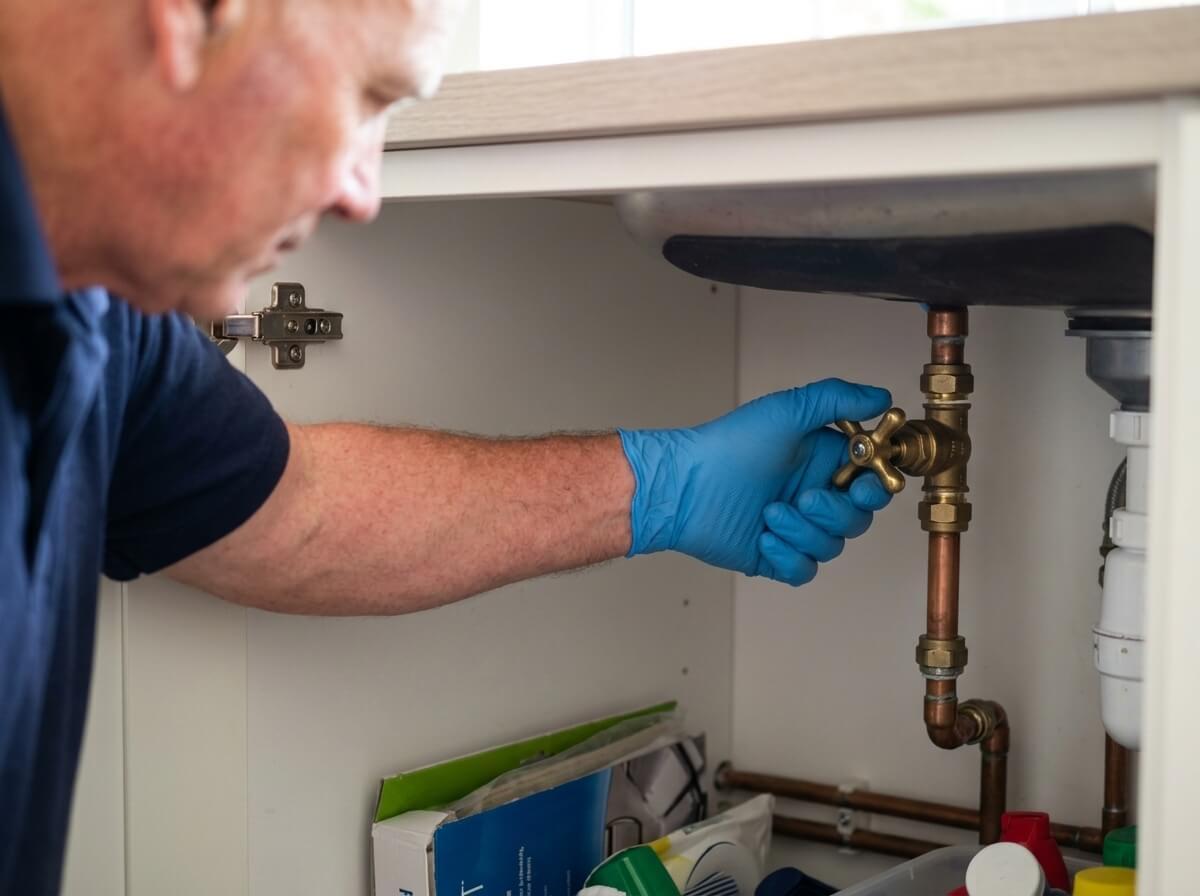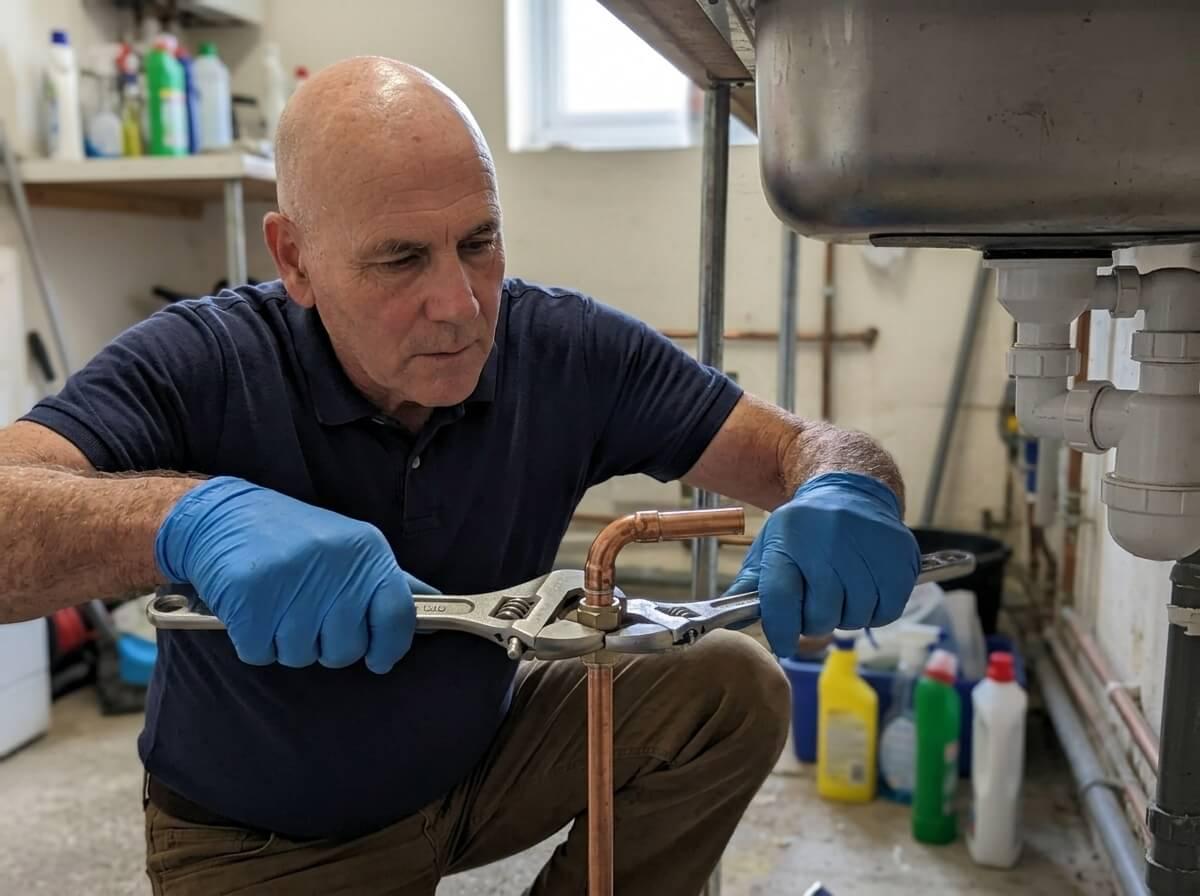
Banging pipes are one of the most common calls I get once the evenings draw in and people are home more, hearing the house. Most of the time the noise is harmless in itself: a lever tap shut too fast, a toilet fill valve that has furred up with our hard Suffolk water, or a length of pipe under the floor that was never clipped down properly. It is irritating, it wakes the children, and it is easy enough to cure.
But a pipe that bangs is a pipe that is being shaken, and every shock works on the joints. I have been a plumber in Ipswich for more than forty years, and I have lost count of the leaking compression joints, split washing machine hoses and weeping tap connectors I have found at the end of a pipe that had been banging for months. So this guide does two things: it helps you pin down the cause from the noise alone, and it tells you plainly when the banging means you need a plumber now rather than at the weekend.
Pipes Banging? Do These 4 Things First
Look and feel for water
Before you worry about the noise, make sure nothing is leaking. Check the ceiling below the bathroom, under the kitchen sink, behind the washing machine, around the toilet and in the airing cupboard. Run your hand along any pipe you can reach near where the noise comes from. Damp, drips, a stain or a bulge in a ceiling changes everything: turn off the stopcock and go to the emergency box below.
Note exactly when it happens
Is it the moment a tap shuts, while the toilet fills, at each stage of the washing machine, when the heating comes on, or at night with nothing running? The timing tells you more than anything else, and the table further down matches each pattern to its cause.
Find which outlet sets it off
Turn taps on and off one at a time, flush each toilet, and run the washing machine and dishwasher. If only one outlet causes it, the fix is at that outlet. If every tap in the house makes the pipes bang, the cause is more likely high pressure or loose pipework on the main run.
Do the meter test if it bangs with nothing on
Banging when nobody is using water means something is drawing water. Turn off every tap and appliance, make sure no toilet is filling, and read your water meter, then read it again after 30 minutes. If it has moved, water is going somewhere: a toilet passing water into the pan, a loft tank overflowing, or a hidden leak. My guide on signs you have a hidden water leak covers the next checks.
What Does the Noise Tell You? Match the Bang to the Cause
Plumbers diagnose banging pipes by ear before anything else. Listen to when it happens and what it sounds like, then find the row below that matches.
| WHAT YOU HEAR | IT POINTS TO | DO THIS NEXT |
|---|---|---|
| One loud bang or thud the moment a tap, shower or appliance shuts off | Water hammer: fast-moving water stopped dead by a fast-closing valve | Close taps more slowly, clip loose pipes, fit an arrestor at the valve that sets it off. |
| Hammering, juddering or a foghorn drone while the toilet or loft tank fills, stopping when it is full | The fill valve (ball valve) bouncing open and shut: worn washer, scaled diaphragm or a float riding the ripples | Clean or replace the washer or diaphragm, or fit a modern quiet fill valve. |
| Banging, spitting and coughing taps after the water has been off | Air trapped in the pipes after a repair, a burst main or a new meter | Open each tap slowly, kitchen first, and run it until the flow is smooth. |
| Thuds or knocking at night when nobody is using water | A cistern or loft tank topping up from a slow leak, a heating timer, or a water softener regenerating | Check every toilet for a trickle into the pan and look in the loft tank. |
| Ticking and creaking as the heating warms up or cools down | Copper heating pipe expanding and rubbing on joists, notches or tight clips | Not urgent. Plastic clips, sleeves or a bit of slack where the pipe crosses joists. |
| Banging, rumbling or kettling from the boiler with the heating on | Scale or poor circulation inside the boiler, or a pump problem | Turn the boiler off if it is very loud and call a heating engineer. |
| Humming, buzzing or vibrating while a tap runs | High mains pressure, or a loose washer or jumper in a tap or old stopcock | Test the pressure. Rewasher the tap or have the stopcock replaced. |
| Banging that started suddenly, is getting worse, or comes with damp or low pressure | A joint shaken loose or a pipe starting to leak | Turn off the stopcock, look for water and call a plumber now. |
What Is Water Hammer?
Water coming into your house from the mains is moving quickly and it is heavy. When a valve stops it in a fraction of a second, all that moving water has nowhere to go. For an instant the pressure in the pipe jumps to several times its normal level, and a shock wave runs back along the pipe. Where the pipe is loose, it jumps and hits a joist, a wall or the next pipe along. That is the bang.
Old-style taps with a washer took several turns to close, so the water slowed down gradually. Modern quarter-turn and lever taps, single lever mixers and shower valves can shut in a flick of the wrist. Washing machines, dishwashers, some combi boilers and electric showers use electric solenoid valves that snap shut instantly. Put any of those on a mains-fed pipe that runs a long way without enough clips, and you have water hammer.
Why it is worse in some houses
- ●High mains pressure. The faster the water moves, the bigger the shock when it stops. Houses at the bottom of a hill or near a pumping station often have higher pressure.
- ●Long straight runs. A long pipe from the stopcock to the far end of an extension holds more moving water, so the shock is bigger.
- ●Plastic pipe. Plastic pipework is quieter in some ways but flexes and moves more if it is not clipped closely enough.
- ●Missing clips after building work. New kitchens, bathrooms and floors often leave pipes hanging free under the boards.
- ●Hard water. Ipswich water is very hard. Scale builds up inside fill valves and tap cartridges, making them snap shut or chatter.
Can Banging Pipes Burst? Is Water Hammer Dangerous?
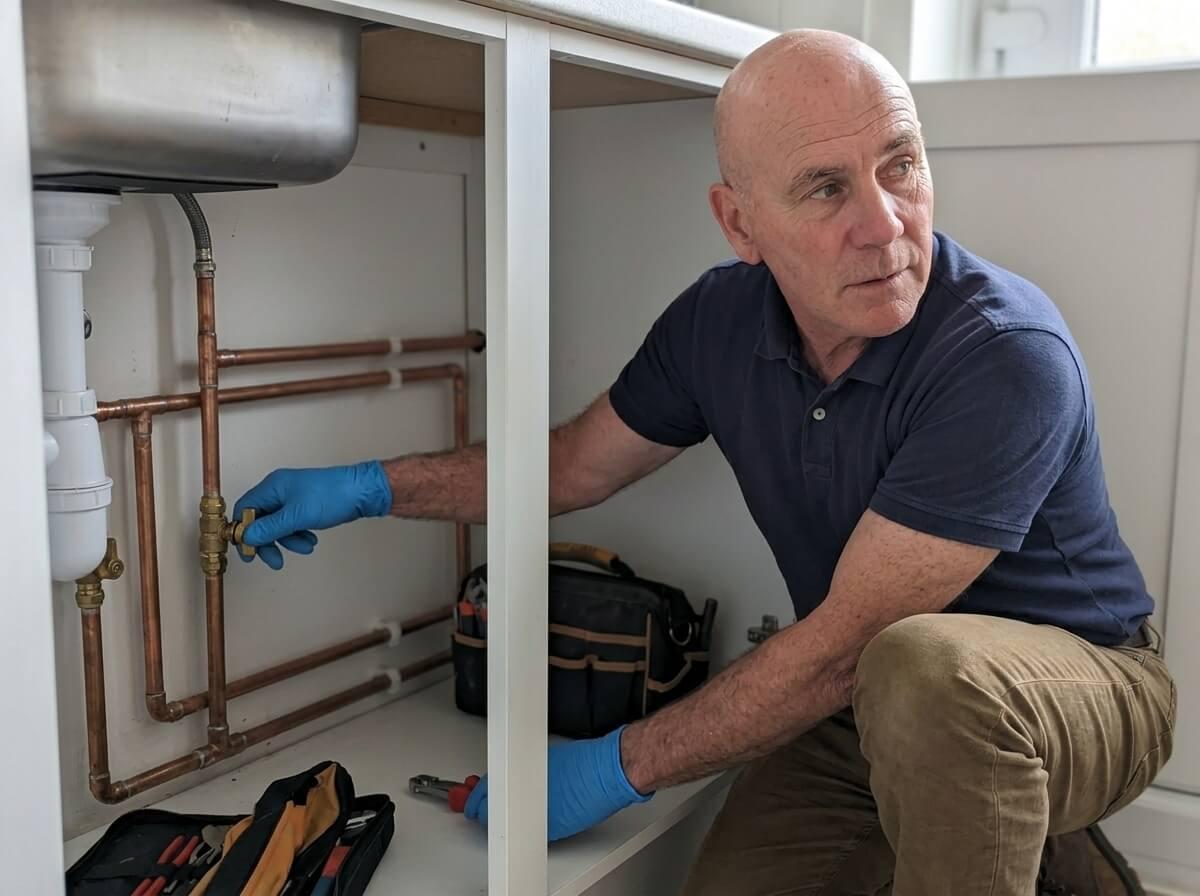
One bang will not burst a sound pipe. Copper and modern plastic pipe are rated well above anything your mains will throw at them. The danger is repetition. A kitchen tap shut fast ten times a day, a washing machine valve snapping shut at every fill, a toilet fill valve juddering every flush: that is thousands of shocks a year, and they go looking for the weakest point.
In my experience, these are the parts that fail first:
- ●Compression joints. The nut slowly backs off with vibration until the joint starts to weep, often inside a wall or under a floor where you cannot see it.
- ●Push-fit fittings. Constant movement can wear the seal, especially where a pipe was not cut square or fully inserted.
- ●Flexible tap connectors. The braided hoses under sinks and basins bulge and split, and when they go they let out a lot of water fast.
- ●Washing machine and dishwasher hoses. They take the full shock at every fill. A bulging hose is a burst waiting to happen.
- ●Old soldered joints and pipe on older houses. Pipework that has been in for decades has less left to give.
- ●Valves and appliances. Shocks wear out tap cartridges, fill valves and the inlet parts of combi boilers and appliances.
So banging pipes are rarely an emergency on their own, but they are not something to live with either. If the noise has suddenly started or got louder, treat it as a warning and check for leaks. If you are not sure where to start, my guide on how to stop a leaking pipe covers temporary fixes that hold until a plumber arrives.
How to Stop Banging Pipes: Fixes in the Right Order
Work through these in order. The first three cost nothing or next to nothing, and they cure a surprising number of noisy houses.
Close taps and showers more slowly
It sounds too simple, but if the bang only happens when one lever tap or mixer is shut quickly, easing it closed over a second or two stops it. Worth trying first so you know you are dealing with water hammer.
Find and clip loose pipes
Have someone turn the offending tap on and off while you listen and feel along the pipework under the floor, in the loft, behind the bath panel and in the kitchen units. A pipe that jumps when you touch it needs clipping. As a rule of thumb, 15mm copper wants a clip about every 1.2 metres on a horizontal run and 1.8 metres on a vertical one, closer for plastic pipe. Where a pipe passes through a joist or a wall and knocks, a foam or rubber sleeve stops the contact.
Bleed out trapped air
If the banging started after the water was off, open each tap slowly, starting with the cold kitchen tap, then the other downstairs taps, then upstairs. Leave each one running until the spluttering stops and the flow is smooth, then close it gently. Flush each toilet.
Service or replace the noisy fill valve
If the judder comes while the toilet or loft tank fills, the fill valve is the culprit. On an older brass or plastic ball valve, a new washer or diaphragm often cures it. A modern bottom-entry or side-entry fill valve designed for quiet filling is a permanent fix. Check the valve is the right type for your pressure too: a high-pressure valve on a low-pressure tank fills slowly, and the wrong one the other way round can hammer.
Fit a water hammer arrestor
An arrestor is a small sealed chamber with a cushion of air or gas behind a piston. It absorbs the spike when a valve snaps shut so the shock never reaches the rest of the pipe. Screw-on versions fit between a washing machine or dishwasher valve and its hose. For a whole-house problem, a plumber can fit one on the cold main just after the stopcock, or on the cold feed to a combi boiler.
Check the mains pressure
A pressure gauge that screws onto an outside tap costs very little. Most homes sit somewhere between 1 and 4 bar. If yours reads well above about 5 bar, a pressure reducing valve fitted after the stopcock will quieten the whole system and protect your taps, valves and appliances.
Replace worn valves
A hum or chatter that seems to come from the stopcock itself is often a loose jumper or worn washer inside an old stopcock. Old gate valves and worn tap cartridges can do the same. Replacing the valve fixes it, and a new stopcock is worth having anyway in case you ever need to turn the water off in a hurry.
Pipes Banging When the Toilet Flushes or Fills
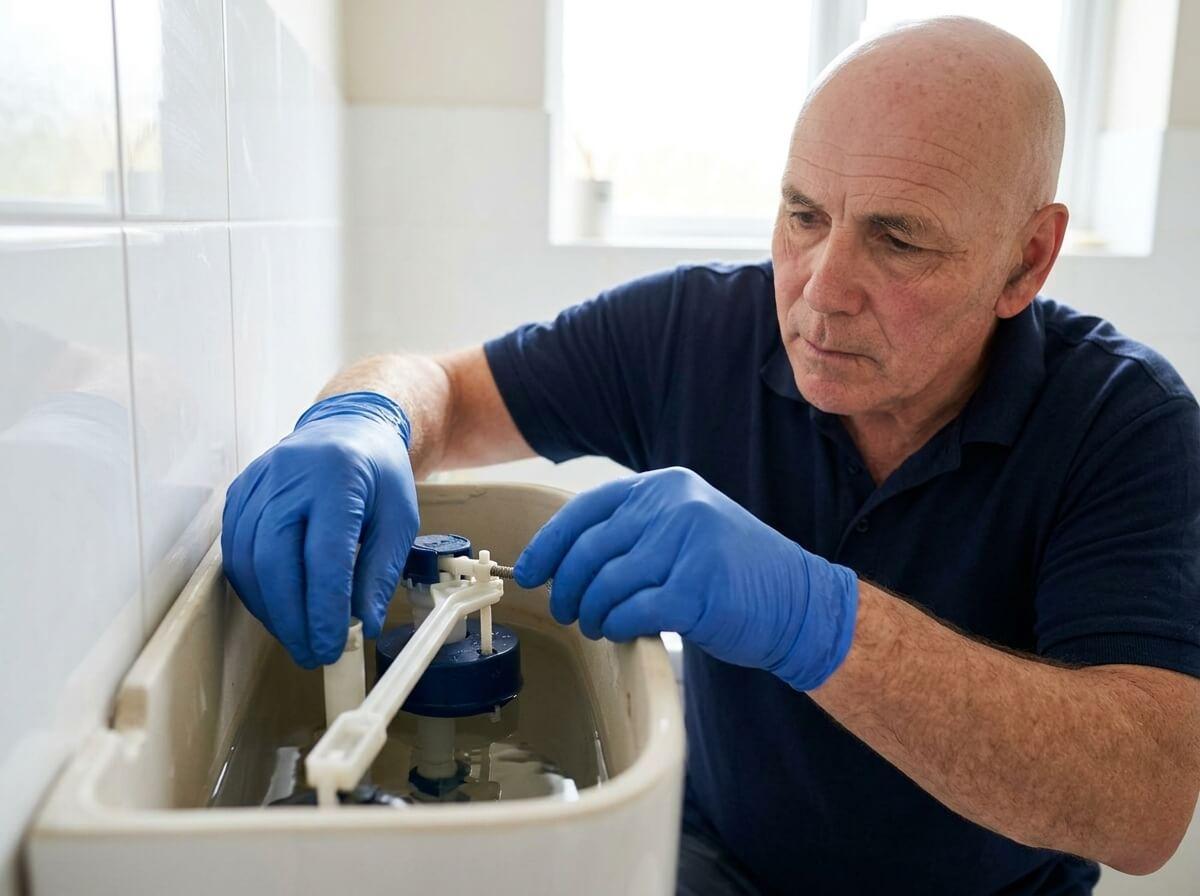
This is the single most common banging pipe I am called out for. You flush, and while the cistern refills there is a rapid hammering, a juddering in the walls or a low drone like a foghorn. It stops dead when the cistern is full.
The cause is the fill valve. As the water rises, the float lifts and starts to close the valve. If the washer is worn or the diaphragm is furred with scale, the valve does not close smoothly: it flutters open and shut many times a second, and every flutter sends a small shock down the pipe. A float riding on the ripples in the cistern makes it worse. The same thing happens with the cold water storage tank in the loft, which is why some people hear banging from upstairs after a bath has been run.
- ●Quick check: turn the isolating valve on the cistern feed down a little and flush. If the noise is less, the fill valve is the problem.
- ●Usual fix: a new washer or diaphragm, or a modern quiet fill valve. Not a big job, and well worth it.
- ●Watch for: a cistern that keeps running or refills on its own. My guide on how to stop a toilet cistern overflowing covers that, and our overflowing cisterns service sorts it if it is beyond a DIY fix.
Pipes Banging When the Washing Machine or Dishwasher Fills
If you hear a bang or a series of thuds at the start of a wash, and again at each rinse, the appliance’s solenoid inlet valve is snapping shut. It is a textbook water hammer trigger. A screw-on arrestor fitted between the appliance valve and the fill hose usually stops it, along with a clip on any loose pipe behind the machine.
While you are there, look at the fill hose. Years of shocks wear them out, and a bulge, a crack or a weep at either end means it needs replacing now. A split washing machine hose can flood a kitchen in minutes. My guide on a washing machine leaking covers hoses, valves and standpipes in detail.
Pipes Banging When the Water Is Turned Back On (or Off)
After any time with the water off, whether a repair, a burst main in the street or a new water meter, air gets into the pipes. When the supply comes back, the air pockets cause banging, spluttering taps and sometimes cloudy water. Bleed it out as in step 3 above. The noise should settle within a few minutes. Cloudy water that clears from the bottom of a glass upwards is just air and is harmless.
If you get a loud bang every time you turn the stopcock off, you are closing it too quickly: turn it slowly. If banging continues for days after work on the supply, the stopcock or outside stop tap may not have been opened fully, or grit may be stuck in a valve. If you have had the water off and now have no water at all, see my guide on no water in the house.
Pipes Banging at Night
Pipes do not bang on their own. If you hear knocking at night with nobody running water, something is using it. Work through these:
- ●A toilet topping itself up. A worn flush valve seal lets water trickle into the pan, and every so often the cistern refills, with the noisy fill valve that goes with it. Put a few drops of food colouring in the cistern and do not flush for an hour. Colour in the pan means it is passing.
- ●The loft tank refilling. If you have a cold water tank, a dripping tap or a passing valve on that side slowly empties it, and the ball valve refills it noisily.
- ●The heating coming on. A timer firing up the boiler and pump at 5am will tick, creak and knock as the pipes warm.
- ●A water softener regenerating. Most softeners clean themselves in the early hours, opening and closing valves as they go.
- ●Neighbours. In older Ipswich terraces some houses still share a supply pipe, and a neighbour running water can set off a noisy valve in your house.
- ●A leak. If none of the above explains it and the meter is moving, find the leak before it finds your ceiling.
Heating Pipes Banging, Ticking or Knocking
Central heating pipes make their own noises. Ticking and creaking as the system warms up and cools down is copper expanding and sliding against joists, notches and tight clips. It is not harmful. Plastic clips, a little more room in the notch, or a sleeve where the pipe crosses a joist quietens it.
Gurgling and knocking at the radiators usually means air in the system. Bleed the radiators, and if you have a pressurised system, check the boiler pressure gauge afterwards. If you keep having to bleed the same radiator, or the boiler keeps losing pressure, there may be a leak, and my guide on a radiator leaking will help you find it.
A loud rumbling, banging or kettling sound from the boiler itself is different. It usually means scale or poor circulation inside the boiler or a problem with the pump. That needs a heating engineer to look at the boiler. If it is very loud, turn it off until they come.
Banging Pipes: Who Fixes It and How Urgent Is It?
Find the row that matches what you have found. The last two columns show who usually fixes it and how quickly it needs dealing with.
| CAUSE | SIGNS | WHO FIXES IT | URGENCY |
|---|---|---|---|
| Leak from a joint shaken loose | New or worse banging, damp ceiling or wall, pressure drop, meter turning with everything off. | Usually a plumber | Act today |
| Unvented cylinder overheating | Cylinder banging, hissing or too hot to touch, hot water or steam from the tundish or discharge pipe. | Usually a plumber | Act today |
| Water hammer from fast-closing taps | One bang when a lever tap, mixer or shower is shut quickly. | Often a DIY fix | Fix when you can |
| Washing machine or dishwasher valves | Bang at each fill during the cycle. Hoses may be bulging or weeping. | Usually a plumber | Within days |
| Noisy fill valve in a cistern or loft tank | Judder or drone while the toilet or tank refills, stops when it is full. | Usually a plumber | Within days |
| Loose or missing pipe clips | Rattle or knock you can feel on a pipe under the floor, in the loft or behind a bath panel. | Often a DIY fix | Fix when you can |
| Mains pressure too high | Banging all over the house, taps splash hard, a gauge reads well above 5 bar. | Usually a plumber | Within days |
| Air in the pipes | Spitting taps and banging just after the water came back on. | Often a DIY fix | Fix when you can |
| Old stopcock with a loose jumper | Hum or chatter from the stopcock while water runs, stiff or weeping spindle. | Usually a plumber | Within days |
| Heating pipes expanding | Ticking and creaking as the heating warms and cools. | Often a DIY fix | Fix when you can |
| Boiler kettling or banging | Rumbling or banging from the boiler itself with the heating on. | Heating engineer | Within days |
| Noise across the whole street | Neighbours have banging or pressure changes too, often after work on the mains. | Your water company | Within days |
What Not to Do
- ✕Do not ignore a new bang that comes with damp. A pipe that has started banging and a stain that has appeared on the ceiling are almost always connected.
- ✕Do not leave the stopcock half closed for months. It hides the problem and can seize the valve in that position.
- ✕Do not overtighten compression joints. A quarter turn to stop a weep is fine. Cranking it hard can split the olive or crack the fitting.
- ✕Do not box in or fill around pipes that move. Expanding foam or plaster packed round a banging pipe just moves the shock to the joints.
- ✕Do not take the cover off a hot, hissing cylinder. Switch off the heat source, keep away from the hot pipework and call a plumber.
- ✕Do not ignore a bulging hose. Washing machine hoses and braided tap connectors that have swollen need replacing before they split.
Renting or in a Flat?
If you rent, banging pipes and the fixes above are your landlord’s responsibility, because repairs to the water installation are theirs under the tenancy. Report it in writing with a note of when it happens, and report any leak straight away. You can still turn the stopcock off in an emergency. In a block of flats, if several flats hear banging at the same time, tell the managing agent, as the cause may be on a shared pipe or a booster pump. If the whole street has the problem, contact your water company. In Ipswich and most of the surrounding area that is Anglian Water, but your bill will confirm who supplies you.
Banging Pipes in Ipswich? Call Philip
If your pipes have started banging and you are worried about a leak, the toilet judders every time it fills, or you just want a quiet house again, call me. I listen for where and when it happens, check every joint on the run for weeping before anything else, and carry fill valves, arrestors, clips, stopcocks and fittings on the van, so most noisy pipes are sorted on the first visit. You will get a clear, fair price agreed before I start, and for a bigger job like a pressure reducing valve or replacing old pipework, a free, no-obligation quote.
I cover Ipswich, Felixstowe, Woodbridge, Kesgrave, Stowmarket and the surrounding towns, and I answer the phone myself, 24 hours a day, seven days a week, on 07977 857224. If you think the banging has shaken a joint loose but cannot see where the water is going, our leak detection service will find it. If a pipe has split, our burst pipe repair page explains what happens next. Or see everything else on the emergency plumbing services page.