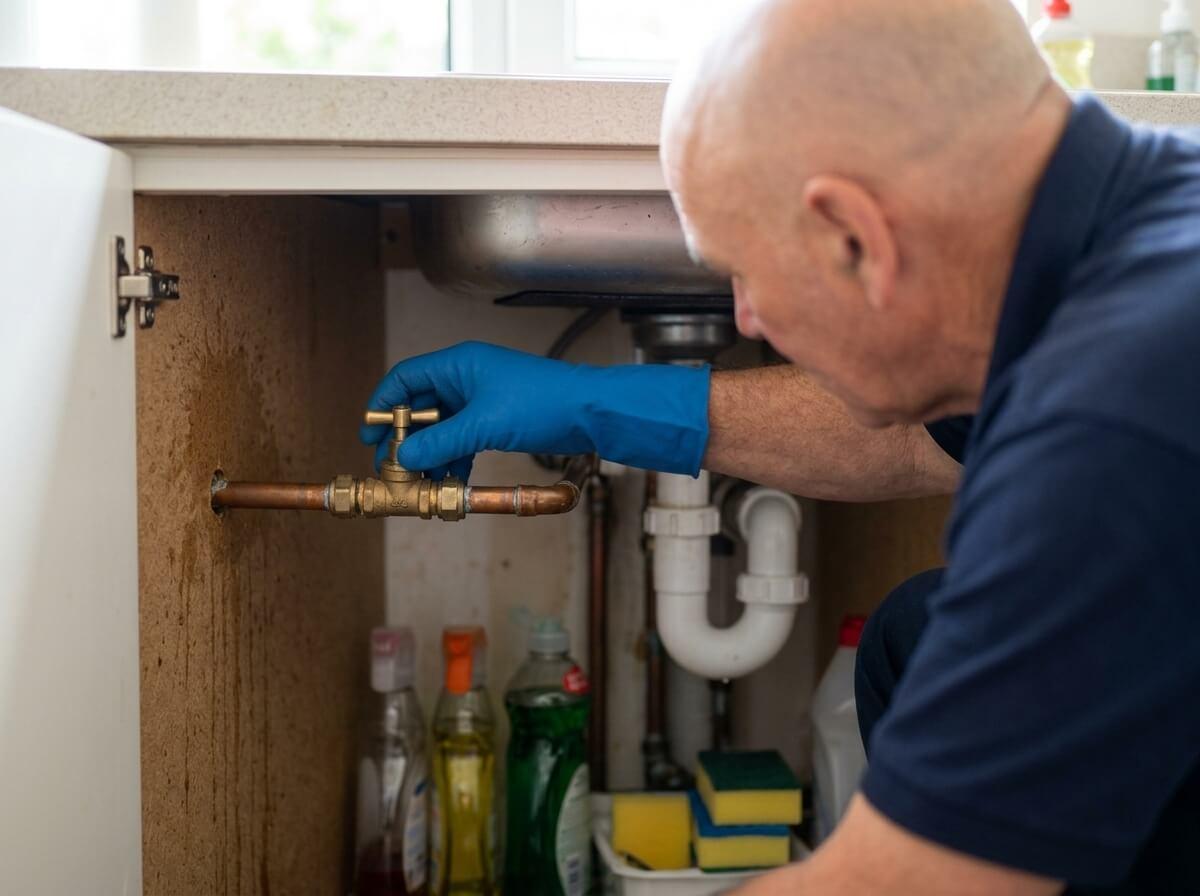
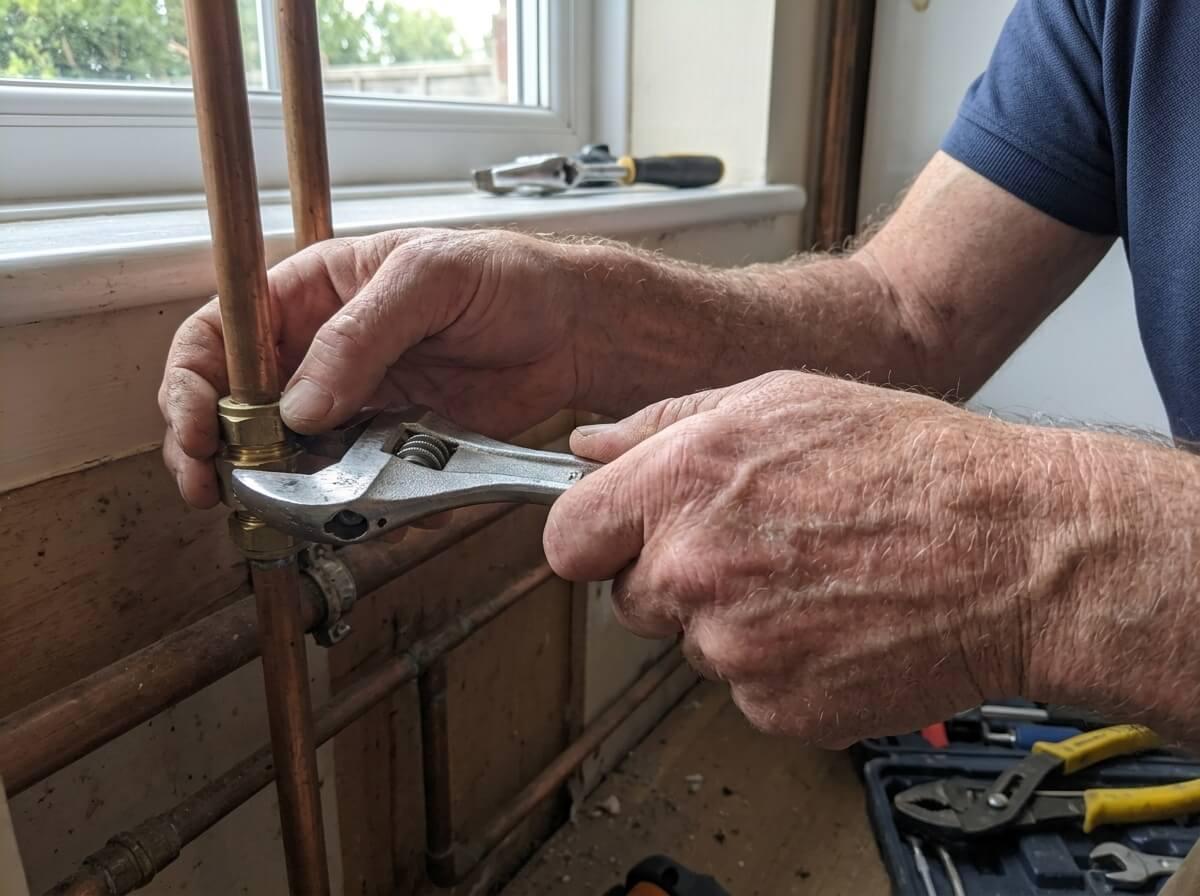
Not every leak announces itself with a puddle on the floor. Some of the most damaging leaks are the ones you cannot see, water escaping quietly behind a wall, under a floor or within your supply pipe, doing its damage for weeks or months before anyone notices. By the time a hidden leak becomes obvious, it has often caused damp, mould or even structural damage that is far more expensive to put right than the leak itself would have been. The key is knowing the early warning signs so you can catch it quickly. In more than forty years as a plumber in Ipswich, I have traced countless hidden leaks, and the homeowners who came off best were always the ones who acted on the first subtle clue. This guide walks you through the signs to look for, a simple test you can do yourself, and what to do next.
1. Damp Patches, Stains and Peeling Paint
One of the most common signs of a hidden leak is damp appearing where it should not. Look for persistent damp patches on walls, ceilings or floors, discolouration or yellow-brown staining (often with a tide-mark edge), peeling or bubbling paint and wallpaper, or plaster that feels soft or crumbles. Unlike condensation, which tends to be seasonal and spread across cold surfaces or around windows, leak-related damp is usually localised, keeps coming back in the same spot, and does not improve with better ventilation. If a patch keeps returning no matter how often you redecorate, a hidden leak feeding it is a very likely cause. If water is actually dripping through, see my guide on water leaking through the ceiling for what to do first.
2. A Musty Smell or Visible Mould
Where water sits unseen, it creates exactly the damp conditions mould needs to grow. A persistent musty, earthy smell, particularly in a room, cupboard or corner that should be dry, is a classic sign of hidden moisture. You may also see mould appearing as black or greenish spots, sometimes in unexpected places well away from the bathroom or kitchen. Because leak-driven damp is fed by a constant source, the mould keeps returning even if you clean it away, which distinguishes it from ordinary condensation mould. If you are battling recurring mould in one particular spot, it is worth investigating whether a leak is behind it.
3. An Unexplained Rise in Your Water Bill
Your water bill is one of the most reliable early-warning systems for a hidden leak. If your usage habits have not changed but your bill has crept up, or jumped, water may be escaping somewhere in your system, because you pay for every litre that passes through your meter whether it reaches a tap or leaks away unseen. Even a small continuous leak adds up over a billing period. If a bill looks higher than it should, do not just pay it and move on; treat it as a prompt to check for a leak, starting with the meter test below.
4. A Drop in Water Pressure
A noticeable, unexplained drop in water pressure can indicate that water is escaping from the system before it reaches your taps. If your shower or taps have become weaker without any obvious cause, and especially if the drop has appeared gradually, it is worth considering a leak, particularly on the supply pipe. Pressure changes can have other causes too, but combined with any of the other signs here, a drop in pressure strengthens the case for a hidden leak.
5. The Sound of Running Water When Everything Is Off
This is one of the clearest signs of all. When no taps or appliances are in use, your plumbing should be silent. If you can hear the sound of running, trickling or hissing water when everything is turned off, water is moving somewhere it should not be, a leak or a fault letting water pass continuously. Try turning everything off, standing quietly, and listening near walls, floors and the airing cupboard. A persistent sound of water with nothing running is well worth investigating promptly.
6. Warm Spots, Wet Ground and a Struggling Boiler
Some signs are more specific. A hot-water pipe leaking under a floor can create a warm patch on the floor above. Outside, a leak on the underground supply pipe can show as an area of ground that is persistently wet, or unusually green and lush, along the pipe’s route, even in dry weather. And if your boiler or hot water cylinder keeps losing pressure and needs topping up more often than it should, that can indicate a leak somewhere in the heating or hot-water system. Any of these, especially alongside the more general signs above, points toward a leak that needs tracing. If the wet ground is outside, the water leak outside your house guide explains whose pipe it is and who pays.
The Simple Meter Test You Can Do Yourself
If you suspect a leak, a water meter test is a straightforward way to confirm it. Make sure no water is being used anywhere in the property, no taps, no toilets flushing, no washing machine or dishwasher running, no outside taps. Note the reading on your water meter (including the small dials or digits). Then avoid using any water for at least a couple of hours, a good time is overnight or while you are out. Check the meter again: if the reading has moved despite no water being used, that strongly indicates a leak somewhere in your system. Some meters have a small leak-indicator dial that spins when water is flowing, which can show a leak even faster. The meter test cannot tell you where the leak is, but it confirms there is one, which is the trigger to get it traced and fixed.
Why Acting Early Matters So Much
Hidden leaks are progressive: the damage compounds the longer they are left. What starts as a slow escape of water soaks into plaster, timber, flooring and insulation, leading to damp, rot and the kind of structural deterioration that costs far more to remedy than the original leak. Persistent moisture breeds mould, harms decorations and belongings, and can affect the air in your home. There is a financial drain too, as escaping water quietly inflates your bills. And a small leak can worsen suddenly, a weakened pipe or joint can fail completely, turning a slow leak into a burst and a full emergency. Acting on the early signs stops all of this, usually means a smaller and simpler repair, and protects both your home and your budget.
How a Plumber Finds and Fixes a Hidden Leak
Finding a hidden leak is a process of careful, methodical investigation rather than guesswork, and it is where experience really counts. When I trace a leak, I gather the clues, where the damp or staining is, whether pressure has dropped, whether you can hear water, what the meter test showed, and narrow down the likely source by reading the symptoms in context, isolating sections of the system and checking the common failure points, so the right problem is fixed once rather than opening up walls and floors at random. Crucially, I both find and repair leaks, so you do not need one company to detect and another to fix, it is handled in one visit wherever possible, with the aim of pinpointing the source accurately and keeping any disruption to a minimum.
What to Do the Moment You Suspect a Leak
If the signs point to a hidden leak, taking a few sensible steps straight away can limit the damage while you arrange for it to be traced and fixed. First, do the water meter test described above to confirm water is escaping. If you have found clear evidence of a significant leak, for example damp spreading, or the meter moving noticeably, and you are worried about damage, you can turn off your stopcock to stop the water supply until the leak is dealt with, though for a slow hidden leak this is not always necessary and would leave you without water in the meantime. If any damp is near electrical fittings, sockets or your consumer unit, keep clear and switch off the electricity to the affected area as a precaution. Move furniture and belongings away from any damp area, and note where the signs are, which room, which wall or ceiling, and whether it is worse at particular times, as this information helps a plumber trace the source faster. If you can see the leak, my guide on how to stop a leaking pipe covers shutting it off and the temporary fixes that hold.
Resist the temptation to start opening up walls or lifting floors yourself to find the leak. Water travels along joists and pipes and often shows up some distance from its actual source, so exploratory damage frequently ends up in the wrong place and simply adds to the repair bill. Accurate tracing is a skill, and a professional can usually narrow down the source with far less disruption. It is also wise not to ignore a suspected leak in the hope it will dry up, hidden leaks almost never resolve themselves, and every week they continue adds to the damp, mould and structural damage.
Leaks and Your Home Insurance
If a hidden leak has caused damage, it is worth understanding how insurance typically works. Many home insurance policies cover the damage caused by an escape of water, and often the trace-and-access cost of locating the leak, while the repair of the pipe itself and gradual damage from a long-standing leak may be treated differently depending on the policy. Cover varies, so check your documents, photograph the damage before any clean-up, and notify your insurer early. An itemised invoice that separates leak detection from the repair supports a claim, and I am happy to provide one and to explain the technical cause to a claims handler.
It is also worth being alert to leaks after any plumbing work or a cold winter, as these are common times for joints and pipes to fail. If you have recently had work done, or the weather has been freezing, give the tell-tale signs a quick check: run your eye over ceilings and under-sink cupboards, listen for running water with everything off, and keep an eye on your next water bill. Catching a leak in its first days rather than its first months is the difference between a quick, inexpensive repair and a major one.
Spotted the Signs? Call Your Ipswich Plumber
If you have noticed damp, a rising bill, low pressure, the sound of running water or any of the other signs above, do not wait for it to become obvious, by then the damage is usually done. A hidden leak caught early is far cheaper and less disruptive to fix. I offer accurate leak detection and repair across Ipswich and Suffolk, tracing leaks with minimal disruption and fixing them properly so they do not return. You can read more on our leak detection page, or simply call. At PD Parnell Plumbing I answer the phone personally and offer a 24-hour service, call 07977 857224 and I will help you find out what is going on before it costs you more.