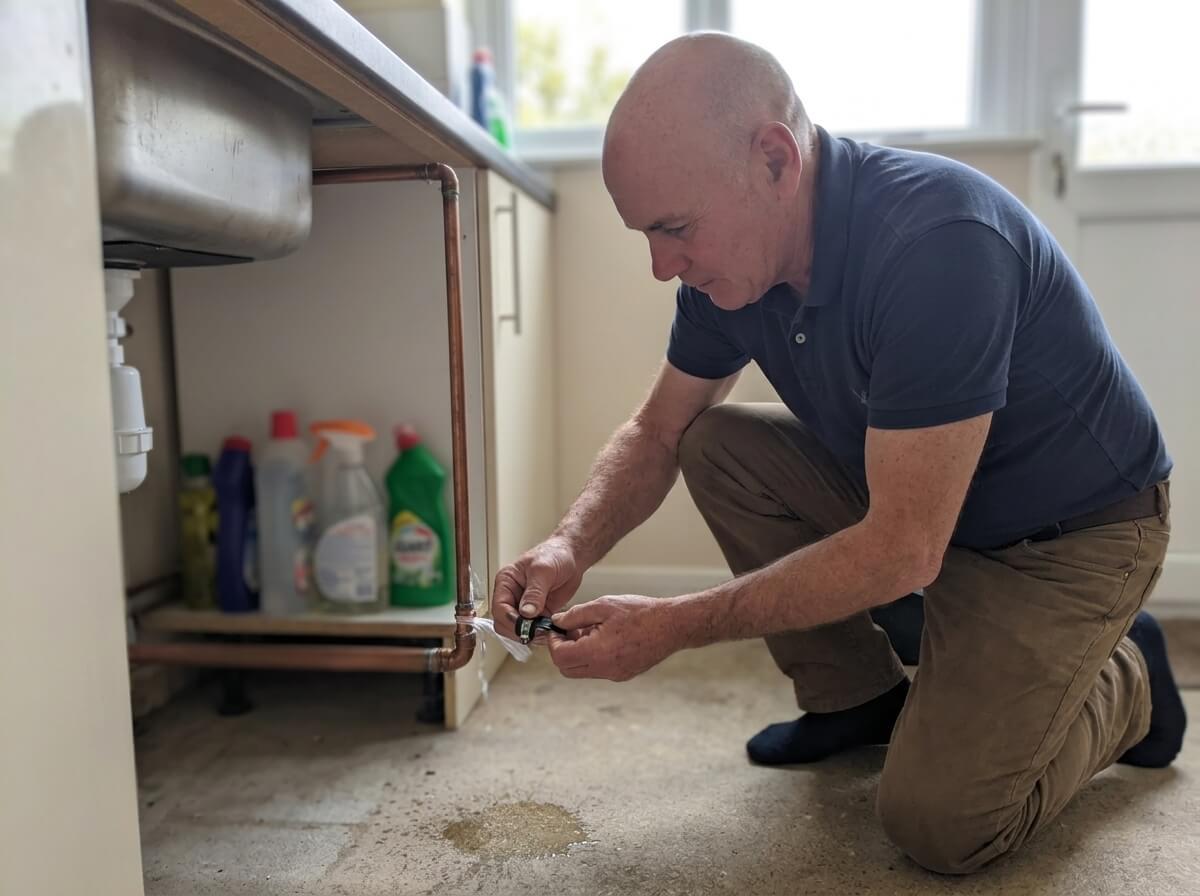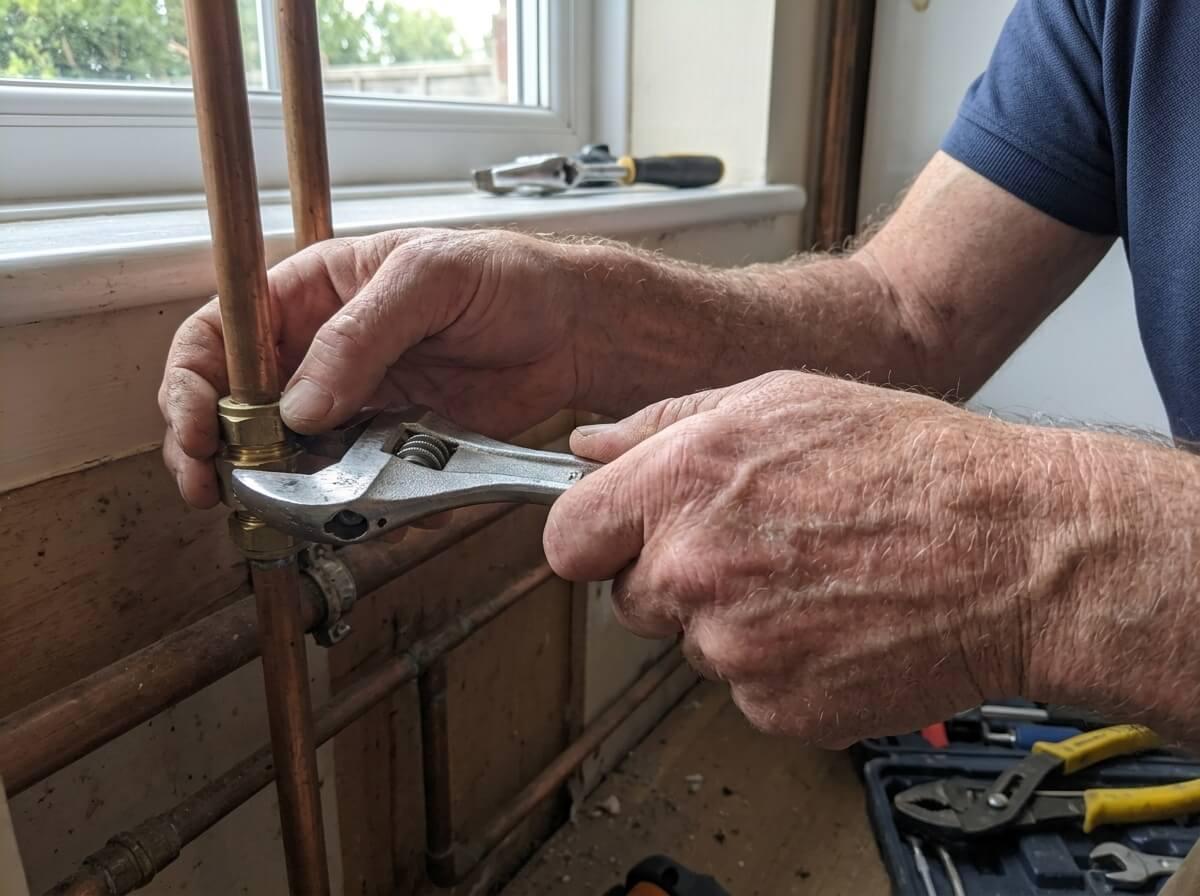
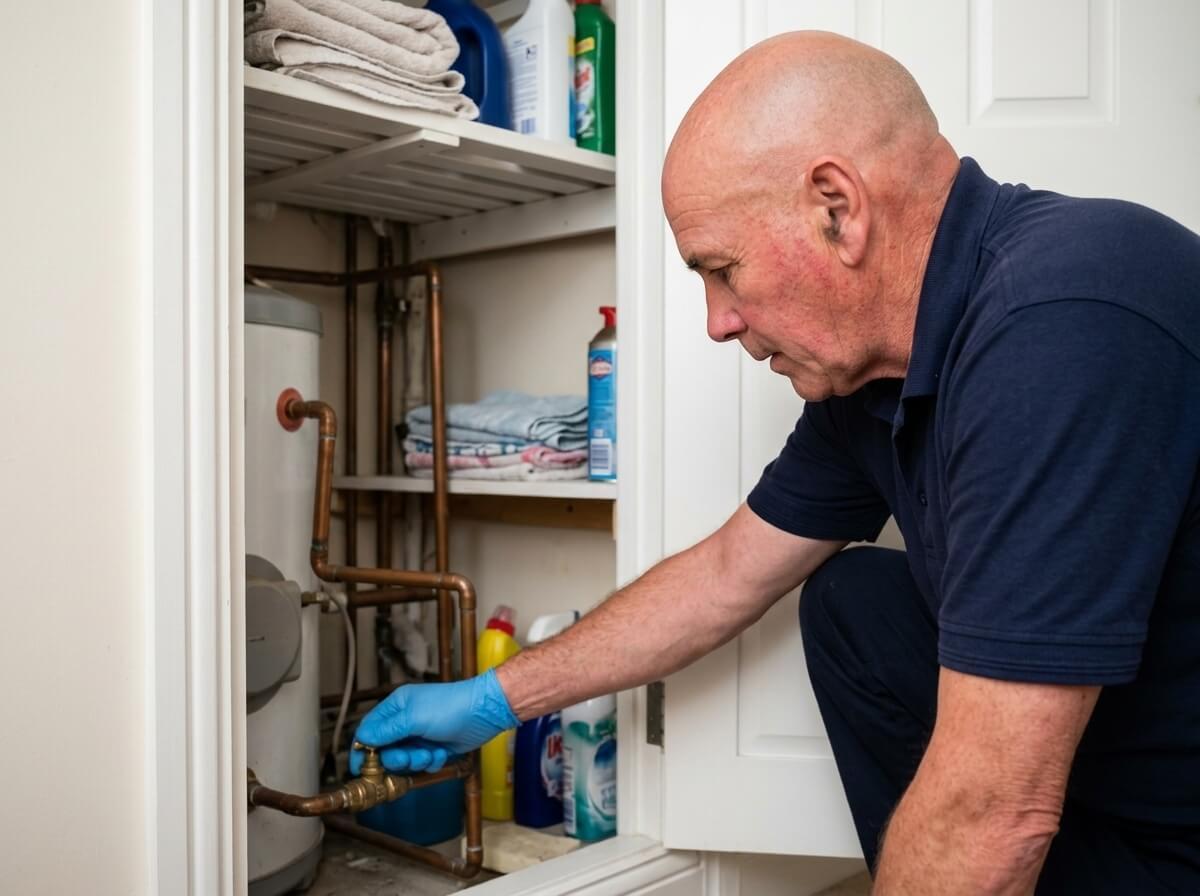
There are few sounds in a house as alarming as water dripping where water should not be. Usually it starts as a small brown ring on the kitchen or living room ceiling. Sometimes it is a steady drip from the light fitting. And now and then it is the call I take at two in the morning: the ceiling has bellied out like a balloon, water is running down the walls, and someone is standing in the hallway with a mixing bowl asking what on earth to do first.
In more than forty years as a plumber in Ipswich, I have dealt with every kind of ceiling leak there is, from a weeping shower tray to a split pipe in a frozen loft. The good news is that the first ten minutes are almost always the same, and they are something you can do yourself. Get those right and you can turn a ruined ceiling, carpet and set of electrics into a small, tidy repair. This guide walks you through exactly what to do, in the right order, then helps you read the clues to find out where the water is actually coming from, and explains what happens next with repairs, drying out and insurance.
Water Coming Through the Ceiling? Do These 7 Things Now
Work through these steps in order. The order is deliberate: safety first, then stopping the water, then limiting the damage. Every minute the water keeps flowing, it is spreading further across the ceiling void and into the walls.
Make the electrics safe
Water and electricity together are the real danger with a ceiling leak, because the water is usually travelling along the same route as the lighting cables. If water is near or coming out of a light fitting, a smoke alarm or a ceiling rose, do not touch the light switch, on or off. Go to the consumer unit (the fuse box) and switch off the circuit for that area, or the main switch if you are not sure which is which, or if you would have to stand in water to reach it. If the consumer unit itself is wet, leave it alone, stay out of the area and call for help. Use a torch or your phone light from here on.
Turn off the water at the stopcock
Turn your internal stopcock clockwise until it stops. It is usually under the kitchen sink, but it can be in a downstairs toilet, utility room, under the stairs or in the airing cupboard. My guide on how to locate your stopcock shows every place it tends to hide. If it will not budge, do not force it with a wrench, see what to do when a stopcock is stuck. If the drip is coming from directly under a single bath, basin or toilet, the small isolating valve on its supply pipe may stop it too, but the main stopcock is the surest option while you work out what is going on.
Turn off the boiler and hot water
Switch off the boiler at its controls or fused spur, and turn off any immersion heater on the hot water cylinder. If the leak is from a hot water or heating pipe, this stops the system pumping more water to it, and it protects the boiler from running with low water or low pressure. Do not try to drain a central heating system yourself in the dark, just turn it off.
If the leak keeps going, drain the cold water tank
Many Suffolk homes, particularly older terraces, bungalows and 1950s to 1980s houses, still have a cold water storage tank in the loft that feeds the bath, the hot water cylinder and sometimes the toilets. The stopcock stops the mains filling that tank, but it does not stop the tank emptying through a split pipe. If water is still coming through ten minutes after the stopcock is off, open the cold tap on the bath and the hot taps around the house and leave them running. That drains the tank and the cylinder feed through the plugholes, where you want it, instead of through your ceiling. Flushing the toilets a couple of times helps empty the system too.
Catch the water and protect your belongings
Put a bucket, washing-up bowl or storage box under the drip, with towels around it to catch the splash. Move furniture, rugs, electronics, books and anything precious out of the way, and roll back carpets if you can. Push a broom handle or a piece of string against the drip point to guide water straight down into the bucket, rather than letting it spread along the ceiling.
Deal with a bulging ceiling carefully
A ceiling that has sagged into a bubble is holding a surprising weight of water, and it can come down without warning. Keep everyone, children and pets out from under it. If the bulge is small, the electrics are off, and you can reach it safely from a stable stepladder to one side (never directly underneath), you can put a large bucket under it and make a small hole at the lowest point with a screwdriver to let the water drain in a controlled way. If the bulge is large, the ceiling is cracking, or you have any doubt, leave it, close the door and keep the room empty until help arrives. A wet ceiling is cheaper to fix than an injury.
Look upstairs, take photos, and call
Once the water is off, look at what is directly above the leak: a bathroom, en-suite, toilet, radiator, airing cupboard or loft tank. Note whether you can see water on the floor, around the bath or toilet, or under the basin. Photograph the ceiling, any damage and anything you find upstairs before you start clearing up, because your insurer will want to see them. Then call an emergency plumber. Tell them what you have done so far and what you have seen: it saves a lot of time when they arrive.
Is Water Coming Through the Ceiling an Emergency?
Usually, yes. Water through a ceiling means a lot of water has already escaped, because it has had to soak the floorboards, fill the ceiling void and saturate the plasterboard before you see a single drop. Treat it as an emergency and call straight away if:
- ●Water is dripping or running steadily, especially if it keeps going when nothing upstairs is being used.
- ●Water is near or coming out of a light fitting, smoke alarm, switch or socket.
- ●The ceiling is bulging, sagging, cracking or has started to come down.
- ●The leak carries on after you have turned off the stopcock.
- ●You cannot turn the water off, or the stopcock will not shut fully.
- ●The water is dirty or smells, which can mean a waste pipe or toilet connection has failed.
A brown stain that appeared slowly over a few weeks and is dry to the touch is less urgent, but it is still a leak that needs finding. Book it in for a weekday rather than waiting to see if it gets worse, because slow leaks are the ones that rot joists and grow mould out of sight. My guide to the signs of a hidden water leak covers those slower, sneakier leaks in more detail.
Where Is the Water Coming From? Read the Clues
Water is a terrible witness. It travels along joists, pipes and cables and often drips out a metre or more from where it actually escaped. But when it leaks tells you a great deal about what is leaking. Here is how I read a ceiling leak when I arrive, and you can use the same clues to describe it on the phone:
| WHAT YOU NOTICE | LIKELY CAUSE | WHAT TO DO |
|---|---|---|
| Drips only while someone is showering, or just after | Failed silicone or grout around the tray, a cracked tray, or a leaking shower waste. Water runs down the wall and under the tray. | Stop using the shower. It can wait until morning if it stops when the shower is off. |
| Water appears when the bath is emptied, or when it is filled high | A loose bath waste or overflow fitting, or a perished overflow seal. The overflow only leaks when the water reaches it. | Do not use the bath. Not usually an out-of-hours emergency once it has stopped. |
| Drips after the toilet is flushed | A failed pan connector to the soil pipe, a leaking cistern-to-pan seal, or a cracked pan. Treat this water as dirty. | Stop using that toilet and wear gloves to clean up. Call for a repair. |
| Steady leak or spray, even with nothing upstairs being used | A pressurised supply pipe or joint has failed: a burst, a pushed-apart fitting, or a failed tap or valve connector. | Emergency. Stopcock off now and call a plumber. |
| Leak carries on after you turn the stopcock off | The water is coming from a loft cold water tank, a hot water cylinder, or the central heating system, none of which the stopcock controls. | Emergency. Turn off the boiler and drain down the tank via the cold bath taps (see step 4). |
| Only leaks when the heating is on | A heating pipe, radiator valve or joint under the floor upstairs, opening up as it heats and expands. | Turn the heating off. Combi or sealed system: check the boiler pressure gauge for a drop. |
| Top-floor ceiling, often during or after heavy rain | Most likely the roof, flashing, a blocked gutter or a valley. A plumbing source in the loft is possible but less likely. | Call a roofer. If dry weather and still dripping, check the loft tank and pipes. |
| Top-floor ceiling in a cold snap, with no rain | A frozen or split loft pipe, an overflowing tank, or heavy condensation dripping off cold pipes and the underside of the roof. | Check the loft with a torch. Stopcock off if a pipe has split. |
| Brown or rusty water | Water that has soaked through dust, insulation and old ceiling, or dirty water from a heating system or an old steel tank. | Treat it as a sign the leak has been running a while. Keep electrics off and call. |
| A slow stain that grows over weeks, never actually dripping | A small, long-running leak: a weeping joint, a failing seal, or a drip from a tap or valve connector inside the floor. | Not a 2am emergency, but book it in. Slow leaks do the most hidden damage. |
Rows shaded red usually need a plumber the same day or night. The others still need fixing, but can normally wait for a booked visit once the leak has stopped.
Leaking from the bathroom above
By far the most common source of a ceiling leak I see in Ipswich is the bathroom or en-suite directly above. The usual culprits are not dramatic burst pipes but small, everyday failures: silicone around a shower tray that has shrunk away from the wall, grout that has cracked, a bath waste that has worked loose, a shower door seal that lets water out onto the floor, or a toilet pan connector that has perished. These only leak when that fitting is used, which is why the drip comes and goes. A simple test is to have someone run each fitting upstairs in turn, the basin, then the bath, then the shower, then a flush, while you watch the ceiling. The one that starts the drip is your suspect.
Leaking from a pipe in the floor
If water comes through steadily whether anything is in use or not, it is almost certainly a pressurised pipe, and that is the one to treat as an emergency. It might be a split in a copper pipe, a compression joint that has crept apart, a push-fit fitting that was never fully seated, a flexible tap connector that has burst, or a nail or screw put through a pipe when floorboards or a carpet were fitted. That last one is more common than you would think, and it can leak slowly for months before it shows. If the pipe has actually split, my burst pipe emergency guide covers what to do next.
Leaking from the loft
A leak on a top-floor ceiling has more possible causes. In dry weather, look in the loft with a torch for a dripping or overflowing cold water tank, a split pipe, or a heating header tank that is overflowing. In winter, pipes in the loft can freeze and split, and you may not know until they thaw, see my guide on frozen pipes. Condensation can also drip enough to stain a ceiling when warm, damp air from the house meets cold pipes and the underside of the roof. If the stain only appears in heavy rain, it is very likely the roof, a flashing or a gutter, and a roofer is the right person to call.
Water Leaking Through a Ceiling Light
This is the version of a ceiling leak that worries me most, and it is common, because the light fitting is a hole in the ceiling and water always finds the lowest gap. Water can get into the cable, the fitting and the junction boxes in the ceiling void, and it conducts electricity. So:
- ✕Do not touch the light switch. Leave it exactly as it is, whether the light is on or off.
- ✕Do not stand in water under the fitting. And do not try to catch the water with your hands or remove the shade.
- ●Switch off the lighting circuit at the consumer unit, or the main switch if you are unsure, as long as you can reach it from a dry spot.
- ●Stop the water, then put a bucket under the light from the side.
- ●Leave the circuit off until it has been checked. Once I have fixed the leak, the lighting circuit and any wet fittings need to be fully dry and checked by a qualified electrician before that circuit is turned back on, even if the light seems to work.
If a circuit breaker or RCD has already tripped on its own, that is the system doing its job. Do not keep resetting it. Leave it off and mention it when you call.
Water Coming Through the Ceiling in a Flat
If you live in a flat and the water is coming from the flat above, the source is in someone else’s home, which makes the first few minutes trickier. Knock on their door straight away. If they are in, ask them to turn off their stopcock and stop using the bathroom. If they are out, call your landlord, managing agent or the freeholder’s emergency line, as they may hold a key or know where the communal stopcock or the shut-off for that flat is. Protect your electrics and belongings as above, and photograph everything with the time and date. In most cases each flat’s own buildings or contents policy deals with the damage in that flat, and the insurers sort out responsibility between them, so let your insurer or landlord know early.
If you rent a house, the same applies: the plumbing is normally the landlord’s responsibility to repair, but you are expected to do what you reasonably can to limit the damage, which means turning off the water and electrics and reporting it straight away. If you cannot reach your landlord out of hours and water is pouring through, calling an emergency plumber to stop it is reasonable. Keep the invoice and tell your landlord in writing.
What Not to Do When Your Ceiling Is Leaking
In a panic, people sometimes make a ceiling leak worse. These are the mistakes I see most:
- ✕Do not stand directly under a sagging ceiling. Not to catch water, not to poke it, not even for a photo.
- ✕Do not use electrical items in a wet room. That includes wet vacuums, heaters, dehumidifiers and extension leads, until the electrics are safe.
- ✕Do not keep using the bathroom upstairs to “see if it does it again” once you know it is leaking. Every test adds water to the ceiling.
- ✕Do not start pulling down the ceiling or lifting floors at random. Water rarely appears directly under its source, so exploratory damage often ends up in the wrong place and adds to the bill.
- ✕Do not paint over a water stain once it looks dry. The stain will come back through and the cause may still be there.
- ✕Do not throw away damaged items before your insurer has seen photos of them.
- ✕Do not wait and see. A leak that stops on its own after you stop using the shower has not fixed itself. It will happen again next time.
How a Plumber Finds and Fixes a Ceiling Leak
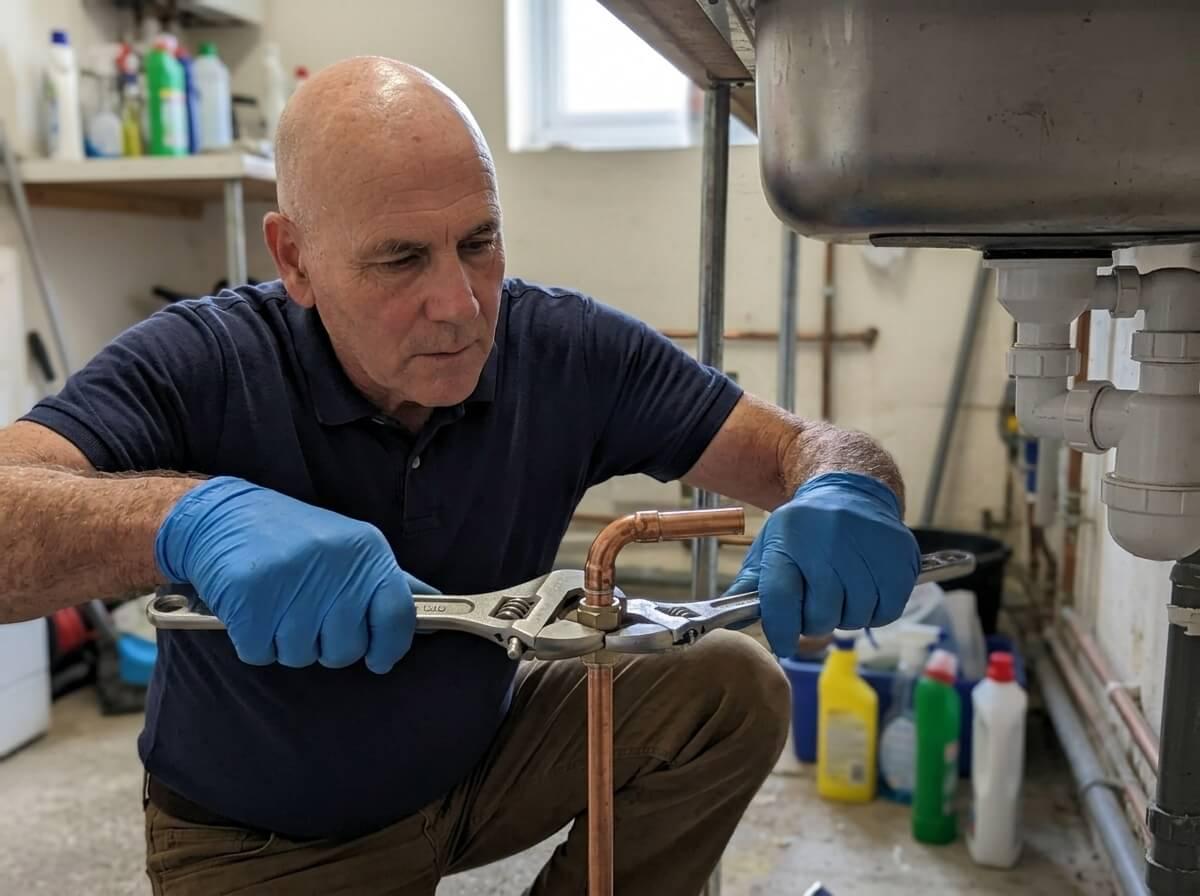
When I arrive at a ceiling leak, the first job is to make sure the water is genuinely stopped, including any tank or heating system that the stopcock does not control. Then I find the source, methodically rather than by guesswork. That means looking at the pattern and timing of the leak, checking the fittings and seals in the room above, running each one in turn, isolating sections of pipework to narrow things down, and lifting only the floorboard or panel I need to. Most ceiling leaks can be found and fixed from above, without cutting into the ceiling below at all.
The repair itself is usually straightforward once the source is found: a new section of pipe or fitting, a replacement tap connector or pan connector, a resealed waste, or a properly reseated joint. Before I leave, I restore the water, refill and check the heating system if it was involved, and test the repair under full pressure. If the source is not obvious, my leak detection service traces it with as little disruption as possible, and for a split or burst pipe, my burst pipe repair service puts it right on the spot. If the culprit turns out to be an overflowing cistern upstairs, there is more on that in my guide on how to stop a toilet cistern overflowing. You will always get a fair price agreed before work starts.
Drying Out and Repairing the Ceiling
Once the leak is fixed, the ceiling needs to dry properly before anyone repairs or decorates it. Rushing this is the most common reason a stain comes back or mould appears a few weeks later.
- ●Small stains and damp patches on a ceiling that has stayed firm can often dry in place over one to three weeks with good ventilation, heating and a dehumidifier once the electrics are confirmed safe. When it is completely dry, a stain-blocking primer stops the mark bleeding back through the paint.
- ●Plasterboard that has sagged, softened or come down normally needs that section cutting out and replacing. Plasterboard loses its strength once it has been soaked, even if it dries flat again.
- ●Lath and plaster ceilings, found in many of Ipswich’s Victorian and Edwardian homes, can lose their grip on the laths when wet. If cracks appear or the ceiling sounds hollow when gently pressed, get it looked at by a plasterer before it is left to dry.
- ●Textured ceilings painted before 2000, such as Artex, can contain small amounts of asbestos. Do not sand, scrape or drill a damaged textured ceiling yourself. If in doubt, it can be tested before anyone works on it.
- ●Insulation in the ceiling void or loft that has been soaked holds water for a long time and should usually be lifted out and replaced, or the ceiling will stay damp.
With a large leak, your insurer may send a drying company to monitor moisture levels before reinstatement, which is worth waiting for, as it gives you evidence that the structure was dry before it was closed up.
Ceiling Leaks and Your Home Insurance
Most UK buildings insurance policies include cover for “escape of water”, which is the insurance term for exactly this: water that has escaped suddenly from a pipe, tank, appliance or fitting. Many policies also include “trace and access” cover, which pays towards finding the leak and opening up and making good the floor or wall to reach it. Contents insurance covers your damaged belongings. Cover always depends on the policy, so check your documents, but a few things help any claim go smoothly:
- ●Report it early. Most policies expect you to tell them as soon as reasonably possible, and many have a 24-hour claims line.
- ●Photograph everything first, the ceiling, the room above, the source if you can see it, and any damaged belongings.
- ●Show you limited the damage. Turning off the water and electrics quickly is exactly what insurers expect you to do.
- ●Keep the plumber’s invoice and report. I give an itemised invoice that separates finding the leak from repairing it, and I am happy to explain the cause to a claims handler.
- ●Know what is often excluded. Worn-out shower seals, grout and silicone, and gradual damage from a leak that has been going for a long time, are often treated differently from a sudden burst. Another reason not to ignore a slow stain.
How to Stop It Happening Again
Most of the ceiling leaks I fix could have been caught earlier with a few minutes of checks a year. These are the ones worth doing:
- ●Know where your stopcock is, and check it turns. Once a year, turn it off and on again so it does not seize when you need it.
- ●Keep an eye on shower and bath sealant. If silicone is black, cracked or pulling away from the wall or tray, cut it out and reseal it before water gets behind it.
- ●Look under the bath and basin now and then. If there is a removable bath panel, a quick look with a torch for drips or staining costs nothing.
- ●Replace old flexible tap connectors. The braided hoses under basins and sinks have a limited life, and a burst one can flood a ceiling fast.
- ●Check the loft before winter. Make sure pipes and tanks are lagged, the tank has a lid, and the overflow pipe is not blocked.
- ●Fit isolating valves. A small valve on each toilet, basin and appliance supply lets you stop a single fitting without turning off the whole house.
- ●Do the meter test if you are on a water meter. With everything off, take a reading, wait an hour without using any water, and read it again. If it has moved, water is escaping somewhere.
- ●Watch the boiler pressure on a combi or sealed system. If you keep having to top it up, there is a leak in the heating somewhere.
When to Call an Emergency Plumber
You can do the first ten minutes yourself, but you will almost always need a plumber to find and fix the source of a ceiling leak. Call me straight away, day or night, if water is still coming through, the leak keeps going with the stopcock off, there is water near electrics, the ceiling is bulging, or you cannot turn the water off. If it is a slow stain that has stopped, call during the day and I will book it in promptly.
When I attend, I make sure the water is properly stopped, find the source, repair it on the spot wherever possible, test it under full pressure, and explain clearly what happened and what the ceiling needs next. You can see everything I cover on the emergency plumbing services page. I cover Ipswich, Felixstowe, Woodbridge, Kesgrave, Martlesham and the surrounding towns, and I answer the phone myself, 24 hours a day, seven days a week, on 07977 857224. If you are wondering what an out-of-hours visit involves, my guide on how much an emergency plumber costs explains how pricing works.