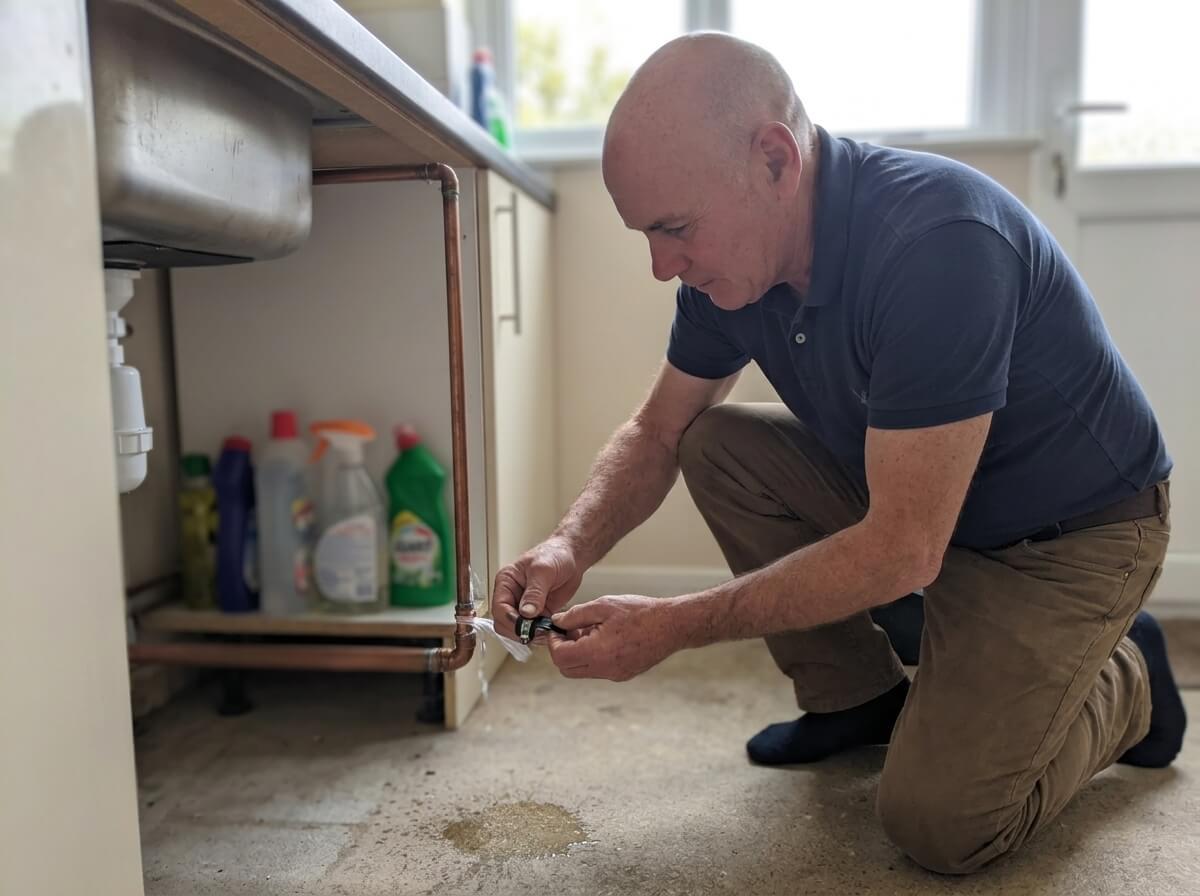
In more than forty years as a plumber in Ipswich, the single most useful thing I have found any homeowner can know is where their stopcock is and how to turn it off. When a pipe bursts or a joint fails, the water does not wait for you to read the manual, it pours out at mains pressure and does real damage within minutes. The people who come through a plumbing emergency with the least damage are almost always the ones who found the stopcock, shut it off, and stopped the flow before I even arrived. This guide walks you through exactly how to find your stopcock quickly, how to identify the right valve, what to do if it is stuck, and how to use the outside shut-off as a failsafe. Take five minutes to find yours now, while everything is calm, it is far harder to hunt for it with water coming through the ceiling.
Why Knowing Your Stopcock Location Matters
Your internal stopcock (also called a stop tap or stopcock valve) is the master switch for the cold water coming into your home from the street. Close it and you cut off the pressure feeding every tap, toilet and appliance. In a plumbing emergency, that one action is the difference between a quick mop-up and a ruined ceiling, warped floors and a costly insurance claim. Water escaping under mains pressure, typically three to four bar, or roughly 40 to 60 PSI in a modern home, can release a remarkable volume very quickly, and it travels along joists and through ceilings far from where it started.
There is a second reason it matters, and it is one I see catch people out constantly in Ipswich and across Suffolk: our water is hard. The high mineral content means limescale gradually builds up inside valves, and a stopcock that is never touched for years can seize solid. If the first time you ever try to turn it is during a flood, you may find it will not move at all. Knowing where yours is, and checking that it still turns, is basic home insurance that costs you nothing.
What Exactly Are You Looking For? (Identifying the Internal Valve)
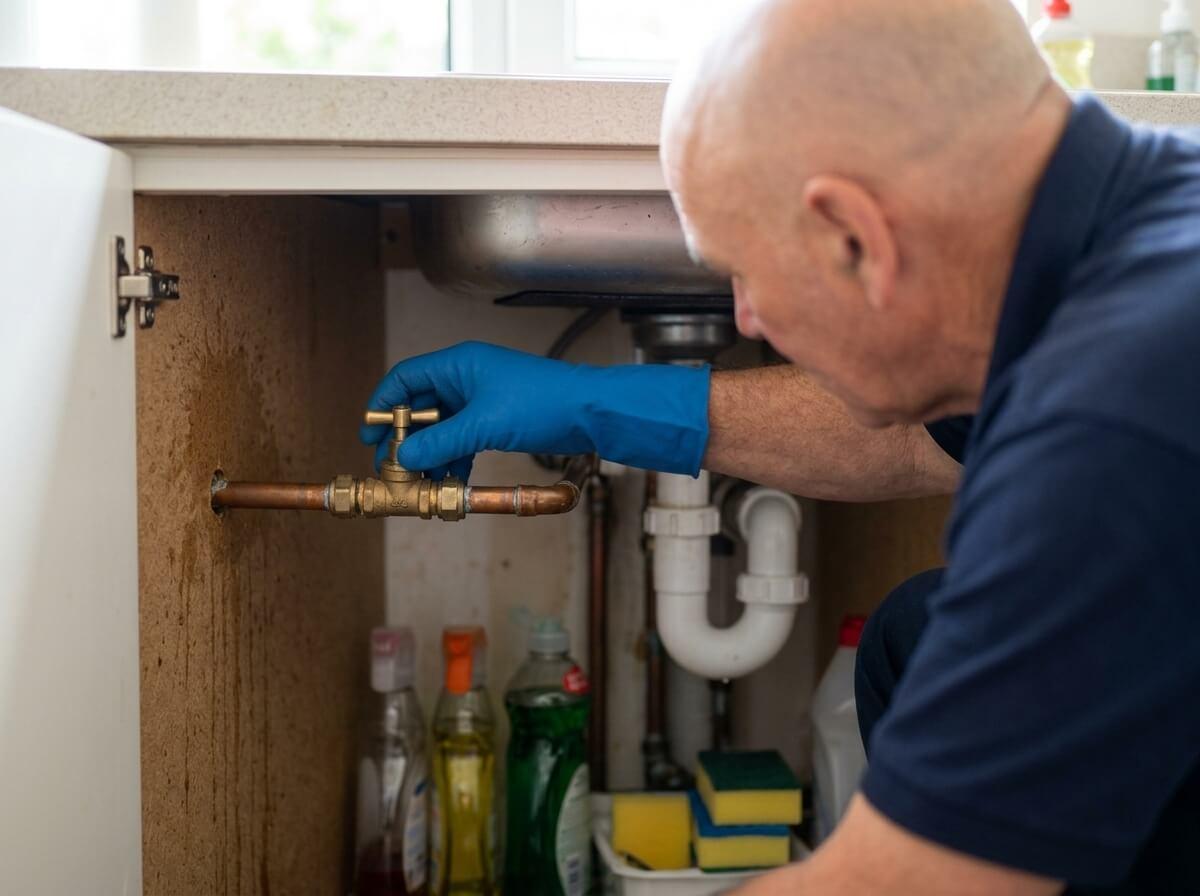
Before you start turning handles in a panic, you need to identify the correct valve, because turning the wrong one causes its own problems. A standard internal stopcock looks like a brass tap without a spout. It sits between two sections of copper pipe and usually has a T-shaped handle or a small metal wheel on top. That is the one you want.
Here is how to tell it apart from the other valves you might find nearby:
- ●Traditional brass stopcock: a brass tap-style valve with a round or T-shaped handle. Turn it firmly clockwise to close. This is the most common type in older and mid-century homes.
- ●Lever valve (quarter-turn): has a long, flat handle instead of a screw top. When the lever lies in line with the pipe, the water is on; turn it 90 degrees so it sits across the pipe and the water stops instantly. Common in newer installations.
- ●Surestop switch: a plastic rocker switch on the wall or inside a kitchen cupboard. It uses water pressure to shut off the supply with a single click, with no manual turning. Increasingly fitted in modern homes.
- ●Gate valve: usually has a small red wheel. These control flow from a header tank in the loft rather than the incoming mains, so closing one may only isolate part of the system.
- ●Gas valve: has a bright yellow handle or sits on a yellow-coded pipe. Never confuse this with your stopcock.
- ●Boiler isolation valves: much smaller, usually directly beneath the boiler, and only isolate the boiler, not the whole house.
If you find a valve that matches the brass-tap or lever description on the pipe that first enters your property, you have found your stopcock. It is worth tying a small label to it now so anyone in the house, or an emergency contractor, can find it instantly.
How to Locate the Stopcock in a House (Step-by-Step)
The trick is to work methodically, starting with the most common location and moving to the more obscure spots. In practice, the stopcock is almost always near the point where the mains water pipe (the rising main) first enters the building, usually on an outside-facing wall at the front of the house.
Step 1: The Primary Location: Under the Kitchen Sink
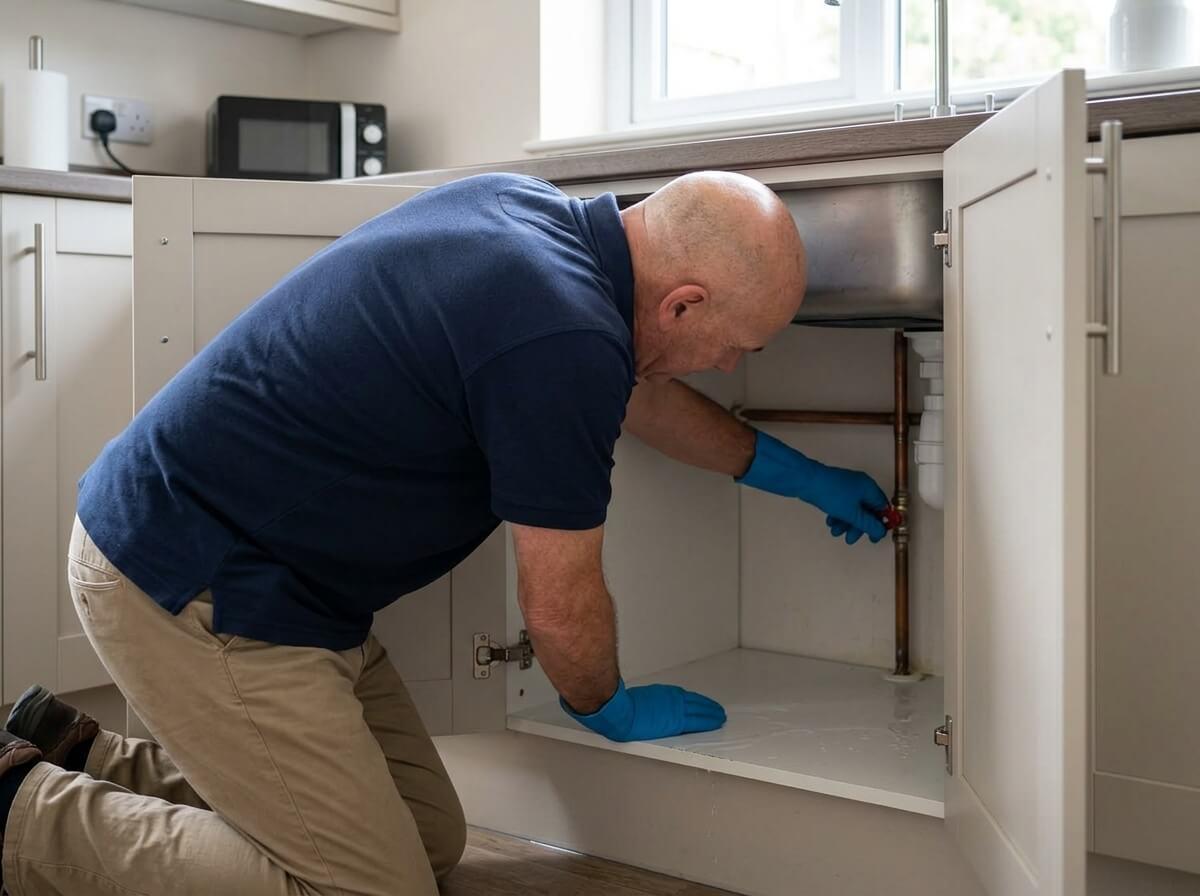
Check under your kitchen sink first. In roughly four out of five UK properties, the rising main enters the house here, and the stopcock sits at the back of the cupboard on the incoming pipe. You may need to move cleaning supplies, or pull back a loose piece of plywood or a cupboard base, to see it clearly. Take a torch, these cupboards are dark and the valve is often tucked low and to the back.
Step 2: Can’t Find It Under the Sink? Check These Hidden Spots
Many older houses in Ipswich follow different plumbing routes, especially Victorian and Edwardian terraces where the kitchen may have been extended or moved over the years. If the kitchen search fails, look where the service pipe would first cross your property boundary, usually the front of the house. Common hiding places include:
- ●The front hallway or under the stairs: many Victorian terraces have the stop tap near the front door.
- ●The downstairs cloakroom or toilet: check behind the pan and inside any small built-in cupboards.
- ●The airing cupboard: look near the floor, especially in homes with an older gravity-fed system.
- ●A downstairs utility room or behind a removable kitchen kickboard panel.
- ●The garage: examine the internal wall shared with the house if the garage is attached.
- ●On a cellar or basement wall, near where the mains rises from the floor.
Step 3: Flats and Converted Homes
If you live in a flat, you usually have a dedicated isolation valve where the water first enters your home, check the kitchen sink cupboard, a utility cupboard, or behind a small access panel in the bathroom. If there is no valve inside your flat, look in the communal hallway: many blocks use a manifold, a row of valves behind a service door or hatch on your floor, with each valve tagged to a flat number. Make sure yours is clearly labelled so you never shut off a neighbour’s supply by mistake. In a converted house, the stop taps for all the flats often sit together near the main entry point on the ground floor or in the basement.
Will Turning the Stopcock Actually Stop the Leak?
This is the part people do not expect, and it catches out a lot of homes in the older parts of Ipswich. The stopcock only controls the incoming pressure from the street. If your home has an indirect, gravity-fed system, with a cold water storage tank in the loft, then closing the stopcock only stops that tank from refilling. The water already stored in the tank, which can be dozens of gallons, will keep feeding the leak until the tank empties.
So after you close the stopcock, you should also drain the system down. Open every cold tap in the house, starting at the ground floor and working upward. This breaks the vacuum in the pipework and lets gravity pull the standing water out through the taps into your drains, rather than through the hole in your pipe and into your floors and ceilings. Open the hot taps too, to empty the hot water cylinder, but make sure your boiler and immersion heater are switched off first, because heating elements can be damaged if they fire against empty pipes. Draining the system manually is how you neutralise the threat to your ceilings while you wait for a plumber.
If you know your home is on a modern, mains-fed (direct) system, closing the stopcock will stop the flow much more quickly, because every tap is fed directly from the mains rather than from a tank. Either way, opening the taps to drain down does no harm and speeds things up.
The Failsafe: How to Find the Outdoor Water Shut-Off Valve
Sometimes the internal stopcock is seized, or it has been boxed in behind a new kitchen unit, or the leak is on the supply pipe before it even reaches the house. In those cases you need the outdoor water shut-off valve, sometimes called the boundary stop tap or the external stopcock.
Look at the boundary of your property where it meets the public pavement. You are looking for a small square or round cover, usually plastic or cast iron, often with the word WATER or the letter W stamped into it. Lift the cover, a flat-head screwdriver helps if it is stuck with grit, and clear away any silt or leaves until you can see the valve head down in the chamber. You may need a long-handled stopcock key to reach it; most hardware stores in Ipswich stock these for a few pounds, and it is worth keeping one in the house. Turn the valve clockwise until the water stops.
One important note on ownership: your water provider owns the external valve and the pipe up to your property boundary. You have every right to use it in an emergency to stop a flood, but if the valve itself is damaged or leaking, you should report it to the water company rather than trying to repair it yourself.
What to Do If Your Stopcock is Seized (The Hard Water Problem)
This is the most common stopcock problem I am called out for in Suffolk, and it is entirely down to our hard water. Over years of sitting untouched, limescale builds up inside the valve threads and locks the brass components together. People usually only discover a seized stopcock during an emergency, which is the worst possible moment.
If your stopcock will not turn, do not reach for a wrench or a hammer. I cannot stress this enough. The brass and the copper pipe become brittle with age, and excessive leverage will shear the valve head or snap the pipe entirely, turning a controllable leak into a high-pressure flood you cannot stop from inside the house. Instead:
- 1Spray the valve threads and spindle with a penetrating oil such as WD-40 and let it soak in for at least five to ten minutes.
- 2Try to move the handle gently, using only your hand or at most a small pair of adjustable pliers with light pressure.
- 3Use a small rocking motion, a few millimetres clockwise, then back anti-clockwise, and repeat. This can break the limescale seal without breaking the valve.
- 4If it still will not move with moderate, gentle force, stop. Do not escalate the force.
- 5Go outside and shut off at the external boundary valve instead, then call a plumber to free or replace the internal valve.
Once the emergency is over, a seized stopcock should be replaced, ideally with a modern quarter-turn lever valve that will not seize the same way and can be operated in a second. I carry these on the van and can swap a stopcock quickly.
How to Test and Maintain Your Stopcock
A stopcock is only useful if it works when you need it, so it pays to look after it. Once or twice a year, turn it fully off and then on again to keep it free and stop limescale locking it up, this simple habit prevents most seizing. When you close it, check it actually shuts the water off by running the cold kitchen tap: the flow should slow to a trickle and stop within a few seconds. When you reopen it, turn it fully on and then back a quarter-turn, which helps prevent it sticking in the fully open position.
While you are there, label the valve and make sure everyone in the household knows where it is, including older children, lodgers or anyone who might be home alone in an emergency. If your stopcock is stiff, dripping, or buried somewhere awkward, get it sorted before you need it in anger. A stopcock you cannot reach or cannot turn is no use at all.
Should You Upgrade to a Modern Lever or Surestop Valve?
If your stopcock is old, stiff or in an awkward spot, it is well worth considering an upgrade. A modern quarter-turn lever valve replaces the traditional screw-down brass tap and lets you shut the water off with a single 90-degree turn, even with wet or cold hands, a real advantage in a panic. A Surestop switch goes a step further, letting you turn the water off with a rocker switch that can be sited somewhere convenient, such as at worktop height in a kitchen cupboard, so you do not have to crawl into the back of a cupboard at all. For elderly residents, or anyone who struggles to reach and turn a low, stiff valve, these upgrades make a genuine difference to how quickly the water can be stopped. It is a small, affordable job that pays for itself the first time you need it.
When to Call an Emergency Plumber in Ipswich
Knowing how to find and turn your stopcock lets you take control in those crucial first minutes, but stopping the water is only the first step, the leak or burst still needs a proper repair. If your stopcock is seized, if you cannot stop the water, or if you have a burst pipe or a serious leak, call me. At PD Parnell Plumbing I offer a genuine 24-hour emergency service across Ipswich and Suffolk, answer the phone personally, and aim to be with you within around thirty minutes locally. I can free or replace a seized stopcock, upgrade you to a modern lever valve, and carry out a lasting repair on the pipe itself. Save my number now, 07977 857224, so it is there when you need it, and take five minutes today to find your stopcock while everything is calm.