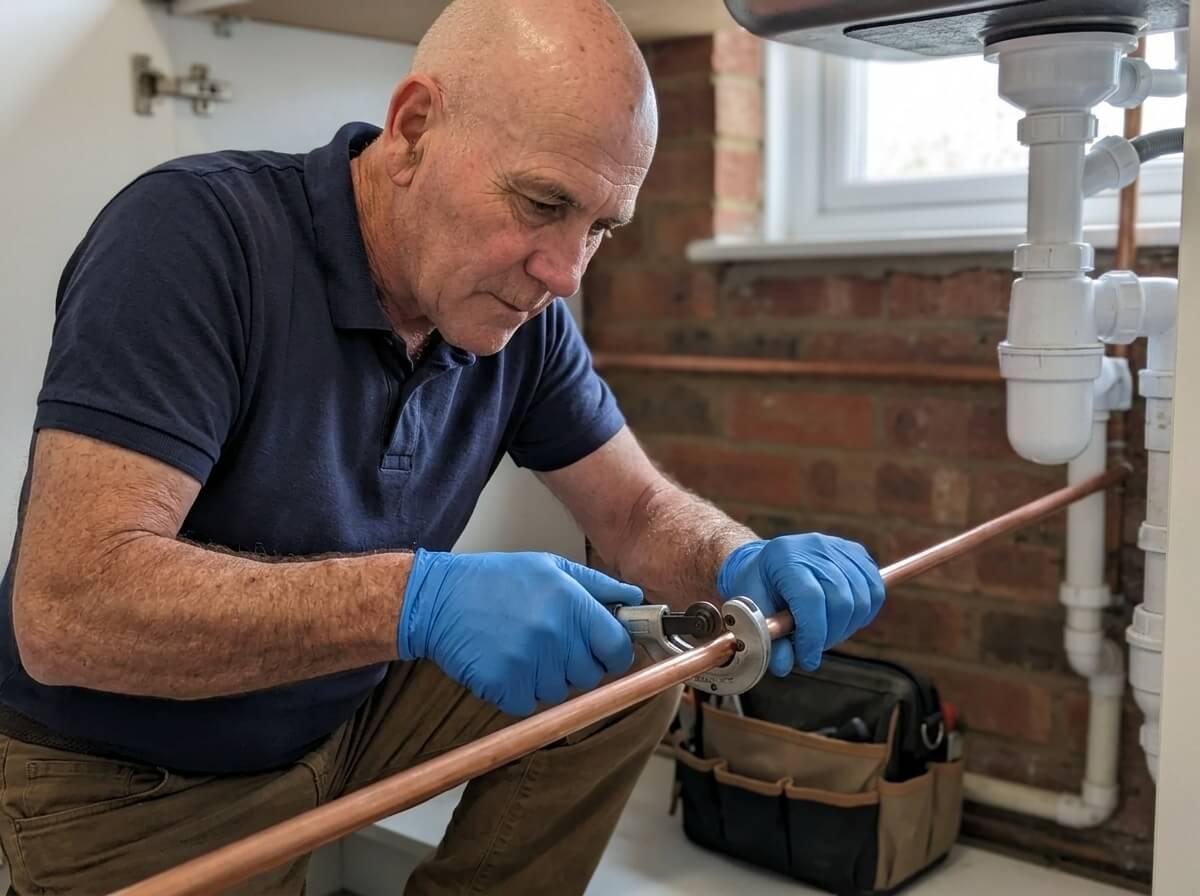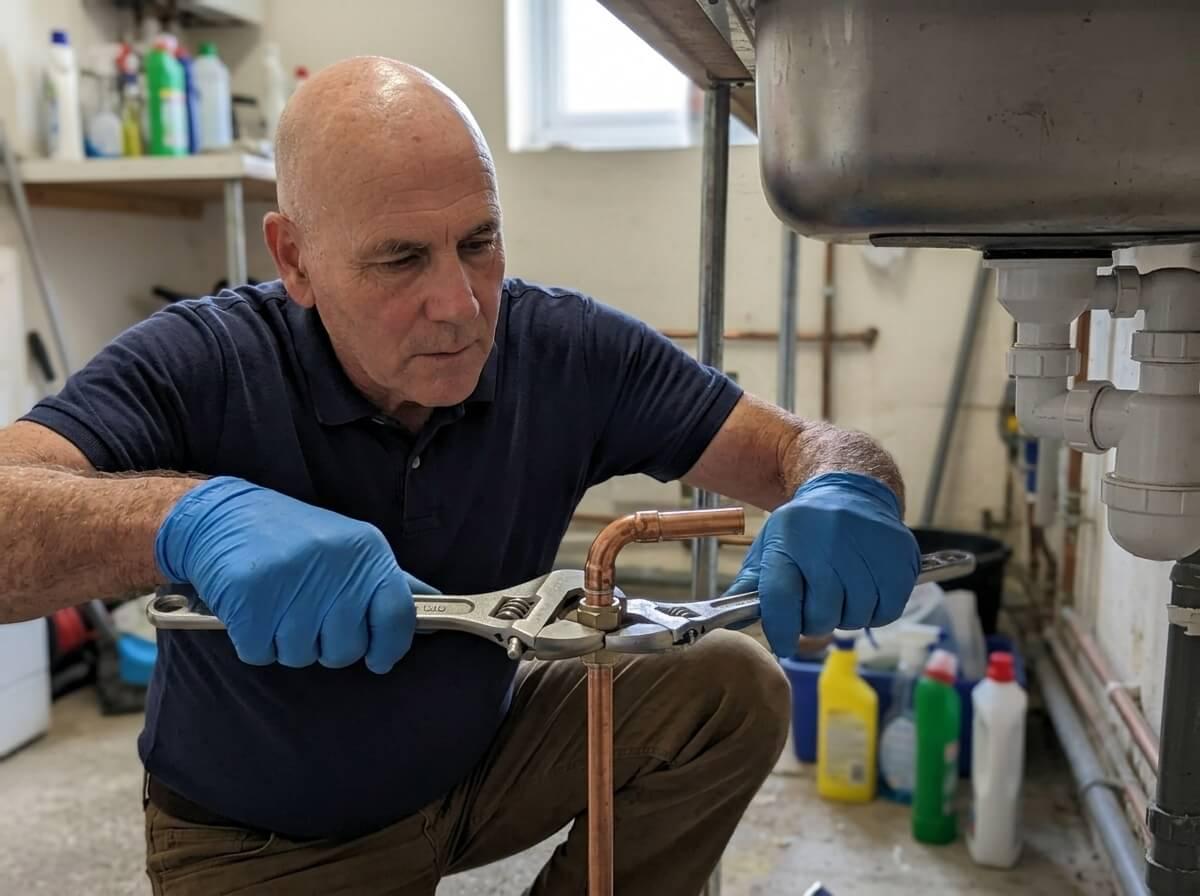
Water coming out of a wall is unnerving, because the one thing you need to know, where the leak actually is, is the one thing you cannot see. Maybe there is a damp patch by the skirting that was the size of a hand last week and is now the size of a tea tray. Maybe the paint has started to blister, the wallpaper is lifting at the seams, or you can hear a faint drip inside the wall when the house is quiet. Or maybe water is simply running out of a socket.
I have been finding and fixing leaks in walls across Ipswich and Suffolk for more than forty years, and the first thing I tell people is that a wet wall is not always a leaking pipe. It might be the mains, the hot water, the heating, a shower waste, a toilet, the rain or plain condensation, and each one is fixed differently. Most guides give you a list of signs and tell you to call someone. This one shows you how to make it safe, how to work out which of those it is in an hour or two for free, and what the repair really involves, so you know what you are dealing with before anyone picks up a saw.
Water Coming Out of the Wall? Do These 4 Things First
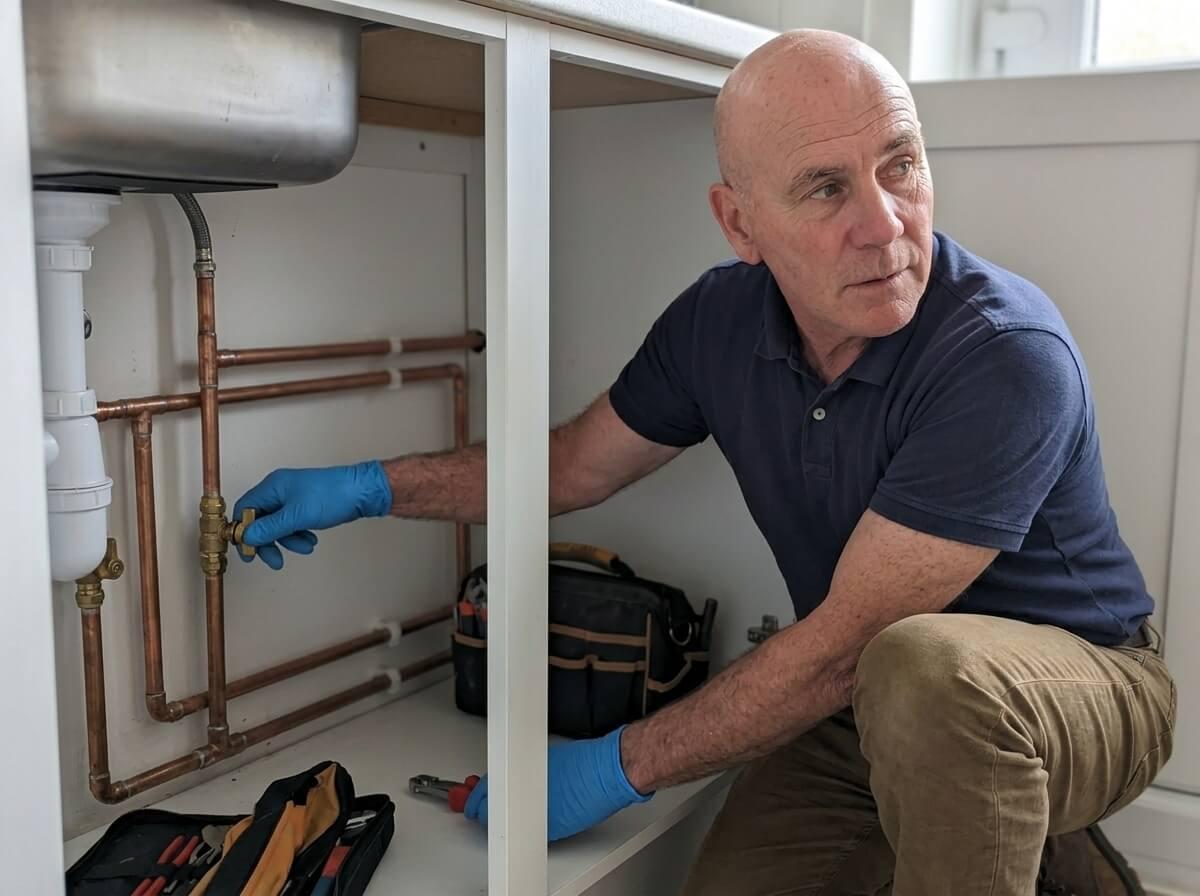
Turn off the stopcock
The main stopcock is usually under the kitchen sink, but it can be in a downstairs toilet, under the stairs, in the garage or in an airing cupboard. Turn it clockwise until it stops, then open a cold tap downstairs to drain the pressure out of the pipes. If you cannot find it, see how to locate your stopcock. If it will not turn, my guide to a stuck or seized stopcock shows you what to try.
Make the electrics safe
Water inside a wall follows cables, and back boxes for sockets and switches are holes it can drain through. Switch off the circuit for any socket, switch or light in or below the wet wall at the consumer unit. If the consumer unit is wet, or water is coming out of an electrical fitting, do not touch it. Keep everyone out of the room and call for help.
Check the boiler pressure gauge
On a combi or system boiler, the gauge on the front should read about 1 to 1.5 bar when the heating is cold. If it has dropped well below that, a heating pipe in the wall may be what is leaking. Turn the boiler off. Turning off the stopcock does not stop a heating leak, because the heating is a separate sealed system.
Protect the room and record it
Move furniture, beds and anything electrical away from the wall, lay towels along the skirting and put a bowl under any drip. Take photos and a short video, mark the edge of the patch in pencil with the date and time, and write down your water meter reading. Your insurer, your landlord and your plumber will all want them.
Is It a Pipe, a Waste or the Rain? Five Free Tests
Inside a typical wall there can be a mains cold pipe, hot water pipes, heating flow and return pipes to a radiator, and the waste from a basin, shower or washing machine. On an outside wall there is also the weather. Each source behaves differently, and these five checks cost nothing and tell you, and whoever comes to fix it, where to look.
| TEST | HOW TO DO IT | WHAT IT TELLS YOU |
|---|---|---|
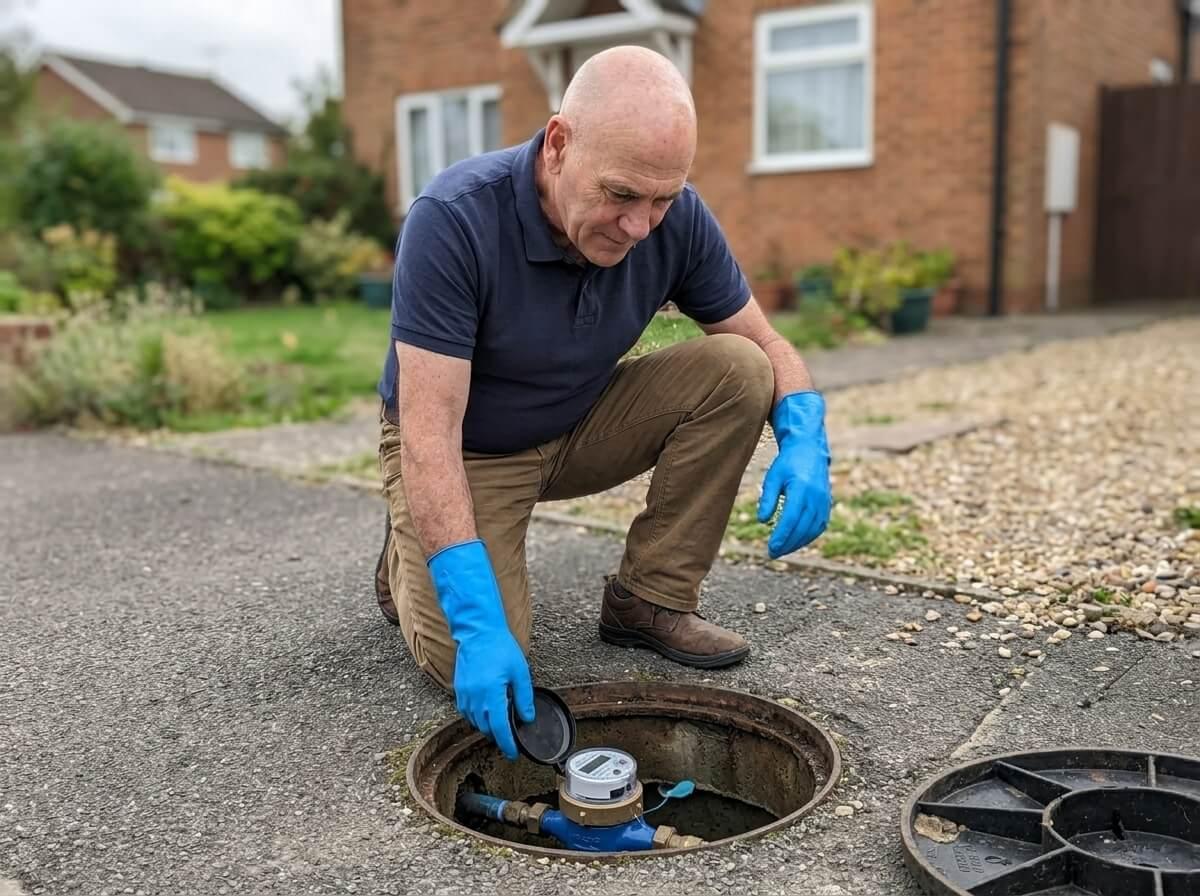
| Water meter test | Turn off every tap, the washing machine, dishwasher, outside tap and anything that fills on its own. Read the meter, use no water for an hour, then read it again. On many meters a small star or dial spins while water is flowing. | If it has moved, water is escaping from the mains cold supply, or from the hot water on a combi boiler. A pipe in the wall is a strong suspect if the wet patch is on a pipe route. |
| Stopcock test | Turn the stopcock off for an hour or two and watch the edge of the wet patch. Mark it lightly in pencil so you can see if it grows. | If the patch stops growing, or water stops running out, the leak is on a pipe fed by the stopcock. If it carries on, look at the heating, a tank in the loft, a waste pipe or rain. |
| Boiler pressure test | On a combi or system boiler, note the needle on the pressure gauge with the heating cold. Check it again the next morning and after the heating has run. | If it keeps dropping below about 1 bar with no drip at the boiler or radiators, a heating pipe is probably leaking, often one buried in a wall or floor. |
| Use test | Leave the patch to settle for a day without using the nearest shower, bath, basin, toilet or washing machine. Then use one at a time and check the wall after each. | If it only gets wetter after one of them is used, it is that appliance's waste, seal, grout or silicone, not a pressurised pipe. The meter will not move for this kind of leak. |
| Weather test | Note whether the patch gets worse after heavy or wind-driven rain, whether it is on an outside wall, and whether it is worse on cold mornings. | Worse after rain points to a gutter, downpipe, pointing, window seal or bridged damp proof course. Worse on cold mornings, with water beads on the surface, points to condensation. |
One extra check on the meter: if it keeps turning with the stopcock inside the house turned off, the leak is not in your wall at all. It is on the underground supply pipe between the meter and the house, and my guide to a water leak outside the house explains whose pipe that is and who pays. Water Safe, the national register of approved plumbers, gives the same meter advice for finding a leak inside a wall.
Where Is the Water Showing? Leak Finder
When someone rings me about a wet wall, I ask where the water is, what it looks like and when it is worst. Find the row that matches your wall.
| WHAT YOU NOTICE | LIKELY CAUSE | URGENCY |
|---|---|---|
| Water running or dripping out of the wall, a socket or a light switch | A split pipe or failed joint inside the wall under mains pressure. Water is finding the easiest way out, often through the holes cut for electrics. | Act today |
| Hissing or running water inside the wall with everything off | A pressurised supply pipe leaking. Often loudest at night when the house is quiet. | Act today |
| Wet patch high on a wall, under a bathroom or tank upstairs | A leaking pipe, toilet, shower tray or bath waste in the floor above, running down inside the wall. Check the ceiling too. | Act today |
| Damp on the wall behind a shower or bath | Failed grout or silicone, a leaking shower valve or its pipe joints, or a leaking bath or tray waste. | Within days |
| Damp low on the wall behind a toilet or basin | A leaking pan connector, cistern inlet, isolation valve or basin waste, or a pipe running down the wall to them. | Within days |
| Wet wall behind the washing machine or dishwasher | A loose or split fill hose, a leaking valve on the pipe, or the waste standpipe or sink trap overflowing into the wall. | Within days |
| A warm damp patch on a wall | A hot water or central heating pipe leaking in the plaster. Common with old copper pipes buried in cement. | Within days |
| Wet patch on the inside of an outside wall by an outside tap | The pipe feeding the outside tap, or the tap itself, leaking back through the wall. Often after a frost. | Within days |
| Stain on a chimney breast, or under a window after rain | Rain getting in through the chimney, flashing, window frame or pointing. Usually a roofer or builder job, not a plumber. | Check and watch |
| Tide mark low on a ground floor wall, salts on the plaster | Rising or penetrating damp from outside: high ground, a bridged damp proof course or a leaking gutter or downpipe. | Check and watch |
| Water droplets and black mould on a cold outside wall, worse in the morning | Condensation from cooking, showers and drying washing indoors. Not a leak, but still needs ventilation and heat. | Check and watch |
Signs of a Leaking Pipe in the Wall
A pipe leaking inside a wall rarely announces itself with a puddle. More often it is a slow build of small clues that people put down to damp or old paint for weeks. Look and listen for these:
- ●A patch that keeps growing. Rain damp comes and goes with the weather. A leaking pipe makes a patch that spreads steadily, day after day, whatever the weather, and does not dry out.
- ●Bubbling paint and peeling paper. Water pushes paint off the plaster in blisters, and lifts wallpaper at the seams. Press a blister and it may be wet inside.
- ●Soft or crumbling plaster. Plaster that has been wet for a while goes soft, powdery or hollow sounding when you tap it. Plasterboard can sag or bow.
- ●Stained or swollen skirting. Water runs to the bottom of the wall, so the skirting board and the floor beside it are often the first place it shows. MDF skirting swells and splits.
- ●A musty smell and mould on one wall. Mould on a single internal wall, or in one patch away from windows, is more likely to be a leak than condensation.
- ●A warm patch. A damp area that feels warm to the back of your hand, especially when the heating or hot water is on, points to a hot or heating pipe.
- ●Dripping or hissing at night. Put your ear to the wall when everything is off. A steady drip or a faint hiss is water escaping under pressure.
- ●Higher bills or falling pressure. A water bill that has jumped on a meter, or boiler pressure that keeps dropping, are the two numbers that prove water is going somewhere it should not.
For the other clues a hidden leak leaves around the house, see the signs you have a hidden water leak.
What Kind of Wall Is It?
How a leak shows, how it is found and how much mess the repair makes all depend on the wall. Most homes around Ipswich have a mix of these, such as solid brick walls in a Victorian terrace off Norwich Road with a later stud wall where a bathroom was squeezed in.
Plasterboard stud walls
A timber or metal frame with plasterboard on both sides and a hollow in the middle. Most internal walls in newer houses and most bathroom and en suite walls are built this way. Water runs straight down the hollow and soaks the bottom of the board and the sole plate, so the damp shows low down even when the leak is high up. The good news is that these are the easiest walls to open and repair: a neat square of board comes out and a new piece goes back in.
Solid brick walls with pipes in the plaster
In older houses, pipes were often chased into the brickwork and plastered over. Copper or steel buried in lime or cement plaster slowly corrodes from the outside, and after decades it can pinhole. The leak soaks into the plaster and brick around it, so the patch spreads sideways as well as down. Repairing it means chasing out a short length of plaster along the pipe, which is messier but quick to make good.
Cavity walls
Most houses from the 1930s onwards have outside walls made of two skins with a gap between. Pipes that pass through to an outside tap, a boiler flue or an overflow cross the cavity, and a leak there can run down inside the cavity and show at the bottom of the inside wall or, in some cases, out through the brickwork outside. If the cavity has been filled with insulation, the insulation can soak up the water and hold it against the inner wall.
Tiled bathroom and kitchen walls
Tiles hide water well. Water gets behind failed grout or silicone and soaks into the board or plaster underneath, and a leaking pipe or shower valve behind the tiles can go unnoticed until the wall on the other side, or the ceiling below, starts to show it. Hollow sounding tiles, grout that stays dark and tiles that start to lift are the usual clues. Opening up from the other side of the wall, such as from a bedroom or a cupboard, is often less disruptive than taking tiles off.
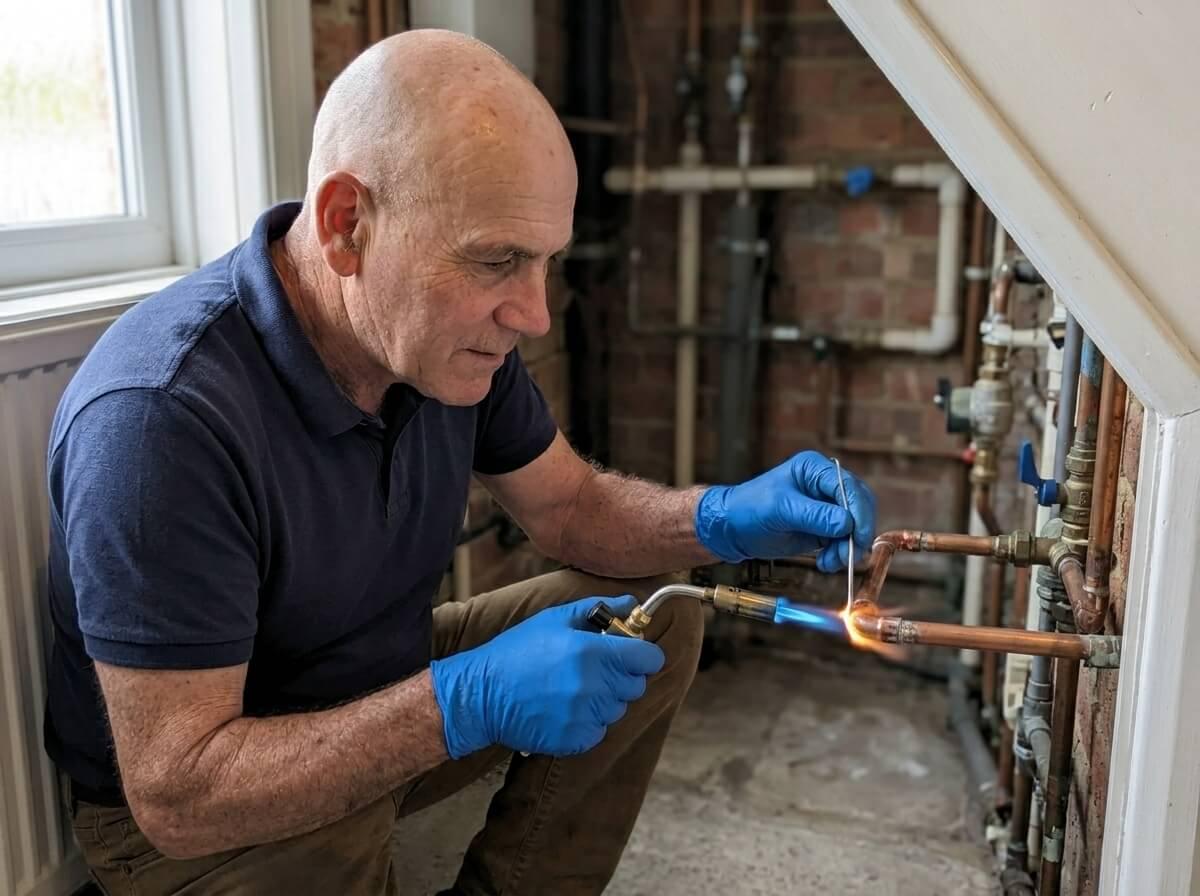
Water Leaking From the Wall Behind a Shower
This is the most common wall leak I am called to, and it is often not a pipe at all. The quickest way to tell is timing:
- ●Only wet after a shower. Water is getting out of the shower, not out of a pipe. The usual causes are cracked grout, failed silicone along the tray or bath, a shower screen seal, or water running down the mixer bar and in behind the wall plate. A leaking tray or bath waste also only leaks when the shower runs.
- ●Wet even when nobody has showered. This points to the pipes feeding the shower valve, or a worn seal inside a built-in valve. The meter will usually move with everything off.
- ●Wet when the shower is on, but not just from spray. A leak on the shower valve, a split hose or a loose outlet elbow behind the wall only leaks while water is flowing through it, but much more than splashing would explain.
My guide to a leaking shower walks through each of these in detail, including how to test the tray, the grout and the valve one at a time.
Water Leaking From the Wall Behind a Toilet, Sink or Washing Machine
Low damp patches behind bathroom and kitchen fittings are usually a joint or a waste rather than a buried pipe. Behind a toilet, check the pan connector where the toilet meets the soil pipe, the cistern inlet, and the isolation valve on the supply pipe. A toilet that leaks every time it flushes will soak the wall behind it and the floor in front. My guide to a toilet leaking from the base covers how to tell which.
Behind a basin or kitchen sink, look at the trap, the waste and the flexible tap connectors first, as covered in my guide to a leak under the sink. Behind a washing machine or dishwasher, the fill hose, the valve it screws onto, and the waste standpipe are the usual suspects. A standpipe that is too short or a sink trap that is partly blocked can overflow into the wall every time the machine empties. See my washing machine leaking guide for the full checklist.
Water Coming Out of an Outside Wall
Water running out of the brickwork or mortar joints outside is a sign that a pipe in or behind the wall is leaking and the water has found its way out through the face of the wall. The common causes:
- ●The outside tap pipe. The pipe feeding an outside tap passes through the wall, and if it splits in a frost, water can leak into the wall and out of the brickwork. See outside tap leaking.
- ●An overflow pipe. A steady drip from a small pipe sticking out of the wall high up is an overflow from a toilet cistern or loft tank, not a leak in the wall. See overflow pipe dripping.
- ●The incoming supply pipe. Where the mains comes up from the ground and into the house, a leak can show as a wet patch low on the outside wall or soggy ground beside it.
- ●Gutters and downpipes. A wet stripe down the brickwork after rain, below a joint in a downpipe or a blocked gutter, is a rainwater problem, not plumbing.
Wet Wall but No Leak?
If the meter does not move with everything off, the boiler holds its pressure, and no shower, toilet or appliance makes it worse, look at these before paying anyone to open the wall:
- ●Penetrating damp. Rain driving through cracked render, worn pointing, a gap around a window frame or a leaking chimney. It gets worse after wind-driven rain and dries out in a dry spell.
- ●Gutters and downpipes. A blocked gutter overflowing down the wall or a cracked downpipe can soak a solid wall right through. Check them in the next downpour.
- ●A bridged damp proof course. If soil, a patio or a path outside is higher than the damp proof course, usually about two bricks above ground, water soaks up into the bottom of the wall and leaves a tide mark inside.
- ●Condensation. Cold outside walls, corners and the wall behind a wardrobe collect moisture from cooking, showers and drying washing. It looks like a leak, but it beads on the surface, is worse on cold mornings and comes with black spotty mould.
None of these are plumbing jobs, and if that is what I find, I will tell you, and who you need instead.
How a Plumber Finds a Leak in a Wall
Finding a leak in a wall is a process of elimination, not guesswork. The aim is to open up one small, neat hole in the right place:
Prove which pipe is leaking
Isolate the mains, the hot water and the heating in turn, and watch the meter and the boiler gauge. Run each waste on its own. Every pipe ruled out shrinks the search.
Map the pipe routes
Pipes in walls usually run straight up and down or level, from the floor or ceiling to a tap, valve or radiator. Where pipes come out of the wall, where the boiler and stopcock are, and what is on the other side of the wall all help map them.
Narrow it down
A moisture meter shows where the wall is wettest and how far the damp has spread. Warm spots on hot and heating pipes can be felt or picked up on a thermal camera, and a pressurised leak can often be heard on the pipe. On the hardest jobs, specialist tracing such as tracer gas may be worth it, and I will tell you honestly if it is.
Open up only what is needed
A small inspection hole confirms the leak before anything bigger is cut. On plasterboard that is a neat square. On solid walls it is a short chase along the pipe.
This is exactly what our leak detection service does, and it is why the bill for finding a leak properly is almost always lower than the cost of making good a wall that was opened in the wrong place.
How a Leak in a Wall Is Repaired
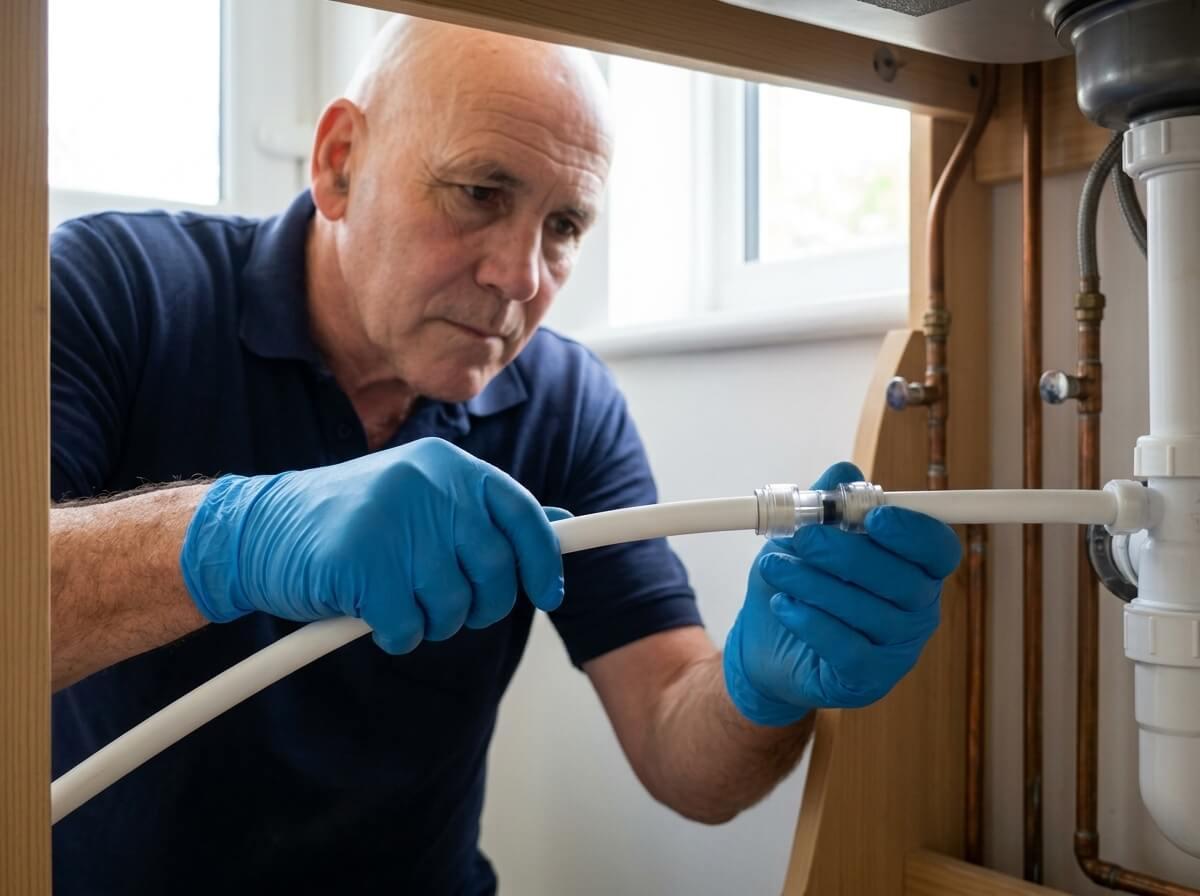
Once the pipe is exposed, the repair itself is usually quick. A failed compression joint is remade or replaced, a pinhole or split is cut out and a short new section of copper or plastic pipe is joined in, and a corroded run may be replaced back to sound pipe. Every repair is then pressure tested with the wall still open, so any weep shows before it is closed up.
The bigger question, just like with a leak under the floor, is whether to repair or reroute. If one buried pipe has corroded through, the rest of that run is the same age and in the same plaster. Running a new pipe on the surface, through a cupboard, or boxed in neatly, can cost less over time and means the problem cannot come back inside the wall. On a stud wall, I often suggest leaving a small screwed access panel over any joint or valve, so it can be reached in future without cutting.
Making good is the last step. Plasterboard is patched and filled, solid walls are re-plastered, and tiles are replaced where needed. None of that should happen until the wall has dried, which is covered below. You get a clear price for the repair and the options, agreed before work starts.
Is Water Leaking From a Wall an Emergency?
Call a plumber straight away, day or night, if:
- ●Water is running or dripping out of the wall, or out of a socket, switch or light fitting.
- ●The wet patch is spreading fast, or a plasterboard wall is bulging or sagging.
- ●Water is coming through a ceiling as well as the wall.
- ●Turning off the stopcock does not stop it, or you cannot find or turn the stopcock.
- ●You can hear water hissing or running inside the wall with everything turned off.
- ●The boiler has lost its pressure and you have no heating or hot water in cold weather.
A damp patch that stops growing when the stopcock is off, or that only appears after a shower or heavy rain, is urgent but can usually wait for a booked visit. Keep the water off when you are not using it, and the shower out of use if that is the cause. If you are not sure, ring me and describe what you can see and hear, and I will tell you honestly whether it can wait until morning. My guide to what counts as a plumbing emergency has a fuller checklist, and you can read what affects the cost of an emergency plumber.
What Not to Do
- ✕Do not cut or drill into the wall on a guess. You may hit the pipe you are looking for, or a cable, and you may still be in the wrong place. Drilling for a shelf or picture is how many wall leaks start.
- ✕Do not touch wet sockets or switches. Switch the circuit off at the consumer unit only if the consumer unit is dry and safe to reach.
- ✕Do not paint or seal over the patch. Stain block, damp seal paint or new wallpaper over a live leak just hides it while the plaster, timber and insulation behind keep soaking.
- ✕Do not blast it with heat. Fan heaters pushed against a wet wall dry the surface and crack the plaster while the inside stays wet. A dehumidifier and steady background heat dry it properly.
- ✕Do not keep topping up the boiler. If the heating is leaking into a wall, every top up adds fresh water and oxygen that corrode the system, and the wall keeps getting wetter.
- ✕Do not leave the water on overnight. A small leak running for eight hours puts a lot of water into a wall. Turn the stopcock off before bed until it is fixed.
Drying Out the Wall and Dealing With Mould
Once the leak is fixed, the wall has to dry before it is made good. A plasterboard stud wall with the damaged board cut out can dry in days. A solid brick wall that has been soaked for weeks can take months. A rough rule many surveyors use is about a month for every inch of wall thickness that got wet. A dehumidifier, the heating on low and a window open a crack will speed it up far more than direct heat.
Wet walls grow mould, and mould is not just a decorating problem. The government’s guidance on the health risks of damp and mould explains that it can affect breathing and the lungs, and that young children, older people and anyone with asthma or a weakened immune system are most at risk. Wipe small areas of surface mould with a mould cleaner while the wall dries, keep the room ventilated, and if the plasterboard or plaster has gone soft and black behind the surface, it is better cut out and replaced than painted over.
Insurance, Landlords and Your Water Bill
Most buildings insurance covers escape of water, meaning the damage the water does to plaster, walls, skirting, floors and decorations. Many policies also include trace and access cover, which helps pay to find the leak and open up and make good the wall. The repair to the pipe itself is usually not covered, and leaks that have clearly been going on for a long time can be excluded as wear and tear or gradual damage. Ring your insurer early, before major work starts, and keep your photos, meter readings and the plumber’s written findings.
If you rent, the supply, hot water, heating and waste pipes are your landlord’s responsibility, wherever they run. Report the leak in writing straight away, turn the water off if it is spreading and take photos. If you rent from the council or a housing association in England, Awaab’s Law means your landlord must investigate and make safe an emergency hazard, which includes a major leak, within 24 hours, and must investigate significant damp and mould within 10 working days.
If you are on a water meter, a leak in a wall can add a lot to your bill. Once it is fixed, ask your water company, Anglian Water for most of the Ipswich area, whether you qualify for a leak allowance on the water lost. Keep the repair invoice, as they usually ask for it.
How I Find and Fix a Leak in a Wall
When I come out to water leaking from a wall, I start with the questions and the free tests above, then the meter, the boiler pressure and each waste in turn, until I know which pipe or fitting is losing water. Then I work out where it runs and narrow the leak down before I cut anything, so the hole is small and in the right place. If the cause turns out to be rain, a gutter or condensation, I will tell you that, and who to call.
I carry copper, plastic and push-fit pipe and fittings on the van, so in most cases I can repair the pipe, or reroute it, on the same visit, and pressure test it before the wall is closed up. If a pipe has split and water is pouring out, that is a burst pipe repair and it is treated as one. You get a fair price agreed before work starts, and if the job is bigger, such as replacing a run of old buried pipe, a free, no-obligation quote with options.
How to Stop It Happening Again
- ●Use a detector before you drill. A cheap pipe and cable detector, and a look at where pipes come out of the wall above and below, stops most nail and screw leaks.
- ●Keep shower grout and silicone sound. Regrout and reseal at the first sign of cracks or black mould. It is the cheapest leak repair there is.
- ●Fit access panels. Ask for a removable panel over concealed shower valves, cistern valves and joints when a bathroom is fitted.
- ●Check your meter now and then. Read it last thing at night and first thing in the morning with nothing used. It catches a hidden leak long before the wall does.
- ●Watch the boiler pressure. A gauge that stays steady month to month is a sealed system with no leaks. One that creeps down needs looking at.
- ●Protect outside taps and pipes from frost. Isolate and drain the outside tap in winter and lag any pipe on an outside wall.
- ●Keep gutters and downpipes clear. Most wet outside walls that are not plumbing are fixed by clearing a gutter.
Water Leaking From a Wall in Ipswich? Call Philip
If you have water coming out of a wall, a damp patch that keeps spreading, or dripping inside a wall you cannot explain, call me. I will find which pipe is leaking and where, open up only what is needed, and repair or reroute it, usually on the same visit. You get a clear, fair price agreed before I start.
I cover Ipswich, Felixstowe, Woodbridge, Kesgrave, Martlesham, Stowmarket and the surrounding towns, and I answer the phone myself, 24 hours a day, seven days a week, on 07977 857224. If the water is also coming through a ceiling, read water leaking through the ceiling first. For a split pipe, see what to do when a pipe bursts, or see everything else on the emergency plumbing services page.