You have had the water off. Maybe a pipe burst and the stopcock was shut for a few hours, maybe Anglian Water had a main up in the road, or maybe you have just had a new radiator or tap fitted. The water comes back on, the kitchen tap runs fine, and then you go upstairs and the hot tap gives you a cough, a hiss, a splutter and then nothing at all. The shower is the same. It is frustrating, and when it is cold outside and you have a family to bath, it can feel like a proper emergency.
The good news is that most airlocks can be cleared in five minutes with nothing more than a tea towel or a length of hose, and no tools at all. I have been plumbing around Ipswich for more than forty years and I clear airlocks all through the winter, mostly in older houses with a cold tank in the loft. This guide shows you how to tell an airlock from the other things that look like one, the safe ways to clear it, and what it means when it keeps coming back.
Is It Really an Airlock? Check These 4 Things First
Before you start pushing water around, take two minutes to rule out the simple stuff. I lose count of the airlock callouts that turn out to be a valve someone forgot to open.
Run the kitchen cold tap
In almost every UK home the kitchen cold tap comes straight off the mains. If it runs at a decent pressure, your supply is on and the problem is inside the house. If it is dead or very weak, it is not an airlock. Go to our guide on what to do when there is no water in the house instead.
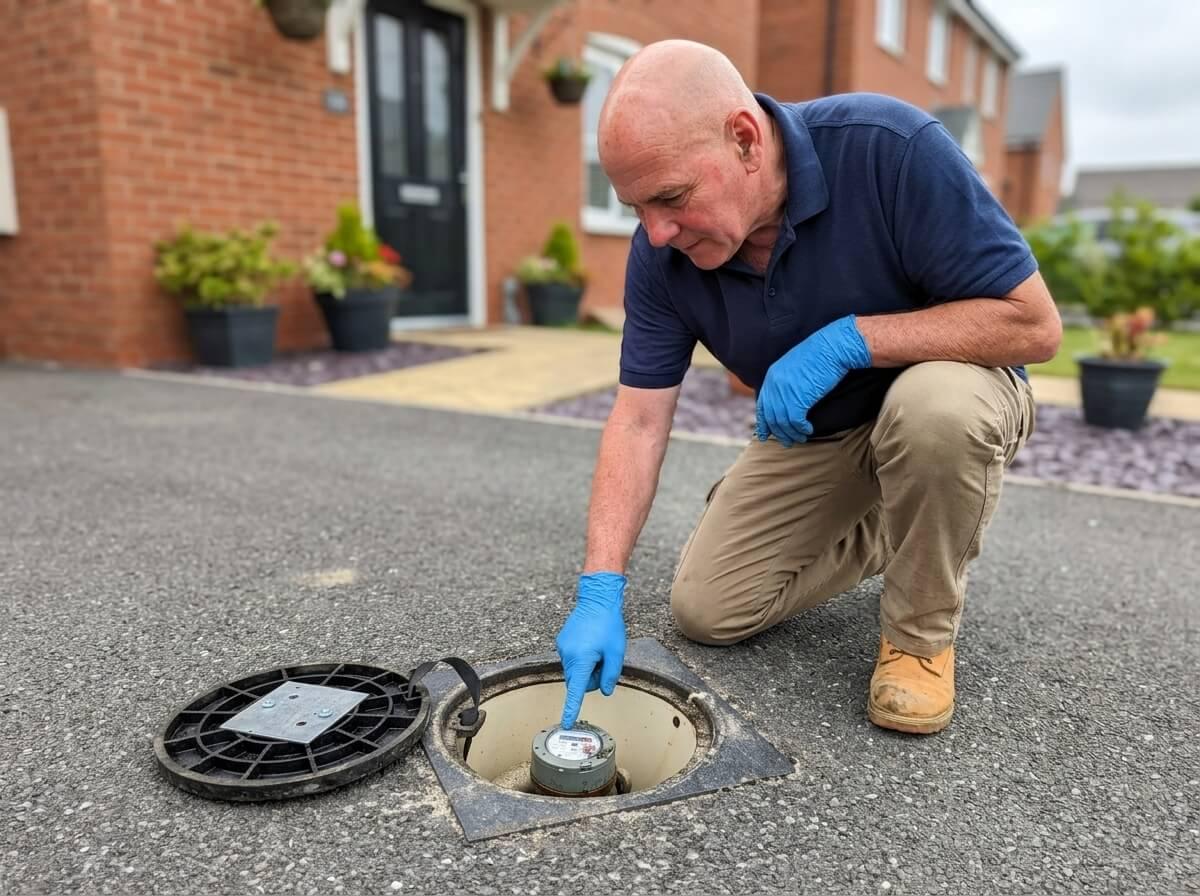
Make sure the stopcock is fully open
After a repair, the stopcock is often only cracked open. Turn it anticlockwise until it stops, then back a quarter turn so it does not stick. Not sure where it is? Our guide on how to locate your stopcock shows you where to look.
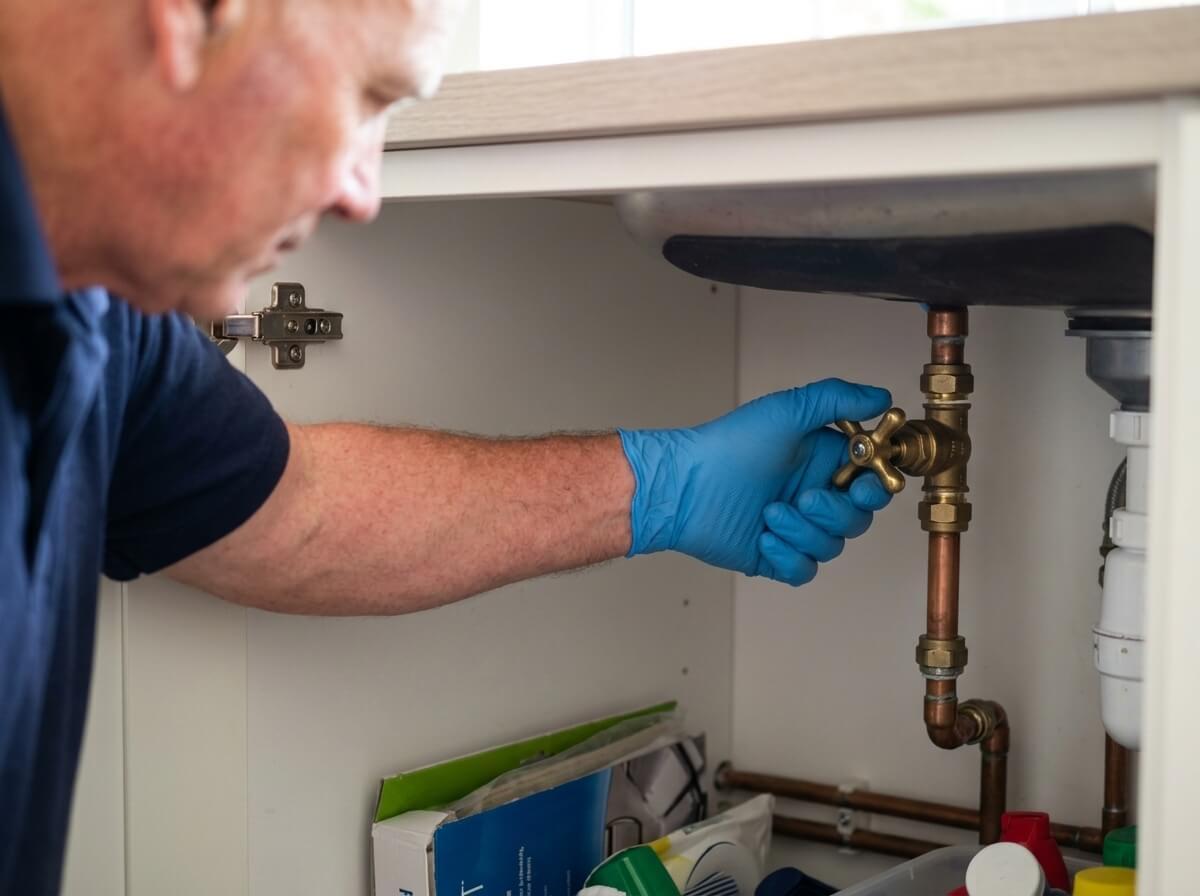
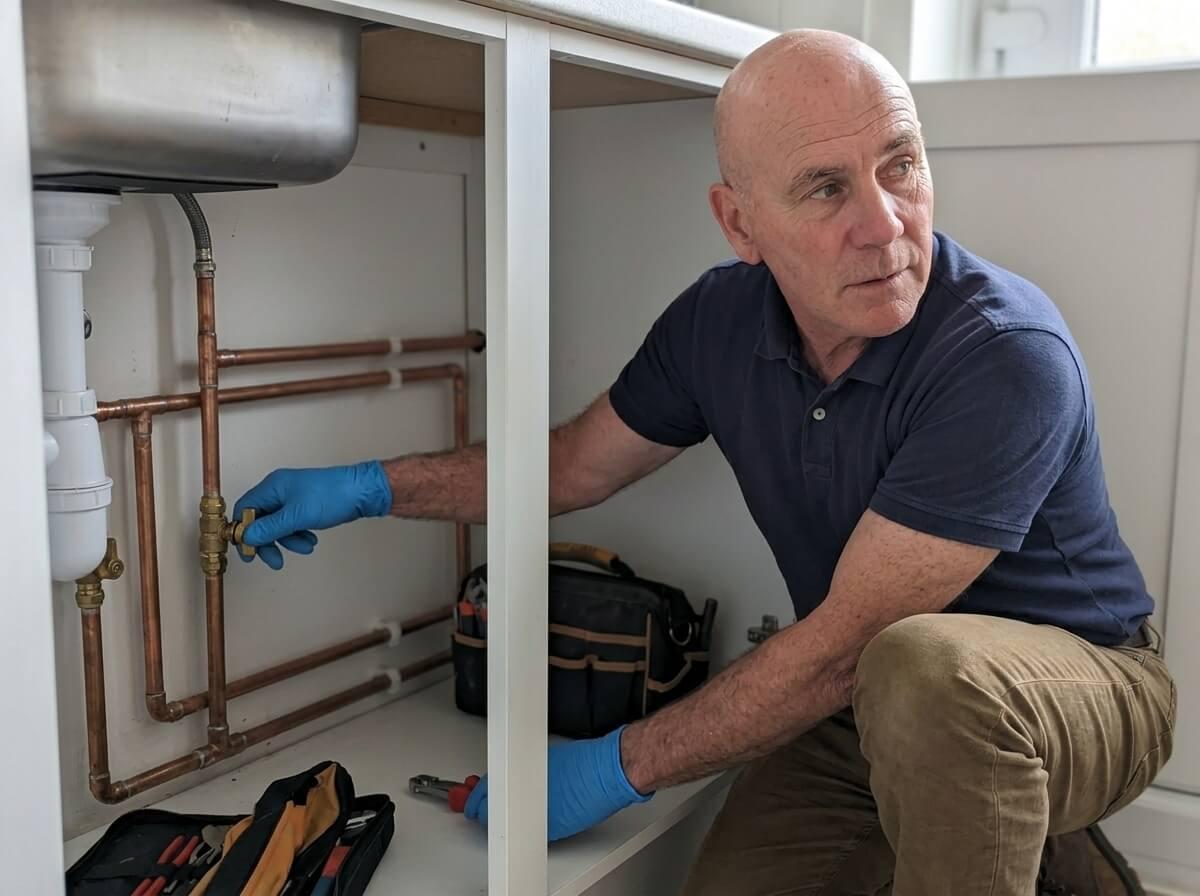
Check the little valves under the taps and toilets
If one tap is affected and the rest are fine, look for an isolation valve on the pipe underneath it. The slot or lever should run along the pipe, not across it. Gate valves with a wheel on the pipes in the airing cupboard should be turned fully anticlockwise.
Look in the loft tank
If you have a cold water tank in the loft, take a torch up and check it is full, roughly to a few inches below the overflow pipe. An empty or low tank means the hot taps have nothing to draw from, and that is often how the air got in to begin with. If it is not filling, the float valve is stuck or the pipe feeding it is frozen or turned off.
Airlock or something else? A quick symptom checker
Find the line that sounds most like your house. It will tell you whether you are dealing with an airlock and where to go next.
| WHAT YOU SEE | WHAT IT USUALLY MEANS | WHAT TO DO |
|---|---|---|
| Kitchen cold tap runs fine, but hot taps cough, spit or only dribble | Classic airlock in the hot pipework of a tank fed (gravity) system, or the loft tank has run low | Check the loft tank is full, then use the mains push method at the kitchen sink |
| Bath or basin cold tap dead upstairs, kitchen cold tap fine | Airlock in the tank fed cold pipe, or an empty loft tank | Check the tank and its float valve, then use the hose method on that tap |
| Every tap is dead, including the kitchen cold tap | Not an airlock. The mains supply is off: stopcock closed, a burst, or work in the street | Check the stopcock is fully open, ask the neighbours, then check with the water company |
| Taps splutter for a minute after the water comes back on, then settle | Air pushed out of the pipes as they refill. Normal and harmless | Run each tap, cold first, until it flows smoothly |
| Water looks milky or white but clears from the bottom of the glass up | Tiny bubbles of air dissolved in the mains water. Harmless | Let it stand. Run the kitchen cold tap for a few minutes if it persists |
| One tap only is slow, every other tap is fine | More likely a half closed isolation valve, a blocked aerator or a worn tap than an airlock | Check the isolation valve under that tap is fully open and clean the aerator |
| Cold snap, a single tap or the loft tank is not filling, pipe runs through a loft or outside wall | Frozen pipe, which can look exactly like an airlock | Treat it as frozen. Do not force water through a pipe that may be split |
| Shower sputters or runs weak and hot, taps are fine | Air trapped in the shower valve, hose or pump | Clear the shower on its own, see the shower section below |
| Loud knock or bang when a tap is shut off quickly | Usually water hammer, not an airlock | See our banging pipes guide |
What Is an Airlock in Water Pipes?
An airlock is simply a pocket of air that has got stuck in a pipe and will not move. Water can push past a small bubble easily, but a big pocket sitting at the top of a hump in the pipework acts like a cork. The water on one side does not have enough pressure to shove the air over the hump and out of the tap, so the flow slows to a dribble or stops altogether.
That is why pressure matters so much. Mains water arrives at your stopcock at several times the pressure that a loft tank can give. A tank a couple of metres above your bath tap gives a gentle push that cannot shift a stubborn bubble. That is the whole reason the fixes below work: they borrow mains pressure for a moment to push the air back the way it came.
What an airlock sounds and looks like
- ●Spitting and coughing. The tap splutters, blows air, gives a short burst of water and then splutters again.
- ●A hiss then nothing. You hear air rush out, then the flow drops to a trickle or stops.
- ●Gurgling or hammering in the pipes. Air moving back and forth makes the pipes rattle or knock while a tap is running.
- ●Hot taps affected, kitchen cold fine. The big giveaway in a house with a loft tank.
- ●A shower that runs weak or only hot. If the cold side of a mixer shower is airlocked, you can get scalding hot water with little flow.
What causes an airlock?
- ●The water being turned off and drained. After a burst pipe repair, a new tap, radiator or cylinder, or when the pipes have been drained to stop a leak.
- ●Work on the water main in the street. When a main is repaired, air gets into the supply and some houses end up with air trapped in their pipes.
- ●The loft tank running dry. If the tank empties because its supply is off, frozen or the float valve sticks, air is drawn into the pipes that feed the hot water.
- ●Pipes with humps in them. A pipe that runs up and over a door frame or joist and back down gives air a place to sit.
- ●Pumps and leaks drawing in air. A shower pump or a weeping joint on a low pressure pipe can suck air into the system.
Which Homes Get Airlocks? It Depends on Your Hot Water System
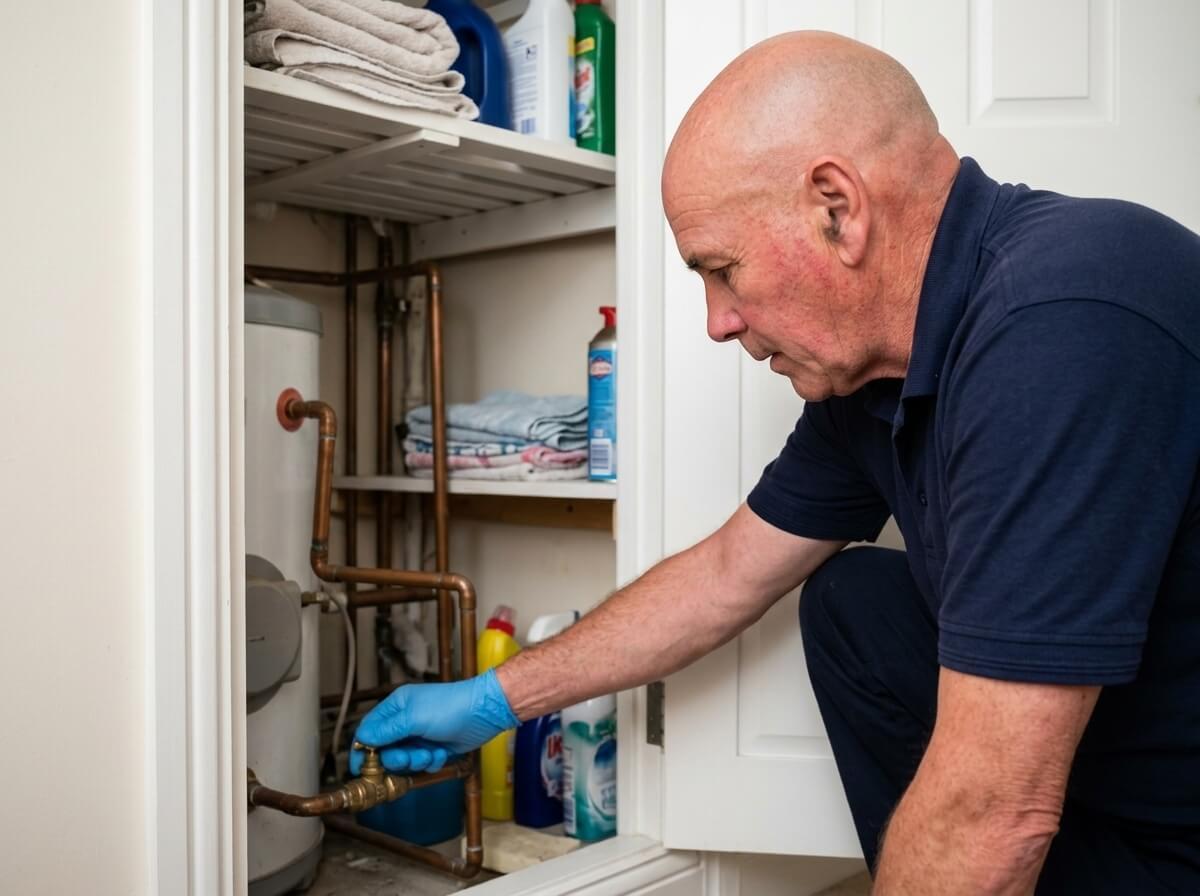
Whether you are likely to get an airlock, and which fix will work, comes down to how your hot water is supplied. If you are not sure what you have: a hot water cylinder in an airing cupboard plus a cold tank in the loft means a tank fed system. A boiler on the kitchen wall and no cylinder at all means a combi.
| YOUR SYSTEM | HOW THE TAPS ARE FED | AIRLOCK RISK | BEST FIX |
|---|---|---|---|
| Tank fed (gravity) hot water: a cold tank in the loft and a hot water cylinder in the airing cupboard | The loft tank feeds the cylinder by gravity. Hot taps, and often the bathroom cold taps, run at low pressure from that tank. | High. Low pressure cannot push a bubble over a high point. This is where nearly every airlock I see happens. | Mains push method or hose method, then check the tank and float valve. |
| Combi boiler: no tanks, hot water heated on demand | Every hot and cold tap runs straight off the mains at mains pressure. | Low. Mains pressure normally shoves air straight out of the taps. | Run every tap, cold then hot, until smooth. If hot water still will not come, the boiler needs looking at, not the pipes. |
| Unvented cylinder: a sealed cylinder, often white, with no loft tank | Hot and cold both at mains pressure through the cylinder's safety controls. | Low. Air usually clears by running the taps. | Run taps to clear. Do not touch the cylinder's valves. Call a plumber if hot water does not return. |
| Pumped shower or whole house pump on a tank fed system | A pump boosts low pressure tank water to the shower or taps. | Medium to high. Pumps cannot push air and will not prime if their pipe fills with it. | Turn the pump off, let the water run through by gravity first, then switch it back on. |
In Ipswich, a lot of the Victorian and Edwardian terraces, and plenty of the 1950s to 1980s semis out towards Kesgrave, Rushmere and Chantry, still have a loft tank and a vented cylinder. Those are the homes where airlocks happen most, especially where the bathroom has been moved or extended over the years and the pipes have picked up a few ups and downs along the way.
How to Clear an Airlock: 3 Methods, Easiest First
Start with method one. It fixes most airlocks and needs nothing but your hands. Only move on if it does not work. Before you start, make sure the stopcock is fully open and the loft tank, if you have one, is full.
Method 1: Open the taps and let the water push the air out
This is the gentle one, and it is all that is needed after most supply cuts, especially on a combi or unvented system.
Start at the lowest tap
Open the kitchen cold tap fully and let it run for a minute or two until the spluttering stops and it runs clear.
Work up through the house
Open the other taps one at a time, cold then hot, starting downstairs and finishing with the highest tap in the house, usually the bath. Leave each one running until it flows smoothly.
Do not forget the toilets and outside tap
Flush each toilet and let the cisterns refill. Run the outside tap for a moment. Any of them can hold a pocket of air.
Turn them off, top floor first
Once everything runs smoothly, close the taps from the top of the house down. If a tap still only dribbles, move on to method two.
Method 2: The kitchen mixer tap trick
If your kitchen has a single spout mixer tap, with tank fed hot water and mains cold water, you can use it to push mains water back up the hot pipe and drive the air back to the cylinder and up the vent into the loft tank. It sounds clever, and it is, but it only takes a minute.
Close all the other hot taps in the house
That way the only escape for the air is back up through the cylinder and vent pipe.
Turn the kitchen hot tap on fully
It may cough or barely run. That is fine.
Turn the kitchen cold tap on fully
Now both are open and mains water is coming out of the spout.
Cover the spout for 10 to 20 seconds
Hold a folded tea towel or the palm of your hand firmly over the end of the spout. With nowhere else to go, the mains water forces its way back up the hot pipe. You may hear gurgling from the airing cupboard or the loft. That is the air leaving.
Release, turn off the cold and test
Let go, turn the cold off and see if the hot tap now runs properly. If not, repeat two or three times, then try the upstairs hot taps.
If nothing happens at all, your tap may have built in check valves that stop water crossing from the cold side to the hot. Lots of modern taps do. That is a good thing for your drinking water, and it just means you need method three.
Method 3: The hose method for a stubborn airlock
This is the method plumbers have used for generations, and it is the one most guides describe. It uses a short length of hose to connect a mains cold tap to the airlocked tap, so mains pressure can push the air back up the pipe.
Get a clean hose and two tap connectors
A short, clean length of garden hose with push on tap connectors works, or a hose clamped on with jubilee clips. Use a new or very clean hose: this water is going into your drinking water pipes.
Connect the mains cold tap to the airlocked tap
One end on a mains fed cold tap, usually the kitchen cold or the outside tap, and the other end on the tap with the airlock. If it is upstairs, you may need a longer hose run out of the window or down the stairs.
Open the airlocked tap first, then the mains tap
Turn the airlocked tap on fully, then slowly open the mains cold tap. Mains water now flows backwards into the airlocked pipe and pushes the air ahead of it up to the tank.
Leave it for one to two minutes
You should hear gurgling from the loft or airing cupboard. Watch the loft tank if someone can, as it may bubble or rise a little.
Turn off the mains tap first, then take the hose off straight away
Close the mains tap, then the other tap, and disconnect the hose immediately. Run the cleared tap and check it flows smoothly. Repeat two or three times if needed.
Methods I would not use
- ✕Hammering the pipes. Banging copper pipes with a spanner does not move air. It dents pipes and loosens joints.
- ✕Undoing joints to let air out. Loosening a fitting on a live pipe usually ends with a soaked airing cupboard and a joint that never seals properly again.
- ✕Running the boiler or immersion when you are not sure the cylinder is full. If the system has been drained, an immersion heater switched on in an empty cylinder burns out in minutes.
- ✕Fiddling with an unvented cylinder’s valves. Those valves are safety controls. If hot water will not come through on a sealed system, call a plumber.
Airlock in the Hot Water Pipes: No Hot Water After the Water Was Off
This is the one I get called about most. The water has been off, it is back on, the kitchen cold tap is fine, but there is no hot water anywhere, or it comes out in fits and starts. On a tank fed system, the usual story is that the loft tank emptied while the mains was off, air got drawn down the cold feed into the top of the hot pipework, and now it is trapped.
- ●Check the loft tank first. It has to be full before anything else will work. If it is filling slowly, give it time.
- ●Use the kitchen mixer trick or the hose method. Push the air back from the kitchen hot tap first, then the upstairs hot taps.
- ●Check the gate valve on the cylinder cold feed. This is the pipe from the loft tank into the bottom of the cylinder. Make sure the wheel is turned fully anticlockwise.
- ●Do not fire up the immersion if the cylinder might be empty. If the system was drained for a repair, run a hot tap until water flows steadily before switching any heat source back on.
On a combi, a true airlock in the hot pipes is rare, because the whole lot is at mains pressure. If the cold taps are fine and the hot taps run but stay cold, the boiler may have locked out while the water was off. Have a look at our guide on using your boiler when the water is off, and check the pressure gauge on the front of the boiler.
Airlock in the Cold Water Pipes
Cold water airlocks happen too, mostly on bathroom cold taps that are fed from the loft tank rather than the mains, and on the pipe from the mains up to the tank’s float valve. If your bath cold tap is dead but the kitchen cold is fine, the bath is almost certainly tank fed, so check the tank and use the hose method on that tap.
If the kitchen cold tap itself is spluttering, that is air in the mains, and it nearly always clears by running the tap for a few minutes. If the water looks milky or white, that is tiny bubbles of air, not a fault. Anglian Water explains in its guide to why tap water looks milky or white that it is harmless and clears from the bottom of the glass upwards.
Airlock in the Shower
Showers are fussy about air because their valves and pumps have small passages. How you clear it depends on the type.
Mixer and bar showers on a tank fed system
Clear the bath and basin taps first using the methods above. Then unscrew the shower head, put the end of the hose low down in the bath or tray and run the shower on full hot, then full cold, for a minute. Lowering the hose lets gravity help pull the air through.
Power showers and shower pumps
A pump cannot push air. If it has lost its prime, it may run noisily or not at all. Switch the pump off at its isolator first, then run the shower on full hot and full cold by gravity until water flows through steadily, then switch the pump back on. Running a pump dry for long can damage its seals.
Electric showers
Electric showers run off the mains cold supply, so a real airlock is unusual. If yours will not start or keeps cutting out after the water has been off, run the nearest cold tap to clear the air, switch the shower off at the pull cord or isolator for a few minutes, then try again. If it still will not run, do not take the cover off. That is a job for a plumber or electrician.
Why Do I Keep Getting Airlocks?
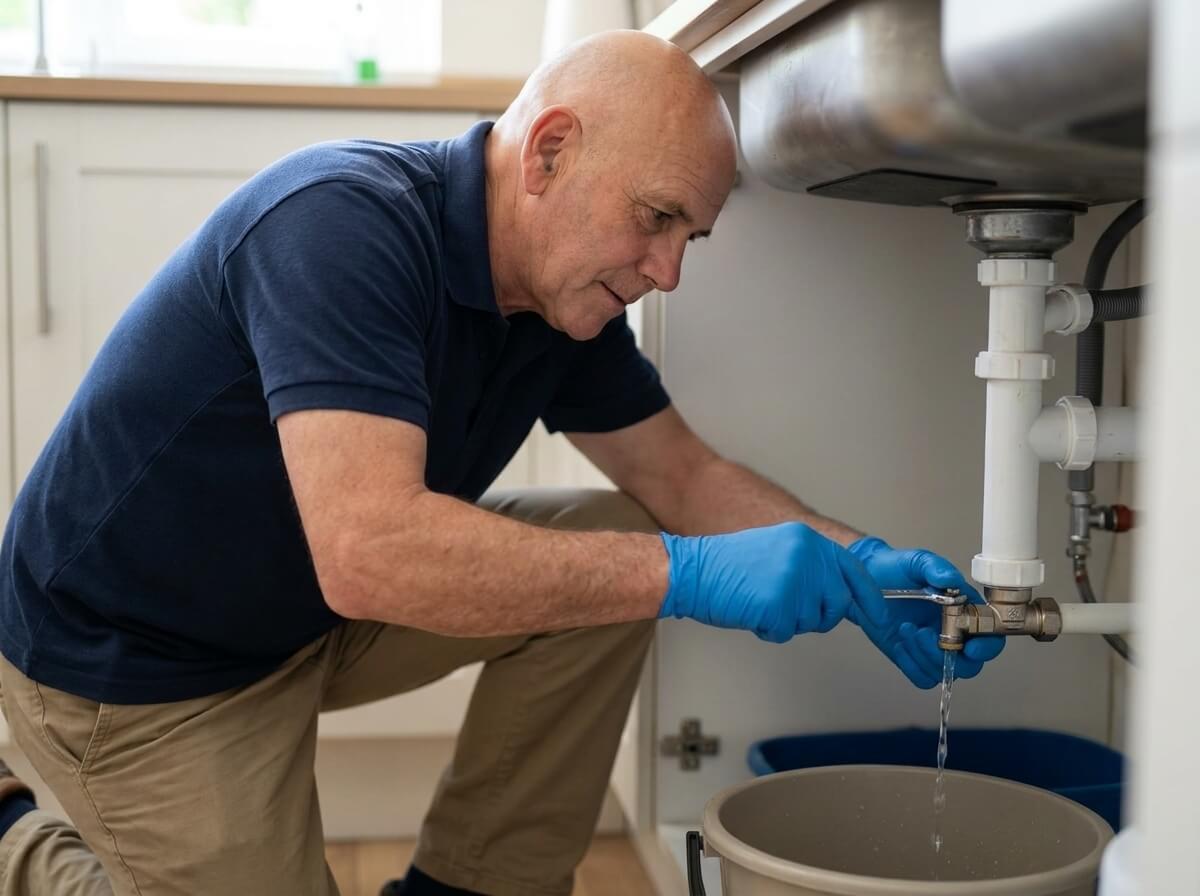
One airlock after the water has been off is normal. An airlock every time the water goes off, or air in the taps with no shutdown at all, means something in the system needs sorting. These are the causes I find most often.
| CAUSE | THE SIGNS | THE PROPER CURE |
|---|---|---|
| Pipes with humps in them | The same tap airlocks every time the water is off. Often after a new bathroom or a pipe rerouted over a door or joist. | Reroute the pipe so it rises steadily towards the tank, or fit an automatic air vent at the high point. |
| Loft tank running low | Hot taps fade during a bath or a run of showers, then spit air. The tank is lower than it should be. | Adjust or replace the float valve so the tank fills properly, and check the mains feed to the tank is not restricted. |
| Cylinder feed pipe too small, or a part closed valve on it | Hot water flow is poor even when the system is full, and air appears with heavy use. | Open the gate valve on the cylinder cold feed fully, or upgrade the feed pipe to 22mm. |
| Air sucked in by a pump or a weeping joint | Shower or pump keeps losing its prime. Sometimes a damp joint near the pump. | Fix the joint, and give the pump its own dedicated feed from the cylinder so it is not drawing air. |
| Vent pipe set up badly | Gurgling in the loft, water spitting from the vent pipe over the tank, or air in the hot water every time the heating runs. | A plumber needs to look at how the vent and cold feed are arranged around the cylinder. |
Air coming in when nothing has been turned off can also be a sign of a leak on a low pressure pipe, often hidden under a floor or in a wall. If you also have a damp patch, a meter that keeps turning, or a loft tank that keeps refilling, read our guide to the signs of a hidden water leak or book our leak detection service.
Poor flow that is there all the time, not just after a shutdown, may not be air at all. Our guide to low water pressure covers the other causes, from part closed valves to furred up pipes.
How to Avoid an Airlock When the Water Goes Back On
Whether you have turned the water off yourself or the water company has, a little care when it comes back on saves a lot of spluttering.
- ●Leave a tap open while the water is off. A cold tap left slightly open on the ground floor lets air out as the pipes refill.
- ●Open the stopcock slowly. A quarter turn at a time. Rushing it traps air and can knock loose any sediment.
- ●Let the loft tank fill before using the hot taps. Give it ten to twenty minutes after the water comes back. Using hot water while the tank is low is how air gets into the cylinder pipes.
- ●Run the taps bottom to top. Kitchen cold first, then the rest of the house, finishing at the highest tap.
- ●Keep the heating and immersion off until the hot taps run steadily. Especially if any part of the system was drained.
Is an Airlock an Emergency?
On its own, an airlock is not dangerous. It will not burst a pipe and it will not hurt you. Most of the time it is a nuisance you can fix yourself. But it can need urgent help when:
- ●There is no hot water and you have a baby, an elderly relative or someone unwell at home, especially in winter.
- ●The loft tank will not fill, which means there may be a frozen pipe or a failed float valve, and the tank could overflow when it frees.
- ●You can see or hear water where it should not be after the water came back on: a drip through a ceiling, a damp patch or a hissing pipe.
- ●The airlock followed a burst pipe and you are not sure the repair is sound.
If you are not sure, my guide on what counts as a plumbing emergency will help you decide whether to call now or book in.
When to Call a Plumber
Give yourself two or three goes at the methods above. If the air will not shift, or it comes straight back, there is usually a reason in the pipework, and that is when it is worth getting someone in. Call a plumber if:
- ●The hose method has not worked after three attempts.
- ●You get an airlock every time the water is turned off, or for no reason at all.
- ●You have an unvented cylinder or a combi and the hot water has not come back.
- ●The loft tank is not filling or the float valve is sticking.
- ●Your shower pump will not prime or keeps losing its prime.
- ●The airlock started after a leak, burst or other repair.
When I clear an airlock, I find where the air is sitting, push it out properly, and then look at why it got there. Sometimes that is a two minute float valve adjustment. Sometimes it is a short length of pipe that needs rerouting. Either way, you get a fair price agreed before any work starts. I cover Ipswich and the surrounding towns and villages 24 hours a day and I am usually with you in about 30 minutes. If your airlock followed a split or burst pipe, our burst pipe repair service includes refilling and bleeding the system so you are not left with air in the pipes. You can see everything else we do on our emergency plumbing services page, and if a pipe has just gone, read what to do when a pipe bursts while you wait.
Whoever you call, check they are on an approved plumbing scheme. You can search for approved plumbers on WaterSafe, the national register of plumbers approved to work on drinking water systems.
Airlocks: The Key Points
- ●An airlock is a pocket of trapped air, usually after the water has been off. It mostly hits tank fed hot taps.
- ●If the kitchen cold tap is dead too, it is not an airlock. Check the stopcock and the supply.
- ●Check the loft tank is full before you try anything else.
- ●Run the taps bottom to top first, then try the kitchen mixer trick, then a clean hose for a minute or two.
- ●Never leave a hose connected between taps, and never use it on a combi or unvented cylinder.
- ●Airlocks that keep coming back point to a fault in the pipework or tank that a plumber should fix.