When I fix a burst pipe or a leaking joint, the plumbing is usually the quick part. What worries people is everything else: a ceiling with a brown stain across it, a carpet that squelches, kitchen units that smell of wet cardboard, and the question of whether the house will ever be dry again. The honest answer is that it nearly always will, as long as the leak is properly fixed and you dry it the right way.
I have been a plumber in Ipswich for more than forty years, and I have seen a lot of homes after a leak. The ones that end up with mould, rotten floors and a second round of repairs are rarely the ones with the most water. They are the ones where the drying was rushed, the wrong things were kept, or the leak was never quite fixed. This guide is what I tell customers once the water is off.
The First 24 Hours After a Leak: 8 Steps
Make sure the water has really stopped
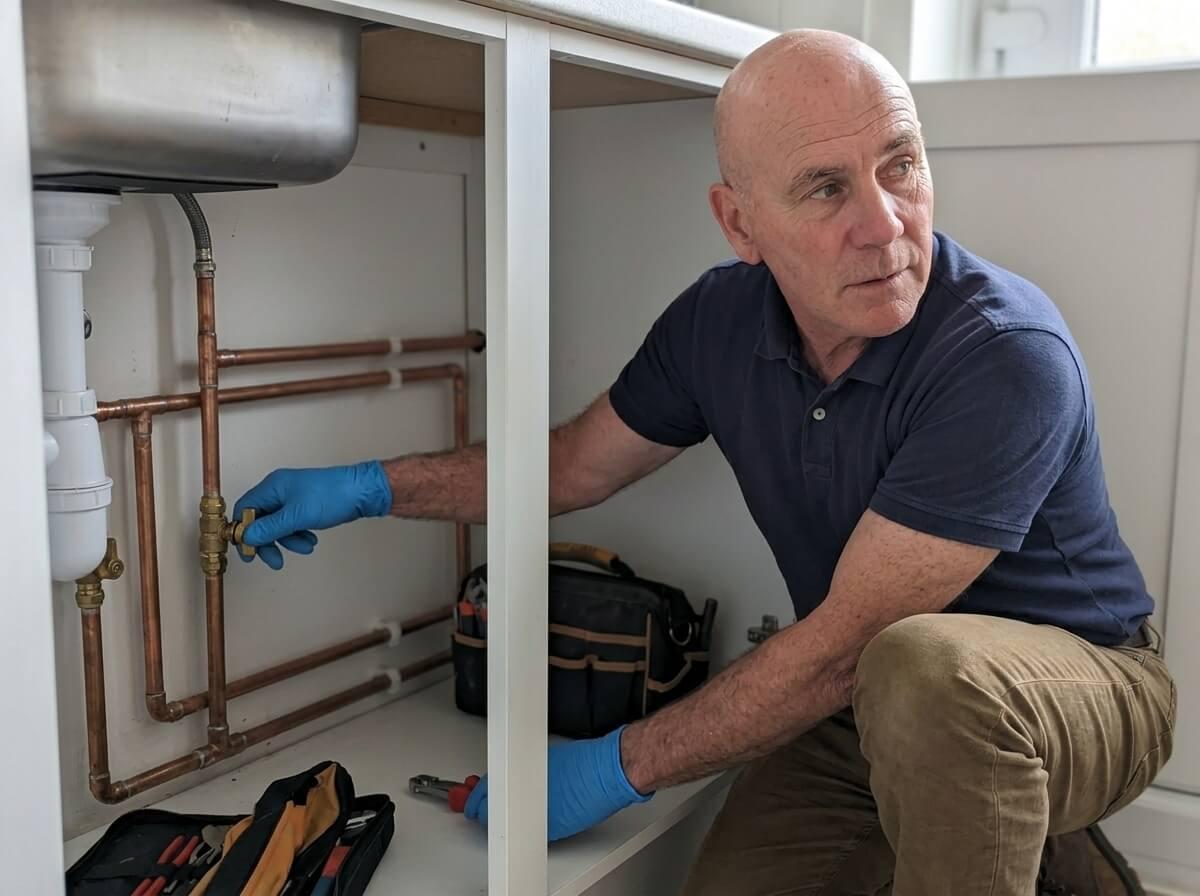
Check the stopcock is off and the cold kitchen tap has stopped running. If you have a cold water tank in the loft, the hot taps and toilets can keep feeding a leak for half an hour after the stopcock is closed. If the water has not stopped, deal with that first. My guides on finding your stopcock and on what to do if the stopcock is off but the water is still running will help.
Keep wet electrics switched off
If water reached sockets, a light fitting, an extractor fan or the consumer unit, leave those circuits off at the consumer unit, and do not touch it at all if it is wet. Do not plug a dehumidifier or a wet vac into a socket in a wet room. Use a dry circuit, or wait until an electrician has checked it.
Photograph and film everything before you move it
Take wide shots of each room and close ups of stains, swollen floors and damaged belongings, with the time and date. Keep the failed part if a plumber removes it. Insurers ask for this, and it is hard to recreate once you have tidied up.
Get the standing water up
Mop, sponge and bucket it, or use a wet and dry vac on a dry circuit. Never use an ordinary household vacuum on water. Push water towards a door or floor drain, not into the next room. The less water you leave, the less soaks into the floor and walls.
Lift, move and open up
Move furniture off wet carpet and put foil or plastic lids under legs. Lift rugs and, if you can, peel back wet carpet and underlay so the floor below can breathe. Pull off kitchen plinths and the bath panel, empty wet cupboards and open their doors. Water hides in these places and nobody looks until it smells.
Start drying: heat, a dehumidifier and moving air
Put the heating on at about 20°C, run a dehumidifier with the windows shut and the internal doors open, and use a fan to keep air moving across wet surfaces. If you have no dehumidifier yet, open the windows instead so the damp air has somewhere to go. More on getting this right below.
Tell your insurer, landlord or managing agent the same day
Report it as an escape of water and ask whether they will send a drying company before you start any repairs. If you rent, report it to your landlord in writing. If the water came from the flat above or next door, tell them and their managing agent straight away.
Get the cause properly fixed
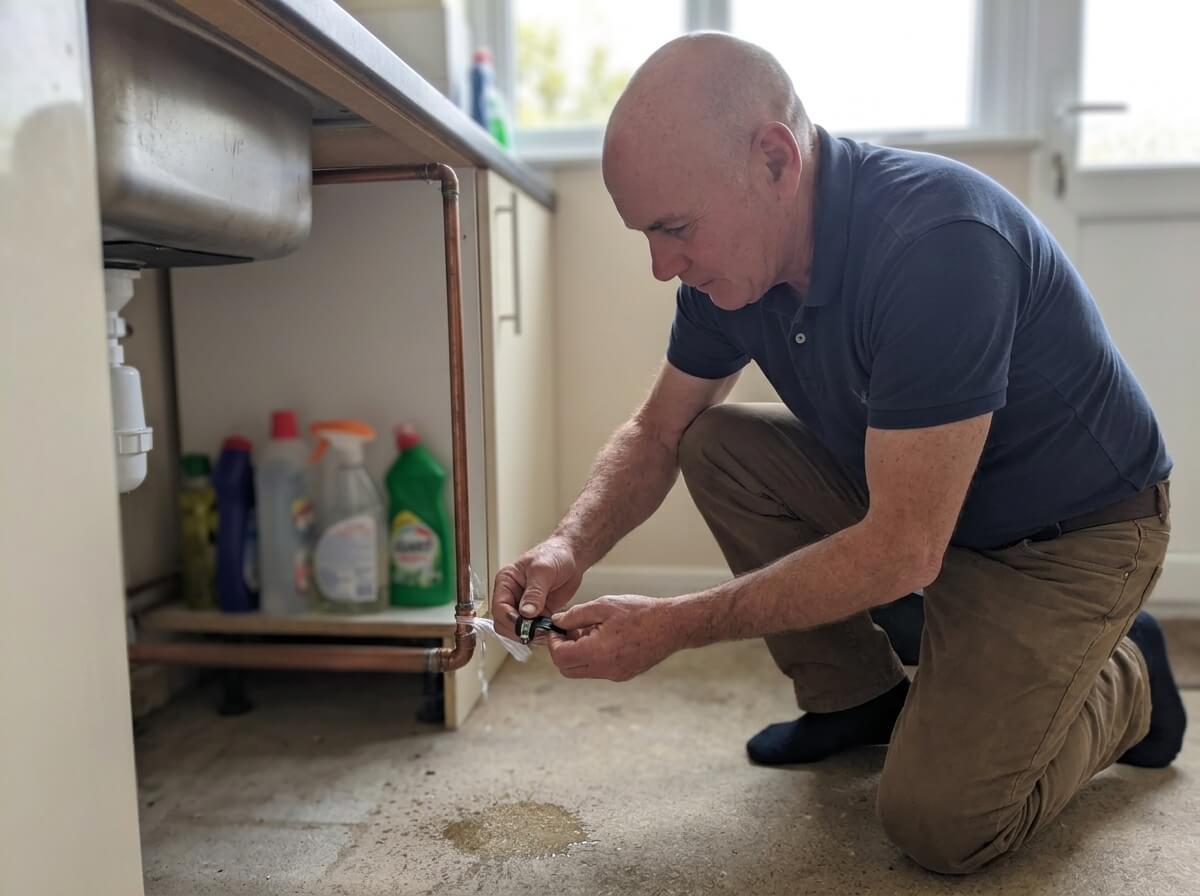
A pipe held with tape, a jubilee clip or a repair putty will do for a night, not for drying out a house. Have a plumber make a proper repair and pressure test it before you put anything back. Drying a room around a leak that is still dripping is wasted effort.
Clean, Grey or Black Water? It Decides What You Can Keep
Drying companies and insurers sort escaped water into three types, and it matters more than the amount. A gallon of clean water from a split pipe is far easier to deal with than a cupful from a blocked toilet.
| TYPE OF WATER | WHERE IT CAME FROM | WHAT YOU CAN KEEP |
|---|---|---|
| Clean water | A burst or split supply pipe, a leaking tank, a tap left running, a flexi hose or a radiator pipe | Most things can be dried and saved if you start within a day or two. Carpets can often be lifted, dried and relaid, though underlay is usually replaced |
| Grey water | A washing machine or dishwasher hose, a sink, bath or shower waste, or clean water that has sat for more than a couple of days | Hard surfaces can be cleaned and disinfected. Soaked carpet, underlay and soft furnishings are often not worth saving |
| Black water | Anything from a toilet pan, a soil pipe, a blocked drain or sewage coming back up, and any flood water from outside | Throw away anything soft and porous it touched. Wear gloves, keep children and pets out, and let a specialist clean and sanitise |
Clean water does not stay clean. After two or three days soaking into carpet, timber and plaster it starts to grow bacteria and smell, and it should be treated as grey water. That is the main reason the first 48 hours matter so much.
How Long Does It Take to Dry Out After a Leak?
As a rough guide, a small clean water leak that was stopped quickly dries in three to seven days. A bigger escape that soaked a ceiling or a floor takes one to three weeks with a dehumidifier running. A leak that went on for days, or ran into walls and under floors, can take six weeks or more. What really sets the time is the material the water soaked into:
| MATERIAL | TYPICAL DRYING TIME | SAVE OR REPLACE? |
|---|---|---|
| Plasterboard ceiling | 1 to 3 weeks if it stayed firm | Replace any board that sags, feels soft or has paper peeling off. Board that held its shape can usually be dried, sealed and painted |
| Lath and plaster ceiling (older houses) | 3 to 6 weeks or more | Often survives, but a soaking can break the plaster keys and it can come down later. Have it checked before anyone sleeps under it |
| Plaster on a block or brick wall | 2 to 6 weeks | Gypsum plaster that stays soft or crumbly after drying needs hacking off and replastering. Sound plaster just needs a stain block |
| Solid brick wall (Victorian and older terraces) | Months, roughly a month per 25 mm of wall | Usually saved. It just takes a long time. Do not seal it with waterproof paint or it holds the water in |
| Timber floorboards and joists | 2 to 4 weeks | Usually saved if the boards are lifted so the void can breathe. Boards may cup, then flatten again as they dry |
| Chipboard floor panels (most homes from the 1980s on) | Does not recover | Chipboard that has swollen stays swollen and goes soft. Soaked panels are normally cut out and replaced |
| Concrete floor and screed | Weeks to months | Saved, but it must be properly dry before new flooring goes down, or the flooring fails |
| Carpet and underlay | 2 to 4 days lifted and dried | Carpet from a clean water leak can often be saved if dried within 48 hours. Underlay is cheap and usually replaced |
| Laminate and engineered boards | Rarely recovers | Once the edges swell and lift, it will not go back. Take it up quickly so the floor underneath can dry |
| Kitchen and bathroom units | 1 to 2 weeks with plinths off | Chipboard carcasses and plinths that have swollen need replacing. Pull the plinths off straight away so air gets underneath |
| Loft insulation | Rarely worth drying | Soaked mineral wool goes flat, holds water against the ceiling and stops insulating. Bag it up and replace it |
These times assume the leak is fixed, the heating is on and a dehumidifier is running. Without a dehumidifier, in a cold house in a Suffolk winter, double them. And a surface that looks and feels dry can still be wet a few millimetres in, which is why drying companies measure rather than guess.
Older Ipswich houses dry differently
A lot of the town, from the Victorian terraces around California, St Clement’s and Rosehill to the older cottages in Woodbridge and Hadleigh, has solid brick walls, lime or gypsum plaster, lath and plaster ceilings and suspended timber floors. Solid walls hold a lot of water and dry slowly, but they are also used to it, and they come back well if you are patient. Newer homes, like the estates at Kesgrave, Grange Farm and Ravenswood, are mostly plasterboard and chipboard flooring. They dry faster, but those materials do not forgive a soaking, so more of them end up being cut out and replaced.
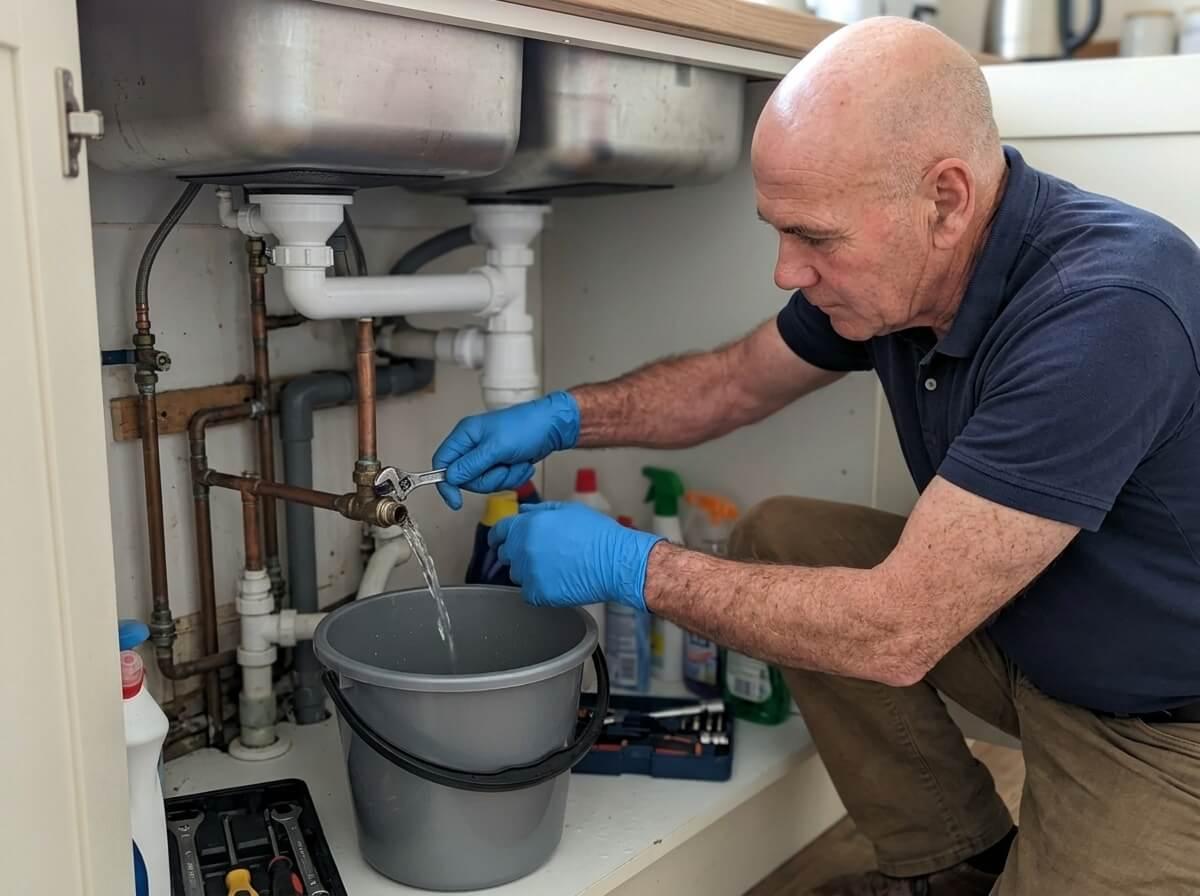
How to Dry Out Your House Properly
Drying is simple in principle: get the water out of the materials and into the air, then get it out of the air. Most of the mistakes I see come from doing only one half of that.
- ●Warmth, not a furnace. Keep the room at about 20°C. Warm air holds more moisture and pulls it out of plaster and timber. Turning the heating right up with the windows shut and no dehumidifier just moves the water into the next cold room and onto the windows.
- ●A dehumidifier does the real work. A compressor (refrigerant) model is best in a heated house. A desiccant model copes better in cold rooms, a garage or a loft. Empty it often, and you will be surprised how many litres a soaked room gives up in the first few days.
- ●Windows shut with a dehumidifier, open without one. A dehumidifier cannot keep up if it is drying the street as well. If you have no dehumidifier, ventilate instead, especially on dry, breezy days.
- ●Keep the air moving. A fan blowing across the wet surface, not straight at it, speeds things up a lot. Keep internal doors open so damp air reaches the dehumidifier.
- ●Open up the hidden places. Kitchen plinths off, bath panel off, cupboard doors open, carpet lifted. If water went under a suspended timber floor, lift a board or two so the void can breathe, and make sure the air bricks outside are not blocked.
- ●Measure it. A cheap pin type moisture meter will show whether readings are falling. Timber below about 18 to 20 percent is out of the danger zone for rot. Take readings in the same spots every few days and write them down.
For a small leak caught quickly, that is usually all you need. For anything bigger, a professional drying company with commercial dehumidifiers and air movers is worth having, and your insurer will normally arrange and pay for it. Which? has a good overview of drying your home out after a leak or flood.
When to get a professional drying company in
- ●The leak ran for more than a few hours, or nobody knows how long it ran, for example a pipe that burst while you were away.
- ●Water went into walls, under floors or through a ceiling, where you cannot see or reach it to dry it.
- ●More than one room or more than one floor is wet. Domestic dehumidifiers cannot keep up.
- ●It was grey or black water. Cleaning and sanitising come before drying.
- ●You are claiming on insurance. The drying company records moisture readings and issues a certificate of dryness at the end, which the insurer usually needs before repairs and redecoration are signed off.
Is It Drying, or Is It Still Leaking?
This is the question I get asked most after a leak, and it matters more than anything else in this guide. A repair that has not quite sealed, a second leak nobody noticed, or a waste pipe that only leaks when the shower runs will keep a patch wet however many dehumidifiers you run. Here is how to tell:
Draw round it
Draw round the edge of the damp patch in pencil and write the date next to it. Do the same every two or three days. A drying patch shrinks inside the line and goes lighter. A live leak holds the line or creeps past it.
Watch when it gets wetter
If it darkens after a shower, a bath or a flush and then fades a little, the leak is on a waste pipe, a seal or a toilet pan connector upstairs. If it is wet all the time, it is more likely a supply or heating pipe under pressure.
Do the water meter test
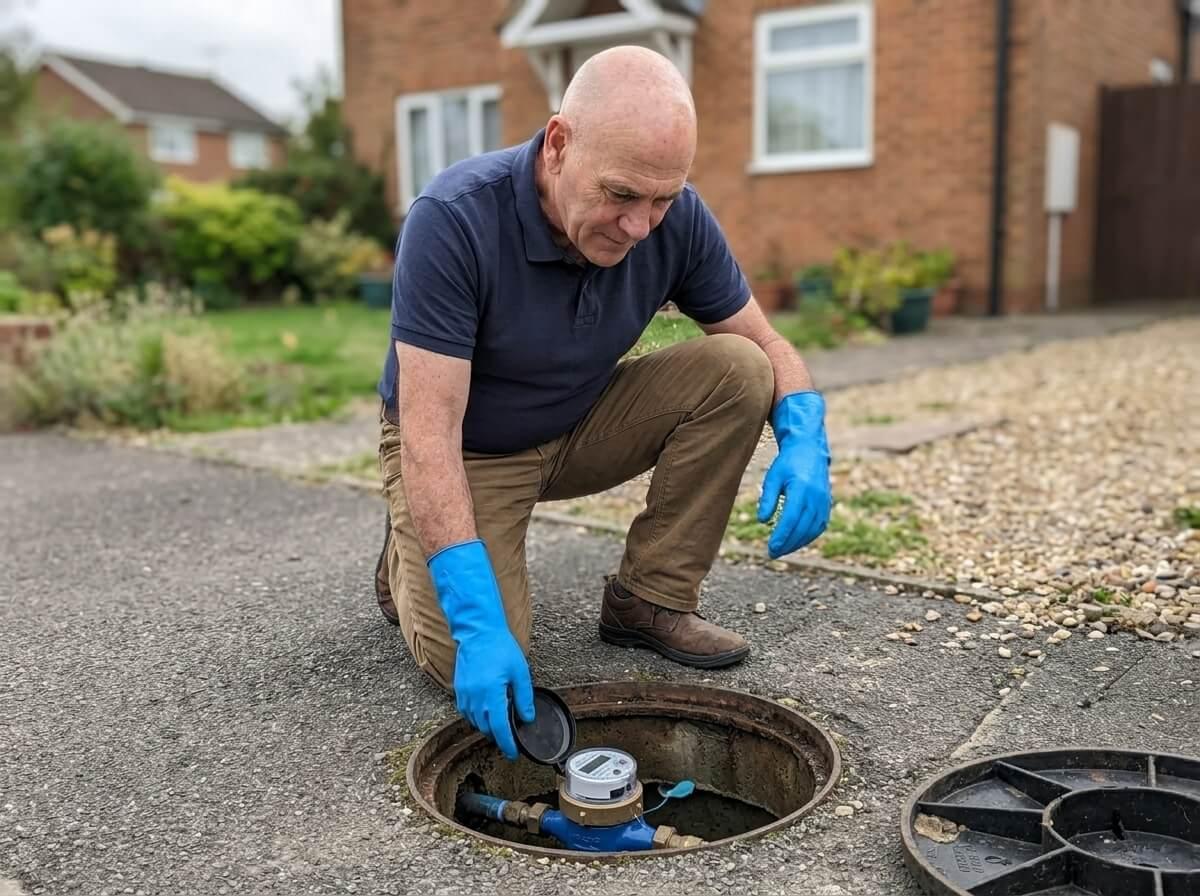
Turn off every tap and water using appliance, make sure no toilet is refilling, and read the meter. Read it again an hour later without using any water. If the numbers have moved, water is escaping somewhere.
Check the boiler pressure
If the pressure gauge on the boiler keeps dropping and you keep topping it up, there is a leak on the heating system. That is common with pipes under floors and behind units.
| WHAT YOU NOTICE | WHAT IT USUALLY MEANS |
|---|---|
| The damp patch gets smaller and lighter week by week | It is drying. Keep the heating and dehumidifier going |
| The patch stays the same size, or grows past your pencil line | Water is still getting in. A joint, seal or waste pipe is probably still leaking |
| It gets wetter after a shower, bath or flush, then dries back a little | A waste pipe, shower tray seal, bath seal or toilet pan connector. Water only escapes when that fitting is used |
| It stays wet all the time, whatever you use | A pipe under mains pressure, or a heating pipe. These leak around the clock |
| The water meter moves with every tap and appliance off | A leak on a supply pipe somewhere between the meter and the taps |
| The boiler keeps losing pressure and needs topping up | A leak on the central heating, often under a floor or behind a radiator |
| A musty smell or mould keeps coming back in the same spot | Either it never fully dried, or there is a slow leak feeding it. A moisture meter tells you which |
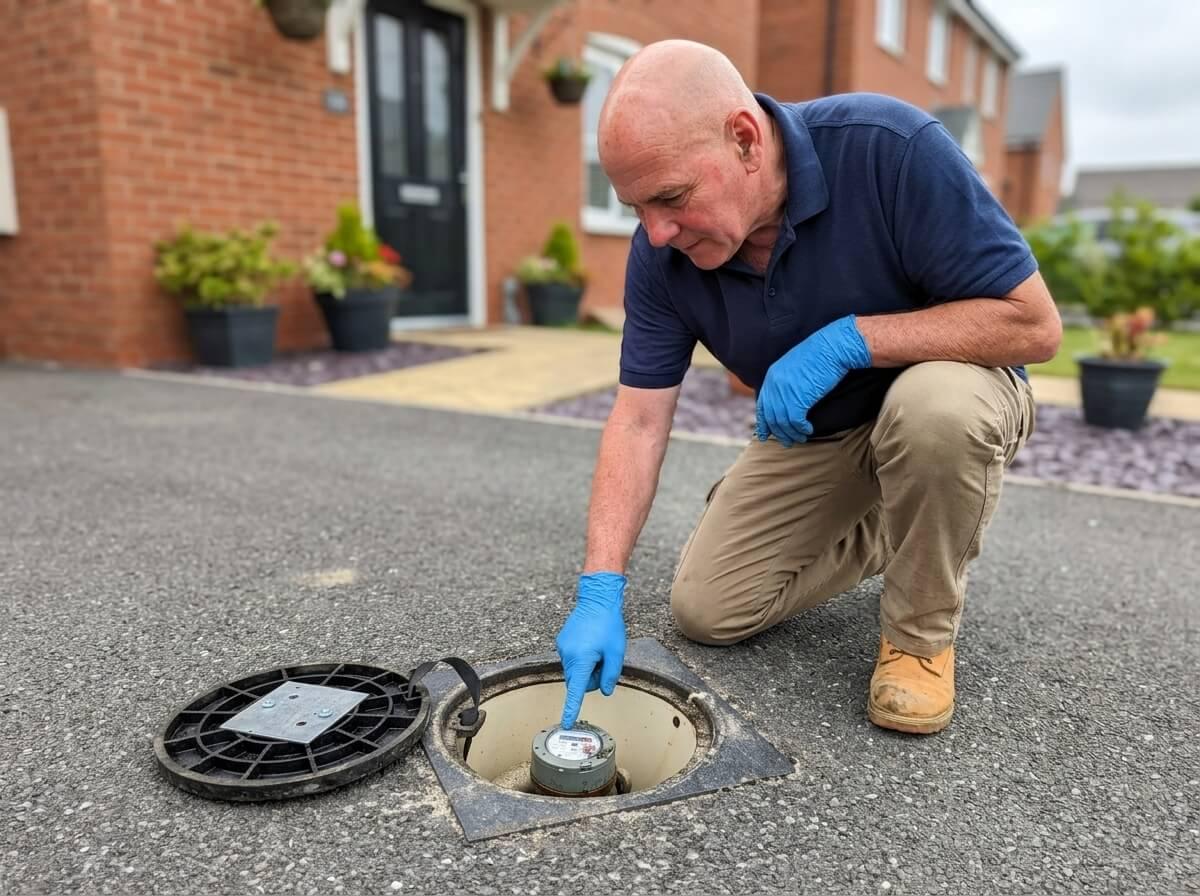
If any of those point to a leak, stop drying and get it found. My leak detection service traces it to the actual joint or fitting, so only the floor or wall that needs opening gets opened, and my guide to the signs of a hidden water leak covers the other clues.
Mould After a Leak: How to Stop It Taking Hold
Mould can start growing on damp plaster, timber, carpet and the back of skirting within a day or two, which is why drying fast matters more than drying perfectly. It thrives in still, cool, damp air, exactly the conditions behind a wardrobe pushed against a wet wall or under a carpet left down.
- ●Prevent it by drying fast. Heat, a dehumidifier and moving air in the first 48 hours prevent most mould. Pull furniture away from wet walls.
- ●Small patches you can clean yourself. Wear gloves and a mask, use a mould remover as the label says, and wipe rather than brush so you do not spread spores. Keep the window open while you work.
- ●Large areas need a specialist. If it covers more than about a square metre, keeps coming back, or anyone in the house has asthma, a weak immune system or is very young or old, get it dealt with professionally.
- ●Mould that returns in one spot after the area has dried usually means a slow leak is still feeding it.
Electrics, Ceilings and Other Dangers
- ●Wet electrics: do not switch a wet circuit back on to see if it works. Even if it seems fine, water in a light fitting, back box or junction box can cause shocks, corrosion and faults weeks later. Have an electrician test it first. If a circuit keeps tripping the RCD after a leak, leave it off. My guide to water leaking from a light fitting explains what to do.
- ●Sagging ceilings: a ceiling that bulges, sags or cracks across can come down without warning, with a lot of water and plaster. Keep people out of the room below. Do not sleep under a ceiling that got soaked until someone has checked it.
- ●Floors: soft or bouncy floorboards, and swollen chipboard that feels spongy underfoot, can give way. Do not put heavy furniture back until the floor has been checked.
- ●Boilers and cylinders: if water got into the boiler casing or around the controls, leave it off and get it checked by a qualified heating engineer before you use it.
When Can You Redecorate?
Not until it is dry all the way through. Painting too soon is the most common way a leak ends up costing twice. Fresh emulsion over damp plaster blisters, flakes and grows mould, and the brown water stain bleeds straight back through ordinary paint.
- ✓Wait until moisture readings are back to normal, the same as an unaffected wall in the same room, or until the drying company issues its certificate of dryness.
- ✓Seal water stains first with a stain block primer, then paint over it. Stains come through ordinary emulsion however many coats you put on.
- ✓Let new plaster dry properly before it is painted, and use a thinned first coat on fresh plaster.
- ✓Check the floor is dry before new flooring goes down, especially concrete and screed. Laminate and vinyl laid over a damp floor fail quickly.
Water Damage, Insurance and Who Pays
Damage from a sudden leak is usually covered by home insurance as escape of water. Buildings insurance covers the structure, like ceilings, plaster, floors and fitted kitchens, and contents insurance covers your belongings. Most policies do not pay to repair the failed pipe itself, but many include trace and access cover for finding a hidden leak and making good afterwards. Escape of water excesses are often higher than the standard excess, and insurers can refuse damage they think built up slowly, so report it promptly and keep your photos.
My guide to making a burst pipe insurance claim goes through it step by step. If the water came from upstairs, read my guide on a water leak from the flat above, and if you rent, my guide on whether your landlord is responsible for plumbing.
What Not to Do After a Leak
- ✕Do not switch wet electrics back on to test them. Leave them off until an electrician has checked them.
- ✕Do not throw damaged things away before you photograph them. Insurers may want to see them or a photo of them.
- ✕Do not leave wet carpet down to dry in place. It holds water against the floor, slows everything down and starts to smell within days.
- ✕Do not turn the heating to full with the house shut up and no dehumidifier. The water just moves to colder rooms and onto windows.
- ✕Do not paint over a damp patch or stain. It traps the moisture and the stain comes back.
- ✕Do not seal a wet wall with waterproof paint or tanking. It stops it drying and pushes the damp somewhere else.
- ✕Do not rely on a temporary pipe repair. Tape, clamps and putty are for getting through the night. Get a proper repair before you dry out.
- ✕Do not ignore a patch that will not shrink. It is very likely still leaking.
How I Help After a Leak
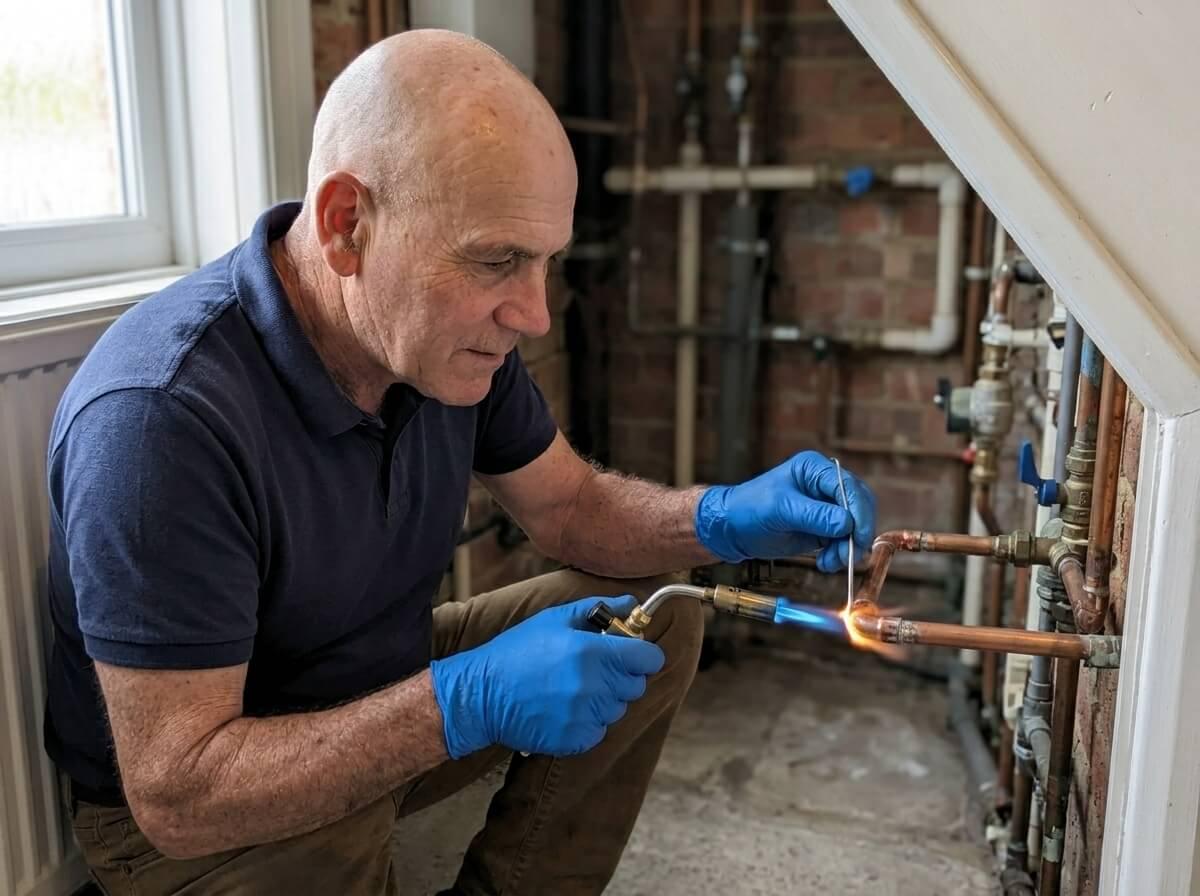
My job is to make sure there is nothing left to leak. I find the source, which is not always where the water showed up, and repair it properly, with a new section of pipe, joint, valve or seal rather than a patch. Then I pressure test the system and check the meter so we both know it is sound before you start drying and spending money on repairs. If the leak is hidden, I open up only what is needed to reach it.
You also get a short written note of what failed, where, and what I did, which is exactly what insurers, landlords, managing agents and drying companies ask for. If a damp patch has not shrunk after a week or two, I will come back and find out why. For split and burst pipes, my burst pipe repair page explains what happens on the day, and the emergency plumbing services page covers everything else.
I cover Ipswich, Felixstowe, Woodbridge, Kesgrave, Martlesham, Stowmarket and the surrounding towns, and I answer the phone myself, 24 hours a day, seven days a week, on 07977 857224. You get a clear, fair price agreed before any work starts.