A leaking washing machine is one of the most common reasons people ring me in a panic. Sometimes it is a small puddle that appears after every wash. Sometimes it is an inch of water across the kitchen floor, running under the units and the fridge. And sometimes, with a machine upstairs or in a flat, the first anyone knows about it is a drip from the ceiling below.
I have been a plumber in Ipswich for more than forty years, and the thing I have learned about washing machine leaks is that most of them are not the machine at all. They are the hose that feeds it, the valve it connects to, or the pipe it empties into. Most guides online are written by appliance makers, so they only talk about the machine. This one covers both sides, so you can work out which it is, fix the simple ones yourself, and call the right person for the rest.
Washing Machine Leaking? Do These 5 Things First
Stop the machine
Press pause or cancel, or turn the dial to off. Do not open the door if the drum is full of water. It will pour straight out onto the floor. You can drain it safely later.
Make the electrics safe
If the water has reached the plug, the socket, an extension lead or the fused spur switch, do not touch them with wet hands or while standing in water. Go to the consumer unit and switch off the circuit for the kitchen or utility room, or the main switch if you are not sure which. Only unplug the machine once the floor is dry and the power is off.
Turn off the water to the machine
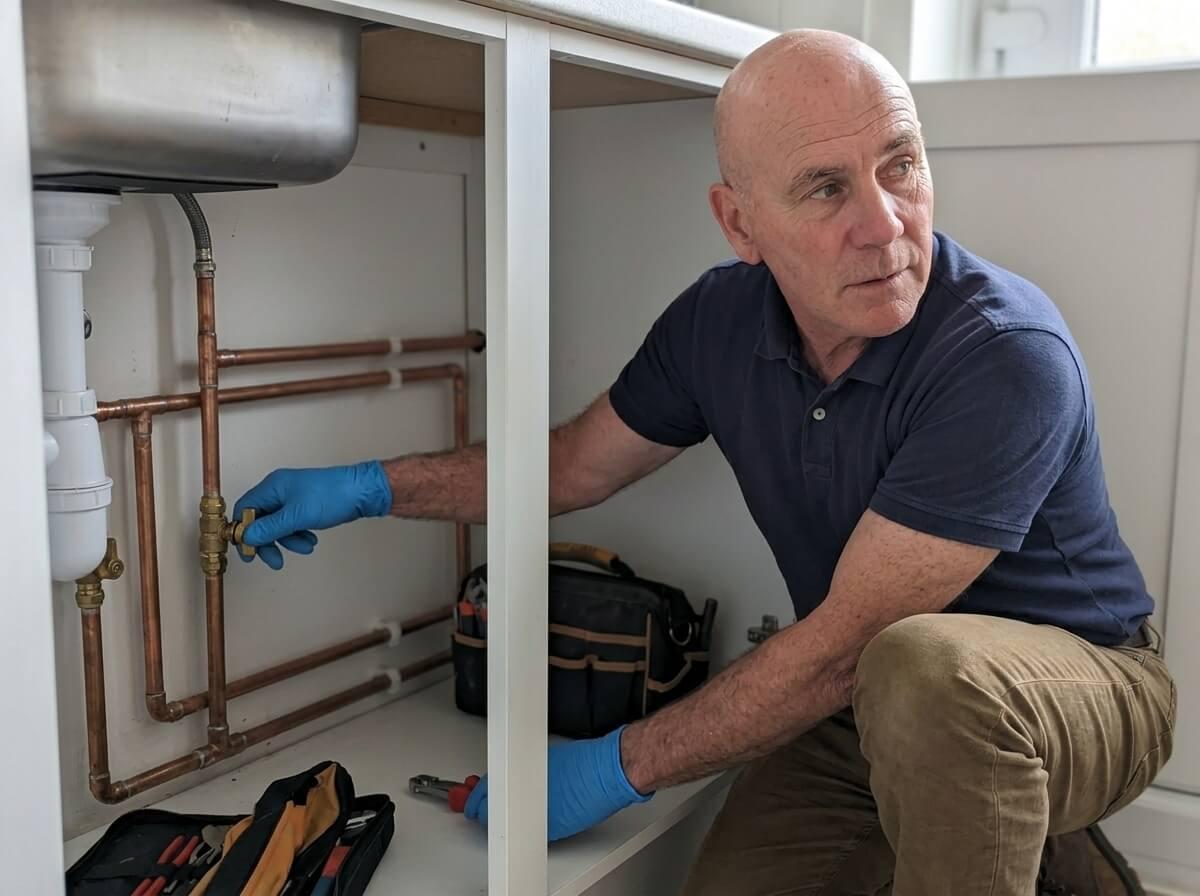
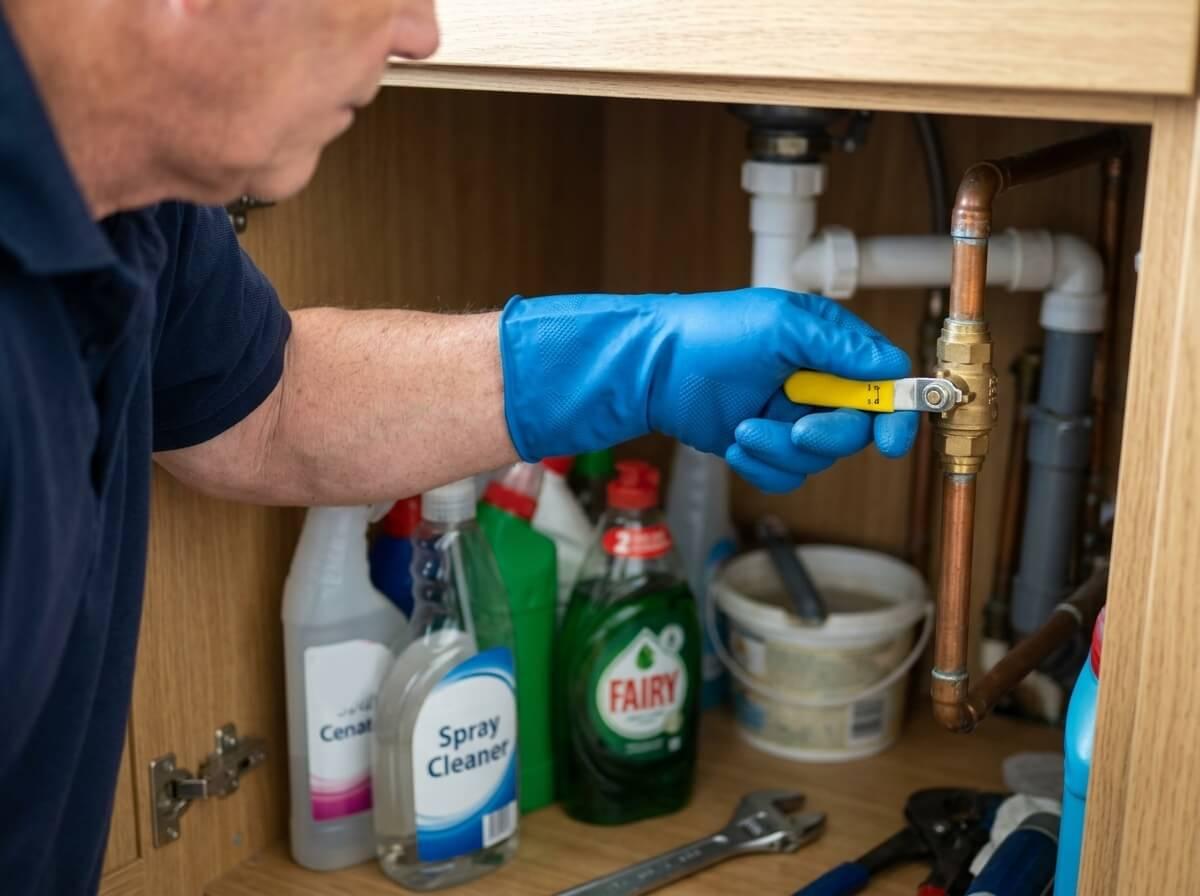
Look on the pipe behind the machine, or in the cupboard under the sink next to it, for a small valve with a blue lever (and a red one if the machine has a hot fill). Turn the lever a quarter turn so it sits across the pipe. If there is no valve, or it will not move, turn off the main stopcock. My guide on how to find your stopcock shows where to look.
Stop the water spreading
Mop up, and lay old towels along the front of the units and in front of the fridge or dishwasher. Water under a washing machine soaks into the kickboards, the bottoms of the units and any wooden or laminate floor very quickly. If you are in a flat or the machine is upstairs, warn whoever is below.
Take photos before you clear up
A quick photo of the water, where it is coming from and any damage will help if you need to claim on your insurance or tell your landlord, and it helps whoever comes to fix it.
How a Washing Machine Is Plumbed In
It helps to know what is behind the machine before you start looking. Every washing machine has two connections to your plumbing, and both can leak.
The supply: valve and inlet hose
Cold water comes from a branch off your mains pipe to a washing machine valve, a small brass valve with a blue lever and a threaded outlet. The inlet hose screws onto that outlet at one end and the back of the machine at the other. Each end has a plastic or metal nut with a flat rubber washer inside it, and it is that washer that seals the joint, not how tight the nut is. Some older machines also have a red hose for hot water. This side of the plumbing is under mains pressure all the time, even when the machine is off.
The drain: hose, standpipe or sink spigot
The grey ribbed drain hose takes dirty water out. In most UK homes it goes one of two ways. Either it hooks into a standpipe, an open topped vertical plastic pipe behind the machine with a trap at the bottom, or it pushes onto a spigot, a short nozzle on the side of the kitchen sink trap. The drain side is not under pressure until the machine pumps out, which is why some leaks only show up on the spin.
Where Is the Water Coming From? Find the Leak in 5 Minutes
Where the water shows up is the best clue to where it is coming from, but water travels. A leak at the back can run forward and appear at the front. Dry the floor and the machine completely, then look again, and if you need to, slide a sheet of kitchen roll under each joint. Find the row that matches what you can see.
| WHERE THE WATER IS | LIKELY SOURCE | CHECK THIS FIRST |
|---|---|---|
| Puddle at the front, bottom left or right corner | The pump filter cap, or the small emergency drain tube beside it | Open the little flap at the bottom front. Is the cap screwed fully in and is its rubber seal clean and seated? |
| Water round the door or dripping down the glass | The rubber door seal, or fluff and detergent on the seal lip | Pull back the folds of the seal and look for tears, coins, hair grips or bra wires. Wipe the lip and the glass clean. |
| Water at the top front, round the detergent drawer | A clogged drawer or drawer housing, too much detergent, or low water pressure | Take the drawer out, wash it, and clean the gunge out of the housing behind it with an old toothbrush. |
| Water behind the machine, all the time, even when it is off | The washing machine valve, the inlet hose ends, or a split inlet hose | Pull the machine out. Feel each end of the hose and along its length with dry kitchen roll. Turn the valve off and see if the drip stops. |
| Water behind the machine only when it empties | The drain hose, the standpipe or the sink trap and spigot | Watch the back of the machine during a spin. Look for water coming over the top of the standpipe or out of the sink trap joints. |
| Water under the machine during the wash, nothing at the back | Inside the machine: the sump hose, pump seal, tub seal or a crack in the drum | Stop using it. This is an appliance fault. Check the warranty before anyone takes the back off. |
| Water in the cupboard under the sink next to the machine | A loose drain hose on the sink spigot, a blocked sink trap, or a cracked trap | Check the hose is pushed fully onto the spigot with a clip, and run the sink to see if the trap drains freely. |
| Machine upstairs and water coming through the ceiling | Any of the above, or a leaking waste pipe hidden under the floor | Stop the water first. Treat it as a ceiling leak until you know where it is coming from. |
Leaks From the Plumbing: The Ones a Plumber Fixes
A leaking or split inlet hose
Rubber inlet hoses harden and crack with age, especially where they bend sharply behind the machine or have been crushed when it was pushed back. Look for bulges, splits, kinks and a white crust along the hose. A bulging hose is about to burst. Replace it, do not tape it. Many manufacturers suggest replacing inlet hoses around every five years, and they are cheap compared with the damage a burst one does. If the drip is only at one end, the rubber washer inside the nut is usually worn, flattened, missing or doubled up. A new washer, and the nut done up straight and hand tight plus a quarter turn, often cures it.
A dripping washing machine valve
Washing machine valves often sit untouched for twenty years, and when you finally turn one off in a hurry, the seal round the spindle starts to weep. A drip from the lever, or from the joint where the valve meets the pipe, needs the valve replacing. It is usually a short job, but it means turning off the water to the house, and old compression fittings on copper pipe need care. If the valve is seized and will not turn at all, leave it and turn the stopcock off instead.
Water coming over the top of the standpipe
If water comes out of the top of the standpipe when the machine empties, the pipe cannot take the water away as fast as the pump pushes it. Nine times out of ten the trap at the bottom of the standpipe is clogged with lint, hair, pet fur and detergent sludge. It can also happen when the drain hose is pushed too far down the standpipe or taped in so tightly that air cannot get in, which can siphon water and stop it draining properly. A standpipe that is too short, too narrow or has too little fall on the pipe beyond it will overflow too. Most manufacturers give a minimum and maximum height for the standpipe in the installation instructions, and leaving an air gap round the hose matters. Clearing the trap is often a DIY job if you can reach it. Raising, replacing or rerouting a standpipe is a job for a plumber.
Leaks at the sink trap and spigot
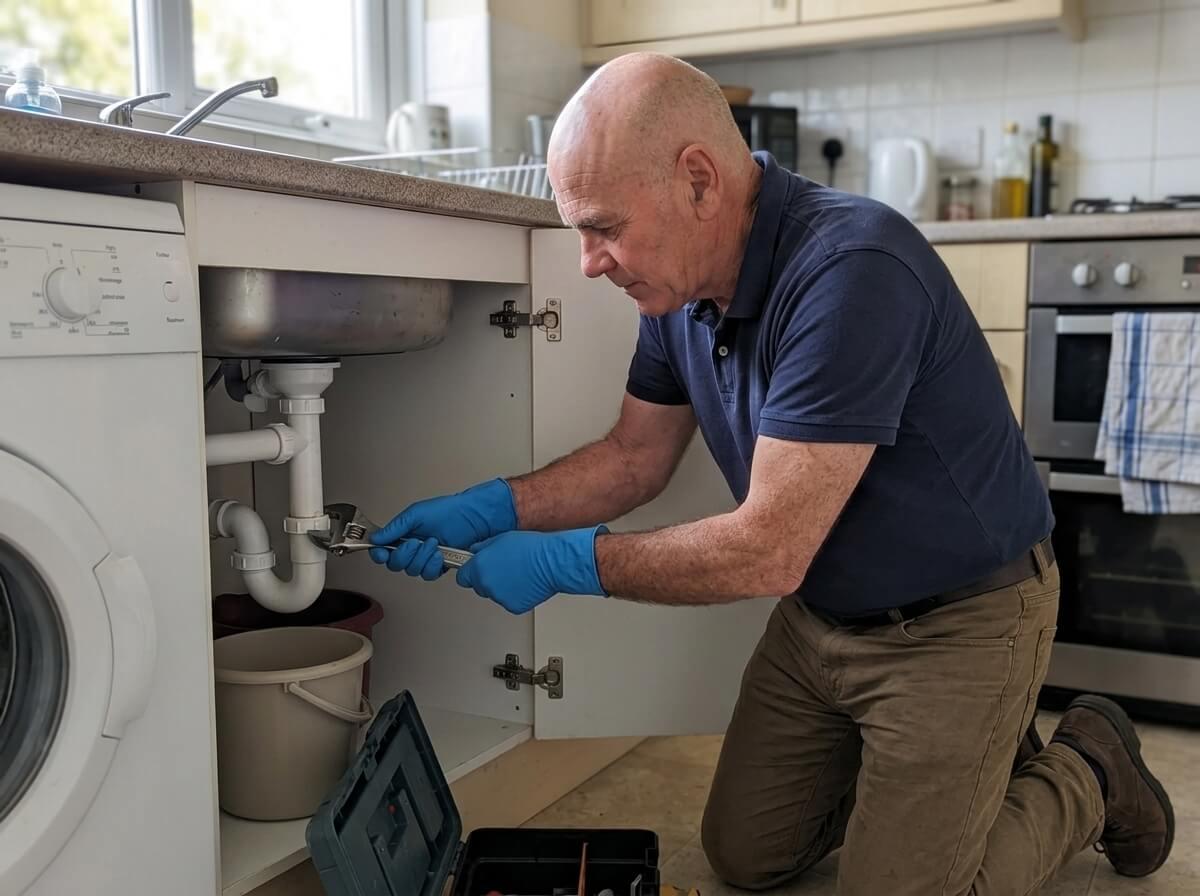
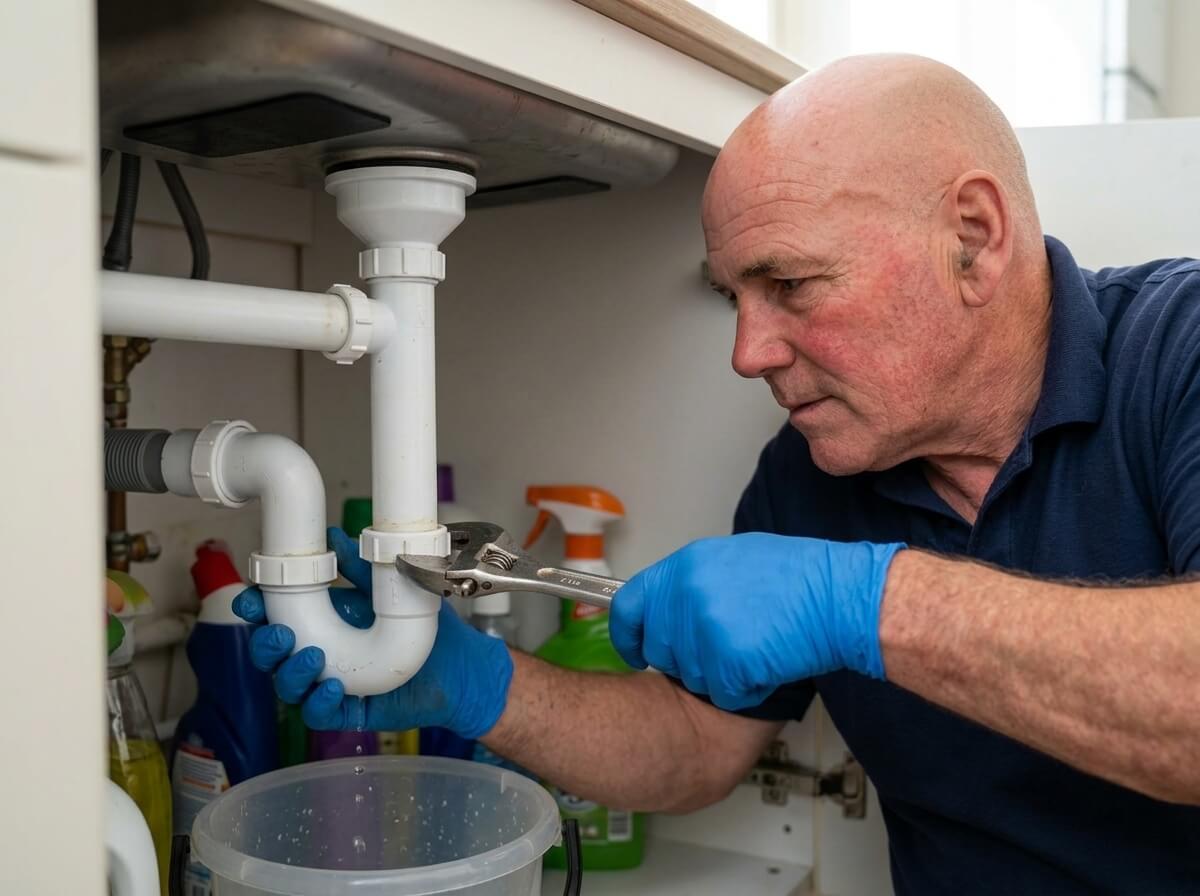
When the drain hose goes into the sink trap, there are three things that cause leaks. The hose is not pushed fully on and has no clip, so the pump forces water out of the joint. The trap or waste pipe is part blocked, so the machine fills the sink or forces water out of a loose trap nut. Or the spigot has a crack. Push the hose fully on, fit a jubilee clip, and clear the trap. My leaking under the sink guide covers every joint in that cupboard, and the kitchen sink unblocking guide shows how to take the trap apart and clean it.
Dirty water running back into the machine
If you open the door and find grey water in the drum before you have even started a wash, or the machine smells of drains, waste water is running back from the sink into the machine. The drain hose must rise in a loop up to the underside of the worktop, roughly the height of the top of the machine, before it drops down to the spigot or standpipe. Many installations also have a non-return valve in the hose or the spigot. Without the high loop, water from the sink, or from the machine itself, can siphon back and forth. It can also make the machine drain constantly or never quite fill.
A leaking waste pipe under the floor
If the machine is upstairs, in a bathroom or in a flat, the waste pipe from the standpipe often runs under the floor before it reaches the soil stack. A joint that has let go, or a pipe with a dip where lint has built up, can leak every time the machine empties, and you only see it as a stain on the ceiling below. If you have a damp patch below a washing machine and everything at the machine looks dry, it needs tracing. See water leaking through the ceiling for what to do while you wait.
Leaks From the Machine Itself
These are faults inside the washing machine. Some are easy to sort yourself. Others need an appliance repair engineer, or the manufacturer if the machine is under warranty, because taking the back or the top off can void it.
The pump filter cap
Behind the small flap at the bottom front of most front loaders is the pump filter, which catches coins, hair grips and fluff. If it has just been cleaned, or someone has been trying to drain the machine, the cap is often not screwed fully home or is cross threaded, and water seeps out on every wash. Unscrew it with a shallow tray and towels underneath, clean the thread and the seal, and screw it back in straight until it stops. If there is a small emergency drain tube next to it, make sure its stopper is pushed back in.
The door seal
The rubber boot round the door is the most damaged part on any washing machine. Coins, bra wires, keys and hair grips get caught in the folds and cut it. Look round the whole seal, especially the bottom, where small tears hide. A build up of fluff, detergent or limescale on the lip can also stop the door sealing against the glass. Clean it with a cloth. A torn seal needs replacing.
The detergent drawer
Water out of the top front of the machine usually means the drawer or the housing behind it is clogged with old powder and softener, so the incoming water backs up and spills. Too much detergent, or hand wash detergent in a machine, produces so many suds that foam comes out of the drawer and the door. Low water pressure can also make the water dribble instead of spraying into the drawer properly.
Internal hoses, pump and tub seals
If the water only appears under the machine during the wash or spin, and the hoses, drain, filter and door are all dry, the fault is inside. Common culprits are a split sump hose between the drum and the pump, a worn pump seal, or a failing tub seal or bearing. Rusty or brown water under the machine, often with a rumbling spin, points to the drum bearings. These are appliance repairs. Check the cost against the age of the machine before you go ahead.
The machine is not level
A machine that rocks or walks across the floor on the spin can slop water out of the door and strain its hoses and drain. Adjust the feet until it sits flat and does not rock when you press each corner.
Washing Machine Leak Finder: Who Fixes It and How Urgent Is It?
When somebody rings me about a leaking washing machine, the first things I ask are where the water is and when it appears. Find the row that matches. The last two columns show who usually fixes it and how quickly it needs dealing with.
| WHAT IS HAPPENING | LIKELY CAUSE | WHO FIXES IT | URGENCY |
|---|---|---|---|
| Water spraying or pouring from behind the machine | A burst or split inlet hose, or a hose that has come off the valve. Under full mains pressure, so it will not stop on its own. | Usually a plumber | Act today |
| Slow drip at the tap end of the hose | A worn or missing rubber washer in the hose nut, or the nut not done up straight. | Often a DIY fix | Within days |
| Valve dripping from the lever or spindle | A worn valve. Older valves often weep when they are turned for the first time in years. | Usually a plumber | Within days |
| Water over the top of the standpipe on the spin | Lint and sludge blocking the standpipe trap, or a standpipe that is too short or too narrow for the pump. | Usually a plumber | Within days |
| Sink fills or gurgles when the machine empties | A part-blocked sink trap or waste pipe. The machine is pumping faster than the waste can drain. | Often a DIY fix | Within days |
| Dirty water in the drum before you have started a wash | Waste water running back from the sink into the machine. The drain hose has no high loop or non-return valve. | Usually a plumber | Within days |
| Puddle after you have cleaned the filter | The filter cap is cross threaded, not screwed fully home, or its seal is twisted or furred with fluff. | Often a DIY fix | Fix when you can |
| Suds or foam coming from the drawer or door | Too much detergent, hand wash detergent in a machine, or a blocked drawer housing. | Often a DIY fix | Fix when you can |
| Water underneath only during the wash or spin | A split sump hose, worn pump seal or failing tub seal inside the machine. | Appliance engineer | Within days |
| Brown or rusty water under the machine | Usually a worn drum bearing seal letting water reach rusting parts. Sometimes dirty water backing up from a blocked waste. | Appliance engineer | Within days |
| Water near the plug, socket or extension lead | Any leak that has spread. The cause can wait. The electrics cannot. | Usually a plumber | Act today |
Plumber or Appliance Engineer? Who to Call
This is the question nobody else answers properly. The simple rule: a plumber looks after everything up to the back of the machine, and an appliance engineer looks after everything inside it.
- ●Call a plumber for: the washing machine valve, the inlet and drain hoses and their connections, the standpipe and its trap, the sink trap and spigot, non-return valves, the waste pipe and the drain, water coming through a ceiling, and anything that needs the water turned off to the house.
- ●Call an appliance engineer for: the pump, the door seal, the drum and bearings, internal hoses, the inlet valve inside the machine, the detergent drawer housing and anything electrical on the machine.
- ●Call the manufacturer first if: the machine is under warranty or an extended guarantee, as someone else taking it apart can void the cover.
If water is pouring out and you cannot stop it, or you simply do not know which side the problem is on, ring a plumber. I can make it safe, tell you honestly whether the fault is the plumbing or the machine, fix the plumbing side there and then, and leave the machine disconnected and safe if it needs an engineer.
How to Drain a Washing Machine Full of Water
If the machine has stopped with water in the drum, do not open the door. With the power off at the socket or the consumer unit, put towels and the shallowest tray or baking tin you have in front of the filter flap. Many machines have a thin emergency drain tube beside the filter. Pull it out, take out its stopper over the tray and let it drain slowly, refitting the stopper each time the tray fills. If there is no tube, unscrew the filter cap a little at a time to let the water out gradually. It is usually more water than you expect, so have plenty of towels. Alternatively, lower the end of the drain hose into a bucket on the floor and let it drain by gravity.
Is a Leaking Washing Machine an Emergency?
Call a plumber straight away, day or night, if:
- ●Water is spraying or pouring from a hose or the valve and you cannot turn it off.
- ●The valve or the stopcock is seized and the water will not stop.
- ●Water has reached sockets, plugs, extension leads or a fused spur.
- ●The machine is upstairs or in a flat and water is coming through the ceiling below.
- ●Dirty water is coming up the standpipe or the sink when the machine empties, along with other slow plugholes.
- ●Water has spread under the units, the flooring or into another room.
A small drip that stops when the valve is turned off, or a puddle after a filter clean, is not an emergency. Turn the valve off, do not use the machine, and book it in. If you are not sure, ring me and describe it. I will tell you honestly whether it can wait. You can also read what affects the cost of an emergency plumber.
What Not to Do
- ✕Do not touch the plug or socket while standing in water. Switch off at the consumer unit first.
- ✕Do not keep using the machine to see if it happens again. Every wash pushes more water into the floor and the units.
- ✕Do not open the door on a full drum. Drain it from the filter or the drain hose first.
- ✕Do not tape up a split or bulging hose. It is under mains pressure. Replace it.
- ✕Do not overtighten hose nuts with a wrench. Plastic nuts crack and washers distort. Hand tight plus a quarter turn is plenty.
- ✕Do not seal the drain hose into the standpipe. It needs an air gap to drain properly.
- ✕Do not pour chemical drain cleaner down a standpipe. It sits in the trap, attacks rubber seals and splashes back. Clear it by hand or have it rodded.
- ✕Do not leave the valve on when you go away. Turning it off for holidays means a hose cannot burst while nobody is home.
Insurance, Renting and Who Pays
Most UK home insurance policies cover sudden water damage from a leaking appliance under escape of water, such as damaged flooring, kitchen units or a ceiling below. They do not usually pay to repair the washing machine itself, or for wear and tear like an old hose, and many exclude damage from a leak that has been going on gradually for a long time. Stop the water, take photos, and tell your insurer promptly. If the leak is hidden, under a floor or in a wall, some policies also cover trace and access, the cost of finding it.
If you rent, who pays depends on whose machine it is. If the landlord supplied the washing machine, it is normally their responsibility to repair. If it is your own machine, its repair is yours, but the valve, the standpipe, the waste pipes and the drain are part of the property and are usually the landlord’s to fix. If your machine damages a flat below, your contents or liability cover is usually what responds. Report any leak to your landlord promptly and in writing.
How to Stop Your Washing Machine Leaking Again
- ●Check the hoses every year. Pull the machine out, look for bulges, cracks and kinks, and replace inlet hoses around every five years.
- ●Leave room behind the machine. Pushing it hard against the wall kinks and crushes the hoses.
- ●Turn the valve off when you go away. Some people turn it off after every wash. It takes a second.
- ●Clean the pump filter every few months. And always screw the cap back in fully.
- ●Wipe the door seal after washes. Check the folds for coins and wires, and leave the door open to dry.
- ●Use the right amount of detergent. Too much causes suds leaks and builds up sludge in the standpipe.
- ●Empty pockets. Coins, keys and grips damage the drum, seal and pump.
- ●Consider a leak alarm. A cheap battery water alarm on the floor behind the machine warns you before the water reaches the rest of the room.
If you see your water meter turning when nothing is running, or you have a damp patch you cannot explain, my guide to the signs of a hidden water leak shows how to test for one.
Leaking Washing Machine in Ipswich? Call Philip
If water is coming from behind your washing machine, the valve will not turn off, the standpipe overflows on every spin, or there is a stain on the ceiling below, call me. I carry valves, hoses, washers, traps and drain clearing tools on the van, so most plumbing side leaks are sorted on the first visit. You will get a clear, fair price agreed before I start, and if a standpipe or waste pipe needs replacing or rerouting, a free, no-obligation quote.
I cover Ipswich, Felixstowe, Woodbridge, Kesgrave, Stowmarket and the surrounding towns, and I answer the phone myself, 24 hours a day, seven days a week, on 07977 857224. If you cannot see where the water is getting out, our leak detection service will find it. For a standpipe or sink that will not drain, see our blocked sink and waste pipe service, and if a hose or pipe has burst, our burst pipe repair page explains what happens next. Or see everything else on the emergency plumbing services page.