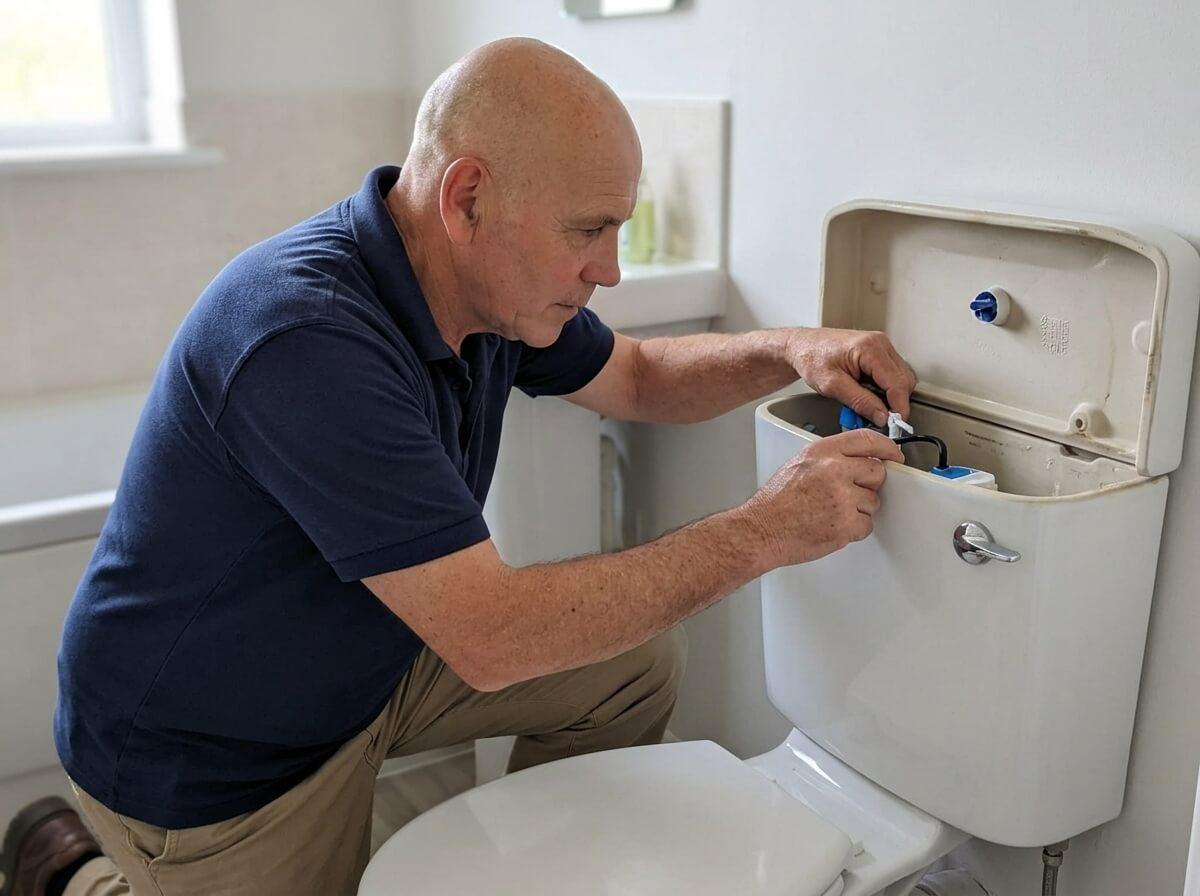
You step into the bathroom and your sock goes cold. There is a puddle round the foot of the toilet, or a dark ring creeping across the vinyl, or a steady drip landing behind the pan where you cannot quite see. Sometimes the first you know about it is a brown stain on the kitchen ceiling underneath.
I have been fixing toilets around Ipswich for more than forty years, and leaking toilets are one of the most common calls I get. The good news is that a toilet only has a handful of joints that can leak, and with ten minutes and a few sheets of toilet roll you can usually work out which one it is. Most of the guides online are written for American toilets, with wax rings and tank flappers that you will not find in a British bathroom. This one is written for the close-coupled, low-level and concealed toilets in UK homes. It covers what to do first, how to find the leak, what you can fix yourself, and when you need a plumber.
Toilet Leaking? Do These 4 Things First
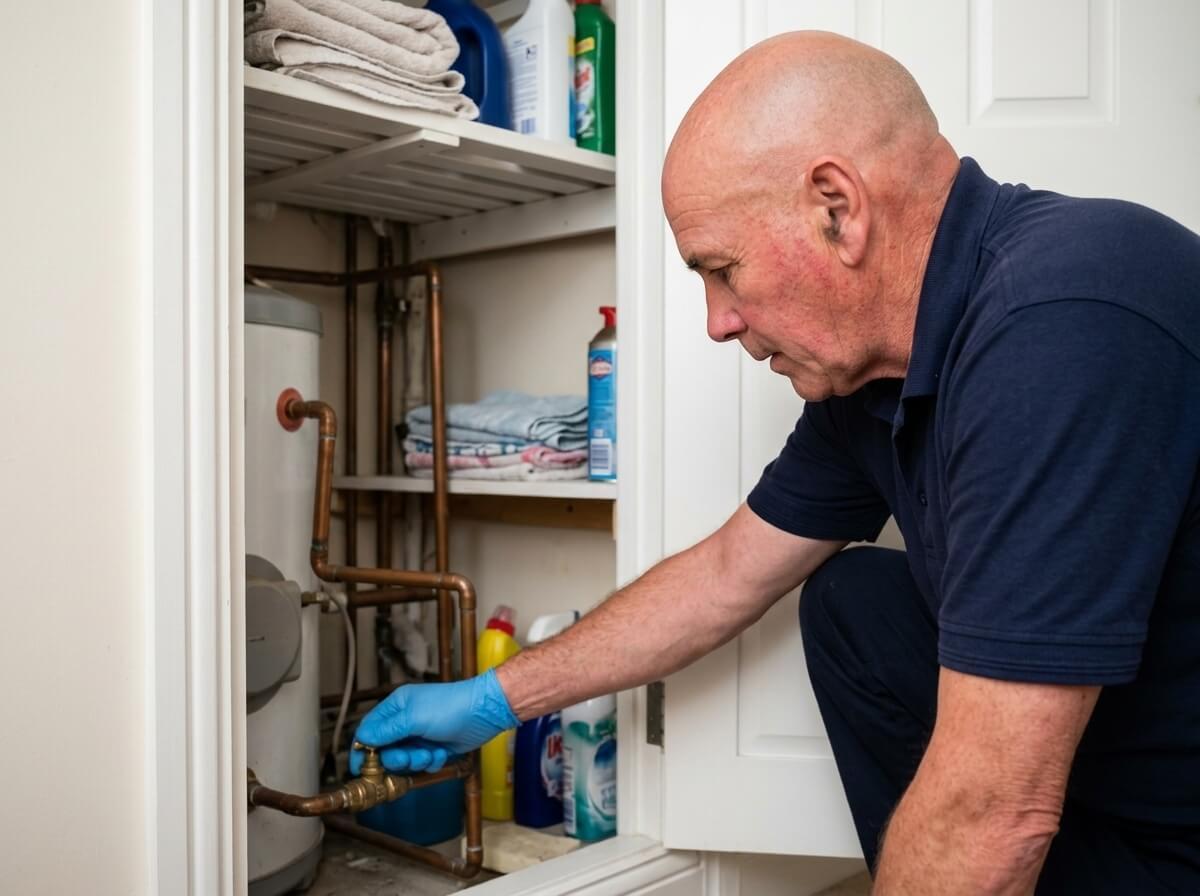
Turn off the water to the toilet
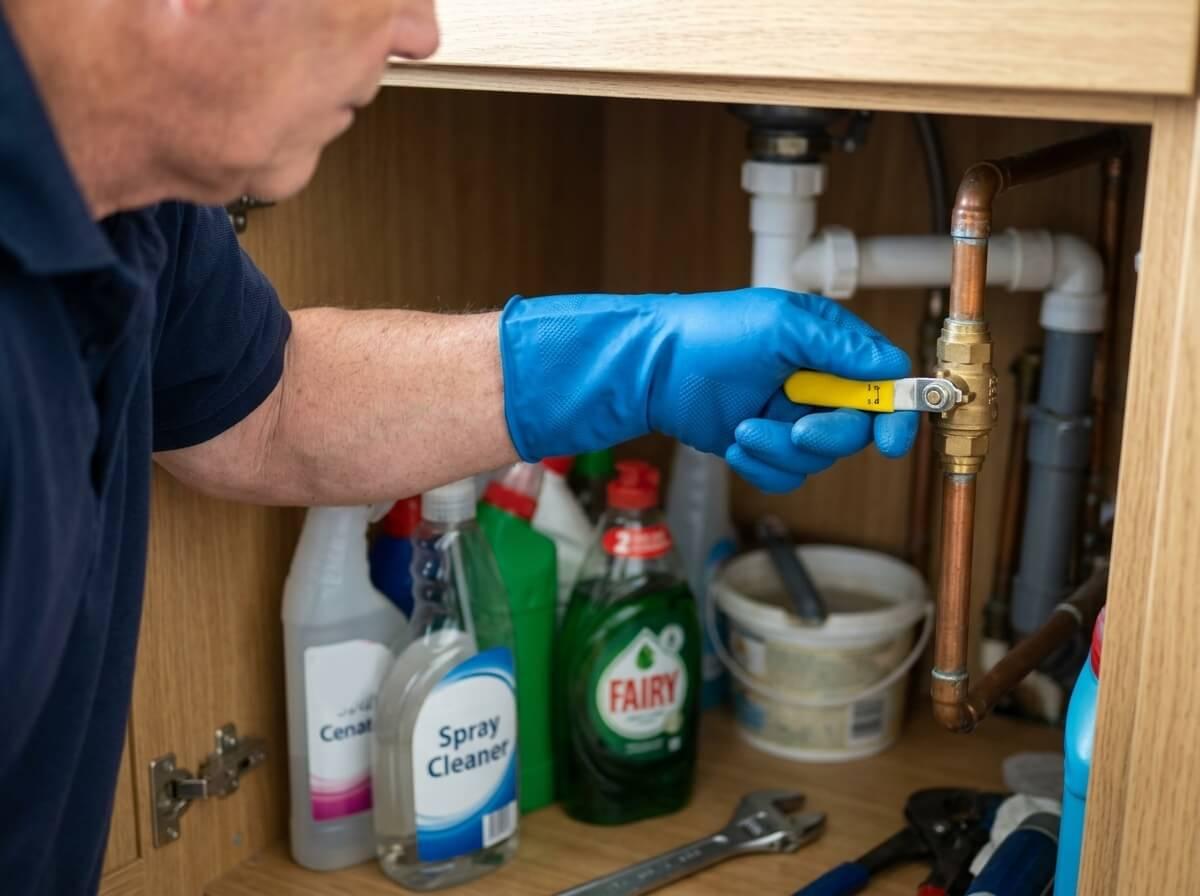
Follow the small pipe that feeds the cistern back towards the wall or floor. Most have an isolation valve: a small fitting with a screw slot or a little lever. Turn the slot a quarter turn with a flat screwdriver or a coin so it sits across the pipe, not along it. If there is no valve, or it will not move, turn off the main stopcock. My guide on how to find your stopcock shows where it hides.
Flush once to empty the cistern
With the water off, one flush empties the cistern and takes the pressure off any leaking seal. If the leak is at the base and only happens when you flush, skip this and empty the cistern with a sponge into a bucket instead, so you do not put more dirty water on the floor.
Put gloves on and mop up
Until you know where it is coming from, treat the water as dirty. Wear rubber gloves, soak it up with old towels, then wash the floor with hot soapy water and a disinfectant. Bag the towels and wash them on a hot cycle.
Check the room below
If the bathroom is upstairs, look at the ceiling underneath. A damp patch, bulging plaster or water near a light fitting means the leak has been running for a while. Keep away from wet light fittings and switch off that lighting circuit at the consumer unit. My guide to water leaking through the ceiling covers what to do next.
The 5 Places a UK Toilet Can Leak
It helps to know what you are looking at. A typical British close-coupled toilet, the kind with the cistern sitting directly on the back of the pan, has five places water can escape:
- ●The supply connection. The pipe or braided flexible hose that brings mains water to the cistern, usually with an isolation valve and a tap connector with a fibre or rubber washer. Clean water, under pressure.
- ●The cistern bolts. Two bolts pass through the bottom of the cistern and the back of the pan, each with rubber washers to seal the holes. Clean water, leaking all the time the cistern is full.
- ●The doughnut washer. A large, thick rubber ring between the cistern outlet and the pan inlet, often called the close-coupling washer. Clean water, leaking mainly during a flush.
- ●The pan connector. The flexible plastic or rubber sleeve that joins the outlet at the back of the pan to the soil pipe in the floor or wall. Older toilets may have a cement or putty joint instead. Dirty water, leaking as the bowl empties.
- ●The china itself. A hairline crack in the pan or cistern, often from a dropped object, an overtightened bolt or frost in an unheated outside toilet.
Low-level toilets, with the cistern on the wall above the pan, have a flush pipe instead of a doughnut washer, with a rubber cone or connector at each end. Concealed cisterns, hidden behind a panel with only a flush plate showing, have the same parts behind the wall, which is why a leak from one often shows up as damp boxing or a wet floor in front of the panel.
How to Find Exactly Where Your Toilet Is Leaking
You need a dry toilet, a torch, a hand mirror if you have one, and a roll of toilet paper. It takes about ten minutes.
Dry everything completely
Wipe down the cistern, the back of the pan, the supply pipe and valve, and the floor around and behind the toilet. You cannot find a leak while everything is already wet, because water runs along the china and drips from the lowest point, which is rarely where it started.
Do the tissue test
Wrap a sheet of dry toilet paper round the supply connection and valve, tuck one under each cistern bolt, one under the back of the cistern where it meets the pan, and lay a strip on the floor right behind the pan outlet. Turn the water back on and let the cistern fill without flushing. Wait five minutes. Any tissue that goes wet now is at a joint that leaks all the time: the supply or the bolts.
Now flush and watch
Flush once and watch the tissues under the cistern and behind the pan. If the one under the cistern goes wet within a few seconds of the flush, it is the doughnut washer. If the strip behind the pan goes wet as the bowl empties, it is the pan connector, or a crack in the pan outlet.
Do the food colouring test
To check for a leak into the bowl, put a few drops of food colouring in the cistern and leave it for 30 minutes without flushing. Colour in the pan means the flush valve is letting water past. Colour on the floor means the cistern bolts or doughnut washer.
Rule out condensation
If the whole cistern and pan are covered in fine beads of water rather than one wet joint, especially after a shower or on a cold morning, it is condensation. Dry it, open the window or run the extractor fan, and see whether it comes back.
Toilet Leak Finder: What Your Leak Is Telling You
These are the patterns I look for when someone rings about a leaking toilet. Find the row that matches what you are seeing. The last two columns tell you whether the water is clean or dirty, and how quickly it needs fixing.
| WHAT YOU NOTICE | LIKELY CAUSE | WATER | URGENCY |
|---|---|---|---|
| Puddle behind or under the pan that appears as the bowl empties after a flush | Pan connector: the rubber or plastic sleeve between the pan outlet and the soil pipe has split, perished or been knocked out of line. | Dirty | Within a day or two |
| Water spreading across the floor every time the toilet is used, or a soft floor round the pan | A failed pan connector or a cracked pan outlet that has been leaking for a while, now soaking the floor. | Dirty | Call now |
| Drips under the back of the cistern a second or two after you press the flush | Doughnut washer: the large seal between the cistern and the pan on a close-coupled toilet has hardened or shifted. | Clean | Within a day or two |
| Slow, steady drip from under the cistern, even when nobody has flushed | Cistern bolts: the rubber washers on the two bolts holding the cistern to the pan have perished, or a bolt has rusted. | Clean | Within a day or two |
| Wet pipe, valve or hose where the water supply joins the cistern, dripping down to the floor | Supply connection: a loose tap connector, a failed fibre washer, a worn flexible hose or a weeping isolation valve. | Clean | Within a day or two |
| Supply pipe or hose to the cistern spraying or running and it will not stop | A split flexible hose or a failed fitting under mains pressure. | Clean | Call now |
| Water trickling into the pan long after a flush, or the cistern refilling on its own | Flush valve or siphon seal letting water through. No puddle, but it can waste 200 to 400 litres a day. | Clean | Book in, not urgent |
| Water running out of the overflow pipe outside, or into the pan through the internal overflow | Fill valve not shutting off, or the float set too high. | Clean | Within a day or two |
| Beads of water all over the outside of the cistern and pan, worse after showers or in cold weather | Condensation, not a leak. Cold mains water chills the china and moist air condenses on it. | Clean | Book in, not urgent |
| Stain or drips on the ceiling below the bathroom | Any of the leaks above that has been running into the floor for a while, most often the pan connector. | Treat as dirty | Call now |
Why Is My Toilet Leaking From the Base?
Water at the foot of the toilet is the most common complaint, and the most misunderstood, because it can come from any of the five places above. Water runs down the outside of the china and collects at the base, so the puddle is often a long way from the leak. Here are the causes in the order I find them.
1. A failed or dislodged pan connector
This is the big one. The pan connector is a short flexible sleeve, with rubber fins inside each end, that pushes over the outlet at the back of the pan and into the soil pipe. Over the years the rubber hardens and stops gripping. It can also be pushed out of line if the pan has been knocked, if the toilet rocks because its floor screws have worked loose, or if someone has unblocked it with more force than sense. Older toilets often have a cement joint into a clay soil pipe, which cracks as the building moves.
The giveaway is a puddle behind or under the pan that appears as the bowl empties after a flush, and not at any other time. That water has been through the pan, so it is dirty. If you can see the connector, look for a split, a gap at either end, or the connector sitting at an angle. Sometimes a connector that has simply been knocked will push back home. More often it needs replacing, which means unscrewing the pan from the floor and easing it forward.
2. A worn doughnut washer between the cistern and the pan
On a close-coupled toilet, the flush water drops from the cistern into the pan through a thick rubber doughnut washer. When it hardens, flattens or slips, some of each flush escapes and runs down the back of the pan to the floor. You see drips under the back edge of the cistern a second or two after you flush, and a puddle at the base a minute later. The water is clean. Replacing the washer means taking the cistern off the pan, which also gives a chance to renew the bolt washers at the same time.
3. Leaking cistern bolts
The two bolts that hold the cistern down pass straight through the bottom of it, sealed with rubber washers. When the washers perish or a steel bolt rusts, water seeps out all the time the cistern is full, not just when you flush. Look for drips hanging from the bolt heads under the back of the pan, and rust streaks. Sometimes a gentle nip on the nuts stops it. If it does not, the bolts and washers need renewing, ideally with stainless steel or nylon bolts.
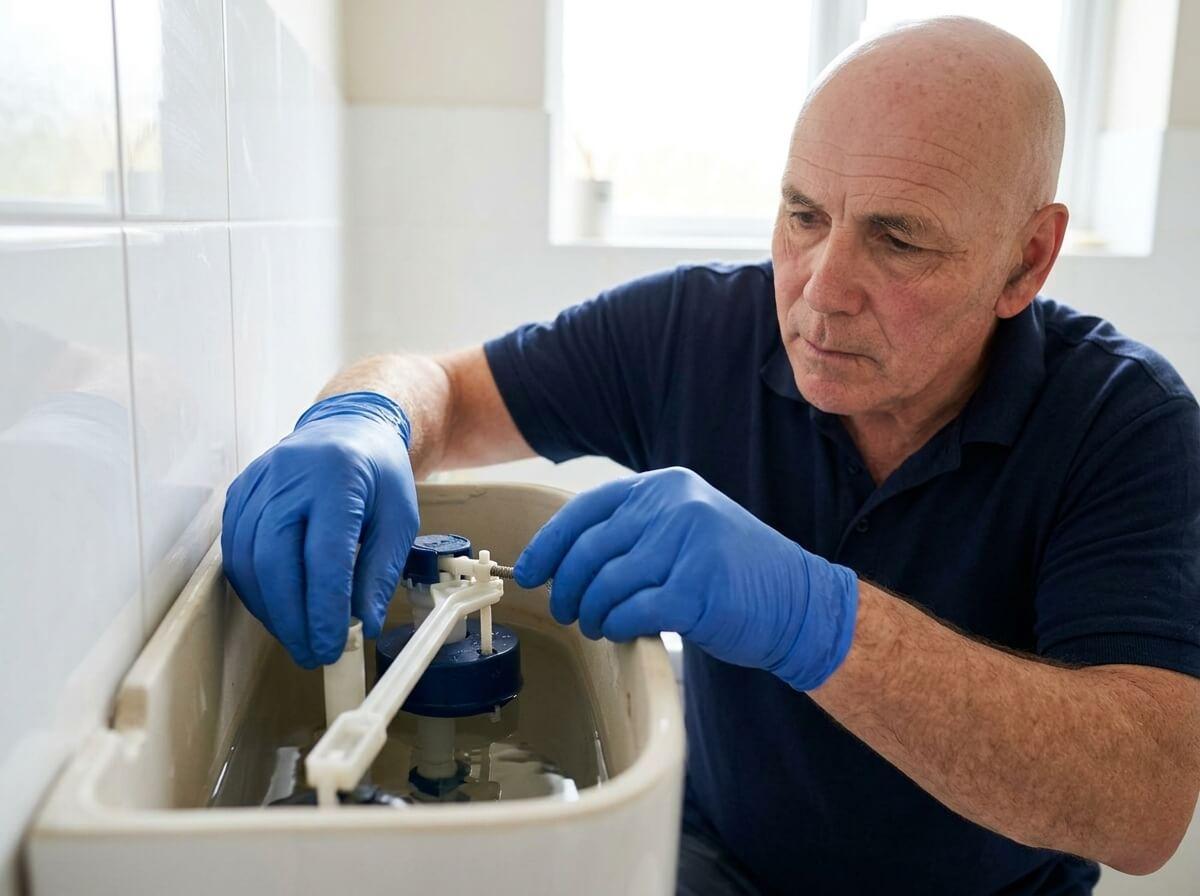
4. A leak at the water supply
The supply to the cistern is under mains pressure, so even a small weep adds up. Common culprits are a tap connector that has worked loose, a squashed or dried-out fibre washer, an isolation valve weeping round its spindle, and braided flexible hoses, which can corrode and fail without warning, especially if they have been kinked or twisted when fitted. A wet pipe with drips running down to the floor behind the toilet is the sign. If a hose is bulging, rusty or fraying, replace it before it splits.
5. A crack in the pan or cistern
Vitreous china is tough, but it does crack. A dropped aerosol or shampoo bottle, an overtightened bolt or seat fixing, a pan screwed too hard to an uneven floor, or a frost in an unheated room can all do it. Hairline cracks are hard to see. Dry the china, then run a torch along it at a low angle and look for a dark line that stays wet. A cracked pan or cistern cannot be reliably repaired. Sealants and epoxy only buy time, and a crack can open suddenly. It needs replacing.
6. Condensation
Not a leak at all, but it fools a lot of people. Cold mains water fills the cistern, the china gets cold, and warm, damp air from a bath or shower condenses on it and runs down to the floor. It is worst in cold weather and in bathrooms with no extractor fan. The sign is fine beads over the whole surface rather than one wet joint. Better ventilation usually cures it. If a cistern that leaks a little into the pan keeps refilling with cold water all day, it sweats more, so fixing the flush valve can help too.
Toilet Leaking Into the Bowl: The Silent Leak
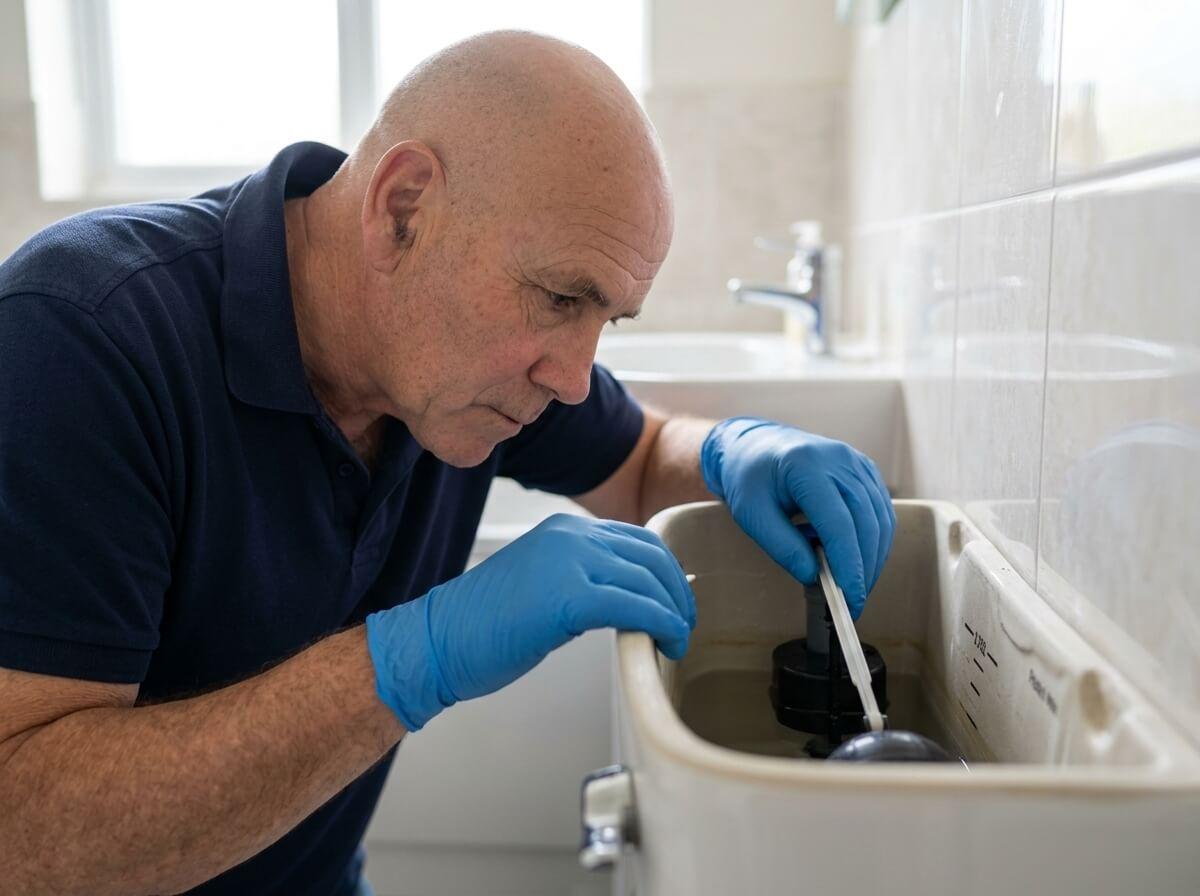
Not every leak puts water on the floor. On modern push-button toilets, the flush valve at the bottom of the cistern is sealed with a rubber washer. When limescale or grit gets under it, or it wears, clean water trickles into the pan all day and the fill valve keeps topping the cistern up. You might notice a faint ripple on the water in the bowl, the cistern refilling on its own every so often, or a brown streak of limescale running down the back of the pan.
It does no damage, but it wastes a remarkable amount of water. The water efficiency charity Waterwise estimates a leaking loo can waste between 200 and 400 litres a day, which on a water meter can double your bill. WaterSafe suggests a simple overnight check: dry the back of the pan under the rim last thing at night, press a sheet of dry toilet paper against it, and do not flush until morning. If the paper is wet, the cistern is leaking into the bowl. If water is also running from the overflow, the fill valve is at fault as well, which my guide on stopping a toilet cistern overflowing covers in detail.
Is a Leaking Toilet an Emergency?
Most toilet leaks can wait until the next day. Some cannot. Call a plumber now, day or night, if:
- ●Water is coming through the ceiling below the bathroom, or near a light fitting.
- ●The supply hose or pipe is spraying or running and the isolation valve will not stop it.
- ●Dirty water spreads across the floor every time the toilet is used, and it is the only toilet in the house.
- ●The floor around the toilet feels soft or spongy, or the pan rocks when you sit on it.
- ●The pan or cistern has visibly cracked and is leaking.
If you have stopped the leak at the isolation valve, or it is a slow drip after flushing and you have another toilet, book it in within a day or two. Do not leave it for weeks. A slow leak at the base soaks into chipboard flooring and joists, and by the time the floor goes soft the repair is much bigger than a new connector.
What You Can Safely Fix Yourself
Turn off the isolation valve and empty the cistern before you start on any of these. Have a towel and a small bowl ready.
Tighten or reseal the supply connection
If the leak is where the tap connector meets the fill valve under the cistern, hold the valve body still with one hand and nip the nut up a quarter turn with a spanner. Plastic threads strip easily, so do not force it. If it still weeps, undo it and replace the fibre washer, which costs pennies. If a braided hose is weeping at its crimped end, the hose needs replacing, not tightening.
Nip up the cistern bolts, gently
If the leak is a drip from a bolt head, tighten each nut a little at a time, alternating sides so the cistern pulls down evenly. Stop as soon as the cistern feels firm. Overtightening is the most common way people crack a cistern, and it squeezes the washer out of shape so it leaks more, not less. If a quarter turn each side does not stop it, the washers need replacing.
Reseat a pan connector that has been knocked
If you can see the connector has simply been pushed out of line, with the pan still firmly screwed down, you can sometimes push it back squarely onto the pan outlet and into the soil pipe. Make sure the pan is not rocking: if the floor screws are loose, tighten them gently by hand. If the connector is split, hard, or the pan has to be moved to get at it, that is a job for a plumber.
Clean or replace the flush valve seal
Many modern push-button flush valves twist and lift out of their base without taking the cistern off. Once it is out, wipe the rubber seal and the seat it sits on, removing any grit or limescale, and refit it. If the seal is cracked, flattened or misshapen, replacement seals and whole valves are inexpensive. Take the old one to the merchant to match it, because there are dozens of types.
What Not to Do
- ✕Do not seal round the base with silicone to stop a leak. It hides the water, which then runs under the pan and into the floor where you cannot see it.
- ✕Do not overtighten anything on the china. Cistern bolts, seat fixings and pan screws all crack porcelain if forced.
- ✕Do not keep using a toilet that leaks dirty water. Every flush puts contaminated water into the floor.
- ✕Do not wrap tape or filler round a pan connector. It will not hold against a flush, and it makes the proper repair messier.
- ✕Do not ignore a soft floor or a rocking pan. Both mean water has been getting into the floor for a while.
- ✕Do not force a seized isolation valve. If it will not turn, use the main stopcock instead, rather than snapping the valve.
Who Is Responsible for a Leaking Toilet?
If you own your home, the toilet and all its pipework are yours to repair. If you rent, in most tenancies in England the landlord is responsible: Section 11 of the Landlord and Tenant Act 1985 requires landlords to keep the installations for water and sanitation, including toilets, in repair and proper working order. Report it to your landlord or agent in writing straight away, with photos, and turn off the isolation valve if the leak is clean water. You can be charged if the damage was caused by misuse.
In a flat, a leak from your toilet can quickly reach the flat below. Let your neighbour know, and tell the managing agent if the ceiling below is affected. If there is damage to floors or ceilings, check your home insurance. Many policies cover the damage that escaping water causes, and some cover tracing the leak, but most do not cover the worn seal or connector itself. Take photos before and after you clean up, and keep any invoices.
How a Plumber Fixes a Leaking Toilet
When I come out to a leaking toilet, I dry it down, run the same tests you have read about here, and usually know which joint has failed within a few minutes. I carry the common parts on the van, so most leaking toilets are fixed in a single visit:
- ●Pan connector: the pan is unscrewed and eased forward, the old connector or cement joint removed, the soil pipe cleaned, and a new connector fitted. The pan is refixed level and solid so it cannot rock the new joint loose.
- ●Doughnut washer and bolts: the cistern comes off, the old washers and bolts are replaced with new ones, and the cistern is refitted square and evenly tightened.
- ●Supply connection: new washers, a new isolation valve or a properly fitted new flexible hose.
- ●Flush or fill valve: a new seal or a complete new valve, set to the right water level.
- ●Cracked pan or cistern: a like-for-like replacement where possible, so it lines up with your existing pipework and flooring.
- ●Hidden leaks: where water is getting into the floor or ceiling and the source is not obvious, I trace it before anything is pulled up.
Before I start, I explain what has failed and agree a fair price with you, so there are no surprises. My guide on how much an emergency plumber costs explains how call-out pricing works. You can also read more about leak detection, overflowing cistern repairs and blocked toilet repair in Ipswich.
How to Stop Your Toilet Leaking Again
- ●Fix a rocking pan straight away. A pan that moves every time you sit down works the connector loose. Check the floor screws once a year.
- ●Do not stand on the toilet to reach a window or a light. It loads the pan, the bolts and the connector in ways they were not designed for.
- ●Keep heavy things off the cistern lid. Bottles knocked off it are a common cause of cracked pans.
- ●Avoid bleach tablets in the cistern. They can attack rubber seals and washers over time. Clean the bowl instead.
- ●Look behind the toilet when you clean. A dry tissue run round the joints every month or two catches a weep before it soaks the floor.
- ●Replace braided hoses showing rust or bulges, and check that the isolation valve turns, so it works when you need it.
- ●Ventilate the bathroom after baths and showers to stop condensation dripping off the cistern.
- ●Do the paper test every few months if you are on a water meter. A silent leak into the bowl shows up on the bill long before you notice it.
Leaking Toilet in Ipswich? Call Philip
You can turn the water off and track down the leak yourself, and a few leaks are a five-minute fix with a spanner and a washer. Call me straight away, day or night, if water is coming through the ceiling, a pipe or hose is spraying, the floor has gone soft, or your only toilet is leaking dirty water. For a slow drip or a toilet running into the bowl, call in the day and I will book you in promptly, find the leak and explain exactly what I have done. If you think water is escaping somewhere you cannot see, my guide to the signs of a hidden water leak is worth a read.
I cover Ipswich, Felixstowe, Woodbridge, Kesgrave, Martlesham and the surrounding towns, and I answer the phone myself, 24 hours a day, seven days a week, on 07977 857224. You can see everything else I cover on the emergency plumbing services page.