You notice a wet patch on the patio, a green stain running down the brickwork, or an icicle hanging off a pipe you have never paid any attention to. Look up, and there is a small pipe sticking out of the wall, dripping. Sometimes it is a drop every few seconds. Sometimes it is a steady trickle, and sometimes it only happens at night or when the heating comes on.
I have been a plumber in Ipswich for more than forty years, and a dripping overflow is one of the most common calls I get. The pipe itself is almost never the problem. An overflow is a warning light made of plastic: it only carries water when something inside the house is overfilling. The trick is working out which tank, cistern or valve is behind it, because a modern home can have four or five pipes that look alike from the garden. This guide walks you through finding the source, stopping the water, fixing the common faults yourself, and knowing which drips are an emergency.
Overflow Pipe Dripping? Do These 4 Things First
Check whether the water is hot, cold or steaming
Hold your hand under the drip, carefully. Cold water is a nuisance, not a danger. Warm or hot water from any overflow, or steam from a pipe near a hot water cylinder, means something is overheating. Switch off the boiler and any immersion heater, and call a plumber straight away.
Note where the pipe comes out
Height tells you most of what you need to know. Ground or first floor under a bathroom: toilet cistern. Up at the eaves or soffit: a tank in the loft. Low down near the boiler: the boiler’s pressure relief pipe or the condensate pipe. The pipe finder below goes through every type.
Look at the tank or cistern it comes from
Lift the toilet cistern lid, or go up into the loft with a torch and look in each tank. The one with the water level right up at the overflow outlet, or running into it, is your culprit. In the loft, step only on the joists or boards.
Stop the water getting in
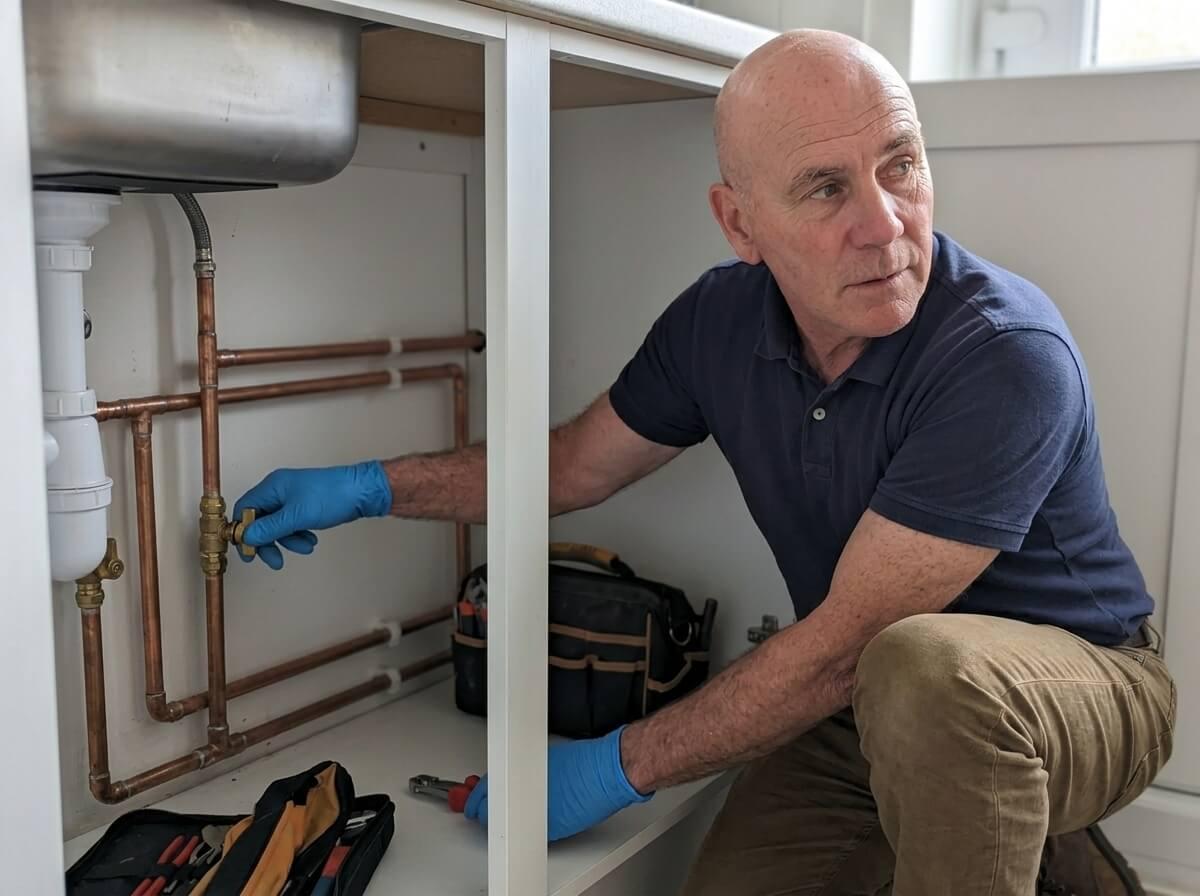
Turn the isolation valve on the supply pipe to that cistern or tank a quarter turn with a flat screwdriver, so the slot sits across the pipe. If there is no valve, lift the float arm and tie it to a length of wood laid across the tank, or turn the water off at the stopcock. The drip should slow and stop within a few minutes.
What an Overflow Pipe Is For
Every cistern and storage tank fed from the mains has a float valve that lets water in until the level reaches a set point, then shuts off. If that valve fails, water would keep coming in until it spilled over the top. The overflow, or warning pipe as the regulations call it, is a pipe set just above the normal water line that catches the extra water and carries it outside.
The Water Supply (Water Fittings) Regulations 1999 require warning pipes on storage cisterns to discharge somewhere they will be noticed, which is why they usually end outside on a wall you can see. That is deliberate. A dripping overflow is the system telling you that a valve needs attention, before the fault turns into a ceiling coming down. Since 2001, toilet cisterns have been allowed to overflow internally into the pan instead, so newer toilets often have no outside overflow pipe at all. On those, the same fault shows up as water constantly trickling into the bowl.
Which Pipe Is Dripping? Overflow Pipe Finder
Stand in the garden and find the pipe on this list. The last column tells you whether that pipe should ever drip.
| WHERE IT IS | WHAT IT LOOKS LIKE | WHAT IT COMES FROM | NORMAL TO DRIP? |
|---|---|---|---|
| Ground or first floor, just below a bathroom or cloakroom | White or grey plastic, about 22mm, poking straight out of the wall | Toilet cistern overflow, on older toilets that do not overflow into the pan | Never |
| High up, at the eaves, soffit or gable end | Plastic or copper, often 22mm or wider, sometimes with a downturned end | Cold water storage tank in the loft, or the small heating feed and expansion tank | Never |
| Low down near the boiler, turning down towards the ground or a drain | Copper, about 15mm | Combi or system boiler pressure relief valve | Never |
| Low down near an unvented hot water cylinder, ending near a drain | Copper, usually 22mm or wider, fed from a tundish (a funnel with an air gap) inside | Unvented cylinder discharge pipe from the relief valves | Never |
| Near the boiler, running into a drain, gully or soakaway | Plastic, about 21 to 32mm, white, grey or black | Condensing boiler condensate pipe, not an overflow | Yes, while the boiler is firing |
If you have two overflow pipes high up, that is normal for an older house with a conventional boiler: one comes from the big cold water tank and one from the small heating tank beside it. Go into the loft to see which one is full.
Overflow Fault Finder: What the Drip Is Telling You
When someone rings me about an overflow, these are the questions I ask: where is the pipe, is the water hot or cold, and when does it drip. Find the row that matches. The last two columns tell you whether it is usually a DIY job and how quickly it needs sorting.
| WHAT YOU NOTICE | LIKELY CAUSE | DIY FIX? | URGENCY |
|---|---|---|---|
| Low pipe under the bathroom drips or trickles, toilet water level is right at the overflow | Toilet fill valve not shutting off: worn washer or seal, limescale, float set too high or catching the side. | Usually | Today or tomorrow |
| High pipe drips all the time, big loft tank is full to the overflow | Cold water tank float valve letting by: worn washer or diaphragm, scaled seat, or a waterlogged float. | Sometimes | Today or tomorrow |
| High pipe drips only at night or first thing in the morning | Early float valve wear. Mains pressure rises overnight and pushes water past a tired washer. | Sometimes | Book in, not urgent |
| High pipe drips only when the heating or hot water comes on | Small feed and expansion tank filled too high, so expanded water goes straight out of the overflow. | Sometimes | Book in, not urgent |
| Warm or hot water comes out of the high overflow | Cylinder overheating, heating system pumping over into the loft tank, or a split cylinder coil. | Call a plumber | Call now |
| Copper pipe by the combi drips, boiler gauge reads 2.5 bar or more | System pressure too high: filling loop left open or letting by, or a flat expansion vessel. | Sometimes | Today or tomorrow |
| Copper pipe by the combi drips, gauge is normal at 1 to 1.5 bar cold | The pressure relief valve has failed and no longer seats, often after it has opened once. | Call a plumber | Today or tomorrow |
| Water or steam through the tundish of an unvented cylinder | Expansion relief valve or temperature and pressure relief valve opening. Very hot water means overheating. | Call a plumber | Call now |
| Overflow running in a steady stream, not a drip | Float valve stuck fully open, a float that has come off its arm, or a split float. | Sometimes | Call now |
| Overflow has stopped in a frost, but there is water in the loft or a ceiling stain | The overflow pipe has frozen or blocked, so the tank is spilling inside the house. | Call a plumber | Call now |
| Plastic pipe by the boiler drips only when the heating or hot water is on | Normal condensate from a condensing boiler. Only a problem if it freezes and the boiler locks out. | Usually | Book in, not urgent |
Toilet Overflow Pipe Dripping
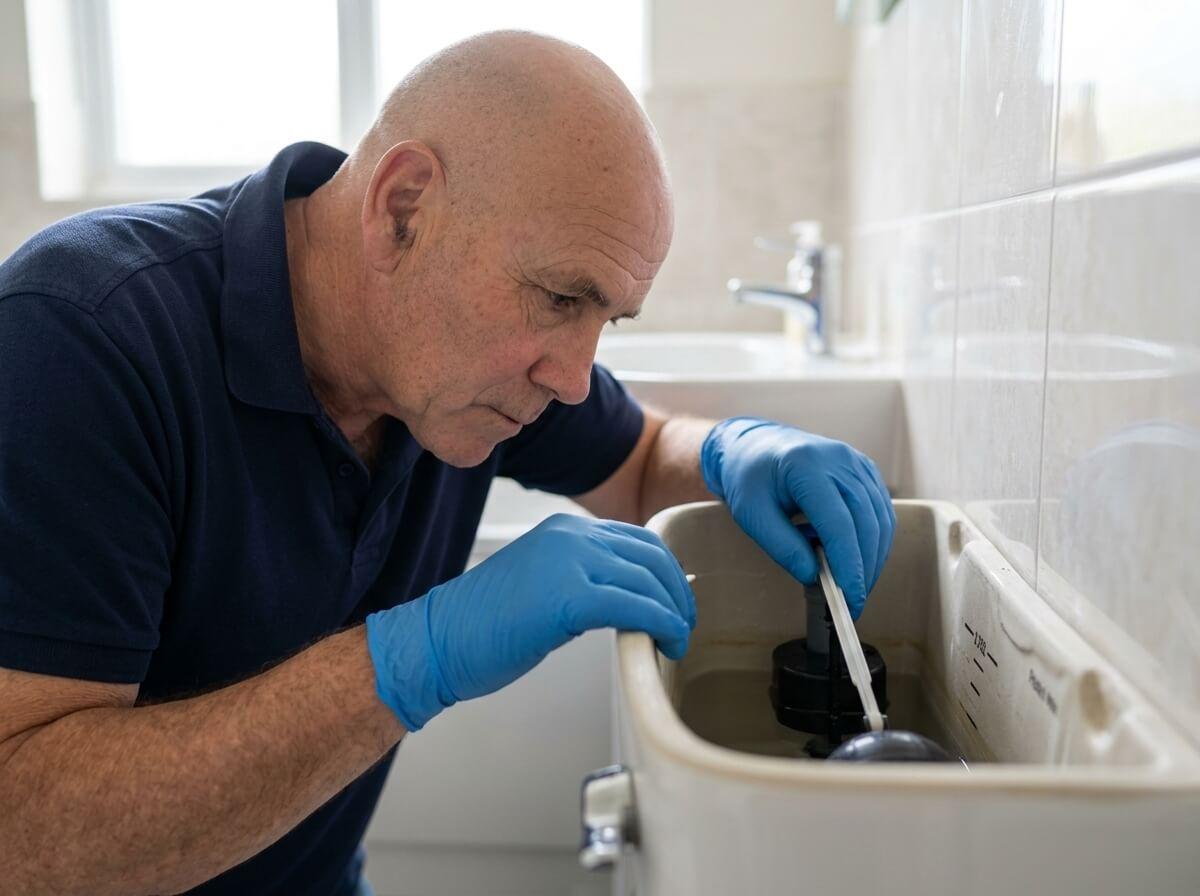
A pipe at ground or first-floor level, directly below or beside a toilet, is the cistern overflow. It is the easiest one to diagnose, because you can see everything with the lid off. Lift the lid and look at the water. If it is level with the top of the overflow pipe inside the cistern, or trickling into it, the fill valve is not shutting off. Push the float up gently with your hand. If the water stops, the valve works but is set too high. If it keeps coming, the valve is worn or scaled.
1. The float is set too high
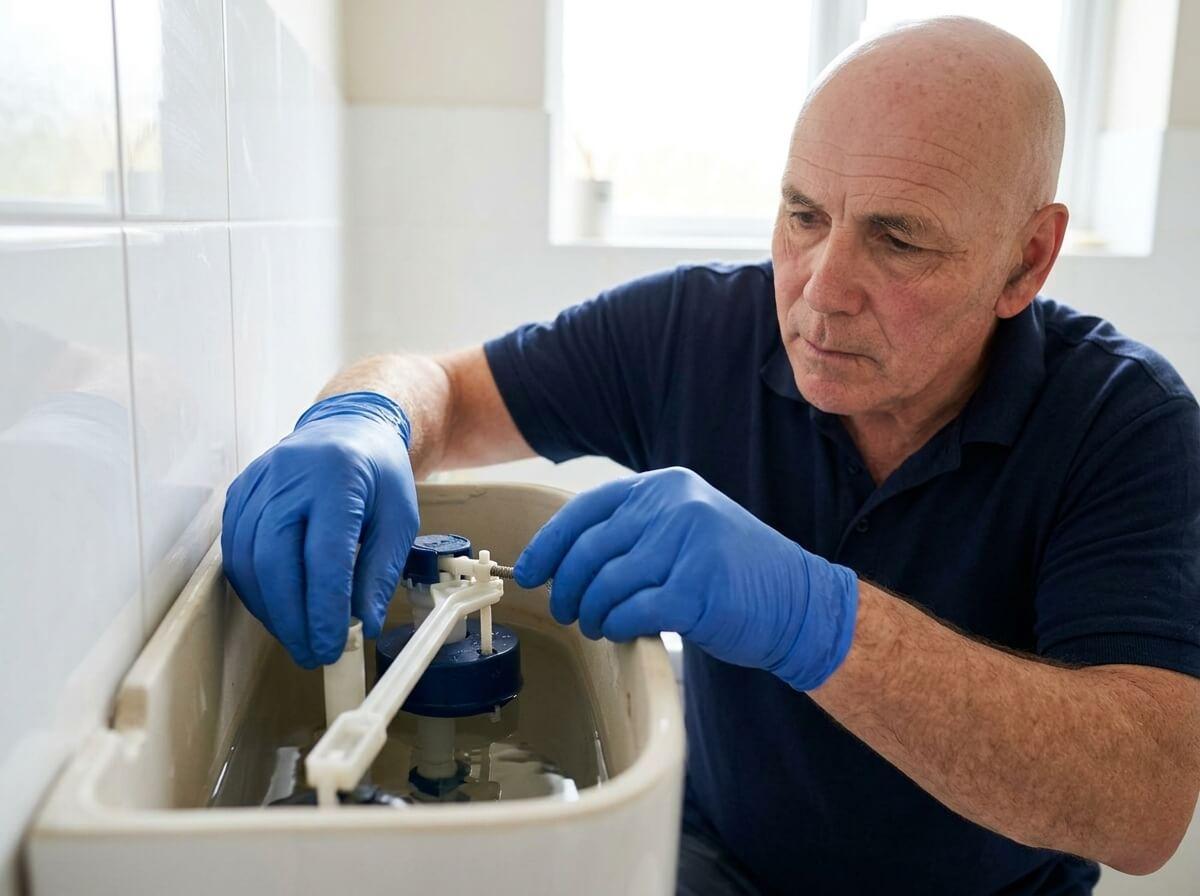
The water should stop about two to three centimetres below the overflow. On a modern fill valve, the float slides on a plastic rod or is set by a screw or a clip: lower it a little, flush, and watch the level settle. On an older ballcock with a brass or plastic arm, there is usually an adjusting screw near the valve. Older brass arms were sometimes bent slightly downwards to lower the level, but gently, with both hands.
2. A worn washer, seal or diaphragm
If the float is at the right height and water still creeps in, the rubber seal inside the valve has worn or a bit of grit is holding it open. With the water off, many valves have a cap you can unscrew to clean or change the seal. Ipswich water is hard, and limescale on the seat is a very common cause here. A new seal costs pennies, but a complete new fill valve often costs little more and saves a second visit.
3. A float that is catching or waterlogged
If the float rubs on the side of the cistern, the flush pipe or the lid, it cannot rise far enough to close the valve. Old ball floats can also split, fill with water and sink. Shake the float: if it sloshes, it needs replacing.
My guide on how to stop a toilet cistern overflowing goes through each of these fixes in detail, including the flush valve faults that let water run into the pan instead.
Loft Tank Overflow Pipe Dripping
A pipe at the eaves or under the roofline comes from the loft. In most older Ipswich homes with a hot water cylinder in the airing cupboard, there is a large cold water storage tank up there, usually plastic and holding anything from 100 to 230 litres. It feeds the hot water cylinder and often the bath taps, shower and toilets. It is filled by a float valve from the rising main, and it has an overflow pipe that runs out through the wall or the soffit.
Go up with a torch and take the lid off. The normal water level is a few centimetres below the overflow outlet, and the regulations expect a gap of at least 25 millimetres between the shut-off level and the overflow. If the water is at or above the overflow outlet, the float valve is not closing.
How to stop the water to a loft tank
Most tanks have a small isolation valve on the feed pipe just before the float valve. Turn the slot across the pipe. If there is not one, or it will not turn, lift the float arm until the water stops, and tie it up to a batten or a broom handle laid across the top of the tank. That stops the drip without turning off the water to the rest of the house, and the tank still supplies the hot water and bathroom for a while.
Adjusting or repairing the float valve
- ●Set the level lower. Modern float valves have an adjusting screw on the arm, or a float that slides along the arm. Wind it down so the valve shuts off about 25mm below the overflow.
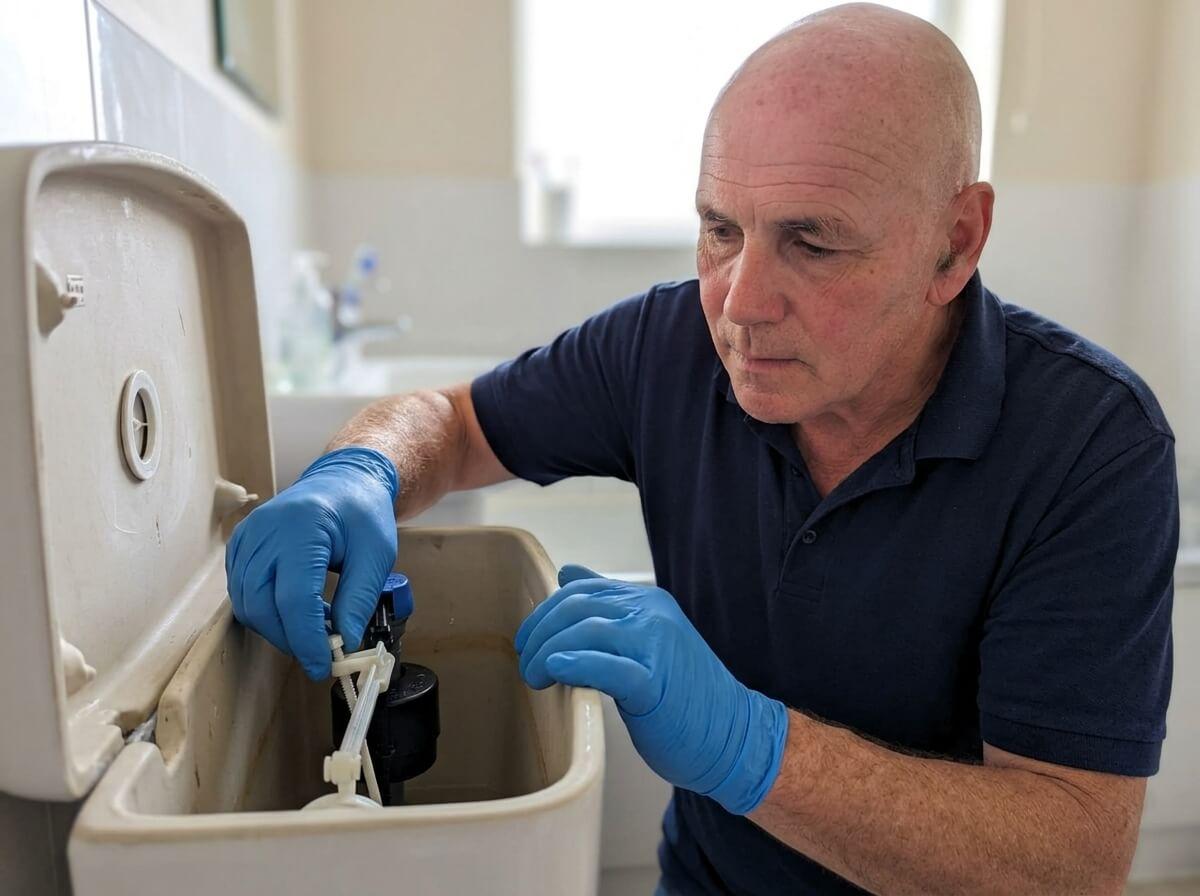
- ●Change the washer or diaphragm. With the water off, unscrew the cap at the end of the valve body. Older brass valves have a small piston with a rubber washer. Newer diaphragm valves have a flat rubber disc. Either is a very cheap part.
- ●Check the seat suits your pressure. Float valves come with a high-pressure or low-pressure seat. A low-pressure seat on mains pressure will never shut off properly. If the valve keeps letting by after a new washer, the wrong seat is a common reason.
- ●Replace the valve. If it is old, scaled or the float is cracked, a complete new float valve is usually the best value. It needs the water off and a pair of spanners, and the tank connection has to be sealed properly so it does not drip into the loft.
Working in a loft carries its own risks, so be honest with yourself. If the tank is hard to reach, has no isolation valve, or the old fittings look corroded, it is a job for a plumber. A loft tank leaking into a bedroom ceiling costs far more than the call-out. My guide on water leaking through the ceiling explains what to do if that has already happened.
Why the overflow only drips at night or in the morning
This puzzles a lot of people. During the day, everyone is using water and the mains pressure drops a little. Late at night, demand falls and the pressure in the street rises. A float valve with a slightly tired washer holds against daytime pressure, then lets water creep past overnight. By the early hours the tank has topped up to the overflow, and you see a wet patch in the morning that has dried out by lunchtime. It is the same fault as a constant drip, caught early. Fix it now and it stays a cheap washer.
The Small Loft Tank: Feed and Expansion Tank Overflowing
If you have a conventional boiler and an open vented heating system, there is a second, smaller tank in the loft, often holding only 20 to 40 litres. This is the feed and expansion tank. It tops up the radiator circuit and gives the heating water room to expand as it warms up. It has its own float valve and its own overflow pipe.
- ●Overflow drips when the heating comes on: the tank has been filled too high. When the system is cold, it should hold only a few centimetres of water, enough to cover the float valve outlet. As the water heats, it expands and rises. If the tank started full, the extra goes out of the overflow. Lower the float so the cold level sits just above the bottom of the tank.
- ●Overflow drips all the time: the float valve is letting by, exactly as on the big tank. The danger here is that fresh, oxygen-rich water keeps entering the heating system, which rusts radiators from the inside.
- ●Hot water spurting into the tank from the pipe above it: this is called pumping over. The heating pump is pushing water up the open vent pipe. It is usually a pump set too high, a blockage in the pipework or a fault in how the system was piped. It needs a plumber or heating engineer, because it corrodes the system fast.
Hot Water Coming Out of the Overflow Pipe
Warm or hot water from a high overflow is a different problem. Cold water tanks should never get warm. If yours is warm to the touch, or the overflow is running hot, one of three things is usually going on:
- ●The hot water cylinder is overheating. A failed cylinder thermostat or immersion heater thermostat lets the water get far too hot. It expands up the vent pipe that hangs over the cold tank and runs out of the overflow. The cylinder thermostat should normally be set to about 60°C.
- ●The heating system is pumping over into the cold tank instead of the expansion tank, on some older layouts.
- ●The coil inside the cylinder has split. On an indirect cylinder, the boiler heats your hot water through a copper coil. If the coil corrodes through, water moves between the heating and the hot water. The cylinder then needs replacing.
In each case, switch off the boiler and the immersion heater, and call a plumber the same day. Do not keep running a cylinder that is overheating.
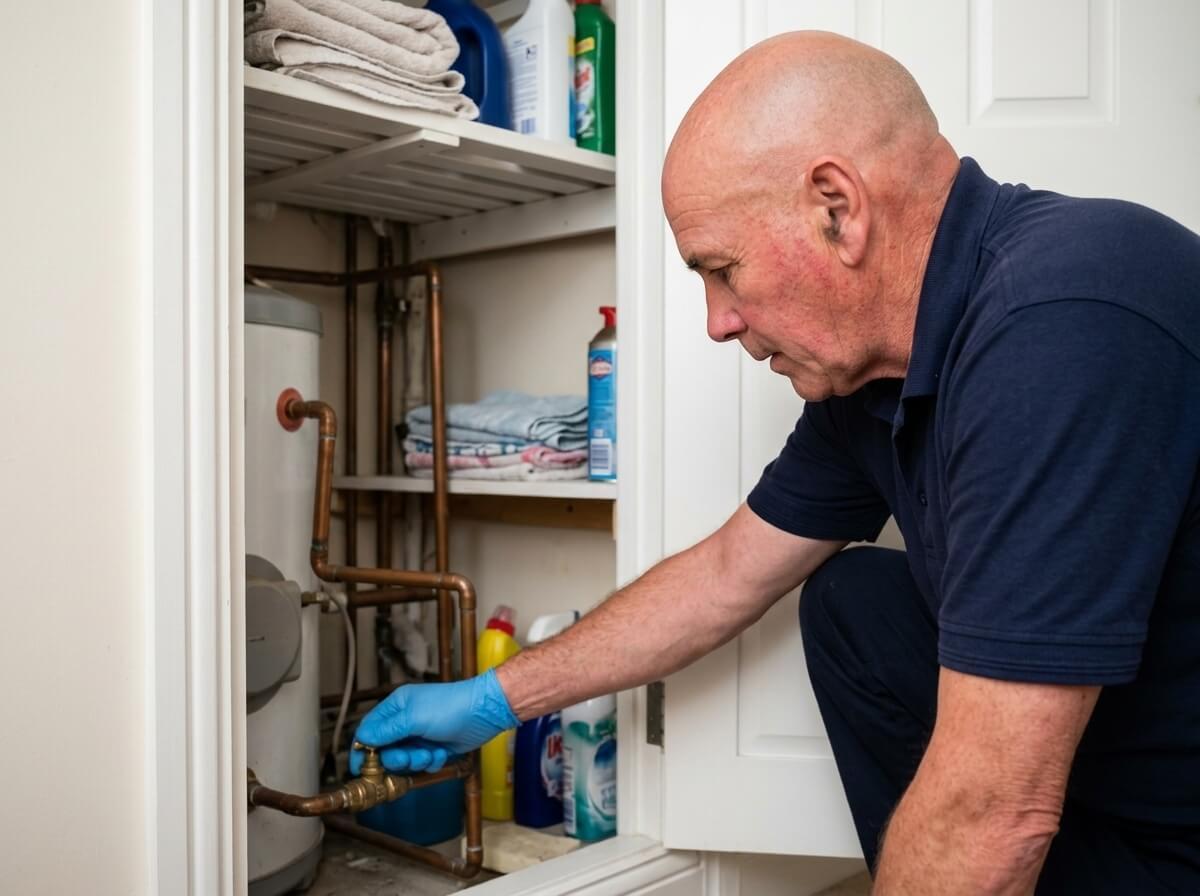
Unvented Cylinder Discharge Pipe or Tundish Dripping
Newer homes, and many that have been updated, have an unvented hot water cylinder instead of a loft tank. It runs at mains pressure, so it has two safety valves: an expansion relief valve on the cold inlet, and a temperature and pressure relief valve on the top of the cylinder. Both discharge into a tundish, a short funnel with a visible air gap, usually mounted on the pipe beside the cylinder. From there a copper discharge pipe runs outside to a safe, low point.
- ●Cold water dripping through the tundish, mainly while the water is heating: usually the expansion vessel on the cylinder has lost its air charge, so the expansion relief valve opens every time the water warms. It can also be a pressure reducing valve that is letting through too much mains pressure.
- ●Hot water or steam through the tundish: the temperature and pressure relief valve has opened because the cylinder has overheated. Switch off the boiler and immersion heater immediately and do not touch the discharge pipe, which can be scalding.
Unvented cylinders must be serviced and repaired by someone qualified to work on them, under the Building Regulations. Do not cap the discharge pipe or tie the valves shut. They are there to stop the cylinder failing.
Combi Boiler Overflow Pipe Dripping
A combi or system boiler does not have a tank, but it does have a pressure relief valve. Its copper pipe, about 15mm, leaves the boiler and usually turns down towards the ground outside. The valve opens at about 3 bar to protect the boiler. Look at the pressure gauge on the front of the boiler.
- ●Gauge reads 2.5 bar or more: the system is over-pressurised. The most common reason is that the filling loop, the braided hose or key underneath the boiler, has been left open or its valve is letting by. Make sure both taps on it are fully closed. If the pressure climbs every time the heating runs and falls back when it cools, the expansion vessel inside the boiler has lost its charge.
- ●Gauge reads a normal 1 to 1.5 bar cold: the relief valve itself has failed. Once a valve has opened, grit can stop it seating properly again, and it keeps dripping even at normal pressure.
- ●Pressure keeps dropping and you keep topping it up: the water is going somewhere. If the relief pipe is dry, look for a leak on the radiators or pipework, or one of the hidden signs in my guide to signs of a hidden water leak.
You can safely close the filling loop and read the gauge. Anything inside the boiler casing, including recharging the expansion vessel or replacing the relief valve, is a job for a registered gas engineer.
Is It Actually the Condensate Pipe?
A modern condensing boiler produces water as it burns gas, a litre or more an hour on a cold day. That water runs out through a plastic condensate pipe, usually white, grey or black and about 21 to 32mm across, into a drain, a gully or a soakaway. Dripping from this pipe while the heating or hot water is on is completely normal. It is mildly acidic, so it can mark paving, but it is not a leak.
The one time the condensate pipe matters is in a hard frost. If the outside section freezes, the water backs up and the boiler locks out with a fault code. Pouring warm, not boiling, water over the outside section usually thaws it. My guide on frozen pipes covers it in more detail.
Is a Dripping Overflow Pipe an Emergency?
A slow, cold drip can wait for a booked visit in the next day or two. Call a plumber now, day or night, if:
- ●The overflow is running in a steady stream and you cannot stop the water with the isolation valve or by tying up the float.
- ●Water is coming through a ceiling, or there is water on the loft floor.
- ●The overflow pipe has frozen or is blocked, and the tank or cistern is spilling inside.
- ●Hot water or steam is coming out of any overflow, tundish or discharge pipe.
- ●A cold water tank feels warm, or a hot water cylinder is too hot to touch.
- ●A loft tank is visibly cracked, bowed or leaking from its connections.
Even a slow drip should not be left for weeks. Worn valves only get worse, and a drip that becomes a stream in a January freeze is a very different job.
Overflow Pipes in Winter: Icicles, Ice and Frozen Overflows
A dripping overflow causes extra trouble in cold weather. The drip can build an icicle on the pipe and a sheet of ice on the path below, which is a real slip hazard, especially by a back door. Worse, the end of the pipe can freeze solid. The overflow then cannot do its job, and the next time the float valve lets by, the tank or cistern overflows inside: into the loft insulation, through the ceiling, or onto the bathroom floor.
If you see an icicle on an overflow, take it as a warning to fix the valve before the next frost, not after. Insulating the overflow pipe in the loft, and fitting a frost cover or a hinged flap on the outside end, helps stop cold air and ice getting in.
What Not to Do
- ✕Do not block, cap or cut off the overflow. It does not stop the water, it just sends it into your loft or ceiling instead. Overflows are required by the regulations for a reason.
- ✕Do not tie down a relief valve or cap a tundish. On a boiler or unvented cylinder, those valves are what stops the system failing under pressure.
- ✕Do not ignore warm water from an overflow. It always means overheating somewhere. Switch off the boiler and immersion heater and get it checked.
- ✕Do not stand between the joists in the loft. Your foot will go through the ceiling. Stand on boards or across the joists, with a torch.
- ✕Do not overtighten plastic tank connectors. Plastic tanks crack and threads strip easily. Hand tight plus a little, with the right washers, is enough.
- ✕Do not keep opening the filling loop to top up a combi that keeps losing pressure. You are replacing water that is leaking out somewhere.
How Much Water Does a Dripping Overflow Waste?
More than most people expect. A drip of one drop a second adds up to roughly 20 litres a day, or several thousand litres over a year. A thin, steady trickle can easily waste a few hundred litres a day. If you are on a water meter, as most homes in the Anglian Water area now are, that goes straight onto your bill, and you pay for it twice because it also counts towards your sewerage charge. A worn float valve washer is one of the cheapest parts in the house to replace, and one of the quickest to pay for itself.
Who Is Responsible for a Dripping Overflow?
If you own your home, the tanks, cisterns and valves are yours to repair. If you rent, in most tenancies in England the landlord is responsible: Section 11 of the Landlord and Tenant Act 1985 requires landlords to keep the installations for water, sanitation and hot water in repair and proper working order. Report it in writing with a photo of the pipe, and tell them the same day if water is coming inside.
If the dripping pipe belongs to a neighbour and is soaking your wall, path or garden, have a friendly word first. Most people never look at the outside of their own house and have no idea it is happening. If they rent, ask for the landlord’s or agent’s details. In a flat or a terrace, it is worth checking which property the pipe actually belongs to before knocking, because overflows can run some distance through a loft.
How a Plumber Fixes a Dripping Overflow Pipe
When I come out to a dripping overflow, I start outside, follow the pipe back to its tank, cistern or valve, and usually know the cause within a few minutes. I carry the common parts on the van, so most overflows are dry again in a single visit:
- ●Toilet cisterns: a new fill valve or seal, the float set to the right level, and the flush valve checked while the lid is off.
- ●Cold water storage tanks: a new washer, diaphragm or complete float valve with the correct seat for your pressure, and the shut-off level set below the overflow.
- ●Feed and expansion tanks: the float valve repaired or replaced and the cold fill level set correctly, so the system has room to expand.
- ●Hot overflows and pumping over: the cause traced to the cylinder, its thermostats or the heating circuit, and the right repair explained before anything is changed.
- ●Overflow pipes themselves: a frozen, cracked, disconnected or badly sloped overflow pipe renewed, with a frost-resistant end fitted.
Before I start, I explain what has failed and agree a fair price with you, so there are no surprises. If the fault is inside a gas boiler, I will tell you so and point you to the right engineer, rather than charge you to guess. My guide on how much an emergency plumber costs explains how call-out pricing works. You can also read more about overflowing cistern repairs and leak detection in Ipswich.
How to Stop Your Overflow Pipe Dripping Again
- ●Look at the outside of the house every few months, especially in autumn. A wet stain under a pipe is the earliest warning you will get.
- ●Set every float to shut off well below the overflow, so a small valve fault has room before it reaches the pipe.
- ●Replace scaled valves early. Ipswich has hard water, and limescale on float valve seats is behind a large share of the overflows I see.
- ●Make sure every tank has an isolation valve on its feed pipe, so you can stop a fault in seconds without turning off the house.
- ●Keep the loft tank lidded and insulated, with the overflow pipe lagged and a frost cover on the outside end.
- ●Check your boiler pressure monthly, and keep the filling loop closed except when you are topping it up.
- ●Have an unvented cylinder serviced every year, including the expansion vessel charge and the relief valves.
Overflow Pipe Dripping in Ipswich? Call Philip
Most dripping overflows are a quick diagnosis and a cheap part, and plenty are a fix you can do yourself with the water off. Call me straight away, day or night, if the overflow is running in a stream, water is coming into the house, the pipe has frozen, or there is hot water or steam. For a slow cold drip, call in the day and I will book you in promptly, find the fault and explain exactly what I have done.
I cover Ipswich, Felixstowe, Woodbridge, Kesgrave, Stowmarket and the surrounding towns, and I answer the phone myself, 24 hours a day, seven days a week, on 07977 857224. You can see everything else I cover on the emergency plumbing services page.