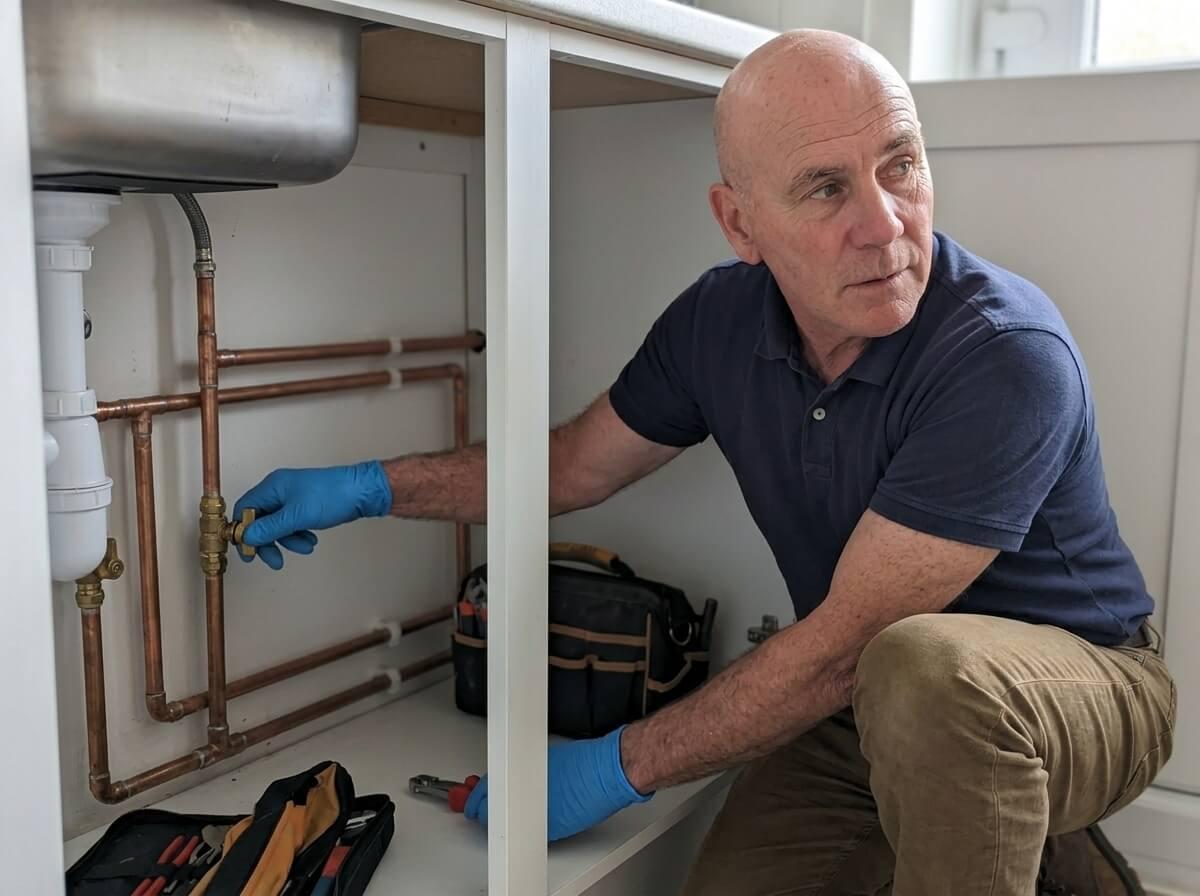
A leaking shower rarely announces itself. Most people only find out when a brown ring appears on the kitchen ceiling, a drip lands on the dining table every morning, or the tiles start to feel loose. By then the water has usually been getting out for weeks, soaking the floor, the joists and the plasterboard below.
I have been a plumber in Ipswich for more than forty years and I have traced hundreds of shower leaks. The good news is that most of them are not burst pipes. They are a tired bead of silicone, a cracked line of grout, a door seal, a loose waste or a worn washer. The trick is testing one thing at a time instead of guessing, so you fix the right thing first. Most guides stop at descaling the shower head. This one covers every kind of shower, including electric showers, bar mixers and concealed valves, and tells you honestly which jobs are yours and which need a plumber.
Shower Leaking? Do These 5 Things First
Turn the shower off and stop using it
Every shower pushes more water into the floor and the ceiling below. Tell everyone in the house not to use it, and use the bath or another shower until you know what is wrong.
Make the electrics safe
If you have an electric shower, switch it off at the ceiling pull cord or wall isolator, then at the consumer unit. If water is dripping through a ceiling near a light fitting, downlights or an extractor fan, do not switch those lights on or off. Turn off the lighting circuit for that floor at the consumer unit, or the main switch if you are not sure which.
Stop the water if it keeps coming
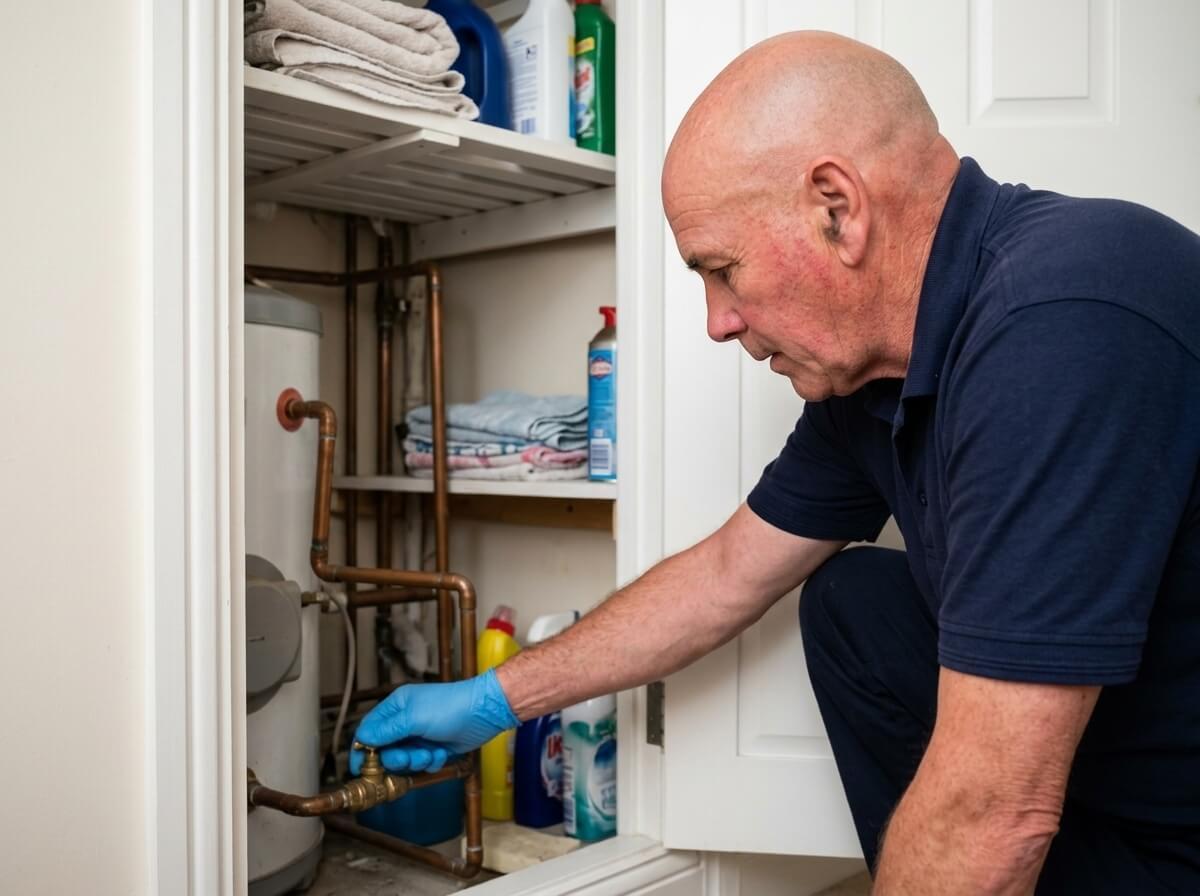
If the head keeps dripping, or the ceiling keeps getting wetter with the shower off, turn off the water. Many showers have a small isolating valve on each supply pipe, often behind a panel, under the bath panel or in the airing cupboard: turn the slot a quarter turn with a flat screwdriver so it sits across the pipe. Otherwise turn off the main stopcock. My guide on how to find your stopcock shows where to look. If your shower is fed from a cold water tank in the loft, there may be a gate valve on the pipe coming out of it.
Protect the room below
Put a bucket under any drip and move furniture, rugs and electrical things out of the way. If a patch of ceiling is bulging with water, keep everyone out from under it. If you are in a flat, knock on the door below and let your neighbour know.
Take photos before you clean up
Photograph the ceiling, the tray, the silicone, the grout and anything that looks wet or damaged. It helps if you need to claim on your insurance or tell your landlord, and it helps whoever comes to fix it.
Is It Leaking When the Shower Is On, or Off?
This one question tells you more than anything else. Every shower has two halves: the supply, the pipes and valve that bring hot and cold water to it, and the waste, the tray, trap and pipe that take it away. In between are the surfaces the water hits: tiles, grout, silicone and the screen.
- ●Leaks only while the shower is running, or for an hour after: almost always the water getting out of the enclosure. Silicone, grout, door seals, the tray, the waste or the trap. The supply pipes are rarely to blame.
- ●Leaks all the time, even when nobody has used it: a supply pipe, a joint behind the wall or under the floor, or the shower valve itself. These pipes are under pressure day and night.
- ●Drips from the head with the shower off: the valve is letting water past. In a mixer it is a worn cartridge or washer. In an electric shower it is usually the solenoid valve.
Where Is the Water Coming From? Find the Row That Matches
Water travels. A leak at the back of a tray can run along a joist and drip out of a ceiling light three feet away. Dry everything first, then find the row that matches what you can see.
| WHAT YOU SEE | LIKELY SOURCE | CHECK THIS FIRST |
|---|---|---|
| Drip from the shower head with the shower off | A worn cartridge or washer in the mixer valve, or a faulty solenoid valve in an electric shower | Wait ten minutes. A few drips is the hose emptying. A steady drip that never stops is the valve. |
| Water spraying from the hose or where it joins the head or valve | A flattened or missing hose washer, or a split hose | Unscrew the hose by hand and look at the rubber washer in each nut. Look along the hose for splits and at the metal ends. |
| Water running out of the bottom of an electric shower unit | The pressure relief device, set off by a furred shower head or kinked hose, or a fault inside the unit | Switch it off at the pull cord and the consumer unit. Check the head for limescale and the hose for kinks before anything else. |
| Water round a bar mixer, at the wall connections | The inlet elbows, their olives, or the washers in the unions that join the mixer to them | Dry the joints and run the shower. Hold dry kitchen roll under each union and elbow in turn. |
| Water on the floor outside the enclosure | Door seals, the bottom wiper strip, a gap at the hinge side, or water bouncing off the screen | Run the shower aimed at the door and watch the bottom corners and the hinge side from outside. |
| Ceiling below drips only while someone showers, or just after | Silicone, grout, the shower waste or trap, or a tray that flexes underfoot | Do the four part test further down this guide to tell which it is. |
| Ceiling or wall below stays wet when nobody has used the shower | A supply pipe, a joint in the wall or under the floor, or a concealed valve | Turn off the isolating valve or stopcock. If it dries up, call a plumber to trace it. |
| Loose or hollow sounding tiles, black mould, swollen skirting next door | A slow leak that has been soaking the wall behind the tiles for weeks or months | Stop using the shower. Press the tiles gently and look for movement. This needs tracing before it spreads. |
The Four Part Shower Leak Test
This is how I find a shower leak without taking anything apart. You need someone downstairs watching the ceiling, a torch, and ideally a few drops of food colouring. Dry the ceiling patch first, or draw a pencil line round the wet edge, so you can see fresh water. Do one test at a time and give each one five to ten minutes.
The waste test
Take the shower head off its holder and hold it right down in the plughole, so the water goes straight down the waste without touching the tray, the walls or the screen. Or pour a few buckets of coloured water straight into the waste. If the ceiling drips now, the leak is the waste, the trap or the pipe under the tray.
The tray test
Put the plug in, or block the waste with a sandwich bag of water, and run an inch of water into the tray. Stand in it and shift your weight around. If it leaks now but not in the waste test, the water is getting out round the edge of the tray, through the silicone, or the tray is flexing and opening up the seal.
The wall test
Spray the tiles and grout only, working from the top down, keeping the water off the bottom silicone joint. Then spray the silicone joints on their own. Then the area round the valve and where the riser rail screws into the wall. Water that gets behind the tiles can take a while to come through, so wait between each one.
The door and screen test
Aim the water at the door, the hinge side, the bottom seal and the corners where the screen meets the tray or the bath. Watch from outside. Water on the bathroom floor that runs to the edge of the room can come through the ceiling well away from the shower.
Leaks Round the Tray and Enclosure
Silicone that has failed
The silicone joint between the tray or bath and the tiles is the number one cause of shower leaks through ceilings. It shrinks, goes black with mould, peels away at the corners, and a hairline gap is all it takes. Water runs down the tiles, under the edge of the tray and into the floor. Press along the joint with a fingernail. If it lifts, or you can see a gap, it needs cutting out completely, the surface cleaning and drying, and a fresh bead putting on. Never put new silicone over old: it will not stick and it traps the water behind it. Fill a bath with water before you seal it, so it sits at its lowest when the silicone sets.
Cracked or missing grout
Grout is not waterproof on its own, but once it cracks or crumbles it lets water straight in behind the tiles. Look for gaps, dark lines and hairline cracks, especially low down and in the corners. A few cracked lines can be raked out and regrouted. Tiles that move when you press them, or sound hollow when tapped, mean water has already got behind them and softened the adhesive or the board underneath. That is more than a regrout. It needs the wall checking.
A tray that moves
A shower tray should not move at all. If it creaks, dips or rocks when you stand in it, it was not bedded properly when it was fitted, or the floor under it has gone soft from an old leak. Every time someone stands in it, it pulls on the silicone and the waste joint and opens them up. Fresh silicone will not fix it for long. The tray needs lifting and rebedding, which is a plumber’s job.
Door seals and screens
Over time, the plastic seals and the wiper strip along the bottom of a shower door wear, split or fall off, and water runs onto the floor. On an over bath shower, water often runs down the inside of the screen, along the bath edge and out at the end. Replacement seals are cheap and clip on, though you need to match the profile and thickness of the glass. A screen that is not quite level or square will leak at the corners however good the seals are.
The shower waste and trap
Under every tray is a waste, the plughole fitting, sealed to the tray with a rubber washer and connected to a trap. If the washer perishes, the nut works loose, or the trap joint fails, water leaks straight into the floor every time the shower runs. A waste that is draining slowly makes it worse, because water sits in the tray and finds its way past the seal. If the waste test above made the ceiling drip, the waste or trap needs resealing or replacing, usually from below or by lifting the tray. If the shower is slow to drain, see my blocked shower drain guide first.
Leaks From the Shower Itself
Shower head leaking or spraying sideways
In a hard water area like Ipswich and most of Suffolk, limescale blocks the small holes in the face of the head, so water sprays sideways at the screen or back at the wall, or leaks from round the edge. Unscrew the head from the hose and soak it in white vinegar or a descaler for a few hours, then rub the rubber nozzles with your thumb. A head that keeps dripping long after the shower is off is not the head’s fault. It is the valve.
Shower hose leaking
Drips where the hose meets the head or the valve are nearly always a worn rubber washer inside the hose nut. Unscrew the nut by hand, fit a new washer, and do it back up hand tight. A hose that leaks from the crimped metal end, or along its length, needs replacing. Most UK shower hoses use a standard half inch fitting, and some have a conical end at the head, so take the old one with you to the shop.
Bar mixer leaking at the wall
A thermostatic bar mixer, the long chrome bar on the wall, is joined to two elbows coming out of the wall by large nuts with fibre or rubber washers. When those washers get old, or the bar is knocked, water seeps from the joints and runs down behind the bar where you cannot see it. Drips from the controls or from the body of the bar point to worn cartridges or seals inside. With the water off, the union washers are a simple change. Cartridges are model specific and the bar has to come off to replace them.
Concealed valve leaking behind the tiles
If your shower has just the controls on the wall and no pipes showing, the valve and the pipes to it are buried in the wall. A leak there usually shows up as damp on the other side of the wall, a stain on the ceiling below, loose tiles round the controls, or water appearing with the shower off. Most concealed valves have a cover plate you can remove to see the body and the isolation points. If the valve body or a pipe joint behind it is leaking, it needs a plumber, and sometimes a tile or two removing to get to it.
Electric shower leaking
Electric showers heat mains water in a small tank inside the unit, and they have a safety valve called a pressure relief device. If the head is furred up or the hose is kinked so water cannot get out of the front, pressure builds and the device lets water out of the bottom of the unit instead. Descaling or replacing the head and straightening the hose cures the cause, but the relief device may then need resetting or replacing. Water from the case can also mean a cracked heater tank, a failed seal or a faulty solenoid valve, the part that also makes the head drip when the shower is off. Electric showers are wired on their own high current circuit, so switch it off at the isolator and the consumer unit before anyone looks inside. If water has got into the wiring, it needs an electrician as well.
Supply pipes under the floor or in the wall
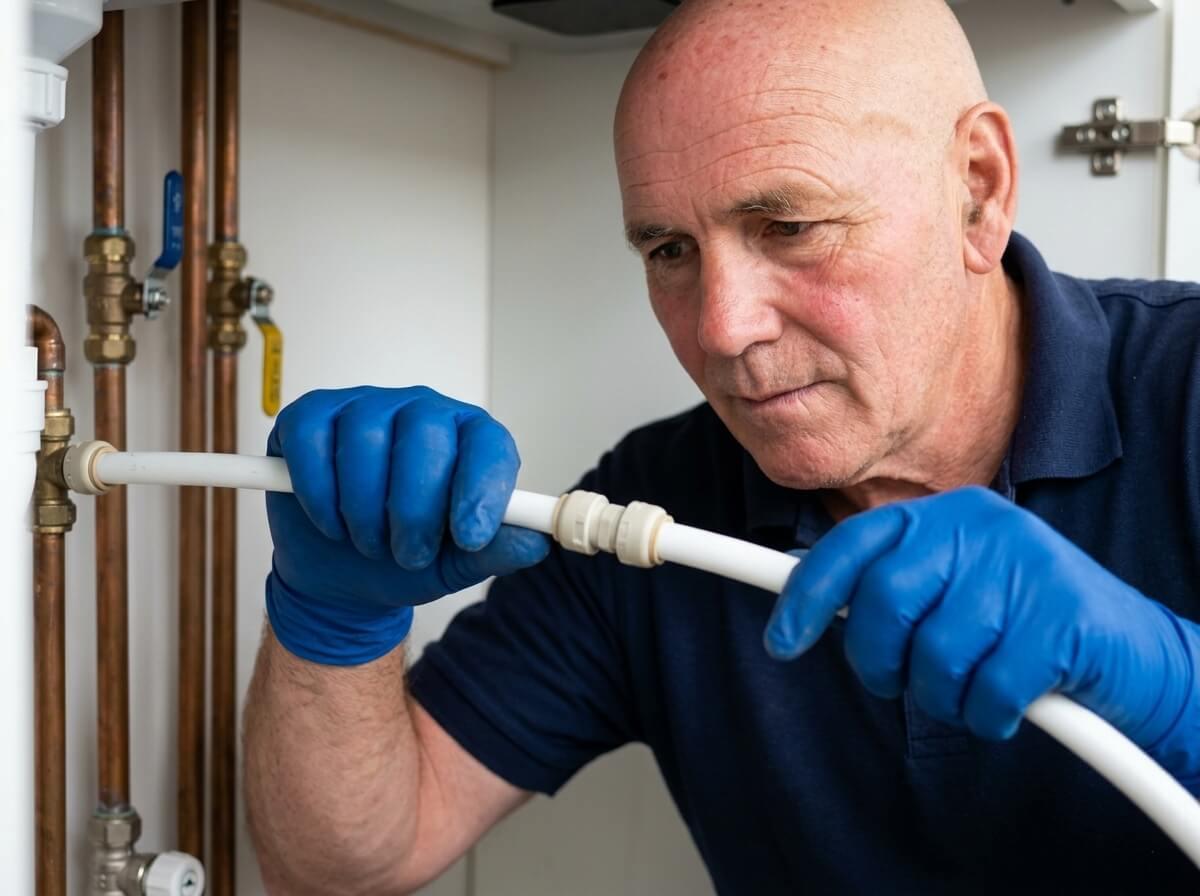
The hot and cold pipes to the shower run under the bathroom floor and up inside the wall. A weeping compression joint, a push fit fitting that has not gone fully home, or a nail or screw through a pipe can leak for months before anyone notices. These leaks carry on whether the shower is used or not. If your ceiling stays wet with the shower off, turn the water off at the stopcock and call a plumber to trace it. Our leak detection service finds it without pulling up the whole floor.
Shower Leak Finder: Who Fixes It and How Urgent Is It?
When somebody rings me about a leaking shower, the first things I ask are where the water is showing and whether the shower is running at the time. Find the row that matches. The last two columns show who usually fixes it and how quickly it needs dealing with.
| WHAT IS HAPPENING | LIKELY CAUSE | WHO FIXES IT | URGENCY |
|---|---|---|---|
| Water through a ceiling near a light or downlights | Any shower leak that has reached the electrics. The cause can wait. The electrics cannot. | Usually a plumber | Act today |
| Ceiling bulging or sagging below the bathroom | Water sitting on top of the plasterboard. It can come down without warning. | Usually a plumber | Act today |
| Water still running with the shower off and you cannot stop it | A leaking supply pipe or valve under mains or tank pressure. | Usually a plumber | Act today |
| Electric shower leaking from the unit | The pressure relief device, a cracked tank or a failed internal seal. Water and mains electricity together. | Plumber, plus electrician if wiring is wet | Act today |
| Ceiling drip only during a shower | Silicone, grout, door seals, the waste or the trap. | Usually a plumber | Within days |
| Shower head dripping all the time | A worn cartridge or washer in the mixer, or a stuck solenoid valve in an electric shower. | Usually a plumber | Within days |
| Bar mixer leaking at the wall | Worn union washers, a loose elbow or a failed olive. | Usually a plumber | Within days |
| Tray moves or creaks when you stand in it | A tray that was not bedded down properly, or a floor that has softened. It pulls the silicone and the waste apart every time. | Usually a plumber | Within days |
| Drip at the hose nut | A worn, flattened or missing rubber washer. | Often a DIY fix | Fix when you can |
| Water spraying sideways from the head | Limescale blocking some of the holes in the shower head. | Often a DIY fix | Fix when you can |
| Silicone black, peeling or with gaps | Sealant that has failed with age, mould or movement. | Often a DIY fix | Within days |
How to Reseal a Shower Tray Properly
If your test points to the silicone, resealing is a job most people can do. Doing it properly is what makes it last.
Cut out all the old silicone
Use a sealant removal tool or a sharp blade, and get every scrap out, including the film left on the tiles and tray. A silicone remover gel helps. New silicone does not stick to old.
Clean and dry it thoroughly
Wipe the joint with white spirit or a mould remover, rinse, then leave it to dry completely, ideally overnight with the window open. Any damp or mould left in the joint will stop the seal bonding and grow back through it.
Load the tray or fill the bath
Stand in the tray while someone else seals, or fill the bath with water. It sits at its lowest when it is in use, and sealing it that way stops the joint stretching and tearing every time it is used.
Use a sanitary silicone and tape the edges
Use a silicone sold for bathrooms with a mould inhibitor, not a general decorator’s caulk or a frame sealant. Masking tape above and below the joint gives a neat line. Run one continuous bead, smooth it with a wet finger or a profile tool, and pull the tape off straight away.
Leave it to cure
Do not use the shower until the silicone has fully cured. Check the tube, but it is usually at least 24 hours.
Is a Leaking Shower an Emergency?
Call a plumber straight away, day or night, if:
- ●Water is coming through a ceiling near a light, downlights, a fan or any electrics.
- ●The ceiling below is bulging, sagging or cracking.
- ●Water keeps running with the shower off and you cannot turn it off.
- ●An electric shower is leaking from the unit, or smells of burning.
- ●The stopcock or isolating valve is seized and the water will not stop.
- ●You are in a flat and water is going into the flat below.
A drip that only appears while the shower is running and stops soon after is not usually an emergency. Stop using the shower and book it in within a few days. If you are not sure, ring me and describe what you can see. I will tell you honestly whether it can wait until morning. You can also read what affects the cost of an emergency plumber.
What Not to Do
- ✕Do not keep using the shower to see if it happens again. Every shower pushes more water into the floor and joists.
- ✕Do not switch lights on or off if water is coming through them. Turn the circuit off at the consumer unit.
- ✕Do not take the cover off an electric shower with the power on. It runs on a high current circuit.
- ✕Do not put new silicone over old. It will not stick, and it traps water behind it.
- ✕Do not grout over cracked or loose tiles. If tiles move, the problem is behind them.
- ✕Do not overtighten hose nuts with pliers. Chrome nuts crack and washers split. Hand tight is enough.
- ✕Do not pour chemical drain cleaner down a shower waste. It attacks the seals you are trying to keep watertight.
- ✕Do not ignore a stain that dries up. A ceiling that dries between showers is still getting wet. It will come back, and the joists are soaking it up.
Insurance, Renting and Who Pays
Most UK home insurance covers sudden damage from escape of water, such as a ceiling brought down by a leaking pipe, and many policies also include trace and access, the cost of finding a hidden leak and making good afterwards. But read the small print: many policies exclude damage caused by failed grout or sealant, and damage from a leak that has gone on gradually. The repair to the shower itself is usually not covered either. Stop the water, take photos, keep any invoices and tell your insurer promptly.
If you rent, the shower, its pipes and the waste are usually the landlord’s responsibility to repair. Tenants are expected to report leaks promptly and not cause damage, so tell your landlord or agent in writing as soon as you see a stain or a drip. If water is going into a flat below, tell your neighbour as well. If you own a flat, a leak from your shower into the flat below is usually your responsibility to fix, even if the damage is theirs.
How to Stop Your Shower Leaking Again
- ●Look at the silicone every few months. Black spots, peeling corners and gaps are your early warning. Reseal before it fails.
- ●Squeegee and ventilate. Wiping the walls and leaving the extractor fan on stops mould eating the silicone and grout.
- ●Descale the shower head regularly. Every couple of months in hard water. It matters more on an electric shower.
- ●Keep the waste clear. A slow waste leaves water sitting against the seal. Take the hair out of the trap often.
- ●Change hose washers when they start to drip. They cost pennies.
- ●Do not hang the head on the hose. Kinks crack the hose and, on electric showers, can set off the relief valve.
- ●Keep an eye on the ceiling below. A small stain caught early is a reseal. One caught late is a ceiling and a floor.
- ●Know where your stopcock and shower isolating valves are. And check they turn before you need them. A seized one is no use in an emergency. See what to do if your stopcock is stuck.
Leaking Shower in Ipswich? Call Philip
If water is coming through your ceiling, your shower drips all the time, a bar mixer is leaking at the wall or you just cannot find where the water is getting out, call me. I trace the leak properly before anything comes apart, I carry washers, wastes, traps, valves and fittings on the van, so many shower leaks are sorted on the first visit, and you will get a clear, fair price agreed before I start. If a tray needs rebedding or a concealed valve needs replacing, you will get a free, no-obligation quote.
I cover Ipswich, Felixstowe, Woodbridge, Kesgrave, Martlesham and the surrounding towns, and I answer the phone myself, 24 hours a day, seven days a week, on 07977 857224. If you cannot see where the water is coming from, our leak detection service will find it. If a pipe has split, our burst pipe repair page explains what happens next, and for a shower that will not drain, see our drain unblocking service. Or see everything else on the emergency plumbing services page.