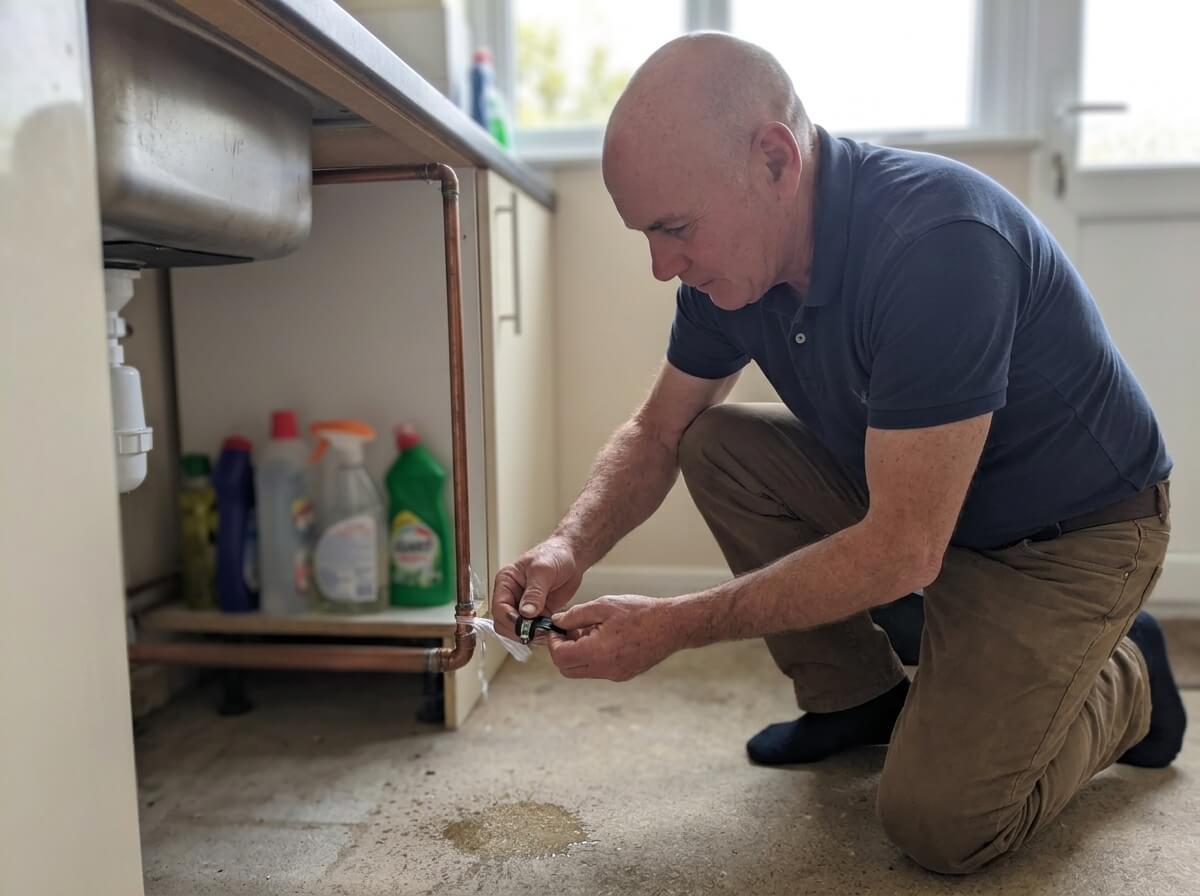
Water leaking from the flat above is a horrible thing to find. A brown patch spreads across the ceiling, a drip starts from the light, and the one person who can turn it off is on the other side of a locked door. You can see the damage happening and you cannot reach the cause. I get these calls from flats all over Ipswich, from the Waterfront blocks to converted Victorian houses near the town centre, and they nearly always start with the same question: what do I do while I wait?
Every minute the water runs, more of it soaks into plasterboard, insulation and joists, and more of your belongings sit underneath it. Then come the awkward bits: a neighbour who is away, a managing agent who does not pick up, and the question of who pays. The order that limits the damage is safety, then stopping the water, then evidence, then the paperwork. This guide takes you through each one, from a plumber who sees these leaks from both sides of the ceiling.
Water Leaking From the Flat Above? Do These 7 Things Now
Work through them in order. You do not need any tools.
Make the electrics safe
If water is near or coming through a ceiling light, a downlight, a smoke alarm or a socket, do not touch the switch or the fitting. Standing on a dry floor with dry hands, switch off that circuit at your consumer unit, or use the main switch if you are not sure which one it is. If the consumer unit itself is wet, leave it alone and see the warning box below.
Go upstairs and knock
Most people upstairs have no idea. The leak is often under their floor or behind a bath panel, and the water runs down to you without leaving a mark on their side. Ask them to turn off their stopcock straight away and to stop using the bathroom, kitchen tap or appliance until it is checked. Be calm and friendly. You will probably need their help, and their insurer’s, later on.
If nobody answers, call whoever manages the building
Ring the managing agent, freeholder, caretaker, concierge or the emergency number on the notice board in the entrance hall. If you rent, call your own landlord or letting agent too. Council and housing association tenants should use their landlord’s 24 hour repairs line. Ask them two questions: can someone get into the flat, and where is that flat’s stop tap?
Catch the water and move your things
Put buckets, bowls or a washing up bowl under the drips, sliding them in from the side rather than standing underneath. Move furniture, rugs, electrical items and anything precious out of the room. Lay towels around the buckets. If water is running along the ceiling, it will often find the lowest point, so watch the corners and light fittings.
Keep out from under a sagging ceiling
A ceiling that is bulging, sagging or cracking is holding back water and can come down without warning, especially an older lath and plaster ceiling. Keep everyone and the pets out of that room and close the door. Our guide to water leaking through the ceiling explains when a bulge can be drained safely.
Photograph everything and start a log
Take dated photos and short videos of the ceiling, the drips, the water on the floor and anything damaged. Write down the time you noticed it, who you called and when, and what they said. This record matters more than anything else when it comes to insurance and who pays.
Tell your insurer and get the leak traced
Report it to your home insurer and to the managing agent as soon as you can, even before you know the cause. Then get a plumber to find and fix the source, and ask for the cause in writing. Insurers and managing agents both ask for it.
Nobody Answering Upstairs? How to Get the Water Turned Off
This is the part that causes the most stress, and it is the most common reason a small leak becomes a big insurance claim. The flat is empty, the tenant is at work, or the owner is on holiday. Please do not try to force the door or climb in. Apart from the legal problem, you could be blamed for damage, and it rarely gets the water off any faster than a phone call to the right person.
Find out who holds the keys
Most leases give the freeholder or managing agent a right to enter a flat in an emergency, and many agents keep keys or a keyholder contact for every flat. If the flat is let, the letting agent will usually hold a set. Neighbours on the same landing sometimes know a relative or a friend with a spare key. Ask everyone, and keep a note of who you spoke to.
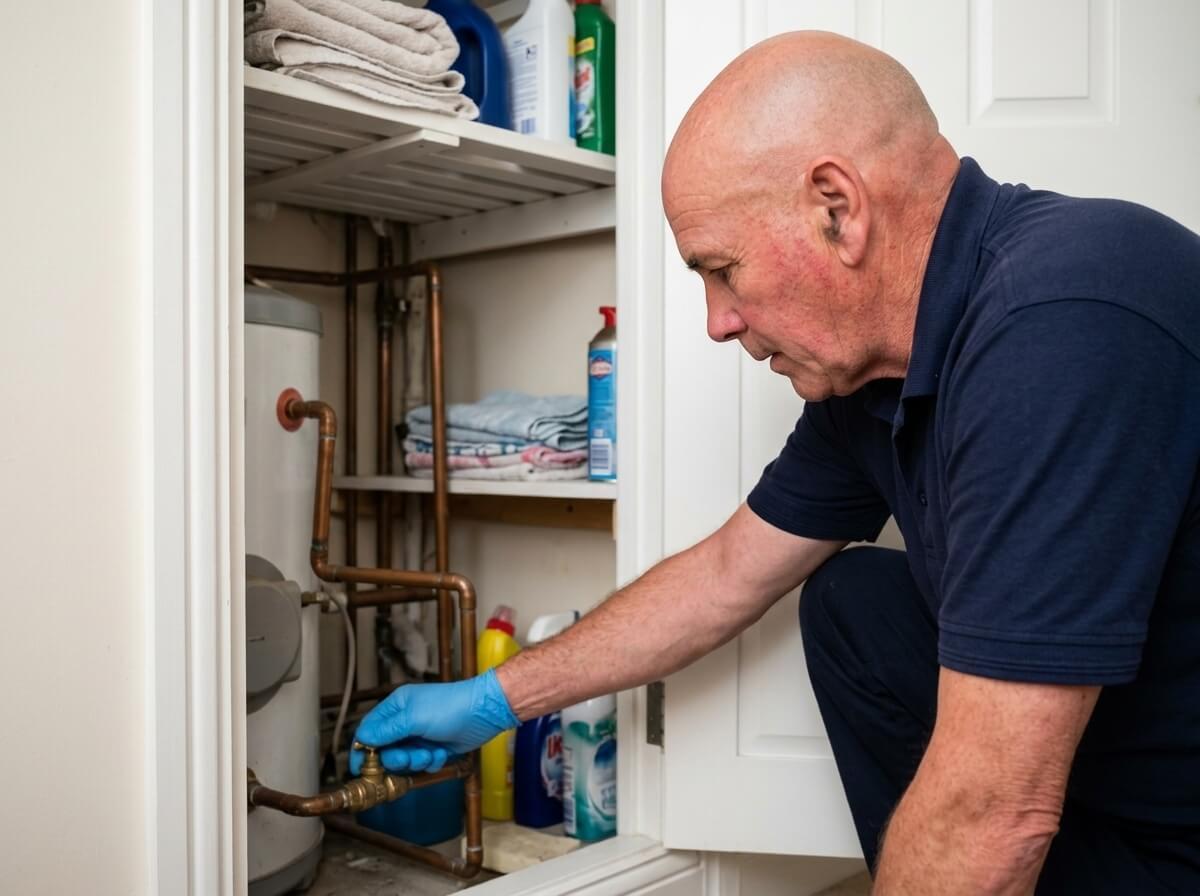
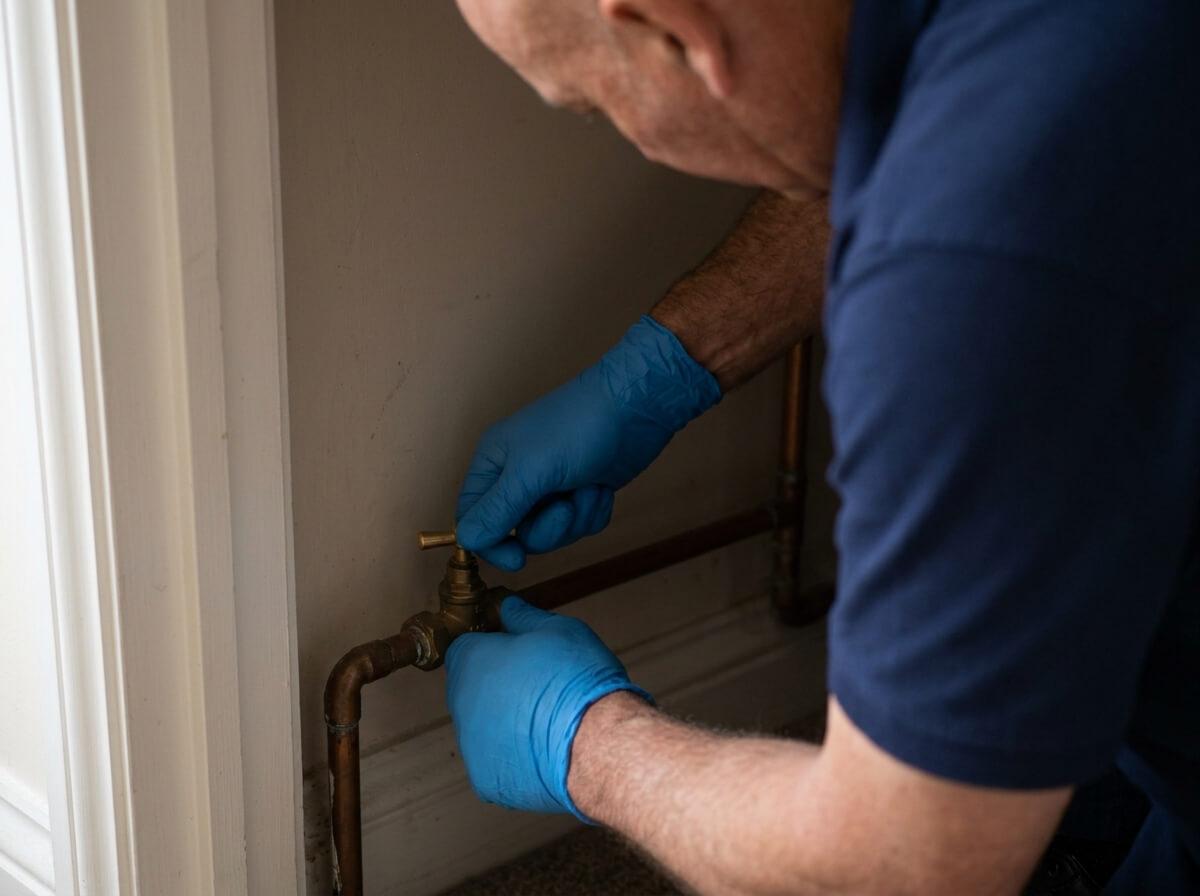
Find that flat’s stop tap
You may not need to get inside at all. In many blocks, every flat has its own stop tap outside the flat itself, in a meter cupboard on the landing, a riser cupboard or a chamber in the ground outside. If it is clearly labelled with the right flat number, closing it stops the leak without anyone going in. If you are not sure which valve serves which flat, ask the managing agent or call a plumber. Closing the wrong one cuts off a neighbour and leaves the leak running.
| BUILDING | WHERE THE STOP TAP USUALLY IS | WHO TO ASK |
|---|---|---|
| Purpose built block (1960s to today) | A meter or riser cupboard on each landing or corridor, with one stop tap per flat, often labelled with the flat number. Sometimes in a bank of meters in a ground floor plant room | Managing agent or caretaker. The cupboard may be locked with a standard utility key |
| Newer apartment block (Ipswich Waterfront style) | Inside each flat (kitchen or utility cupboard) plus an isolation valve in a communal riser. Many have a concierge or a 24 hour building emergency line | Concierge, building manager or the emergency number on the notice board by the entrance |
| Converted house split into flats | Often one shared supply with a single stop tap under the ground floor kitchen sink, in a cellar or in a boundary chamber outside. Sometimes each flat has its own valve where the pipe enters it | Freeholder or landlord. Turning off a shared stop tap cuts water to every flat, so tell the others |
| Maisonette or flat over a shop | Under the kitchen sink of the upper flat, in a stairwell cupboard, or in a meter chamber in the pavement | The shop or the freeholder, who may hold a key for the upper flat |
| Council or housing association block | A landing riser cupboard or ground floor plant room. Residents are not usually given access | Your landlord's emergency repairs line, which is staffed 24 hours |
What the water company can and cannot do
Anglian Water and Essex and Suffolk Water look after the mains in the street and the pipes up to your boundary. The pipes inside the building belong to the owners. A water company will not usually come out to shut off a private leak inside a block of flats, although they can sometimes help if the only working stop tap is their own valve in the pavement. It is worth a call if every other route has failed, but expect to be pointed back to the building’s owner or a plumber.
Where Is the Water Actually Coming From?
Where the water appears in your ceiling is only a clue, not an answer. Water runs along joists, pipes and cables until it finds a gap, so a drip at your hall light can start under their bathroom two metres away. Even so, thinking about what is directly above the wet patch, and when it gets worse, narrows it down quickly.
| WET PATCH IS | LIKELY SOURCE ABOVE | CLUES |
|---|---|---|
| Under their bathroom | Shower tray or bath seal, a bath or shower waste, the toilet pan connector, a weeping joint under their floor | Comes and goes, worst just after someone upstairs showers, baths or flushes |
| Under their kitchen or utility | Washing machine or dishwasher hose, sink waste, a compression joint, a flexi hose to the tap | Appears when the machine is draining or the sink is emptied. Often soapy or greasy |
| Under a hall cupboard or airing cupboard | Hot water cylinder, its valves and pipework, a combi boiler's pipework or pressure relief pipe, a heating pump | Steady drip, sometimes warm. Their heating pressure keeps dropping |
| Along a line across the ceiling | A supply or heating pipe running under their floor, sometimes hit by a nail or screw during new flooring | Constant, whether anyone is home or not. Gets worse quickly if it is a split |
| Near the corner where a soil stack runs | A leaking soil stack joint or branch connection, which is often communal pipework | Smells, and gets worse when flats higher up flush. Treat as dirty water |
| Top floor ceiling, or after heavy rain | The roof, a flat roof outlet, a gutter or a balcony above, rather than plumbing | Only during or after rain. A roofing job for the freeholder in most blocks |
Constant drip or comes and goes?
A steady drip that carries on at 3am, when nobody upstairs is using anything, is almost always a pressurised pipe: the mains supply, a hot water pipe or the heating. Those keep leaking until the water is turned off, so they are the urgent ones. A leak that only appears after a shower, a flush or a washing machine cycle is usually a waste pipe, a seal or an appliance hose. Ask your neighbour to stop using the bathroom or appliance and the leak will often stop on its own while you wait for a plumber.
Clean, soapy or dirty water?
Clear water with no smell is usually from a supply pipe, a tank or the heating. Soapy or grey water points to a bath, shower, basin or washing machine waste. Brown water with a sewage smell means a toilet connection or a soil pipe, and should be treated as contaminated. Wear gloves, keep children and pets away and do not try to dry out anything it has soaked. Our guide to a leaking soil pipe explains how those are cleaned up and repaired.
Is it them, or a shared pipe?
In a block of flats, not every pipe above your ceiling belongs to the flat above. Soil stacks, rainwater pipes, heating risers and shared supply pipes often run through every floor, and they are usually the freeholder’s responsibility. If the water appears near a boxed in corner, gets worse when flats higher up use their bathrooms, or the neighbour above has turned off their water and it is still coming, a shared pipe is a real possibility. Tell the managing agent straight away rather than waiting for the neighbour to arrange a plumber.
The Most Common Causes I Find Upstairs
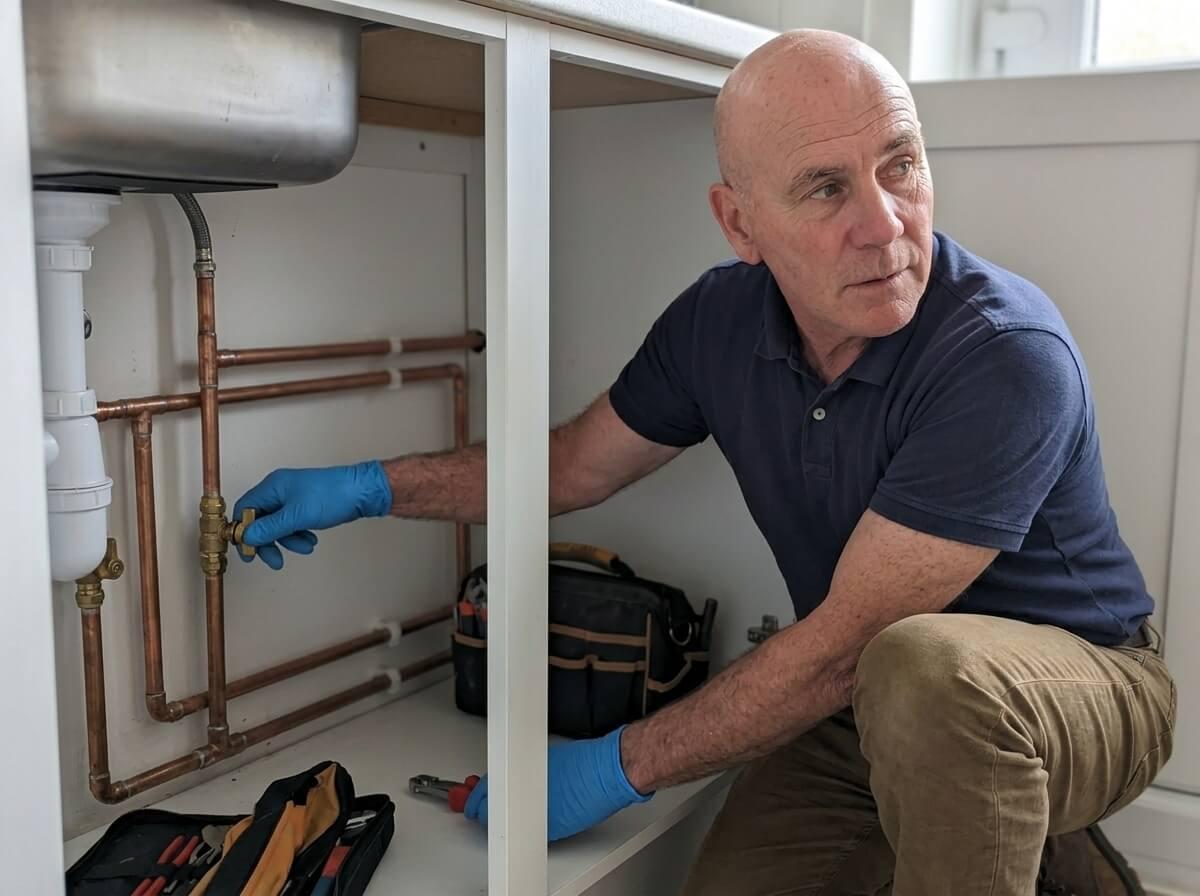
After years of tracing leaks between flats in Ipswich, Felixstowe and Woodbridge, the same few culprits come up again and again. None of them are dramatic. Most are small parts that have quietly worn out.
- ●Failed shower tray and bath seals. Silicone that has gone black, cracked or pulled away lets a little water through with every shower. It can soak a ceiling void for months before it shows downstairs. See our guide to a leaking shower for how these are found.
- ●Washing machine and dishwasher hoses. Hoses split, connections work loose and waste pipes pop out of the standpipe. A burst inlet hose can put a lot of water through a ceiling in a few minutes. Our washing machine leaking guide covers the usual faults.
- ●Toilet pan connectors and cistern valves. A loose pan connector leaks a little dirty water with every flush. A cistern that overflows into the pan is harmless, but one with a cracked body or a failed doughnut washer leaks onto the floor.
- ●Weeping joints under the floor. Compression and push fit joints under bathroom and kitchen floors can start to weep with age or movement. A slow weep is the classic cause of a stain that grows over weeks.
- ●Nails and screws through pipes. New flooring, carpet gripper rods and kitchen fitting are regular causes. The pipe may hold for days or weeks with the nail in it before the leak shows.
- ●Baths and sinks left running. It happens to everyone eventually. These are short, heavy leaks, and usually the easiest to sort out with insurers because the cause is obvious.
- ●Frozen and split pipes in winter. In top floor flats with pipes in a cold loft, or in empty flats with the heating off, a pipe can freeze and split. The leak only starts when it thaws. Our frozen pipes guide explains how to prevent it.
Who Is Responsible for a Leak From the Flat Above?
Two separate questions get mixed up here. The first is who has to fix the thing that is leaking. The second is who pays for the damage to your flat. They often have different answers, and both depend heavily on your lease, so it is worth finding your copy now.
As a general rule, the Leasehold Advisory Service (LEASE) explains that each leaseholder is usually responsible for the pipes that serve only their flat, even if part of the pipe runs outside it, while the freeholder usually looks after pipes, tanks and drains that serve more than one flat. The table below shows how that normally works in practice.
| WHAT IS LEAKING | USUALLY RESPONSIBLE | WHO ARRANGES THE REPAIR |
|---|---|---|
| Pipes, taps, appliances and seals that serve only the flat above | Usually the leaseholder of that flat, even where the pipe runs outside their flat | Their own plumber, or their landlord if they rent |
| Shared supply pipes, risers, soil stacks and drains serving several flats | Usually the freeholder or management company | The managing agent arranges the repair |
| The roof, gutters, external walls and balconies | Usually the freeholder | The managing agent arranges the repair |
| Your ceiling plaster and the structure between floors | Depends on the lease. Often covered by the building insurance either way | Report to the managing agent and the building insurer |
| Your furniture, carpets and belongings | You, through your own contents insurance, unless someone was negligent | Your contents insurer |
If you own your flat
Report the leak to the managing agent or freeholder and to your neighbour in writing, as well as by phone. Your lease usually allows the freeholder to require the neighbour to repair a leak that is damaging other flats, and to get access to do it if they will not. You arrange and claim for the damage to your own flat through the right insurance policy, which we cover below.
If you rent your flat
Tell your landlord or letting agent as soon as you can, in writing with photos. In England, your landlord is responsible for repairs to the structure and the water and heating installations, so the repairs to your ceiling are theirs to arrange, even though the leak came from somewhere else. Your own belongings are covered by your contents insurance, if you have it. Your landlord’s policy will not pay for your things.
If the flat above is rented out
The tenant upstairs is the person to knock on, but their landlord is usually the one who must fix the leak. Ask the tenant to report it to their landlord or letting agent straight away, and ask for those contact details so you can follow it up yourself. Copy in the managing agent of the block as well.
Who Pays for the Damage?
This is where most of the frustration comes from. People understandably assume that if the water came from upstairs, upstairs pays. In practice, the damage is usually paid for by insurance, and the question of blame decides who ends up with the excess.
- ●Your ceiling, walls and fitted kitchen are normally covered by the building insurance. In most leasehold blocks the freeholder arranges one policy for the whole building, and you pay towards it in your service charge. Ask the managing agent for the policy details and how to make a claim.
- ●Your belongings (sofa, carpets, clothes, electricals) are covered by your own contents insurance, if you have it.
- ●The leaking pipe or appliance itself is the neighbour’s cost to repair, or the freeholder’s if it is shared pipework. Insurance often pays to find the leak (trace and access) but not to fix the worn part.
- ●The excess is the sticking point. You can ask the neighbour to cover it, and if their negligence caused the leak you may be able to recover it from them or their insurer.
| SITUATION | WHO USUALLY PAYS | WORTH KNOWING |
|---|---|---|
| Hidden pipe joint under the neighbour's floor fails suddenly | Building insurance for the structure, your contents insurance for belongings. The neighbour pays for the pipe repair | Often no one is negligent, so recovering your excess can be hard |
| Bath or sink left running and overflowing | The neighbour or their insurer, if they have liability cover. Otherwise insurance as above | Carelessness is the strongest case for recovering your excess |
| Shower seal left to fail for months despite warnings | Possibly the neighbour, as the problem was known and ignored. Insurers may refuse gradual damage | Keep copies of every message where you reported it |
| Communal soil stack or riser leaks | Freeholder or management company, usually through the building insurance and service charge | Report to the managing agent, not the neighbour |
| You rent your flat | Your landlord deals with repairs to the structure. You claim your belongings on your contents insurance | Report it to your landlord or letting agent in writing |
Accident or negligence?
This makes a big difference. If a hidden pipe joint fails without warning, your neighbour may not have done anything wrong in law, and each person usually claims on their own cover. If the leak happened because of carelessness, or because a known problem was left unfixed after you reported it, you have a much stronger case for asking them to pay your excess and any uninsured losses. Most disputes settle by agreement. If yours does not, LEASE and Citizens Advice give free guidance, and a solicitor can advise on a claim. I am a plumber rather than a lawyer, so treat this section as a starting point, not legal advice.
Slow leaks and insurance refusals
Most policies cover sudden escape of water. Many exclude damage from a leak that has been going on gradually for weeks or months. That is why reporting early matters so much: a stain you mention on the first day is a sudden leak, while a stain you ignored for three months may be treated as gradual damage. If an insurer refuses a claim you think is fair, you can complain to them and then to the Financial Ombudsman Service. Our burst pipe insurance claim guide explains what usually gets paid.
What to Record and Who to Tell
A good record turns a messy argument into a straightforward claim. I have seen claims go smoothly with nothing more than a few dated photos and a short timeline, and I have seen them drag on for months because nobody could prove when the leak started.
- ✓Dated photos and videos of the ceiling, drips, floors and damaged items, taken on the day and every day after while it dries.
- ✓A call log with times, names and what each person said: neighbour, managing agent, landlord, insurer, plumber.
- ✓The cause in writing from the plumber who found it. Ask for the location, what failed and whether it was a sudden failure or a long term leak.
- ✓Receipts and a list of damaged items with rough ages and prices. Keep the damaged items until your insurer says you can throw them away.
- ✓Copies of every message you send to the neighbour and the managing agent. Email is better than a chat on the stairs.
- ✕Do not start the repair to your ceiling before your insurer or the building insurer has seen the damage or agreed it, unless it is unsafe.
How a Plumber Finds and Fixes a Leak Between Flats
A leak between flats is a bit of detective work, because the evidence is downstairs and the cause is upstairs. Here is how a typical callout goes when I am called out to one.
Make it safe on both floors
I check the electrics are off where they need to be, the ceiling is not about to come down, and the water to the flat above is off at the right valve. If the leak is on shared pipework, I isolate just that section where I can, so the rest of the block keeps its water.
Read the ceiling below
The shape of the stain, the wettest point on a moisture meter and the timing of the drips tell me where to look upstairs before I lift anything.
Trace the source upstairs
I test the obvious suspects first: shower and bath seals, wastes, the toilet, the kitchen and appliances. Where it is not obvious, our leak detection service uses thermal imaging, moisture mapping and pressure testing to find it with as few floorboards up as possible.
Repair it properly
A weeping joint is remade, a damaged length of pipe is cut out and replaced, a failed seal is cut out and redone. If a pipe has split or been pierced, our burst pipe repair service covers it. A fair price is agreed before any work starts.
Test it and write it up
The water goes back on and the repair is tested under pressure, or with plenty of running water for a waste or seal. You and your neighbour get a short written note of what failed and what was done, which is exactly what the insurers and managing agent ask for.
Drying Out Your Ceiling: What Can Be Saved
Once the water has stopped, the ceiling tells you how long the leak was going on. A fresh drip leaves a damp patch that usually dries out. A slow leak leaves a brown ring, soft plaster and sometimes a musty smell.
- ●Plasterboard ceilings (most flats built from the 1960s) soften and sag when soaked. A small patch that stays firm can usually be dried, sealed with a stain blocking primer and painted. A board that sagged or crumbled needs cutting out and replacing.
- ●Lath and plaster ceilings in older converted houses hold water for longer and can come down in large, heavy pieces. Keep out from under them and get them checked before anyone patches them.
- ●Drying takes longer than people think. A light soaking can dry in a week. A heavy one, or a leak that ran for weeks, can take a month. Open windows, keep the heating on gently and use a dehumidifier on a dry circuit.
- ●Do not paint too early. The stain will come back through ordinary emulsion if the plaster is still damp underneath.
- ●Watch for mould. A musty smell after the leak has been fixed can mean mould on the back of the board or the joists. Mention it to the building insurer, as it may need the ceiling opening up.
Any light fitting or socket that got wet should stay off until an electrician has checked it. Electrical Safety First advises that electrics affected by water are tested by a registered electrician before they are used again. Our guide to water leaking from a light fitting covers this in more detail.
When the Leak Keeps Coming Back
Repeat leaks from the same flat are exhausting, and I understand why people lose patience. It is usually the same shower seal, the same poorly fitted washing machine or the same weeping joint that was patched rather than repaired.
- ●Put every leak in writing to both the neighbour and the managing agent, with dates and photos. A pattern of reports is what gets action.
- ●Ask the managing agent to enforce the lease. Most leases require each leaseholder to keep their pipes and fittings in good repair and to avoid causing damage to other flats. The freeholder can insist on a proper repair.
- ●Ask for the cause to be confirmed by a plumber, not just “sorted”. A written cause shows whether the real fault was fixed.
- ●Council and housing association residents can complain through their landlord’s complaints process and then to the Housing Ombudsman if leaks are not dealt with properly.
If You Live Upstairs and Your Leak Has Gone Downstairs
Sometimes you are the one getting the knock. It is an awful feeling, but a quick, co-operative response saves everyone a lot of money and bad feeling.
- ✓Turn your stopcock off straight away and stop using the bathroom, kitchen or appliance involved. Our guide to finding your stopcock helps if you have never needed it before.
- ✓Let your neighbour in to look, and tell your landlord or managing agent if you rent or if it might be shared pipework.
- ✓Get a plumber to find and fix the cause, and share the written note with your neighbour.
- ✓Tell your own insurer early. Many contents and buildings policies include liability cover for accidental damage you cause to a neighbour’s home.
- ✕Do not admit fault or promise to pay before you have spoken to your insurer. Be helpful, share information, and let the insurers sort out the money.
How to Stop a Leak Between Flats Happening Again
Most leaks from the flat above start small and give some warning. A few habits on both floors catch them early.
- ●Know where your own stopcock is and check it turns once or twice a year. A seized one is no help in an emergency.
- ●Ask the managing agent for a list of where each flat’s stop tap is, and for the out of hours emergency number. Put them on the fridge.
- ●Swap neighbour contact details so you can reach each other quickly, especially before holidays.
- ●Keep shower and bath seals in good order. Cut out and redo silicone that is black, cracked or lifting.
- ●Check appliance hoses yearly and replace any that are bulging, cracked or more than about five years old.
- ●Leave the heating on low in winter, and turn the water off at the stopcock if the flat will be empty for more than a few days.
- ●Watch your ceiling. A faint ring, a hairline crack around a downlight or bubbling paint are early warnings. Our list of signs of a hidden water leak covers the rest.
Emergency Help in Ipswich and Suffolk
I cover Ipswich, Felixstowe, Woodbridge, Kesgrave, Martlesham and the surrounding towns and villages 24 hours a day, usually with you in about 30 minutes for local emergencies. Whether you are the flat getting wet or the flat with the leak, I can isolate the water, trace the source, repair it and give you a written cause for the insurers. For anything else, see all our emergency plumbing services.
Water Leaking From the Flat Above: The Key Points
A leak from upstairs feels out of your hands, but the first hour is mostly about a few calm, simple steps.
- ●Make the electrics safe first, and never touch a wet light, switch or consumer unit.
- ●Knock upstairs, then call the managing agent, landlord or building emergency line if nobody answers. Do not force entry.
- ●Ask where that flat’s stop tap is. In many blocks it is in a landing cupboard or outside.
- ●Catch the water, move your belongings and keep out from under a sagging ceiling.
- ●Photograph everything, keep a call log and report it to your insurer and the managing agent on day one.
- ●Get the cause traced and written down, because that decides who pays.
If water is coming through your ceiling right now, contact PD Parnell Plumbing or call for a free, no-obligation quote and a fair price agreed before any work starts.