It is usually the airing cupboard carpet that gives it away. Wet towels on the bottom shelf, a puddle round the base of the tank, or a brown ring on the ceiling of the room underneath. Sometimes it is a steady drip you can hear at night. And because the cylinder is hidden behind a door and wrapped in lagging, most people have no idea what they are looking at, which valve does what, or whether it is about to empty itself across the landing.
I have been plumbing in Ipswich for more than forty years, and leaking cylinders are one of the calls where a few minutes of the right action makes the biggest difference. A cylinder holds anywhere from about 100 to 300 litres of water, usually upstairs. This guide shows you how to make it safe, how to stop the water on whichever type of cylinder you have, how to find the leak, and how to tell a ten minute repair from a cylinder that has reached the end of its life.
Hot Water Cylinder Leaking? Do These 5 Things First
Switch off the boiler and the immersion heater
Turn the immersion heater off at its switch, usually a red switch on the wall in or near the airing cupboard, and switch the boiler off at its controls or its fused spur. That stops anything heating a cylinder that may be losing water. If water is near the immersion switch or its cable, switch it off at the consumer unit instead, and do not touch it with wet hands.
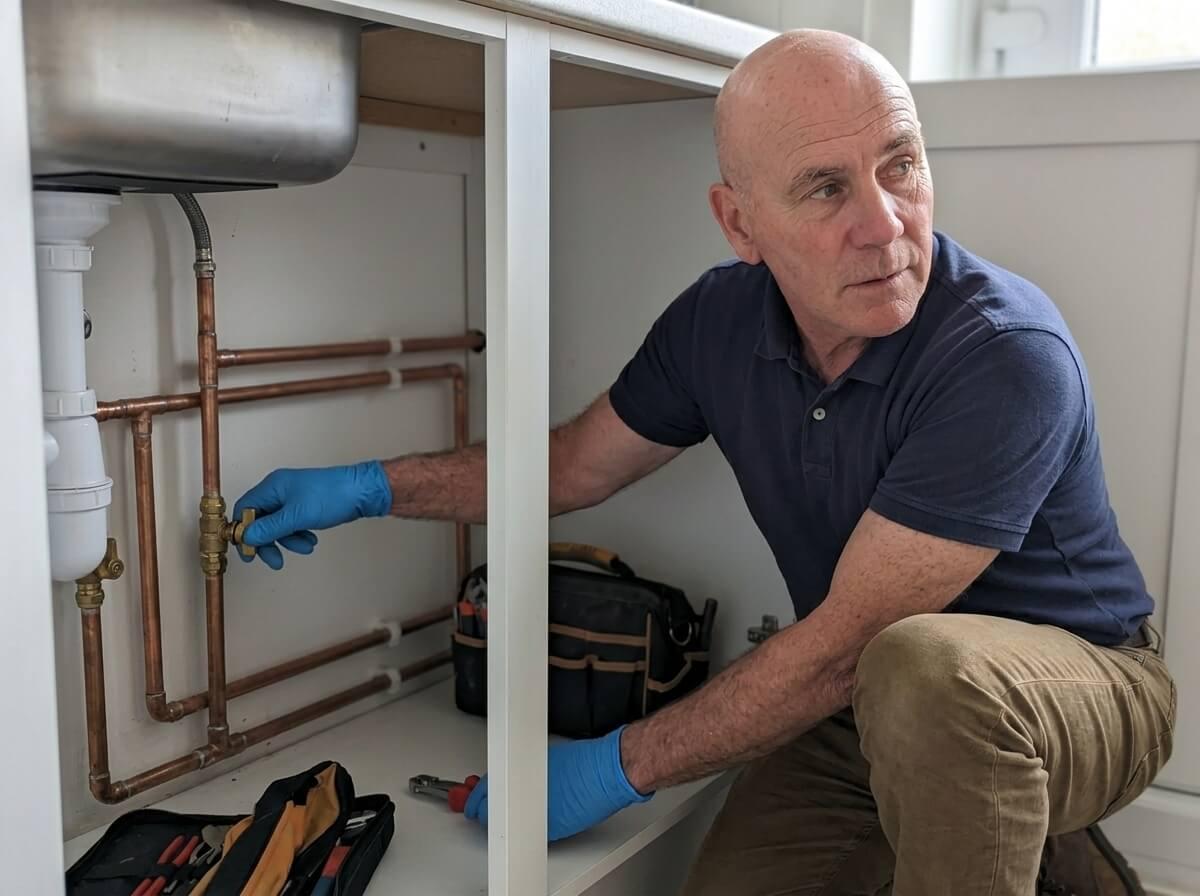
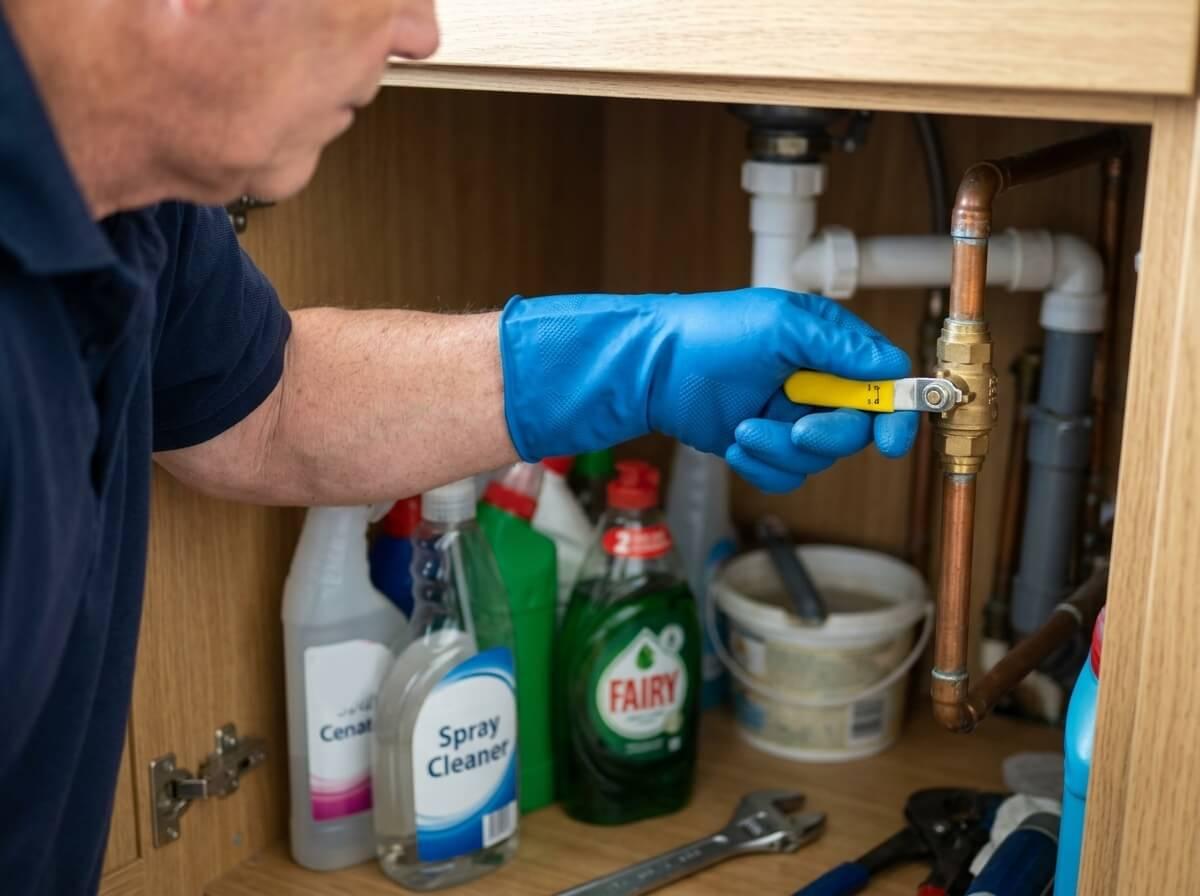
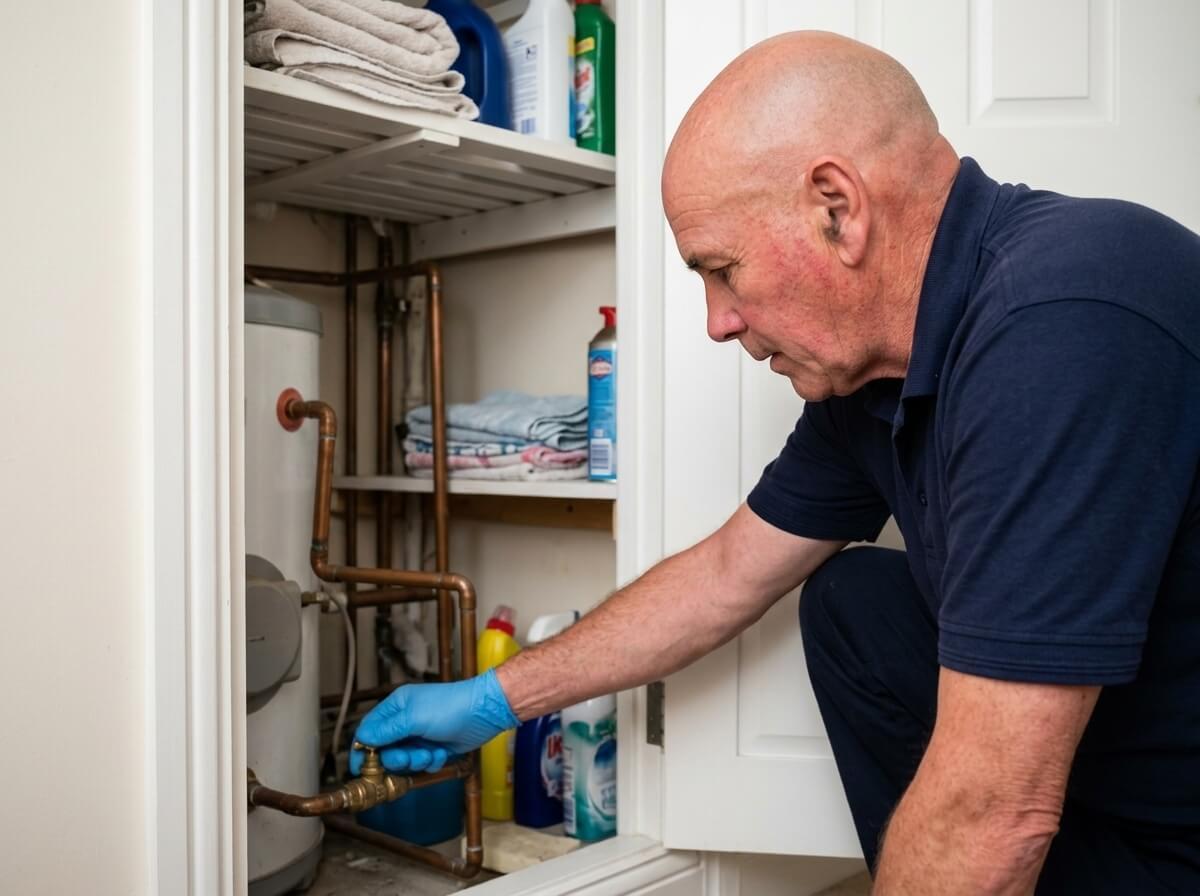
Stop the water feeding the cylinder
On a vented cylinder, close the gate valve on the cold feed pipe going into the bottom of the cylinder, turning it clockwise. On an unvented cylinder, close the isolating valve on the cold mains pipe at the cylinder, or the main stopcock. The table below shows how to tell which you have. If a valve will not move, the stuck stopcock guide will help, but do not force it with a bar. The one exception: if hot water or steam is pouring from the safety pipework of an unvented cylinder, leave the cold supply on, because it is helping to cool the cylinder.
Catch the water and protect the ceiling below
Put a baking tray, washing up bowl or bucket under the drip, and towels round the base. Move bedding, clothes and anything that matters out of the airing cupboard. Go downstairs and check the ceiling under the cupboard. If it is wet or bulging, follow the water through the ceiling guide, and switch off the lighting circuit for that room.
Take the pressure off
Open a hot tap somewhere in the house. On an unvented cylinder that releases the stored pressure, which slows the leak right down. On a vented cylinder it lets the loft tank empty through the taps instead of through the leak. Leave the cold kitchen tap alone: it comes straight from the mains and you will want it for drinking water.
Find the leak, then call a plumber
Once the water is under control, dry the cylinder and pipes with kitchen roll and watch where the first drop forms. The leak finder table below tells you what it probably is. If water is still flowing, the leak is from the cylinder body, or hot water or steam is coming from the safety pipework, call a plumber now.
Vented or Unvented? Know Your Cylinder First
How you stop the water, and what you can safely do yourself, depends on which type of cylinder you have. Have a look in the airing cupboard and up in the loft.
| CYLINDER TYPE | HOW TO SPOT IT | HOW TO STOP THE WATER | DRAIN IT YOURSELF? |
|---|---|---|---|
| Vented (open vented) | Usually copper, often with green or orange foam lagging. A big cold water tank in the loft feeds it, and a vent pipe runs from the top of the cylinder back up over that tank. | Close the gate valve on the cold feed pipe going into the bottom of the cylinder. No valve? Close the stopcock and run the bath taps to empty the loft tank. | Yes, through the drain cock near the base, once the heat is off and the feed is closed. |
| Unvented (mains pressure) | White or metal casing, no tank in the loft. Look for a small expansion vessel, a pressure reducing valve, a tundish (a little funnel in the pipework) and a warning label about qualified installers. | Close the isolating valve on the cold mains pipe at the cylinder, or the main stopcock, then open a hot tap to let the pressure off. | No. It is a pressurised appliance with safety devices and must be drained by someone qualified on unvented systems. |
| Combination (tank on top) | A copper cylinder with its own small cold water tank built on top, often in a flat or bungalow with no loft tank. | Close the stopcock or the valve on the mains pipe feeding the tank on top. That stops the float valve refilling it. | Yes, through the drain cock, the same way as a vented cylinder. |
Most older Ipswich homes, especially Victorian terraces and 1950s to 1980s semis, still have a vented copper cylinder with tanks in the loft. Newer builds and homes that have had the heating modernised are more likely to have an unvented cylinder, which gives mains pressure hot water and has no loft tank at all. If you have a combi boiler and no cylinder, the leak is coming from somewhere else, and the leaking pipe guide is the one you need.
Where Is the Water Coming From? Leak Finder
When somebody rings me about a leaking cylinder, the first thing I ask is where exactly the water is. Find the row that matches what you can see. The last two columns show whether it is usually a repair or a new cylinder, and how quickly it needs dealing with.
| WHERE THE WATER IS | LIKELY CAUSE | REPAIR? | URGENCY |
|---|---|---|---|
| Drips from a nut on a pipe joint above or beside the cylinder | A loose or failed compression joint, often after the pipework has been knocked or the joint has dried out. | Usually repairable | Within days |
| A drip from the little tap with a square spindle near the base | The drain cock is weeping through its spindle or its outlet. Very common, and very fixable. | Usually repairable | Within days |
| Water around the immersion heater, with crusting round the edge | The immersion heater washer has failed, or the boss it screws into has corroded. | Needs checking | Act today |
| Water weeping from the cylinder body, a seam or a green pinhole | The copper or steel has corroded through from the inside. It will only get worse. | Usually a new cylinder | Act today |
| A pool under the cylinder with no drip you can see | A leak at the base or bottom joint, or water running down from higher up behind the lagging. | Needs checking | Act today |
| Water dripping through the tundish of an unvented cylinder | The expansion vessel has lost its charge, or the pressure reducing or relief valve is letting by. | Usually repairable | Within days |
| Hot water or steam pouring from the tundish or discharge pipe | The cylinder is overheating and the safety valves are opening. A stuck thermostat or a failed control. | Needs checking | Act today |
| Weeping from the stem of a valve when it is turned | The gland packing on an old gate valve or stopcock has dried out. | Usually repairable | Book in, not urgent |
| Water on the cold pipes only, that wipes off and comes back | Condensation on cold mains pipework in a warm cupboard. Not a leak at all. | Needs checking | Book in, not urgent |
| Loft tank or feed and expansion tank overflowing, cylinder never seems hot | A split coil inside the cylinder letting heating water and hot water mix. | Usually a new cylinder | Within days |
How to Find Exactly Where the Leak Is
Water runs down pipes and behind lagging before it drips, so the puddle is often a long way below the leak. This is how I track it down, and you can do the same with a torch and a roll of kitchen paper.
Dry everything you can reach
Wipe the cylinder, every pipe and every joint until they are completely dry, working from the top down. Put a dry sheet of kitchen paper on the floor or shelf under the cylinder so you can see fresh drips.
Start at the top and work down
Run a dry piece of tissue round each joint in turn: the hot draw off at the top, the vent pipe, the immersion heater, the coil connections on the side, the cold feed at the bottom and the drain cock. A joint that is leaking will darken the tissue straight away.
Look behind and under the lagging
On a factory foam lagged cylinder you cannot see the body, so look for water appearing from under the edge of the foam, rust or green staining, or a soft, wet patch. On an old cylinder with a fabric jacket, lift the jacket carefully and look underneath.
Check above the cylinder too
Look at the pipework and the ceiling above the airing cupboard. A leaking loft tank, a joint on the vent pipe in the loft, or a pipe in the floor above can all run down onto the cylinder and look as if it is the cylinder leaking.
Note when it leaks
A leak that only appears when the heating or hot water is running points to a joint that leaks as it expands with heat, or to an overheating problem. One that drips all the time is more likely a failed washer, a drain cock or a corroded body.
Leaking Joints, Valves and the Drain Cock
The good news is that most cylinder leaks I am called to are not the cylinder at all. They are the fittings around it, and they can be put right without replacing anything big.
A leaking compression joint
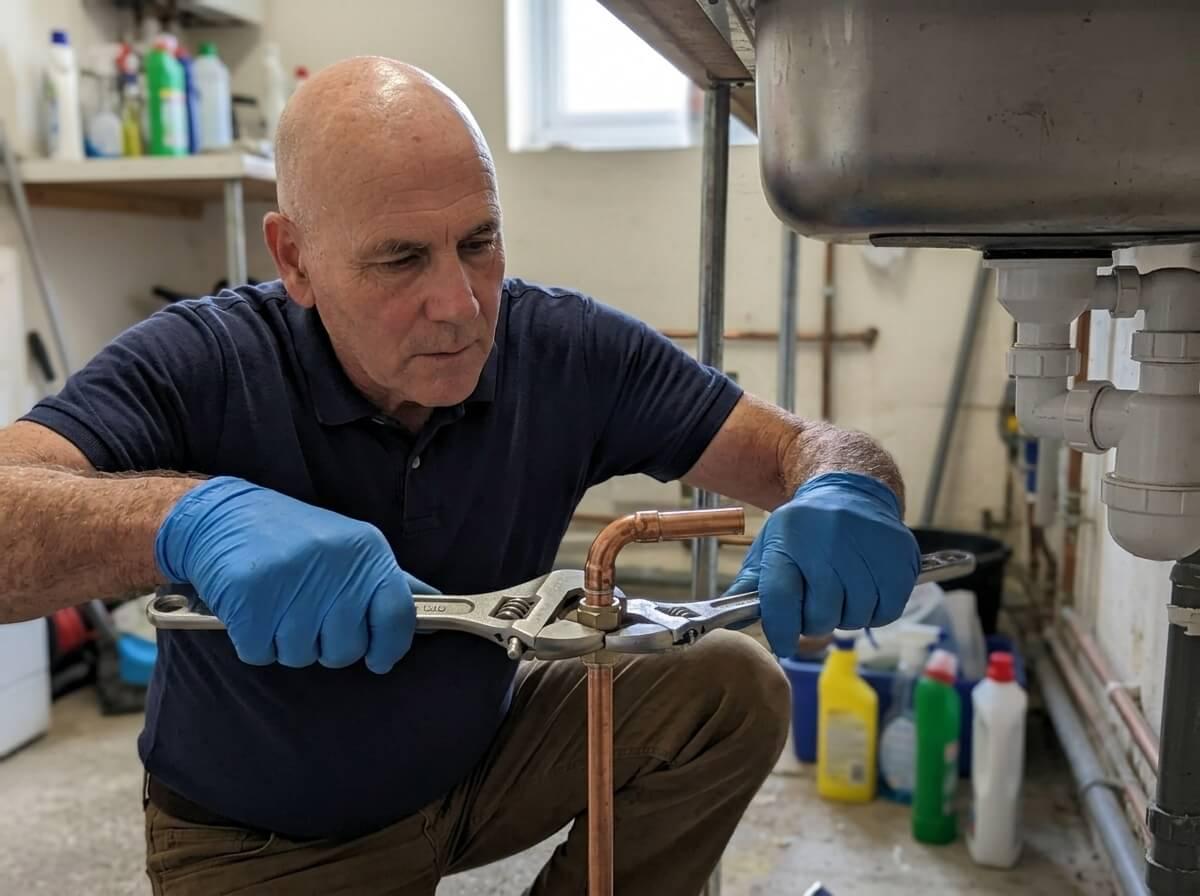
Most cylinder connections are brass compression joints: a nut that squeezes a small brass ring, called an olive, onto the pipe. If one is weeping, a gentle eighth to a quarter of a turn on the nut, while holding the fitting still with a second spanner, often stops it. Do not keep cranking it: an overtightened olive distorts and leaks worse. If a small turn does not cure it, the olive needs replacing, which means draining the water down below that joint first.
A dripping drain cock
The drain cock is the small tap near the bottom of a vented cylinder, or on the cold feed pipe just below it, with a square spindle and a ridged outlet for a hose. If it drips from the outlet, make sure the spindle is turned fully clockwise and screw a cap on the outlet if one is missing. If it weeps round the spindle, the gland or washer has worn. Replacing it needs the cylinder drained, so it is a planned job rather than a midnight one, as long as a tray can catch the drips.
A leaking immersion heater
An immersion heater screws into a threaded boss on the cylinder with a fibre washer to seal it. Hard water like ours in Ipswich builds scale round the element and the washer, and eventually it lets by. If the water is coming from round the edge of the immersion, a new washer, or a new element and washer, usually fixes it. If the boss itself is green, crusty or soft, the cylinder round it has corroded, and replacing the element will not solve it for long. Because there is mains electricity inside that cover, this is not one to tackle yourself.
A weeping gate valve
Old brass gate valves on the cold feed sometimes weep from the spindle, especially just after they have been turned for the first time in years. Tightening the small gland nut under the wheel handle by a quarter turn often stops it. If the valve no longer shuts off properly, it is worth replacing it while the cylinder is drained, so you can isolate the cylinder properly next time.
Unvented Cylinder Leaking or the Tundish Dripping
An unvented cylinder holds hot water under mains pressure, and it has several safety devices to stop that pressure or temperature ever getting dangerous: a pressure reducing valve, an expansion vessel, an expansion relief valve, and a temperature and pressure relief valve. If any of those valves opens, the water is sent down a discharge pipe through a small open funnel called a tundish, where you can see it.
- ●A slow drip through the tundish, especially while the water is heating up, usually means the expansion vessel has lost its air charge, or the pressure reducing valve is letting mains pressure creep up. It needs fixing within days, but it is not dangerous in itself.
- ●Hot water or steam through the tundish, or a cylinder that is hissing, banging or too hot to touch, means it is overheating and the last line of safety is working. Switch off the boiler and the immersion heater straight away, keep clear of the discharge pipe, and call for help. Do not turn the water off to it in this situation, because the cold water is helping to cool it.
- ●Water from a joint or the cylinder itself is handled like any other leak: heat off, cold mains isolated, a hot tap opened, and the water caught.
Under the building regulations, unvented cylinders must only be installed, maintained and repaired by someone who holds an unvented hot water qualification, often called G3. Whoever you call, ask to see their card. Do not adjust, open or replace any of the safety valves yourself, and never cap or block the tundish or the discharge pipe to stop a drip. That turns a nuisance into a serious danger. You will find more on discharge pipes in the overflow pipe dripping guide.
Cylinder Body Leaking? How to Drain a Vented Cylinder
If the water is coming from the cylinder itself and you cannot keep up with it, draining it stops the damage while you wait for a replacement. This is for vented and combination cylinders only. Never drain an unvented cylinder yourself.
Make sure the heat is off
Boiler off, immersion heater off at the switch. If you can wait an hour or two for the water to cool before draining, do, because the water inside can be well over 60 degrees.
Close the cold feed
Close the gate valve on the cold feed into the bottom of the cylinder. If there is no valve, turn off the main stopcock and run the bath taps until the loft tank is empty.
Connect a hose to the drain cock
Push a garden hose firmly onto the drain cock outlet, and secure it with a jubilee clip or tape if you can. Run the hose out of a window or down the stairs to an outside drain, lower than the cylinder, so the water can run away by gravity.
Open a hot tap, then the drain cock
Open the hot tap nearest the cylinder to let air in, then turn the drain cock spindle anticlockwise with a drain cock key, a small spanner or pliers. Keep an eye on both ends of the hose: a hose that pops off inside will make things worse.
Leave it off until it is fixed
Once the cylinder is empty, close the drain cock and leave the boiler and immersion off. Running either with an empty cylinder can burn out the immersion element and damage the boiler. Cold water from the kitchen tap will still work.
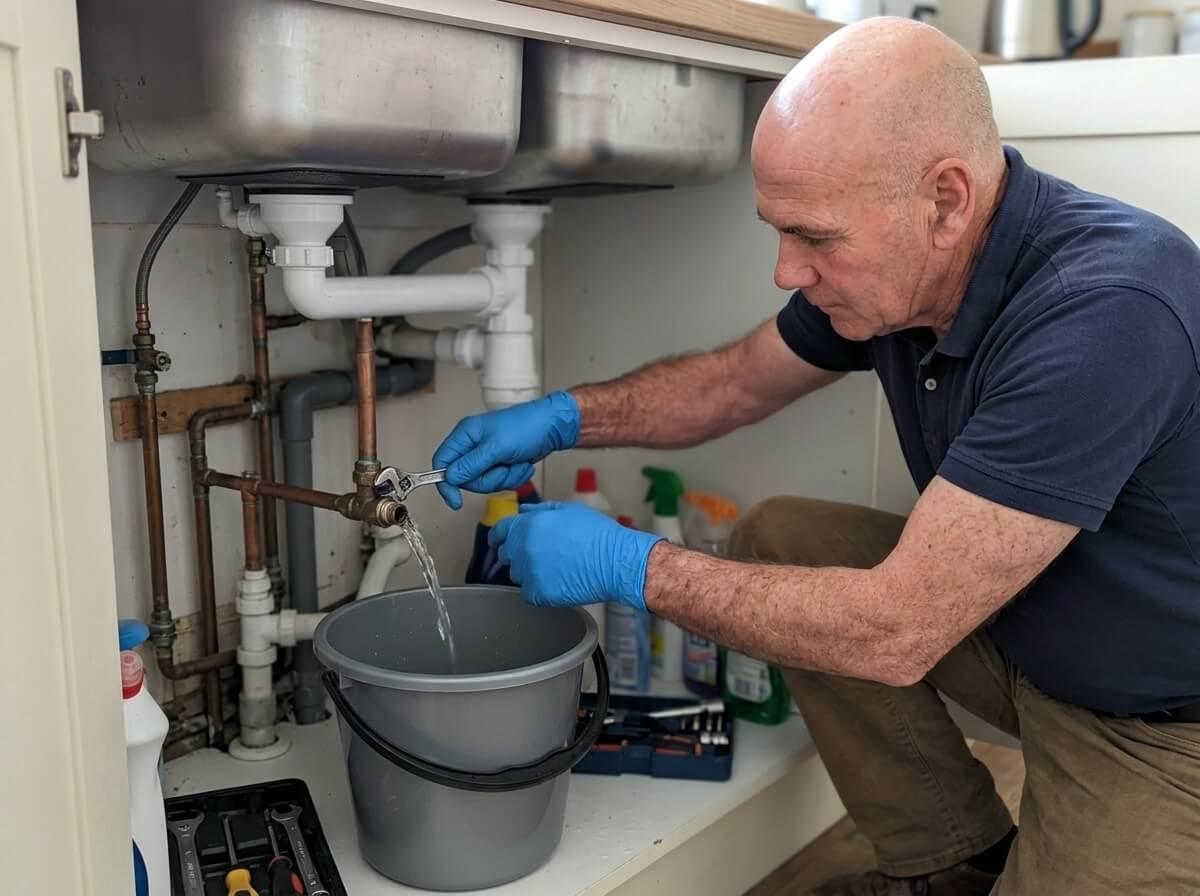
Is a Leaking Hot Water Cylinder an Emergency?
A slow drip from a joint that you can catch in a tray, with the cylinder isolated, can usually wait until the morning. Call a plumber straight away, day or night, if:
- ●Water is running or spraying and you cannot stop it at any valve.
- ●Water is coming through the ceiling below, or the floor of the airing cupboard is soaked through.
- ●Water is near the immersion heater, its switch, its cable or any other electrics.
- ●Hot water or steam is coming out of the tundish or discharge pipe, or the cylinder is banging, hissing or too hot to touch.
- ●The cylinder body is leaking and you cannot drain it safely yourself, or it is unvented.
- ●Someone vulnerable is in the house and needs hot water or heating, for example a young baby or an elderly relative in winter.
Repair or Replace the Cylinder?
Once I have found the leak, the decision is usually straightforward, and I will always tell you honestly which one you need.
When a repair is enough
Leaking compression joints, drain cocks, gate valves, immersion heater washers and the pipework round the cylinder can all be repaired, usually in a single visit. On an unvented cylinder, a recharged or replaced expansion vessel, or a new pressure reducing or relief valve, often cures a dripping tundish. If the cylinder itself is sound, a repair is almost always the better value.
When it needs a new cylinder
Water from the body, a seam or the base, green pinholes, a corroded immersion boss, a split internal coil, or a cylinder that keeps springing new leaks all mean the metal has had it. Cylinders cannot be patched safely, and a corroded one only gets worse. Most copper vented cylinders last somewhere around 15 to 25 years, less in hard water areas like ours, so if yours is older than that, replacement is usually the sensible option even for a smaller fault.
Like for like, or an upgrade?
The quickest replacement is a like for like vented cylinder in the same space, often fitted the same or the next day. A failed cylinder is also a natural moment to think about whether you want something different: a larger cylinder for a growing family, a mains pressure unvented system for a better shower, or, in a small home, removing the cylinder and loft tanks altogether in favour of a combi boiler. Those take longer to plan, so it is fine to fit a straightforward replacement now and talk about the rest later. Either way, you will get a fair price agreed before any work starts.
What Not to Do
- ✕Do not leave the boiler or immersion on. Heating a cylinder that is losing water risks burning out the element and damaging the boiler, and on an unvented cylinder it can trigger the safety valves.
- ✕Do not touch the safety valves on an unvented cylinder. Do not open, adjust, replace, cap or block them, or the tundish and discharge pipe. They are there to stop a cylinder failing dangerously.
- ✕Do not patch the cylinder body. Tape, putty, epoxy and leak sealers do not hold on a cylinder at temperature, and they hide corrosion that will fail again.
- ✕Do not overtighten joints. A gentle nip is all a compression nut needs. Heaving on it distorts the olive, twists the pipe, and can crack the fitting on the cylinder.
- ✕Do not drain a hot cylinder in a hurry. The water can scald, and a hose that slips off a drain cock will pour very hot water across the floor.
- ✕Do not ignore a slow drip. It rots the airing cupboard floor and the ceiling below without you seeing it, and on a corroding cylinder a weep becomes a split.
Will Home Insurance Pay for It?
Usually for the damage, and usually not for the cylinder. Most buildings and contents policies cover escape of water from a hot water cylinder: wet ceilings, floors, carpets and belongings. What they normally exclude is the cylinder itself if it has simply worn out or corroded, along with wear and tear and any leak you knew about and left. Some policies and home emergency covers do include repair of the fault, so it is worth checking.
Take photos before anything is moved, keep the old part or cylinder until the claim is settled, and ask your plumber for written findings saying where the leak was and what caused it. If you can, ring your insurer before any big repair work, and keep receipts for anything you buy to dry the place out.
Who Pays in a Rented Home?
In England, landlords must keep the installations for space heating and heating water in repair, under section 11 of the Landlord and Tenant Act 1985, and that includes the hot water cylinder. As a tenant, your job is to report the leak straight away, by phone and in writing with photos, and to switch off the heat and isolate the water if it is safe to do so. If your landlord or letting agent has given you an emergency plumber to call, use them first.
How to Make Your Cylinder Last Longer
- ●Know where your valves are. Find the cold feed valve and the stopcock now, check they turn, and label them, so nobody is hunting in the dark.
- ●Look in the airing cupboard once a month. Keep the floor round the cylinder clear, and look for drips, crusting, green staining or rust coloured marks.
- ●Do not run it too hot. A cylinder thermostat set to around 60 degrees is hot enough to keep the water safe from bacteria, without the extra scale and strain of running hotter.
- ●Have an unvented cylinder serviced every year. It is a requirement of most manufacturer warranties, and it is when the expansion vessel and safety valves are checked.
- ●Deal with hard water. Ipswich water is hard. A scale reducer on the mains, or a new immersion heater when the old one starts to struggle, protects the cylinder.
- ●Replace before it fails. If your cylinder is over 20 years old and showing corrosion, replacing it at a time that suits you is far cheaper than a flood.
Leaking Hot Water Cylinder in Ipswich? Call Philip
If your cylinder is leaking, switch off the heat, stop the water, catch what you can, and call me. I will make it safe, find exactly where the water is coming from, and tell you straight whether it is a joint, a valve or a cylinder that has reached the end of its life. Most repairs are done on the first visit, and if you need a new cylinder, you will get a clear, fair price agreed before I start.
I cover Ipswich, Felixstowe, Woodbridge, Kesgrave, Stowmarket and the surrounding towns, and I answer the phone myself, 24 hours a day, seven days a week, on 07977 857224. If you cannot see where the water is coming from, our leak detection service will find it. For a split or burst pipe, see burst pipe repair, or everything else on the emergency plumbing services page.