A boiler leaking water always seems to pick its moment. The heating has just come on for winter, it is dark at five, and there is a puddle on the kitchen floor under the boiler cupboard. The gauge that normally sits at 1.5 is reading 0.4, the boiler is flashing a fault code, and the house is getting colder by the hour. If you rent, you are wondering who to ring. If you own, you are wondering whether this is the day you need a new boiler.
I have been plumbing in Ipswich for more than forty years, and here is what most guides do not tell you: a large share of “boiler leaks” are not coming from the boiler at all. They are coming from the pipes, valves and joints underneath it, which are ordinary plumbing and usually a quick, inexpensive repair. This guide shows you how to make it safe, how to tell a pipework leak from an internal boiler fault, what the pressure gauge is telling you, and who to call for each one.
Boiler Leaking Water? Do These 6 Things First
Rule out gas and carbon monoxide
If you can smell gas, or your carbon monoxide alarm is sounding, stop. Do not touch any switches. Open doors and windows on your way out, get everyone outside, and call the National Gas Emergency Service free on 0800 111 999. If it is safe, turn the gas off at the meter. The water can wait. Gas cannot.
Switch the boiler off
Turn the heating and hot water off at the boiler controls or programmer, then switch the boiler off at its fused spur, the switch on the wall near the boiler, usually labelled. If water is running over the boiler’s wiring, the spur or a nearby socket, do not touch them: switch the boiler circuit off at the consumer unit instead, with dry hands, standing on a dry floor.
Catch the water and protect the floor
Put a bowl, a baking tray or a washing up bowl under the drip and lay old towels round it. Water from the heating side is often black and will stain grout, carpet and kitchen plinths, so move anything you care about. If the boiler is upstairs or in a loft, check the ceiling below. If it is wet or sagging, see the water through the ceiling guide before you do anything else.
Turn off the cold water to the boiler
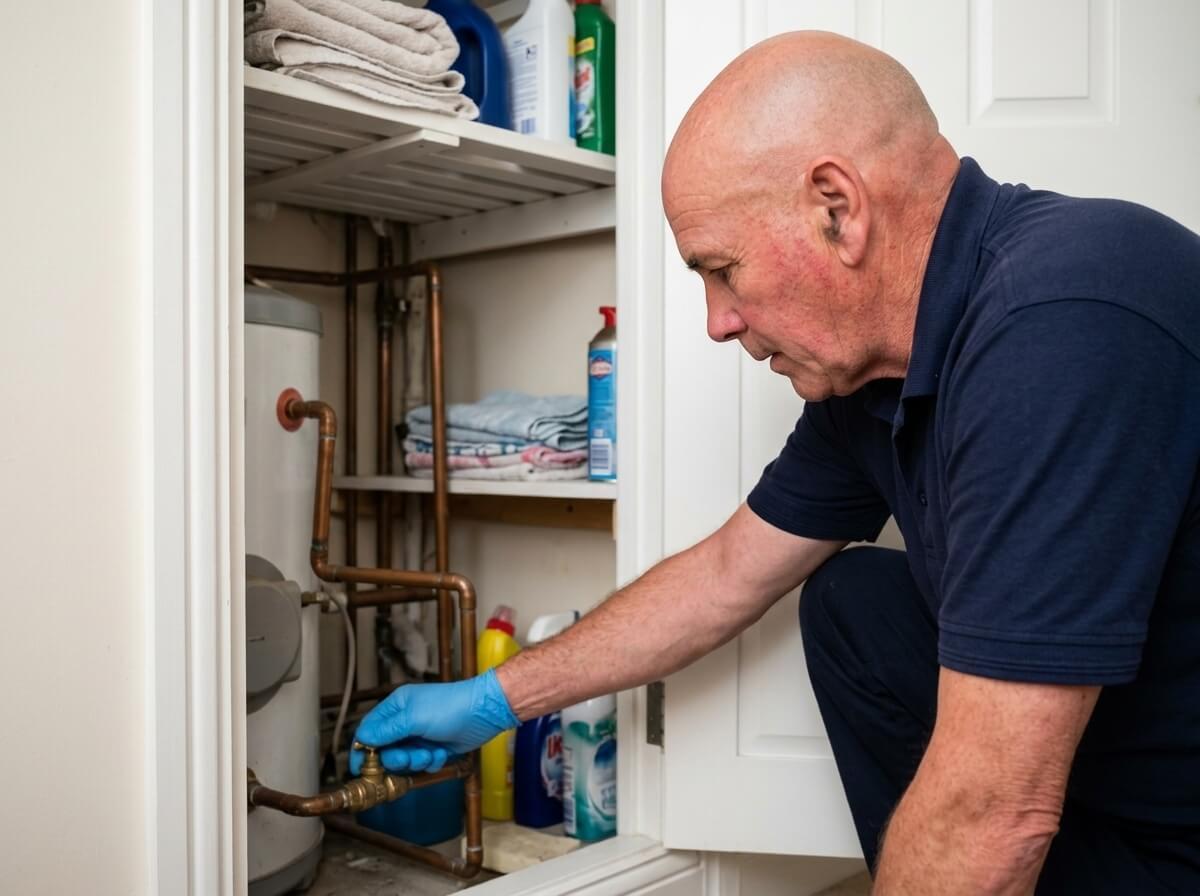
On a combi boiler, find the cold mains pipe underneath. It usually has a small isolation valve with a screwdriver slot: a quarter turn so the slot sits across the pipe closes it. If you cannot find it, turn off the main stopcock. Leave the gas valve alone. On a system or regular boiler, the heating has no direct mains feed, so the leak will slow as the heating pressure drops, or as the small tank in the loft stops refilling it.
Read the pressure gauge and the display
On a combi or system boiler, write down what the pressure gauge says and any fault code on the screen. Do not top the pressure up yet. If the system is still leaking, every top up goes straight onto the floor. The reading tells you a lot, and the table further down explains what each number means.
Take photos, then find the leak
Photograph the boiler, the pipes underneath, the puddle and the gauge. It helps your insurer, your landlord and whoever comes to fix it. Once the water has slowed or stopped, use the leak finder below to work out where it is really coming from.
Is It Really the Boiler? What the Pipes Underneath Are
Before blaming the boiler, it helps to know what you are looking at. Under a typical combi boiler you will see six or seven pipes in a row. Water collects at the lowest point, so a drip from a joint underneath can easily look like it is coming out of the case. Work out which pipe is wet and you are most of the way to knowing who needs to fix it.
| PIPE | HOW TO SPOT IT | WHAT A LEAK LOOKS LIKE |
|---|---|---|
| Heating flow and return | Two 22mm copper pipes, usually on the outer edges, often with valves fitted. They get hot when the heating is on. | Black or dark grey water, sometimes with a metallic smell. Pressure falls. |
| Cold mains in | A 15mm copper pipe with a small isolation valve, usually turned with a flat screwdriver. Stays cold. | Clean, cold water. Leaks all the time the water is on, even with the boiler off. |
| Hot water out | A 15mm copper pipe that gets hot when a hot tap is running. | Clean water, often only while a hot tap is open. |
| Gas supply | Usually the widest copper pipe, often in the middle, with a valve that may have a yellow lever. | Never water. If you smell gas, leave it alone and call 0800 111 999. |
| Filling loop | A short silver braided hose or a built-in key or lever linking the cold main to the heating, with a small tap at one or both ends. | Clean water from the hose ends, or rising pressure if it is letting by. |
| Pressure relief discharge | A 15mm copper pipe that runs from the boiler through the outside wall, often turned down at the end. | Water outside, sometimes hot, and falling pressure inside. |
| Condensate | A white or grey plastic pipe, usually 21.5mm or wider, running to a drain, a sink waste or outside. | Clear, slightly acidic water. A trickle into a drain while the boiler runs is normal. |
System and regular boilers, the kind with a hot water cylinder in the airing cupboard, have fewer pipes underneath because they do not heat tap water directly. A regular boiler on an older open vented system has no pressure gauge and no filling loop at all: a small feed and expansion tank in the loft keeps the heating topped up. That matters, because a leak on an open vented system can run quietly for weeks while the loft tank keeps refilling it.
Where Is the Water Coming From? Boiler Leak Finder
When someone rings me about a leaking boiler, my first question is always the same: where exactly is the water? Find the row that matches what you can see. The last two columns show who usually fixes it and how quickly it needs dealing with.
| WHERE THE WATER IS | LIKELY CAUSE | WHO FIXES IT | URGENCY |
|---|---|---|---|
| Water spraying or running from a pipe or fitting under the boiler | A split pipe, a joint that has pulled apart, or a valve that has failed. Often after a frost or after someone has knocked the pipes. | Plumber | Act today |
| Water coming out of the bottom of the boiler casing itself | An internal leak: a pump seal, an automatic air vent, an internal pipe joint, the pressure relief valve or the heat exchanger. | Boiler engineer | Act today |
| Drips from a brass nut or valve on the pipes below the boiler, casing bone dry | A loose or tired compression joint, or a worn isolation valve. The most common "boiler leak" I am called to, and not the boiler at all. | Plumber | Within days |
| Drips from the braided filling loop hose or its little taps | A worn filling loop valve, or a loop that has been left open and is still feeding water in. | Plumber | Within days |
| Steady drip from the small copper pipe that goes through the outside wall | The pressure relief valve is discharging. The system has gone over about 3 bar, usually from a flat expansion vessel or an overfilled system, or the valve is worn. | Boiler engineer | Within days |
| Clear water dripping from a white or grey plastic pipe joint under the boiler | The condensate pipe or its trap has come apart, cracked or blocked. The water is mildly acidic, so wipe it up and wash your hands. | Plumber, or you | Within days |
| Boiler has stopped in freezing weather, gurgling, water backing up at the condensate pipe | A frozen condensate pipe outside. The ice blocks the pipe and the boiler shuts down to protect itself. | Often you | Within days |
| Pressure keeps dropping and there is no water anywhere you can see | A hidden leak on the heating: a radiator valve, a pipe under the floor or behind a wall, or the relief valve letting by outside. | Plumber | Within days |
| Water on the floor near the boiler, but from a cupboard, tank or cylinder beside it | The hot water cylinder, a cold water pipe, a tank in the cupboard above, or a washing machine or sink nearby. | Plumber | Act today |
| Wet patch or drips on the ceiling below the boiler or airing cupboard | A pipework leak under the floor upstairs, often on the heating flow and return or the hot water pipe. | Plumber | Act today |
| Rusty streaks, brown drips or a crusty white or green deposit on or inside the casing | A long-running slow leak that has been corroding parts. Often the heat exchanger or an internal joint. | Boiler engineer | Within days |
| Fine beads of water all along cold pipes that wipe off and come back slowly | Condensation on the cold mains pipe in a cool, damp kitchen or cupboard. Not a leak. | Often you | Not urgent |
How to Find Exactly Where a Boiler Is Leaking
Water runs along pipes and drips from the lowest point it can find, so the puddle is rarely right under the leak. Here is how I track it down, and you can do the same with a torch and a roll of toilet paper. Keep the boiler switched off throughout.
Dry everything you can reach
Wipe every pipe, nut and valve under the boiler with kitchen roll until it is bone dry, and dry the underside of the casing. Lay a dry sheet of paper on the floor or the cupboard base under the pipes so new drips show up straight away.
Wrap tissue round each joint
Wrap a strip of toilet paper round each brass nut and valve in turn, and round each end of the filling loop hose. The one that darkens first is your leak. If the paper stays dry but drips keep appearing on the floor, the water is coming from higher up.
Check under the casing with a torch
Shine a torch up at the underside of the boiler. Water beading on the bottom panel, dripping from a seam or running out of a grommet where the pipes enter the case means the leak is inside. Stop there and call a boiler engineer.
Go outside and look at the two small pipes
Find where pipes leave the wall outside, near the boiler. A dripping copper pipe means the pressure relief valve is letting water out. A trickle from the plastic condensate pipe while the boiler runs is normal; ice on it in winter is not.
Turn the water back on briefly if you need to
Some leaks only show when the cold main is on, or when a hot tap is running. If everything stays dry, turn the cold isolation valve back on with tissue on each joint, run a hot tap for a minute, and watch closely. Turn it off again as soon as you see it.
Boiler Leaking Water From Underneath: The Common Causes
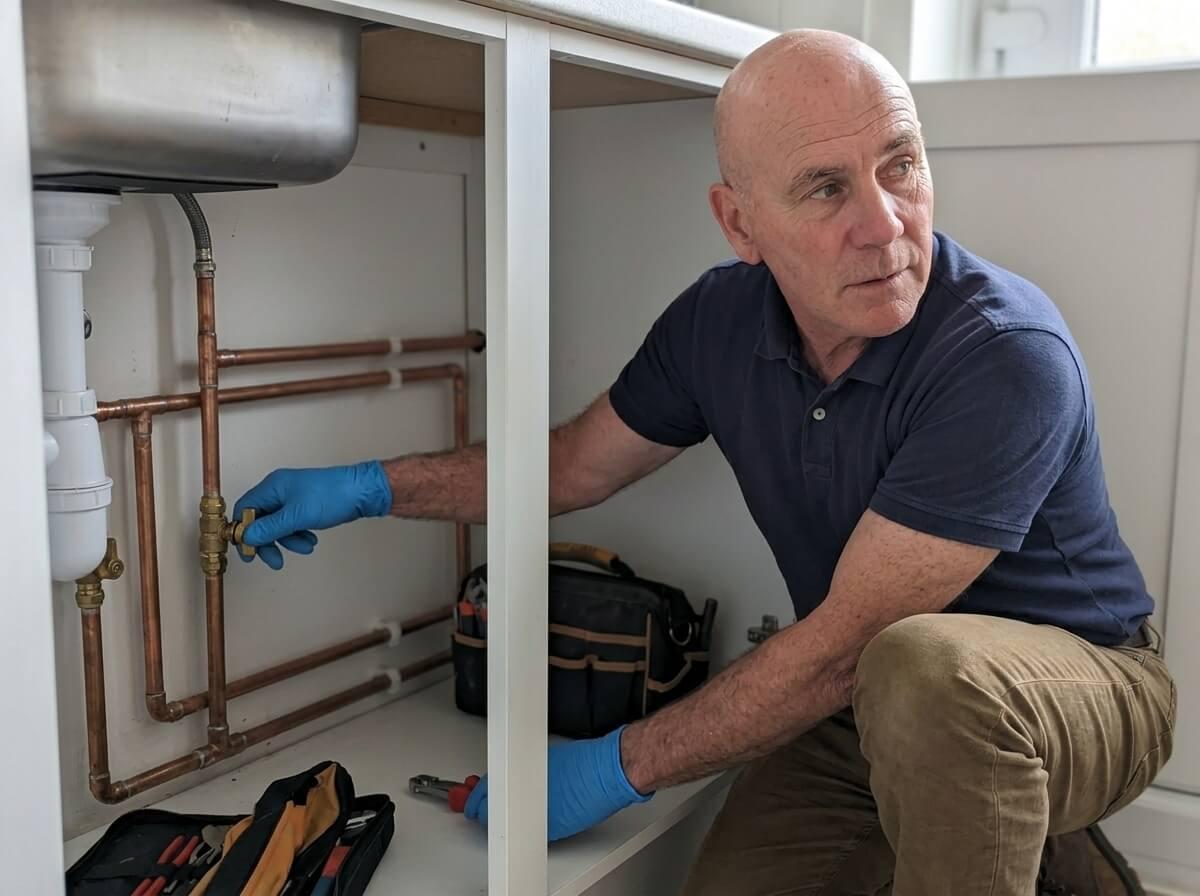
Most leaks under a boiler fall into one of five groups. The first three are plumbing repairs. The last two are inside the boiler and need a boiler engineer.
1. A loose or tired compression joint
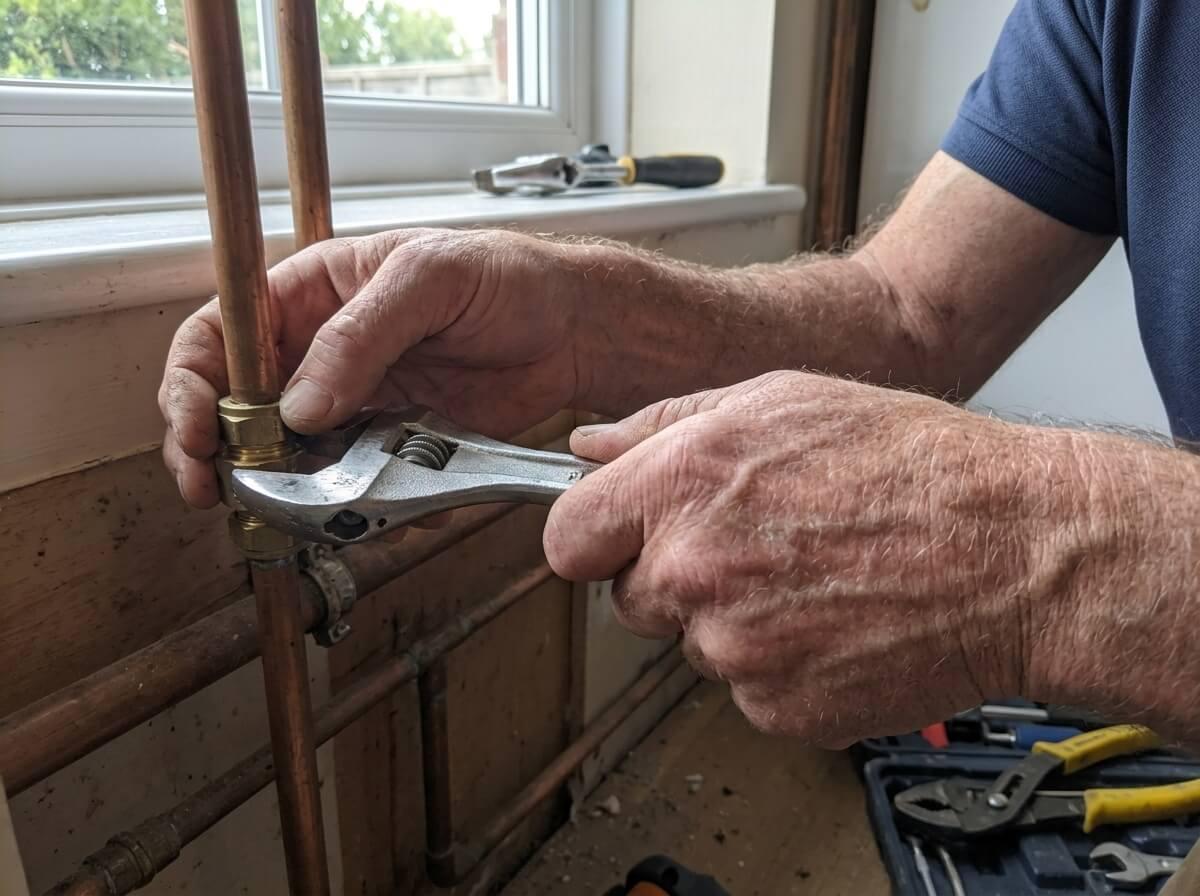
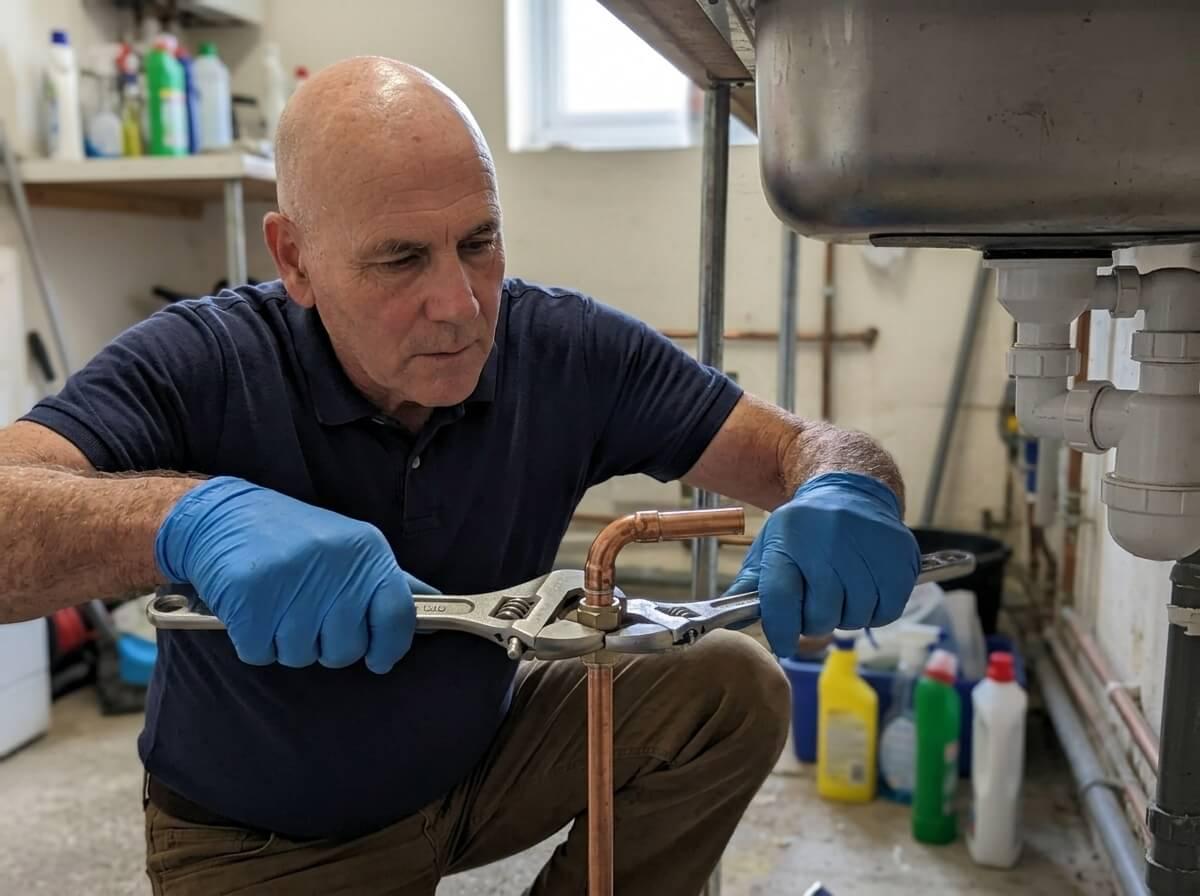
The pipes under most boilers are joined with brass compression fittings: a nut squeezes a soft brass ring, called an olive, onto the copper pipe. Every time the heating comes on, the pipes expand and contract, and after a few winters a joint can start to weep. It is especially common in the first weeks of autumn, and just after a boiler has been serviced or replaced and the pipes disturbed. If the joint is on the water side and well clear of the gas pipe, a gentle eighth of a turn on the nut, holding the fitting still with a second spanner, will sometimes stop it. Do not crank it: an overtightened olive distorts and leaks worse. If a nip does not cure it, the joint needs remaking, which on the heating side means draining down part of the system.
2. A worn valve or filling loop
The isolation valves under a boiler and the two little taps on the filling loop all have rubber or fibre seals that perish with age. A weep from a valve spindle can sometimes be stopped by nipping up its gland nut a quarter turn. A filling loop that drips from the hose ends needs new washers or a new loop. A filling loop that has been left open, or whose valve no longer seals, does something sneakier: it keeps feeding mains water into the heating, the pressure climbs past 3 bar, and the relief valve dumps water outside. Always check both filling loop taps are fully closed after topping up.
3. The condensate pipe
Every modern condensing boiler produces water as it burns gas efficiently, a litre or two an hour when it is working hard. That water runs out through a plastic condensate pipe and a trap. Joints in that pipe can come unglued, the trap can crack, and the pipe can block with sludge or freeze outside. You will usually see clear water dripping from a plastic joint rather than a copper one. A loose push-fit or solvent joint on the condensate pipe is a simple repair. If water is backing up inside the boiler because the pipe is blocked, switch it off and get it cleared, because the boiler will lock out and can be damaged.
4. The pressure relief valve
The pressure relief valve is a safety device inside the boiler. When the heating pressure reaches about 3 bar, it opens and lets water out through the copper discharge pipe to the outside, so nothing bursts. If that pipe is dripping, the valve is either doing its job because the pressure really is too high, or it has a bit of debris on its seat or has worn and is letting by at normal pressure. Bringing the pressure down and closing the filling loop often stops the drip. If it keeps happening, the cause is usually a flat expansion vessel, and both that and the relief valve are boiler engineer jobs.
5. An internal leak
Water coming from inside the casing means one of the boiler’s own parts has failed. The usual suspects are the pump seal, the automatic air vent on top of the pump, an internal pipe joint or O-ring, the diverter valve, or on older boilers the heat exchanger itself, which can corrode through. Leave the boiler switched off and call a boiler engineer. Water dripping onto a printed circuit board can wreck it, and running a boiler with an internal leak can turn a seal replacement into a much bigger bill.
Boiler Leaking and Losing Pressure? What the Gauge Means
On a sealed system, with a combi or system boiler, the pressure gauge is the best leak detector in the house. Pressure only falls when water escapes, and it only climbs too high when water is getting in or the expansion vessel has stopped doing its job. Check the reading with the heating cold, then use this table.
| GAUGE READING | WHAT IT MEANS | WHAT TO DO |
|---|---|---|
| 0 to 0.5 bar | The system has lost a lot of water. Most boilers lock out below about 0.5 to 0.8 bar and the heating stops. | Do not keep topping up. Find where the water has gone first: the boiler, the relief pipe outside, or the heating pipework. |
| 0.5 to 1 bar (cold) | A little low. It may have dropped slowly over months, or after a radiator was bled. | Top up once to about 1 to 1.5 bar and watch it for a week. If it falls again, there is a leak somewhere. |
| 1 to 1.5 bar cold, up to about 2 bar hot | Normal for most domestic boilers. Check your manual, as some manufacturers give slightly different figures. | Nothing to do on the pressure side. If there is still water, the leak is on the pipework or inside the casing. |
| 2.5 to 3 bar | Too high. The filling loop may be letting by, or the expansion vessel inside the boiler may have lost its air charge. | Check the filling loop taps are fully closed, then bleed a radiator to bring it down. If it climbs again, call a boiler engineer. |
| 3 bar or above | The pressure relief valve opens and dumps water through the copper pipe outside. Some boilers lock out with a high pressure fault. | Switch the boiler off. Close the filling loop, bleed a radiator, and get the expansion vessel and relief valve checked. |
Losing pressure, but no water anywhere
This is one of the most frustrating calls I get, and it has three usual answers. First, the relief valve is letting by and the water is quietly going down the outside wall: check that copper pipe, and put a jam jar under the end overnight if you are not sure. Second, a radiator valve or bleed screw is weeping somewhere in the house, often behind furniture: see the leaking radiator guide. Third, a heating pipe is leaking under a floor or inside a wall, which often shows up later as a damp patch, lifting laminate or a stain on a ceiling. That last one needs proper leak detection rather than guesswork, and the signs of a hidden water leak are worth reading while you wait.
How to top up the pressure safely
Only top up once you know the leak has stopped or been isolated. With the boiler off and the heating cold, find the filling loop under the boiler, a braided hose with a tap at each end or a built-in key or lever on some models. Open the taps slowly, watch the gauge rise to about 1 to 1.5 bar, then close both taps firmly. Reset the boiler if it asks. Your boiler manual shows exactly where your filling loop is. If you need to top up more than once or twice a year, there is a leak somewhere that needs finding.
How to bring high pressure down
If the gauge is above about 2.5 bar cold, first make sure the filling loop taps are fully closed. Then, with the heating off and cooled, hold a cloth under a radiator bleed screw and open it slowly with a radiator key, letting a little water out until the gauge drops to about 1.5 bar. Close it again firmly. If the pressure creeps back up over the next day or two with the filling loop shut, the loop valve is letting by. If it shoots up every time the heating gets hot and then drops back, the expansion vessel has probably lost its charge. Both need a professional.
Water Dripping From the Pipe Outside the Boiler
Two small pipes usually leave a boiler through the outside wall, and people often confuse them. The copper one, normally 15mm and turned down towards the wall at the end, is the pressure relief discharge pipe. Water from it means the system went over pressure, or the valve is worn. The wider plastic one is the condensate pipe, and a gentle trickle from it into a drain while the boiler is running is completely normal. The overflow pipe dripping guide covers every pipe that can drip on the outside of a house, including the toilet and loft tank overflows.
In a cold snap, the condensate pipe is the one to watch. If it freezes, the boiler stops and often shows a fault code or gurgles. Pour warm water, not boiling, along the outside section of the pipe or hold a hot water bottle on it, then reset the boiler. The frozen pipes guide has the full method. If it freezes every winter, the pipe can be rerouted, insulated or upsized so it copes with frost.
Can I Still Use My Boiler If It Is Leaking?
Usually not until you know where the water is coming from. Running a boiler with an internal leak can damage the pump, the heat exchanger and the electronics, and if the pressure is low it will lock out anyway. There are a few situations where it is reasonable to run it carefully while you wait for a repair:
- ●The relief pipe was dripping because the pressure was too high, and it stopped once you closed the filling loop and brought the pressure back to about 1.5 bar. Use it, and watch the gauge.
- ●A small drip is on the pipework under the boiler, not the boiler, the casing is completely dry, and the drip is caught in a bowl well away from the electrics. Get it repaired quickly anyway.
- ●The leak was a radiator you have now isolated by closing both its valves, and the pressure is holding steady.
- ✕Do not use it if water is coming from inside the casing, if it is near the wiring or the fused spur, if the pressure will not hold, or if there is any smell of gas or fumes.
For what you can and cannot run when the water itself is off, for example while a leak is being repaired, see can I use my boiler if the water is off.
Is a Leaking Boiler Dangerous? Is It an Emergency?
The water itself is rarely the danger. What it reaches is. A drip onto the boiler’s circuit board or the fused spur below it can cause a short and trip the electrics. Water from inside the case can be a sign that seals are failing, and on a room-sealed gas boiler those seals are part of what keeps combustion gases out of the room. That is why I always tell people to keep a working carbon monoxide alarm near any gas boiler, and to switch the boiler off if anyone has headaches, dizziness or sickness that gets better outside.
Call for help straight away, day or night, if:
- ●You smell gas or the CO alarm sounds. Get out and call 0800 111 999 before anything else.
- ●Water is spraying or running and turning off the cold isolation valve or the stopcock does not stop it.
- ●Water is reaching electrics: the boiler’s wiring, the fused spur, sockets or a light fitting below.
- ●Water is coming through a ceiling or soaking into floorboards and kitchen units.
- ●The boiler has lost all its pressure on a cold night and there is a baby, an elderly relative or someone unwell in the house who needs heat.
A slow drip you are catching in a bowl, from a boiler that is switched off and isolated, can usually wait until the morning. If you are not sure, ring and describe what you can see. I will tell you honestly whether you need someone tonight. The what counts as a plumbing emergency guide has a full triage table, and the emergency plumber cost guide explains what affects the price of a call out.
Plumber or Boiler Engineer? Who to Call for a Leaking Boiler
This is where a lot of time and money gets wasted. People call a boiler company for a leaking pipe joint and wait three days, or call a plumber for a failed pump seal that needs a specialist part. Here is the simple split.
A plumber can deal with
- ●Leaking compression joints, soldered joints and push-fit fittings on the pipework under and around the boiler.
- ●Worn isolation valves, heating valves and drain off valves.
- ●Dripping or letting-by filling loops.
- ●Condensate pipe leaks, blockages and reroutes outside the boiler.
- ●Leaking radiators, radiator valves and burst or split heating pipes.
- ●Hidden leaks under floors and behind walls that make the boiler lose pressure.
- ●Leaks from a nearby hot water cylinder, tank or cold pipe that look like a boiler leak.
A boiler engineer is needed for
- ●Any water coming from inside the boiler casing.
- ●The pump, automatic air vent, diverter valve, heat exchanger and internal pipes and seals.
- ●The pressure relief valve and expansion vessel, which sit inside the boiler on most combis.
- ●Any work on the gas supply, the burner, the fan or the flue. By law, that engineer must be registered to work on gas.
If you are not sure which you have, start with whoever can get to you soonest and find the leak. I will always tell you plainly if it turns out to be inside the boiler, and fix anything on the pipework while I am there so you are not paying twice.
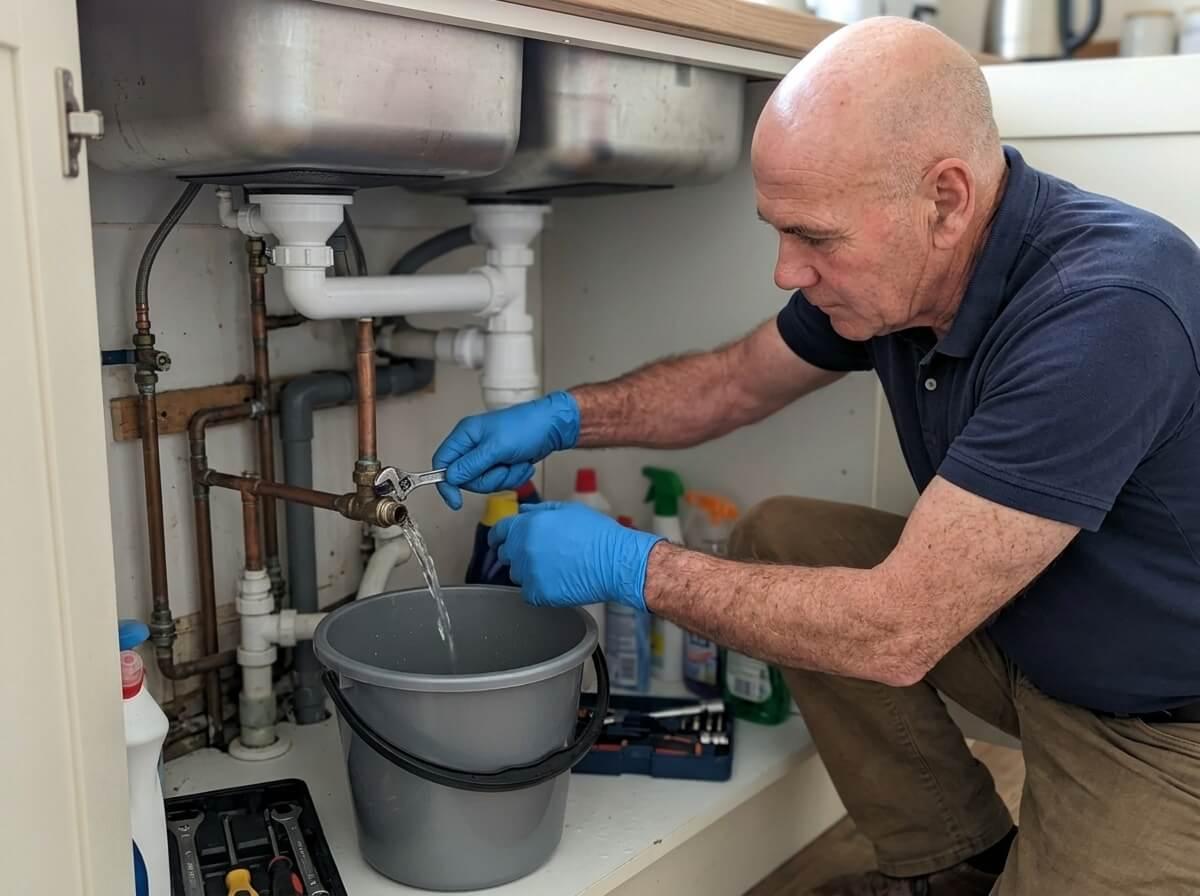
Why Boilers Start Leaking
- ●The heating coming on after summer. Joints that have sat cold for months expand as they heat up. The first two or three weeks of the heating season are when I see the most weeping fittings.
- ●Pressure set too high. A sealed system topped up to 2.5 bar or more cold puts strain on every joint and seal, and pushes the relief valve open when the water heats and expands.
- ●A flat expansion vessel. The vessel absorbs the expansion of the heating water. When it loses its air charge, the pressure swings wildly between hot and cold and water ends up outside.
- ●Corrosion and sludge. Without enough inhibitor in the water, steel radiators and boiler parts slowly rust from the inside, and the black magnetite sludge wears pump seals and blocks valves.
- ●Age. Seals, O-rings and valve washers harden over time. On a boiler more than ten or twelve years old, a leak is often the first of several.
- ●Recent work. A new boiler, a service, a powerflush or a radiator taken off for decorating can all disturb joints.
- ●Frost. A boiler in a garage, utility or loft can have its pipes or condensate freeze and split in a hard frost.
What Not to Do
- ✕Do not open the boiler casing. It is dangerous, it is illegal to work on gas parts unless you are registered to, and it can void the warranty.
- ✕Do not keep topping up the pressure. Every top up pushes more water out of the leak, dilutes the inhibitor and adds fresh oxygen that speeds up corrosion.
- ✕Do not touch wet switches or sockets. Turn the circuit off at the consumer unit from a dry spot instead.
- ✕Do not tighten the gas pipe or the gas valve. It is not a water leak, and disturbing it can cause a gas leak. Leave it completely alone.
- ✕Do not pour in leak sealer without checking. Some boiler manufacturers say not to use it, it can block narrow passages in the heat exchanger and filter, and it can affect your warranty. Check the manual first.
- ✕Do not block or cap the relief pipe outside. It is a safety outlet. If it is dripping, the fault is inside, and blocking it removes the boiler’s protection against over-pressure.
- ✕Do not ignore a slow drip. It rots the cupboard base and the floor, corrodes the parts it lands on, and small leaks have a habit of becoming big ones at the worst possible time.
Repair or Replace a Leaking Boiler?
A leak on its own is rarely a reason to replace a boiler. Joints, valves, filling loops, pump seals, air vents and relief valves are all routine repairs. It starts to make sense to think about replacing the boiler when:
- ●The heat exchanger itself has corroded through, which is usually the most expensive single part.
- ●The boiler is more than about 15 years old and parts are becoming hard to get.
- ●It has needed several repairs in the last year or two, and the bills are adding up.
- ●There is rust and staining inside the casing, suggesting the leak has been going for a long time.
Either way, ask for written findings and a clear price for the repair before deciding. Whatever the job, on the plumbing side you will get a fair price agreed before any work starts.
Will Home Insurance Cover a Leaking Boiler?
Usually for the damage, rarely for the boiler. Most buildings and contents policies cover escape of water from a heating system, so a ruined kitchen floor, a stained ceiling or soaked carpets are often covered. What they normally exclude is the part that failed, because worn seals and gradual corrosion count as wear and tear. Boiler cover and home emergency cover are separate products that may pay for the repair itself. The burst pipe insurance claim guide explains how escape of water claims work, and the water damage after a leak guide covers drying out.
Take photos before anything is moved, keep the old part, ask for written findings saying what failed and why, and report the leak promptly. Insurers can refuse claims for leaks that were known about and left.
Boiler Leaking in a Rented Home: Who Pays?
In England, landlords must keep the installations for space heating and heating water in repair under section 11 of the Landlord and Tenant Act 1985, and that covers the boiler, its pipework and the radiators. A gas boiler in a rented home must also have a gas safety check every year. As a tenant, switch the boiler off if it is safe, catch the water, and report the leak straight away, by phone and in writing with photos. If your landlord or agent has given you an emergency contractor, call them first. The landlord plumbing responsibilities guide explains what to do if nobody responds.
How to Stop Your Boiler Leaking Again
- ●Have it serviced every year. An annual service catches weeping seals, a tired expansion vessel and a sticking relief valve before they leak.
- ●Keep the pressure right. About 1 to 1.5 bar cold on most boilers. Check it when the heating goes on in autumn and once a month through winter.
- ●Close the filling loop properly. Both taps fully shut after every top up. A loop left cracked open is one of the most common causes of water from the relief pipe.
- ●Look after the system water. Have the inhibitor level checked and, if there is a lot of sludge, the system cleaned. A magnetic filter under the boiler catches debris before it wears out the pump.
- ●Protect the condensate pipe. Make sure the outside run is as short as possible, insulated, and wide enough to cope with frost.
- ●Glance under the boiler once a month. Thirty seconds with a torch and a sheet of kitchen roll will spot a weep long before it becomes a puddle.
Boiler Leaking in Ipswich? Call Philip
If water is coming from under your boiler, switch it off, turn off the cold feed, catch what you can and call me. I will make it safe, find exactly where the water is coming from, and fix leaking pipework, valves, filling loops, condensate pipes and radiators, usually on the first visit. If it turns out to be inside the boiler, I will tell you straight away so you can get the right engineer out, without paying for guesswork.
I cover Ipswich, Felixstowe, Woodbridge, Kesgrave, Stowmarket and the surrounding towns, and I answer the phone myself, 24 hours a day, seven days a week, on 07977 857224. If the pressure keeps dropping and you cannot see where the water is going, our leak detection service will find it. See everything else on the emergency plumbing services page, or get in touch for a free, no-obligation quote.