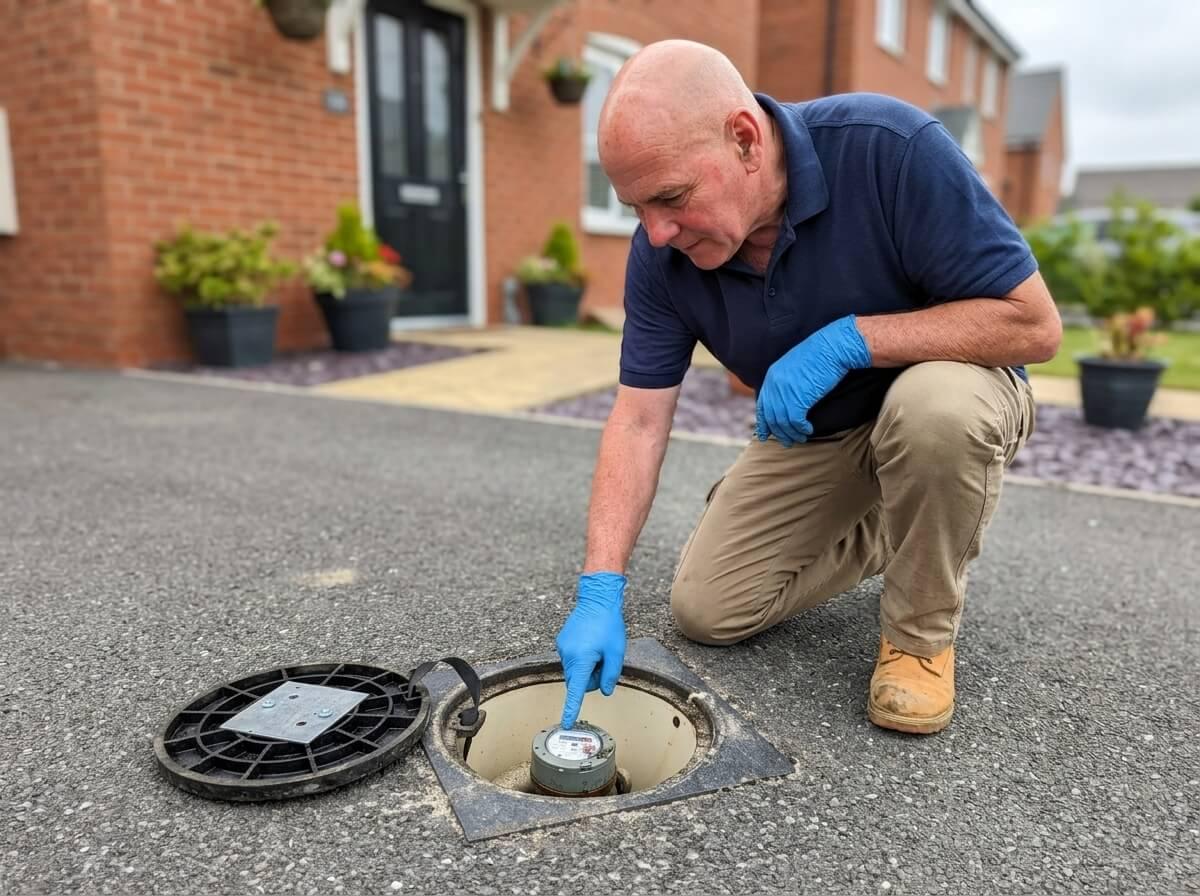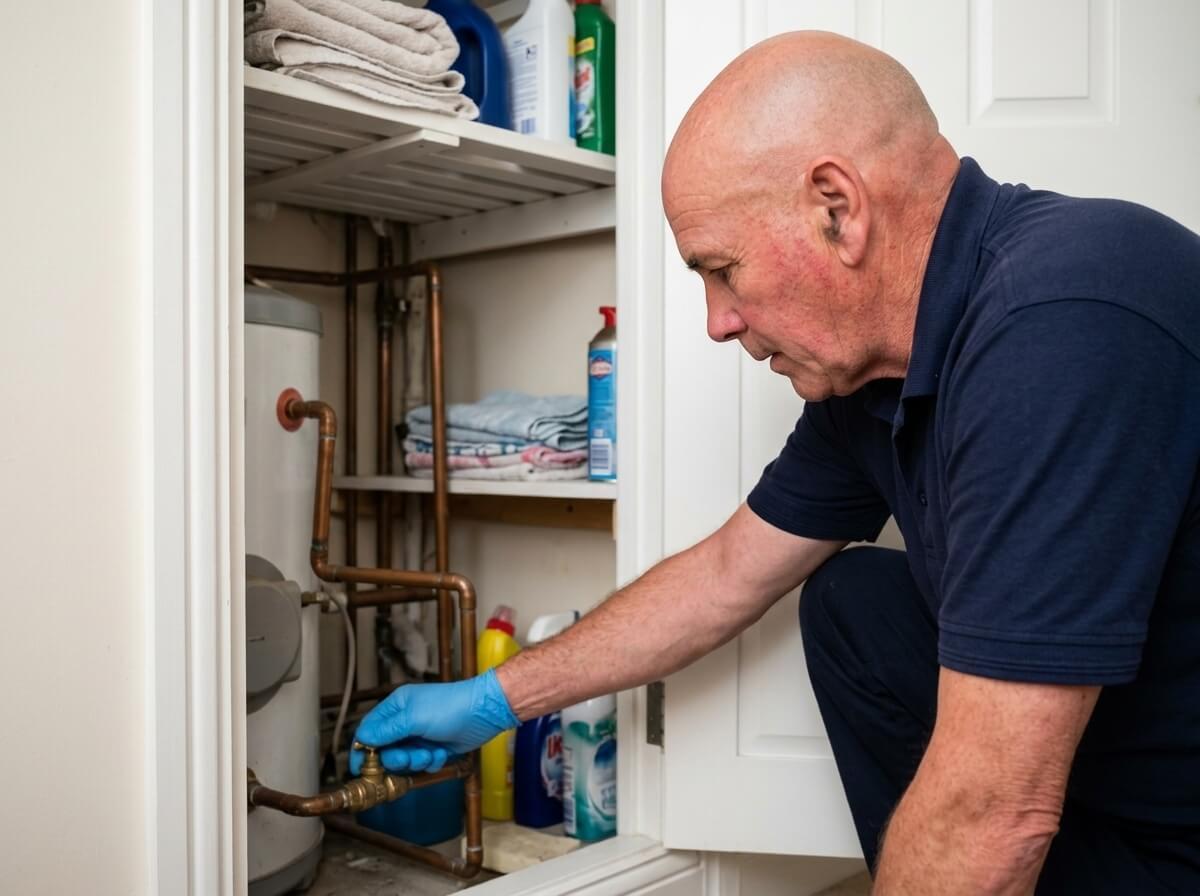
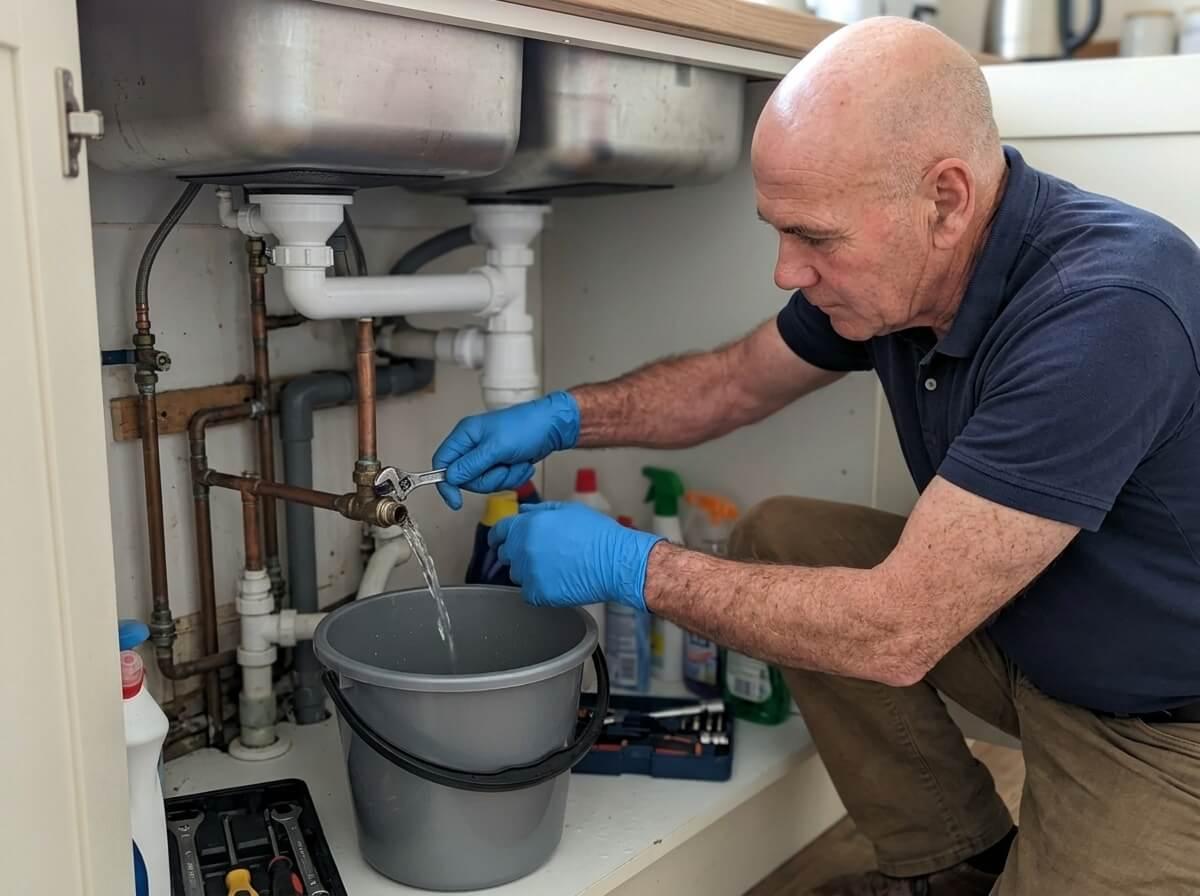
Turning off the stopcock is only half the job. The moment it closes, no new water comes in, but every pipe, cistern and tank in the house is still full, and all of that water is still trying to get out through the burst. In a house with a loft tank, that can be two hundred litres or more pouring through a ceiling after you thought you had stopped it. Draining down is how you empty that water out in a controlled way, through the taps and a hose, instead of through your plasterboard.
I have been plumbing in Ipswich for more than forty years, and I drain down houses every winter: after bursts, before repairs, and for homes that are about to sit empty through the cold months. Most people only need the five minute emergency version. This guide covers that first, then the full drain down for an empty house, what to leave alone on your type of system, and how to bring it all back to life without airlocks, spluttering taps or a fresh leak. If water is pouring out right now, start with the next section.
Emergency Drain Down: Stop a Burst Pipe in 5 Minutes
This is what to do with water coming through a ceiling, spraying from a pipe or running down a wall. You do not need tools and you do not need to drain the cylinder or the heating.
Turn the stopcock off
Turn it clockwise until it stops. It is usually under the kitchen sink, in a downstairs toilet, by the front door or in the airing cupboard. If you cannot find it, the how to locate your stopcock guide shows every usual hiding place. If it will not turn, use the outside stop tap in the pavement, or see what to do if the stopcock is stuck.
Switch off the boiler and immersion heater
Turn the boiler off at its switch or fused spur and switch off the immersion heater. A boiler firing with no water coming in, or an immersion element running in a cylinder that is emptying, can be damaged. If water is near any electrics, switch the power off at the consumer unit, but only if you can reach it standing somewhere dry.
Open every cold tap in the house
Start with the kitchen cold tap, which is fed straight off the main and drains the rising pipe fastest, then open the cold taps in every other room. Leave them all open.
Open the hot taps and bath taps if you have a loft tank
In a tank fed house, the hot taps, the bath and often the bathroom cold taps are fed from the loft tank, not the main, so they keep running after the stopcock is shut. That is what you want. Every litre that comes out of a tap is a litre that does not come through the ceiling.
Flush every toilet once and call a plumber
Flush each toilet and hold the handle down so the cistern empties. Then put buckets under any drips, take photos for insurance and call an emergency plumber. The full drill for the rest of the clear up is in what to do when a pipe bursts.
When You Should Drain Down Your Water System
- ●A burst or split pipe. The emergency drain down above, every time, even if the burst looks small.
- ●A leaking loft tank or hot water cylinder. Draining the tank or cylinder is the only way to stop the leak, because both hold water that the stopcock cannot shut off. See the guides to a leaking cold water tank and a leaking hot water cylinder.
- ●Frozen pipes you cannot thaw. If a pipe is frozen and you are worried it has split, turning the water off and draining the pipes before it thaws means it has nothing to leak when the ice melts. The frozen pipes guide covers thawing safely.
- ●Leaving a house empty in winter. A holiday home, a rental between tenants, a house waiting for probate or a sale, or your own home while you are away for weeks.
- ●Before plumbing work. Replacing a stopcock, cutting into the main or moving pipework all need the system drained. A plumber will normally do this as part of the job.
Know Your System First: Combi, Tank Fed or Unvented
How you drain down depends on where the water in your house is stored. Most Suffolk homes have one of three set ups. Find yours in the table, because it tells you what to drain and, just as important, what to leave alone.
| SYSTEM | HOW TO SPOT IT | WHERE THE WATER IS | HOW TO DRAIN IT | LEAVE ALONE |
|---|---|---|---|---|
| Combi boiler, mains fed (no tanks) | No loft tank and no hot water cylinder. Hot water comes straight from the boiler. Every tap has strong pressure. | Only in the pipes, toilet cisterns and the boiler's heating circuit. | Stopcock off, boiler off, open every tap, flush toilets, then open the drain off valve above the stopcock. | The heating circuit. It is sealed and separate from your taps. |
| Tank fed, vented cylinder (gravity system) | A cold water tank in the loft and a copper hot water cylinder in the airing cupboard, often with an immersion heater. | The pipes, toilets, the loft tank (often around 200 litres) and the cylinder (often 115 to 210 litres). | Stopcock off, boiler and immersion off, open all taps including the bath, let the tank empty, then the drain off valves. | The cylinder and heating, unless the cylinder is leaking or the house will be empty and unheated for weeks. |
| Unvented cylinder, mains pressure (Megaflo style) | A cylinder, often white, with a small expansion vessel and safety valves on top, but no loft tank. Strong pressure on hot and cold. | The pipes, toilets and the cylinder, which is held at mains pressure. | Stopcock off, boiler and immersion off, open taps, flush toilets, drain off valve on the cold main. | The cylinder itself. Draining it needs the right procedure for that model, so leave it to a qualified installer. |
Not sure? Go up into the loft. A plastic or galvanised tank with a lid, a float valve and pipes coming out of the bottom means a tank fed system. No tank and a boiler that gives instant hot water means a combi. A cylinder with a small round vessel and a cluster of valves on top, and no loft tank, is almost always unvented.
What You Need
- ●A garden hose long enough to reach from the stopcock and the airing cupboard to an outside drain or gully.
- ●A drain cock key or small adjustable spanner. Drain off valves have a square or slotted spindle, not a handle. A drain cock key costs a few pounds from any plumbing merchant and is worth keeping with the stopcock.
- ●A jubilee clip to hold the hose on the drain off nozzle, so it does not pop off and soak the floor.
- ●Buckets, old towels and a torch. Drain offs always release a little water at the spindle as they open.
- ●Masking tape and a pen to label the stopcock and the boiler once the system is drained.
How to Drain Down a House Fully: Step by Step
This is the full version, for a house that will be left empty or before work on the pipes. It assumes a tank fed system, the most involved kind. On a combi, skip the loft tank and cylinder steps.
Switch off the boiler, immersion heater and any electric showers
Turn the boiler off at the fused spur and switch the immersion heater off at its switch. Let hot water cool for an hour if you plan to drain the cylinder, because water from the bottom of a hot cylinder can scald.
Turn off the stopcock and the outside stop tap if you can
Close the internal stopcock fully. If you have access to the outside stop tap and the house will be empty for a long time, closing that too protects the underground supply pipe inside your boundary.
Take the plugs out and open every tap
Open every hot and cold tap in the house, including the bath and shower. Pull the plugs out of every sink, basin and bath first, so nothing can overflow if the water is ever turned back on.
Flush each toilet and hold the handle down
Each cistern empties in one long flush. The water left in the bottom of the pan is the trap, which you deal with at the end.
Open the drain off valve on the cold main
Push the hose onto the nozzle of the drain off valve above the stopcock, clip it on, run the other end outside to a drain, and open the valve a turn or two with the key. The water left in the rising main and the pipes that drop down to it will drain out. Leave it open.
Let the loft tank empty through the taps
With the stopcock off, the tank cannot refill, so it empties through the hot taps and bath. When the taps stop running, check in the loft that the tank is empty apart from a little water below the outlet. Sponge that out if the loft is unheated.
Drain the hot water cylinder only if you need to
For most empty houses this is optional. If you do drain it, make sure the immersion is off, attach the hose to the drain off at the base of the cylinder (on the cold feed pipe), run it outside and open the valve. With the hot taps open, the cylinder will drain slowly. Never drain an unvented cylinder this way unless you know the procedure for your model.
Isolate and drain the outside tap and appliances
Close the isolating valve that feeds the outside tap, then open the outside tap to drain it. Close the washing machine and dishwasher valves. The isolation valve guide shows how to find and turn each one.
Protect the traps and leave a note
In an unheated house, the water left in toilet pans and sink traps can freeze and crack them. Sponge out the toilet pans, or add a good handful of salt to each trap and pan to lower the freezing point. Leave the taps and drain offs open, and tape a note to the stopcock and the boiler saying the system is drained and must not be turned back on until the taps are closed.
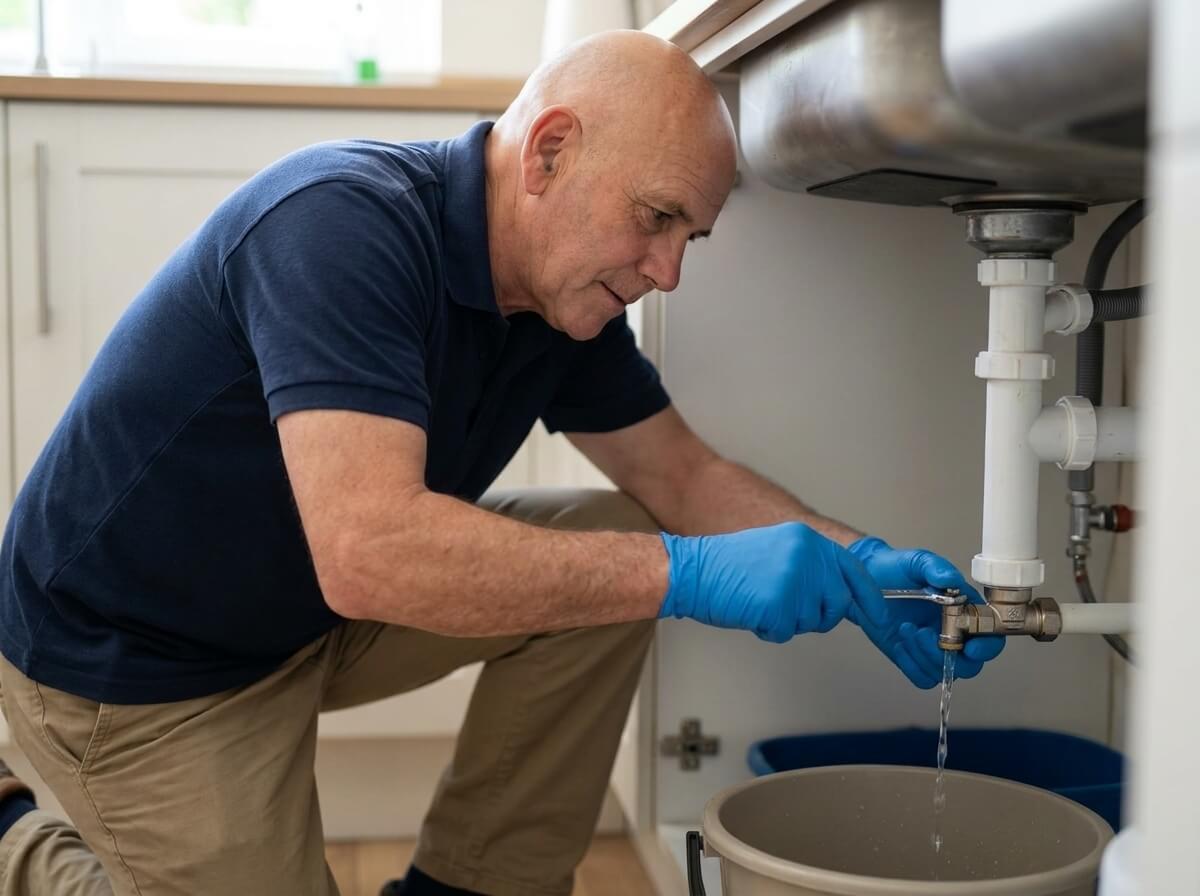
Where Is the Drain Off Valve?
Most houses have several, and people are often surprised to find them. They are small brass valves, roughly the size of a thumb, with a ridged nozzle for a hose and a square or slotted spindle.
- ●On the cold main, just above the stopcock. This is the one you use most. Many modern stopcocks have it built into the same body, on the house side of the valve.
- ●At the bottom of the hot water cylinder. On the cold feed pipe that enters the cylinder near its base, in the airing cupboard.
- ●On the heating system. At the lowest point of the radiator pipework, often under a downstairs radiator or by the boiler. These drain the heating, not your taps, so leave them shut unless you mean to drain the heating.
- ●None at all. Some older Ipswich terraces have no drain off on the cold main. In that case the lowest tap, usually the kitchen cold, is your drain point, and a little water stays in the pipe below it.
What Not to Drain: Heating and Unvented Cylinders
Your central heating
The radiators and boiler are a separate circuit from your taps. On most homes it is a sealed system, topped up through a filling loop and dosed with inhibitor to stop the radiators rusting inside. Draining it lets air in, washes the inhibitor out and means bleeding every radiator and re-pressurising the boiler afterwards. For a burst on a water pipe, or a few weeks away, leave the heating full. If the burst is on the heating pipework itself, turning the boiler off and closing the radiator valves either side of the leak is usually enough until a plumber gets there. The radiator leaking guide covers that.
Unvented hot water cylinders
An unvented cylinder holds hot water at mains pressure and has an expansion vessel, a pressure relief valve and a temperature relief valve. Draining one involves opening valves in a specific order, and getting it wrong can leave a safety valve stuck open or damage the expansion vessel. In an emergency you do not need to drain it at all: once the stopcock is off and a hot tap is open, the pressure drops and it stops pushing water out. Leave a full drain of an unvented cylinder to a qualified installer.
Leaving a House Empty This Winter: Heat It or Drain It?
An empty, unheated house is the most likely place of all for a burst pipe, and because nobody is there, a split that lets go on the thaw can run for days. Here are the three realistic options.
| OPTION | WHY IT WORKS | WATCH OUT FOR | BEST FOR |
|---|---|---|---|
| Heating on low (12 to 15°C) | Pipes stay above freezing, the house is ready to use, nothing to drain or refill. | Relies on the boiler not breaking down or the gas or oil not running out. Someone should check in. | A week or two away, or a lived in home over Christmas. |
| Water off and taps drained | Quick, free, and stops a burst from flooding the house if the heating fails. | The heating can still run on frost protection. Loft tank and cylinder stay full unless drained. | Any trip away, combined with the heating on low. |
| Full drain down | Almost no water left in the house to freeze or escape. Often what insurers want for long empty spells. | Takes an hour or two, and the system has to be refilled and checked properly when you return. | Probate houses, empty rentals, holiday homes and anywhere empty for a month or more in winter. |
My advice for most people going away over Christmas or for a couple of weeks is to do both of the first two: leave the heating on a low, steady setting and turn the stopcock off and open the cold taps before you leave. If the boiler fails, there is very little water in the pipes to freeze or escape. For anything longer, or a house nobody will check, a full drain down is the safest choice. The Christmas plumbing emergency guide has a full checklist for going away over the holidays.
Check your home insurance first
Many UK home insurance policies include an unoccupancy clause. If the home is empty for more than a set period, often 30 or 60 consecutive days, cover for escape of water and frost damage can be reduced or removed unless the water is turned off and the system drained, or the heating is kept at a stated minimum temperature. The wording varies a lot, so read your policy or ring your insurer before you leave. If you do drain down, keep a note of the date and take a photo of the closed stopcock and open drain offs. The burst pipe insurance claim guide explains what insurers look for if the worst happens.
How Long Does It Take to Drain Down a House?
| PART OF THE SYSTEM | TYPICAL TIME | NOTES |
|---|---|---|
| Cold main and pipework | 5 to 10 minutes | Faster with the drain off valve open and every tap open. |
| Toilet cisterns | 1 minute each | Hold the flush down until the cistern is empty. Some water stays in the pan. |
| Loft cold water tank | 20 to 40 minutes | Empties through the bath and hot taps. Bigger tanks and narrow pipes are slower. |
| Vented hot water cylinder | 40 minutes to 1 hour plus | Through a hose from the drain off at the base. Slow if the hose barely drops. |
| Full drain down, tank fed house | 1 to 2 hours | Including outside taps, appliances, traps and a final check. |
How to Refill After Draining Down, Without Airlocks
Refilling is where most problems happen: spluttering taps, a hot tap that will not run, a cylinder heated while half empty, or a joint that wept quietly the whole time the system was empty. Take it slowly.
Close every drain off valve and every tap
Check the drain offs on the main and the cylinder are fully closed and the hoses removed. Close all the taps, put the plugs back and open the isolating valves to the toilets and appliances.
Open the stopcock slowly
A quarter turn at a time. Opening it fast slams water into empty pipes and can cause banging and stress on joints. Listen for water running where it should not, and check the stopcock itself for drips.
Let the loft tank and cylinder fill
On a tank fed system, the loft tank fills first, then the cylinder fills from it. Give it twenty minutes or so. The cylinder is full when the hot taps run without spitting air.
Bleed the air out of each tap
Open the tap nearest the stopcock first, usually the kitchen cold, and let it run until it flows smoothly. Then work around the house, cold taps then hot taps, downstairs then upstairs. Flush each toilet once the cisterns have refilled.
Switch the immersion and boiler back on last
Only once the hot taps run with a steady flow. An immersion heater switched on in an empty cylinder burns out in minutes. On a combi, check the boiler pressure gauge reads around 1 to 1.5 bar before firing it up.
Check every joint for an hour
Look under sinks, round the cylinder, at the drain offs, in the loft and at any pipe that was repaired. A frozen split or a perished washer often only shows once the system is full again.
If a tap only dribbles or will not run at all after refilling, you almost certainly have an airlock. The airlock in pipes guide shows the hose trick that clears most of them in a few seconds.
Drain Down Mistakes to Avoid
- ✕Leaving the immersion heater on. Once the cylinder empties, the element overheats and fails. Switch it off before you start, and only back on once the cylinder is full.
- ✕Forcing a stiff stopcock. A long bar on a seized stopcock can snap the spindle or crack the pipe, turning a drain down into a flood. Use the outside stop tap instead.
- ✕Pouring car antifreeze into toilets or traps. It is toxic and ends up in the drains. Salt, or sponging the water out, is enough in a domestic house.
- ✕Draining the heating for no reason. It lets air and rust in and means a proper refill, bleed and inhibitor dose afterwards.
- ✕Forgetting the outside tap. It is the pipe most likely to freeze, and draining the house does not empty it unless you open it.
- ✕Running hot water onto the lawn or into a planter. Drain to an outside gully or drain. Water from a cylinder can be hot, and water from heating drain offs is dirty and contains chemicals.
- ✕Turning the water back on fast. Open the stopcock slowly, a quarter turn at a time, and check for leaks as it fills.
When to Call a Plumber
Most people can do an emergency drain down themselves, and a careful DIYer can drain down a combi or tank fed house for a trip away. Call a plumber if:
- ●Water is still running after the stopcock is off and the taps are open.
- ●The stopcock will not turn, or is leaking itself. See the stopcock leaking guide.
- ●You have an unvented cylinder that needs draining, or you are not sure what system you have.
- ●The house will be empty for months, and you want it drained down, made frost safe, labelled and recommissioned properly.
- ●A drain off valve will not close, or the system will not refill properly afterwards.
- ●You need the burst itself found and repaired. The burst pipe repair service and leak detection service cover both.
How I Drain Down and Recommission a House
When I drain down a property, I identify the system first, isolate the water at the stopcock and, where it makes sense, at the outside stop tap. I drain the main, the loft tank and the cylinder through hoses to an outside drain, isolate and empty the outside taps, make the toilet pans and traps frost safe and label the stopcock and boiler so nobody turns the water back on by mistake. For an emergency, I will drain whatever is needed to stop the water, repair the burst, often on the first visit, then refill and test the system before I leave.
When the house is needed again, I refill it slowly, bleed the air from every tap, check the cylinder is full before the immersion goes on, and go round every joint for leaks. You get a fair price agreed before any work starts, and a free, no-obligation quote if you would like to plan ahead.
How to Drain Down a Water System: The Key Points
- ●Turning the stopcock off stops new water coming in, but the pipes, tank and cylinder stay full until you drain them.
- ●Emergency drain down: stopcock off, boiler and immersion off, open every tap, flush toilets. That is enough for most bursts.
- ●Full drain down: add the drain off valve above the stopcock, the loft tank, the outside tap and the traps.
- ●Leave the sealed heating circuit and any unvented cylinder alone unless you know exactly what you are doing.
- ●For an empty house in winter, keep the heating low and the water off, and check your insurance unoccupancy clause.
- ●Refill slowly, bleed every tap and only switch the immersion and boiler back on once the system is full.
Burst Pipe or Drain Down in Ipswich? Call Philip
If you have a burst pipe, turn the stopcock off, open the taps and call me. I will talk you through draining down on the phone, get to you as fast as I can, usually in about 30 minutes for local emergencies, and repair the pipe properly. If you are planning to leave a house empty this winter, I can drain it down before you go and recommission it when you get back.
I cover Ipswich, Felixstowe, Woodbridge, Kesgrave, Stowmarket and the surrounding towns, and I answer the phone myself, 24 hours a day, seven days a week, on 07977 857224. See everything else on the emergency plumbing services page, or get in touch for a free, no-obligation quote.