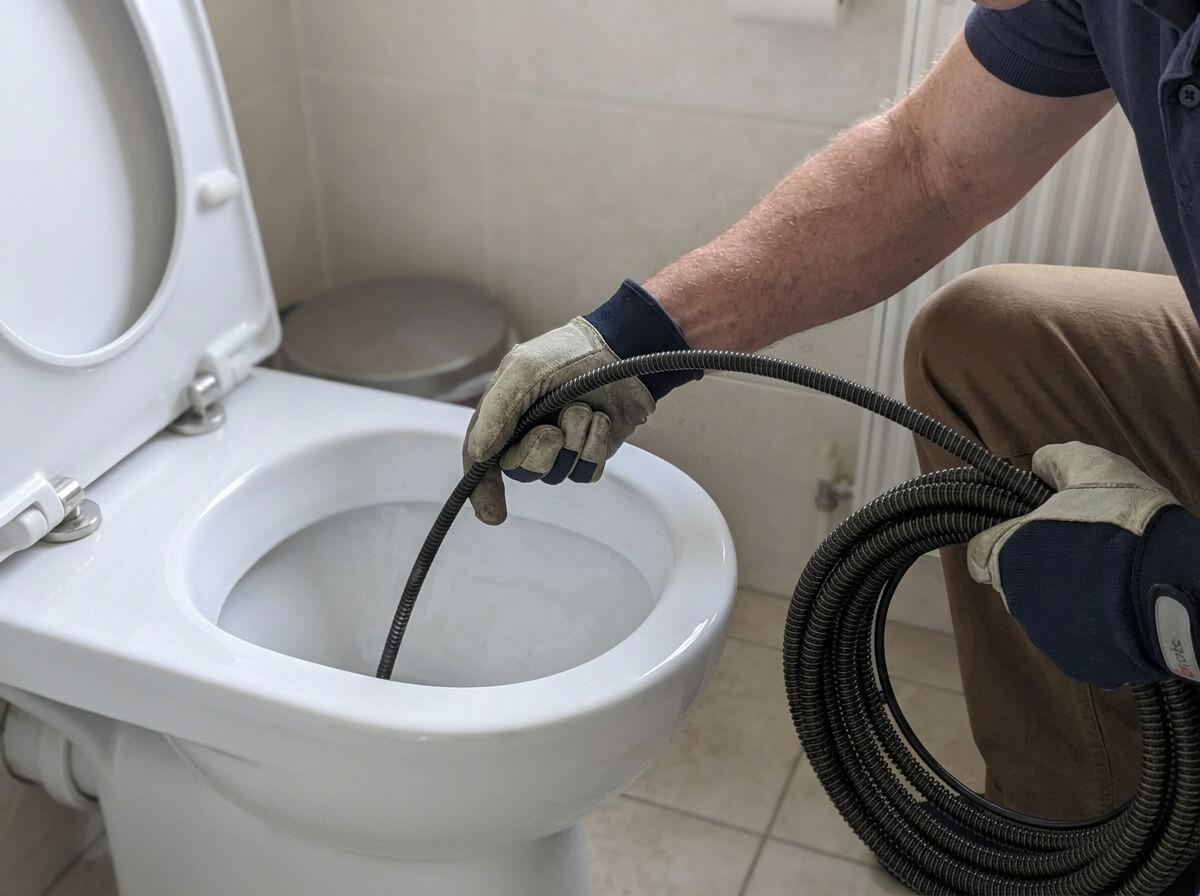
If your toilet keeps blocking, you have probably got very good with a plunger and very tired of it. Clearing it is not the hard part. The hard part is the creeping worry each time someone flushes, the guests you warn, and the mornings when it decides to block ten minutes before everyone needs to leave the house.
Most advice online stops at “do not flush wipes”, which is good advice but no help at all if nobody in your house flushes wipes. A toilet that blocks again and again almost always has a specific, findable cause, and in more than forty years of clearing toilets around Ipswich I have found most of them several hundred times over. This guide walks you through the same checks I do on a call-out, in the same order, so you can find yours.
First, Clear Today’s Blockage Safely
If the toilet is blocked right now, deal with that before you start detective work. Do not flush again to “see if it has gone”: each flush sends another four to nine litres into a pan that cannot empty. If the cistern is still refilling, turn the isolation valve on the pipe feeding it a quarter turn.
- ●Soft blockage (paper or waste): washing-up liquid and a bucket of hand-hot water, then a flanged plunger. Our guide on whether Fairy liquid unblocks a toilet has the full method, with quantities and timings.
- ●No plunger? The options in how to unblock a toilet without a plunger will usually get you through the night.
- ●Water over the rim? Follow the steps for a toilet overflowing first, then come back here.
Toilet Problem or Drain Problem? The 2 Minute Test
Every toilet that keeps blocking falls into one of two camps. Either the toilet itself (the cistern, the pan or the short pipe behind it) cannot move waste away properly, or the toilet is fine and the pipework beyond it is restricted. The fixes are completely different, so this is the first thing to settle. Do these four checks with the toilet clear and working.
Run the other fittings
Fill the bath or basin and let it go while you watch the toilet. If the water in the pan rises, bubbles or gurgles, the blockage is downstream in the soil stack or the drain, where everything joins. Our guide on why a toilet gurgles explains what each kind of noise means.
Lift the manhole cover and flush
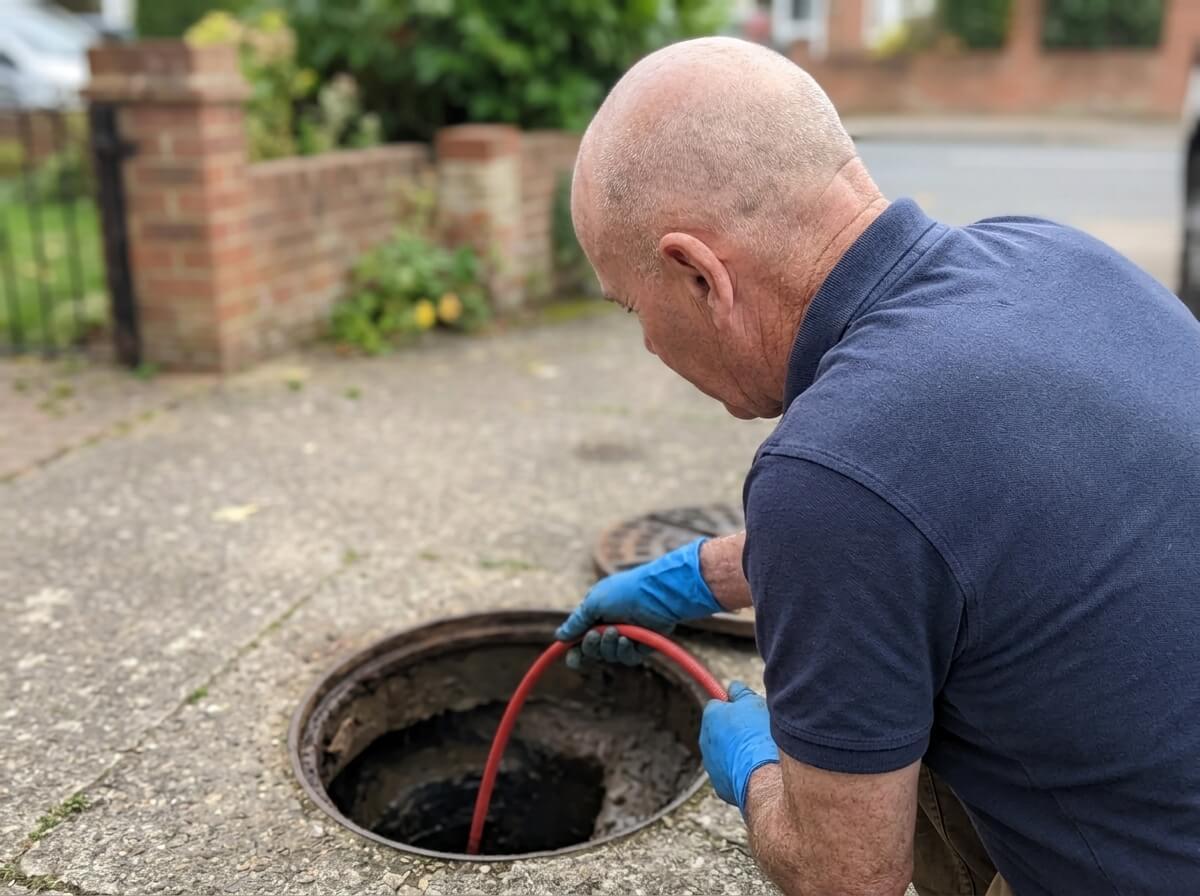
Find the inspection chamber nearest the house, lift the cover if it is safe to, and have someone flush. You should see a clean rush of water through the channel within a few seconds. If the chamber is half full, slow to empty or lined with paper and wipes, the drain is the problem.
Do the bucket test
Pour a full bucket of water, about ten litres, into the pan in one quick go from waist height. A healthy toilet and drain swallow it with a rush. If the bucket clears the pan easily but a normal flush leaves paper sitting in the bend, the flush is too weak. If the bucket drains slowly too, the restriction is in the pan or the pipe behind it.
Check the cistern water level
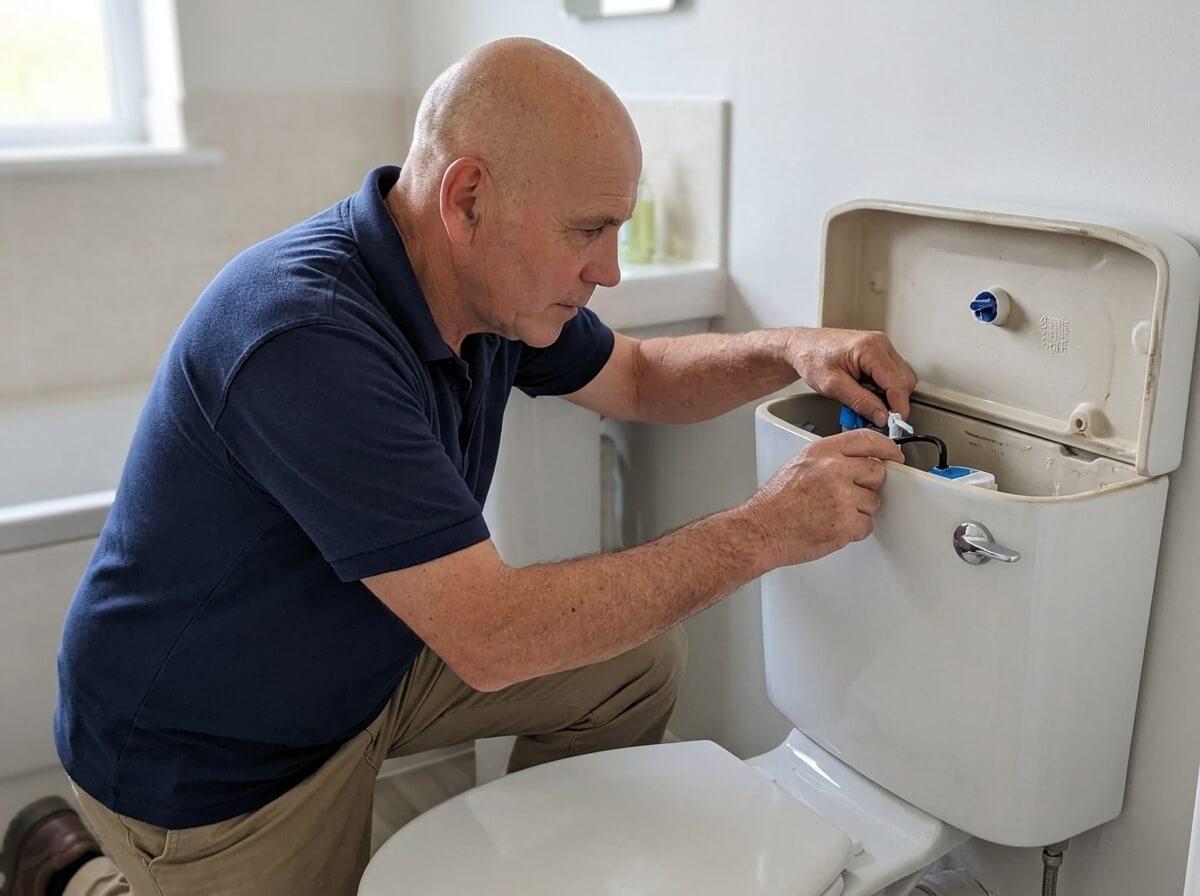
Lift the cistern lid. There is usually a water line moulded inside or marked on the overflow. If the water sits well below it, the flush is short of water every time, and that alone can cause repeat blockages.
If the bath gurgles, the manhole is slow or more than one toilet is affected, skip to the drain causes below. If everything else is fine and only this toilet struggles, start with the flush and the pan.
10 Reasons Your Toilet Keeps Blocking
These are the causes I find, roughly in order of how often I find them. The first three account for most repeat blockages in Ipswich homes.
1. Wipes, including the “flushable” ones
Wet wipes are woven to stay strong when wet, so they do not break up the way toilet paper does. They snag on any rough joint or scale in the pipe, and every wipe that follows catches on the first. A single flushed wipe a day is enough to cause a blockage every few weeks. Anglian Water, which runs the sewers across Ipswich and Suffolk, says in its Keep it Clear advice that only pee, poo and paper should go down the toilet, and that even wipes labelled flushable belong in the bin.
In houses where the adults swear nobody flushes wipes, I often pull out make-up remover pads, cotton wool, children’s wipes and the odd cleaning wipe. It is worth asking everyone, including teenagers and visitors.
2. Too much paper, or the wrong paper
Thick, quilted, extra-strong toilet paper is designed to hold together, which is exactly what you do not want in the bend of a pan. A big handful folded into a wad can lodge before it has had time to soften. If the toilet only blocks after heavy use, this is the likely cause. Kitchen roll and tissues used when the toilet roll runs out are worse still, because they are made to stay strong when wet.
3. A flush that is too weak
A toilet clears waste by dropping a full cistern of water into the pan fast enough to fill the bend and start a siphon. Anything that reduces that volume or speed leaves paper sitting in the trap, ready for the next flush to stack more on top. The common reasons are:
- ●Water level set too low. The float or fill valve has been adjusted down, often by someone fixing a dripping overflow, so the cistern never fills properly.
- ●A worn flush valve or siphon. A perished seal lets water trickle away, or a split siphon diaphragm only moves part of the water. Our guide on why a toilet will not flush covers both.
- ●Half flush being used for everything. On a dual flush, the small button may deliver only three or four litres. It is not designed to move paper.
- ●An early low-flush pan. Some of the first water-saving toilets simply did not clear well. Modern ones are much better designed, but a 2000s-era low-flush pan can be a repeat offender.
- ●Something in the cistern. A brick or water-saving bag in an older cistern cuts the flush volume. That is fine on some toilets and a disaster on others.
4. Limescale in the pan outlet
Ipswich has very hard water. Over years, scale builds up inside the rim and in the outlet at the back of the pan, where water sits every day. It narrows the passage and leaves a rough, crusty surface that paper catches on. You may see brown or white crust where the water sits, or the flush may swirl weakly because the rim holes are scaled up too. Light scale can be dissolved with a toilet descaler left overnight; heavy scale in the trap usually means a new pan.
5. Something solid caught in the trap
A toy, a toothbrush, a bottle top, the plastic cage from a rim block or an air freshener that dropped in. If it lodges in the trap, water can still get past it, so the toilet works most of the time, but every flush of paper catches on it. This is the classic “it started all of a sudden and never really cleared” blockage. Plunging hard tends to wedge it in further.
6. A sagging or badly fitted pan connector
The pan connector is the short pipe joining the back of the toilet to the soil pipe. Flexible concertina connectors are handy for awkward installs, but if one is stretched too long, kinked or left unsupported it sags in the middle. Water and paper settle in the dip, and the toilet blocks every few weeks. You will often see this on back-to-wall toilets and toilets moved during a bathroom refit. A rigid connector at the correct height usually ends it.
7. A soil pipe with too little fall or too many bends
Waste pipes need a steady fall so water carries solids with it. A branch that runs almost flat, rises in the middle, or turns through several tight bends before reaching the stack will collect paper. This is common where an en suite or downstairs cloakroom has been added, and where a toilet has been moved across the room. The fix is to re-run the pipe properly, which is more work but solves the problem rather than managing it.
8. A partial blockage in the drain outside
Scale, fat from the kitchen, wipes and debris build up in the underground drain over time and narrow it. The toilet is usually the first fitting to complain because it sends the most solids down in one go. If more than one fitting is affected, or the manhole is slow, this is your cause. Rodding or jetting the drain clears it, and our drain unblocking service covers Ipswich and the surrounding villages day and night.
9. Roots, cracks and dips in the drain
In older Ipswich streets many drains are still clay pipes with mortar joints. Tree roots find their way through the joints, ground movement pushes sections out of line, and a pipe can sink to form a dip (plumbers call it a belly) where waste settles. These faults catch paper every time, so the drain blocks again a few weeks after each clear. If your drain has been cleared more than twice in a year, it needs a CCTV survey to see what is down there.
10. A blocked or missing vent
The soil stack is open at the top, or fitted with an air admittance valve, so that air can get in behind the water as it falls. If the vent is blocked by a bird’s nest or leaves, or an air admittance valve has stuck shut, a flush pulls a vacuum. The pan gurgles, the water level in the bend drops, and the toilet drains sluggishly. It is less common than the other causes, but it is the usual culprit when a toilet gurgles and drains slowly with no sign of a blockage.
What Is Causing Your Toilet to Keep Blocking? Symptom Checker
Find the line that best matches what you are seeing. It is a shortcut to the likely cause and the right next step.
| WHAT YOU NOTICE | LIKELY CAUSE | WHAT TO DO |
|---|---|---|
| Blocks only after heavy use, then clears with a plunger | Too much paper in one flush, or a flush that is a little weak | Flush part-way through, try a thinner paper, check the cistern water level |
| Blocks on a normal amount of paper, every week or two | Weak flush, scaled pan outlet or a sagging pan connector | Do the bucket test below. If a bucket clears it and a flush does not, it is the flush |
| Started suddenly and nothing seems to clear it fully | Something solid caught in the trap: a toy, a rim block cage, a toothbrush | Stop plunging hard. A toilet auger, or a plumber lifting the pan, will get it out |
| Bath, shower or basin also slow, or gurgling when you flush | Partial blockage in the soil stack or the underground drain | Lift the manhole cover. The drain needs rodding or jetting, not the toilet |
| Downstairs toilet rises or bubbles when the upstairs one is flushed | The drain below is restricted, so waste backs up to the lowest fitting | Have the drain cleared and, if it keeps happening, surveyed on camera |
| Worse in heavy rain | A restricted private drain or a public sewer surcharging | Clear and check your drain, and report repeated sewer flooding to Anglian Water |
| New house, blocking since you moved in | Building debris in the drain, poor fall on the pipework, or a weak water-saving flush | Report it in writing to the builder while you are within the warranty period |
| Macerator (Saniflo type) toilet keeps stopping or backing up | Wipes, paper or hair wrapped round the blades, scale on the switch, or a failed non-return valve | Turn off the power at the fused spur and call a plumber who services macerators |
Downstairs, Upstairs, New Build or Rainy Days: Special Cases
Downstairs toilet keeps blocking
A ground floor toilet is usually the lowest fitting on the drain and the nearest to the manhole, so when the drain is partly blocked, waste backs up there first. If the downstairs pan rises or bubbles when the upstairs toilet is flushed, the drain below is restricted, not the downstairs toilet. Cloakroom toilets are also often compact or short-projection pans with tighter bends, and many were squeezed into understairs spaces with a long, flat run to the drain.
Upstairs toilet keeps blocking
If only the upstairs toilet blocks and everything downstairs is fine, the cause is between that pan and the soil stack: the flush, the pan, the connector or the branch pipe. Loft conversions and en suites added later are the usual suspects, because the pipe often has to travel some distance with little room for a proper fall.
New build toilet keeps blocking
In new homes I regularly find plaster, grout, tile adhesive and bits of rubble in the drains, washed in while the house was being finished. Pipes laid too flat and slim water-saving pans add to it. If your home is under two years old, report each blockage to the builder in writing before paying anyone to fix it.Drainage defects in that period are normally the builder’s responsibility, and if the builder will not act, your warranty provider (for many homes, the NHBC) has a resolution process. A survey report with photos is the strongest evidence you can give them.
Toilet blocks when it rains
Many older parts of Ipswich have combined drains that carry rainwater and sewage together. In a downpour, a drain that is already partly restricted cannot cope with the extra flow, and the level backs up towards the lowest toilet. If the public sewer itself is surcharging, that is Anglian Water’s to deal with, so report it to them. If the problem is your own drain, clearing and checking it usually solves it.
Macerator toilet keeps blocking
Macerator toilets (often called by the Saniflo brand name) pump waste through a small pipe, so they are far less forgiving. Wipes, hair and too much paper wrap round the blades, and scale on the pressure switch stops the unit starting. Always isolate the power at the fused spur before doing anything, and do not use chemical unblockers, which damage the seals.
How a Plumber Fixes a Toilet That Keeps Blocking
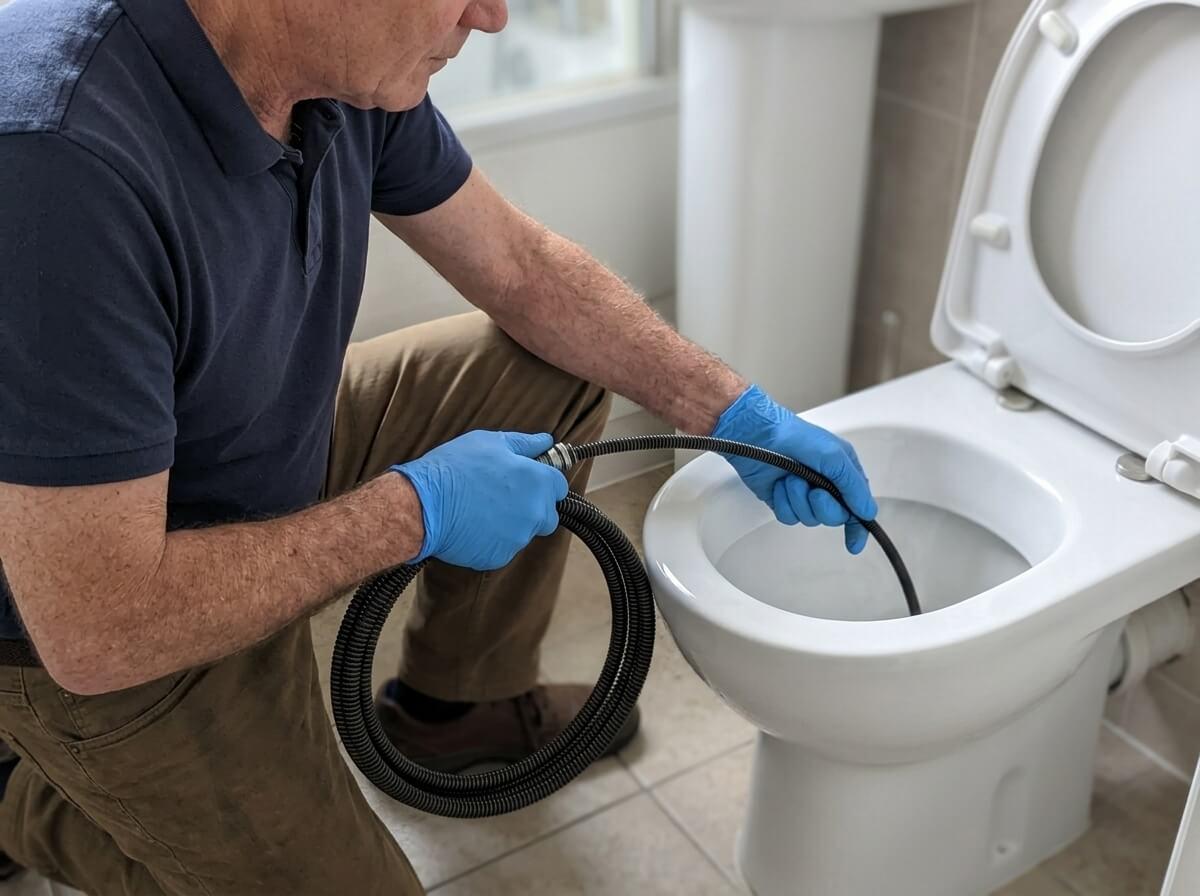
Clearing the blockage is only half the job. The other half is finding why it happened, because otherwise you will be calling again next month. When I come out to a repeat blockage, I clear it, test the flush, check the manhole and the other fittings, and then tell you which of the causes above it is. Here is what usually follows.
| CAUSE | THE FIX | SIZE OF JOB |
|---|---|---|
| Low water level in the cistern | Adjust the float or fill valve so the cistern fills to the water line | Minutes |
| Worn flush valve or siphon | Replace the flush valve seal or the siphon diaphragm so the full volume drops at once | Under an hour |
| Object caught in the trap | Retrieve with a toilet auger, or lift the pan off and take it out from behind | Under an hour to half a day |
| Limescale in the pan outlet | Descale if light. A new pan if the trap is badly narrowed | Overnight descale, or half a day for a new pan |
| Sagging or kinked pan connector | Refit with a rigid or correctly supported connector at the right height | An hour or two |
| Soil pipe with too little fall or too many bends | Re-run the branch with a proper fall and long-radius bends | Half a day or more |
| Partial blockage in the drain | Rod or jet from the manhole to clear scale, fat, wipes and debris | Usually within the visit |
| Roots, cracks, dips or displaced joints | CCTV drain survey, then a patch liner or excavation repair | Planned job after the survey |
Most repeat blockages turn out to be one of the quick fixes at the top of that table. You get a fair price agreed before any work starts, so there are no surprises. Our guide on how much an emergency plumber costs explains what affects the price of a call-out.
Who Pays When a Toilet Keeps Blocking?
- ●Your own pipework. The toilet, the soil pipe and the drain within your property boundary that serves only your home are yours to maintain.
- ●Shared drains and sewers. Since October 2011, drains shared with neighbours and the pipes beyond your boundary have been the water company’s responsibility. In Ipswich that is Anglian Water. If the blockage is in a shared section, we will tell you, so you do not pay for something you do not need to.
- ●Renting. Your landlord must keep the toilet, pipes and drains in repair and working order. Report every blockage in writing. The government guide to repairs in rented homes sets out what your landlord has to fix.
- ●New build under warranty. Report it to the builder first, as above.
- ●Insurance. Some home policies and add-on cover pay for unblocking or for repairing a damaged drain, but rarely for repeat blockages caused by what has been flushed. Check your policy wording.
Mistakes That Keep a Toilet Blocking
- ✕Chemical drain unblocker on repeat. Caustic products rarely shift paper in a toilet, they splash when you plunge, and regular use attacks rubber seals and older pipe joints.
- ✕Plunging something solid. If an object is caught, hard plunging drives it from the trap into the soil pipe, where it is harder to retrieve.
- ✕Boiling water. It can crack a vitreous china pan and soften a plastic pan connector. Hand-hot water does the same job safely.
- ✕Turning the cistern level down to stop a drip. It fixes the overflow and creates a weak flush. Fix the fill valve instead. Our guide on how to stop a toilet cistern overflowing shows how.
- ✕Using the half flush for paper. It saves a few litres and costs you a blockage.
- ✕Ignoring the other fittings. A gurgling bath next to a blocking toilet is the drain asking for help. It does not fix itself.
How to Stop Your Toilet Blocking Again
Once the cause is fixed, a few habits keep it that way. None of them cost much.
- ✓Only the three Ps. Pee, poo and paper. Everything else in the bin, including wipes labelled flushable, cotton wool, cotton buds, sanitary products, nappies, dental floss and kitchen roll.
- ✓A lidded bin in every bathroom. Most things that block toilets end up there because there was nowhere else to put them.
- ✓Flush part-way through. For heavy use, one flush halfway and one at the end clears far better than one big flush.
- ✓Full flush for paper. Keep the half flush for liquids.
- ✓Descale twice a year. In hard water areas like Ipswich, a toilet descaler left overnight every six months stops scale building up in the outlet.
- ✓Check the rim block clip. Rim block cages are one of the most common things I pull out of a pan.
- ✓Keep fat out of the kitchen sink. It sets in the shared drain and catches toilet paper. Our guide on why a sink keeps blocking explains how.
One change worth knowing about: the ban on wet wipes containing plastic comes into force in England on 19 May 2027. It will help rivers and beaches, but plastic-free wipes are still not toilet paper and can still block your drain, so keep binning them.
When to Call a Plumber
Call a plumber when the toilet has blocked more than twice in a couple of months, when other fittings are slow or gurgling, when the manhole outside is full or slow, when you know something solid has gone down, or when it is the only toilet in the house and it will not clear. If sewage is coming back up into the bath or shower, treat it as urgent and read our guide to sewage coming up through the drains.
Our blocked toilet repair service covers Ipswich and the surrounding towns and villages 24 hours a day, usually with you in about 30 minutes for local emergencies. I clear the blockage, find the cause and explain it in plain English, so you know whether it is a five minute adjustment or a job to plan for. Not sure if it can wait until morning? My guide on what counts as a plumbing emergency will help you decide.
Toilet Keeps Blocking: The Key Points
- ●A toilet that keeps blocking has a cause, and it can nearly always be found and fixed.
- ●Gurgling fittings, a slow manhole or more than one toilet affected means the drain, not the toilet.
- ●If a bucket of water clears the pan but a flush does not, the flush is too weak: check the cistern level and the flush valve.
- ●Wipes, thick paper, limescale, a sagging pan connector and a flat soil pipe are the other common culprits.
- ●Do not buy a new toilet until you know the toilet is the problem.
- ●New build, rented or shared drain? Someone else may be responsible for the repair.