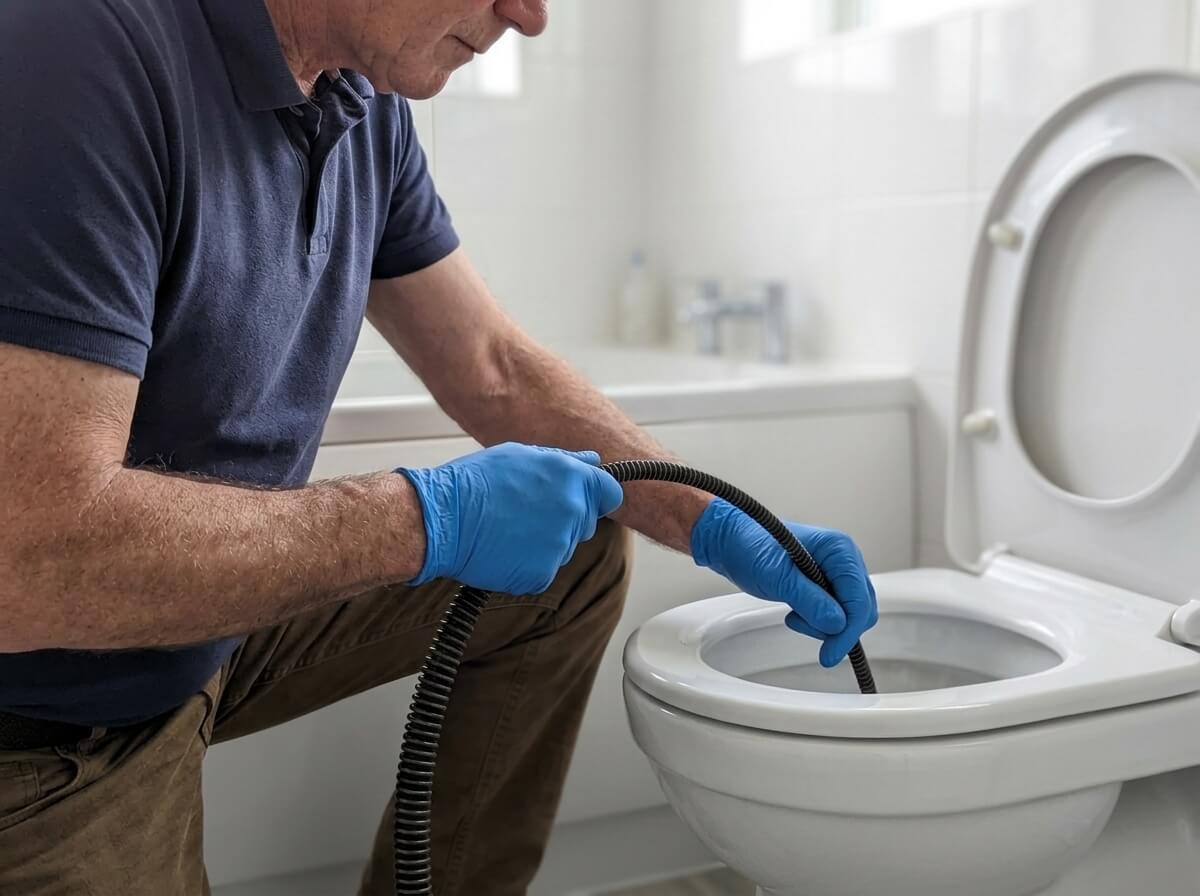
It is one of the most unsettling things a house can do. You walk into the bathroom first thing and it smells like a drain. Or there is a faint whiff of sewage on the landing that comes and goes, and nobody else seems to notice it until you have guests. Sometimes it only happens when it rains. You clean the toilet, bleach the plugholes, light a candle, and a day later it is back.
I have been tracking down drain smells around Ipswich for more than forty years, and the good news is that most of them have a simple cause, and a good few cost nothing at all to fix. The trick is to find where the smell is coming from rather than covering it up. This guide explains how to make sure it is not gas, how to find the source in about fifteen minutes, what each kind of smell usually means, what you can safely sort out yourself, and when you need a plumber.
First, Make Sure It Is Not Gas
Natural gas has no smell of its own. The gas network adds a chemical so that a leak smells of rotten eggs or sulphur, which is very close to how a drain smells. So before anything else, ask yourself where the smell is strongest.
- ●Probably drains: strongest at a plughole, around a toilet, in a bathroom, near a manhole or soil pipe, and it changes when you run water or flush.
- ●Possibly gas: strongest near the boiler, the cooker or hob, a gas fire or the gas meter, and it does not change when you run water.
If there is any doubt, treat it as gas. Do not switch lights or anything electrical on or off, do not use a flame, open the doors and windows, turn the gas off at the meter if it is safe to reach, get everyone out, and call the National Gas Emergency Service on 0800 111 999. It is free, it runs 24 hours a day, and they would far rather check a drain smell than miss a leak. If you have a carbon monoxide alarm sounding, or anyone feels drowsy, dizzy or sick near a gas appliance, get outside and call the same number.
Why Drains Smell: The Water Seal
Every sink, basin, bath, shower and toilet in your home is connected to the same drain that carries sewage to the sewer, so something has to stop that air coming back into the room. That something is the trap: a bend in the pipe that always holds a little water. Under a sink it is the U-bend or bottle trap. In a toilet it is the water you can see in the bottom of the pan. Building Regulations expect most sink, basin, bath and shower traps to hold a seal of around 75mm of water, which is plenty, as long as it stays there.
The drain also needs to breathe. Most houses have a soil and vent pipe that runs up the outside wall and is open above the gutter, or an inside soil stack finished with an air admittance valve, a one-way valve that lets air in but not out. That vent lets the drain gases escape high above the house, and lets air in when water rushes down, so it does not suck the water out of your traps.
So almost every indoor sewage smell comes down to one of three things: the water seal in a trap has gone, there is a gap in the pipework somewhere that drain air can leak out of, or something in the drain is rotting or blocked. Find which, and you have found the fix.
Find the Smell in 15 Minutes: 6 Checks
You need nothing more than a torch, rubber gloves and a jug of water. Do them in this order, because the first two solve the problem in a surprising number of homes.
Refill every trap in the house
Run every tap for a few seconds, run the shower and the bath, flush every toilet, and pour a jug of water into any floor drain, shower tray you never use, or washing machine standpipe. Pay special attention to a spare bedroom basin, an en suite nobody uses or a downstairs shower. Open a window, then come back in an hour. If the smell has gone, a dried out trap was the cause.
Sniff room by room, low and high
Close the doors and go round each room, sniffing at each plughole, around the base and back of the toilet, along any boxing where the soil pipe runs, and under the sinks. The smell is almost always strongest within a metre or so of where it is getting out. Note the room and the spot.
Note when it happens
Is it worst first thing in the morning? After someone flushes, or after the bath empties? Only on windy days? Only in heavy rain? When the dishwasher drains? A smell that comes and goes is following something that changes, and the pattern is often the biggest clue of all. Keep a note on your phone for a few days if it is not obvious.
Look under the sinks and around the toilet
With a torch, look at the trap and waste pipe under each sink and basin for drips, damp or a joint that has slipped apart. Look behind the toilet where it joins the soil pipe for staining, damp or a gap. A wet floor around the base of the toilet after flushing goes with a smell more often than not, and my guide on a toilet leaking from the base explains how to pin that down.
Lift the nearest manhole cover
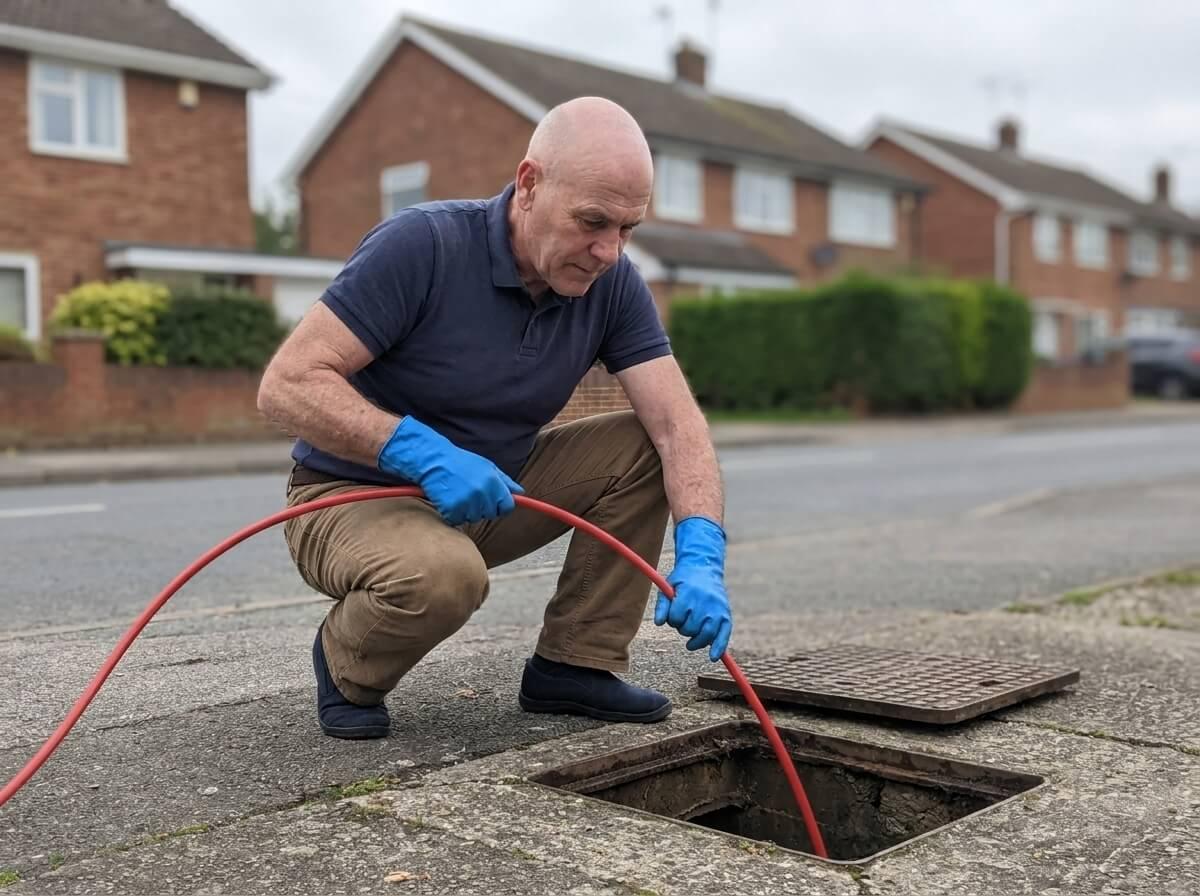
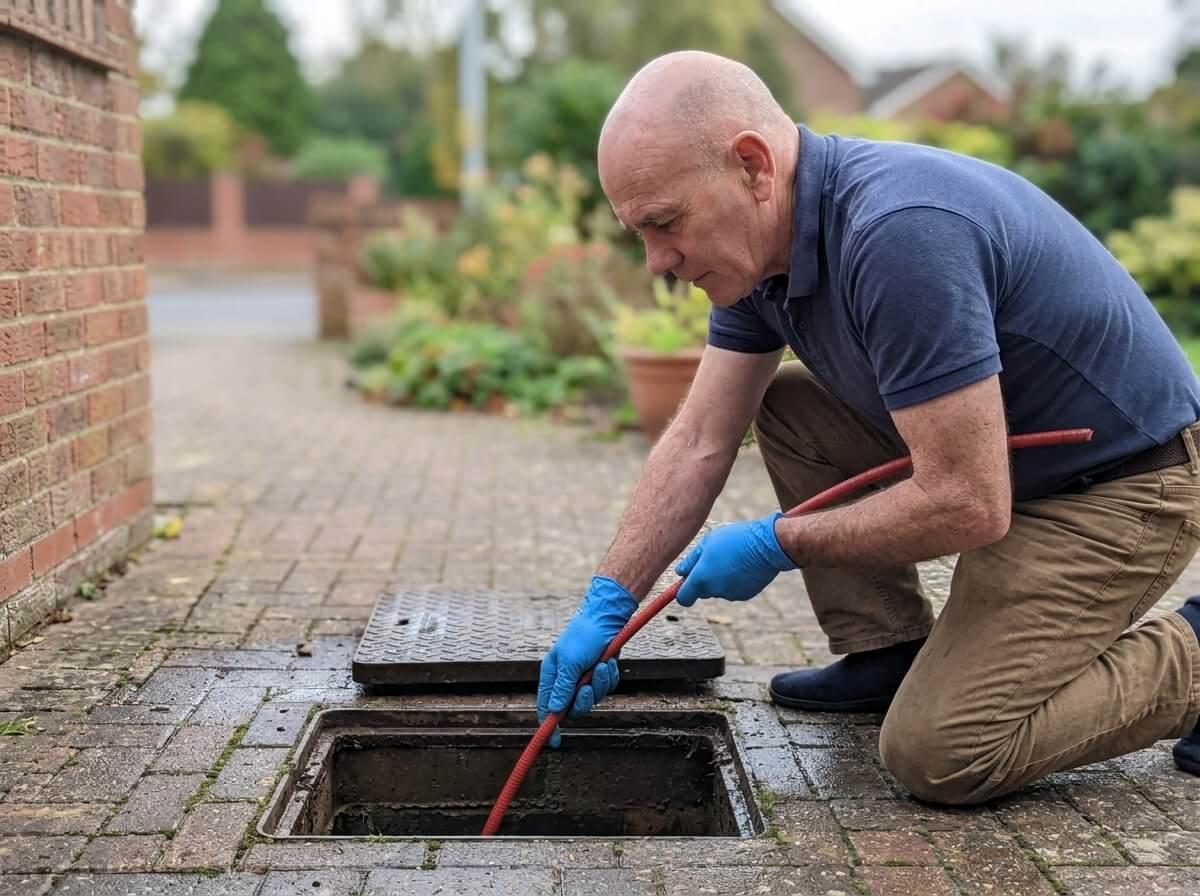
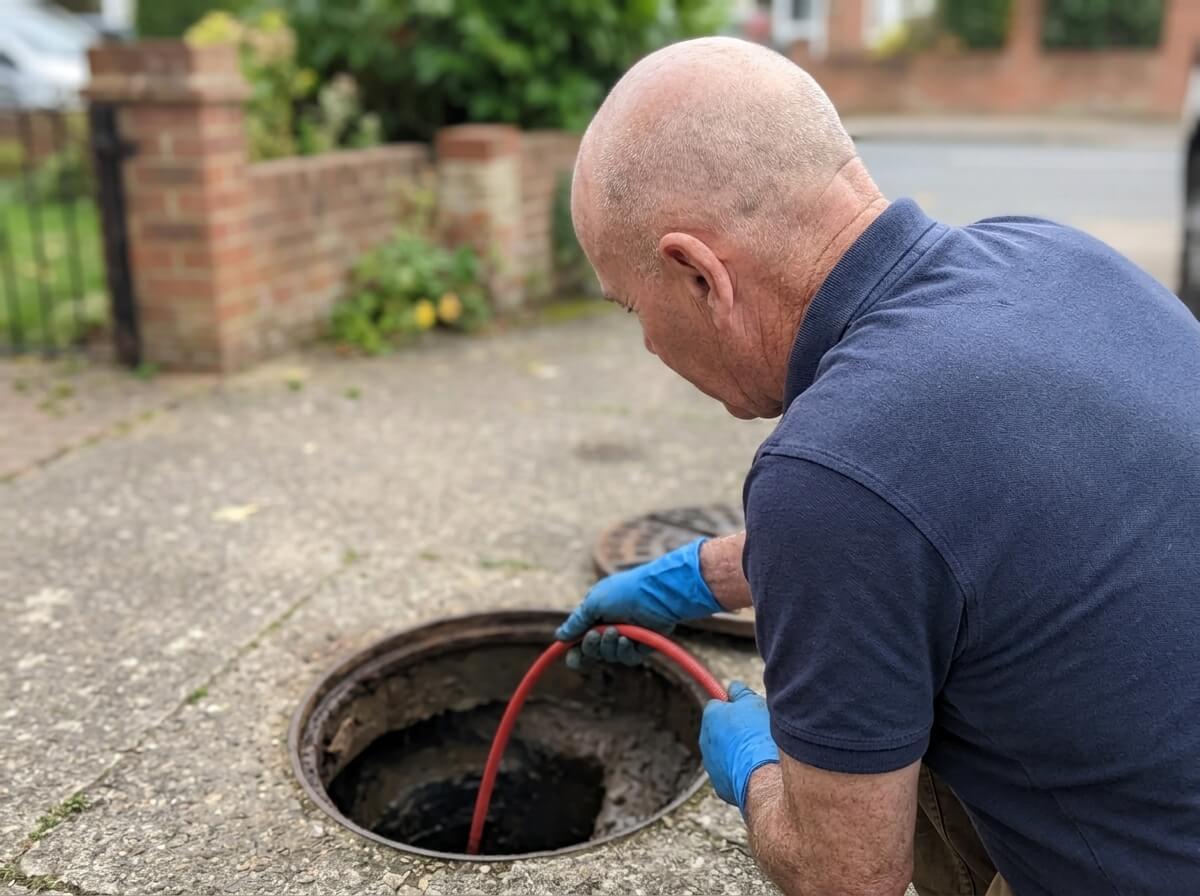
Find the inspection chamber outside, usually on the path, drive or garden near the bathroom or kitchen. Lift the cover carefully, keep your face back, and look in. A clear channel with water running through means the drain is flowing. A chamber holding water or sewage means the drain is blocked further down, and that is your problem. Do not climb in.
Ask the neighbours
If you are in a semi, a terrace or a flat, ask next door whether they have a smell or slow drains too. If they do, the problem is probably in a shared drain or the public sewer, which Anglian Water looks after.
Sewage Smell Finder: Where It Is Tells You Why
These are the patterns I look for when someone rings about a smell. Find the row that matches what you have found. The last column tells you how quickly it needs dealing with.
| WHERE AND WHEN | LIKELY CAUSE | WHAT TO DO | URGENCY |
|---|---|---|---|
| A spare bathroom, en suite or downstairs shower that is rarely used | The water in the trap has evaporated, so nothing is sealing the drain from the room. | Run each tap, the shower and the bath for a minute and flush the toilet. If it clears within an hour, that was it. | Try the fix first |
| Around the base or back of the toilet, worse after a flush | A perished or slipped pan connector, a loose soil pipe joint behind the pan, or a cracked pan. | Look for damp or staining around the back of the pan. A new pan connector is a quick job for a plumber. | Within a day or two |
| From the shower tray or bath plughole | Hair and soap rotting in the trap, or a shallow trap that has been pulled dry. | Lift the cover, pull the hair out and clean the trap. Flush with hot water and washing-up liquid. | Try the fix first |
| Kitchen sink, worse when the dishwasher or washing machine empties | Food and fat rotting in the trap, an appliance hose with no loop, or a standpipe with no trap. | Clean the trap, check the hose loops up above the trap, and clear the gully outside the kitchen. | Try the fix first |
| Basin or sink smells right after the toilet is flushed or the bath empties | Siphonage pulling the water out of the trap, often because the vent cannot let air in. | Top up the trap. Check the soil vent from the ground and any air admittance valve on the stack. | Within a day or two |
| Inside a cupboard or boxing where the soil pipe runs, or a bedroom wall next to it | A cracked soil stack, a failed joint or a waste pipe pushed into the stack without a seal. | Open the boxing if you can and sniff along the pipe. This needs a plumber to reseal or replace. | Within a day or two |
| Upstairs or in the loft, sometimes only on windy days | A stuck air admittance valve, a disconnected vent pipe in the loft, or the vent ending near a window. | Check the valve is not covered or split. Look at where the vent pipe ends outside, from the ground. | Within a day or two |
| Every room, only in heavy rain, then it clears | A combined drain or the public sewer is full of storm water and pushing gas back up the pipes. | Keep every trap topped up. Report repeated sewer smells to Anglian Water on 03457 145 145. | Try the fix first |
| An extension, conservatory or utility room with a manhole cover inside | The seal on an internal inspection chamber cover has dried out or the cover is not seated. | Check the cover sits flat. It needs a sealed, screw-down cover with fresh grease in the seal. | Within a day or two |
| The whole house, with slow drains, gurgling or a full manhole outside | The main drain is part-blocked or fully blocked between the house and the sewer. | Stop flushing and running water, lift the nearest manhole, and call a plumber, or Anglian Water if it is shared. | Call now |
| Sewage or dirty water coming up into the shower, bath, toilet or a floor drain | A full blockage. The waste has nowhere to go and is coming back up through the lowest fitting. | Emergency. Do not use any water in the house. Keep children and pets away and call a plumber now. | Call now |
The 9 Most Common Causes of a Sewage Smell in the House
1. A dry trap
The number one cause, and the cheapest to fix. If a basin, bath, shower or toilet is not used for a few weeks, the water in its trap slowly evaporates, faster in summer or in a warm room with the heating on. Once the seal drops low enough, drain air comes straight up the plughole. Holiday lets, spare bedrooms, a downstairs shower room, a utility sink and a house that has been empty while you were away are the usual places. Running the water for a minute refills it. If a trap keeps drying out even when it is used, it is being pulled dry, which is cause number five.
2. A failed seal behind the toilet
In UK homes the toilet outlet is joined to the soil pipe with a pan connector, a rubber or plastic sleeve with flexible fins. You might see American advice talking about a wax ring, but we rarely use them here. Over the years the rubber hardens and cracks, or the connector gets knocked when the bathroom floor is redone, and drain air leaks out round the back of the pan. The giveaway is a smell that is strongest around the base or back of the toilet, often worse after a flush, sometimes with a damp patch. Replacing the connector usually means lifting the toilet off, and it is a common, reasonably quick repair.
3. A dirty shower, bath or basin trap
Hair, soap, skin and toothpaste build up in the trap and the first stretch of waste pipe and slowly rot. The water seal is still there, but the trap itself smells, and the smell rises out of the plughole. Shower trays are the worst for it, especially low-profile trays with shallow traps. You will usually find the water also drains a little slowly. Lifting the cover, pulling out the hair and cleaning the trap normally cures it in ten minutes.
4. The kitchen sink, dishwasher or washing machine
Kitchen smells are usually food and fat rotting in the sink trap, in the waste pipe, or in the gully outside under the kitchen window. Appliances add their own problems. If a dishwasher or washing machine hose does not loop up above the trap, dirty water can sit in the hose and go stale. A washing machine standpipe should have its own trap, and some older ones do not, which leaves an open pipe straight to the drain behind the machine. And sometimes the smell is the washing machine itself, from a dirty filter or detergent drawer, rather than the drain at all. My guide on how to unblock a kitchen sink shows how to take the trap off and clean it.
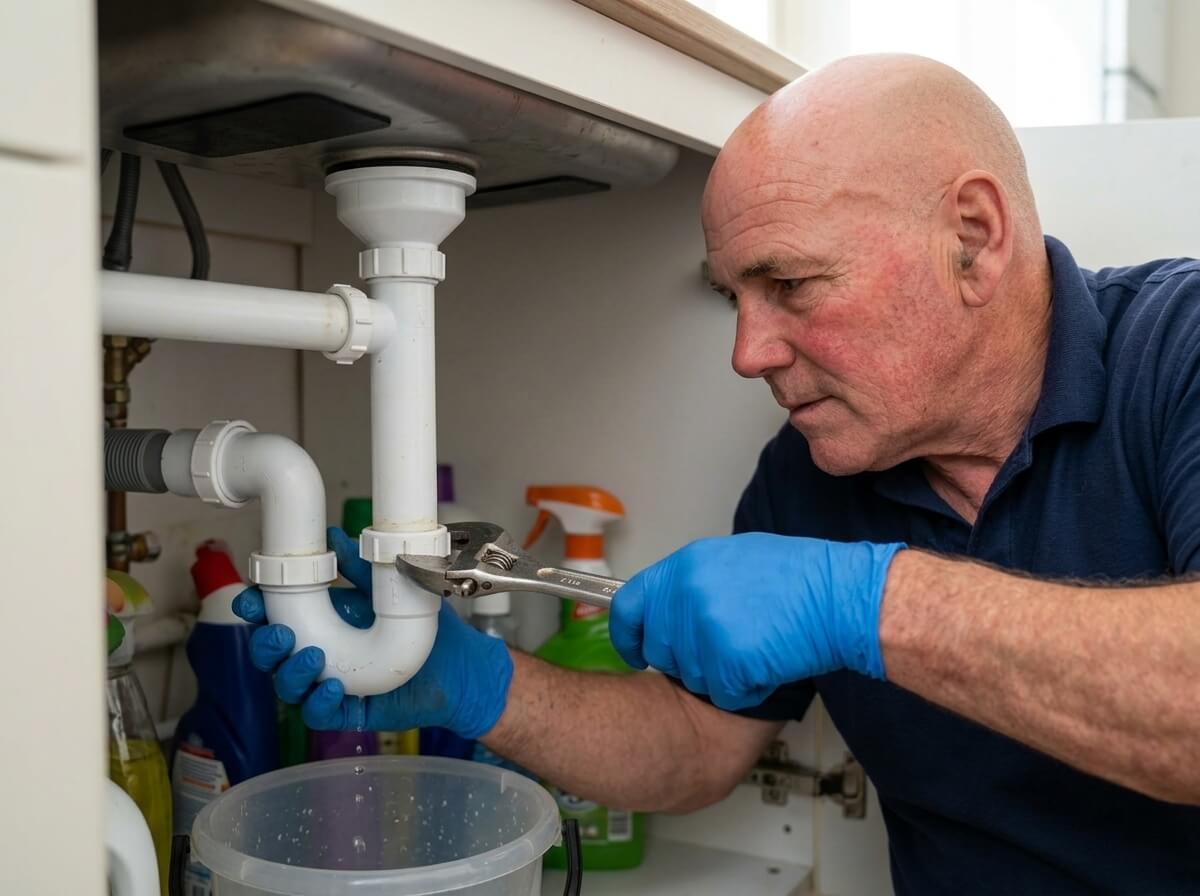
5. Traps being pulled dry by siphonage
Sometimes the water seal is there one minute and gone the next. When water rushes down a waste pipe or the soil stack, it can drag the water out of a trap behind it. A basin that slurps after it empties, or a basin that gives off a smell straight after the toilet next to it is flushed, is a classic sign. Long or steep waste pipes, narrow pipes, and a vent that cannot let air in all make it worse. You often hear it before you smell it, which is why my guide on a gurgling toilet covers the same ground. An anti-siphon trap, a small air admittance valve on the waste or a fix to the vent usually cures it.
6. A blocked vent or a failed air admittance valve
If birds nest in the top of the soil vent pipe, or leaves, moss or a lost cage block it, the drain cannot breathe. Gases build up and push through the weakest trap, and flushes pull the other traps dry. Inside, an air admittance valve on the soil stack in the loft or boxing can stick shut with dust or split with age, or stick open and let smells straight out. Check it is not buried in insulation or boxed in airtight. A valve that is cracked or will not move is usually a straightforward swap for the same size.
One more vent fault I see often: the vent pipe ends too close to a bedroom window or a roof light, so on a still or windy day the gas blows straight back in. Building Regulations expect an open vent to finish at least 900mm above any opening into the building within 3 metres of it. If yours does not, it may need extending.
7. A cracked soil stack or a leaking joint
Inside the boxing in a bathroom or behind a downstairs toilet, the soil stack has joints where pipes meet, and branch connections where the basin and bath wastes join it. A cracked old cast iron stack, a joint that has pulled apart, or a waste pipe that was just pushed into a hole in the stack without a proper boss and seal will all leak drain air into the room or the wall cavity. The smell often seems to come from inside a cupboard, a wall, or a bedroom that backs onto the bathroom. This is one to have looked at, because the same joint can start to leak water too.
8. A part-blocked or fully blocked drain
When the main drain between the house and the sewer starts to block, sewage sits in the pipe and in the chambers, and the smell comes up through every weak point. You will usually notice other signs too: slow drains, gurgling, a toilet that fills higher than normal when you flush, or a manhole holding water. A full blockage ends with sewage coming back up into the lowest fitting in the house, usually a downstairs toilet or shower. My guide on whether a blocked drain is an emergency helps you decide how fast to act.
9. A full sewer, a broken drain, or a septic tank
If the smell only turns up in heavy rain, it is usually the sewer. Many older streets in Ipswich still run rainwater into the same drain as the toilets, and in a storm the sewer fills and pushes air back up into houses through any trap with a weak seal. A cracked or collapsed drain under the house or a conservatory, often from tree roots or ground movement, gives off a smell that never quite goes, sometimes with damp or rats. And out in the villages, a septic tank or treatment plant that needs emptying, or a soakaway that has failed, will make the whole garden and house smell. Those need a licensed emptying contractor, but I can check the drain running to the tank.
Is a Sewage Smell an Emergency?
Most sewage smells are a problem to sort within a day or two rather than an emergency. Call a plumber now, day or night, if:
- ●Sewage or dirty water is coming up into a shower tray, bath, toilet, sink or floor drain.
- ●The toilet water rises towards the rim when you flush or when another fitting empties.
- ●A manhole or gully outside is full or overflowing.
- ●Water is leaking from the soil pipe or from behind the toilet into the room or the ceiling below.
- ●The smell is strong, has not gone after refilling the traps and ventilating, and someone in the house is elderly, very young or unwell.
If it could be gas, call 0800 111 999 first, not a plumber. If the smell is faint, comes and goes, or you have already found a dry trap and it has cleared, there is no need for an out-of-hours call. Book it in during the day.
What You Can Safely Fix Yourself
Refill and protect dry traps
Run every fitting for a minute. For a basin or shower you rarely use, run it once a week. If you are going away for a few weeks, especially in summer, a plug in the plughole and the toilet lid down slow the evaporation, and running everything when you get back clears any smell.
Clean the shower, bath and basin traps
Most shower traps have a cover that lifts or unscrews, with a removable cup or dip tube underneath. Wearing gloves, pull out the hair and sludge, scrub the parts with an old toothbrush and washing-up liquid, and refit them properly, because a dip tube that is left out means no water seal at all. Under a basin, put a bowl underneath, unscrew the bottle trap by hand, clean it and refit it hand tight with the washers in place.
Clean the kitchen trap and the gully
Take off the sink trap over a bucket, clean out the fat and food, and flush the pipe with very hot water and washing-up liquid. Outside, lift the grid on the gully under the kitchen window, scoop out the grey sludge with a gloved hand into a bin bag, and rinse it through. My guide on an outside drain overflowing walks through it step by step.
Check appliance hoses
Pull the dishwasher or washing machine out and look at the waste hose. It should rise in a loop higher than the trap it connects to, and be clipped there. Run a hot cleaning cycle on the machine and clean its filter, which on most washing machines is behind a small flap at the bottom of the front.
Check the air admittance valve and the vent
If you have an air admittance valve on the soil stack, make sure it is not covered and that air can reach it. From the garden, use binoculars to look at the top of the outside vent pipe for a nest or a missing cage. Please do not climb on the roof or lean out of a loft window.
The peppermint test
An old plumber’s trick for a smell you cannot place. Put a few drops of strong peppermint oil in a bucket of hot water and tip it down the toilet in the bathroom at the top of the house, or the vent if it is safely reachable. Then have someone who has not been near the oil walk round the house. If they can smell peppermint inside, especially near boxing or a wall, drain air is escaping at that point.
What Not to Do
- ✕Do not just mask it with air fresheners, candles or bleach. The smell is telling you there is a gap or a blockage, and covering it up lets the fault get worse.
- ✕Do not mix cleaning products. Bleach mixed with some drain cleaners or ammonia-based cleaners gives off toxic gas, and a confined bathroom is the worst place for it.
- ✕Do not pour chemical drain unblocker down a slow or smelly drain. It rarely shifts the cause, and it is dangerous for whoever has to open the pipe next.
- ✕Do not seal up or remove an air admittance valve to stop a smell. The drain will pull your traps dry and the smell will get worse.
- ✕Do not climb into a manhole or inspection chamber. Gas collects at the bottom, and every year people are hurt in confined spaces.
- ✕Do not keep flushing if the toilet fills high or the drains are slow. A blocked drain has nowhere for that water to go.
Smell Outside or From the Street? Who Is Responsible
Inside your home, the traps, waste pipes, toilets, soil stack and vent are yours to look after, or your landlord’s if you rent. Outside, you are responsible for the drain that serves only your property, within your boundary. Since October 2011, drains shared with neighbours, and any section beyond your boundary, belong to the water company, which across Ipswich and most of Suffolk is Anglian Water.
If the smell is coming from a manhole in the road, a pumping station, or the public sewer, or your neighbours have the same smell, report it to Anglian Water on 03457 145 145. They investigate smells and blockages on their network free of charge. If you are not sure which side of the line the problem is on, a plumber can tell you quickly by lifting the chambers and, if needed, running a camera through the drain.
If you rent
Under section 11 of the Landlord and Tenant Act 1985, landlords of most homes must keep the toilets, basins, baths, showers and drains in repair and proper working order. Report the smell to your landlord or letting agent in writing, with dates. If sewage is coming back up, tell them it is urgent. If repairs do not happen, the private housing team at your local council can inspect. You can still run the taps to refill dry traps yourself in the meantime.
How a Plumber Finds and Fixes a Sewage Smell
When I come out to a smell, I start with the checks above, because a dry trap or a dirty shower trap is far more likely than anything dramatic. Then I lift the chambers to see whether the drain is flowing, and look at the pan connector, the soil stack and the vent. If the source still is not obvious, these are the tools that find it:
- ●Smoke testing: harmless smoke is pumped into the drain from a manhole. Wherever there is a crack, a loose joint or a dry trap, smoke appears, which shows the exact spot even inside a wall or under a floor.
- ●CCTV drain survey: a camera on a flexible rod goes down the drain to look for cracks, root intrusion, displaced joints, sunken sections and build-ups.
- ●Dye testing: coloured dye in a fitting shows which drain it runs to and whether it is leaking out where it should not.
The fix then depends on the cause: a new pan connector or trap, an anti-siphon trap, a new air admittance valve, resealing a joint on the soil stack, clearing the drain with rods or a jetter, or, where a drain is cracked, a repair or a liner. Before I start, I explain what I have found and agree a fair price with you, so there are no surprises. My guide on how much an emergency plumber costs explains how call-out pricing works. You can also read more about drain unblocking, blocked toilet repair and leak detection in Ipswich.
How to Stop Sewage Smells Coming Back
- ●Run spare taps and showers once a week, and every fitting when you come back from holiday.
- ●Fit hair catchers in the shower and bath, and clean the shower trap every month or two.
- ●Keep fat out of the sink. Let it cool and put it in the bin. Wipe greasy pans with kitchen roll before washing them.
- ●Only flush the three Ps: pee, poo and paper. Wipes, even ones labelled “flushable”, cause most of the drain blockages I clear.
- ●Clear the outside gullies of leaves and silt every autumn, and check the vent cage from the ground.
- ●Leave air admittance valves uncovered, and never box one in airtight.
- ●After a new bathroom or kitchen, make sure every waste has a trap and every joint is sealed. Many of the smells I trace started with building work.
- ●Act on the first whiff. A smell is the cheapest warning a drain gives you, usually weeks before anything overflows.
Sewage Smell in Your Ipswich Home? Call Philip
Start with the checks above, because plenty of smells are cured with a jug of water or a clean trap. Call me straight away, day or night, if sewage is coming back up into the house, the toilet is filling towards the rim, or a manhole is overflowing. If it is a smell you cannot trace, call in the day and I will book it in promptly, find the source and explain what I have done.
I cover Ipswich, Felixstowe, Woodbridge, Kesgrave, Stowmarket and the surrounding towns, and I answer the phone myself, 24 hours a day, seven days a week, on 07977 857224. You can see everything else I cover on the emergency plumbing services page.