You press the button and nothing happens. Or the handle flops down with no resistance at all. Or the water drains out of the cistern but the pan slowly fills up instead of emptying. Whichever it is, a toilet that will not flush moves from annoying to urgent very quickly, especially if it is the only one in the house.
I have been fixing toilets around Ipswich for more than forty years, and the good news is that there are only three ways a toilet can fail to flush: the flush mechanism is not releasing the water, there is no water in the cistern to release, or the water has nowhere to go. Lifting the lid tells you which one you have in about two minutes. Most of the guides online are written for American toilets, with tank flappers and chains you will not find in many British bathrooms. This one is written for the lever, push-button and concealed cisterns in UK homes, and it starts with how to get the toilet flushing again right now.
Toilet Won’t Flush? Do These 4 Things First
Look at the water in the pan before you press again
If the water in the bowl is higher than normal, or rose when you last flushed, the toilet is blocked. Do not flush again, because one more cistern full will put it over the rim. Skip to the blockage section below, or see my guide on what to do when a toilet is overflowing.
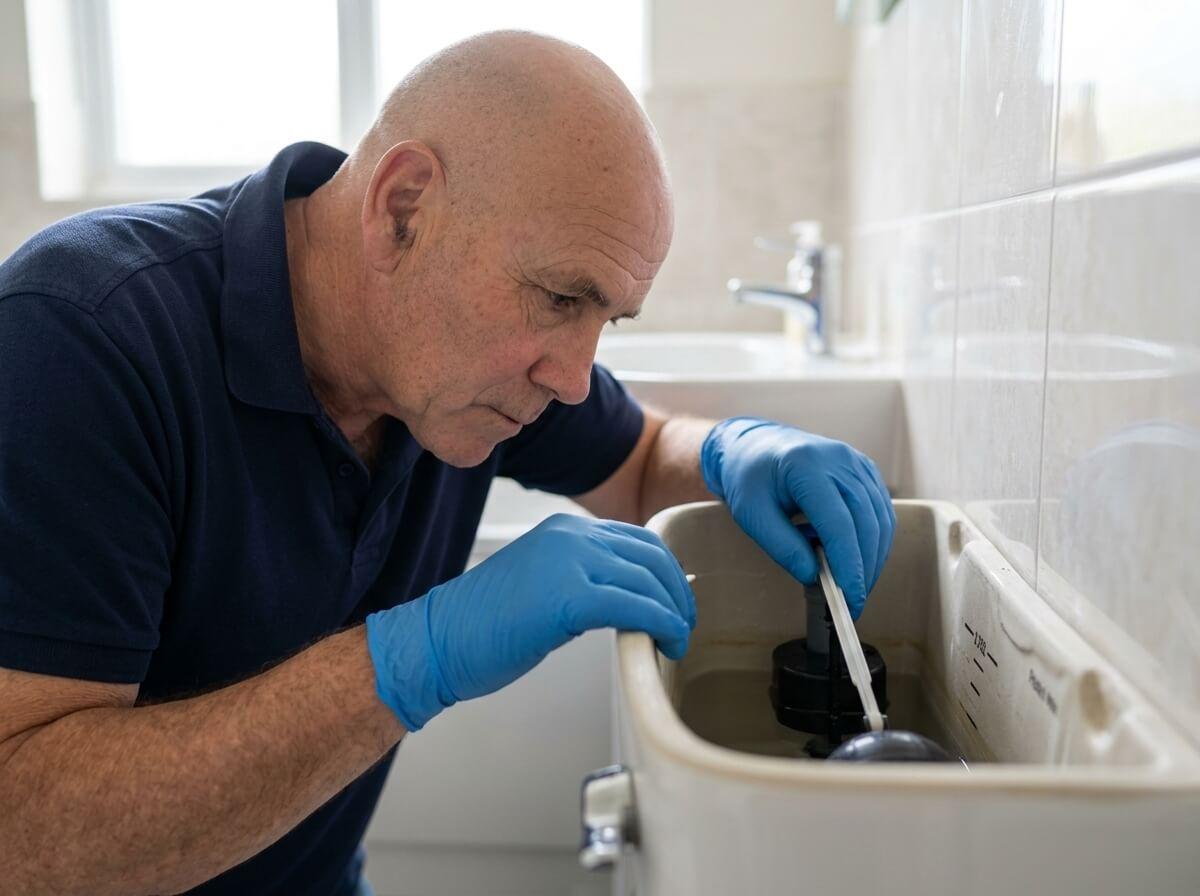
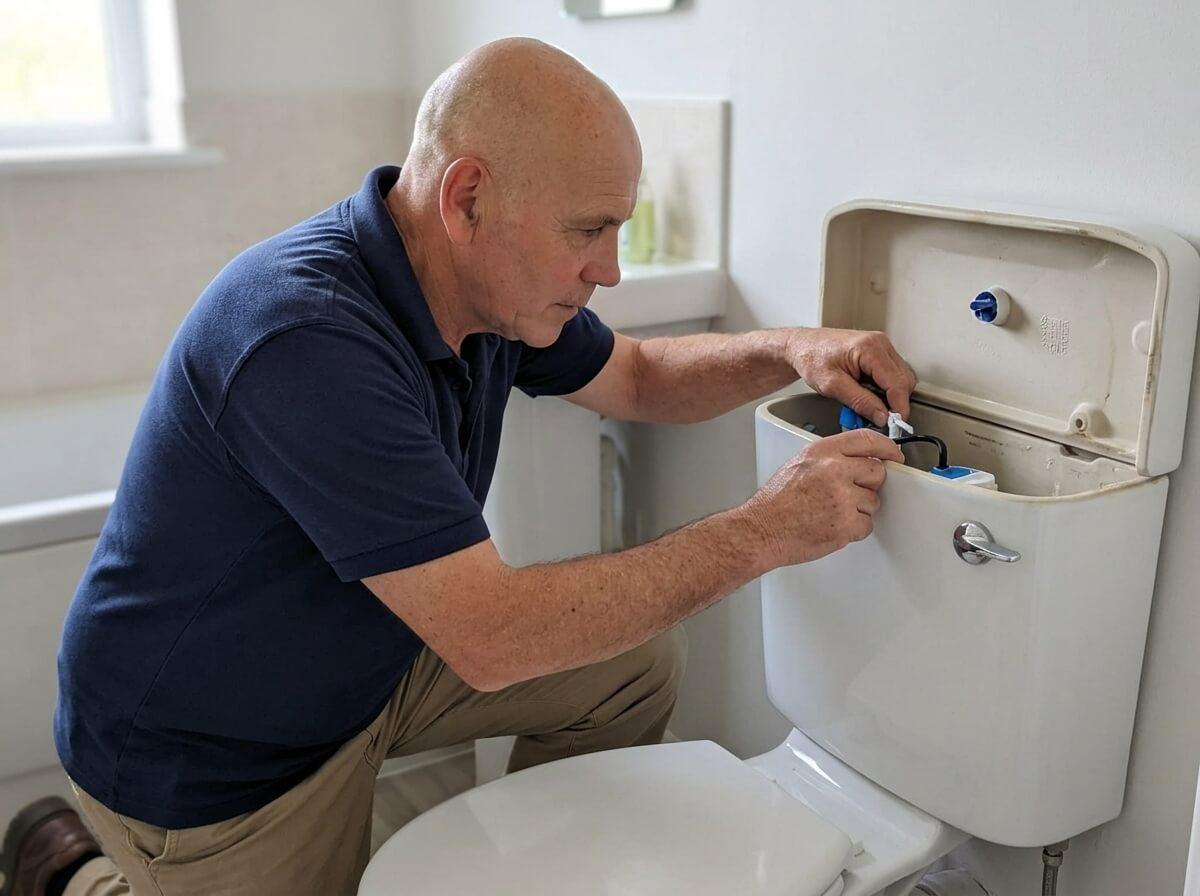
Lift the cistern lid
On a close-coupled toilet the lid lifts straight off. Unscrew the push button first if it is the screw-in type, and put the lid somewhere flat on a towel, because a dropped lid cracks easily. On a concealed cistern, the flush plate on the wall usually unclips upwards or pushes up and pulls out at the bottom.
Check whether the cistern is full
A healthy cistern sits full between flushes, with the water a couple of centimetres below the top of the overflow. Full means the problem is the flush mechanism or the handle. Empty or half full means the problem is the water supply or the fill valve.
Press the flush with the lid off and watch
Watch what moves. If the handle moves but nothing inside lifts, the link has come apart. If the mechanism lifts but only a little water goes, it is the siphon or flush valve. If the water drops out of the cistern normally but the pan does not clear, the cistern is fine and the toilet or drain is blocked.
How to Flush a Toilet That Won’t Flush
While you work out the fault, or while you wait for a plumber, you can still use the toilet. There are two ways, depending on whether the cistern has water in it.
The bucket flush: works even with the water off
Fill a bucket with six to eight litres of water, which is roughly what a modern cistern holds. Stand over the pan and pour it in one steady, fairly quick go, aiming at the hole at the bottom of the bowl, from about waist height. The rush of water starts the siphon in the pan and pulls the contents away exactly as a normal flush does. Pour too slowly and the water just tops up the bowl. This is also how to flush a toilet during a water outage, and bath water or water from the washing-up bowl is fine.
Do not use the bucket flush if the pan is already full and draining slowly. That means a blockage, and the extra water will overflow it.
Flushing by hand when the cistern is full
If the cistern is full and only the handle or button has failed, you can flush by hand. On a push-button toilet, the flush valve is the tall plastic column in the middle. Most have a clip, a hook or a top section you can grip and lift straight up. Hold it up for a couple of seconds while the cistern empties, then let it drop back square onto its seat. On a lever toilet, lift the wire link or the plastic arm that joins the lever to the top of the siphon. Wash your hands afterwards: the water in the cistern is clean, but the mechanism will not be spotless.
What Is Inside a UK Toilet Cistern
You only need to recognise four parts to diagnose most flushing faults. British cisterns come in two main types, and you can tell them apart by the handle.
- ●Lever toilets have a siphon. The lever lifts a plastic plate inside a curved tube called the siphon. A thin flexible flap on the plate, the diaphragm, pushes a slug of water up and over the bend, and the siphon then drains the cistern on its own. Siphons were the only type allowed in Britain until 2001 and are still very common in older homes.
- ●Push-button toilets have a flush valve. The button pushes a rod or pulls a cable that lifts a valve, sometimes called a drop valve, off a rubber seal at the bottom of the cistern. Dual-flush buttons lift it for a short or a long time. Valve flushing has been allowed since 2001, under the Water Supply (Water Fittings) Regulations, and it is what most modern toilets use.
- ●The fill valve refills the cistern. Usually a tall valve on the left or right with a float, or an older ball valve with a float on an arm. When the float drops after a flush it opens the valve, and when it rises it shuts the water off.
- ●The isolation valve controls the supply. A small fitting on the pipe feeding the cistern, with a screw slot or a little lever. Slot along the pipe means on. Slot across the pipe means off.
Concealed cisterns, where only a flush plate shows on the wall, use the same parts behind the panel. The buttons work the valve through a cable, a rod or an air tube. Electric macerator toilets, often fitted in cloakrooms and loft conversions, add a pump behind the pan that grinds and pumps the waste away through a small pipe.
Toilet Flush Fault Finder: What Your Toilet Is Telling You
These are the patterns I look for when someone rings to say their toilet will not flush. Find the row that matches what you are seeing. The last two columns tell you whether it is usually a DIY job and how quickly it needs sorting.
| WHAT YOU NOTICE | LIKELY CAUSE | DIY FIX? | URGENCY |
|---|---|---|---|
| Cistern is full, but the lever or button moves freely and nothing happens | The link between the handle and the mechanism has come apart: a chain or wire hook off the lever arm, a push rod or cable unclipped, or a snapped lever arm. | Usually | Today or tomorrow |
| Push button is stiff, sticks down, or only flushes if you hold it | Limescale on the button or valve, a cistern lid put back slightly out of line, or a kinked button cable. | Usually | Book in, not urgent |
| Lever toilet needs two or three pumps, or only gives a short gush | Split or worn siphon diaphragm, the thin flap inside the siphon that lifts the water. | Sometimes | Today or tomorrow |
| Cistern is empty or only half full when you lift the lid | Water not getting in: isolation valve off or half closed, fill valve blocked or stuck, float jammed, or the supply is off. | Sometimes | Today or tomorrow |
| Cistern takes five minutes or more to refill | Grit or limescale in the fill valve inlet or filter, a part-closed isolation valve, or low mains pressure. | Sometimes | Book in, not urgent |
| Water leaves the cistern, but the pan fills up and drains slowly | Blockage in the pan, the U-bend or the branch pipe to the drain. Wipes, too much paper or a dropped object. | Sometimes | Today or tomorrow |
| Water rises towards the rim and is not going down | A full blockage in the toilet or the drain. Another flush will overflow it. | Sometimes | Call now |
| Every toilet is slow, or water comes up in the bath, shower or outside drain when you flush | The main drain is blocked, usually at or beyond the inspection chamber. | Call a plumber | Call now |
| Flush works, but it is weak and does not clear the pan | Water level set too low, a worn flush valve or siphon, limescale in the rim holes and jet, or a partial blockage. | Usually | Book in, not urgent |
| Toilet stopped flushing after the water was turned off and back on | Isolation valve left closed, or grit and air from the mains lodged in the fill valve. | Usually | Today or tomorrow |
| Concealed cistern behind a panel, button does nothing | Air tube or cable behind the flush plate has pulled off, or the valve behind the wall has stuck. | Sometimes | Today or tomorrow |
| Electric macerator toilet (Saniflo type) will not flush, pump silent or humming | Power off at the spur, a tripped pump, or something jammed in the macerator blades. | Call a plumber | Call now |
Cistern Full but the Toilet Won’t Flush
If there is plenty of water in the cistern and it is not going anywhere, the fault is between your hand and the bottom of the cistern. These are the causes in the order I find them.
1. The handle or button has come unhooked
This is the most common cause, and the easiest to fix. On a lever toilet, the lever arm inside the cistern joins the top of the siphon with a wire hook or a plastic link. If the hook has slipped off, the lever swings freely and nothing lifts. Hook it back on, and if the wire is badly worn or the plastic link has snapped, replace it. If the lever arm itself has snapped off the handle, which happens a lot with older plastic levers, you need a new lever. Take the old one to the merchant, because the spindle length and arm shape vary.
On a push-button toilet, the button sits in the lid and pushes down onto the top of the flush valve, or works it through a cable. If the lid has been put back slightly out of position, the button misses the valve. If it is a cable button, the end of the cable may have popped out of its socket on the valve. Clip it back in, refit the lid so the button sits directly above the valve, and try again.
2. A split siphon diaphragm on a lever toilet
If the lever lifts the plate inside the siphon but you only get a short gush, or you have to pump the handle two or three times to get a proper flush, the diaphragm has split, perished or stiffened. Without a good seal, the plate lifts water but not enough to start the siphon. It is a cheap part, but on many close-coupled toilets the siphon is held in by a large nut underneath, so the cistern has to come off the pan to change it. Some siphons are the two-part type, which lift out from the top without disturbing the cistern. If you are changing it, fitting a two-part siphon makes the next repair much easier.
3. A push button that sticks or a flush valve that will not lift
Ipswich has hard water, and limescale builds up on everything inside a cistern. A button that feels stiff, stays down, or only flushes if you hold it is usually scaled up or rubbing on the lid. Unscrew the button from the lid, soak it in white vinegar or descaler for an hour, rinse it and refit it. If the flush valve itself is sticking, many twist and lift out of their base. Clean the seal and the seat, wipe off any scale, and refit it squarely. If the button or valve is cracked, or the plastic linkage is broken, replace it. There are dozens of designs, so take a photo or the old part with you.
Cistern Empty or Not Filling? Why Your Toilet Has Nothing to Flush
A toilet flushes with the water stored in the cistern. If the cistern is empty, or only half full, there is nothing to flush with, or not enough to clear the pan. Work through these in order.
4. The isolation valve is off or half closed
Follow the small pipe that feeds the cistern back to the wall or floor and find the isolation valve. If the slot is across the pipe, it is off. If it is at an angle, it is half closed, which makes the cistern fill painfully slowly. Turn it with a flat screwdriver until the slot runs along the pipe. This is very often the whole fix after someone has done a job in the bathroom. If the valve will not turn, do not force it, because they snap. My guide on a stuck or seized stopcock explains what to do with valves that will not move.
5. The float is stuck
If the float is jammed against the side of the cistern, the flush valve or the overflow, it cannot drop to open the fill valve, so the cistern never refills. Press the float down gently with your hand. If water starts flowing, the float was stuck. Ease it away from whatever it was catching on. On older ball-and-arm valves, check the ball has not filled with water: a waterlogged float sits low and behaves oddly, and needs replacing.
6. The fill valve is blocked with grit or limescale
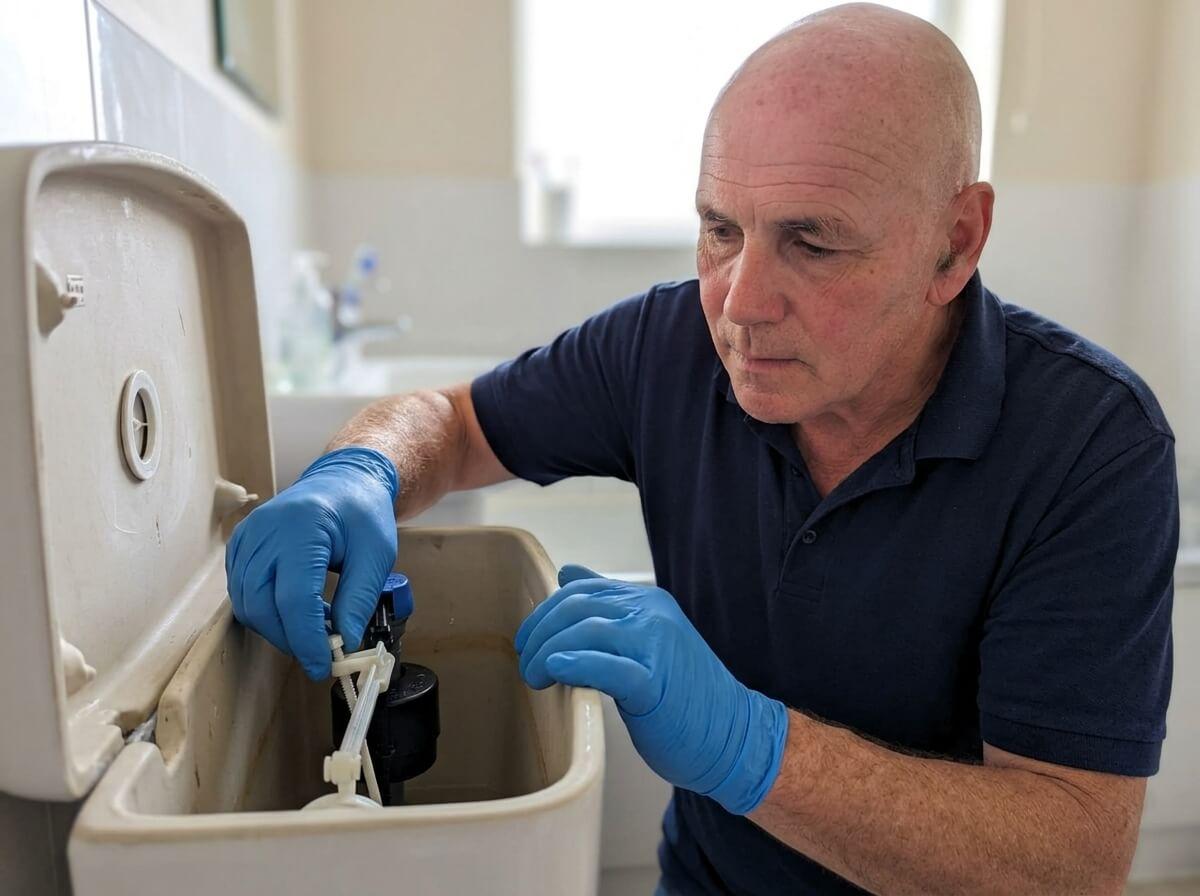
Fill valves have a tiny inlet, often with a mesh filter or a small rubber washer, and in hard-water areas it scales up over time. Grit disturbed in the mains, especially after a burst or water company works, lodges in it too. The sign is water on in the rest of the house, the float down, and only a trickle or nothing coming in. With the isolation valve off, most modern fill valves let you twist off the top to rinse the washer and filter. Hold a cup over the open valve and turn the water on briefly to flush out the grit. If that does not cure it, or it is an old brass ball valve, a new fill valve is the reliable fix and costs very little.
7. The water level is set too low
If the cistern fills but stops well below the line moulded inside it, the flush is weak and may not clear the pan. Modern fill valves have an adjusting screw or a clip on the float rod: raise it a little at a time until the water stops about 20 to 25mm below the top of the overflow. On a ball valve, there is usually an adjusting screw at the valve end of the arm. Set it too high and the cistern runs into the overflow instead, which my guide on stopping a toilet cistern overflowing covers.
8. The water is off, or the pressure is low
If the cistern will not fill and the taps are weak or dry as well, the problem is the supply, not the toilet. It may be the main stopcock, a burst somewhere, a frozen pipe in winter, or a fault in the street. Anglian Water and Essex & Suffolk Water publish live outage maps. Use the bucket flush until the supply comes back.
Water Goes Down From the Cistern but the Pan Won’t Clear
If the cistern empties normally but the water in the pan rises and then drains away slowly, or the flush swirls and leaves everything behind, the cistern is working. The water simply has nowhere to go.
9. A blockage in the pan or U-bend
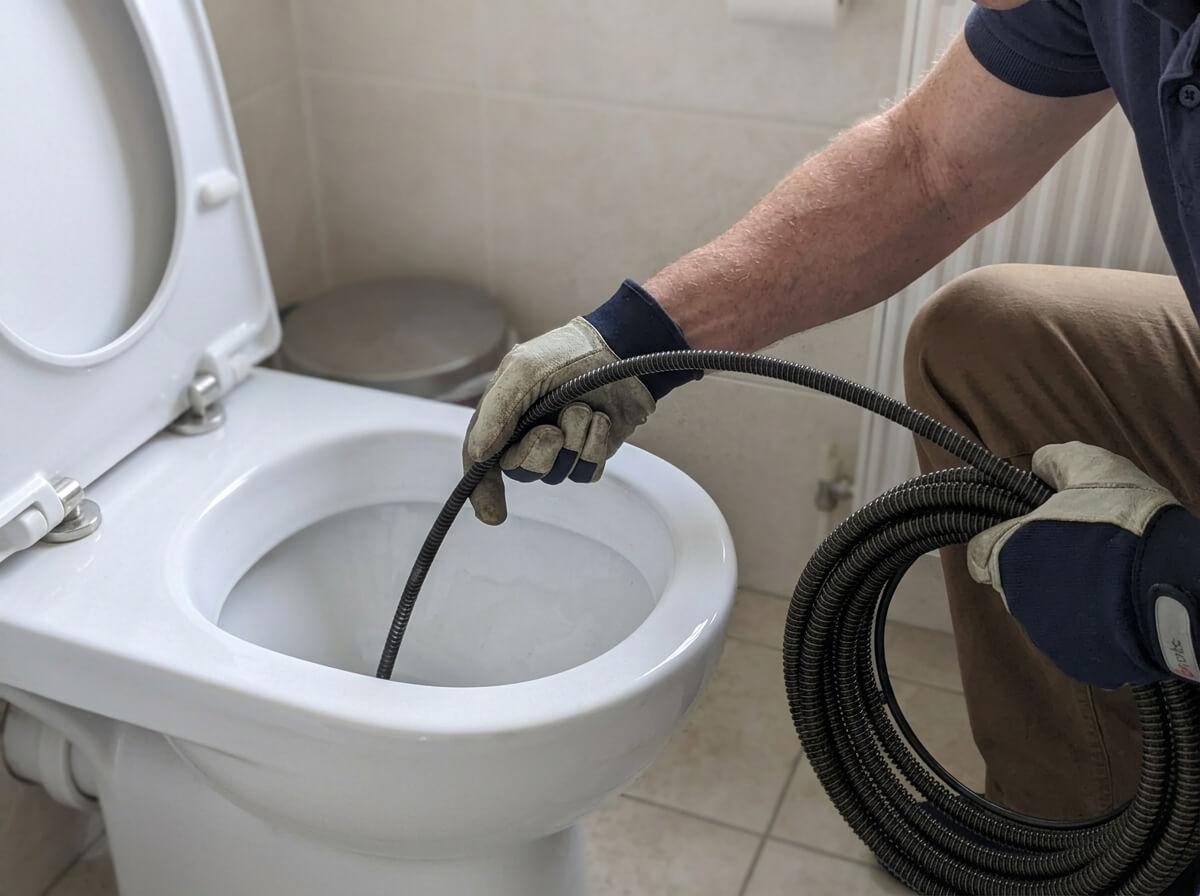
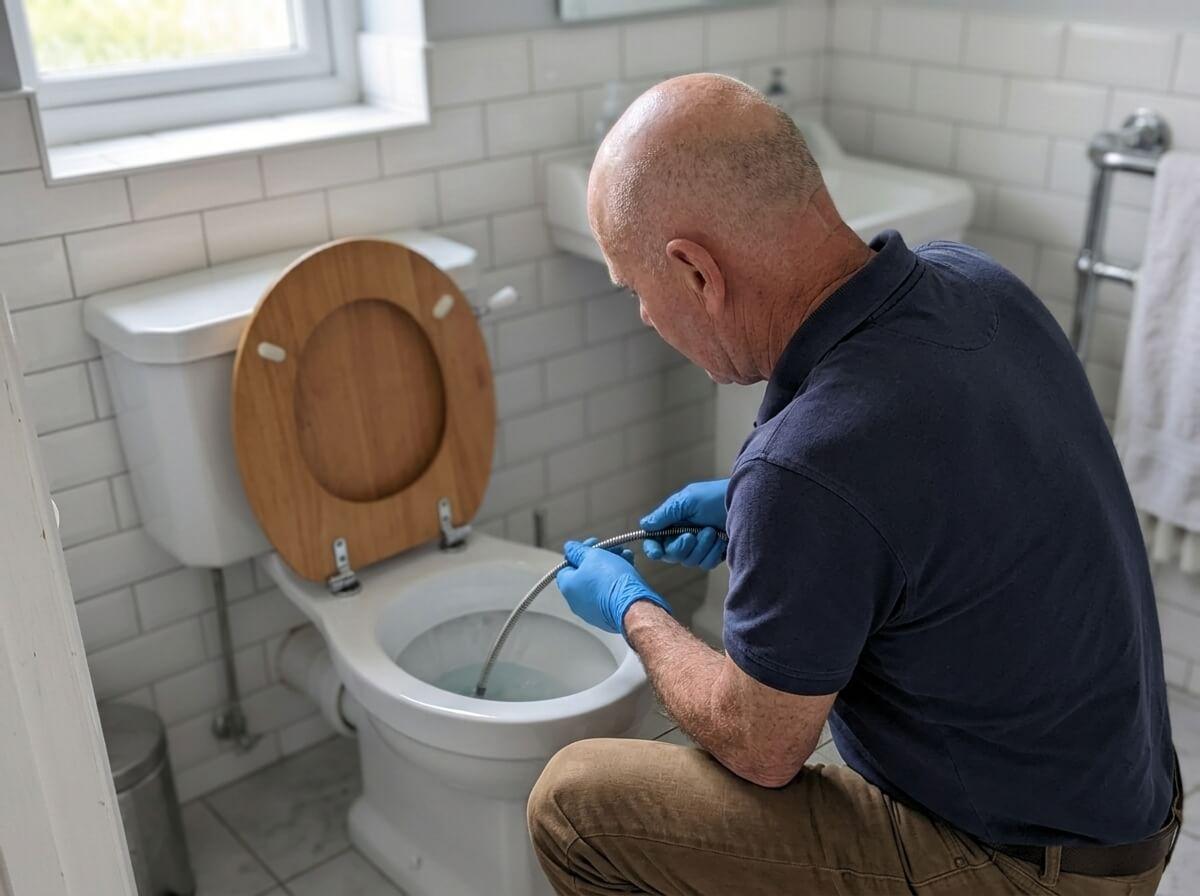
Wet wipes, too much toilet paper in one go, cotton buds, sanitary products and dropped objects are the usual causes. Modern toilets that use less water per flush block more easily if you are heavy-handed with paper. Wait for the level in the pan to drop, then use a flanged toilet plunger with firm, steady pumps, keeping the seal under water. A toilet auger reaches further round the bend. If you do not have a plunger, my guide on how to unblock a toilet without a plunger has methods that work. Do not pour caustic drain chemicals into a toilet. They rarely shift the blockage and make the job dangerous for whoever clears it.
10. A blocked drain beyond the toilet
If every toilet in the house is slow, the bath or shower gurgles or backs up when you flush, or the outside drain cover is lifting or the inspection chamber is full, the blockage is in the main drain, not the toilet. No amount of plunging will clear it. Stop flushing, stop running water, and call. My guides on an outside drain overflowing and why a toilet gurgles explain the warning signs.
11. Limescale in the rim and jet
If the flush sounds normal but the water trickles round the pan instead of rushing, look under the rim with a small mirror. In hard-water areas the little holes under the rim, and the jet at the bottom of the bowl on some pans, scale up until the water cannot get out fast enough to start the siphon. A limescale remover left in the pan overnight, and the holes picked clear with a bent wire, often brings a weak flush back to life.
Concealed Cisterns and Macerator Toilets
12. Concealed cistern button not working
On a toilet with the cistern hidden in the wall or a unit, the flush plate is the only part you see. Most plates unclip by pushing up and pulling the bottom out, or have screws behind a small cover. Behind it you will find either the rods or cable that work the valve, or on pneumatic buttons, thin plastic air tubes. If a tube has pulled off its spigot, push it back on. If a rod has dropped out of position, reseat it. Many concealed cisterns, such as Geberit and Grohe frames, let you lift the flush valve out through the plate opening to clean it. If the panel has to come off to get at the cistern, or water is leaking inside the boxing, that is a job for a plumber.
13. Electric macerator toilet will not flush
On a macerator toilet, the cistern flushes into the pan as normal, then a pump grinds and pumps the waste away. If the pan fills and the pump stays silent, check the fused spur and the consumer unit. If the pump runs on, hums or keeps cutting in, something it cannot grind, such as a wipe, sanitary product or dental floss, is usually jammed in the blades. Switch it off at the spur, stop using it, and call. Do not keep flushing a macerator that is not pumping, and never put your hand into one without the power isolated.
Is a Toilet That Won’t Flush an Emergency?
Many flushing faults can wait until the next day, and the bucket flush gets you through. Call a plumber now, day or night, if:
- ●It is the only toilet in the house and it is blocked, or the cistern will not fill and the bucket flush is not practical.
- ●The water in the pan is rising towards the rim and not going down.
- ●Dirty water comes up in the bath, shower, a downstairs toilet or an outside drain when you flush.
- ●The cistern will not stop filling and water is running out of the overflow or onto the floor.
- ●A macerator toilet has stopped pumping and the pan is full.
- ●Someone in the house is elderly, unwell or has a disability and cannot manage without a working toilet.
If you have a second toilet, or the cistern is full and it is just the handle or button, book it in for the day. Do not leave a blockage that drains slowly for days, though. Partial blockages tend to become full ones, usually at the worst moment.
What Not to Do
- ✕Do not keep pressing the flush when the pan is filling up. One extra cistern full is all it takes to flood the bathroom floor.
- ✕Do not pour caustic drain cleaner into the toilet. It rarely clears a toilet blockage, can damage seals and plastic pipes, and sits in the pan waiting to splash whoever deals with it next.
- ✕Do not bend the lever arm or force the button to make it reach. Find out why it is not reaching, usually a slipped link or a lid out of line.
- ✕Do not drop the cistern lid. Lids are heavy and brittle. Lift it with both hands and lay it flat on a towel.
- ✕Do not overtighten plastic fittings. Fill valve nuts and button threads strip easily. Hand-tight plus a little is plenty.
- ✕Do not put bleach tablets in the cistern. They can attack the rubber seals and diaphragms that make the flush work. Clean the pan instead.
Who Is Responsible If Your Toilet Won’t Flush?
If you own your home, the toilet is yours to repair. If you rent, in most tenancies in England the landlord is responsible: Section 11 of the Landlord and Tenant Act 1985 requires landlords to keep the installations for sanitation, including toilets, in repair and proper working order. Report it in writing straight away, and say clearly if it is your only toilet, because most landlords and agents treat that as urgent. If the cause is a blockage from something that should not have been flushed, you may be asked to pay for clearing it.
If the blockage is in a drain shared with neighbours, beyond your property boundary, it is likely to be the water company’s responsibility. Since 2011, most shared drains and lateral drains in England have belonged to the local sewerage company, which for Ipswich is Anglian Water.
How a Plumber Fixes a Toilet That Won’t Flush
When I come out to a toilet that will not flush, I lift the lid, watch a flush, and usually know what has failed within a couple of minutes. I carry the common parts on the van, so most toilets are flushing again in a single visit:
- ●Handle and button faults: a new lever, link, push button or cable, matched to your cistern, and the lid set so the button sits squarely.
- ●Siphon diaphragm: a new diaphragm or, often better value, a two-part siphon, with the cistern refitted on new washers and bolts if it has to come off.
- ●Flush valve: a new seal or a complete new valve, set for the right full and half flush.
- ●Cistern not filling: the fill valve cleaned or replaced, the isolation valve freed or renewed, and the water level set correctly.
- ●Blocked toilet or drain: cleared with a toilet auger, or drain rods from the inspection chamber if it is further down the line.
- ●Concealed cisterns: valves, buttons and air tubes serviced through the flush plate opening wherever possible, without taking the boxing apart.
Before I start, I explain what has failed and agree a fair price with you, so there are no surprises. My guide on how much an emergency plumber costs explains how call-out pricing works. You can also read more about blocked toilet repair, cistern repairs and drain unblocking in Ipswich.
How to Keep Your Toilet Flushing Properly
- ●Only flush the three Ps: pee, poo and paper. Wipes marked flushable still cause blockages.
- ●Flush twice for big loads of paper, rather than once with a pile that a low-flush toilet cannot carry.
- ●Descale the pan every few months. In hard-water Ipswich, limescale in the rim and jet slowly weakens every flush.
- ●Lift the lid once a year and look for a worn link, a scaled button or a float catching the side.
- ●Check the isolation valve turns, so you can shut the toilet off quickly when you need to.
- ●Fix a weak flush early. A toilet that needs two flushes is on its way to one that will not flush at all.
- ●Put the lid back carefully so the button lines up with the valve.
Toilet Won’t Flush in Ipswich? Call Philip
Most flushing faults are a two-minute diagnosis with the lid off, and plenty are a five-minute fix. Call me straight away, day or night, if it is your only toilet and it is blocked, water is coming up elsewhere in the house, the cistern will not stop filling, or a macerator has stopped pumping. For a handle, a button or a slow-filling cistern, call in the day and I will book you in promptly, find the fault and explain exactly what I have done.
I cover Ipswich, Felixstowe, Woodbridge, Kesgrave, Stowmarket and the surrounding towns, and I answer the phone myself, 24 hours a day, seven days a week, on 07977 857224. You can see everything else I cover on the emergency plumbing services page.