Washing-up liquid is the first thing most people reach for when the toilet will not flush, and it is one of the few kitchen cupboard tricks I am happy to recommend. I have been clearing blocked toilets around Ipswich for more than forty years, and a good share of the toilets I am called to would have cleared with a squirt of washing-up liquid, a bucket of warm water and half an hour of patience.
The trouble is that most of the advice online stops at “squirt some in and flush”. Flush too early and you have a bathroom floor full of dirty water. Use boiling water and you can crack the pan. And if the blockage is wet wipes or the drain outside, you can wait all night and nothing will happen. This guide gives you the full method, the two minute checks that tell you whether it is worth trying, and what to do when it does not work.
Before You Start: 4 Checks That Save a Flooded Floor
Do not flush again
If the bowl is full or rising, one more flush sends another four to nine litres into a pan that cannot empty. That is how most bathroom floods start. If the cistern is refilling, lift the lid and lift the float up, or turn the little isolation valve on the pipe feeding it a quarter turn so the slot sits across the pipe. Our guide to isolation valves shows you what to look for.
Run the bathroom sink and the bath for a moment
If the water in the toilet rises or bubbles when you run another tap, or the sink and bath are slow too, the blockage is not in the toilet. It is in the soil pipe or the drain, and washing-up liquid will not reach it.
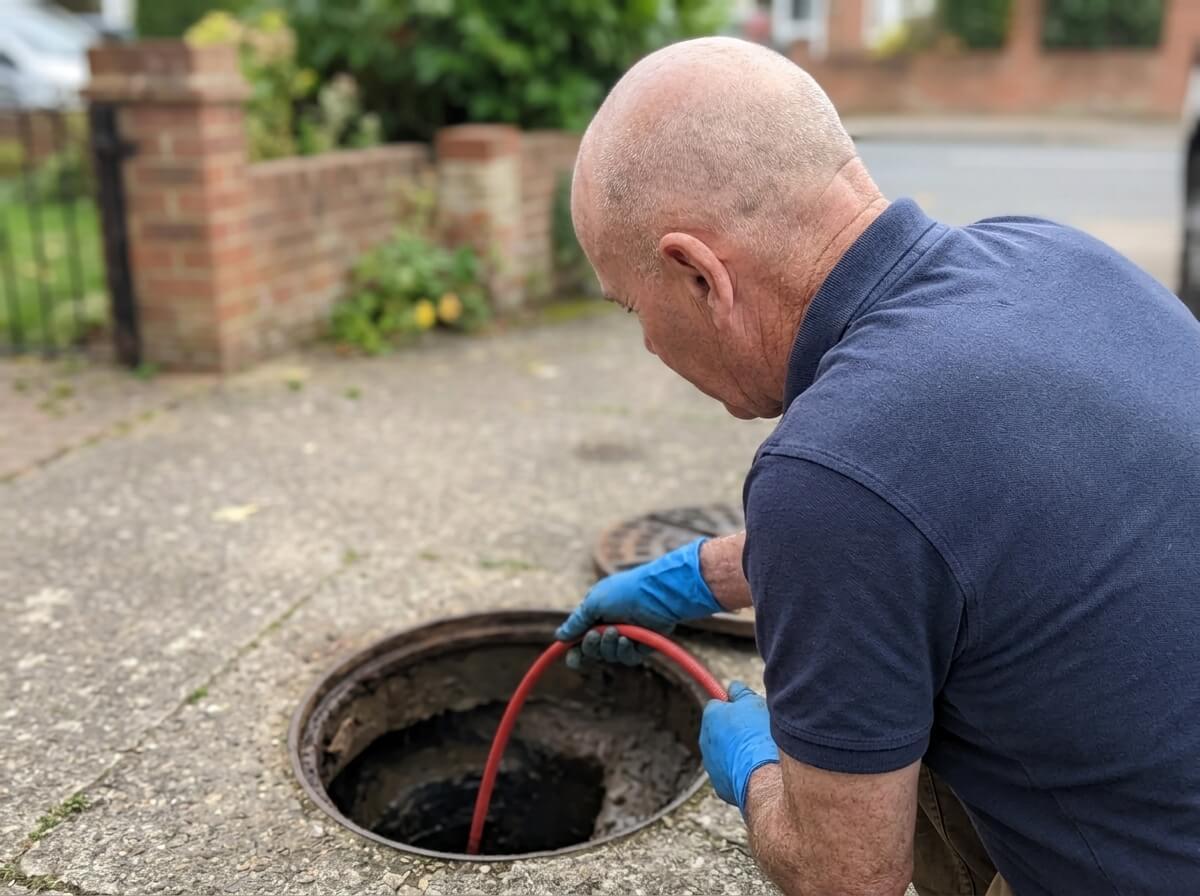
Lift the manhole cover outside
If you can safely lift the inspection chamber cover in the garden or drive, look inside. Water sitting in it, or waste backed up, means the drain is blocked and you need a plumber with drain rods. Our guide on whether a blocked drain is an emergency explains what to do next.
Think about what went down
Wipes, sanitary products, cotton buds, a child’s toy or an air freshener block that has dropped off the rim? Washing-up liquid will not help with any of those. Skip ahead to the section on what it cannot clear.
How to Unblock a Toilet With Fairy Liquid: Step by Step
You will need washing-up liquid, a bucket, a kettle, rubber gloves and some old towels. A thick, concentrated washing-up liquid such as Fairy works best because it is dense enough to sink through the water to the blockage, but any brand, or a shampoo or shower gel, will do the same job.
Protect the floor and open a window
Lay old towels around the base of the toilet, put your gloves on, and ventilate the room. If anyone else is in the house, tell them the toilet is out of action.
Pour in about half a mug of washing-up liquid
That is roughly 100 to 150ml, a lot more than a squirt. Pour it in a ring around the inside of the bowl so it runs down the sides and into the water. It is heavier than water, so it sinks towards the bend at the back of the pan where the blockage sits.
Leave it for 20 to 30 minutes
This is the part people skip. The washing-up liquid needs time to work its way into the blockage and coat the inside of the bend. Use the time to boil the kettle.
Make a bucket of hand-hot water
A full kettle topped up with the same again of cold tap water gives you water at roughly 50 to 60 degrees: hot enough to steam, not hot enough to scald or crack anything. You want about five litres, as long as the bowl has room for it.
Pour from waist height, in one steady go
Tip the water into the middle of the bowl from about waist height. The weight of the water gives the blockage a push while the heat and soap soften it. Stop if the level gets within a few inches of the rim.
Wait another 10 to 15 minutes, then watch the water level
If the level drops back to normal, or you hear a sudden gurgle as it drains, the blockage has gone. If it is dropping slowly, give it longer. For a stubborn paper blockage you can leave it for a few hours, or overnight if nobody needs the toilet.
Test with a bucket before you flush
Pour a bucket of cold water in. If it drains away freely, give the toilet a normal flush. If it drains slowly or not at all, do not flush. Repeat the method once more, or move on to the plunger.
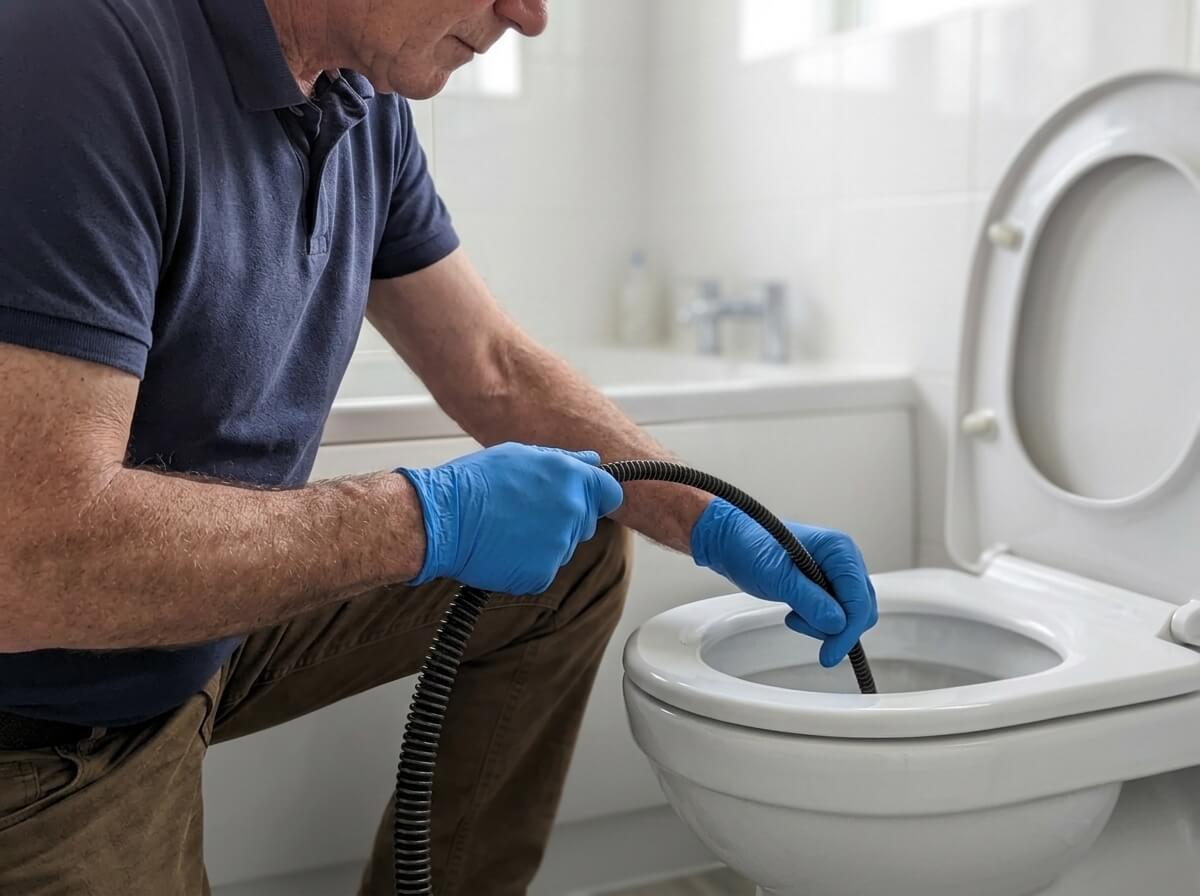
Why Washing-Up Liquid Works on a Blocked Toilet
It is not magic, and it does not dissolve anything. Washing-up liquid is a surfactant: it lowers the surface tension of water so the water soaks into things more easily, and it leaves everything it touches slippery. In a blocked toilet that does two useful jobs.
- ●It lets water soak into a tight wad of paper. Toilet paper is made to break down in water, but a big compressed plug of it keeps the water out of the middle. Soap helps the water in so the plug softens and falls apart.
- ●It greases the bend. The S or P shaped trap at the back of the pan is where blockages lodge. Coating the blockage and the glaze makes it far more likely to slide through when you add hot water or use a plunger.
- ●The heat helps. Warm water softens waste and paper faster than cold, which is why the hot water step matters.
That also explains why it does nothing to a wet wipe. Wipes are woven from fibres designed to stay strong when wet, so there is nothing for the soap to soften. Water UK has said that wet wipes make up the vast majority of the material causing sewer blockages, which is why its advice on wet wipes is simple: bin them, do not flush them.
What Washing-Up Liquid Will and Will Not Clear
Find the line that matches what you think has gone down the toilet. It will tell you in a few seconds whether the Fairy liquid method is worth your time.
| WHAT IS BLOCKING IT | WILL WASHING-UP LIQUID WORK? | WHAT TO DO |
|---|---|---|
| Too much toilet paper in one go | Yes. This is exactly what it is good at | Washing-up liquid and hand-hot water, then a plunger if it is slow to clear |
| Human waste, the classic after-dinner-party blockage | Yes, usually within an hour | Same method. Give it time before you reach for anything stronger |
| Thick kitchen roll or tissues used as toilet paper | Sometimes. Tissues and kitchen roll are made to stay strong when wet | Washing-up liquid plus a plunger. If it will not budge, a toilet auger |
| Wet wipes, including ones labelled flushable | No. Wipes do not soften or break down in the time you have | A plunger may pull them back. Otherwise a toilet auger or drain rods |
| Sanitary towels, tampons, nappies, cotton buds, dental floss | No | Do not keep flushing. A gloved hand if you can reach it, or call a plumber |
| A toy, toothbrush, phone, air freshener block or other solid object | No, and hot water and plunging can push it further in | Try to retrieve it by hand. If it is out of sight, call a plumber before it lodges in the drain |
| Limescale build up inside the pan's outlet in a hard water area | No. The toilet drains slowly all the time, not just after one flush | A descaler made for toilets, or a new pan if the outlet is badly narrowed |
| A blocked drain outside, not the toilet itself | No. Nothing poured into the bowl can reach it | Lift the manhole cover. If it is full, the drain needs rodding or jetting |
Signs it is not the toilet at all
- ●The bath, shower or basin is draining slowly, or gurgles when you flush.
- ●Water bubbles up in the toilet when you run a tap or the washing machine empties.
- ●There is a smell of sewage in the house or garden, or the manhole outside is full.
- ●More than one toilet in the house is affected.
Any of these mean the blockage is in the drain, and no amount of washing-up liquid will shift it. Read our guides on why a toilet gurgles and what to do when an outside drain is overflowing, or book our drain unblocking service.
Washing-Up Liquid vs Other Ways to Unblock a Toilet
Here is how washing-up liquid compares with the other things people try, from a plumber who has seen what each one does to a toilet.
| METHOD | THE GOOD | THE BAD | MY VERDICT |
|---|---|---|---|
| Washing-up liquid and hand-hot water | Cheap, safe, already under the sink. Clears most paper and waste blockages | Slow. Useless on wipes, sanitary products and objects | Best first try |
| Flanged toilet plunger | The most effective DIY tool for toilets. Works even better after washing-up liquid | Splashy. A flat sink plunger does not seal in a toilet | Best second step |
| Bicarbonate of soda and vinegar | Fizzes and may loosen a light blockage | Mostly theatre. The fizz is gone in seconds and does little to a wad of paper | Fine to try, do not expect much |
| Boiling water from the kettle | Nothing that hand-hot water does not do | Can crack the pan and soften the plastic pan connector | Never |
| Chemical drain unblocker | Can help with organic blockages in sinks | Caustic. Dangerous if you then plunge. Can damage seals and older pipes | Avoid in toilets |
| Wire coat hanger | Can hook out something just in the bend | Scratches the glaze, which then stains for good | Last resort, wrap the end in a cloth |
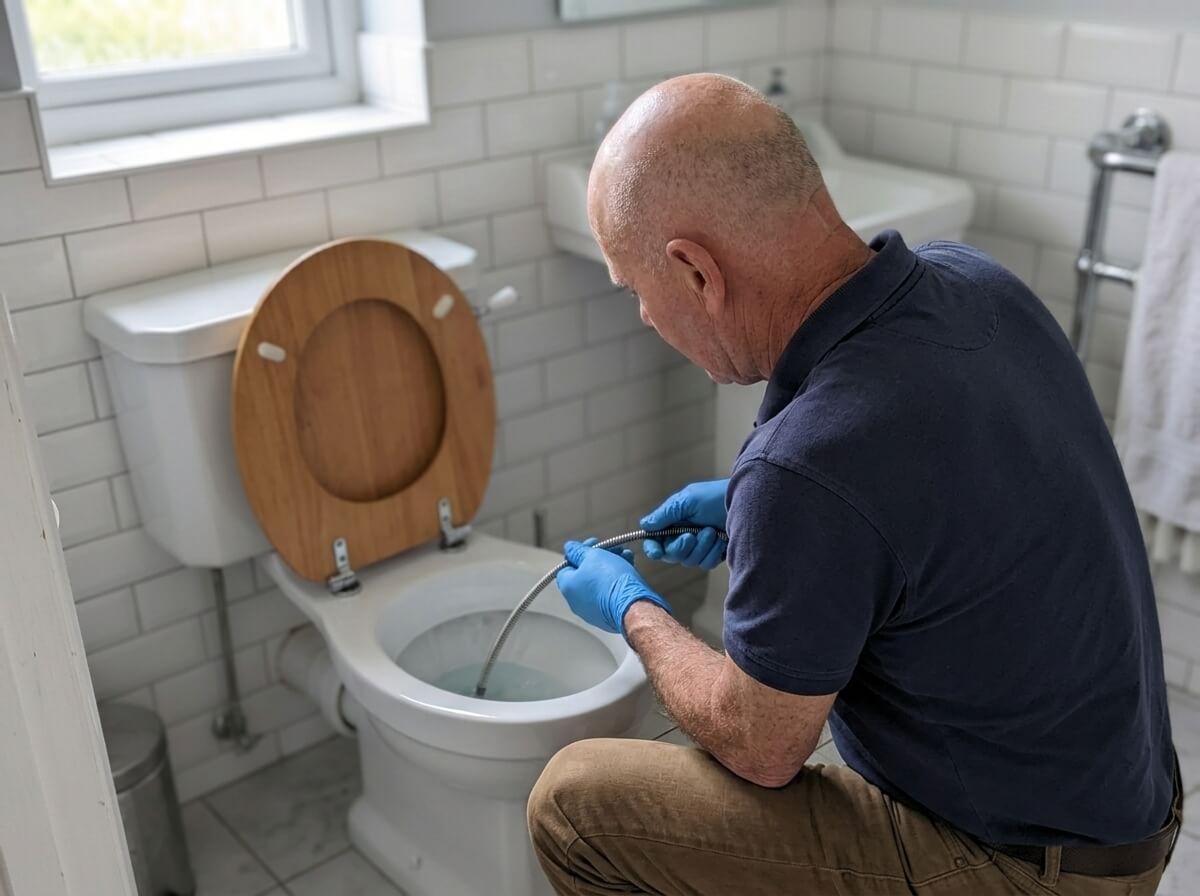
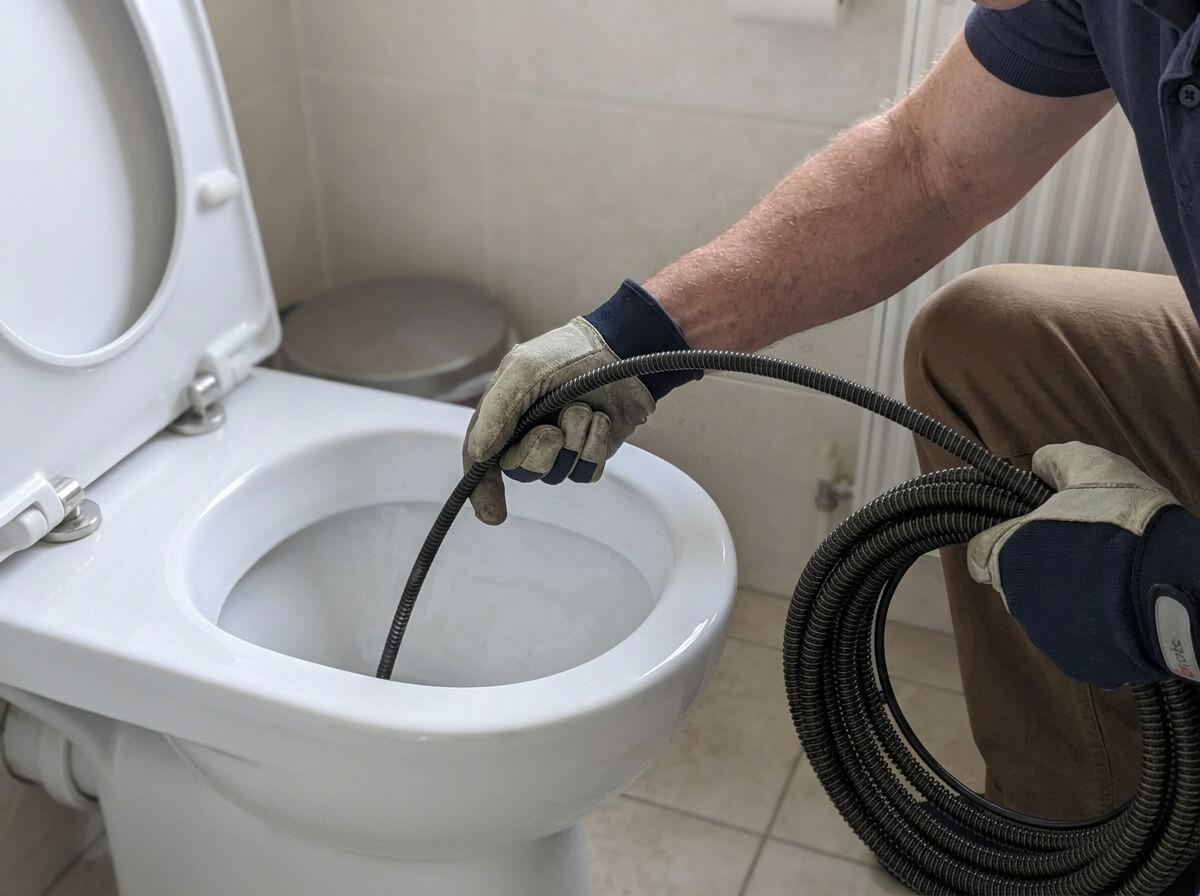
| Toilet auger | Reaches through the bend to break up or pull out the blockage | Needs a bit of practice. Cheap ones can scratch the pan | What a plumber uses |
The best combination: washing-up liquid, then a plunger
If the water level is dropping but slowly, do not throw the washing-up liquid away and start again. Leave it in the bowl and use a plunger. The soap makes the blockage slippery, so the plunger moves it with far less effort. Use a flanged toilet plunger, the kind with a soft rubber sleeve sticking out of the bottom of the cup. A flat cup plunger made for sinks will not seal in the outlet of a toilet.
- ●Get a seal. Push the flange into the outlet at the bottom of the bowl, with enough water in the bowl to cover the cup.
- ●Start gently. The first push forces air out. Press slowly, then pump firmly in and out ten or fifteen times, keeping the seal.
- ●Pull back sharply. It is often the pull, not the push, that frees the blockage.
- ●Test with a bucket, not a flush. Same as before. Flush only when a bucket of water drains freely.
No plunger in the house? Our guide on how to unblock a toilet without a plunger covers the cling film trick, bicarbonate of soda and a few other options.
Mistakes That Make a Blocked Toilet Worse
- ✕Flushing to see if it has cleared. Test with a bucket. A flush you cannot stop is how the floor gets flooded.
- ✕Boiling water. Cracked pans and softened pan connectors. Hand-hot only.
- ✕Washing-up liquid in the cistern. The viral cleaning tip does nothing for a blockage, which is in the pan, and detergent sitting in the cistern can dry out the rubber seals over time. Bowl only.
- ✕Mixing cleaners. Bleach mixed with other products, especially acidic toilet cleaners, can give off harmful fumes in a small room. One product at a time.
- ✕Plunging after a chemical drain unblocker. Caustic water splashes. If you have used one, do not plunge, and tell your plumber what you used.
- ✕Pushing an object further in. If something solid has gone down, plunging and pouring can drive it past the bend into the soil pipe, where it is much harder to get out.
- ✕An unwrapped coat hanger. Bare wire scratches the glaze, and the scratches stain for good. Wrap the end in a cloth and tape it if you must.
How Long to Leave It, and When to Give Up
A paper or waste blockage usually shifts within an hour of the hot water going in. If the water is going down, however slowly, the method is working: leave it longer, overnight if you can. If the level has not moved at all after two goes and some plunging, stop. Something is in there that soap and water will not move, or the blockage is further down the pipe.
Is a Blocked Toilet an Emergency?
A slow toilet in a house with a second one can usually wait until the morning. But it is worth calling straight away when:
- ●It is the only toilet in the house, especially with children, older relatives or someone unwell at home.
- ●The bowl is overflowing or water is leaking from the base of the toilet onto the floor.
- ●Sewage is coming back up into the bath, shower or a downstairs toilet.
- ●The manhole outside is full or overflowing.
If the bowl is already over the rim, our guide on what to do when a toilet is overflowing walks you through stopping the water first. If sewage is backing up, read sewage coming up through the drains. And if you are still not sure, my guide on what counts as a plumbing emergency will help you decide.
When to Call a Plumber
Call a plumber if the Fairy liquid method and a plunger have not cleared it after two goes, if you know something solid has gone down, if other drains in the house are affected, or if your toilet keeps blocking every few weeks. A toilet that blocks again and again usually has a reason: a pan with a narrow or scaled outlet, a low flush cistern that is not delivering enough water, a dip in the soil pipe, or roots or a collapse in the drain outside.
When I clear a blocked toilet, I use a proper toilet auger that reaches through the bend without scratching the pan, and if the blockage is further down I rod or jet the drain from the manhole. Then I tell you what caused it, so it does not happen again. You get a fair price agreed before any work starts, and I cover Ipswich and the surrounding towns and villages 24 hours a day, usually with you in about 30 minutes. See our blocked toilet repair service, or our guide on how much an emergency plumber costs if you want to know what to expect.
In a terrace or semi with a shared drain, a blockage beyond your own property may be the responsibility of Anglian Water, not you, because shared private sewers were transferred to water companies in 2011. If the blockage is in a shared section, we will tell you, so you do not pay for something you do not need to.
How to Stop Your Toilet Blocking Again
- ●Only the three Ps. Pee, poo and paper. Everything else goes in the bin, including wipes labelled flushable, cotton buds, sanitary products and kitchen roll.
- ●Flush twice for big loads. Flush halfway through if a lot of paper is being used, particularly with older low-flush or dual-flush toilets.
- ●Put a bin in the bathroom. Most wipes and sanitary products end up in the toilet because there is nowhere else to put them.
- ●Watch the rim blocks. Clip-on toilet blocks and their cages are a common thing for me to pull out of a pan. Check the clip is sound.
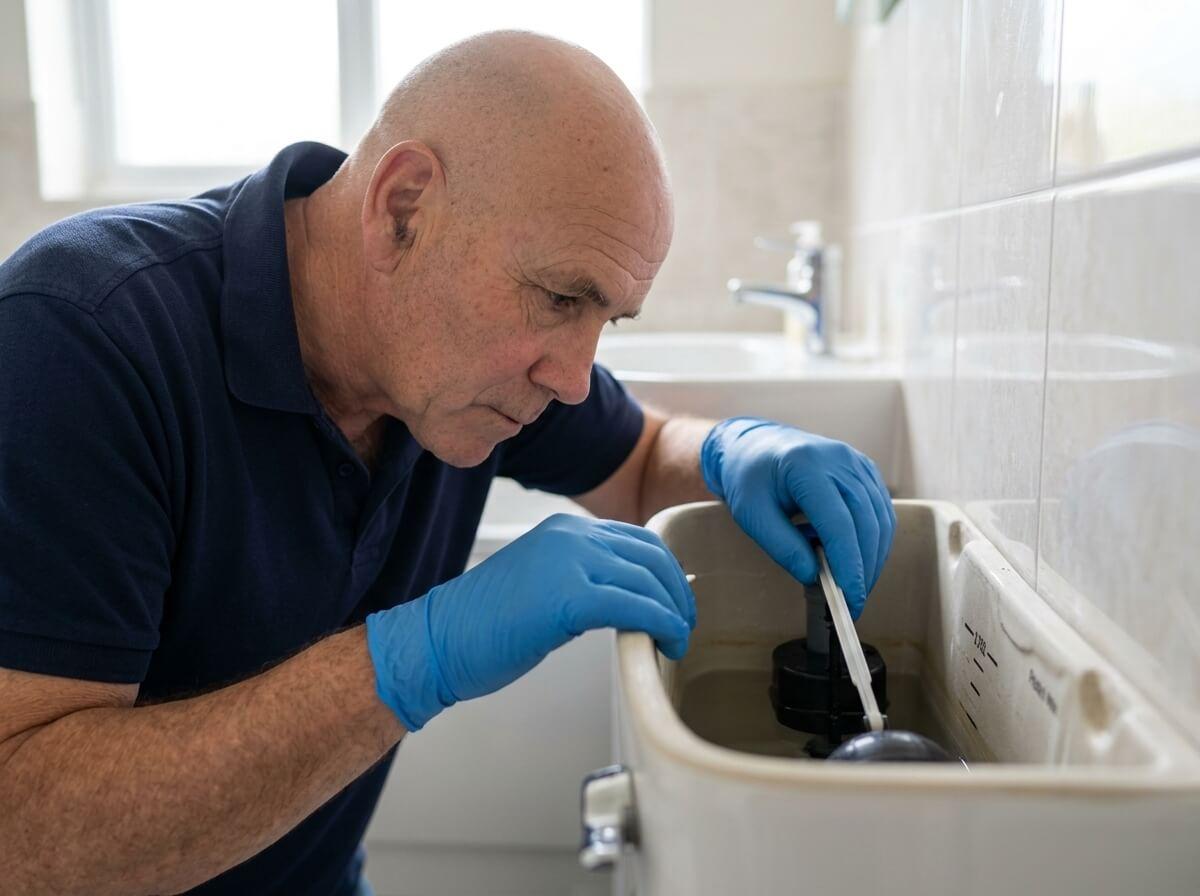
- ●Deal with a weak flush. If the flush is feeble or the cistern is slow to fill, get it looked at. A poor flush leaves paper sitting in the bend. Our guide on why a toilet will not flush covers the common causes.
Fairy Liquid and Blocked Toilets: The Key Points
- ●Washing-up liquid works well on soft blockages: toilet paper and waste in the bend of the pan.
- ●Use about half a mug, wait 20 to 30 minutes, add a bucket of hand-hot water from waist height, then wait again.
- ●Never use boiling water, and never flush until a bucket of water drains freely.
- ●Follow up with a flanged toilet plunger if it is slow to clear.
- ●It will not clear wipes, sanitary products, objects or a blocked drain outside.
- ●Other drains gurgling, sewage smells or a full manhole mean it is the drain, and it needs a plumber.