Every plumber knows the moment. Someone flushes, the water in the pan rises instead of falling, and for a long second everyone stares at it hoping it will stop just short of the rim. Sometimes it does. Sometimes it does not, and a couple of minutes later there is dirty water across the bathroom floor, seeping under the door and, if you are unlucky, heading for the ceiling below.
I have been clearing blocked and overflowing toilets in Ipswich for more than forty years, and the good news is that the first minute is the same every time, and it is something you can do yourself without getting your hands dirty. This guide covers exactly that, then how to clear the toilet safely, how to tell a simple blockage in the pan from a blocked drain that needs a plumber, what is going on when a toilet overflows but does not seem to be blocked, how to clean up properly, and who is responsible for the drain if it is not your fault.
Toilet Overflowing? Do These 6 Things Now
Work through these in order. The first two stop the flood getting worse. The rest keep you safe and make clearing it easier.
Do not flush again
It sounds obvious, but it is the most common way a small overflow becomes a big one. If the water in the pan is high and not draining, another flush adds six litres or more of water to a bowl that has nowhere to put it. Tell everyone else in the house too, and stop using the basin, bath and shower until you know whether the drain is affected.
Stop the cistern refilling
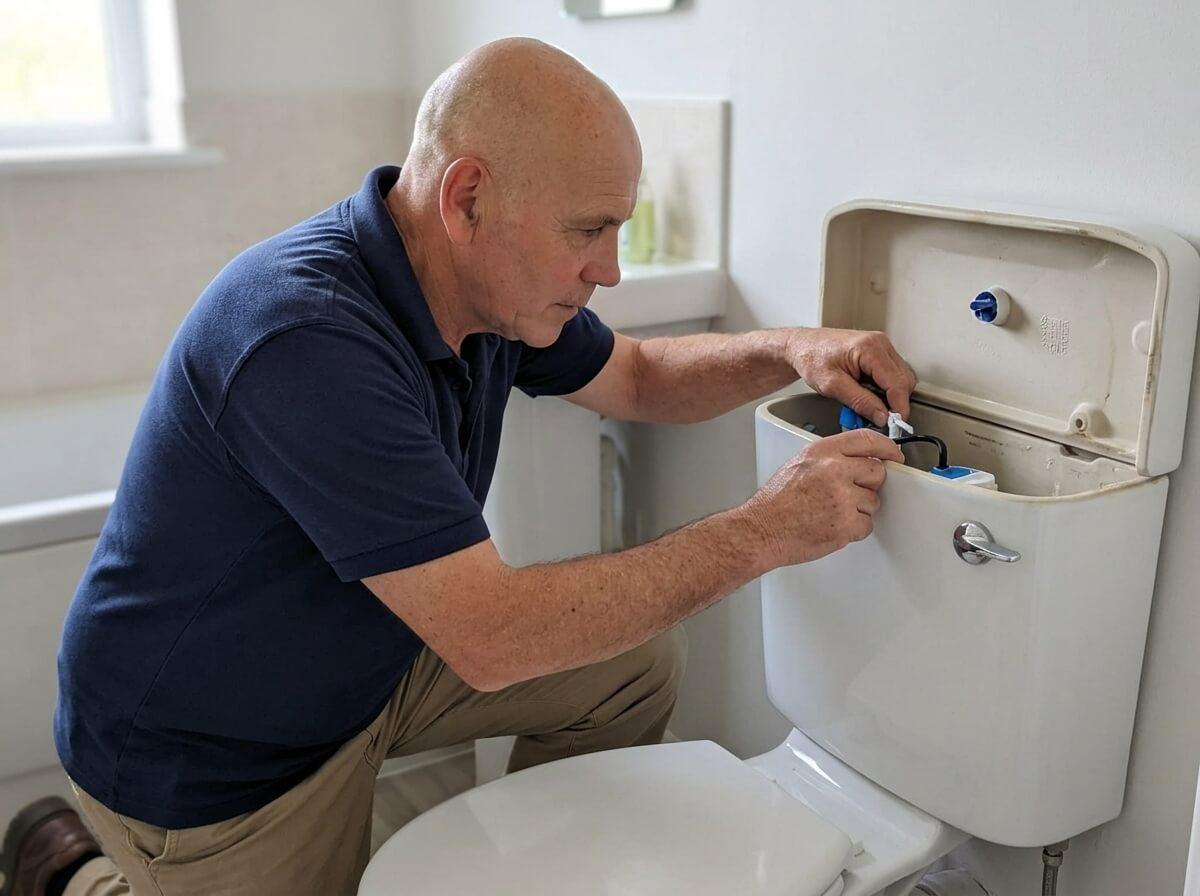
Lift the lid off the cistern (it is heavy ceramic, so put it somewhere it cannot fall) and lift the float up by hand. The float is the ball on an arm, or the plastic cup on the fill valve, that rises with the water. Holding it up shuts the water off instantly. Then find the isolating valve on the pipe that feeds the cistern, usually low on the wall or floor behind or beside the toilet. It normally has a slot for a flat screwdriver: turn it a quarter turn so the slot runs across the pipe, not along it. If there is no valve, or it will not turn, switch off the water at your stopcock. My guide on how to locate your stopcock shows where it usually hides.
Make the electrics safe
Water from a toilet will run along the floor to the lowest point. If it is spreading towards sockets, an electric towel rail, a shaver point, a wall heater or an extension lead, switch that circuit off at the consumer unit. Do not unplug anything while standing in water. If water is coming through the ceiling below, keep away from any wet light fittings and turn off the lighting circuit, then see my guide to water leaking through the ceiling.
Contain the water
Put old towels around the base of the toilet and across the doorway to stop the water spreading onto carpets and into the hall. Move bath mats, laundry baskets and anything else off the floor. Wear rubber gloves from here on, and keep children and pets out of the room.
Wait ten minutes and watch the level
With the water off, leave it alone for ten minutes. If the level in the pan slowly drops, the blockage is partial and close by, which is the easiest kind to clear with a plunger. If it does not move at all, or it rises when someone uses a basin or bath elsewhere in the house, the problem is further down the drain.
Check for a bigger drain problem
Run a little water in the bath or shower for a few seconds and watch the plughole, and ask if any other toilets in the house are slow. If water comes back up anywhere else, or the toilet gurgles, you have a blocked main drain. Lift the nearest manhole cover outside (see below) to confirm it, then call a plumber or drain engineer rather than plunging.
Is an Overflowing Toilet an Emergency?
Not every overflow needs a plumber at two in the morning, but some do, and dirty water on the floor is not something to leave until next week. Call an emergency plumber straight away if:
- ●The water keeps rising even after you have stopped the cistern refilling.
- ●Waste is coming up into the toilet, bath, shower or sink, rather than just clean water from the cistern.
- ●More than one fitting in the house is backing up or draining slowly at the same time.
- ●Water is coming through the ceiling below the bathroom, or near electrics.
- ●It is the only toilet in the house, and someone elderly, unwell or very young lives there.
- ●You live in a flat and the water is coming up from a shared pipe.
If the bowl overflowed once, the level has now dropped back down, and only that toilet is affected, it is usually something you can clear yourself or book in for the next day. My guide on whether a blocked drain is an emergency goes into more detail on judging the urgency.
Why Is My Toilet Overflowing? Read the Clues
A toilet overflows for one reason: water is going in faster than it can get away. But where it is getting stuck makes all the difference to how you fix it. These are the patterns I look for, and they are worth describing when you call:
| WHAT YOU NOTICE | LIKELY CAUSE | WHAT TO DO |
|---|---|---|
| Bowl fills to the rim after one flush, then drains away slowly over 10 to 20 minutes | A partial blockage in the pan or the bend just behind it: usually too much paper, wipes or a child's toy. | Do not flush again. Plunge with a flanged plunger once the level has dropped. |
| Bowl stays full and does not drop at all | A solid blockage in the pan, the pan connector or the soil pipe. | Stop the cistern refilling. Plunge, and call if two or three goes do not shift it. |
| Water comes up in the shower, bath or a downstairs toilet when you flush | The main drain under or outside the house is blocked, so waste backs up to the lowest outlet. | Emergency. Stop using all water and check the manhole. Plunging will not help. |
| Gurgling from the toilet, sink or bath, and slow draining everywhere | A drain blockage building up, or a blocked soil vent pipe letting air pull through the traps. | Book it in before it overflows. If it is getting worse by the hour, call now. |
| Clean water trickling into the pan constantly, sometimes over the rim | A faulty fill valve or float in the cistern, sending the excess down the internal overflow into the bowl. | Turn off the isolating valve. See my cistern overflow guide for the fix. |
| Toilet backs up during or after heavy rain | The public sewer is overloaded by storm water, or a gully or soakaway linked to your drain is flooding it. | Avoid flushing until the rain eases. Report repeated sewer flooding to Anglian Water. |
| Toilet is slow or backing up in a rural home not on mains drainage | A septic tank, cesspit or treatment plant that is full, or a soakaway that has stopped draining. | Book an emptying. If the tank is not due, the outlet or drain to it may be blocked. |
| Sewage rising in a ground-floor flat when people upstairs flush | A blockage in the shared soil stack or communal drain, which the whole building drains into. | Emergency. Tell your neighbours to stop using water and call the managing agent. |
| Water around the base of the toilet, even when the bowl level is normal | Not an overflow: a leaking pan connector, cistern seal or cracked pan, which can soak the floor and ceiling below. | Stop using it. Wipe it dry and watch where the water reappears, then book a repair. |
Rows shaded red usually need help the same day or night. The others still need sorting, but can normally wait for a booked visit once the water has stopped.
A blockage in the pan
Most overflowing toilets I attend are blocked in the pan itself, or in the tight bend just behind it, called the trap. The usual cause is not one thing but several: a lot of paper in one go, a few wet wipes that never break down, or something that should not have gone near a toilet at all, such as a nappy, sanitary products, cotton wool, kitchen roll or a child’s toy. Modern low-flush toilets use less water per flush, which is good for your bills but leaves less push to move a big load, so they block more easily if you are heavy-handed with the paper.
A blocked soil pipe or main drain
Below the toilet, the waste goes into the soil pipe and then the underground drain that runs out to the sewer. Fat, wipes and roots can build up in that drain over months until it blocks completely. The giveaway is that the problem is not confined to one toilet: the downstairs loo, the shower or the bath backs up too, or the toilet gurgles when you pull the plug on the bath. No amount of plunging the toilet will shift a blockage that is ten metres away under the patio. It needs rodding or jetting from the manhole, which is my drain unblocking service.
A blocked soil vent pipe
Your soil pipe usually runs up through the roof or the side of the house and is open at the top, to let air into the system. If it gets blocked by leaves, a bird’s nest or ice, or someone has capped it off during building work, the toilet can flush weakly, gurgle, or pull the water out of the traps, and the waste does not clear properly. It is a less common cause, but it explains a lot of “slow but not blocked” toilets.
Toilet Overflowing but Not Blocked?
This is one of the most common questions I get. You have plunged, nothing seems to be stuck, and yet the toilet still fills to the rim. These are the usual reasons:
- ●The blockage is further down. A partial blockage in the drain lets water away slowly, so plunging seems to work, then it backs up again on the next flush. Check the manhole.
- ●It is the cistern, not the pan. If clean water is trickling into the bowl all the time, the fill valve is not shutting off and the excess is going down the cistern’s internal overflow into the pan. If the drain is even slightly slow, the bowl can overfill. My guide on how to stop a toilet cistern overflowing covers the fix.
- ●Heavy rain. Many older Ipswich streets drain rainwater and sewage into the same sewer. In a downpour it can overload, and water backs up into the lowest toilet or gully in the street. If it only happens in heavy rain, report it to Anglian Water so it is on their records.
- ●A septic tank or cesspit that needs emptying. Plenty of homes in the villages around Ipswich are not on mains drainage. When the tank is full, or its soakaway stops working, every toilet in the house slows down and eventually backs up.
- ●A macerator toilet. If you have a pump-assisted toilet, such as one fitted in a cellar or a loft conversion, a failed pump or a blocked macerator will make it fill and overflow. Do not keep flushing it. Switch it off at its fused spur and call.
- ●A blocked vent. As above, a blocked soil vent can make a toilet behave as if it is blocked when it is not.
How to Unblock an Overflowing Toilet Safely
Once the water has stopped and the level has dropped, you can usually clear a blockage in the pan yourself. Here is how to do it properly:
Get the right plunger
A toilet needs a flanged plunger, the kind with an extra rubber sleeve that folds out from the bottom of the cup and fits into the outlet of the pan. A flat sink plunger will not seal and mostly just splashes. Hardware shops and supermarkets in Ipswich sell them for a few pounds, and it is worth keeping one in every house.
Protect yourself and the floor
Rubber gloves on, old towels down, and if you have them, safety glasses. If the bowl is still very full, scoop some of the water out into a bucket with an old jug first, so that plunging does not send it over the rim. You need enough water left to cover the cup of the plunger.
Make a seal, and push gently first
Put the plunger into the pan at an angle so it fills with water rather than air, then fit the flange into the outlet. The first push should be slow and gentle, to push out any trapped air without splashing.
Plunge firmly in short strokes
Keeping the seal, push and pull firmly fifteen to twenty times. It is the pulling that does as much work as the pushing. Lift the plunger off and see whether the water starts to drain. It may take three or four rounds.
Test with a bucket, not a flush
When the water level drops back to normal, tip a bucket of water into the pan from waist height. If it clears with a swirl, the blockage has gone. Only then turn the isolating valve back on and try one flush, with the cistern lid off so you can lift the float if the level starts rising again.
If there is no plunger in the house, the methods in my guide on how to unblock a toilet without a plunger can work for a soft blockage, such as paper. They will not shift wipes, nappies or a solid object, and they should only be tried once the water level has dropped right down.
Check the Manhole: Is It Your Drain or the Sewer?
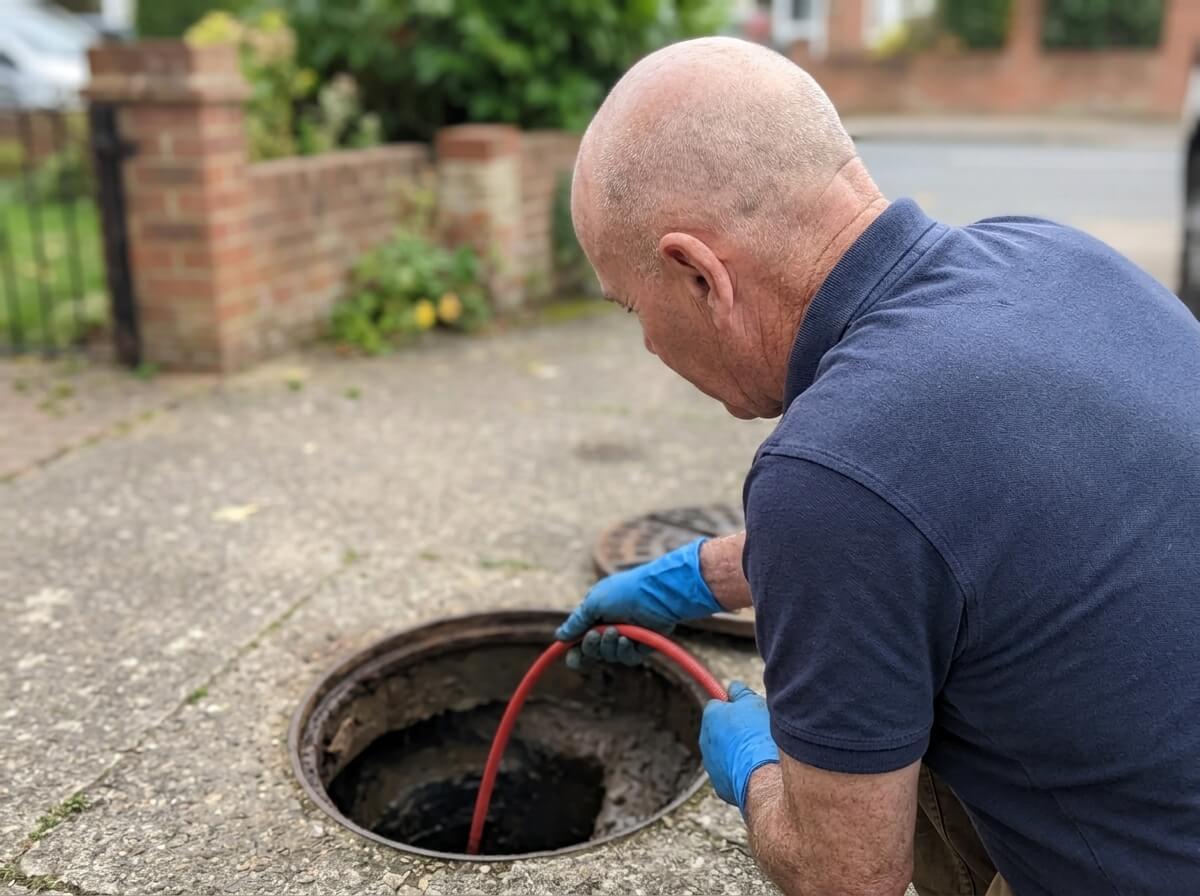
If more than one fitting is backing up, a two-minute look in the inspection chamber tells you where the blockage is and, importantly, whose job it is to clear it. The chamber is under the square or round metal or plastic cover in your garden, drive or path, usually near the house where the soil pipe goes into the ground.
- ●Lift it carefully. Covers are heavy. Use a flat spade or a screwdriver in the lifting slots, keep your back straight and your fingers clear, and never leave an open chamber unattended where a child, a pet or a visitor could step into it.
- ●If the chamber is full of water, the blockage is further downstream, beyond that chamber. Check the next one if there is one.
- ●If the chamber is empty, the blockage is between the house and that chamber, so it is in your own drain or soil pipe.
- ●If water is flowing through normally, the problem is inside the house, in the pan, the pan connector or the soil pipe.
Who is responsible for the blocked drain?
In England, you are responsible for the drains that serve only your property, within your boundary. Since 1 October 2011, any drain or sewer that is shared with a neighbour, or that runs outside your boundary, has belonged to the water company. Across Ipswich and most of Suffolk that is Anglian Water, and they clear blockages in their section free of charge. So if the chamber that is full is a shared one, or the blockage is under the pavement, call Anglian Water first. If it is in your own drain, a plumber or drain engineer clears it. If you are not sure, I will tell you honestly which it is when I look, and if it turns out to be the water company’s section, I will point you straight to them.
Toilet Overflowing in a Flat or Rented Home
In a block of flats, every toilet usually drains into a shared soil stack. If that stack blocks, the flats on the lower floors get everyone else’s waste, often coming up through the ground-floor toilet or shower. If that is happening to you, knock on doors or message the building group to ask people to stop flushing and draining baths, then call the managing agent or freeholder’s emergency line. Communal drains are normally the building’s responsibility, not yours.
If you rent, report an overflowing toilet to your landlord or letting agent straight away, in writing as well as by phone. Repairs to the drains and the toilet itself are normally the landlord’s responsibility, but you are expected to stop the water and limit the damage. If the blockage was caused by something flushed that should not have been, the landlord may ask you to pay for clearing it. If you cannot reach anyone out of hours and it is your only toilet, calling an emergency plumber is reasonable: keep the invoice and send it to your landlord.
How to Clean Up After a Toilet Overflow
Water that has come from a toilet pan or a drain is contaminated, even if it looks fairly clear, and it can carry bacteria such as E. coli and viruses such as norovirus. Clean water that came straight from the cistern is less of a worry, but if it went through the pan on the way to the floor, treat it as dirty.
- ●Protect yourself. Rubber gloves, old shoes or wellies, and keep children, pets and anyone unwell out of the room until you are done.
- ●Soak up the water. Use old towels, then bag them and either throw them away or wash them separately on a hot wash.
- ●Clean, then disinfect. Mop the floor with hot water and detergent first to lift the dirt, then disinfect it, along with the outside of the toilet, the base of the pan, skirting boards, the bath panel and the door. Disinfectant works far better on a clean surface.
- ●Do not mix chemicals. Bleach mixed with other cleaners, especially ones containing ammonia or acids, can give off toxic gas.
- ●Deal with soft flooring. Bathroom carpet, underlay and rugs soaked with dirty water are usually best thrown away. Upholstery and larger carpets need a professional clean if they are to be saved.
- ●Ventilate and dry. Open the window and run the extractor fan, once the electrics are confirmed safe, so the room dries fully.
- ●Wash your hands thoroughly, and put the clothes you wore straight into a hot wash.
If the water has soaked through the floor into the ceiling below, the ceiling plaster and insulation will need to dry out, and anything soaked by sewage, rather than clean water, is usually removed and replaced rather than dried.
What Not to Do When Your Toilet Is Overflowing
- ✕Do not keep flushing to “push it through”. Every flush is more water on the floor.
- ✕Do not pour chemical drain unblocker into a full toilet. It rarely shifts a solid blockage, it can splash and burn, it can damage older pipes and seals, and it makes the water dangerous for whoever has to clear it.
- ✕Do not pour boiling water into the pan. It can crack a ceramic toilet. Hand-hot is the most you should use.
- ✕Do not poke it with a wire coat hanger or a garden cane once the pan is full. You will scratch the glaze and can push the blockage further in.
- ✕Do not plunge a toilet when the main drain is blocked. If other fittings are backing up, plunging just pushes waste out of them instead.
- ✕Do not leave dirty water to dry on its own. It soaks into grout, flooring and the floor beneath, and it smells.
How a Plumber Fixes an Overflowing Toilet
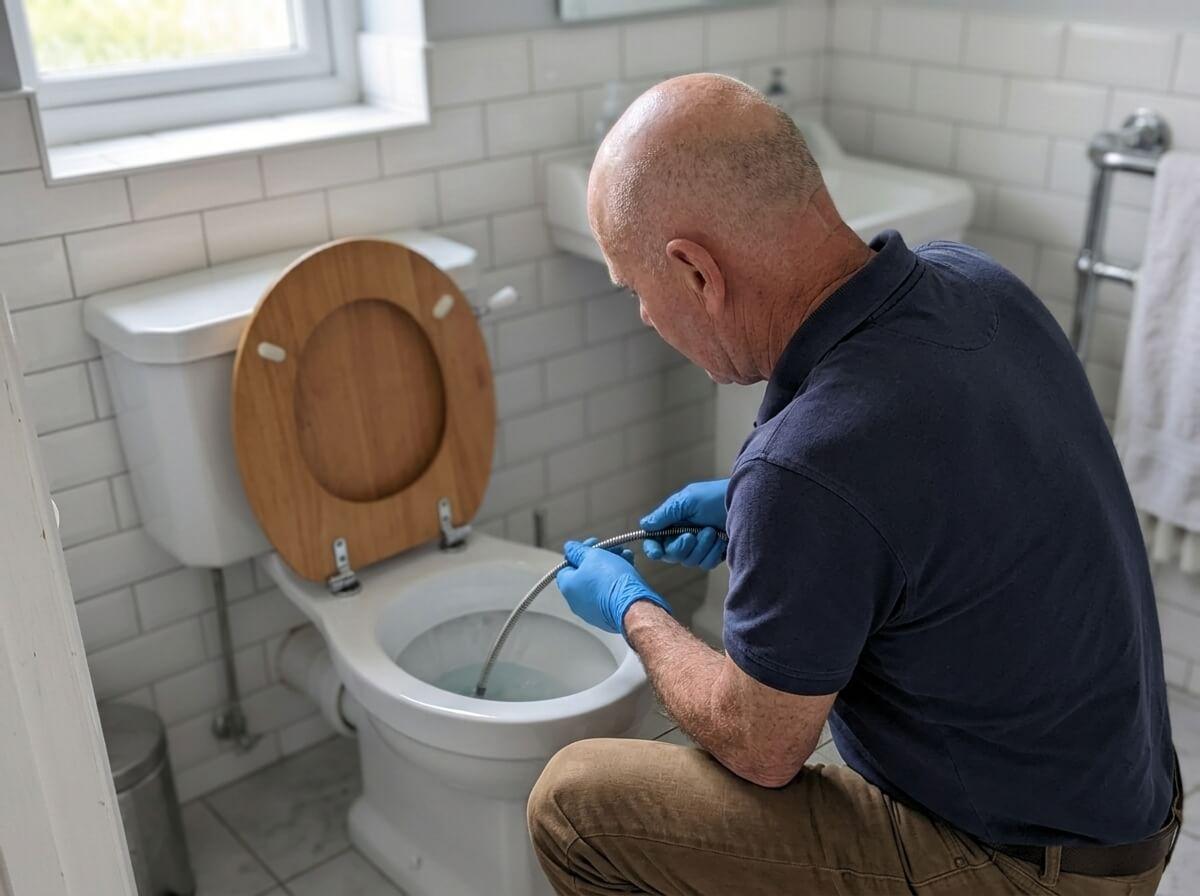
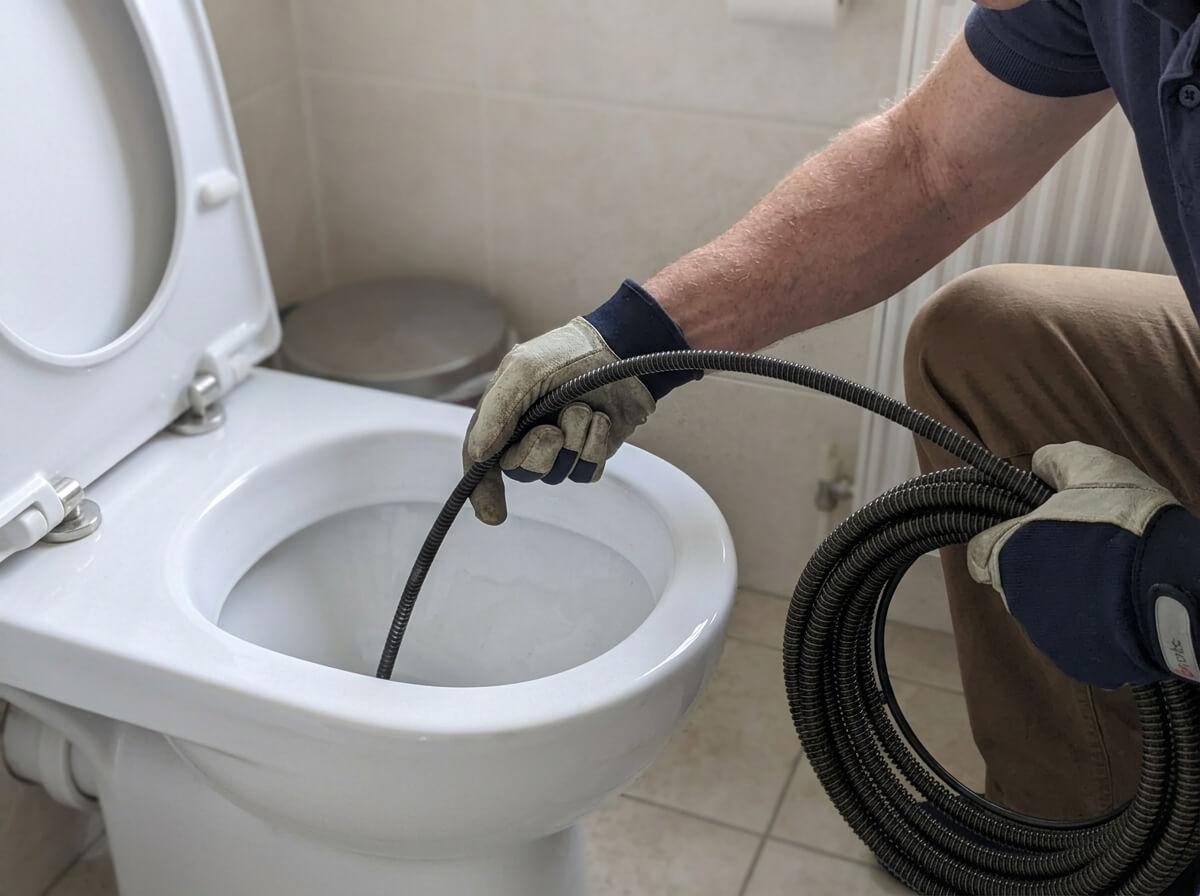
When I arrive at an overflowing toilet, the first thing I do is find out where the blockage is, using the same clues as above: whether it is just that toilet, whether other fittings are affected, and what the manhole is showing. A blockage in the pan or trap I clear with a professional toilet auger, a flexible cable that goes round the bend without scratching the pan, which shifts things a plunger cannot, such as wipes, nappies and dropped objects. A blockage in the drain I clear from the manhole with drain rods or a jetter. If the pan connector has been damaged, the seal has failed, or there is a crack, I can replace it on the spot.
Before I leave, I flush the toilet several times and run the other fittings to make sure everything drains freely, and if a drain keeps blocking, I will tell you why and what it would take to put it right properly. You can read more about my blocked toilet repair service, and you will always get a fair price agreed before work starts.
Overflowing Toilets and Home Insurance
Whether your insurance covers an overflowing toilet depends on the policy and the cause, so check your documents. In general:
- ●Water damage from a sudden overflow is often covered under escape of water or accidental damage, though some insurers treat a blocked toilet differently from a burst pipe.
- ●Blocked or collapsed underground drains are covered by some buildings policies, often as an optional extra, including the cost of clearing or repairing them.
- ●Wear and tear and gradual damage are usually excluded, as can be damage from a blockage caused by flushing things that should not go down a toilet.
- ●Photograph everything before you clean up, and keep the plumber’s invoice. I note the cause of the blockage on mine, which helps with a claim.
- ●Call early. Most insurers expect you to report a claim as soon as reasonably possible, and many have a 24-hour line.
How to Stop Your Toilet Overflowing Again
Nearly every overflowing toilet I clear could have been avoided. These are the habits and checks that make the biggest difference:
- ●Flush only the three Ps: pee, poo and paper. Nothing else, ever.
- ●Do not flush wet wipes, even the ones labelled “flushable”. They do not break down the way toilet paper does, and they are behind most of the blockages I clear.
- ●Keep a lidded bin in every bathroom for wipes, sanitary products, cotton buds, nappies and dental floss.
- ●Go easy on the paper, especially with a low-flush toilet. If you use a lot, flush part-way through.
- ●Keep fat out of every drain. Fat poured down the kitchen sink sets in the same underground drain your toilet uses.
- ●Act on early warnings. A toilet that is slow to empty, gurgles, or rises higher than usual before draining is telling you a blockage is forming.
- ●Keep a flanged plunger in the house, and know where your isolating valve and stopcock are before you need them.
- ●Get a camera survey if it keeps happening. Repeated blockages usually mean roots, a sagging pipe or a damaged joint in the drain, and a survey shows exactly where.
When to Call an Emergency Plumber
You can handle the first few minutes yourself, and often clear a simple blockage too. Call me straight away, day or night, if the water will not stop rising, waste is coming up into other fittings, you have plunged three or four times without success, water is coming through a ceiling, or it is your only toilet. If it has drained down and only that toilet is affected, call in the day and I will book it in promptly.
When I attend, I find out where the blockage is, clear it properly, check the whole system drains freely, and explain what caused it so it does not happen again. You can see everything I cover on the emergency plumbing services page. I cover Ipswich, Felixstowe, Woodbridge, Kesgrave, Stowmarket and the surrounding towns, and I answer the phone myself, 24 hours a day, seven days a week, on 07977 857224. If you are wondering what an out-of-hours visit involves, my guide on how much an emergency plumber costs explains how pricing works.