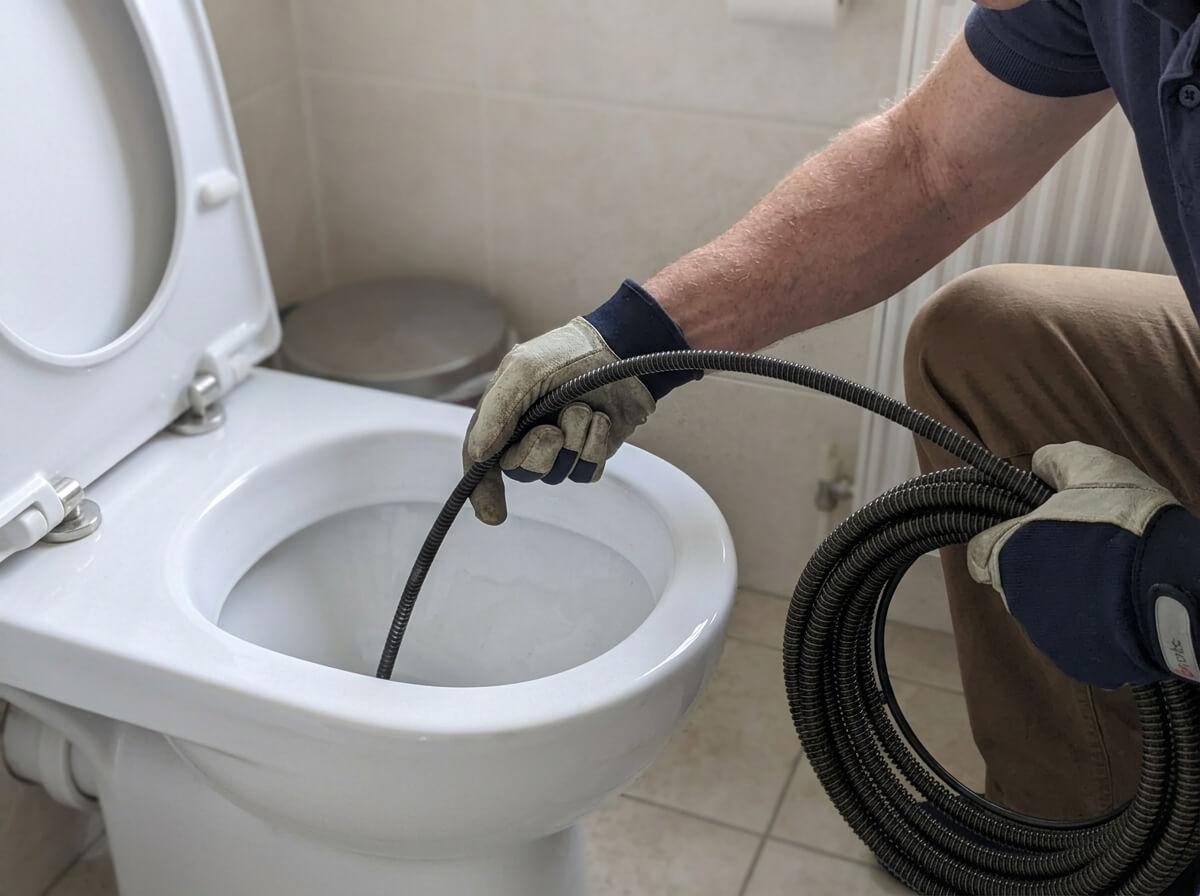
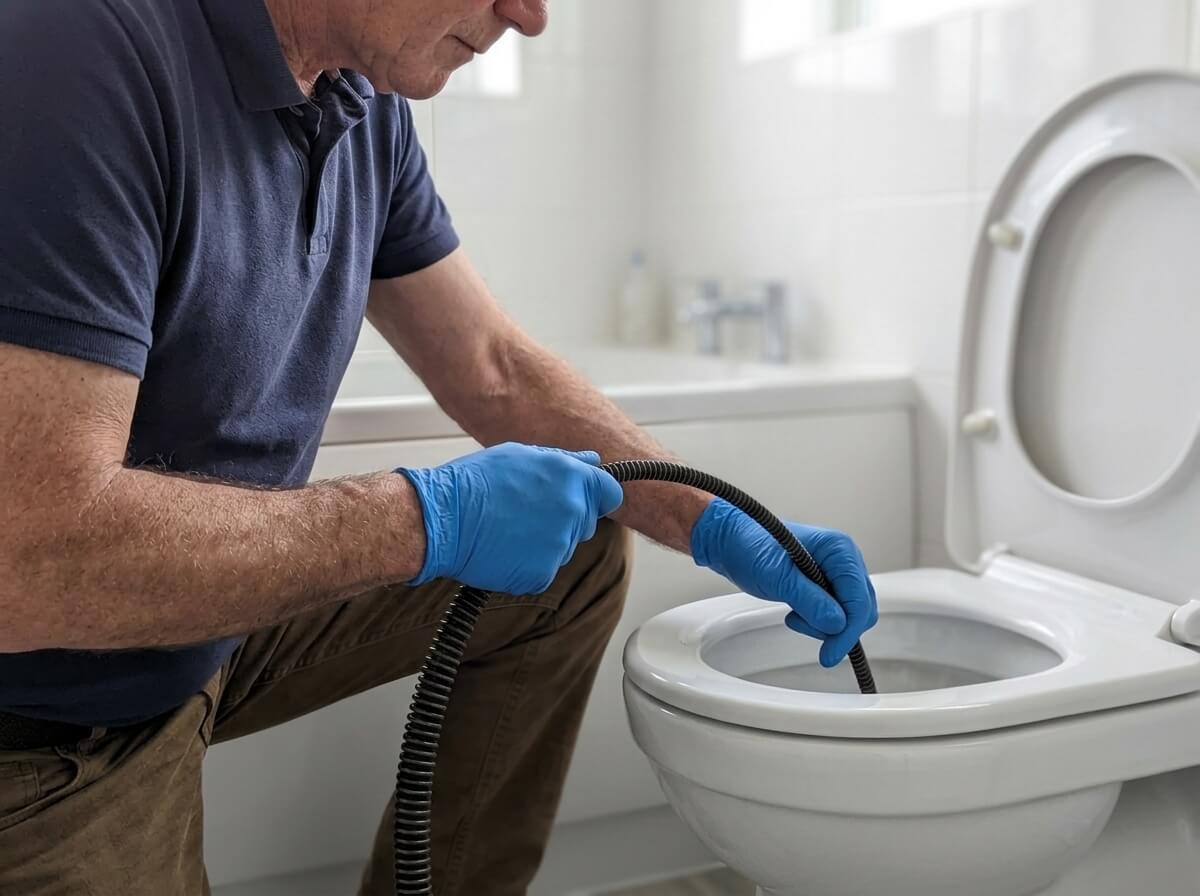
It is a strange noise to hear from a bathroom you are not using. Someone pulls the plug on the bath, and the toilet next to it starts to glug and bubble. Or you flush, and the basin across the room answers with a gurgle of its own. Sometimes it happens late at night when the house is quiet, and the toilet water rocks back and forth on its own.
I have been sorting out drains around Ipswich for more than forty years, and a gurgle is one of the most useful warnings a house can give you. It nearly always means air is in the wrong place, and it usually turns up days or weeks before a drain blocks completely. Read it early and the fix is often quick and cheap. Ignore it and it can end with a toilet overflowing. This guide explains what the gurgle means, how to work out where it is coming from, what you can safely check and fix yourself, and when you need a plumber.
What a Gurgle Actually Means
Every toilet, sink, basin, bath and shower in your home has a trap: a bend that holds a little water to stop drain smells coming into the room. In a toilet it is the water you can see sitting in the bottom of the pan. Under a sink it is the U-bend or bottle trap.
When water rushes down a drain, it pushes air in front of it and pulls air in behind it, like a piston in a tube. A healthy system lets that air in and out through the vent, which is usually a soil vent pipe running up the outside of the house and open above the roof line, or an air admittance valve fitted on a soil stack inside. When the air cannot move where it should, it takes the easy route instead, straight through the water in the nearest trap. That is the gurgle you hear and the bubbles you see.
So a gurgle tells you one of three things. Something is narrowing the pipe, so water and air are fighting to get past. Or the vent is not doing its job. Or the drain or sewer downstream is full. Which one it is depends on which fitting gurgles, and when.
Toilet or Drains Gurgling? Do These 5 Checks First
These take about ten minutes, need no tools beyond a bucket and rubber gloves, and tell you most of what a plumber would want to know.
Note which fittings gurgle, and when
Is it just the toilet when you flush it? The toilet when the bath empties? The kitchen sink when the washing machine pumps out? Every fitting at once? Write it down. One fitting gurgling on its own points to a local problem. Two or more reacting to each other points to a shared drain or the vent.
Watch the toilet water when you flush
Flush and watch. If the water rises higher than usual before it slowly drains away, there is a partial blockage, and it is time to stop flushing heavily until it is cleared. If it rises towards the rim, stop flushing completely. My guide to a toilet overflowing covers what to do next.
Run a bucket test
Tip a full bucket of water quickly into the toilet pan, and have someone watch the bath, shower tray and ground-floor sink. If water bubbles or rises in another fitting, the blockage is in a shared pipe below them. If the toilet clears briskly and nothing else reacts, the drain is probably flowing and you are looking at a vent or trap problem instead.
Lift the nearest manhole cover
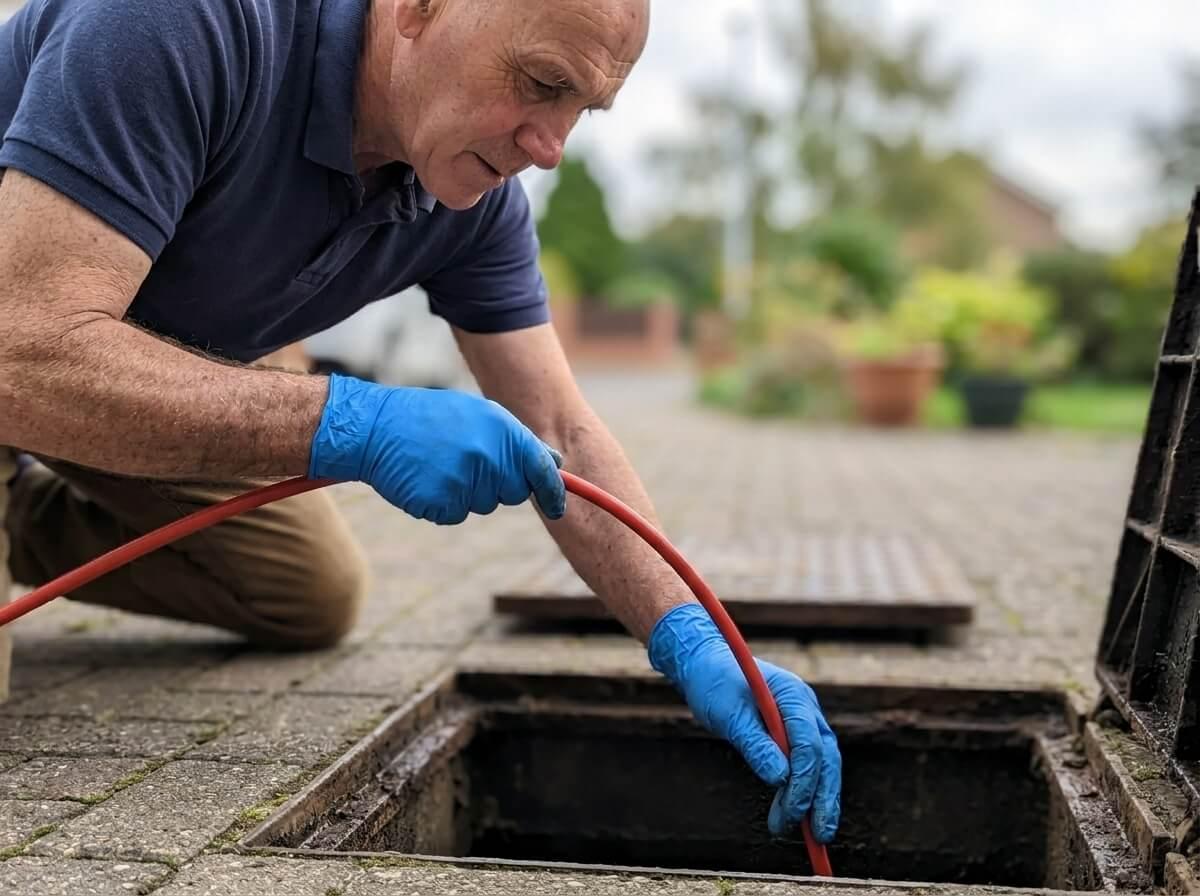
Find the inspection chamber outside, usually in the garden, path or drive near the bathroom or the back of the house. Lift the cover carefully. If the channel at the bottom is running clear, the main drain is fine at that point. If the chamber is holding water, the blockage is further down. If it is dry while the toilet is struggling, the blockage is between the house and that chamber.
Ask the neighbours
If you live in a semi, a terrace or a flat, knock next door and ask whether their toilet or drains are gurgling or slow. If they are, the problem is probably in a shared drain or the public sewer, which Anglian Water clears free of charge.
Why Is My Toilet Gurgling? Read the Clues
These are the patterns I look for when someone rings about a gurgling toilet or drain. Find the row that matches what you are hearing. The last column tells you how quickly it needs dealing with.
| WHAT YOU NOTICE | LIKELY CAUSE | WHAT TO DO | URGENCY |
|---|---|---|---|
| Toilet gurgles only when you flush it, and empties slowly | A partial blockage in the pan or the short branch pipe behind it, usually paper or a wipe. | Plunge it with a flanged toilet plunger. If it is no better, the blockage is further down. | Within a day or two |
| Toilet gurgles or bubbles when the bath, shower or basin empties | The shared branch or main drain is part-blocked, so draining water pushes air back up through the toilet. | Lift the nearest manhole cover. If the chamber is holding water, the main drain needs clearing. | Within a day or two |
| Toilet or sink gurgles when the washing machine or dishwasher pumps out | A pumped surge into a drain that is part-blocked or poorly vented, or a standpipe sharing the sink trap. | Clear the sink trap and the outside gully. If it carries on, the waste layout or the drain needs looking at. | Book in, not urgent |
| Basin or bath gurgles after it has emptied itself, and the trap is left half empty | Self-siphonage: the water in the waste pipe pulls the trap seal out behind it. Common on long or steep waste runs. | An anti-siphon or resealing trap, or a small air admittance valve on the waste, usually cures it. | Book in, not urgent |
| Sink, basin or bath gurgles when the toilet is flushed | Induced siphonage: the flush pulls air from the nearest trap because the stack cannot draw air through its vent. | Check the soil vent or the air admittance valve on the stack. Top up the trap to stop smells meanwhile. | Within a day or two |
| Gurgling plus a sewage smell indoors | A trap seal has been pulled dry, so drain gases are getting into the room. | Run water into every sink, basin, bath and shower to refill the traps, ventilate, and find the cause. | Within a day or two |
| Toilet water level drops and it gurgles on its own, often on windy days | Wind across the top of the soil vent pipe changing the pressure in the stack, or a blocked or failed vent. | Look at the vent terminal from the ground for a nest or a missing cage. Check any air admittance valve. | Book in, not urgent |
| Every fitting gurgles in heavy rain, then it settles down | A combined drain or the public sewer is overloaded with storm water and pushing air back up. | Clear your gullies. If water comes back up, or it happens in light rain, the drain needs checking. | Book in, not urgent |
| Gurgling everywhere, and water rising in the toilet or shower tray | The main drain is close to fully blocked between the house and the sewer. | Emergency. Stop using water, do not flush, and call a plumber, or Anglian Water if the drain is shared. | Call now |
The 6 Main Causes of a Gurgling Toilet or Drain
1. A partial blockage in the toilet or its branch pipe
The most common cause by a long way. Too much toilet paper in one go, a wipe, a sanitary product, a child’s toy or a build-up of limescale in the outlet narrows the pipe. Water still gets through, but slowly, and the air that should flow with it gets trapped and glugs back up through the pan. The giveaway is a toilet that gurgles when it is flushed, fills higher than normal and then drains slowly. A few firm strokes with a flanged toilet plunger usually shifts it. If you do not have one, my guide on unblocking a toilet without a plunger has methods that work.
2. A partial blockage in the main drain
When the toilet gurgles as the bath, shower or washing machine empties, the problem is usually lower down, in the drain that all of them share. Wipes, fat from the kitchen, roots or a sunken section of pipe slow the flow. A big volume of water from a bath fills the pipe and pushes air back up through the toilet, which is often the lowest trap in the house. This is the most important gurgle to act on. It is the early stage of a blocked drain, and if it is left, the next sign is often waste coming back up into the shower tray or a ground-floor toilet.
3. A blocked soil vent pipe
Most houses have a large pipe, the soil and vent pipe, running from the drain up the outside wall and open above the gutter or roof. The open top lets air in and out of the drains, and it should have a cage or cap to keep birds out. If that cage is missing, birds can nest in it. Leaves, moss, a dislodged cap, ice in a hard frost, or a pipe capped off during building work can all block it too. With no air coming in from the top, every flush pulls air through the nearest trap instead. You get gurgling from basins and baths when the toilet is flushed, weak flushes, and sometimes a smell.
You can usually see the top of the vent from the garden or the street. Look for a nest, a missing cage or anything growing out of it, using binoculars if you have them. Please do not climb onto a roof or lean out of a loft window to clear it. That is a job for someone with the right access equipment.
4. A stuck or failed air admittance valve
Many homes, especially newer houses, extensions and flats, have an inside soil stack that stops in the loft or inside boxing, finished with an air admittance valve instead of an open pipe through the roof. It is a one-way valve that opens to let air in when water rushes down, and shuts again so no smell escapes. Smaller versions are often fitted under sinks and basins too. Over the years the seal inside can stick shut with dust and grime, or split. When it does, the stack cannot breathe and the traps gurgle and empty.
If you know where yours is, check it is not covered with insulation, boxed in tight with no air, or painted over. A failed valve is usually a straightforward swap, and it must stay accessible and fitted above the level of the highest fitting it serves. Most systems also still need at least one open vent to the outside somewhere on the drain run, so an air admittance valve is not always the right answer on its own.
5. Siphonage from the waste pipework
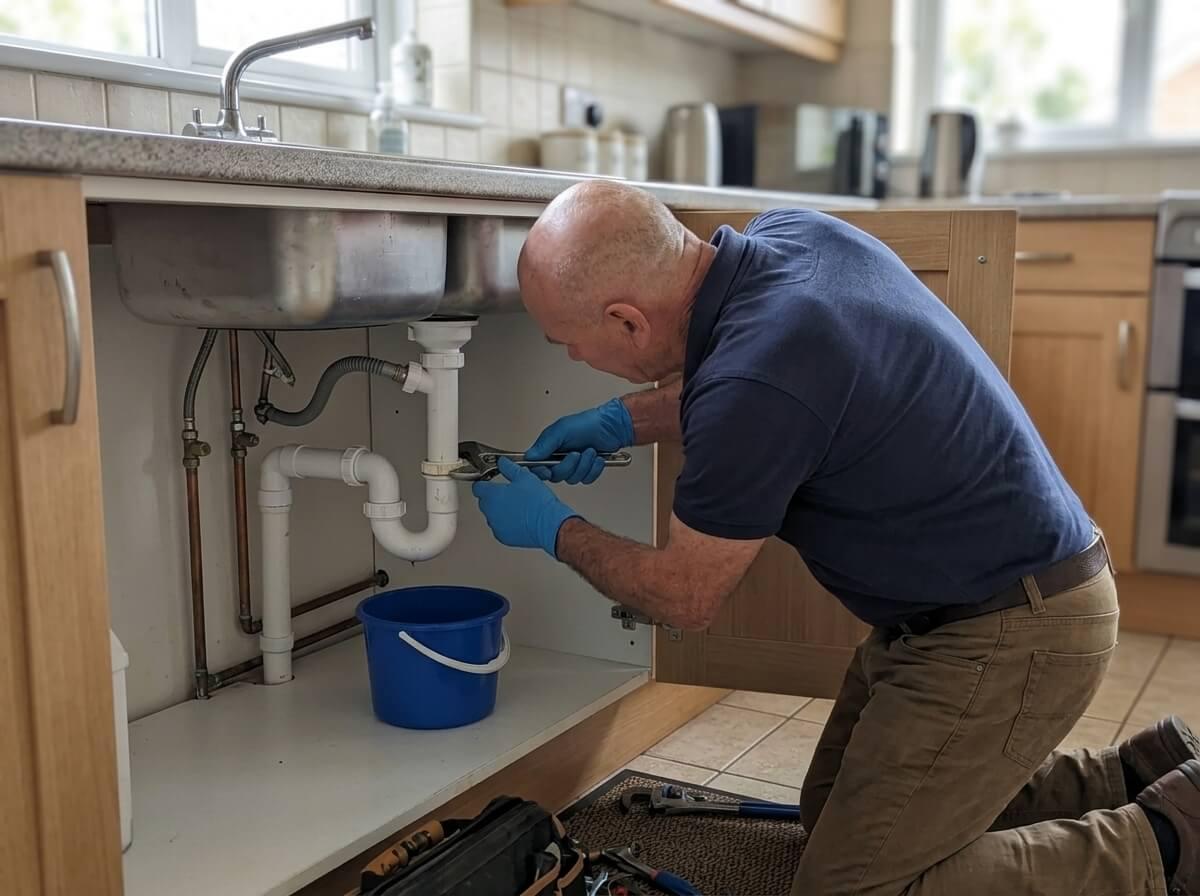
Sometimes there is no blockage and the vent is fine, but the waste pipe itself is the problem. If a basin or bath waste runs a long way, drops steeply, or is a narrow pipe, the column of water racing down it can drag the water out of its own trap behind it. You hear a long slurp or gurgle just after the basin empties, and the trap is left half full. That is called self-siphonage.
Induced siphonage is the same thing caused by a neighbour: a toilet flush or a washing machine pump-out sucks the water out of another trap on the same pipe. Washing machines that empty into a standpipe joined to the kitchen sink trap are a very common example, and the sink glugs every time the machine drains. Building Regulations expect sink, basin, bath and shower traps to keep a deep water seal for this reason. An anti-siphon or resealing trap, a small air admittance valve on the waste, or rerouting the pipe usually cures it.
6. An overloaded drain or sewer in heavy rain
In many older streets around Ipswich, rainwater from roofs and yards runs into the same drain and sewer as the toilets. In a heavy downpour that combined system can fill up, and the air in it gets pushed back up through the lowest traps in your house. Everything gurgles for a while and then settles when the rain eases. That is usually the sewer, not your drain. But if it happens in light rain, gets worse each time, or water starts coming back up, your own drain or a shared section is likely part-blocked too.
Is a Gurgling Toilet an Emergency?
Most gurgling toilets are a warning rather than an emergency. But some need a plumber straight away. Call now, day or night, if:
- ●The toilet water rises towards the rim when you flush or when another fitting empties.
- ●Dirty water or sewage comes up into the shower tray, bath or a ground-floor sink.
- ●The outside manhole is full, or a gully or manhole is overflowing.
- ●There is a strong sewage smell indoors that does not go after topping up the traps.
- ●You have only one toilet and it is no longer flushing properly, especially with young children or someone unwell at home.
If the toilet gurgles but still flushes and empties normally, book it in during the day within a day or two. A gurgle that has turned up suddenly and is getting worse is a blockage building, and it is far cheaper to clear a slow drain than a flooded one.
What You Can Safely Fix Yourself
Plunge the toilet properly
Use a toilet plunger with a flange, the soft extra lip on the cup, which seals into the outlet. A flat sink plunger will not seal in a toilet. Make sure the cup is covered with water, push down gently to get the air out, then give ten to fifteen firm push and pull strokes, keeping the seal. Flush to test, with your hand on the lid in case it rises. If it drains quickly and the gurgle has stopped, the blockage was in the pan.
Clean the sink or basin trap
Put a bucket underneath, unscrew the trap by hand and empty it. Bottle traps under basins collect hair and soap, and kitchen traps collect fat and food. Rinse it out, check the rubber washers are seated, and refit it hand tight. Run the tap and check for drips.
Refill dry traps
If you have a smell, run each tap for a few seconds, fill and empty the bath, and pour a jug of water into any shower or floor drain that is rarely used. A spare bedroom basin or a downstairs shower that nobody uses can dry out on its own, especially in summer, and let drain smells into the house.
Clear the outside gully
If the kitchen sink or the washing machine is the one gurgling, check the gully outside under the kitchen window. With rubber gloves on, lift the grid and scoop out the leaves, fat and silt from the trap into a bin bag. My guide to an outside drain overflowing walks through it step by step.
Check the air admittance valve
If there is one on the soil stack in your loft or boxing, make sure nothing is covering it and that air can get to it. On many valves the cap unscrews so you can see whether the membrane inside lifts freely. If it is cracked, stuck or missing, replace it with the same size. If you are not sure what you are looking at, leave it alone and ask.
What Not to Do
- ✕Do not keep flushing to see if it clears. If there is a blockage, each flush adds more water with nowhere to go.
- ✕Do not pour chemical drain cleaner into a toilet or a slow drain. It rarely touches wipes or roots, sits in the pipe, and is dangerous for whoever has to clear it next.
- ✕Do not climb onto the roof to look at the vent pipe. Check it from the ground and leave the rest to someone with proper access.
- ✕Do not seal up or remove an air admittance valve to stop a smell. It will make the gurgling worse and pull your traps dry.
- ✕Do not ignore it for weeks. A gurgle that is getting worse is a blockage building, and the cheapest time to clear it is now.
Who Is Responsible for a Gurgling Drain?
Inside your home, the toilet, traps, waste pipes, soil stack and vent are yours to maintain, or your landlord’s if you rent. Outside, you are responsible for the drain that serves only your property, within your boundary. Since October 2011, drains shared with neighbours, and any section beyond your boundary, belong to the water company, which across Ipswich and most of Suffolk is Anglian Water. They clear blockages in their section free of charge, on 03457 145 145.
In a block of flats, the main soil stack and drains are usually communal, so a gurgle that starts when the flat above flushes is one to report to the managing agent or freeholder. If you are not sure which section the problem is in, a plumber can tell you quickly by lifting the chambers and, if needed, running a camera through the drain.
How a Plumber Fixes a Gurgling Toilet or Drain
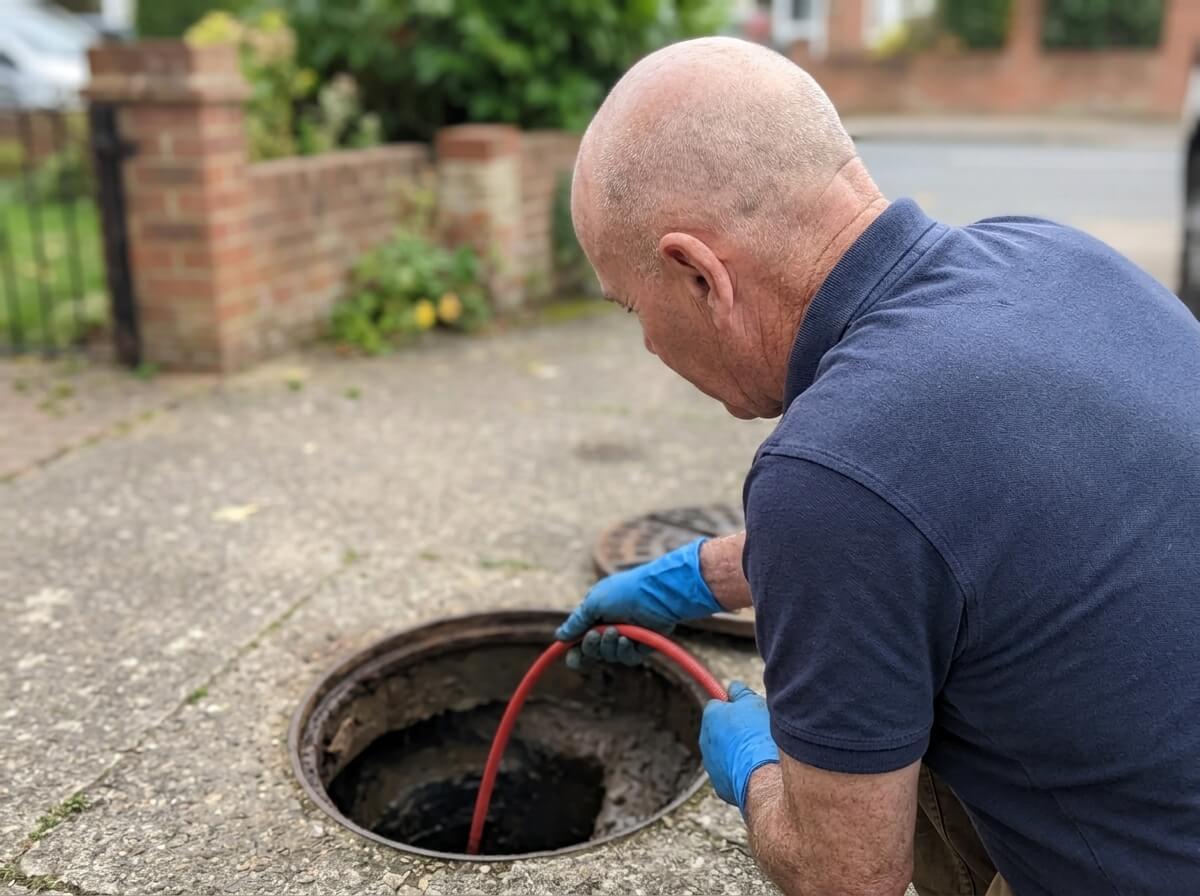
When I come out to a gurgling toilet, I start by finding out which fittings react to which, then lift the chambers to see where the water is standing. That usually narrows it down to one section in a few minutes. From there, the fix depends on the cause:
- ●Toilet or branch blockage: cleared with a toilet auger, which reaches round the bend in the pan without scratching it.
- ●Main drain blockage: cleared with drain rods from the manhole, or a jetter for fat, silt and scale that rods cannot shift.
- ●Blocked vent: cleared or re-caged, with a new cage fitted to keep birds and leaves out.
- ●Failed air admittance valve: replaced with the right size and type, in an accessible position.
- ●Siphonage: solved with an anti-siphon trap, a small air admittance valve on the waste, or a better waste layout.
- ●Repeated blockages: a CCTV drain survey to find roots, a sunken pipe or a cracked joint, so the real fault can be repaired.
Before I start, I explain what I have found and agree a fair price with you, so there are no surprises. If you are curious how call-out pricing works, my guide on how much an emergency plumber costs explains it. You can also read more about blocked toilet repair and drain unblocking in Ipswich.
How to Stop Toilets and Drains Gurgling Again
- ●Only flush the three Ps: pee, poo and paper. Wipes, even ones labelled “flushable”, cause most of the main drain blockages I clear.
- ●Keep fat out of the kitchen sink. Let it cool and put it in the bin. It sets in the drain and narrows it bit by bit.
- ●Use less paper per flush, or flush halfway through, especially on older toilets with small flushes.
- ●Fit hair catchers in the bath and shower, and clean basin bottle traps a couple of times a year.
- ●Check the vent cage from the ground each autumn, and after any roof or building work.
- ●Leave air admittance valves uncovered by insulation, boxes and stored items in the loft.
- ●Run rarely used taps and showers every week or two so their traps stay full.
- ●Act on the first gurgle. It is the cheapest time to fix a drain, before it becomes a blockage.
Gurgling Toilet in Ipswich? Call Philip
You can do the first checks yourself, and plenty of gurgles are cured with a plunger or a clean trap. Call me straight away, day or night, if water is rising in the toilet or coming up in the shower, the manhole is full, or there is a strong sewage smell. If it is a gurgle that comes and goes, call in the day and I will book it in promptly, find the cause and explain what I have done.
I cover Ipswich, Felixstowe, Woodbridge, Kesgrave, Martlesham and the surrounding towns, and I answer the phone myself, 24 hours a day, seven days a week, on 07977 857224. You can see everything else I cover on the emergency plumbing services page.