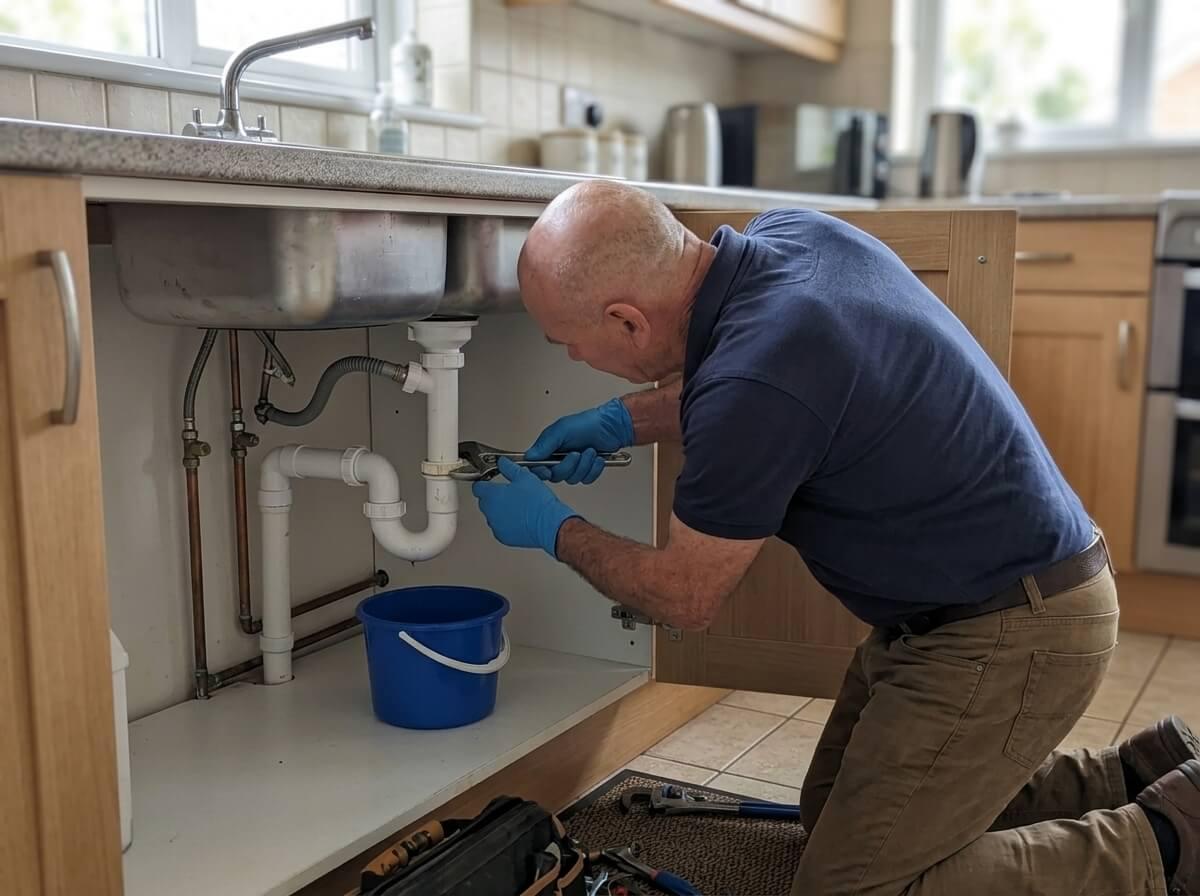
It always happens at the worst moment. Sunday dinner is finished, the roasting tin has been rinsed, and the sink just sits there, full of grey water with bits of carrot floating in it. Or the dishwasher kicks into its drain cycle and the sink beside it starts to fill up on its own.
I have been clearing blocked sinks around Ipswich for more than forty years, and the good news is that most kitchen sinks can be unblocked by the person standing in front of them, with a plunger, a bucket and ten minutes. The trick is doing things in the right order, and knowing when the problem is not in the sink at all. Most guides online are written for American kitchens with garbage disposals and basement drains. This one is written for British kitchens: plastic bottle traps and P-traps, washing machine spigots, double bowls and the gully outside the back wall.
Kitchen Sink Blocked? Do These 4 Things First
Stop running water into it
Turn the taps off and switch off the dishwasher and washing machine, even mid-cycle. In most UK kitchens they drain into the sink waste, so the next pump-out will come straight up through the plughole and over the edge.
Check whether it is just the sink
Run a little water in the bathroom basin and flush the toilet once. Then go outside and look at the gully where the kitchen waste pipe comes out of the wall, usually a small square grid at ground level. If the toilet is slow, the bath gurgles or the gully is full of water that is not going down, the problem is the drain, not the sink. Skip to the section on the drain outside.
Bail out the standing water
You cannot see the plughole or plunge properly through a full sink. Scoop the water out with a jug or mug into a bucket, sponge out the last of it, and tip it down the toilet or an outside drain that is working. Wear rubber gloves, because it is full of old food and grease.
Clear the plughole
Lift out the strainer or plug basket if you have one and empty it. Pick out any food, peel or grease you can see in the top of the waste. A surprising number of “blocked” sinks are just a basket full of rice.
How Your Kitchen Sink Drains (and Where It Blocks)
It helps to know what is under there. From the plughole down, a typical British kitchen sink has:
- ●The plughole and overflow. A strainer or basket in the plughole, and a slot or hole near the top of the bowl that lets water escape into the waste if the sink overfills. On a double sink, each bowl has its own plughole and they join under the sink.
- ●The trap. The U-shaped or pot-shaped plastic fitting directly below the plughole. It always holds a little water to stop drain smells coming back up. A P-trap is a U-bend shape; a bottle trap is a straight pot with a base that unscrews. This is where most kitchen blockages are.
- ●The appliance spigot. A short plastic nozzle on the side of the trap where the washing machine or dishwasher drain hose pushes on. It often has a small flap valve inside to stop sink water running back into the machine, and that valve can clog with grease and lint.
- ●The waste pipe. Usually 40mm plastic pipe running from the trap, through the back of the cabinet and out through the wall. Grease cools and sticks to the inside of it, especially on long, flat runs.
- ●The gully. Outside, the waste pipe usually ends in a back-inlet gully: a small trap at ground level with a grid on top, which then runs into the underground drain. On some older houses it discharges over an open gully instead, and on upstairs flats into a hopper and downpipe.
Where the water stops tells you where the blockage is. If one bowl is blocked and the other is fine, it is above the join. If both are blocked, it is the trap or beyond. If the gully outside is overflowing, it is underground.
Blocked Sink Finder: Where Your Blockage Is
These are the patterns I look for when someone rings about a blocked kitchen sink. Find the row that matches yours. The last column tells you whether it is a job you can do yourself or one to call about.
| WHAT YOU NOTICE | WHERE IT IS | TRY FIRST | URGENCY |
|---|---|---|---|
| Sink drains slowly but does empty, maybe with a gurgle | Grease and food building up in the trap or the first stretch of waste pipe. | Hot water and washing-up liquid, then plunge. Soda crystals weekly after. | DIY first |
| One bowl full of standing water, the other bowl fine | In that bowl's own plughole, strainer or the short pipe before the two wastes join. | Clear the plughole, plunge with the overflow sealed, then clean the trap. | Try the fixes, then call |
| Both bowls of a double sink fill up together | Below the point where the two wastes join: the shared trap or the waste pipe to the wall. | Seal one bowl and plunge the other. If that fails, clean the trap. | Try the fixes, then call |
| Water rises in the sink when the washing machine or dishwasher empties | Waste pipe partly blocked beyond the appliance spigot on the trap, so pumped water backs up. | Stop the appliance, clean the trap and spigot, then clear the pipe beyond. | Try the fixes, then call |
| Trap is clean, but the sink still will not drain | The waste pipe through the wall, or the gully outside where it ends. | Check the gully outside. Clear it if full. If it is empty, the pipe needs a sink cable. | Try the fixes, then call |
| Sink blocked and water in the cupboard underneath | Blockage putting the waste under pressure, so a trap joint or washer is leaking. | Stop using the sink, dry out, check every trap nut is hand-tight and seated. | Try the fixes, then call |
| Gully outside full and not draining, or the toilet and bath are slow too | The underground drain, not the sink. Plunging the sink will not reach it. | Stop using all water in the house and call a plumber or drain engineer. | Call now |
| Dirty or smelly water coming up in the sink from somewhere else | Main drain blocked, with waste backing up to the lowest open outlet. | Stop flushing and running water anywhere. This needs clearing now. | Call now |
| Chemical unblocker poured in and the sink is still full | Blockage not dissolved, and now a sink full of caustic water. | Do not plunge or open the trap. Ventilate and call, saying what you used. | Call now |
How to Unblock a Kitchen Sink: 7 Methods, in Order
Start at the top and work down. Each step is a little more involved than the one before, and most sinks clear by step three or four. Do not skip to chemicals. I will explain why further down.
1. Very hot water and washing-up liquid
For a sink that is slow or has just blocked after a greasy wash-up, this is often all it takes. With the sink empty, squeeze a good glug of washing-up liquid into the plughole. Boil the kettle, let it stand for a few minutes so it is very hot but not boiling, then pour it slowly straight down the plughole. Wait five minutes and repeat. The heat softens the fat and the detergent breaks it up so it can wash through.
Why not boiling? Most kitchen traps and waste pipes in UK homes are plastic, and repeated boiling water can soften joints and push seals out of shape. Boiling water poured into a ceramic sink full of cold water can also crack it. Hot from the kettle after a few minutes does the job just as well.
2. Plunge it properly
A plunger is the single most useful tool for a blocked kitchen sink, but most people use it wrong. Use a small cup plunger, not the one from the toilet. Then:
- ●Seal the overflow. Stuff a damp cloth firmly into the overflow slot. Otherwise all your pushing just blows air out of it.
- ●Seal the other bowl. On a double sink, put the plug in the other bowl and hold a wet cloth over it, or get someone to press a second plunger on it.
- ●Watch the dishwasher hose. If a dishwasher drains into the sink, plunging can force dirty water back up its hose. Pinch the hose closed, or clip it with a bulldog clip, while you plunge.
- ●Cover the cup with water. Leave or add about 5cm of water in the bowl so the plunger pushes water, not air. Rub a little petroleum jelly or washing-up liquid round the rim for a better seal.
- ●Plunge hard and fast. Fifteen to twenty firm, sharp strokes, keeping the seal, then pull off quickly. Repeat three or four times before you give up.
No plunger? Fill a plastic bottle with hot tap water, press the neck hard into the plughole and squeeze it sharply. It is a weak version of a plunger, but on a fresh blockage it sometimes works.
3. Soda crystals, or bicarbonate of soda and vinegar
Soda crystals (sodium carbonate, sold in the cleaning aisle in most supermarkets) are good at breaking down grease. Pour about a cupful into the empty plughole, follow it slowly with a kettle of very hot water, leave it for half an hour and flush with more hot water. Wear gloves, as they irritate skin.
Bicarbonate of soda and vinegar is the one everyone has heard of. To be honest with you, it is better at freshening a smelly drain than clearing a blockage. The fizzing is mostly the two ingredients cancelling each other out, and Which? found it failed to shift a hairball in its testing. On a slow sink it does no harm to try: a cupful of each, leave it for an hour, then flush with hot water. On a sink full of water, it will not do much.
4. Clean out the trap
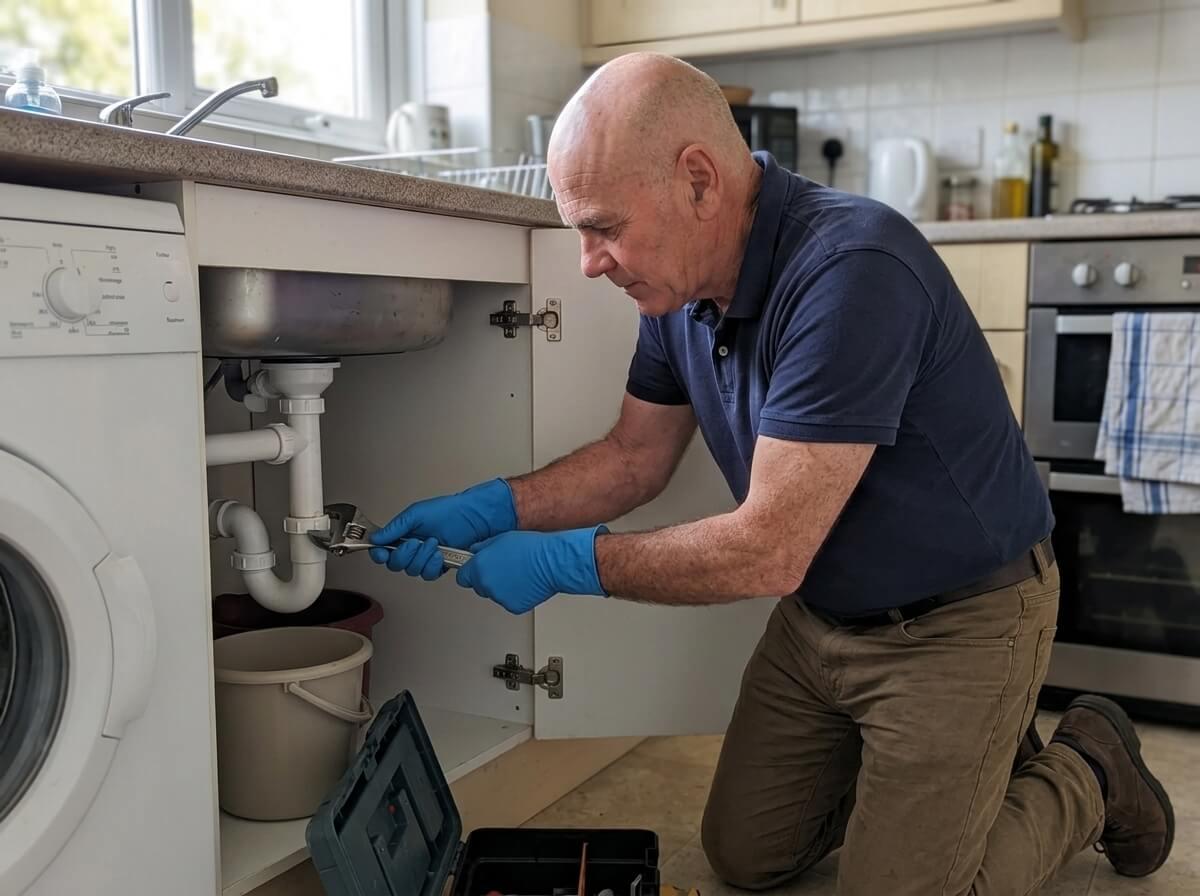
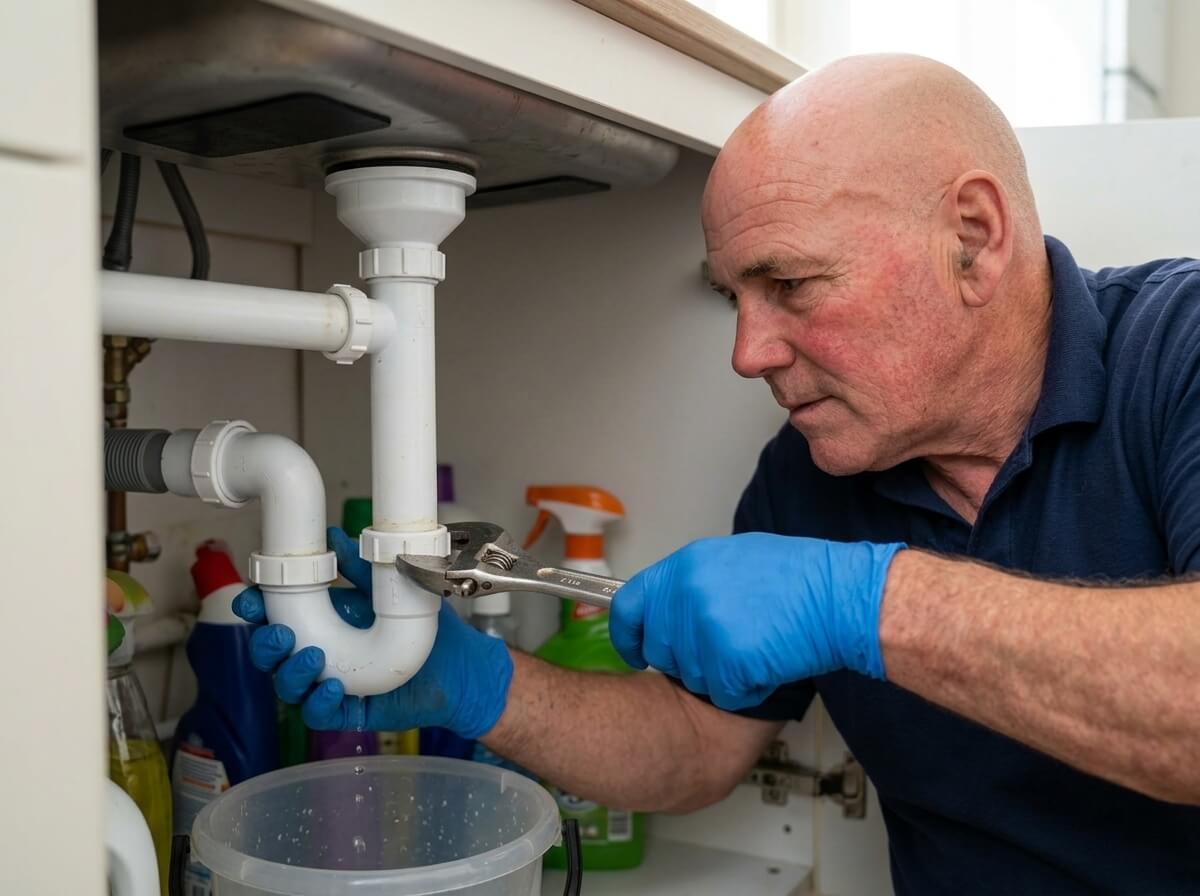
If plunging has not done it, the blockage is very likely sitting in the trap, and this is where most kitchen sinks finally clear. It is easier than it looks. Plastic traps are designed to come apart by hand.
Empty the sink and get ready
Bail out as much water as you can. Put a washing-up bowl or bucket directly under the trap, with an old towel round it. Gloves on.
Unscrew the trap
On a P-trap, undo the two large plastic nuts at either end of the U-bend by hand, anticlockwise, and lower it into the bowl. On a bottle trap, unscrew the pot at the bottom. If a nut is tight, wrap a cloth round it and use grips gently. Never use force on plastic.
Clean it out
Tip the contents into the bucket. Scrape out the grease and food with an old spoon or a bottle brush, and rinse the trap in the bath or outside, not in the blocked sink. Check the appliance spigot and its little flap valve too, and clear anything stuck in it.
Look up and along
With the trap off, look up into the sink outlet and along the waste pipe towards the wall. If you can see a plug of grease, this is the moment to clear it with a sink cable (method 6).
Refit and test
Check each rubber or plastic washer is in place and not twisted, then screw the nuts back on hand-tight, plus a little more. Run the cold tap slowly, then faster, and watch every joint with a dry tissue for a few minutes. If a joint drips, tighten it a touch or reseat the washer.
5. Check the gully outside
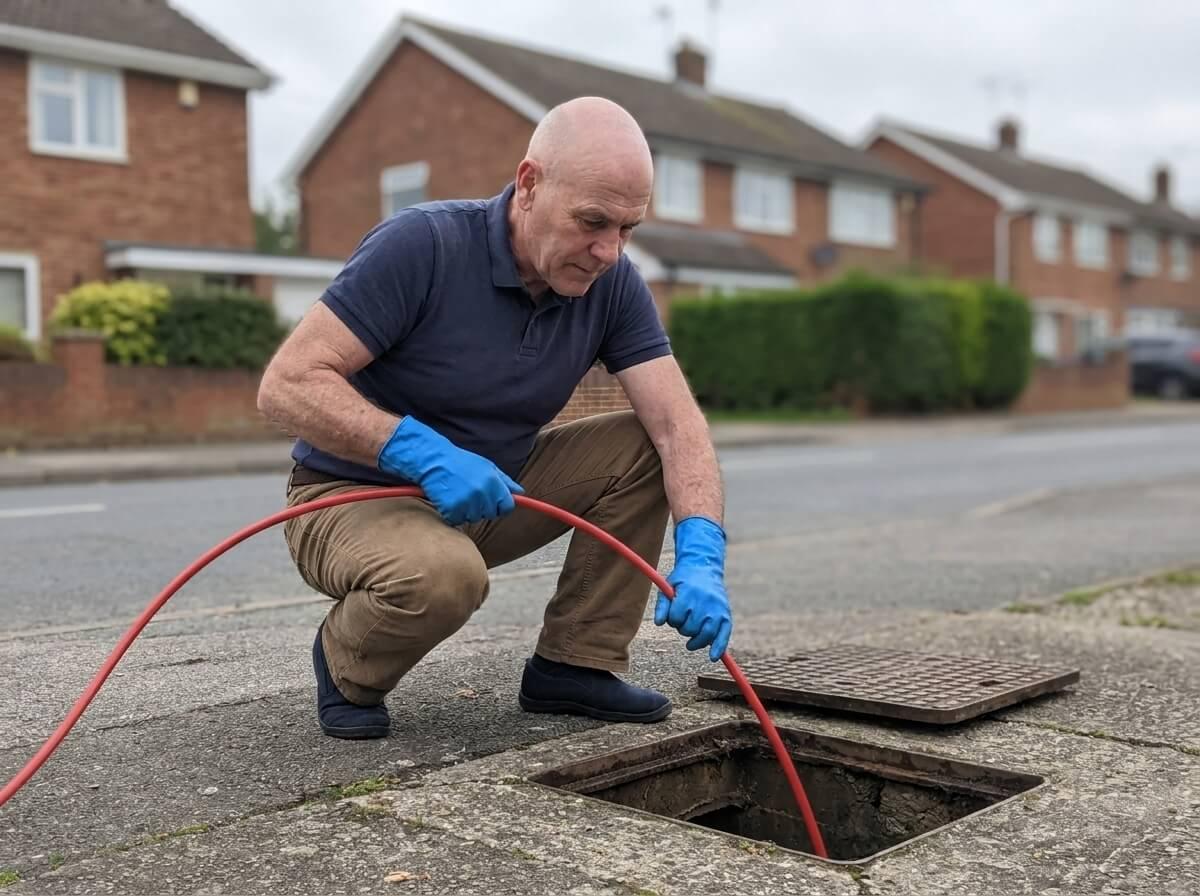
If the trap is clean and water still will not go, go outside and find where the kitchen waste pipe comes through the wall. If it runs into a gully, lift the grid (gloves on) and look in. A gully full of greasy water that is not going down is blocked itself. Scoop out the fat, food and leaves with an old trowel or a gloved hand into a bag, then run the outside tap or a bucket of water through it.
If the gully empties, your sink will usually drain straight away. If it stays full, or the inspection chamber (manhole) nearby is full too, the blockage is in the underground drain. My guide on what to do when an outside drain is overflowing covers that in detail. If the gully is empty and dry while the sink is full, the blockage is in the waste pipe between the trap and the wall.
6. Use a sink cable or drain snake
For grease in the waste pipe itself, a sink cable (a thin, flexible coiled spring with a handle, sold at DIY stores) or a cheap plastic barbed drain snake will reach where a plunger cannot. Feed it in where the trap was, not down the plughole, because it goes round far fewer bends that way. Push it gently along the pipe, turning the handle as you go. When you feel resistance, keep turning and work it back and forth to break the blockage up, then pull it out slowly. Refit the trap and flush with hot water.
A straightened wire coat hanger will reach into the top of the waste, but not much further, and it scratches stainless steel. Do not force anything metal through plastic pipe joints.
7. Wet and dry vacuum
If you have a wet and dry vacuum (not a household one), set it to wet, seal the overflow and the other bowl, and press the hose tightly over the plughole. On full power it can pull a blockage back up out of the trap. It is a useful last resort before calling someone, especially for something solid that has gone down the plughole.
Chemical Drain Unblockers: Use With Care
Supermarket gels and caustic soda (sodium hydroxide) do dissolve fat and soap, and on a slow sink they can work. On a properly blocked kitchen sink they often do not, because the blockage is a mix of grease, food and coffee grounds that chemicals cannot shift. Then you have a sink full of caustic water that you cannot plunge, cannot bail out safely and cannot open the trap under.
- ●Never pour chemicals into standing water. They dilute, sit there and do nothing except make the water dangerous.
- ●Never mix products. Different unblockers, bleach and acidic cleaners can react violently or give off toxic fumes.
- ●Wear gloves and eye protection, keep children and pets away, open a window, and follow the label exactly.
- ●Never plunge after using a chemical. It splashes straight back at your face.
- ●Always tell your plumber what you have put down, before they start work.
Caustic soda can also damage older metal pipes and some sink finishes. If you have already tried a chemical and the sink is still full, leave it, ventilate the room and call a plumber. Do not take the trap off.
What Not to Do
- ✕Do not keep running the dishwasher or washing machine into a blocked sink. Each pump-out is another few litres you will be bailing out.
- ✕Do not pour boiling water through plastic traps again and again. Very hot from the kettle after a few minutes is safer and works as well.
- ✕Do not use the toilet plunger on the kitchen sink. Keep a separate one for each.
- ✕Do not force metal rods through plastic waste joints. They can push joints apart inside the wall or cabinet.
- ✕Do not overtighten trap nuts with tools. Hand-tight seals; a wrench cracks plastic threads.
- ✕Do not try cola, salt or other internet tricks on a sink full of water. They waste time while the water goes stale.
Why Kitchen Sinks Block
Nearly every kitchen sink blockage I clear comes down to the same few things:
- ●Fat, oil and grease. Poured down hot as a liquid, it cools in the trap and pipe and sets like candle wax, then catches everything else. Roasting tins, frying pans and gravy are the usual sources. Water UK puts the number of sewer blockages in Britain at around 300,000 a year, and fat and wipes are behind most of them. The ones in your own kitchen pipe start the same way.
- ●Food scraps. Rice, pasta and potato peelings swell and stick. Without a waste disposal unit, none of it should go down.
- ●Coffee grounds and tea leaves. They clump together in a trap like wet sand.
- ●Washing machine lint. If the machine drains into the sink, fluff and fibres collect with the grease in the trap and spigot.
- ●Limescale. Ipswich and most of Suffolk have hard water, and scale roughens the inside of pipes so grease grips them more easily.
- ●Poor pipe layout. Long waste runs with too little fall, or kinked appliance hoses, block again and again.
If yours blocks every few weeks however careful you are, the cause is usually one of the last two, or a partly blocked gully. My guide on why a sink keeps blocking goes through how to find and fix a recurring blockage for good.
Is a Blocked Kitchen Sink an Emergency?
Most blocked sinks can wait until the morning as long as you stop using them. Call a plumber now, day or night, if:
- ●The sink is overflowing or water is leaking into the cupboard and onto the floor.
- ●Dirty or smelly water is coming up in the sink when you flush the toilet or empty the bath.
- ●The gully or manhole outside is full and overflowing.
- ●You have used a chemical unblocker and the sink is still full of it.
- ●It is a business kitchen, or there is a baby, an elderly or a vulnerable person in the house and no other way to wash up and prepare food safely.
If it is just slow, or blocked and you have stopped using it, try the methods above and call in the day if they do not work. My guide on whether a blocked drain is an emergency explains how to tell the difference.
Who Is Responsible for a Blocked Sink?
If you own your home, the sink, trap and waste pipe are yours, and so is the drain up to the point where it leaves your property or joins a neighbour’s. Since October 2011, shared drains and the sewer beyond your boundary in England have been the water company’s responsibility, which around Ipswich is Anglian Water. If the blockage turns out to be in a shared drain, they should clear it at no charge.
If you rent, in most tenancies in England the landlord is responsible under Section 11 of the Landlord and Tenant Act 1985 for keeping sinks, waste pipes and drains in repair and proper working order. Report it in writing straight away. Be aware that if the blockage was caused by fat, food or coffee grounds going down the sink, the landlord may be entitled to charge you for clearing it.
How a Plumber Unblocks a Kitchen Sink
When I come out to a blocked kitchen sink, I start by finding where the blockage is, not just attacking the plughole. I carry the kit to clear it in one visit:
- ●Trap and spigot: stripped, cleaned and refitted with new washers if the old ones are tired.
- ●Waste pipe: cleared with a powered sink cable that cuts through set grease along the whole run to the wall.
- ●Gully and drain: checked outside, cleared with drain rods if needed, and the flow tested from the sink to the drain.
- ●Leaks: any joint that started weeping under the strain of the blockage is remade before I leave.
- ●The cause: if it is a pipe with too little fall, an undersized waste or a badly fitted appliance hose, I explain what would stop it coming back.
Before I start, I tell you what I have found and agree a fair price, so there are no surprises. My guide on how much an emergency plumber costs explains how call-out pricing works. You can read more about my blocked sink service and drain unblocking in Ipswich.
How to Stop Your Kitchen Sink Blocking Again
- ●Never pour fat down the sink. Let it set in a jar or tin, then bin it. Wipe greasy pans and plates with kitchen roll before washing them.
- ●Use a plughole strainer and empty it into the food waste caddy, not the sink.
- ●Bin the coffee grounds, tea leaves, rice and peelings.
- ●Flush with very hot water after a greasy wash-up, while the fat is still liquid.
- ●Do a soda crystal flush once a month: a cupful down the plughole and a kettle of hot water after it.
- ●Clean the trap every few months, especially if the washing machine drains into it.
- ●Run the dishwasher on a hot cycle now and then. Eco cycles do not always shift grease, and it ends up in your trap.
- ●Keep the gully outside clear of leaves and silt, and keep its grid on.
Blocked Kitchen Sink in Ipswich? Call Philip
Most blocked sinks clear with hot water, a plunger and a clean trap, and I would always rather you tried those first. Call me straight away, day or night, if the sink is overflowing, water is leaking into the cupboard, the drain outside is full, dirty water is coming up from elsewhere, or you have used a chemical that has not worked. For a sink that is just slow or keeps blocking, call in the day and I will book you in promptly, clear it properly and explain what caused it. If the toilet is playing up too, my guides on why a toilet gurgles and what to do when a toilet overflows are worth a read.
I cover Ipswich, Felixstowe, Woodbridge, Kesgrave, Martlesham and the surrounding towns, and I answer the phone myself, 24 hours a day, seven days a week, on 07977 857224. You can see everything else I cover on the emergency plumbing services page.