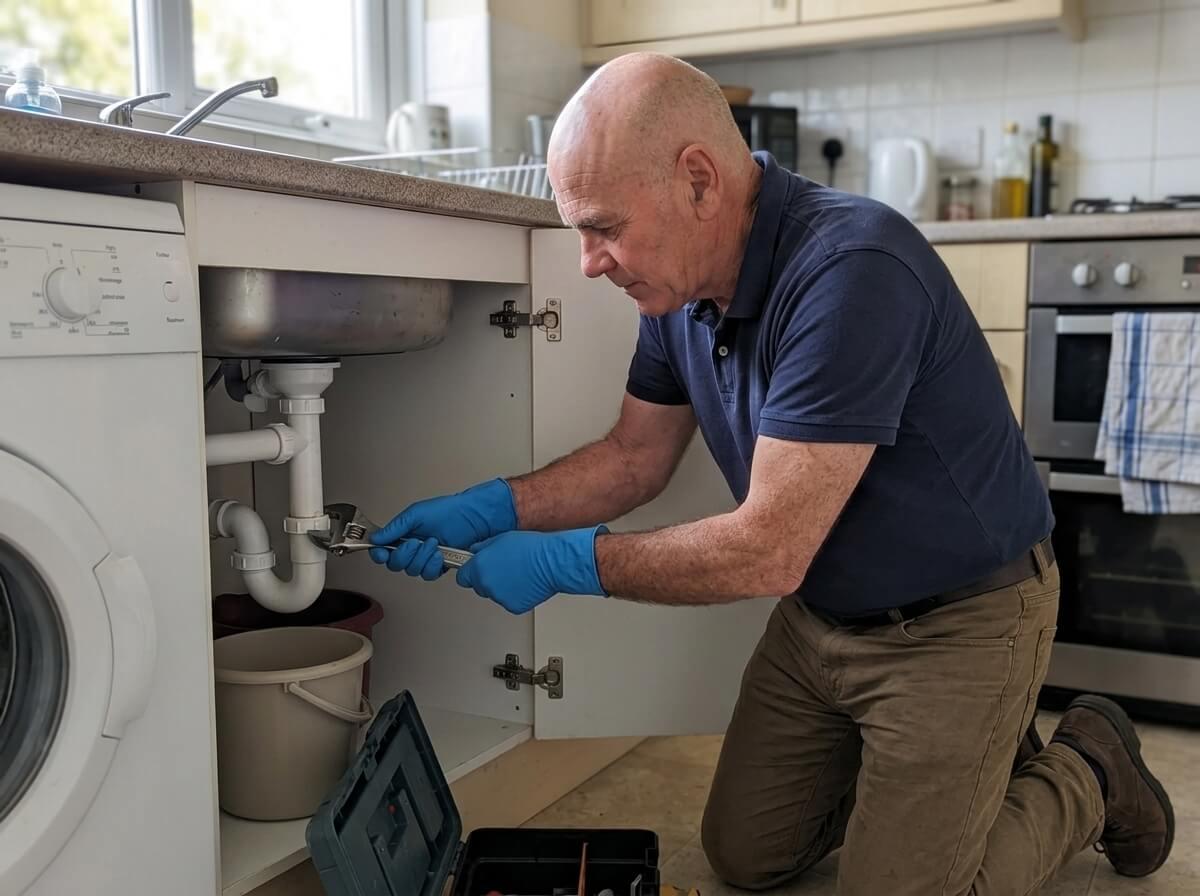
A blocked bathroom sink always seems to happen at the worst moment. You are halfway through shaving or brushing your teeth before work, and the basin fills with cloudy water that just sits there. Then you notice the plug will not come out, and the cupboard underneath is full of bottles you need to move before you can even see the pipes.
Most online guides jump straight to bicarbonate of soda and vinegar or a bottle of drain cleaner. In more than forty years of plumbing in Ipswich, I have found that nearly every blocked basin is cleared in one of three places: the plug, the trap or the short pipe behind it. The trick is knowing which kind of waste you have, how it comes apart, and the one quick test that tells you whether it is the sink at all. That is what this guide covers.
Bathroom Sink Blocked? Do These 4 Things First
Turn the tap off and stop using the basin
It sounds obvious, but a basin that is draining slowly can overflow surprisingly quickly if someone leaves a tap running, especially if the overflow is clogged too. If the tap will not turn off, use the small isolation valve on the pipe under the basin, or the main stopcock. My guide on how to find your stopcock shows where it usually is in Suffolk homes.
Check the bath, shower and toilet
Run the bath tap for thirty seconds and flush the toilet once while you watch the basin. If the basin is the only thing that is slow, the problem is in the basin itself and you can usually sort it. If the water in the basin rises when the toilet flushes, or the bath is slow too, skip ahead to the two minute test below before you do anything else.
Clear the area under the basin
Empty the vanity cupboard or move anything around the pedestal. Put an old towel on the floor and find a bucket or washing up bowl that fits under the trap. You will need it if you get as far as taking the trap off, and it is better to be ready than mopping up.
Leave the chemicals in the cupboard for now
If the simple steps do not work, a basin full of caustic drain cleaner makes every next step more dangerous. You cannot plunge it, you cannot safely open the trap, and anyone you call has to deal with it too. Start with the plug.
Is It the Sink or the Drain? The Two Minute Test
Your basin empties through a trap, a short waste pipe, and then into either the soil stack (the big pipe that takes the toilet) or a shared waste that the bath or shower uses too. Where the blockage is decides who can fix it and how urgent it is. Find the row that matches what you are seeing.
| WHAT YOU SEE | WHERE IT IS BLOCKED | WHAT TO DO |
|---|---|---|
| Only the basin is slow. Bath, shower and toilet all drain normally | The plug, the trap or the short waste pipe under the basin | A DIY job. Start with the plug, then the trap. Most are cleared in under half an hour. |
| The basin and the bath (or shower) are both slow, toilet is fine | The shared waste pipe that both fittings run into before the soil stack | Clean both plugs and traps first. If both stay slow, the shared branch needs rodding. |
| The basin gurgles or bubbles when the bath or shower empties | A part blockage in the shared waste, or the basin trap being siphoned | Clear both traps. If the gurgle carries on, get the waste run checked for fall and venting. |
| Water rises in the basin or the bath when the toilet is flushed | The underground drain or the soil stack, not the sink at all | Stop using the bathroom. Lift the nearest manhole cover. This is a drain job. |
| Every fitting in the house is slow, including the kitchen sink | The main drain or the shared sewer outside | Do not run any water. Check the manhole and call a plumber or your water company. |
If you are in the top row, carry on. Most people are, and the rest of this guide will get you sorted. If you are in the bottom two rows, plungers and drain cleaner in the sink will not reach the problem, and the extra water just makes things worse.
Know Your Basin Waste Before You Start
The single biggest reason people give up on a blocked basin is that they cannot get the plug out. There are three common types, and each comes apart differently. Look at your plughole and match it to one of these.
Click-clack waste (push to open, push to close)
You press the chrome plug and it clicks down, press again and it pops up. These are on most basins fitted in the last fifteen years. With the plug in the up position, grip the cap and unscrew it anticlockwise. On most, the whole plug unscrews from a threaded post. On some, only the top cap comes off and you then unscrew the spring mechanism underneath with your fingers. The hair wraps around that post and the spring.
Pop-up waste with a lift rod behind the tap
You pull a little knob up behind the tap to close the plug. Under the basin, the knob is connected to a flat bar with holes in it, which is clipped to a horizontal pivot rod that goes into the back of the waste. To get the plug out, look under the basin for the small nut where the pivot rod goes into the waste pipe. Undo that nut and pull the rod back a couple of centimetres, and the plug lifts straight out. Push the rod back through the loop on the plug when you put it back, or the plug will not open.
Plug and chain (open grate waste)
Older basins and many cloakrooms have a simple rubber plug on a chain over a metal grate. There is no mechanism to remove. The hair collects just below the grate, so you hook it out from above. If the grate itself is clogged with scale, a small stiff brush and a bit of hot soapy water shifts it.
Bottle trap or U-bend underneath
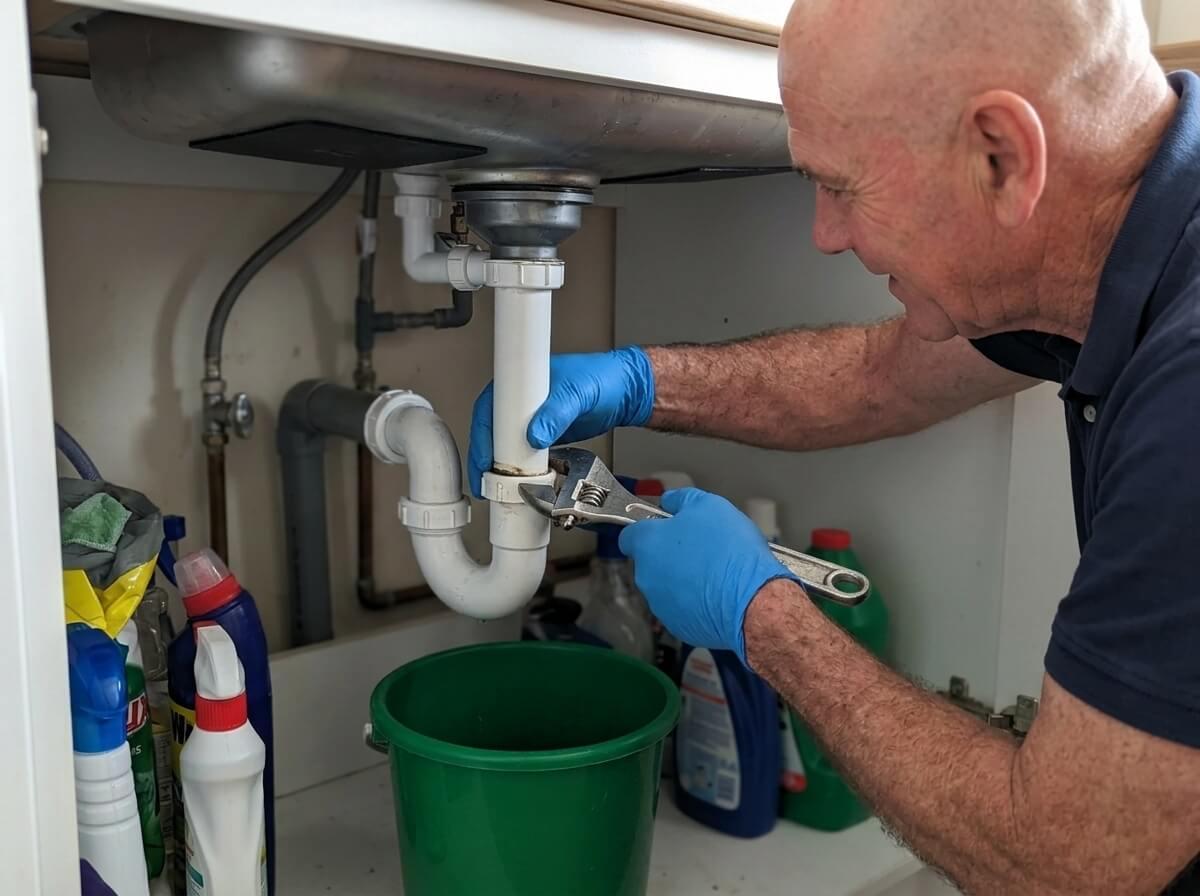
Under the basin you will see one of two shapes. A bottle trap is an upright cylinder with a screw-off bottom, common under pedestal and wall-hung basins because it is compact. A U-bend (or P-trap) is a curved pipe with two nuts. Both hold a pocket of water to keep drain smells out, and both catch hair, soap, toothpaste caps and the odd earring. Both come apart by hand, with no tools needed on most modern plastic traps.
How to Unblock a Bathroom Sink: 7 Methods in the Right Order
Work through these in order and stop as soon as the basin drains freely. The first three clear most blocked bathroom sinks I am called to, and none of them needs any special kit.
Take the plug out and clean it
Remove the plug as described above for your type of waste. Expect a grey, slimy rope of hair and soap wrapped around it. Wear gloves, pull it off into a bag rather than the basin, and scrub the plug with an old toothbrush and washing up liquid. Run the hot tap with the plug out. In my experience this step alone fixes about nine blocked basins in ten.
Hook out what is just below the plughole
With the plug out, look down the waste with a torch. Hair often hangs down from the crossbar just inside. A cheap plastic drain strip with barbs, from any hardware shop, is ideal. A straightened wire coat hanger with a small hook bent into the end works too, but go gently so you do not scratch the chrome or push the clump further in.
Flush with hot water and washing up liquid
Squeeze a good squirt of washing up liquid down the plughole and follow it with a kettle of hot water that has been left to stand for a few minutes. This softens soap scum and toothpaste on the walls of the trap. Avoid water straight off the boil: plastic traps and their washers do not like it, and it can crack a cold ceramic basin.
Plunge with the overflow blocked
Put about five centimetres of water in the basin. Stuff a damp cloth firmly into the overflow slot near the top of the basin and hold it there, or the plunger just pushes air out of the overflow. Use a small cup plunger, not the toilet one. Seat it over the plughole and give ten short, sharp pumps, then pull it off quickly. Repeat two or three times.
Clean the trap
Bucket under the trap. On a bottle trap, unscrew the bottom section by hand. On a U-bend, undo the two nuts and lift the bend out. Empty it into the bucket, clean it out in another sink or outside, and check the rubber washers are still in place and not split. Refit it hand tight, plus a small extra turn. Run the tap and watch the joints for drips before you put everything back in the cupboard.
Clear the pipe beyond the trap
With the trap off, you can see into the short waste pipe that goes into the wall or floor. A small hand auger or a flexible drain cleaning brush, fed into that pipe rather than down the plughole, will reach a blockage on the way to the soil stack or the bath waste. Feed it in, turn the handle as you go, and pull back slowly. Have the bucket ready.
Check the overflow
If the basin drains but smells, or fills up and spills over the top before the overflow takes it, clean the overflow channel. A long thin bottle brush pushed into the slot, with hot soapy water poured in after, clears the slime. Some modern basins have no overflow at all, which is fine, but they need the right type of waste (see below).
Why Bathroom Sinks Block
A bathroom basin has a much narrower waste than a kitchen sink, usually 32mm rather than 40mm, and it gets a steady diet of the things that stick to each other best.
- ●Hair. The main culprit, by a long way. It catches on the plug mechanism and acts like a net for everything else.
- ●Soap and shaving foam. Bar soap, in particular, leaves a waxy residue that binds hair into a solid plug.
- ●Toothpaste. Thick and gritty, it coats the inside of the trap and dries hard.
- ●Hard water scale. Ipswich and most of Suffolk have very hard water. Limescale mixes with soap scum to form a crust that narrows the pipe.
- ●Things that should not be there. Cotton buds, dental floss, contact lenses, toothpaste caps, razor covers and children's toys all turn up in traps.
- ●Cosmetics and clay face masks. Clay sets in the trap, and oily products coat the pipe so other things stick to it.
If your basin seems to block every few weeks no matter what you do, the cause is often the way it was fitted rather than what goes down it. My guide on why sinks keep blocking goes into recurring blockages in more depth.
Bathroom Sink Blocked but the Pipes Are Clear?
This is the one that catches people out. The plug is clean, the trap is clean, and the basin is still slow. When I get called out to one of these, it is usually one of four things.
The plug is not opening fully
On a lift rod pop-up, the pivot rod might be in the wrong hole of the flat bar, so the plug only lifts a few millimetres. Move the clip to a higher hole and test again. On a click-clack, a worn spring might not pop the plug all the way up.
The wrong waste for the basin
A basin with an overflow needs a slotted waste, which has holes in the side to let overflow water and air through. A basin without an overflow needs an unslotted one. Fit an unslotted waste to a basin with an overflow and the overflow does nothing, and the basin can drain slowly because air cannot get in behind the water. Fit a slotted waste to a basin without an overflow and it leaks around the side. This is common after a DIY basin swap.
Not enough fall on the waste pipe
Waste pipes need a gentle slope all the way to the stack. A pipe that runs level, or sags between clips, lets sludge settle in the low spot. A long basin waste that is too narrow can also siphon the water out of the trap, which causes gurgling and smells.
A blockage further along the branch
Where the basin waste joins the bath waste or the soil stack, there is a junction where hair and soap from both build up. You cannot reach that from the plughole. It needs the trap off and a proper auger, or the pipe opening up at the junction.
What Is Your Sink Telling You? Bathroom Sink Symptom Finder
When someone rings me about a blocked bathroom sink, I ask what else is happening before anything else. Find the row that matches. The last two columns show whether it is usually something you can sort yourself, and how quickly it needs dealing with.
| WHAT IS HAPPENING | LIKELY CAUSE | WHO FIXES IT | URGENCY |
|---|---|---|---|
| Dirty water or sewage coming up the basin | A blocked drain or soil stack pushing waste back up the lowest openings in the bathroom. | Usually a plumber | Act today |
| Basin overflowing and the tap will not turn off | A worn tap washer or cartridge on top of a blocked waste. Isolate the tap or turn off the stopcock first. | Usually a plumber | Act today |
| Basin, bath and toilet all slow at once | A blockage in the soil stack or the drain that the whole bathroom shares. | Usually a plumber | Act today |
| Water stands in the basin and will not go down at all | A solid mat of hair and soap on the pop-up plug, or a cotton bud or cap jammed in the trap. | Often a DIY fix | Within days |
| Basin drains slowly, worse each week | Hair, soap scum and toothpaste building up on the plug and in the trap. Hard water speeds it up. | Often a DIY fix | Within days |
| Basin fine with the tap trickling, fills up with the tap full on | The pop-up plug is not lifting far enough, or the waste or trap is partly blocked. | Often a DIY fix | Within days |
| Plug out, trap clear, but still slow | Blockage further along the waste branch, a sag in the pipe, not enough fall, or the wrong type of waste for the basin. | Usually a plumber | Within days |
| Basin gurgles after it empties | Part blockage downstream, or the trap being siphoned because the waste pipe is too long or too small. | Usually a plumber | Within days |
| Drip under the basin since you cleared the trap | A trap washer that is twisted, missing or not seated, or a trap nut that is cross threaded. | Often a DIY fix | Within days |
| Stale smell from the basin, drains fine | Gunk in the overflow channel or on the underside of the plug, or a trap losing its water seal. | Often a DIY fix | Get it checked |
| Pop-up plug will not stay up or will not close | Lift rod nut loose, the pivot rod has come out of the plug, or the click-clack spring has failed. | Often a DIY fix | Get it checked |
Water Coming Up the Bathroom Sink? When It Is the Drain
If dirty water appears in the basin when you flush the toilet or empty the bath, the blockage is below the bathroom, in the soil stack or the underground drain. The water is taking the easiest way out, which is back up through the nearest opening. Clearing the sink will not help.
- ●Stop using all the water in the house. Every flush and every tap adds to what is backing up.
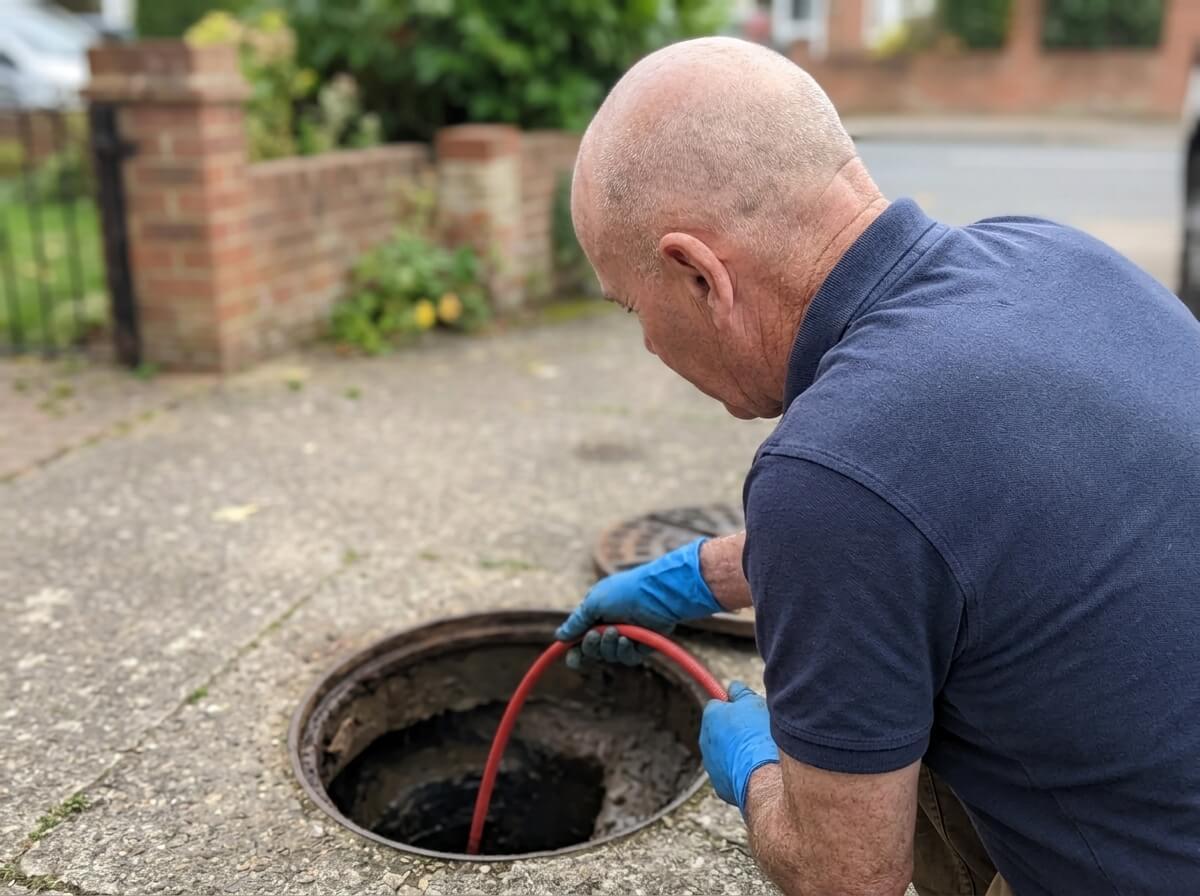
- ●Lift the nearest manhole cover. If it is full of water, the blockage is further down the drain. If it is empty, the blockage is between the bathroom and that manhole.
- ●Check with the neighbours. If you share a drain and they have problems too, the blockage may be in a shared section, which in England is usually your water company's responsibility.
- ●Keep children and pets away. Water that has come up from a drain carries bacteria. Wear gloves and clean the basin with disinfectant once it has gone down.
My guide to sewage coming up your shower, bath or sink explains what to do in more detail. Clearing a blocked drain with rods or a jetter is part of my drain unblocking service, and I can usually tell you within a few minutes of arriving which section is blocked.
Chemical Drain Unblockers: Why I Would Avoid Them in a Basin
I understand the appeal. You pour it in, walk away and hope. But on a bathroom basin, chemical unblockers have a poor success rate against hair, and they bring real risks.
- ✕They sit on the blockage, not in it. If the basin is fully blocked, the chemical stays in the bowl, where it can splash and damage the chrome and the glaze.
- ✕They attack seals. The rubber washers in pop-up wastes and traps are not designed to sit in caustic solution, and a perished washer means a leak.
- ✕They make the next step dangerous. Once it is in there, you cannot safely plunge or open the trap.
- ✕Mixing them is dangerous. Two different products can react and give off heat or fumes. Never add a second one on top of the first.
If you have already used one and the basin is still blocked, do not plunge it. Leave it, ventilate the room, and tell whoever comes to clear it exactly which product you used. Consumer group Which? has a useful list of what you should never pour down a sink, and it is worth a read before you reach for the bottle.
Is a Blocked Bathroom Sink an Emergency?
Most of the time, no. A basin that is slow or blocked on its own is a nuisance, and it can usually wait until you have time to clear it, or until I can come round at a time that suits you. It becomes urgent when:
- ●Dirty water or sewage is coming up the basin, bath or shower. That is a drain blockage and gets worse with every flush.
- ●The toilet will not flush away as well. A bathroom with no working toilet is an emergency in my book, especially for a family.
- ●The basin is overflowing and you cannot stop the tap. Turn off the isolation valve or the stopcock, then call.
- ●Water is leaking from under the basin. Especially upstairs, where it will be through the ceiling below before long.
- ●Someone vulnerable relies on that basin. An elderly relative or someone with a disability may not have another way to wash.
If you are not sure, my guide to what counts as a plumbing emergency sets out how I decide what needs a same day visit and what can wait.
What Not to Do
- ✕Do not keep running the tap to see if it clears. It will not, and you risk an overflow.
- ✕Do not use the toilet plunger on the basin. It is the wrong size, it will not seal, and it is not hygienic.
- ✕Do not plunge without blocking the overflow. All the pressure escapes out of the overflow slot instead of pushing on the blockage.
- ✕Do not pour in boiling water. It can soften plastic traps, distort washers and crack a cold basin.
- ✕Do not force a stiff wire down a pop-up waste. You can bend the pivot rod or scratch the chrome, and push the hair further in.
- ✕Do not use grips on plastic trap nuts. They crack easily. Hand tight plus a small extra turn is enough.
- ✕Do not pour chemicals on top of standing water. They will not reach the blockage and they make the next step dangerous.
- ✕Do not leave the trap off and run the tap. It sounds silly, but everyone does it once.
Who Pays? Renting, Flats and Shared Drains
If you rent
A blockage caused by everyday use, such as hair in the plug, is usually the tenant's to clear, and many tenancy agreements say so. A blockage caused by a fault, such as a cracked trap, a badly fitted waste, a pipe with no fall or a blocked drain, is normally the landlord's to repair. Tell your landlord or letting agent in writing if you cannot clear it, especially if the bath and toilet are slow too. GOV.UK's guidance on repairs in rented homes sets out what landlords are responsible for.
If you live in a flat
If your basin backs up when a neighbour upstairs uses water, the blockage is in a shared stack. That is usually down to the freeholder or managing agent, so report it to them straight away and let your neighbours know.
Shared drains outside
In England, pipes that serve only your home and sit within your boundary are your responsibility. Once a drain is shared with a neighbour, or leaves your property, it is usually the responsibility of the water company, which for most of Ipswich is Anglian Water. If the manhole you lift is shared and full, ring them before paying anyone.
How a Plumber Unblocks a Bathroom Sink
When I come out to a blocked basin, I start with the same two minute test, because it tells me straight away whether I need the kit in the van or the rods for the drain. A typical visit looks like this.
- ●Find the blockage. I run the basin, the bath and the toilet, and if needed, lift the manhole to see where the water is.
- ●Strip and clean the waste and trap. Plug, waste body and trap all come apart, get cleaned and are checked for damage.
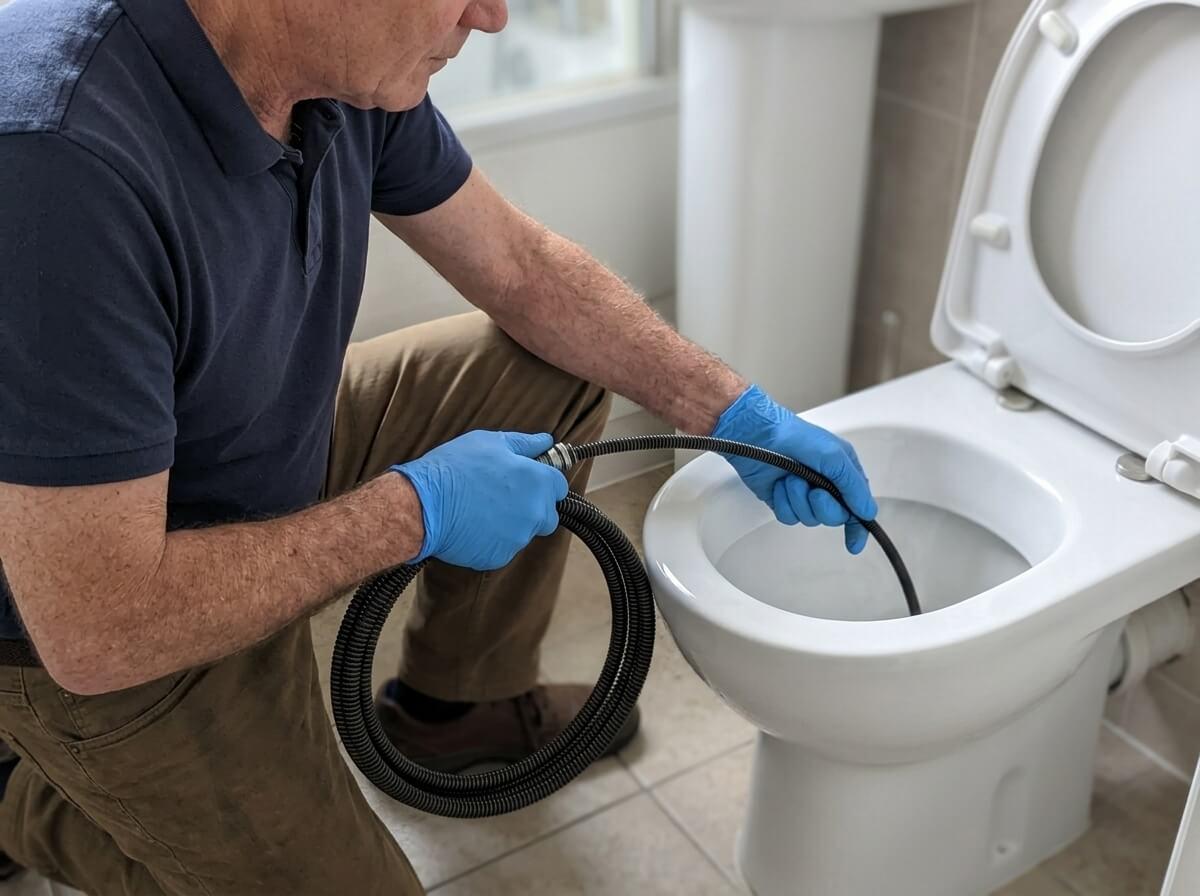
- ●Clear the branch. A hand or powered auger goes through the waste pipe to the soil stack or the junction with the bath.
- ●Fix the cause. That might mean a new pop-up waste, the right slotted or unslotted waste, a replacement trap, or re-clipping a sagging pipe so it falls properly.
- ●Test. I fill the basin to the overflow, pull the plug and check every joint is dry before I leave.
You will always get a fair price agreed before any work starts, with no surprises. You can read more about how I deal with blocked sinks in Ipswich and Suffolk on my service page. If the kitchen sink is the problem rather than the basin, my guide on how to unblock a kitchen sink deals with grease and food waste, which need a different approach. And if the bath is draining slowly too, see my blocked bath guide.
How to Stop Your Bathroom Sink Blocking Again
A few minutes a month keeps most basins clear for years. These are the habits I recommend to every customer.
- ✓Fit a hair catcher. A simple mesh or silicone plughole cover costs a couple of pounds and stops most of the hair.
- ✓Clean the plug once a month. Unscrew the click-clack or lift out the pop-up and rinse off the hair and soap before it builds up.
- ✓Run the hot tap after use. Thirty seconds after shaving or washing your hair washes soap residue through before it sets.
- ✓Switch to liquid soap. It leaves far less residue in the trap than bar soap.
- ✓Bin, do not rinse. Cotton buds, floss, wipes, clay masks and cotton wool pads go in the bin, not the basin.
- ✓Clean the overflow. A bottle brush through the overflow slot every couple of months stops the stale smell.
- ✓Descale. In a hard water area like ours, a little limescale remover on the plug and waste every few months keeps the mechanism moving freely.
Blocked Bathroom Sink in Ipswich? Call Philip
A blocked bathroom sink is one of the most fixable problems in the house, as long as you go about it in the right order. The main things to remember:
- ●Check the bath, shower and toilet first. If they are fine, it is the basin.
- ●Take the plug out. Hair on the plug causes nine blockages in ten.
- ●Block the overflow before you plunge, then clean the trap over a bucket.
- ●Skip the boiling water and the chemicals.
- ●Water coming up the basin when the toilet flushes is a drain problem. Stop using the bathroom and call.
I cover Ipswich, Felixstowe, Woodbridge, Kesgrave, Stowmarket and the villages around them, 24 hours a day, and usually arrive within about 30 minutes for an emergency. If you would like me to sort it, get in touch for a free, no-obligation quote or ring me now. If you would rather check who you are letting into your home, the WaterSafe scheme lists approved plumbers across the UK.