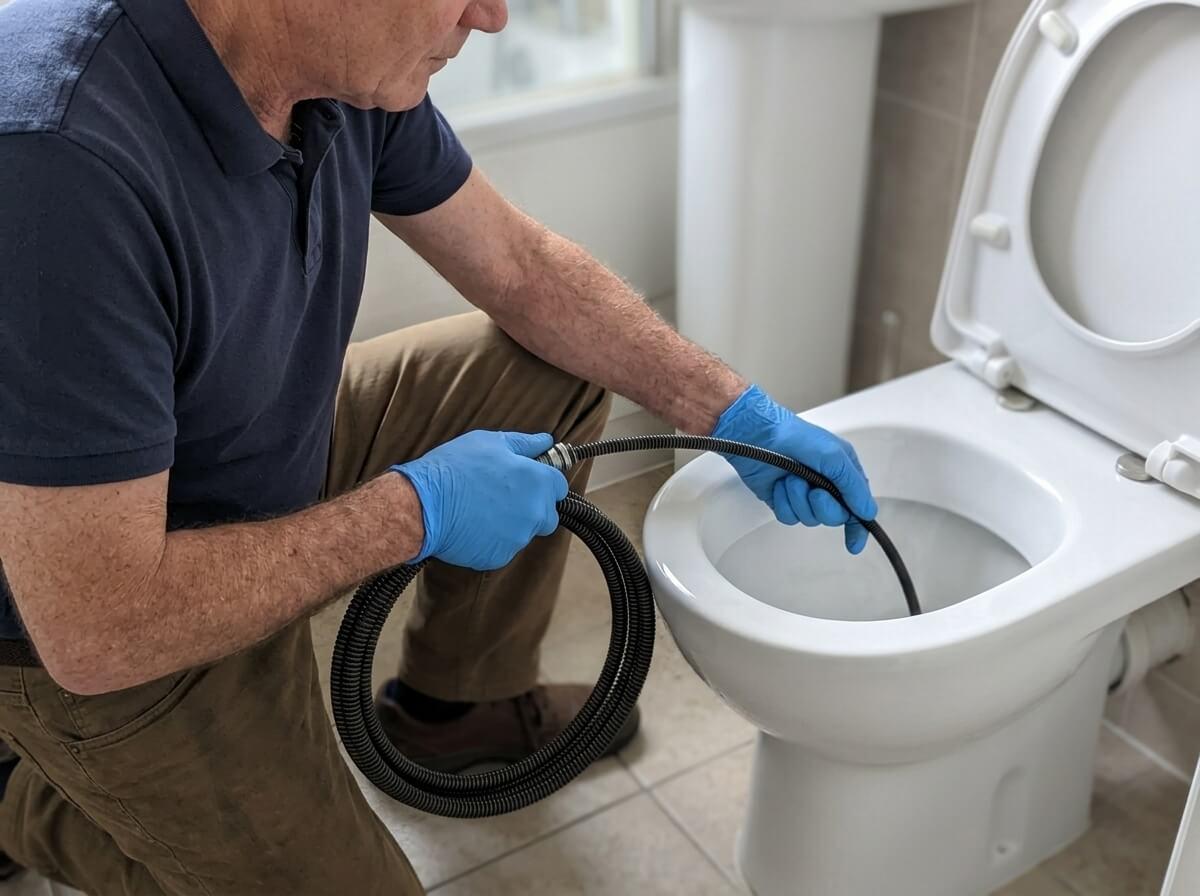
A blocked bath creeps up on you. It empties a little slower each week, then one evening you pull the plug and are still waiting twenty minutes later with a grey tidemark and a scum of soap round the sides. Sometimes it goes the other way: the bath is fine until someone flushes the toilet and water starts coming up through the plughole.
I have been clearing blocked wastes and drains across Ipswich for more than forty years, and baths are near the top of the list. Most bath blockages are within reach of the plughole and can be cleared with nothing more than rubber gloves and a bucket. What most guides leave out is that a bath is not like a sink or a shower. It has an overflow that ruins your plunging if you do not seal it, a trap you can only reach by taking the panel off, a plug that hides most of the hair, and in a lot of older Suffolk houses a waste pipe that empties into a hopper on the outside wall. This guide covers all of it, plus the signs that the problem is the drain and not the bath.
Bath Not Draining? Do These 4 Things First
Stop adding water
Turn the taps off and do not run the shower over the bath. A full bath of standing water pushes on every seal in the waste and overflow, and if there is a weak joint underneath, that is when it shows on the ceiling below. Leave the plug out so what can drain, does.
Check whether anything else is slow
Run the basin and flush the toilet while someone watches the bath. If only the bath is slow, the blockage is at the plug, in the trap or in the bath waste pipe, and you can usually clear it yourself. If the bath water rises when the toilet flushes, or the basin is slow too, the problem is further down.
Look outside if more than one thing is slow
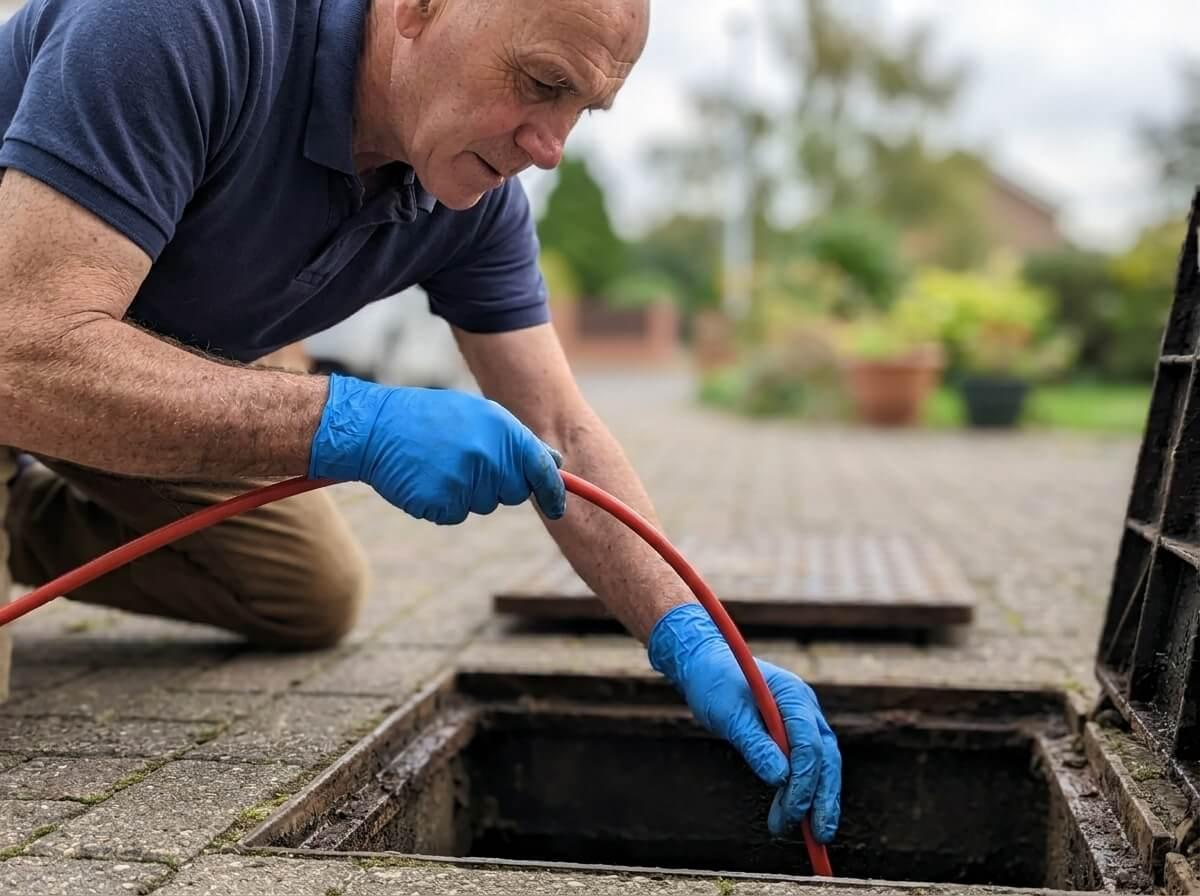
Lift the nearest manhole cover. If the chamber is full of water or waste, the main drain is blocked, and nothing you do to the bath will fix it. Stop using water in the house and read whether a blocked drain is an emergency. If your bath waste runs down the outside wall into a hopper or gully, look at that too.
Hold off on chemicals and kettles
Do not pour drain unblocker or boiling water into a full bath. If the simple steps below do not work, a bath full of caustic water makes everything after it slower, messier and more dangerous, for you and for whoever comes to clear it.
Is It the Bath or the Drain? The Two Minute Test
Every bath empties through its plug, a shallow trap under the bath, a waste pipe, and then into the soil stack, a hopper or a gully, which joins the main drain that the toilet, basin and kitchen use too. Where the blockage is decides who can fix it and how quickly. Find the row that matches what you are seeing.
| WHAT YOU SEE | WHERE IT IS BLOCKED | WHAT TO DO |
|---|---|---|
| Only the bath is slow. Basin, shower and toilet are all fine | The plug, the cross bar under it, or the trap under the bath | Almost always hair and soap. Take the plug out and clean it, then the trap if needed. Usually a DIY job. |
| Bath and the basin beside it are both slow | The shared waste pipe after the point where they join | Clean both plugs and traps. If both stay slow, the shared pipe needs rodding with a drain snake. |
| Upstairs bath slow, and the pipe outside empties into a hopper or open gully | The hopper head on the wall, or the gully at the bottom of the downpipe | Look outside while someone empties the bath. If the hopper or gully overflows, clear the leaves and silt. |
| Bath water rises when the toilet is flushed | The soil pipe or main drain that the bath and toilet share | Stop flushing and running water. Lift the manhole cover. If it is full, the main drain is blocked. |
| Ground floor bath fills when the washing machine or dishwasher empties | The main drain, or a shared waste pipe running under the floor | Pause the appliance and check the manhole and the gully outside. This gets worse, not better. |
| Every plughole in the house is slow and the toilet gurgles | The main drain, the soil stack or the vent at roof level | Not a bath problem. Treat it as a blocked drain and look at the manhole first. |
Know Your Bath Waste Before You Start
Half the battle with a blocked bath is knowing how the plug comes out. Look at the plughole and the overflow and match them to one of these.
Click-clack (push button) plug
The most common bath waste in UK homes. You press the chrome plug to close it and press again to open it. The plug sits on a threaded post, and hair wraps round that post and the cross bar it screws into. To remove it, press it into the up position, hold the top and turn it anticlockwise. Most come off in a few turns. Some have a cap that unscrews first to reveal a small screw. Clean the post, the cross bar and the underside of the plug, then screw it back until it seals when pressed.
Pop-up waste with a lever or turning knob
Here the plug is lifted by a lever or a knob on the overflow, connected to the plug by a cable or a rod behind the bath. With the plug open, it usually lifts straight out or turns a quarter turn and lifts. Hair collects on the plug stem and the cable housing. If the plug will not rise fully even when it is clean, the cable has stretched or jammed, which is a job for the panel off.
Plug and chain with a grid
Older and traditional baths have a loose rubber plug on a chain and a slotted grid or cross bar in the waste. There is nothing to unscrew, so the blockage sits just below the grid where fingers do not reach. A plastic hair grabber is the right tool here. The grid itself can be unscrewed from the waste with a large screwdriver across the cross bar, but it is easy to break the seal underneath, so leave it in unless you are confident.
Bath filler through the overflow
Some modern baths fill through the overflow opening rather than from a tap. The waste works like a pop-up, worked by turning the overflow. These have their own rules about contamination and backflow, so if the overflow filler is involved in the blockage, or the water rising in the bath is coming out of the overflow, do not take it apart. Call a plumber.
The trap under the bath
Under every bath, at the tap end, is a trap with the flexible overflow hose coming down into it. Because a bath sits low, the trap is usually a shallow one, often with a water seal of only around 40mm, and on most baths it unscrews by hand. Shallow traps have a tight bend, block faster than a deep trap, and are where hair that gets past the plug ends up. Getting to it means taking the bath panel off.
How to Unblock a Bath: 8 Methods in the Right Order
Work through these in order and stop as soon as the water runs away freely. Wear rubber gloves, and test each step with a bucket of warm water rather than filling the bath, so you can stop straight away if it backs up.
Take out the plug and clean it
Remove the click-clack or pop-up plug as described above. Pull the hair and soap off its underside, the post and the cross bar with a gloved hand or an old toothbrush. Bag it and bin it. On its own this clears more than half the baths I am called to.
Use a plastic drain hair grabber
A thin plastic strip with barbs along both edges costs a couple of pounds from any DIY shop or supermarket. Push it down through the cross bar, twist, and pull it out slowly. It reaches the rope of hair just round the first bend that your fingers cannot. A bent wire coat hanger does the same job but can scratch enamel and acrylic.
Plunge it, with the overflow sealed
This is where most people go wrong. A bath has an overflow, and if you do not seal it, the plunger just pushes air and water out of the overflow instead of down the pipe. Hold a wet cloth hard over the overflow opening, or get someone to. Leave enough water in the bath to cover a small cup plunger, then give ten to fifteen firm, straight up and down pushes and pull away sharply. Repeat two or three times. Do not use the toilet plunger.
Hot water and washing up liquid
Squeeze a good amount of washing up liquid into the waste and follow it with a bucket of hot tap water. It softens soap scum and body oils so they move. Use hot, not boiling. Boiling water can craze or soften acrylic, which most modern baths are, and soften plastic traps and loosen joints underneath.
Clean out the overflow
Pour a jug of hot soapy water into the overflow opening. The overflow hose behind the bath collects soap, skin and hair, and on many wastes it joins the trap just before the bend, so a gunged overflow narrows the trap too. It is also the usual cause of a smelly bath.
Take the panel off and clean the trap
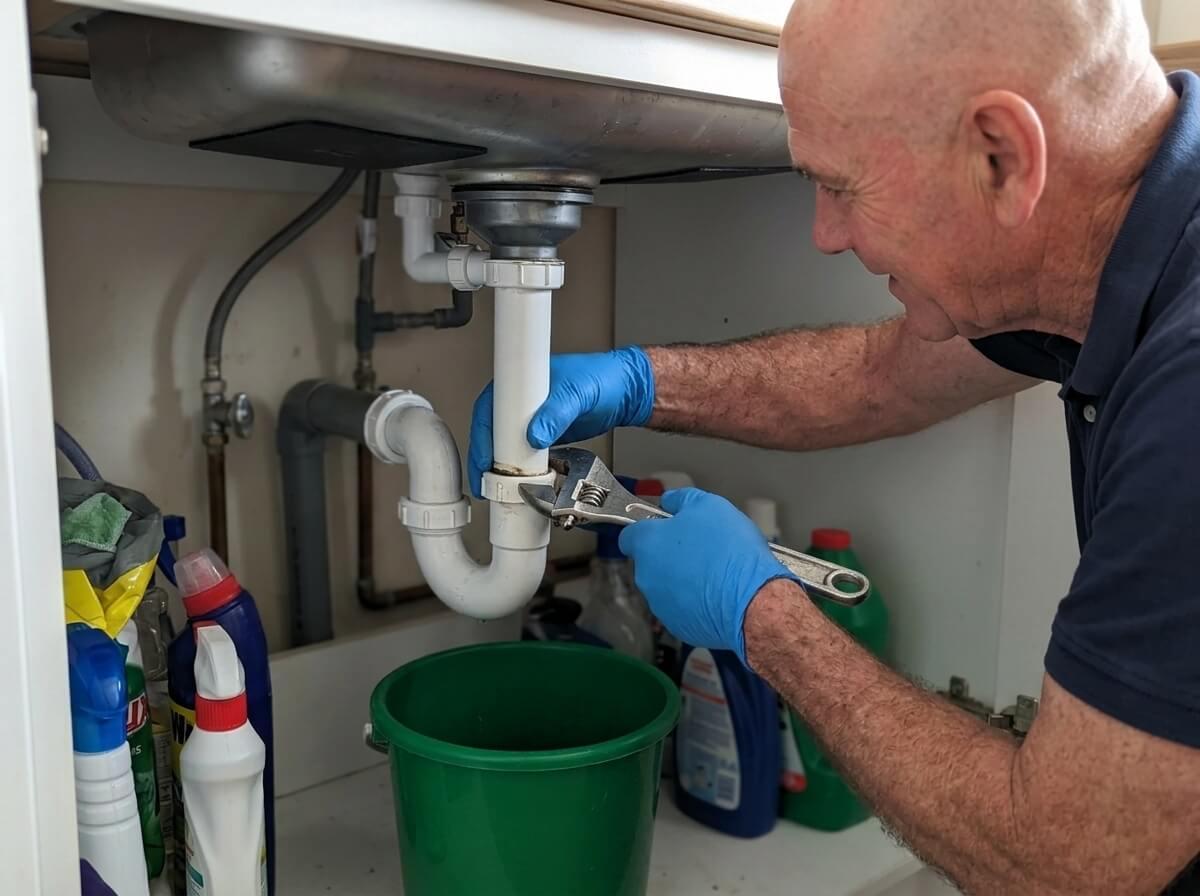
Bath panels pull away at the top edge, or are held by screws under small caps. With the panel off, put a towel and a shallow tray under the trap at the tap end. Unscrew the trap by hand, empty it into a bucket, clean it out, check the rubber washers are in place, and screw it back hand tight. Run a bucket of water through and watch the joints for drips before you refit the panel.
Use a hand drain snake
A small hand auger with three to five metres of cable will reach past the trap into the waste pipe. Feed it in through the trap outlet with the trap off, rather than through the plughole and its tight bends. Turn the handle clockwise as you push, work it through the blockage, then pull it back slowly with a bucket ready.
Use an enzyme cleaner, not a caustic one
If the bath now drains, but slowly, an enzyme or bacterial drain treatment left overnight helps break down the soap coating the inside of the pipe. It works slowly and is safe on plastic pipes and acrylic. If you have done everything above and the bath is still blocked, the problem is further along the pipe, or outside, and it is time to call a plumber.
Why I Would Avoid Chemical Drain Cleaner in a Bath
Shop bought drain unblockers are usually strong caustic soda or sulphuric acid. On a thin film of soap they can work, but on a solid rope of hair they tend to sit in the bath, and then you have a blocked bath full of corrosive water. They can dull acrylic, etch the glaze on enamel and cast iron baths, perish the rubber washers in the trap and the overflow, and splash into eyes if you plunge afterwards. If you have already used one and it has not worked, do not plunge and do not use a snake. Bail out what you safely can with gloves and eye protection, and tell whoever comes to clear it exactly what you used, as some products react dangerously with each other.
Blocked Bath Symptom Finder: What Is It Telling You?
When someone rings me about a bath that will not drain, the first thing I ask is what else is happening. Find the row that matches. The last two columns show whether it is usually a job you can do yourself, and how quickly it needs dealing with.
| WHAT IS HAPPENING | LIKELY CAUSE | WHO FIXES IT | URGENCY |
|---|---|---|---|
| Bath takes ten minutes or more to empty | A rope of hair and soap scum wrapped round the plug post and the cross bar in the waste. By far the most common cause. | Often a DIY fix | Within days |
| Water does not go down at all | The trap under the bath is packed solid, or something has gone down: a bottle top, a razor cap, a bath toy. | Often a DIY fix | Within days |
| Slow even with the plug and trap spotless | A blockage further along the waste, a pipe with too little fall, a sag in a long run, or a blocked hopper outside. | Usually a plumber | Within days |
| Click-clack or pop-up plug will not open fully | Hair and scale jamming the plug mechanism, or a stretched cable on a lever-operated pop-up waste. | Often a DIY fix | Fix when you can |
| Bad smell from the plughole or overflow | Soap and skin rotting in the overflow hose or trap, or a trap seal that has dried out in a rarely used bath. | Often a DIY fix | Fix when you can |
| Loud gurgling as it drains, or when the basin or toilet is used | Air being pulled through the trap by a part-blocked pipe, a long unvented waste, or a blocked soil stack vent. | Needs checking | Within days |
| Dirty or brown water coming up into the bath | The drain the bath empties into is blocked, so other fixtures are pushing their water back up the bath waste. | Usually a plumber | Act today |
| Bath fills when the toilet flushes | A blockage in the soil pipe or main drain below the point where the bath and toilet join. | Usually a plumber | Act today |
| Stain or drip on the ceiling below the bath | A leaking overflow or waste joint that only shows when the bath is full, or water sitting above the seals because it drains slowly. | Usually a plumber | Act today |
Water Coming Up the Bath When You Flush the Toilet
This is the one that really worries people, and rightly. In most houses the bath and toilet empty into the same soil pipe. When the drain below that junction is blocked, the water from a flush has nowhere to go, and it takes the easiest way out, which is back up the bath waste. On the ground floor the same thing happens when the washing machine or dishwasher pumps out. You may see clean water first, then grey, then brown, with gurgling from the plughole.
The bath is not the problem, and taking its plug out will not help. Stop flushing and stop running water anywhere in the house, then lift the manhole cover. If the chamber is full, the blockage is downstream of it. If it is empty, the blockage is between the house and the chamber, often at the foot of the soil stack. Either way it needs drain rods or a machine. The outside drain overflowing guide explains who is responsible for which part of the drain, including when it is Anglian Water’s to clear, and why a toilet gurgles covers the early warning signs.
One exception: if the bath only bubbles or the water level twitches as the toilet flushes, but nothing comes up and the bath drains fine, that is usually air being pushed past the bath trap because the waste joins the soil pipe close to the toilet with no vent. It is a design problem rather than a blockage, often fixed with an air admittance valve on the bath waste. Worth checking, not an emergency.
Upstairs Bath Slow? Check the Hopper Outside
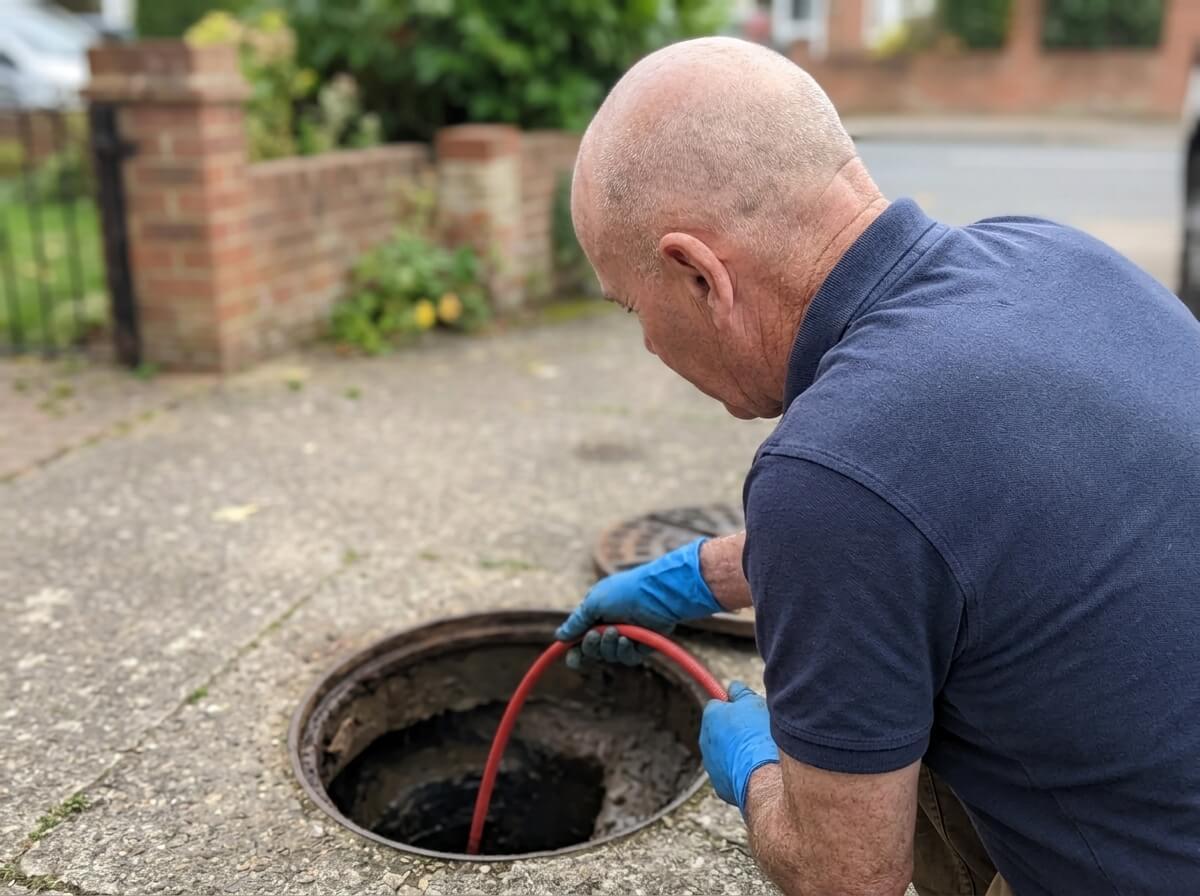
A lot of older homes in Ipswich and around Suffolk, especially Victorian and 1930s terraces and semis, do not have the bath connected straight into the soil stack. The waste pipe goes out through the wall and empties into a hopper head, the open metal or plastic funnel at the top of a downpipe, or runs down the wall into an open gully at ground level. Leaves, moss and silt collect in both, and when they block, the bath empties slower and slower even though the plug and trap are spotless.
Get someone to pull the plug on a bath of water while you watch outside. If the hopper overflows down the wall or the gully floods across the path, that is your blockage. A gully grid lifts off, and with gloves on you can scoop out the silt and leaves from the trap below. A hopper at first floor height needs a proper ladder and someone footing it, so if you are not comfortable working at height, leave it to a plumber. Clearing these every autumn stops it happening again.
Bath Drains Slowly Even When It Is Clear
If the plug, overflow and trap are clean and nothing is blocked outside, a slow bath usually comes down to the pipe itself:
- ●Too little fall. A bath waste needs a steady slope all the way to where it discharges. Pipes that run flat, or rise to get over a joist, hold water and silt up.
- ●A long run with no vent. The further the bath is from the soil stack, the more likely the water pulls the trap empty or drains with a glug. Long runs often need an air admittance valve.
- ●Undersized or sagging pipe. Bath wastes should be 40mm. A run in thinner pipe, or one that has sagged between clips, never drains well.
- ●Soap curd and scale. Ipswich has hard water. Soap and limescale combine into a hard grey layer inside the pipe that narrows it year on year, and only rodding or replacing that section cures it.
These are not DIY jobs, as they usually mean lifting a floorboard or re-running the waste. If you are not sure which it is, see why a sink or basin keeps blocking, as the same causes apply.
Can a Blocked Bath Cause a Leak Through the Ceiling?
Yes. A bath that drains slowly sits full of water for longer, and that pushes on every joint in the waste and the overflow. The overflow seal in particular only gets wet when the bath is nearly full, so a perished washer there can go unnoticed for years and then start dripping the first time a slow bath sits brim full. Water also gets past tired silicone along the wall edge when the bath is full and standing.
If you notice a brown ring or a damp patch on the ceiling below the bathroom, stop using the bath and get it checked. A leak under a bath is hidden by the panel and the floor, and it can rot joists and boards long before it shows. My guide to water leaking through the ceiling covers what to do if it is already dripping.
Is a Blocked Bath an Emergency?
Call a plumber straight away, day or night, if:
- ●Dirty water or sewage is coming up into the bath or shower tray.
- ●The bath fills when a toilet is flushed or the washing machine empties.
- ●The manhole outside is full, or more than one fixture in the house is blocked.
- ●Water is coming through the ceiling below the bath, or near lights or electrics.
- ●Your bath fills through the overflow and dirty water is coming back out of the overflow filler.
- ●It is the only bath or toilet in the house and someone elderly, disabled or unwell needs it.
A bath that drains slowly but does drain, with everything else in the house working, is not an emergency. Clean the plug and trap, and if that does not cure it, book it in within a few days before it blocks completely. If you are not sure, ring me and describe it. I will tell you honestly whether it can wait. You can also read what affects the cost of an emergency plumber.
What Not to Do
- ✕Do not plunge without sealing the overflow. The pressure just comes out of the overflow, and you can blow dirty water out across the bathroom.
- ✕Do not pour boiling water into an acrylic bath. It can craze or soften the surface and loosen the joints underneath. Hot from the tap is enough.
- ✕Do not mix drain chemicals. Two different products, or bleach and an unblocker, can react violently and give off dangerous fumes.
- ✕Do not plunge or snake after using chemicals. It sends caustic water back up at your face and hands.
- ✕Do not over tighten the trap or the plug. Plastic threads strip and washers split. Hand tight is right for most bath traps.
- ✕Do not keep filling a slow bath. Standing water finds every weak seal in the waste, overflow and silicone.
- ✕Do not rinse paint, grout, plaster or tile adhesive down the bath. They set in the trap like concrete and the trap has to be cut out.
Rented Homes and Who Pays
If you rent, your landlord is usually responsible for the drains, the waste pipes, the trap and the bath itself. Day to day care, like clearing your own hair off the plug, is normally the tenant’s job, and if a blockage is plainly caused by something being put down the bath, the landlord may ask you to pay for clearing it. A blocked drain outside, a hopper or gully that floods, a slow waste that keeps coming back after the plug and trap are clean, or a leak through a ceiling is the landlord’s to fix. Report it promptly and in writing.
If you own the house, home insurance does not normally pay to clear a blockage, but many policies cover the water damage it causes, such as a stained ceiling below. Some home emergency policies include drain blockages. Photograph any damage before you clear up.
How to Stop Your Bath Blocking Again
- ●Fit a hair catcher. A silicone or stainless steel catcher over the plughole stops most hair before it reaches the plug post. Empty it after every bath or shower.
- ●Clean the plug every month. Unscrew the click-clack or lift out the pop-up and wipe the post. Five minutes stops a blockage ever forming.
- ●Flush the overflow. A jug of hot soapy water down the overflow every few weeks stops it gunging up and smelling.
- ●Run hot water after a bath. A minute of hot water with the plug out helps push soap and oils through before they set.
- ●Go easy on bath oils and bombs. Oils, glitter and the solid fats in bath melts coat the pipe and catch hair.
- ●Do not wash pets or muddy boots in the bath without a catcher. Dog hair and grit block a bath trap faster than anything.
- ●Clear hoppers and gullies every autumn. If your bath empties outside, leaves will block it once a year unless you clear them first.
Blocked Bath in Ipswich? Call Philip
If your bath will not drain and the steps above have not shifted it, or dirty water is coming up the plughole, call me. I carry hand and power drain snakes, plungers and drain rods on the van, so I can clear the bath waste and, if it turns out to be the hopper or the main drain, the drain outside on the same visit. You get a clear, fair price agreed before I start, and if a trap, waste or overflow needs replacing, a free, no-obligation quote.
I cover Ipswich, Felixstowe, Woodbridge, Kesgrave, Stowmarket and the surrounding towns, and I answer the phone myself, 24 hours a day, seven days a week, on 07977 857224. For bath, basin and shower wastes, see our blocked sink and waste pipe service. If the problem is the main drain, see drain unblocking. If there is a stain on the ceiling below the bath, our leak detection service will find where the water is getting out. If it is the shower that is blocked rather than the bath, see how to unblock a shower drain, or see everything else on the emergency plumbing services page.